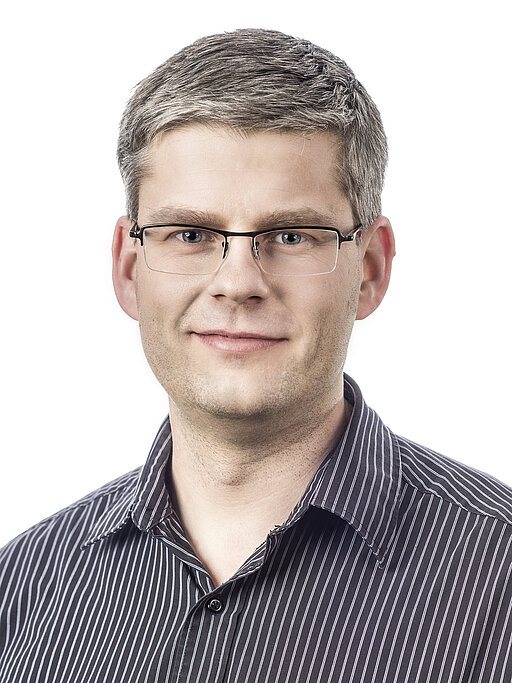
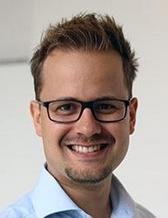
Dr. Jay Howell is an Associate Professor at the School of Education at the University of Southern Mississippi. He serves as Interim Associate Director and Program Coordinator for Secondary Alternate Route Licensure Programs . Based in Hattiesburg, he contributes to educator training and curriculum development. Bachelor's Degree - Auburn University (2001) Master's Degree - Auburn University (2007) PhD - Auburn University (2014) Dr. Howell's research focuses on problem-based inquiry , design-based research , and visual curriculum materials integration. His work advances teacher education through innovative methods like scaffolded lesson study and inquiry-based instruction in social studies. His recent publications demonstrate trends in geography education (2018-2022), historical inquiry (2017-2020), and teacher professional development (2017-2022). Key themes include authentic pedagogy , civic education , and visual resource design . Honor Society: Phi Kappa Phi As Program Coordinator for Secondary Alternate Route Licensure , he develops pathways for teacher certification while maintaining active research in curriculum & teaching through his personal website . Contact: James.B.Howell@usm.edu | 601.266.5810
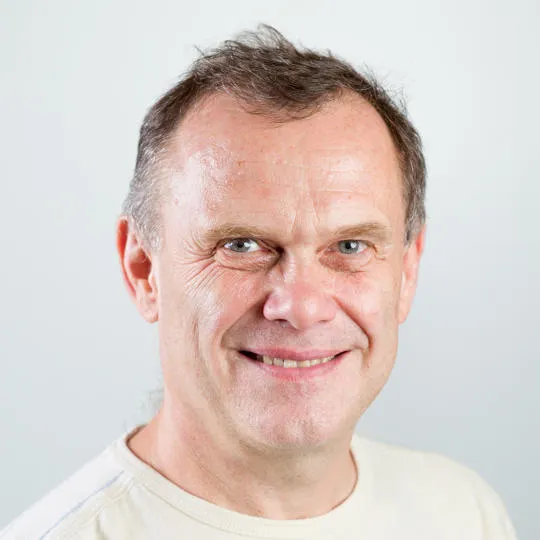
Professor Daniel Wachsmuth holds the Chair of Mathematics VII (Optimal Control) at the University of Würzburg, where he has been a professor since 2012. He is affiliated with the Faculty of Mathematics and Computer Science and maintains his office in Building 30 (Mathematics West), Room 02.011. Prior to his current position, he completed his academic training with positions as a postdoc at RICAM in Linz, Austria (2008-2012) and as a research assistant at TU Berlin (2002-2008). Wachsmuth's research focuses on optimal control theory , particularly concerning partial differential equations, nonsmooth optimization problems, and regularization of problems with bang-bang control. His work bridges theoretical mathematical analysis with practical numerical methods for solving complex control problems. He has made significant contributions to the understanding of sparse optimization, topological derivatives, and non-convex optimization problems in function spaces. His recent publications demonstrate a strong trend toward addressing L 0 constraints in optimal control, developing advanced numerical methods for non-smooth problems, and exploring connections between optimal control theory and deep neural networks. His work spans both theoretical developments (such as second-order conditions and stability analysis) and practical algorithmic implementations for solving challenging optimization problems. Among his notable recognitions is the Dimitrie-Pompeiu Preis awarded in 2016. His research has been published in top-tier journals including SIAM Journal on Control and Optimization, Computational Optimization and Applications, and Inverse Problems. Current Position: Professor of Mathematics at University of Würzburg (since 2012) Previous Positions: Postdoc at RICAM, Linz (2008-2012); Research Assistant at TU Berlin (2002-2008) Contact: daniel.wachsmuth@uni-wuerzburg.de; +49 931 31-89071
Mathieu Chekroun is a Researcher at the Institute of Acoustics , Le Mans Université , focusing on elastic wave propagation in complex media. His work spans nonlinear acoustics, multiple scattering, and non-destructive testing. Education: PhD in Mechanics (2008), Ecole Centrale de Nantes. Research interests include: Nonlinear Coda Wave Interferometry (NCWI) for microcrack detection Metamaterial-based seismic shielding Ultrasonic wave modeling in heterogeneous materials Surface wave inverse problems and dispersion curve analysis Recent publications highlight: Advanced numerical methods (Spectral Element Method, Finite-Element Modeling) Applications to concrete evaluation and structural monitoring Wave-structure interaction in granular and pressurized systems Labs/teams: Laboratoire d'Acoustique de l'Université du Maine (LAUM) Collaborations with European Acoustics Association, Société Française d'Acoustique
Hilde Gundersen serves as an Associate Professor in Teacher Education with a Sports specialization at a Norwegian institution (contact: 55 54 07 00). Her role integrates teaching and research across exceptionally diverse academic domains without explicit university/school affiliation in the source text. Her research spans foundational education (General education, Kindergarten pedagogy, Physical education), theology (Biblical Studies, Religious education, Practical theology), music (Music Education, Choral singing), and social sciences (Intercultural communication, Human rights, Migration). She examines Classroom management, Curriculum development, and Qualitative methodologies while addressing societal challenges like Bullying and Social Entrepreneurship through pedagogical innovation. Professor Gundersen's work uniquely bridges Religious Studies with Physical education and Music Education, emphasizing worldview integration (KRLE) and Problem-based learning. Her expertise in Special Education and Digital competence reflects contemporary educational priorities within Norwegian teacher training contexts. No scientific awards were documented in the available information. Details regarding student supervision, grant funding, or research teams were not provided in the source material.
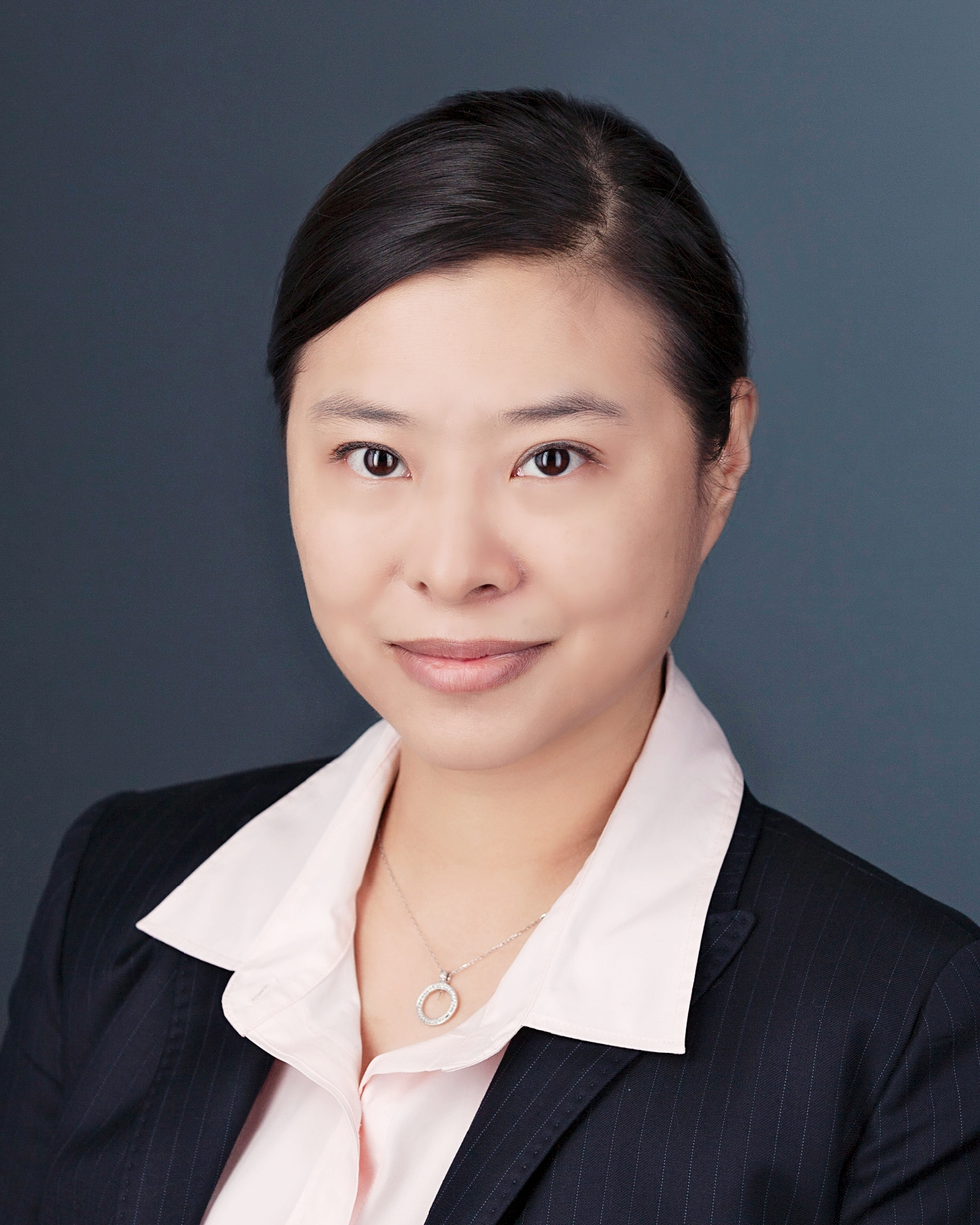
Fengjun Li is a Professor in the Department of Electrical Engineering and Computer Science at the University of Kansas. She leads the KU Privacy and Security (KUPS) Lab, which is part of the High Assurance and Secure System Center at the Institute for Information Sciences. Dr. Li also serves as the director of the Midwest VICEROY Institute (MVI) and is the point-of-contact for the CAE-CD and CAE-R Centers at the University of Kansas. Dr. Li's research spans a broad spectrum of topics related to computer and network security, with current focus on AI security and privacy (adversarial ML attacks and defenses, privacy-preserving federated learning), and cyber-physical system security including IoT and smart grid security. Her work bridges theoretical security concepts with practical applications across emerging technologies. She has published extensively in top security venues including ACM CCS, NDSS, ESORICS, and IEEE transactions. Her recent publications (2022-2025) demonstrate leadership in cutting-edge security challenges, particularly in adversarial machine learning, AI-generated content detection, and privacy-preserving deep learning techniques. Analysis of her publication trends shows increasing focus on AI security as these systems become more integrated into critical infrastructure. Scientific Recognition Best Paper Award at ICPR 2022 for 'Aggregating global features into local vision Transformer' Distinguished Paper Award at ACSAC 2021 for 'Two Souls in an Adversarial Image' Best Paper Award at SecureComm 2015 for 'Enhancing Traffic Analysis Resistance for Tor Hidden Services with Multipath Routing' Research Leadership and Mentoring Dr. Li has advised numerous PhD and Master's students, with current PhD candidates including Zhaohui Wang, Ye Wang, Pramil Paudel, Sumit Bhattarai, and Liangqin Ren. Her former students include Sana Awan (now Assistant Professor at University of Wisconsin Whitewater), Krushi B. Patel (Research Scientist at Spectral AI), and Lei Yang (Research Scientist at Amazon). Her research has been supported by NSF, NSA, and Ripple University Initiatives funding. Research Infrastructure As director of the KU Privacy and Security Lab, Dr. Li oversees research on privacy and security problems in distributed systems dealing with large-scale information collection and sharing. The lab investigates security challenges across computer networks, AI systems, cyber-physical systems, and online social networks. Through the Midwest VICEROY Institute, she facilitates broader cybersecurity research collaboration across regional institutions.
Alexandre Chanson is a Lecturer at the Polytechnic School of the University of Tours (EPU), affiliated with the Blois Computer Science Department within the Fundamental and Applied Computer Science Laboratory (LIFAT, UR 6300). His research focuses on data mining, machine learning, and human-centered AI systems. Academic Focus: Exploratory data analysis, optimization algorithms, and recommender systems Contact: Office 331, Jean Jaurès Campus, Blois | Phone: +33 254 552 168 | Email: alexandre.chanson@univ-tours.fr Research Trends: Alexandre's work bridges mathematical programming with interactive data exploration, emphasizing explainable AI and optimization frameworks like the Traveling Analyst Problem. Key contributions include local explanation clustering, comparison query generation, and personalized data narration. Scientific Awards: No specific honors identified in the current dataset.
Gert Tinggaard Svendsen is a Professor at the Department of Political Science at Aarhus University. His primary research focuses on trust, social capital, climate policy, welfare state dynamics, lobbying, and collective action problems. He has collaborated internationally, notably with Harvard University's Robert D. Putnam on historical roots of trust in Denmark. Key Research Areas : Trust, Social Capital, Climate Policy, Lobbying, Collective Action Problems. Teaching Expertise : Collective action problems, climate policy, public policy, welfare economics, EU/USA lobbying, rational choice, self-regulation, volunteering, co-production. Interdisciplinary Collaborations : Engaged in three major networks—iCLIMATE (climate change), LUMEN (Lutheran theology), and TRAUST (social trust with Kiel University). Recent projects include the LUMEN project (2015–2025) and Urban Orders Research (2014–2025). Contact Information : Telephone +45 87 16 56 93 | Email gts@ps.au.dk
Professor Han Cheng Lie is a faculty member at the Institut für Mathematik , Universität Potsdam , specialising in Uncertainty Quantification . His research focuses on Bayesian inference, inverse problems, and probabilistic numerical methods. Contact: han.lie@uni-potsdam.de Location: Campus Golm, Haus 9, Karl-Liebknecht-Str. 24-25, D-14476 Potsdam OT Golm, Germany His work addresses mathematical challenges in Bayesian inverse problems , including stability analysis of posteriors, low-rank approximations for Gaussian posteriors, and randomized algorithms for differential equations. He has contributed to Markov chain Monte Carlo on manifolds and transition path theory for diffusion processes. Recent publications highlight advances in dimension-independent sampling , probabilistic integrators , and model error mitigation in Bayesian frameworks. His methodological innovations span applications in computational statistics , molecular dynamics , and geophysical fluid dynamics . He organizes academic events like the Potsdam Data Assimilation Days and has presented at international workshops including Oberwolfach and SIAM conferences .
Christine Trinkle serves as Associate Professor and Director of Undergraduate Studies in Mechanical Engineering at the University of Kentucky's Stanley and Karen Pigman College of Engineering, where she has been a faculty member since 2008. Her academic journey began with undergraduate and master's degrees at Kentucky, followed by a Ph.D. from UC Berkeley, establishing deep institutional roots while bringing cutting-edge research expertise to the department. Education Ph.D. in Mechanical Engineering, University of California, Berkeley, 2008 MSME in Mechanical Engineering, University of Kentucky, 2003 BSME in Mechanical Engineering, University of Kentucky, 2001 Dr. Trinkle's research program bridges engineering and biomedicine through four interconnected pillars: Biologically-Inspired Design leverages natural systems to solve engineering challenges; Micro-scale Design and Fabrication develops novel techniques for creating intricate 3D microstructures; Microfluidic Systems enables advanced cell culture platforms and diagnostic tools; and Lung/Ventilator Mechanics addresses critical respiratory care problems. Her work consistently translates fundamental surface science into biomedical applications, particularly in cancer modeling and respiratory therapy. Analysis of her 15 publications (2005-2022) reveals an evolving research trajectory where early work established foundational microfabrication techniques (microcontact printing, PDMS patterning), while recent publications demonstrate sophisticated integration of these methods with biological systems—particularly in tumor organoid development, advanced ventilator concepts, and lung colonization models. The consistent thread across all work is the application of micro-scale engineering to solve pressing biomedical problems, with increasing focus on translational impact in oncology and critical care. Scientific Awards Lighthouse Beacon Foundation Scholar As Director of Undergraduate Studies, Dr. Trinkle oversees curriculum development and student advising for mechanical engineering majors. Her leadership role combined with sustained publication output in high-impact journals (including ACS Omega , Pharmacology & Therapeutics , and Journal of Colloid and Interface Science ) indicates active research funding, though specific grants aren't detailed in the source material. Her collaborative approach is evident in publications spanning engineering, oncology, and respiratory medicine. Her research group operates at the intersection of microfabrication and biomedicine, with particular emphasis on developing platforms for 3D cell culture and respiratory mechanics. Current projects appear focused on tumor microenvironment modeling and next-generation ventilator systems, leveraging the university's biomedical engineering resources and clinical partnerships.
Professor Tim Hopthrow is a leading scholar in Social Psychology at the University of Kent's School of Psychology, focusing on group dynamics, cooperative behavior in social dilemmas, and alcohol's impact on collective decision-making. His work bridges theoretical and applied research. Research Interests: Tim investigates how groups solve social dilemmas, the role of alcohol in group risk-taking, and interventions to promote prosocial behavior (e.g., reducing engine idling). His studies emphasize integrative processes, stereotype threat, and cultural variations in norm enforcement. Publications & Collaborations: With over 15 recent articles in high-impact journals like Nature Communications and Psychology , his research spans environmental behavior, cross-cultural social norms, and organizational sustainability. Key projects include British Academy and ESRC-funded studies on mindfulness and decision-making. Scientific Awards ESRC Post-doctoral fellowship Supervision Current: Hirotaka Imada, Laura Spear Past: Dr Lynsey Mahmood, Dr Rose Meleady, Dr Dawn H Nicholson Grants British Academy (2016): £9,744 for mindfulness intervention DSTL (2013): £5,000 for mental simulation ESRC (2012): £44,692 for risk perception Leverhulme Trust (2009): £48,475 for mindfulness research
Remi Elzinga is an Assistant Professor and PhD candidate at the Copernicus Institute of Sustainable Development , Faculty of Geosciences, Utrecht University. His work focuses on the dynamics of innovation systems and sustainable transitions, particularly in the context of circular economy practices across renewable energy technologies, textiles, bioplastics, EV batteries, and ICT sectors. University: Utrecht University Department: Copernicus Institute of Sustainable Development Research Themes: Mission-oriented innovation policies, circular economy transitions, problem-solution constellations, and systemic change in technological systems. Elzinga's research explores how actors like entrepreneurs, policymakers, and industry leaders can accelerate sustainability transitions through strategic activities and innovation system management. His work integrates theoretical frameworks with practical case studies to assess system performance and policy responses in circular economy contexts. Recent publications analyze the interrelation between problems and solutions in mission-driven systems, circular supply chains in ICT and plastics, and adaptive strategies for sustainable innovation. Elzinga actively engages in workshops and presentations, often collaborating with advisors Marko Hekkert and Matthijs Janssen. Contact: r.elzinga@uu.nl
Barbara Jansen is an Adjunct Assistant Professor and Coordinator of the School Librarian Certificate Program at the University of Texas at Austin’s School of Information. She retired after 26 years as an elementary and high school librarian and department chair. Her research focuses on integrating new media into curricula to enhance 21st-century skills and knowledge-building in schools. Dr. Jansen teaches courses such as Practicum in School Libraries , Inquiry and Information Seeking in K-12 , and School Library Management , emphasizing hands-on experience and leadership in educational settings. Education & Background: Holds a doctoral degree in Library and Information Science, with a dissertation exploring new media’s role in subject-area knowledge development. Her career spans decades in K-12 education, including roles as a librarian, department chair, and curriculum developer. Research Interests: Prioritizes innovative library practices, information literacy, inquiry-based learning, and the integration of technology in education. She advocates for school librarians as key instructional partners in fostering critical thinking and digital citizenship. Professional Contributions: Authored over 30 publications on topics like library space redesign, curriculum innovation, and librarian leadership. Her work highlights the importance of adaptive learning environments and evidence-based practices in modern education. Affiliations: Located at UTA 5.402 on the UT Austin campus, contactable via bajansen@utexas.edu. Active in professional networks through LinkedIn and Twitter.
Andreas Dzemski is a Lecturer in the Department of Economics with Statistics at the University of Gothenburg, School of Business, Economics and Law. His contact information includes email andphone number, with office located at Vasagatan 1, Room E-620 in Gothenburg. Dr. Dzemski's research focuses on econometric methodology, with particular interest in panel econometrics, empirical network models, and non-parametric estimation. His work spans theoretical developments in statistical inference and practical applications in economics and finance. Recent publications demonstrate his expertise in network analysis, hypothesis testing, and panel data methodologies. His publications from 2017-2025 show a consistent research trajectory in econometric theory, with increasing focus on network structures and inference methods. The most recent work (2025) addresses multiple hypothesis testing, stock return distributions, and confidence interval methodology, indicating continued evolution of his research interests toward complex statistical problems in economics. Dr. Dzemski teaches Basic Econometrics at the undergraduate level, providing students with foundational knowledge in econometric modeling. His teaching aligns closely with his research expertise, ensuring students receive instruction grounded in current methodological developments.
Professor Jürgen Berndt is a distinguished mathematician specializing in differential geometry, particularly focusing on the geometry of submanifolds, Riemannian manifolds, and Lie group actions. He holds the position of Professor of Mathematics at King’s College London, where he has been since 2009 and served as Head of the Department of Mathematics until 2013. **Education:** PhD in Mathematics, University of Cologne, 1989 Habilitation in Mathematics, University of Cologne, 1995 **Research Interests:** Explores geometric problems with algebraic, analytic, and topological connections, including submanifold geometry, curvature properties, homogeneous spaces, and Lie group symmetries. His work emphasizes symmetric spaces and their applications, with over 50 research articles and four books. **Grants & Collaborations:** Secured grants from EPSRC, JSPS, and others. Collaborated with mathematicians globally, including those from Argentina, Japan, Spain, and the USA. Advised numerous PhD students, many now in academic and industry roles. **Professional Engagement:** Organized 42 conferences/workshops, including the UK-Japan Winter Schools. Served on editorial boards and grant review panels, and delivered invited talks worldwide.
Dr. Alexander Paul Browning is a Visiting Professor, Research Fellow, and Lecturer at the Mathematical Institute of the University of Oxford. His research focuses on Mathematical Biology and Applied Mathematics, particularly in parameter identifiability of PDEs, stochastic processes, and computational modeling of biological systems. He holds a PhD, MPhil, and BMath in Mathematics. His work integrates theoretical analysis with applications in biological systems, such as velocity-jump models and phenotypic heterogeneity in fluctuating environments. Recent publications include studies on structural identifiability of parabolic PDEs and stochastic differential equation models. Contact details include the Andrew Wiles Building at the Radcliffe Observatory Quarter and a personal website at alexbrowning.me . Collaborative research groups include Mathematical Biology at Oxford.