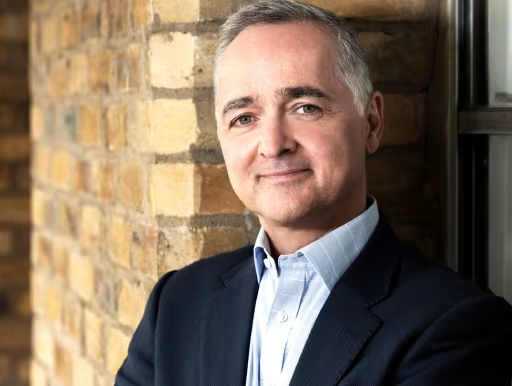
Dr. Aneurin "Nye" Grant is a Professor in the Department of Civil Engineering and Construction Management at the University of West Florida , where he has taught since 2010. His research focuses on Sustainable Construction , Life Cycle Assessment (LCA) , Water Conservation , and Construction Safety , with publications in journals such as Building Research and Information and Safety Science . He integrates project-based learning and field experiences into his courses. Bachelor's Degree in Social Ecology (University of California Irvine) Master’s in Urban and Regional Planning (University of Florida, 2003) Ph.D. in Construction Management (University of Florida, 2010) Dr. Grant’s research spans Urban Metabolism , Rudimentary Structures , and Alternative Building Materials , emphasizing practical applications in Developing World Building Technologies and Rapid Manufacturing. His recent publications analyze hurricane resilience, 3D-printed materials, and passive energy-efficient building strategies. He has presented at conferences like the Southern Political Science Association and CIB W099 International Conference , and his work has been featured in peer-reviewed journals including the Journal of Industrial Ecology and Water Science and Technology .
Raul U. Hernandez-Ramirez is a Research Scientist in Biostatistics at the Center for Methods in Implementation and Prevention Science (CMIPS) at the Yale School of Public Health. He serves as Director of the Dissemination and Implementation Science Methods (DISM) Core at the Center for Interdisciplinary Research on AIDS (CIRA) and is an Affiliated Faculty member at the Yale Institute for Global Health. His work bridges biostatistics, implementation science, and global health research with a focus on practical applications for public health improvement. Dr. Hernandez-Ramirez earned his PhD in Public Health (Chronic Disease Epidemiology) from Yale University in 2018, following an MPhil in the same field in 2016. During his doctoral studies, he conducted research as a predoctoral visiting fellow at the National Cancer Institute (NCI). He further enhanced his expertise through specialized training programs including the Training Institute for Dissemination and Implementation Research in Cancer (TIDIRC) and the Multilevel Intervention Training Institute (MLTI) from NCI, as well as training in optimization of multicomponent interventions using the Multiphase Optimization Strategy (MOST). His research primarily focuses on HIV/AIDS, cancer, and implementation science. He develops and applies causal inference methods for evaluating HIV prevention interventions and methods to account for exposure uncertainty in environmental health studies. His work spans multiple settings including New Haven, other locations in the United States, and low- and middle-income countries, particularly Mexico. He is particularly interested in adapting and developing interventions to increase the uptake of evidence-based practices for HIV and cancer prevention and care, including follow-up care for abnormal cervical cancer screens. He is a member of the Yale Cancer Center (YCC) and the Yale Institute for Global Health (YIGH). Analysis of Dr. Hernandez-Ramirez's recent publications reveals a strong focus on gastric cancer epidemiology through the Stomach cancer Pooling (StoP) Project, examining dietary factors and their relationship to cancer risk. His work prominently features implementation science methodologies applied to HIV prevention and cancer screening programs, particularly in Mexican and other international settings. His research combines rigorous biostatistical methods with practical applications in global health contexts, with significant contributions to causal inference methods and network-randomized trial analysis. Provides expertise, consultations, and technical assistance on implementation science through CIRA's DISM core Contributes to projects in Ending the HIV Epidemic (EHE) priority areas through the CIRA-affiliated IS hub R3EDI Collaborates on research projects in New Haven, other US settings, and low- and middle-income countries including Mexico Offers seminars and trainings on research methods, design, and analysis to CIRA affiliates Dr. Hernandez-Ramirez previously gained substantial research experience in nutrition, environmental health, and cancer at the National Institute of Public Health of Mexico, where he worked as a researcher and instructor and served as project coordinator, data manager, and main statistician for a multistate study. He holds an MSc in Epidemiology and a BSc in Nutrition, establishing a strong foundation for his current work at the intersection of nutritional epidemiology and implementation science.
Daniel Johansson is an Associate Professor at Chalmers University of Technology, working in the Department of Physical Resource Theory. With approximately 20 years of experience in climate-energy-economic analysis and integrated assessment modelling, he has authored around 50 peer-reviewed articles and other research papers. His work bridges climate science, engineering, and economics to address critical environmental challenges. His research spans numerous topics including climate stabilisation scenarios, emission metrics, statistical estimation of climate sensitivity, fuel markets, negative CO 2 emissions, food vs fuel dynamics, climate impacts of aviation, and the role of autonomous vehicles in future transportation systems. Dr. Johansson actively engages with industry, policymakers, and the public through research projects, workshops, presentations, policy reports, and op-eds. His recent publications (2022-2025) reveal a strong focus on practical climate solutions across multiple domains. Key themes include methane policy and valuation, electric vehicle transitions and critical materials, autonomous transportation systems, climate justice and fair emission allocation, integrated assessment modeling, and carbon removal technologies. His work demonstrates a consistent integration of economic, engineering, and climate science perspectives to address complex environmental challenges. Among his notable scientific contributions are analyses of: The social cost of methane and appropriate climate metrics Fair allocation of national greenhouse gas emissions Sweden's electric car transition and critical material requirements Climate impacts of aviation and potential policy measures Investment decisions under carbon price uncertainty Autonomous vehicles and their implications for travel demand and emissions Dr. Johansson has led and coordinated various research activities both within Chalmers and in multinational contexts. He has developed courses on energy and environmental issues for students at Chalmers, the School of Economics at University of Gothenburg, and for employees at General Motors. Notably, during autumn 2015 to spring 2016, he took temporary leave from research to work as a regulatory expert at Volvo Cars. His current research projects (2022-2025) include: Co-created scenarios for the climate transition of passenger cars Climate impact from aviation emissions (CLIMAV) Social cost of aviation contrails Climate impacts of aviation: Policies and climate evaluation of different fuels Systems analysis of biomass and carbon capture across energy sectors MISTRA Carbon Exit Phase 2
Magne Jørgensen serves as a Research Professor in the Department of IT Management at Simula Metropolitan, a research center operated by Simula Research Laboratory in collaboration with Oslo Metropolitan University. His work bridges academic research and practical public sector IT implementation, focusing on evidence-based solutions for digitalization challenges. His research centers on critical gaps in software project management, particularly examining human judgment biases in estimation, benefits realization frameworks for agile public sector projects, and the statistical properties of software productivity distributions. He investigates how front-end project phases impact success in Norwegian government IT initiatives and develops methods for more accurate cost-benefit analysis in digital transformation. Analysis of his 15 most recent publications reveals three dominant research trajectories: (1) Agile adaptation challenges in public sector contexts, (2) Empirical studies of productivity variation and estimation bias, and (3) Benefits management frameworks connecting technical delivery to organizational outcomes. His work consistently employs mixed-method approaches combining systematic literature reviews with Norwegian case studies. Jørgensen actively contributes to the EDOS research center at SimulaMet, collaborating with public sector agencies like NAV and the Ministry of Finance. His frequent presentations at governmental seminars (e.g., for Statsministerens kontor and Finansdepartementet) demonstrate direct policy impact, while his Norwegian-language publications target local practitioners through outlets like Magma and Stat & Styring.
Prof. Dr. Martina Steul-Fischer holds the Chair of Business Administration, with a specialized focus on Insurance Marketing, at Friedrich-Alexander University Erlangen-Nuremberg (FAU). She is affiliated with the Institute of Marketing and the FACT Institute, and serves as founding director of the Experimental Lab for Business Insights Nuremberg (ELAN). Additionally, she acts as the women's representative for both the Business, Economics and Social Sciences Department and the Faculty of Law and Economics. She is a board member of Forum V, the North Bavarian Institute for Insurance Science and Economics at FAU, and participates in the 'Consumption and Behavior' research group. Prof. Steul-Fischer earned her doctorate from Goethe University Frankfurt and completed her habilitation at the University of Wuppertal. Her academic journey includes teaching and research stays at the European Business School, Université Lumière Lyon II in France, and the University of Maryland in the USA. She serves on the Editorial Review Board of 'Marketing ZFP – Journal of Research and Management' and co-edits the Gabler series 'Consumption and Behavior.' Her research primarily focuses on financial services marketing and consumer behavior within the insurance sector. She investigates how digital transformation affects customer experience management, examines consumer decision-making processes across different devices, and explores psychological factors influencing health risk perception. Her work bridges theoretical insights with practical applications, often collaborating with industry partners to address real-world challenges in insurance marketing. Analysis of her recent publications reveals a strong emphasis on omnichannel behavior, device effects on customer decisions, referral programs, and health-related insurance products. Her research employs diverse methodologies including experimental designs, systematic literature reviews, and clickstream data analysis, demonstrating methodological versatility in addressing complex consumer behavior questions. Prof. Steul-Fischer is actively involved in multiple interdisciplinary research focuses at FAU, particularly in Customer Insights, Health, and sustainability-related research. Her contributions to these areas reflect her commitment to addressing contemporary challenges at the intersection of marketing theory and insurance industry practice.
Toshihide Arimura is a Professor at the Faculty of Political Science and Economics, Waseda University, specializing in Environmental Economics, Climate Policy, and Carbon Pricing. His research bridges economic policy with environmental sustainability, focusing on emissions trading schemes, energy efficiency, and policy evaluation in both industrial and municipal contexts. He holds a Ph.D. in Economics from the University of Minnesota and has served in leadership roles such as President of the Society for Environmental Economics and Policy Studies (2022–2025). Alma Mater: University of Minnesota (Ph.D. in Economics), University of Tsukuba (M.S. in Environmental Science), University of Tokyo (B.A. in History of Science) Research Interests include Emissions Trading Schemes, Carbon Pricing, Climate Change Economics, Trade and the Environment, PM2.5 mitigation, and voluntary corporate environmental actions. He employs computable general equilibrium modeling, econometric analysis, and field experiments to assess policy impacts on energy consumption and economic performance. Article Trends (15 most recent) reveal a focus on carbon neutrality strategies (EU CBAM analysis), municipal green procurement (Tokyo case studies), household energy behavior (air conditioner rebound effects), and industrial policy evaluation (Tokyo ETS impact on manufacturing). His work often integrates economic modeling with empirical data to address climate challenges. Scientific Awards include: The Ichimura Prize in Science against Global Warming (2023) SEEPS Commentary Award (2021) Environmental Science Society Paper Award (2020) SEEPS Outstanding Publication Award (2018) SEEPS Young Achievement Award (2012) Committee Memberships span the Science Council of Japan (2023–), Tokyo Metropolitan Environment Council (2019–2025), and Central Environment Council (2010–2012), with expertise in carbon pricing and emissions trading. He has advised government bodies on environmental tax reforms and energy policy.
Dr. Goran Oblakovic serves as Associate Professor in Management and Strategy at Luxembourg School of Business, teaching undergraduate, MBA, and executive programs. Concurrently, he holds leadership roles at Zagreb School of Economics and Management as Associate Dean for Undergraduate Programs and Executive MBA Program Director. His academic foundation includes a Ph.D. in Management from University of St. Gallen (Switzerland) focused on bank risk management, complemented by master's degrees in Strategic Finance and Business Administration from Indiana University (USA). His educational background spans: Ph.D. in Management, University of St. Gallen, Switzerland (Research: Risk Management in Banks) Master of Science in Strategic Finance (MSSF) and MBA, Indiana University, USA Bachelor of Science in Business Administration, Indiana University, USA Dr. Oblakovic's research centers on risk, strategic, and operations management with specialization in human-computer interaction, banking, and entrepreneurship. His work bridges theoretical frameworks with practical applications, examining technology adoption in organizations, crisis-induced consumer behavior, and sustainable business practices through interdisciplinary methodologies including bibliometric analysis and behavioral studies. Analysis of his 15 most recent publications (2018-2025) reveals evolving research trajectories from pandemic economic impacts toward generative AI's organizational implications. Key thematic clusters include technology adoption dynamics (particularly AI in workplaces), behavioral responses to crises (panic buying during pandemics), and sustainable management frameworks (Five Capitals, Value Chain Optimization). Methodologically, he combines bibliometrics for trend mapping with empirical studies on human factors in technology compliance. Dr. Oblakovic maintains extensive industry engagement through consulting projects with major corporations including Cargolux, Ericsson, Kaufland, Sparkasse, Grawe, and Novomatic. As Vice President of Platinum Invest's supervisory board, he contributes to investment fund governance while applying academic insights to real-world business challenges across logistics, banking, and technology sectors.
Cony Ho is an Assistant Professor at Northern Arizona University in the Department of Management, Marketing, and Information Systems . With a focus on consumer behavior and organizational psychology, her research explores how workplace dynamics, political ideologies, and social connectivity influence decision-making and charitable actions. Academic Rank: Assistant Professor Department: Management, Marketing, and Information Systems Email: Cony.Ho@nau.edu Research Interests include: Organizational psychology (voice behaviors, managerial endorsement) Consumer psychology (brand consumption, donation strategies) Political ideology effects (cognitive flexibility, game choice) Liver transplant research (hepatocellular carcinoma, post-transplant complications) Recent publications demonstrate expertise in behavioral economics, charitable donation mechanisms, and cognitive processing. Articles like "Every voice has its bright and dark sides" and "Collective influence: How the collection mindset shapes consumer spending" highlight interdisciplinary connections between psychology and marketing.
Alessio Trivella is a Researcher specializing in Industrial Engineering & Business Information Systems , with a focus on optimization models for energy, transportation, and logistics. His work bridges academic research with industry applications, emphasizing mathematical programming, stochastic optimization, and sustainability. Research Interests: His expertise spans combinatorial optimization , dynamic programming , and network algorithms , addressing challenges in green hydrogen production , hydrogen railway systems , container loading , and renewable energy procurement . Key themes include uncertainty modeling , resource flow optimization , and system resilience . Scientific Contributions: Recent work (2023–2025) explores sustainable energy hubs , hydrogen infrastructure , retail planning , and railway automation , with publications in journals like Renewable Energy and Management Science . His research aligns with UN Sustainable Development Goals, particularly in energy sustainability and smart transport systems . Awards: Recognized for excellence with the Outstanding Reviewer Award OR Spectrum 2019 .
Dr. Marc A. Adams serves as the Assistant Dean of Education and Interim Program Director of the MPH in the School of Technology for Public Health at Arizona State University, while also holding a Professor position in the College of Health Solutions. He maintains additional affiliations with the Institute for Social Science Research as both a faculty member and Affiliated Faculty, and serves as a Senior Global Futures Scientist within the Global Futures Scientists and Scholars program. His academic leadership spans multiple institutional units focused on public health innovation and research. Dr. Adams' educational background includes a PhD in Public Health from the University of California, San Diego and San Diego State University (2009), an MPH in Public Health from San Diego State University (2003), a BA in Psychology from San Diego State University (2001), and postdoctoral training in Cardiovascular Epidemiology and Prevention at the University of California, San Diego (2011). As a behavioral scientist and epidemiologist, Dr. Adams' research spans the intersection of digital health interventions, physical activity promotion, and behavioral nutrition within diverse neighborhood contexts. His work integrates advanced AI and deep learning techniques to map pedestrian environment features across thousands of US neighborhoods, revealing critical inequities in built environments. He develops and tests interventions that consider how urban planning features interact with behavior change strategies to increase physical activity and healthy eating, particularly among underserved populations. His methodological expertise includes epidemiologic methodology, clinical trial design, and the development of ecological models for understanding behavior-environment interactions. Dr. Adams is an active member of the International Physical Activity and Environment Network (IPEN), contributing to international comparative research on how city design influences physical activity levels across 14 global cities. Dr. Adams' recent publications reveal a strong focus on neighborhood walkability, digital health interventions, and the use of AI to analyze built environments for public health purposes. His research consistently examines how environmental features moderate the effectiveness of physical activity interventions, with particular attention to socioeconomic disparities. The methodological approaches in his work span from traditional epidemiological studies to cutting-edge computer vision applications for analyzing street-level imagery at scale. Dr. Adams has secured substantial research funding from multiple sources including NIH, American Heart Association, and Robert Wood Johnson Foundation. His current projects include "Developing AI-measures of Pedestrian Environment Features for Physical Activity and Cancer Prevention in Rural Communities" (NIH/NCI, $413,673), "PED-PHAM: An Automated and Scalable Spatial Tool" (NIH/NHLBI SBIR, $275,000), and "WalkIT Arizona: Neighborhood walkability and moderation of adaptive interventions for physical activity" (NIH/NCI, $2,620,000). He serves as Principal Investigator on multiple projects while also collaborating as Co-Investigator on large-scale international studies through IPEN. His grant portfolio demonstrates expertise in both intervention development and environmental measurement, with a consistent focus on translating research findings into practical applications for public health practice. Dr. Adams leads research teams focused on developing and validating AI tools for assessing pedestrian environments and testing how these environmental features interact with digital health interventions. His work with the International Physical Activity and Environment Network connects him to a global consortium of researchers examining built environment influences on physical activity across diverse cultural contexts. His laboratory work bridges computer science, public health, and urban planning disciplines to create innovative approaches for measuring and improving neighborhood environments that support healthy behaviors.
Dr. Khurshid Ali serves as a full-time Lecturer in the Department of Financial and Business Systems at Lincoln University's Lincoln Business School. His academic profile demonstrates strong alignment with sustainability-focused business practices and corporate governance research. His educational background includes: PhD in Accounting from University of Otago MSc in Banking and Finance from University of Salford BBA from Middlesex University BBIT from Iqra University Dr. Ali's research focuses on corporate environmental sustainability, corporate governance, and sustainability accounting and reporting. His work bridges financial accountability with environmental and social responsibility, examining how businesses can integrate sustainability into core operations while maintaining financial viability. His research particularly emphasizes the holistic aspects of sustainability that encompass environmental, social, and economic dimensions. His publication record shows a clear progression from traditional finance topics toward sustainability-focused research, with his most recent work examining capital markets' response to climate change actions. This evolution reflects growing academic and industry interest in environmental sustainability within corporate reporting frameworks. Dr. Ali actively contributes to academic service as a member of the Faculty of Teaching Committee and serves as a Technical Advisor for Xero Accounting Software. He supervises Masters and PhD students and is currently collaborating on a university-funded research project with the Agribusiness department focused on climate change actions. His professional engagement extends to the UN Sustainable Development Goals, particularly those related to climate action, sustainable cities, responsible consumption, and gender equality. He holds current Xero certifications and teaches financial and management accounting courses including ACCT 101, ACCT 308, and ACCT 621.
Ben Hermann is a Professor for Secure Software Engineering at Technische Universität Dortmund, Germany, with research focusing on the intersection of programming languages and security. His work primarily centers on vulnerability detection using static analysis, risk assessment of software libraries, security guarantees in type systems, and language-based security. His academic journey includes a doctoral degree from Technische Universität Darmstadt in 2016, followed by postdoctoral work in Eric Bodden's Secure Software Engineering Group at the Heinz Nixdorf Institute. Since 2020, he has held a tenure-track professorship at TU Dortmund, after serving as an interim Professor for IT Security at Paderborn University from October 2019 to September 2020. Hermann's research portfolio demonstrates consistent output in static program analysis frameworks, particularly with contributions to Soot and PhASAR. His work spans vulnerability detection, analysis reusability, and research quality in computer science, with emphasis on artifact evaluation. His recent publications show progression from framework development toward security applications and research methodology. Hermann has been actively involved in numerous conferences including ASE, ICSE, ECOOP, and SPLASH, often serving in program committees and as session chair. His research group at TU Dortmund includes students like Maximilian Krebs who presented work on energy consumption prediction of programs. He maintains an active presence in the academic community, advocating for research quality and reproducibility, and serves in various organizational roles including Doctoral Symposium Chair and Diversity & Inclusion Chair for conferences.
Nader Tavassoli is a Professor of Marketing at London Business School (LBS), where he has served since 2002. Previously, he held positions at MIT Sloan School of Management, including Associate Professor of Marketing and Richard Leghorn Professor of Entrepreneurship. He is the Faculty Advisor for LBS Publishing and founder of the Behavioural Research Lab and the Walpole Luxury Management Programme. A recipient of LBS' Excellence in Teaching Award, his research focuses on branding, consumer cognition, and marketing strategy. His academic journey includes a BA and MBA from Syracuse University and an MPhil/PhD from Columbia Business School. Nader has advised over 100 organizations, spanning Fortune 500 firms and startups, specializing in branding, internal brand management, and executive education. His work bridges academic research with practical business impact, emphasizing consumer behavior, cross-cultural marketing, and leadership. Key contributions include pioneering insights on employee-based brand equity, the role of branding in labor markets, and sustainable tourism pricing strategies. His recent articles explore topics like Red Bull's fashion expansion and Bhutan's tourism policies, reflecting his interest in innovative market strategies and global challenges. Nader’s awards highlight his teaching excellence, while his entrepreneurial spirit is evident in founding academic and industry programs. He remains active in executive education, offering courses on marketing, leadership, and luxury management.
María Jesús Beltrán Muñoz is an Associate Professor in the Department of Economics, Quantitative Methods and Economic History at Pablo de Olavide University in Seville, Spain. She holds a European PhD in Ecological Economics and Environmental Management from the same institution and an MSc in Ecological Economics from the Autonomous University of Barcelona. Her academic career includes significant research positions including as a Research Engineer for the French National Center for Scientific Research on the TERRE-EAU Project and as a Marie Curie Post-Doctoral Research Fellow for the European Network of Political Ecology (ENTITLE Project). She has also served as a visiting researcher at the Centre for Water and Development, SOAS University of London. Her research focuses on the political ecology of water systems, with particular expertise in virtual water analysis, water footprint methodology, and socio-ecological metabolism. She examines how water resources are managed within political and economic frameworks, with special attention to power dynamics in water governance. Her work bridges ecological economics with critical political analysis, challenging conventional approaches to water accounting and management. Analysis of her publication record reveals consistent research trends examining the political dimensions of water resource management, with particular attention to Spanish and Palestinian contexts. Her work increasingly integrates metabolic analysis frameworks with political ecology approaches, developing more contextualized understandings of water flows that account for social, institutional, and environmental factors beyond simple quantitative accounting. Marie Curie Post-Doctoral Research Fellow (ENTITLE Project) Research Engineer for French National Center for Scientific Research (TERRE-EAU Project) Beltrán Muñoz teaches courses including Water Footprint Calculation in the University Master's Degree in Climate Change, Carbon and Water Resources, and Introduction to Economics in the Degree in Social Work. She supervises numerous Final Degree Projects across multiple programs including Sociology, Business Administration, Agricultural Engineering, and Political and Administrative Sciences, demonstrating interdisciplinary engagement across the university.
Maria Elena Martin Cañadas is an Associate Professor at the Department of Electrical Engineering within the Barcelona East School of Engineering (EEBE) at Universitat Politècnica de Catalunya (UPC). She leads research at the SEPIC group (Power Electronics and Control Systems), focusing on renewable energy integration and power systems optimization. Research Interests: Her work spans power electronics, microgrid design, energy policy analysis, and control systems for distributed generation. Key research areas include: Regulatory frameworks for renewable energy adoption Uncertainty modeling in energy systems High-temperature heat pump technologies Economic optimization of microgrids Solar energy integration and policy analysis Publication Trends: Recent articles (2020-2025) demonstrate strong focus on regulatory impacts in energy systems, with methodologies addressing uncertainty through stochastic modeling and probabilistic analysis. Dominant themes include microgrid optimization, solar policy evolution, and decarbonization strategies for industrial applications. Student Advising & Projects: Supervised doctoral candidates include Alonso (microgrid design), Coronas (distributed generation), and El Mariachet (power quality). Actively leads competitive R&D projects such as: Decarbonization of energy-intensive industries Power quality improvement in remote systems Regulatory framework development for Latin American biogas projects Research Group: Core member of SEPIC laboratory specializing in power electronics applications for sustainable energy systems, collaborating with industrial and international partners.