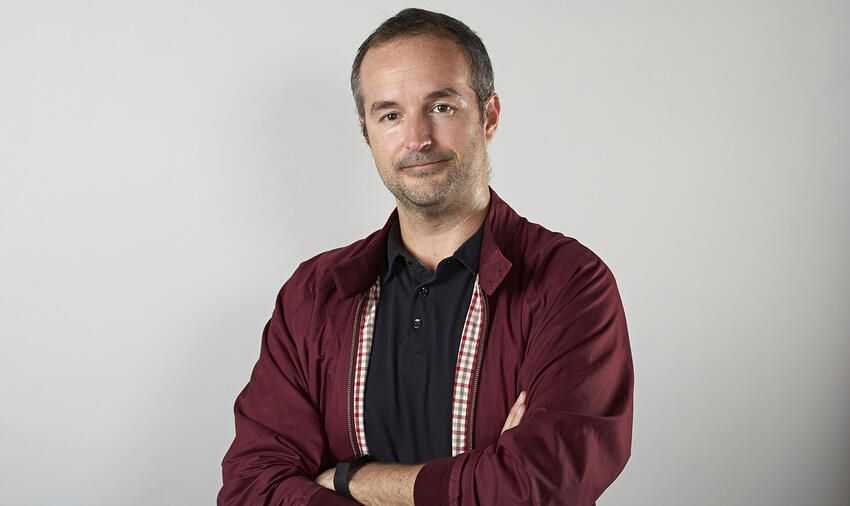
Jessica Cartwright is a researcher at the University of Queensland's School of Human Movement and Nutrition Sciences. Her work focuses on nutrition science, sensory analysis, and public health, with particular emphasis on dietary patterns in athletes with disabilities and sugar-sweetened beverage consumption in Indigenous communities. Recent publications highlight her expertise in sensory trials, longitudinal dietary analysis, and global health patterns. Notable work includes studies on sweet-liker status in beverage systems, dietary habits of swimmers with cerebral palsy, and factors influencing sugary drink consumption in remote Indigenous populations. Contact: j.cartwright@uq.edu.au
Karen Pittel is a Professor of Economics at the Ludwig Maximilian University of Munich and Director of the ifo Center for Energy, Climate, and Resources since 2010. She holds a habilitation from ETH Zurich (2010) and a doctorate from TU Chemnitz (2000, summa cum laude). Her academic journey includes research stays at the University of California, Berkeley, McGill University, and CICERO Oslo. Habilitation: ETH Zurich, 2010 PhD: TU Chemnitz, 2000 MSc: University of North Carolina, Chapel Hill, and Georg-August University Göttingen Research interests center on Energy and Climate Economics , Long-Term Economic Development , and Environmental Policy . Her work addresses climate finance, carbon pricing, energy transition challenges, and the interplay between sustainability and economic growth. Scientific Trends from her recent articles include EU energy policy post-crisis , CO2 pricing mechanisms , climate adaptation financing , and interdisciplinary studies on water, health, and carbon management . Keywords span Environmental Economics , Climate Change , Energy Markets , and Public Policy . Scientific Awards : 2017 Prize for outstanding success in contract studies management Teaching includes courses on Growth and Natural Resources , Environmental Economics , and Climate Policy . She co-chaired the WBGU (2016–2022) and serves on the German Academy of Science and Engineering Presidium (2022–present).
Brett Danaher is an Associate Professor at the George L. Argyros College of Business and Economics, Chapman University , specializing in Industrial Organization, Digital Piracy, and Data Analytics . His research explores the economic implications of digital content distribution, copyright enforcement, and consumer behavior in media markets. Education : Ph.D., University of Pennsylvania His work uses empirical methods to analyze the impact of anti-piracy measures, including site blocking and price changes , on consumer behavior. He has demonstrated that multi-site blocking increases legal content consumption more effectively than targeting single platforms, while price reductions primarily deter novice pirates. His publications frequently appear in top journals like MIS Quarterly , Management Science , and Harvard Business Review . Recent publications focus on digital market dynamics , cybercrime mitigation , and policy implications of content regulation . His research has been cited in policy documents and media outlets such as BBC and Wired.
Kapil Bawa is a Professor at the Allen G. Aaronson Department of Marketing & International Business within the Zicklin School of Business at Baruch College, City University of New York. He holds a PhD in Business from Columbia University (1984), an MBA from the Indian Institute of Management, Calcutta (1980), and a BA in Economics from St. Stephen's College, Delhi (1977). His educational background includes a Post-Graduate Diploma in Management from the Indian Institute of Management Calcutta and an MA (Part I) in Economics from the Delhi School of Economics. Ph.D., Business, Columbia University (1984) Post-Grad. Diploma in Mgmt., Business, Indian Inst. Of Mgmt Calcutta (1980) MA (Part I), Economics, Delhi School of Econ. Delhi (India) B.A., Economics, St. Stephen's College Delhi (India) Professor Bawa's research focuses on consumer behavior, particularly in the areas of brand choice, coupon usage, promotional effectiveness, and the psychological factors influencing consumer decisions. His work examines how consumers respond to different marketing stimuli, with special attention to hedonic versus utilitarian consumption, variety seeking behavior, and the temporal aspects of purchase decisions. He has made significant contributions to understanding coupon proneness across product categories and the effectiveness of free sample promotions. His publication history spans over three decades, with research consistently focused on understanding the nuanced aspects of consumer decision-making. His work shows a progression from foundational studies on coupon usage and brand switching in the 1980s to more sophisticated examinations of consumer psychology in the 2000s. A notable theme throughout his career has been the investigation of how promotional tools affect both short-term sales and long-term brand loyalty. Zicklin Teaching Innovation Award (2023) Citation of Excellence for 'Coupon Attractiveness and Coupon Proneness: a Framework for Modeling Coupon Redemption' from ANBAR, UK (1998) Professor Bawa has served as a dedicated mentor to numerous doctoral students including Maneesh Thakkar, Keith Wilcox, and others from institutions like McGill University and New York University. His service to the academic community includes extensive committee work at Baruch College, where he has chaired various search committees and curriculum review panels. He has also secured research funding including a PSC-CUNY grant for 'Modeling the Perceptual and Emotional Antecedents of Musical Preference' and led the 'Assessing Drivers of Enrollment in CUNY Graduate Programs' project. As an active member of the academic community, Professor Bawa serves on the review panel for PSC-CUNY Research Grants and has provided editorial review services for numerous prestigious marketing journals including the Journal of International Marketing, International Journal of Consumer Psychology, and Marketing Science.
Gina Shamshak is a Professor in Economics and Environmental Studies at Goucher College . As an environmental and natural resource economist specializing in fisheries and aquaculture economics , she develops dynamic stochastic bioeconomic models to analyze seafood markets and fishing industry sustainability. Education: Ph.D. in Environmental and Natural Resource Economics (University of Rhode Island), M.A. and B.A. in Economics (Boston University) Her research focuses on seafood consumption patterns , fishing community economics , and sustainable aquaculture production systems . Recent publications examine market opportunities for U.S. aquaculture, economic viability of inland seafood markets, and global seafood demand trends. Scientific Awards: Elizabeth Conolly Todd Class of 1921 Distinguished Professorship (2023-2028) Caroline Doebler Bruckerl Class of 1925 Award (2021-2022) IAAEM Dissertation of the Year (2010) As principal investigator and subcontract researcher on multiple NOAA grants, she has examined regulatory impacts on fishing crews, elasmobranch interactions in shrimp fisheries, and local food movement potential for seafood producers. She has presented keynote addresses at international aquaculture conferences, including Aquaculture America and IIFET symposia.
Daniel Murphy is the Jung Family Associate Professor of Business Administration at the Darden School of Business, University of Virginia. He holds a B.S. from the University of Notre Dame and M.A. and Ph.D. from the University of Michigan. His research bridges macroeconomics and public policy, focusing on fiscal stimulus, housing markets, and economic slack. B.S., University of Notre Dame M.A., University of Michigan Ph.D., University of Michigan Murphy's research examines cost-effective strategies for economic stabilization, emphasizing how fiscal policies impact heterogeneous populations. Key areas include: Defense spending effects on employment and inequality Gentrification and housing affordability Land taxation efficiency and implementation Consumer debt dynamics during recessions Macroeconomic modeling of demand complementarities Speculative trading in oil markets His recent publications analyze: 2025: Theoretical models for expenditure shocks 2024: Land tax impacts on urban development 2022: Fiscal policy during pandemics 2020: Credit market responses to stimulus No scientific awards are explicitly mentioned in the provided text.
Darin Erickson is a Professor in the Division of Epidemiology & Community Health at the University of Minnesota. He serves as Associate Director of Research at the Cannabis Research Center and is affiliated with the Alcohol Epidemiology Program. Education : PhD, Social Psychology - University of Missouri MA, Social Psychology - University of Missouri BS, Psychology - Iowa State University Research Interests focus on the policy environment's role in substance use behavior and outcomes. His work spans alcohol epidemiology , cannabis policy evaluation , and public health methodology . Key areas include law enforcement practices in cannabis states, traffic safety, retail operations, and underage access. Methodological Expertise includes Mixed model regression Time series analysis Latent variable modeling Policy impact assessment Longitudinal studies Health behavior surveys Current projects examine cannabis legalization's effects on Traffic fatalities Alcohol purchasing trends Retail compliance Youth access prevention
Matheus Belucio is a postdoctoral researcher affiliated with the University of Évora, holding a PhD in Economics (2023) and a Master in Economics (2018) from the University of Beira Interior. His research focuses on Tourism Economics, Urban Economy, and Economic Growth with significant environmental and religious tourism dimensions.
Karen K. Lewis is the Joseph and Ida Sondheimer Professor in International Economics and Finance, and a Professor of Finance and Economics at the University of Pennsylvania's Wharton School. She has held her primary appointment in the Finance Department since 1994 and a secondary appointment in the Economics Department. Lewis is a Research Associate at the National Bureau of Economic Research and a Senior Fellow at the Globalization and Monetary Policy Institute, Federal Reserve Bank of Dallas. PhD in Economics, University of Chicago, 1985 BA in Economics, University of Oklahoma, 1979 Lewis's research focuses on asset pricing, international finance, and macroeconomic risk. Her recent work examines disaster risk in asset returns, equity market integration, and consumption risk sharing across countries. Her scientific awards include: Research Associate, National Bureau of Economic Research (1991–present) Senior Fellow, Globalization and Monetary Policy Institute, Federal Reserve Bank of Dallas (2010–present) Olin Fellow, NBER (1989–90) Visiting Scholar, Board of Governors of the Federal Reserve System (1987, 1991, 1995) Consultant, International Monetary Fund (1996) Lewis has advised numerous students through courses like FNCE2310 (Global Val Risk Analysis), FNCE3990 (Independent Study), and FNCE9330 (International Finance). She previously served as Co-Director of the Weiss Center for International Financial Research until 2011.
Olivia S. Mitchell is the International Foundation of Employee Benefit Plans Professor and Professor of Insurance & Risk Management and Business Economics & Policy at The Wharton School, University of Pennsylvania. She serves as Executive Director of the Pension Research Council and Director of the Boettner Center for Pensions and Retirement Research. Dr. Mitchell is also a Research Associate at the NBER, an Independent Director on the Allspring Mutual Fund Boards, and a Research Fellow at the Leibnitz Institute for Financial Research SAFE, Goethe University Frankfurt. Education: BA in Economics from Harvard University, MA and PhD in Economics from University of Wisconsin-Madison Awards: 2024 CIO Lifetime Achievement Award, 2023 Distinguished Fellow of the American Economic Association, multiple accolades including World Economic Forum recognition as Top 10 Women Economist Dr. Mitchell's research focuses on pensions, insurance, financial literacy, and public finance. Her work examines longevity risk, defined contribution pensions, financial literacy impacts on wealth accumulation, and Social Security claiming behavior. Her publications appear in leading journals like the American Economic Review and Journal of Political Economy. Key article themes include behavioral finance in 529 college savings plans, household portfolio underdiversification, longevity income annuities in retirement design, and cognitive decline's impact on financial decisions. Recent studies explore financial literacy's age-related decline and its economic implications. 2024 Lifetime Achievement Award 2023 Distinguished Fellow, AEA Multiple Best Paper Awards (2021, 2020, 2019) Doctoral Honorary Degrees from Goethe University and University of St. Gallen She chairs academic advisory boards, testified before global legislative bodies, and consults with organizations like the World Bank and IMF. Her teaching includes courses on consumer financial decision-making and risk management at Wharton.
Gideon Nave is the Carlos and Rosa de la Cruz Associate Professor of Marketing at The Wharton School, University of Pennsylvania. He holds a prominent position within the Department of Marketing and contributes significantly to the school's research and teaching missions in consumer behavior, marketing analytics, and decision sciences. His academic journey began with B.Sc and M.Sc degrees in Electrical Engineering from the Technion – Israel Institute of Technology, specializing in Signal Processing. He then pursued and earned his PhD in Computation & Neural Systems from the California Institute of Technology (Caltech), establishing the interdisciplinary foundation for his current research program. Nave's research focuses on how technological developments in measurement instruments have granted unprecedented access to individual-level data. His work spans several interconnected domains: Consumer neuroscience and neuroeconomics Applications of genetic data in marketing AI's impact on creativity and consumer research Ethical implications of new data collection technologies Decision-making processes across various contexts He investigates how digital footprints of online behavior, MRI, genotyping, and hormonal assays can help understand consumer preferences and behavior, while critically evaluating the ethical challenges these technologies present. His publication record demonstrates a clear trajectory toward understanding the intersection of emerging technologies and consumer behavior. Recent work particularly emphasizes AI applications in marketing research, genetic data utilization for personalization, and neuroscientific approaches to understanding decision-making processes. His methodological approach often combines large-scale datasets with rigorous experimental designs, contributing significantly to both theoretical advancement and practical applications in marketing. Nave's contributions to the field have been recognized with several prestigious awards: National Science Foundation Faculty Early Career Development (CAREER) Award (2020-2025) Association For Consumer Research (ACR) Early Career Award (2024-2025) APS Rising Star Award (2020) Poets & Quants Selection as one of the "World's Best 40 B-School Professors under the Age of 40" (2021) As a recipient of the NSF CAREER Award, Nave leads significant research initiatives examining the applications and ethical implications of new measurement technologies in marketing and consumer behavior. His work has attracted considerable media attention, with features in major outlets including The New York Times, The Guardian, CNN, and The Economist, reflecting the broad relevance and impact of his research. While specific lab names aren't prominently featured in his public profile, Nave's research appears to involve extensive interdisciplinary collaborations spanning neuroscience, genetics, computer science, and marketing. His publications frequently include co-authors from diverse disciplinary backgrounds, suggesting a team-based research approach that bridges traditional academic boundaries.
Dr. Elham Delzendeh is an Associate Professor and College Academic Lead for Employability at the College of Built Environment, Birmingham City University. She specializes in Digital Built Environment and Technological Design, with research emphasizing cutting-edge digital technology, building energy performance, occupant behavior, and Building Information Modelling (BIM). Her academic background includes a PhD in Architecture and Built Environment, an MSc and BSc in Architectural Engineering. PhD in Architecture and Built Environment MSc in Architectural Engineering BSc in Architectural Engineering Her research bridges practical and academic expertise in design and construction, focusing on occupant behavior analysis, energy-efficient building simulation, and Industry 4.0 technologies like digital twins. She has contributed extensively to energy performance modeling, occupant-driven systems, and sustainable urban interventions. Selected scientific awards include Fellow of the Higher Education Academy (FHEA) . She has supervised postgraduate research in digital built environments and occupant behavior, integrating real-world industry insights into her pedagogy.
Sebastian Wichert is the Head of the LMU-ifo Economics & Business Data Center (EBDC) since January 2022 and was Deputy Director of the ifo Center for Industrial Organization and New Technologies from 2018 to 2021. He holds a PhD in Economics from LMU Munich (2012–2018) and has affiliations with institutions like the ifo Institute and the DFG-Sonderforschungsbereich TRR 190 'Rationality & Competition'. Education: Diplom-Volkswirt (LMU Munich, 2011) Erasmus Exchange (University of Bern, 2009–2010) Abitur (Gymnasium Gröbenzell, 2006) His research interests span Big Data Economics , Health Economics , Innovation Economics , and Regional Economics . He focuses on empirical analyses of consumer behavior during crises, public transport policies, climate movements, and healthcare utilization. His scientific awards include the Science Prize of the German Society for Health Economics (2019) and admission to the Leibniz-Akademie für Führungskräfte (2022) . He has contributed to projects like the Horizon 2020 PILLARS program and Research Data Centers (RDCnet) . As a research associate at LMU Munich and ifo Institute, he has led initiatives to improve research data access and published extensively on topics such as economic recovery post-pandemic , mobility patterns , and health risk attitudes . He also teaches courses on digital transformation and empirical methods in economics .
Anne Hannusch is an Associate Professor (tenure-track) of Economics at the University of Bonn, affiliated with the Institute for Macroeconomics and Econometrics. She also holds research affiliations with the Centre for Economic Policy Research (CEPR), Institute of Labor Economics (IZA), and is a member of the Collaborative Research Center TR 224.
Yann Renisio is a CNRS Research Fellow at the Center for Research on Social Inequalities (CRIS) at Sciences Po, a position he has held since October 2021. He is also an affiliated researcher at the Department of Sociology of Education and Culture at Uppsala University. His work focuses on understanding social structures and inequalities through rigorous sociological research. Dr. Renisio earned his PhD in sociology from EHESS in 2017. Prior to his current position, he held postdoctoral positions at Sciences Po, Uppsala University, and the Collège de France, demonstrating his international research experience and academic mobility across prestigious institutions. Yann Renisio's research spans multiple interconnected areas within sociology. His primary interests include social stratification, higher education systems, kinship networks, and the sociology of science. He investigates how social inequalities are reproduced and transformed through educational pathways and professional specialization, with particular attention to methodological innovations in social science research. His current projects examine higher education trajectories, professional specialization in medicine, practice-report gaps in survey data, and kinship networks. His methodological approach often integrates digital traces with traditional research methods to provide more comprehensive insights into social phenomena. Dr. Renisio's publication record reveals a strong focus on methodological innovation and the sociology of knowledge. His recent work explores the integration of digital trace data with survey methodologies, topic modeling of scientific disciplines, and the social organization of academic knowledge. Across his publications, he consistently examines how social structures shape individual opportunities and choices, with particular attention to educational and professional trajectories. His research bridges theoretical sociology with empirical analysis of contemporary social issues, particularly in understanding how digital practices intersect with traditional social stratification patterns. Dr. Renisio is actively involved in significant research projects including ANR RECORDS (2019-2023), which investigates music streaming practices and their relationship to social stratification, and ANR MEDSPE (2021), which examines the choice of medical specialties and locations among French doctors. These projects demonstrate his commitment to understanding how social structures influence individual choices in contemporary society through both traditional and digital methodologies. As a CNRS Research Fellow, Dr. Renisio contributes to the vibrant research community at CRIS, collaborating with scholars across disciplines and institutions. His work exemplifies the interdisciplinary approach needed to address complex social inequalities in modern societies, particularly through innovative methodological approaches that bridge digital and traditional research paradigms.