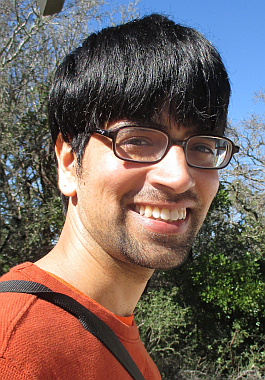
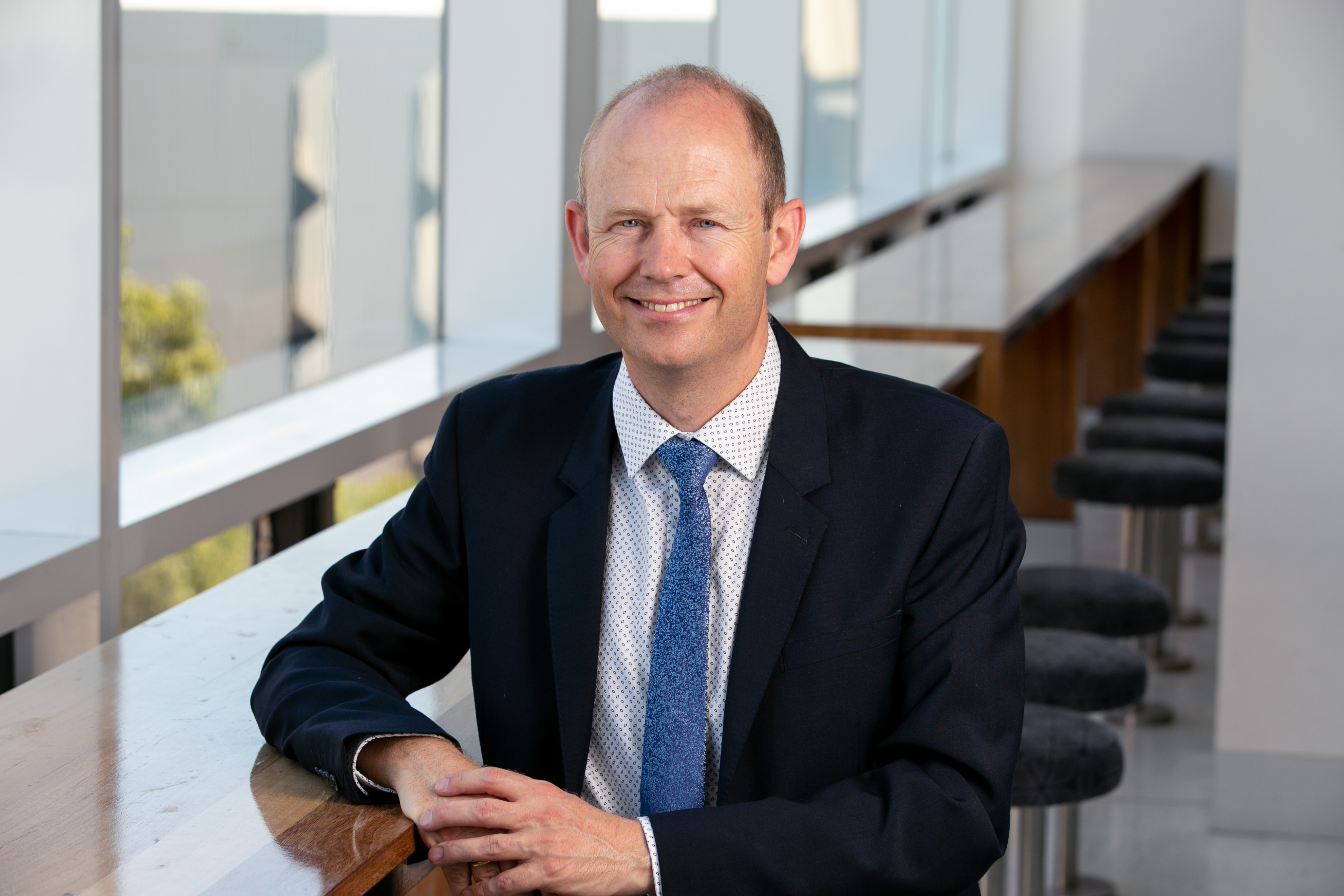
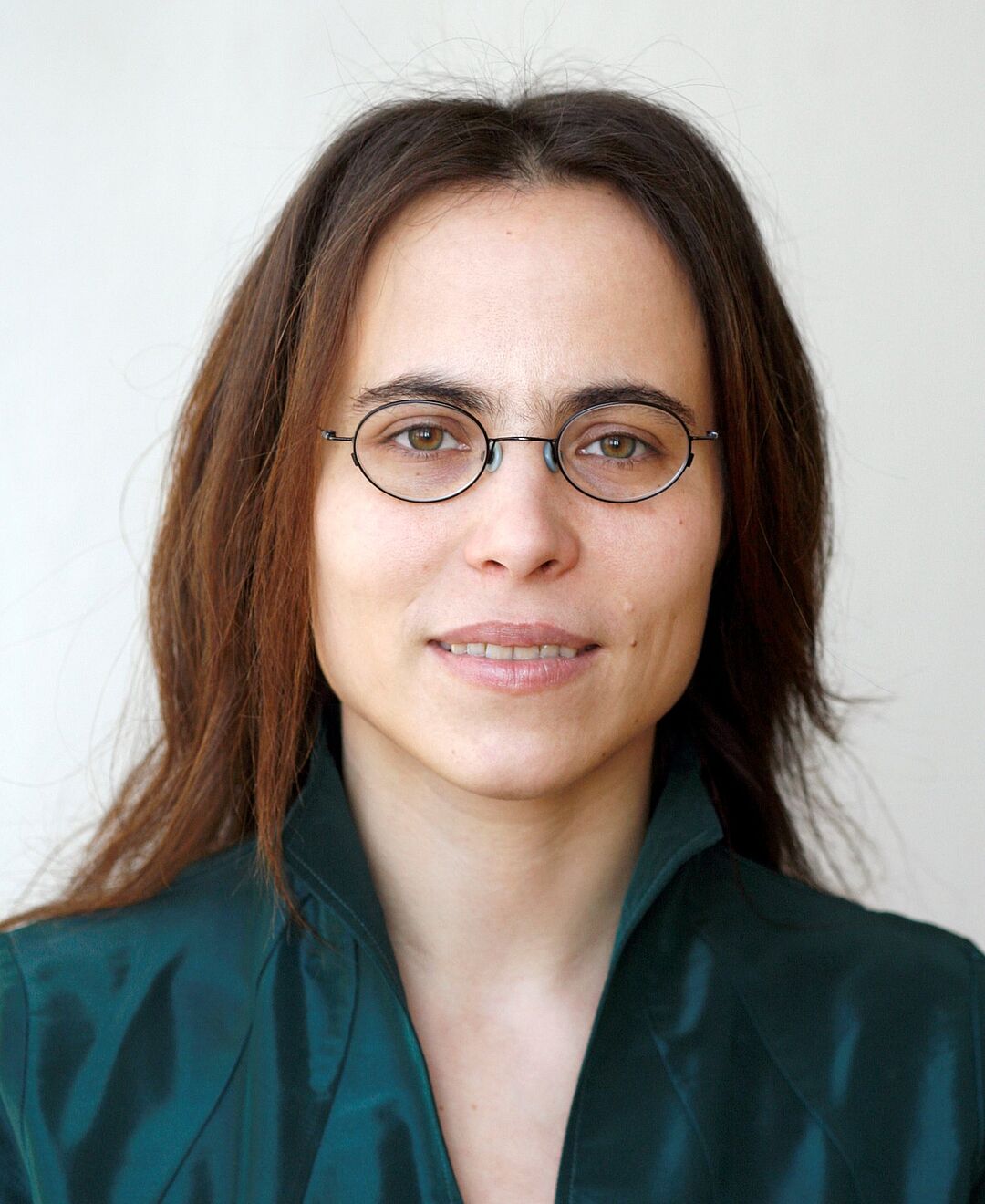
Dr Harrison Smith is a Lecturer in Digital Media & Society at the University of Sheffield's School of Sociological Studies, Politics and International Relations. He holds a PhD from the University of Toronto’s Faculty of Information, alongside MA and BA degrees in Sociology from Queen’s University, Canada. His research focuses on the political economy of data analytics, particularly in smart cities and consumer surveillance contexts. Education: PhD in Information Studies, University of Toronto (Canada) MA in Sociology, Queen’s University (Canada) BA (Hons) in Sociology, Queen’s University (Canada) Smith’s research examines how data infrastructures shape socio-economic inequality through processes like surveillance, classification, and market segmentation. Key areas include location-based marketing, 5G data infrastructures, and industry consolidation in data analytics. His work critiques how digital technologies reconfigure urban spaces and labor markets, particularly in 'smart city' contexts. Recent publications explore the metaverse's industrial implications, blockchain’s role in dispute resolution, and surveillance practices at music festivals. His teaching includes leading the module SCS2016: The Sociology of the Media. Smith’s expertise bridges media theory, urban informatics, and critical data studies, emphasizing ethical and political dimensions of digital technologies in everyday life.
Professor Heather Wardle is a distinguished social scientist at the University of Glasgow's School of Social and Political Sciences, holding dual appointments in Urban Studies & Social Policy and the School of Health & Wellbeing. With nearly twenty years of experience, she specializes in gambling research, policy, and practice, serving as co-director of Gambling Research Glasgow and leading the prestigious Lancet Public Health Commission on Gambling. Her work is supported by major funding bodies including the ESRC, Wellcome Trust, and NIHR. Professor Wardle's research explores the evolving relationship between gambling and gaming behaviors, particularly how technological changes create new risks and opportunities. She investigates how policy evidence is framed and developed, with a strong emphasis on incorporating lived experience into decision-making processes. Her work bridges academic research, public health policy, and practical interventions, focusing on understanding gambling's impact on individuals' lives and developing effective solutions. Her extensive publication record demonstrates significant contributions to understanding gambling consumption patterns, gambling harms, sports betting culture, and the intersection between gaming and gambling. Recent work shows increasing attention to mental health impacts, policy development, and evidence-based interventions, particularly regarding vulnerable populations and specific contexts like football fan culture. Professor Wardle has played leadership roles in major research initiatives including the Health Survey for England and the British Gambling Prevalence Survey. She has developed innovative approaches to measuring gambling harms and has contributed significantly to shaping gambling policy through her evidence-based recommendations. Her work extends to developing practical tools like the 'Words Matter' language guide for respectful reporting on gambling. She leads Gambling Research Glasgow and has established significant collaborations across academic, policy, and practice domains. Her research team has conducted important studies on gambling harms in social care settings, esports betting, and the relationship between gambling marketing and unplanned gambling spend. Current projects include longitudinal studies of gambling careers during the pandemic and interventions targeting at-risk male sports bettors.
Monika Rosińska is an Assistant Professor at SWPS University's Faculty of Design in Warsaw, where she serves as Head of the Department of Design Theory and Research and as Dean's Representative for Interdisciplinarity. She is affiliated with both the Institute of Social Sciences and the Design Institute within the university. Her research focuses on the socio-cultural dimensions of design practices, with particular expertise in non-anthropocentric design, science and technology studies (STS), and critical/speculative design approaches. She investigates the history of design within political, social and cultural contexts, and examines the sociology of objects in everyday life. Dr. Rosińska explores why the creative process extends beyond form and function, pursues definitions of "good design," and investigates what matters to contemporary designers. Her scholarly work reveals consistent themes across publications, with recent research increasingly focused on multi-species communities and non-anthropocentric approaches to design. Her 2019 paper "Zoepolis: Non-anthropocentric design as an experiment in multi-species care" represents a significant contribution to this emerging field, building on earlier work exploring urban revitalization and participatory design. Dr. Rosińska has curated exhibitions including "Zoepolis. Design for Plants and Animals," which serves as both research output and practical exploration of her theoretical frameworks. Her publications span from foundational works on collective behaviors ("Deindywiduacja. Socjologia zachowań zbiorowych") to cutting-edge explorations of AI in visual arts (2025). She actively contributes to academic discourse through platforms including Google Scholar, ResearchGate, Academia.edu, and ORCID, maintaining visibility across multiple scholarly networks. Her work bridges sociology and design in innovative ways that challenge traditional disciplinary boundaries.
Professor Clinton Fookes is a faculty member at the Queensland University of Technology (QUT) within the School of Electrical Engineering & Robotics . His research focuses on leveraging computer vision and artificial intelligence to develop automated systems that understand, anticipate, and interact with human behaviors, with applications in medical diagnostics, autonomous vehicles, defense, and industrial efficiency . Research areas include AI adaptability, multimodal biosignal analysis, and human-machine interaction Collaborates with CSIRO Data61, Defence Science and Technology Group, Orica, Airbus, and Sentient Vision Systems Develops systems for human action detection, infrastructure monitoring, and stress response prediction His work addresses critical challenges in AI deployment, such as environmental adaptability and reducing diagnostic errors in medical and autonomous systems. Recent publications highlight trends in self-supervised learning, zero-shot knowledge transfer, multimodal integration , and 3D reconstruction for healthcare , while exploring ethical AI use in sectors like mining and defense . Professor Fookes emphasizes interdisciplinary collaboration, bridging engineering, medicine, and social sciences to advance AI systems capable of real-world impact. His research agenda includes improving AI memory capabilities and explainability for safer, more reliable automation.
Tridas Mukhopadhyay is the Deloitte Consulting Professor of e-Business at Carnegie Mellon University's Tepper School of Business, where he has served on the faculty since 1986. His academic journey at CMU progressed from Instructor of Information Systems (1986-1987) to Assistant Professor (1987-1993), Associate Professor (1993-1997), Professor (1998-present), and Deloitte Consulting Professor of e-Business (2000-present). He also served as Director of the MS in Electronic Commerce program from 1999-2004. Ph.D. in Computer and Information Systems, University of Michigan–Ann Arbor, 1987 M.B.A. in Computer and Information Systems, Indian Institute of Management Calcutta, 1981 B. Tech. in Electrical Engineering, Indian Institute of Technology Kharagpur, 1978 Professor Mukhopadhyay's research spans multiple critical areas in information systems and technology management. His work on strategic IT use examines how organizations derive business value from information technology investments. He has conducted extensive research on business-to-business commerce, particularly focusing on e-procurement systems, web-based marketplaces, and electronic intermediation models. His cybersecurity research investigates the economic aspects of cyber security, including liability mechanisms and patch release strategies. In software engineering, he has studied productivity, quality metrics, and offshore software development contracts. His most recent publications reveal several key trends in his research trajectory. There's a growing focus on digital platform economics, examining advertising models, virtual currency systems in gaming, and sharing economy dynamics. His work increasingly incorporates behavioral aspects, studying how users respond to personalized content and how backers exert control in crowdfunded projects. Methodologically, his research employs sophisticated analytical approaches including hierarchical Bayesian models, structural equation modeling, and natural experiment designs. CART Research Frontier Award, Carnegie Mellon, 2005 Distinguished Ph.D. Alum, Michigan Business School, 2004 Best Paper, International Conference on Information Systems, 2001 Best Paper, MIS Quarterly, 1995 Xerox Research Chair, Tepper School of Business, 1988-1989 Information Systems Society Distinguished Fellow, 2012 Professor Mukhopadhyay has served on numerous editorial boards including Information Systems Research (1994-2003), Management Science (1999-2003), and MIS Quarterly (1997-1999), demonstrating his significant contributions to the field. His consulting work with major organizations including Alcoa, Chrysler, Ford, General Motors, IBM, and governmental agencies like the United States Post Office and Pennsylvania Turnpike has provided practical insights that inform his academic research. He has been actively involved in university governance through committee service including the Business Technology Faculty Search Committee and the CMU Faculty Senate. His research has been supported through various industry partnerships and academic grants, though specific grant details aren't provided in the source material. His teaching focuses on Business Computing and Strategic IT courses, reflecting his expertise in both foundational information systems concepts and strategic applications of technology in business contexts.
Jay Pujara is a Research Associate Professor in the Department of Computer Science at the University of Southern California (USC), affiliated with the Viterbi School of Engineering and the Information Sciences Institute (ISI). He directs the Center on Knowledge Graphs and leads research in artificial intelligence, specializing in knowledge graph construction, scalable machine learning, and probabilistic models. Education : PhD in Computer Science (University of Maryland, 2016), MS and BS in Computer Science from Carnegie Mellon University (2005 and 2004), with minors in Robotics, Mathematical Sciences, and Logic & Computation. Research Interests : His work focuses on probabilistic models for dynamic data, knowledge graph construction, entity resolution, and applications in NLP and social network analysis. He emphasizes scalable algorithms and real-world impact in domains like finance, climate science, and healthcare. Awards : Includes the SWSA Ten-Year Award (2023), Best Paper Awards at IUI 2019 and ISWC 2013, and grants totaling over $9M from DARPA, NSF, and industry partners. Grants & Mentorship : Principal Investigator on projects like "Artificial Domain-Understanding and Collaborative Agency" (DARPA) and "Explainable and Robust AI Agents" (NSF). Mentored over 50 students in PhD, MS, and undergraduate programs, focusing on knowledge graphs, NLP, and machine learning. Labs & Teams : Leads ISI’s Knowledge Graph and Neurosymbolic AI teams, coordinating the Open Knowledge Network (OKN) and tools like KGTK. Active in academic service, including roles on PhD admissions committees and ISI’s Space Management Committee.
Riikka Koulu is an Associate Professor of Social and Legal Implications of AI at the University of Helsinki, holding joint appointments at the Faculty of Law and Faculty of Social Sciences. She serves as Director of the University of Helsinki Legal Tech Lab, an interdisciplinary research hub focused on law, technology, and society, and is an affiliated researcher at the Alexander von Humboldt Institute for Internet and Society in Berlin. In 2025, she will be an academic visitor at Oxford University. Education: Doctor of Law (OTT), University of Helsinki (awarded November 17, 2016) Title of Docent (digitalisation of law), University of Lapland (2020-present) Riikka Koulu is a socio-legal scholar specializing in the interconnections between law, technology, and society. Her research focuses on understanding law's role in shaping and being shaped by digitalized societies. She combines doctrinal and theoretical legal analysis with empirical research from a public law perspective. Her current work examines digital public administration, AI policy and regulation, European technology regulation, and the impact of digital technologies on legal decision-making. She is particularly interested in human oversight mechanisms and interface design in automated systems. Her recent publications reveal a strong focus on the legal implications of digital transformation, with particular attention to automated decision-making in public administration, algorithmic governance, and the changing nature of legal procedures in digital environments. Her work spans theoretical explorations of legal concepts in digital contexts and practical analyses of how technology is reshaping justice systems and public administration. Scientific Recognition: Title of Docent (digitalisation of law), University of Lapland (2020) Affiliated researcher, Alexander von Humboldt Institute for Internet and Society, Berlin (2019-present) Riikka Koulu actively supervises doctoral researchers through the Doctoral Programme in Law and has secured significant research funding for multiple projects. Her current research portfolio includes the ADM-Gov project (2022-2026) on automated administration governance, the REPAIR project (2022-2025) on algorithmic system maintenance, and the DARE project (2021-2026) on inclusive digital administration design. These projects involve collaboration with international partners and interdisciplinary teams. As Director of the University of Helsinki Legal Tech Lab, Koulu leads an interdisciplinary research hub that is part of the Network of Centers (NoC). The lab serves as a focal point for research on the intersection of law, technology, and society, bringing together scholars from legal studies, computer science, social sciences, and design disciplines to address pressing challenges in digital governance.
Dr. Heini Vanninen is a postdoctoral researcher at LUT University 's School of Business and Management , specializing in Business Studies . Her research focuses on the intersection of digitalization, entrepreneurship, and internationalization within small and medium-sized enterprises (SMEs). Research Areas: Business Administration, International Business, Entrepreneurship, Digital Marketing, SMEs, Social Media. Recent publications analyze digital entrepreneurial internationalization, B2B influencer marketing strategies, and the embeddedness of small multinational enterprises. Collaborative works with scholars like Prof. Mika Gabrielsson and Dr. Joel Mero explore how SMEs leverage social media affordances for global expansion.
Harald Van Heerde is a Research Professor of Marketing at the University of New South Wales, Sydney, within the UNSW Business School's Department of Marketing. He holds roles as Editor of the Journal of Marketing and Executive Vice-Chairman/Program Director of the Marketing Science Hub at AiMark. His academic career includes positions at Maastricht University, the University of Waikato, Tilburg University, and Massey University. Education: Ph.D. in Economics (Cum Laude), University of Groningen, the Netherlands (1999) M.Sc. in Econometrics (Cum Laude), University of Groningen, the Netherlands (1995) Research Interests: Harald focuses on applying econometric models and large datasets to address critical marketing challenges. His work explores marketing mix effectiveness , brand equity , digital marketing strategies , consumer behavior in crises , and cross-industry applications such as retailing, healthcare, and entertainment. Methodologically, he emphasizes dynamic models, endogeneity correction, optimization techniques, and text mining. Articles Trends: Recent publications highlight analysis of inflation's impact on consumer spending , mobile app engagement , brand recovery post-crisis , and econometric frameworks in marketing decision-making. His work bridges theoretical advancements with practical business implications, particularly in stochastic cost industries and global market dynamics. Awards & Fellowships: 2024: AMA Fellow & Shelby/Hunt Best Paper Award 2021: Churchill Award (Lifetime Contributions) 2004–2023: 10+ paper awards including MSI/Root, Paul Green, and multiple long-term impact recognitions Advising & Grants: Currently supervising doctoral candidates Ayesha Hossain (Human Branding) and Ada Choi (consumer financial decision-making). Supervised 12 completed theses across branding, retailing, and digital marketing. Secured over AU$2 million in grants including ARC Discovery, MSI, and the Marsden Fund. His grants examine topics like brand crisis management, price war dynamics, and mobile marketing ROI. Labs & Teams: Leads the Marketing Science Hub at AiMark, a nonprofit connecting academics with household panel data. Consults for global firms including Unilever, Edeka, and AZTEC. His work emphasizes collaborative data-driven research with industry partners.
Nina Baur is a Full Professor (W3) of Methods of Social Research at the Department of Sociology, Technische Universität Berlin, within Faculty VI: Planning Building Environment. Her academic roles include Director of the Global Center of Spatial Methods for Urban Sustainability (GCSMUS) and leadership in interdisciplinary research initiatives such as the Collaborative Research Center 'Re-Figuration of Spaces' (CRC 1265). She holds a Ph.D. (Dr. rer. pol.) in Sociology from Otto-Friedrich-University of Bamberg (2005) and a Master’s equivalent (Diplom-Soziologin) from the same institution (1999). Her research focuses on social science methodology, spatial methods, historical sociology, and economic sociology. Key areas include process-oriented methodology, innovation studies, and global methodological challenges. Notable projects involve analyzing commodity chains, urban sustainability, and interdisciplinary research collaboration between sociology, geography, and urban planning. She has received awards such as the DGS Dissertationspreis (2007) and the E.ON Kulturpreis Bayern (2005). Her international collaborations include visiting professorships at IIT Roorkee (India) and Japan Women’s University, and leadership in global academic networks via DAAD and BCGE programs. She serves on editorial boards of journals like Historical Social Research and Kölner Zeitschrift für Soziologie und Sozialpsychologie . Her publications emphasize methodological innovation, cross-cultural research, and spatial sociology. Recent work addresses decolonizing methodologies and global sustainability through spatial analysis frameworks.
Murali Mani is a Professor in the Department of Computer Science, Engineering, and Physics at the College of Innovation and Technology, University of Michigan-Flint. He is actively involved in teaching courses such as Database Design (CSC 384, CSC 584) and Independent Graduate Study in Computer Science (CSC 591), and serves as Principal Investigator on multiple research grants focused on computing education and data science. His research interests span database systems, data provenance, generative AI for data augmentation, computing education, and the societal impact of technology . He has developed educational tools including epidemiology calculators and market basket analysis modules to support interdisciplinary learning. His work emphasizes integrating computing skills across disciplines such as health sciences and management. The 15 most recent scholarly contributions reflect a strong focus on data management, AI-augmented data curation, educational technology, and the cognitive aspects of learning programming. These publications appear in venues such as VLDB, IEEE FIE, and ACM conferences, with several under review or in preparation for top-tier journals like Communications of the ACM and the VLDB Journal. Scientific Awards: No awards explicitly mentioned in the provided text. Advising and Grants: Murali Mani actively mentors students through independent graduate studies and collaborative research projects. He has secured funding from the National Science Foundation (SGER grant on provenance metadata) and internal university sources, including the CIT/CHS Joint Grant and the Office of Research at UM-Flint, supporting projects on civic literacy, computational skills integration, and AI for social science data archiving. Labs and Teams: While no formal lab name is mentioned, Murali Mani leads a research group focused on data systems and computing education, collaborating with colleagues across departments and institutions. He contributes to initiatives such as the Michigan Institute for Data & AI in Society (MIDAS) and the Academic Data Science Alliance (ADSA), and has presented at conferences including IASSIST, FIE, and ICCTAC.
Maja KORICA is a Full Professor of Strategic Management at IÉSEG School of Management in France. She holds a DPhil in Management Studies from the University of Oxford. Her academic roles include previous positions as Reader in Management and Organisation at Warwick Business School (2021–2023), Assistant Dean (2017–2019), and earlier roles as Associate/Assistant Professor there (2013–2021). Her research focuses on strategy, sustainability, organizational behavior, healthcare management, and pedagogy in management education. She has contributed to understanding managerial work dynamics, knowledge mobilization in healthcare, and innovative teaching methodologies like structured shadowing. Her research spans topics such as CSR, creative industries, and the intersection of aesthetics and organizational style. She has published widely in journals like British Journal of Management , Organization Science , and Management Learning , emphasizing practical and theoretical contributions to management studies. Notable works include analyses of managerial mood work in creative settings and attentional practices of healthcare CEOs. KORICA’s teaching spans undergraduate and postgraduate programs, including Responsible Leadership and International Business Strategy. She has advised on organizational decline in alternative structures, such as coworking cooperatives.
Dr. David Wright is a Professor in the Department of English and Technical Communication at Missouri University of Science and Technology (Missouri S&T). He joined the faculty in 2007 after prior roles at NASA’s Education Project, Oklahoma state government, and the software industry. He holds a Ph.D. in Technical Communication (Oklahoma State University, 2007), an M.S. in Higher Education Administration (1996), and a B.S. in Organizational Psychology (1993), all from Oklahoma State University. His research focuses on smart home technology and artificial intelligence, particularly examining human-AI interaction through usability and user experience (UX) testing. He also explores technology diffusion, technical communication practices in emerging technologies, and educational methodologies for technical fields. His work integrates interdisciplinary approaches, blending engineering, sociology, and computer science. Recent publications highlight his contributions to IoT usability, smart home adoption challenges, and the intersection of AI ethics with virtual assistants. He has also authored studies on knowledge graph design, technical documentation in software development, and educational initiatives in computer science and healthcare. Dr. Wright teaches courses in technical writing, usability studies, and web-based communication. His academic service includes curriculum development and advising on technical communication pedagogy. While no specific awards are listed, his extensive publication record reflects sustained scholarly impact in his fields.
Prof. Dr. Christina Raasch is Professor of Digital Economy at Kühne Logistics University (KLU) and holds a joint appointment with the Kiel Institute for the World Economy (IfW) . Since 2017 she has led research and teaching on how digitalization reshapes innovation processes, enterprise crowdfunding, and customer-driven disruptive innovation. Education Habilitation (Dr. habil.) in Business Administration, Hamburg University of Technology (TUHH), 2012 PhD in Management, University of Erlangen-Nuremberg, 2006 MSc (lic. oec.) in Economics & Management, University of St. Gallen (HSG), 2002 Visiting Researcher, MIT Sloan School of Management, 2010-2012 Research Interests Prof. Raasch’s work centers on digital transformation of innovation . She investigates how firms leverage digital technologies—ranging from AI to crowdfunding platforms—to enhance idea generation, evaluation, and implementation. Core themes include: Open & User Innovation: understanding when and how users become valuable innovators inside and outside firms. Disruptive Innovation Dynamics: analyzing whether disruptive ideas stem from users or producers under varying environmental conditions. Enterprise Crowdfunding: designing decentralized decision-making systems that mitigate hierarchy-induced biases. Publication Trends Her 70+ publications reveal a systematic exploration of demand-side innovation . Early work modeled welfare impacts of user innovation; recent studies use large-scale field data from Siemens and other multinationals to uncover cognitive and social biases in idea evaluation. A consistent thread is bridging micro-level behavioral insights with macro-level policy and strategy implications. Scientific Awards & Honors Fellow of the Open and User Innovation (OUI) Society Host of the 2023 OUI Conference at KLU Research Funding & Industry Collaboration Current grants exceed €2 million and include: FabCity-Citizen Extension (2025-2026) – decentralized urban innovation funded by the German Federal Ministry of Education and Research. EvaluationShirking (2024-2026) – idea evaluation biases in collaboration with a global industrial manufacturer. Idea Evaluation in Democratized Innovation (2019-2023) – DFG-funded project on enterprise crowdfunding design. Labs, Teams & Knowledge Transfer Prof. Raasch leads the Open & User Innovation Research Group at KLU, supervising doctoral researchers and managing industry partnerships with firms in automotive, high-tech, and logistics sectors. She regularly contributes to policy panels and media outlets such as Harvard Business Manager and Springer Professional .
Dr. Nicholas A Smith is an Assistant Professor of Psychology at The University of Texas at Arlington, specializing in Industrial-Organizational Psychology and Workplace Diversity. He holds a PhD in Applied Psychology from Portland State University (2019), an MS in I/O Psychology from the University of Central Florida (2014), and a BS in Psychology from the same institution (2012). His research focuses on workplace diversity, mental health equity, and labor rights, with recent projects examining the impact of overtime legislation on Latinx agricultural workers and stigma reduction in service industries. He has secured grants totaling over $1.2 million, including a 2024 EPA grant for air quality advocacy in underserved communities and a Robert Wood Johnson Foundation-funded study on labor rights. Dr. Smith serves on editorial boards for Applied Psychology: An International Review and reviews for the Society for Industrial and Organizational Psychology. His teaching includes courses on Business Psychology and Research Methods. He actively engages in international collaborations, presenting at conferences in France, Spain, and Lithuania, and advocates for inclusive workplace policies through community-engaged research. His scholarly contributions span over 20 peer-reviewed articles, addressing topics from allyship strategies to stereotype content intersections. Despite no explicitly listed awards, his impactful grant-funded work reflects recognition of his research contributions.