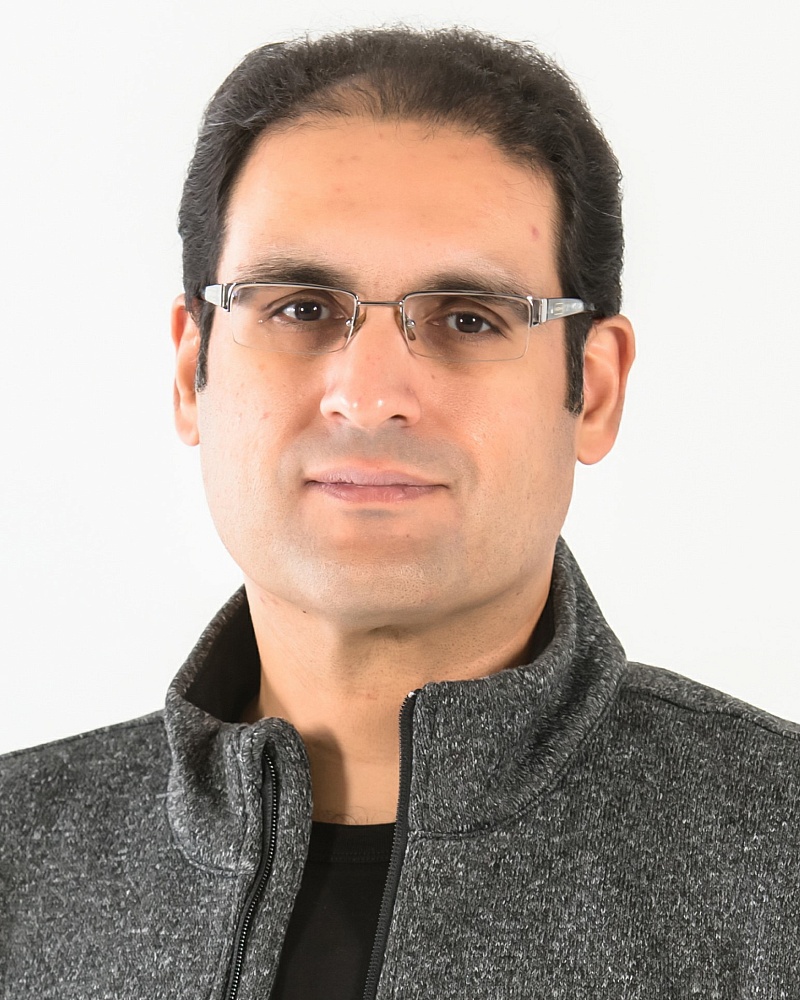
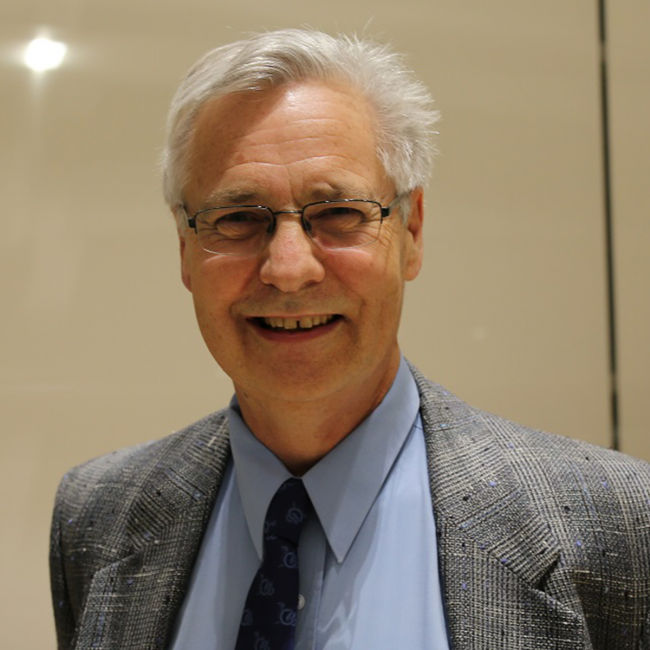
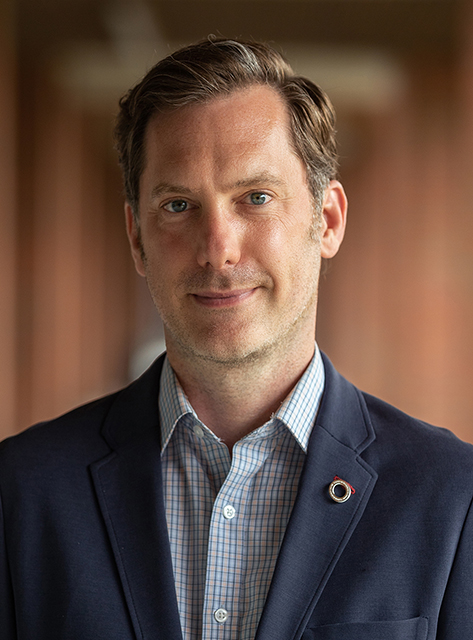
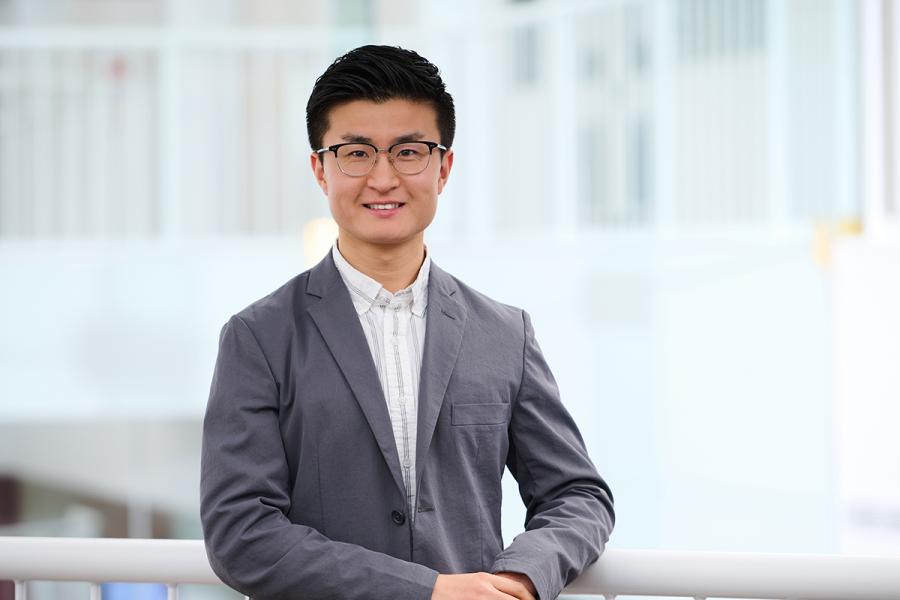
Dr. Anne-Marie Nicol is an Associate Professor of Professional Practice in Health Sciences at Simon Fraser University. Her multidisciplinary research spans health communication, toxicology, social marketing, risk perception, and risk assessment, with emphasis on environmental and occupational health exposures. She leads CAREX Canada, a national carcinogen surveillance program, and has developed public health campaigns including Wash with Care and Tick Talk. Her work focuses on translating scientific information about carcinogens to policymakers and cancer prevention stakeholders. She teaches Human Health Risk Assessment, Toxicology for Public Health, and Health Communication. Her research has been funded by CIHR, Michael Smith Foundation, and Canadian Cancer Society. Current projects include studies on radon exposure, infodemic communication strategies, and community resilience to wildfire smoke. She holds a BA from SFU, MES from York University, and PhD from UBC.
Dr. Bon Woo Koo is an Assistant Professor at the School of Urban and Regional Planning , Toronto Metropolitan University. His expertise lies in geospatial urban analytics, walkability, and GIS applications, focusing on urban design for public health equity and innovative data science tools. He holds a PhD in City & Regional Planning from Georgia Institute of Technology, a Master’s in Landscape Architecture from Seoul National University, and a Bachelor’s in Interior Design from Kookmin University. Education: PhD in City and Regional Planning, Georgia Institute of Technology Master of Landscape Architecture, Seoul National University Bachelor of Interior Design, Kookmin University Research Interests: Dr. Koo investigates urban environments’ impact on health and well-being, equity in environmental amenities (e.g., tree canopies), and advanced GIS techniques. He develops automated audit methods for walkability and explores spatial modeling for urban sustainability. His work bridges data science with policy, contributing to CDC health surveillance and smart city initiatives. Publications: His research appears in journals like Landscape and Urban Planning , Environment and Behavior , and Health and Place , with a focus on walkability audits, urban tree equity, and audio-based pedestrian sensing. Recent work addresses post-pandemic mental health and broadband equity strategies. Professional Engagement: He has advised the CDC’s technical panel on leveraging big data for health policy, presented at conferences like the Association of Collegiate Schools of Planning, and collaborated with institutions like Universitas Gadjah Mada and the Atlanta Regional Commission.
Dr. Umar Ruhi is a Full Professor and Ian Telfer Teaching Fellow at the Telfer School of Management, University of Ottawa, where he also serves as Vice-Dean of Undergraduate Programs. He holds a B.Sc. in Computer Science from the University of Toronto, an MBA from McMaster University, and a Ph.D. in Information Systems and Management Science from McMaster's DeGroote School of Business. His teaching spans undergraduate and graduate programs, covering information systems, cybersecurity management, and interdisciplinary courses in digital transformation. Research Focus: Professor Ruhi's work intersects information systems and knowledge management, with current emphasis on: Consumer health informatics and personal health records Digital misinformation countermeasures and tool usability Human-AI collaboration frameworks and governance Learning analytics and adaptive gamification in education Social computing and enterprise applications His research has resulted in commercial patents and practical implementations across industries. Research Recognition & Funding: Professor Ruhi has secured significant research funding, including: Canadian Heritage grant ($68,160) for disinformation research Multiple MITACS grants ($30,000 each) for AI, blockchain, and health tech projects Telfer Education Excellence Fellowship ($45,000) for learning analytics Noteworthy recognitions include the 2012 Best Dissertation Award from the German Society for Online Research and conference best paper awards. Academic Leadership: Beyond research, Professor Ruhi leads pedagogical innovation through his Ian Telfer Teaching Fellowship, exploring generative AI applications in education. His extensive consulting portfolio includes e-government portals, UX design, and knowledge management systems. As Vice-Dean, he oversees undergraduate program development and strategic initiatives.
Eric Zvaniga serves as an Adjunct Professor in the Tourism & Hospitality Management department within the Faculty of Management at the University of British Columbia, Okanagan Campus. His academic focus spans managerial thought, ethics, management information systems, and negotiation skills for undergraduate and international student cohorts across UBC campuses. Education: Doctor of Business Administration, Tourism (2020), Athabasca University MBA in Project Management (2009), Athabasca University Post Baccalaureate in Management (2006), Athabasca University Research Focus: Dr. Zvaniga investigates tourists' experiences across seasonal settings to develop destination involvement and place attachment theories. His work bridges academic research with industry transformation in the global tourism sector through interdisciplinary approaches combining management theory, behavioral analysis, and strategic planning. Publication Analysis: Recent publications (2015-2020) demonstrate concentrated expertise in tourism destination dynamics, examining lifestyle influences, business intelligence applications, and psychological attachment mechanisms. Earlier works (1979-1995) reveal foundational contributions to information systems in healthcare and financial technology, showcasing an evolving research trajectory from technical systems to human-centered tourism management. Professional Integration: Complementing his academic role, Zvaniga leverages executive experience as Global Data Strategy and Governance Manager at Cisco Systems, Inc., alongside entrepreneurial engagements in tourism strategy development where he examines organizational vision creation and long-range sustainability planning.
Dr. Christopher Collins is a Professor of Computer Science at Ontario Tech University, leading the Visualization for Information Analysis Lab (vialab). He holds a PhD from the University of Toronto (2010) and focuses on interdisciplinary research in information visualization, human-computer interaction, and natural language processing. His work addresses challenges in information overload, text analytics, and novel interfaces such as touch, pen, VR/AR. Collins' research has been featured in top-tier venues like ACM CHI and IEEE Transactions on Visualization and Computer Graphics, earning honorable mentions and over $3M in funding as sole PI. He serves on the IEEE VIS Executive Committee and Board of Governors at Ontario Tech University. Education: PhD in Computer Science, University of Toronto (2010) MSc in Computer Science, University of Toronto (2004) BSc (Hons) in Computer Science, Memorial University (2001) Research Interests: Collins' work spans information visualization , pen+touch interfaces , visual analytics , and text-driven systems . He explores how interactive technologies can democratize complex data analysis, particularly in education, healthcare, and creative domains. Recent projects include gaze-driven learning tools, context-aware camera interfaces, and bias-mitigating product review analysis. Awards: ACM CHI Honorable Mention Award IEEE VIS Honorable Mention Award Grants & Impact: Secured $3M+ in research funding. Media coverage includes New York Times and CBS Sunday Morning for innovations in visualization and text analytics. Teaches courses in human-computer interaction, computer graphics, and information visualization. Labs & Collaborations: vialab develops tools like Lexichrome , ConToVi , and NeuroSight . Active in IEEE Visualization and ACM Interactive Media communities. Collaborates with academia and industry globally.
Dr. Anatoliy Gruzd is a Professor and Canada Research Chair (Tier 2) in Privacy Preserving Digital Technologies at the Department of Information Technology Management, Faculty of Communication and Design, Toronto Metropolitan University. He also serves as Director of Research at the Social Media Lab, where he leads interdisciplinary research on social media, online communities, misinformation, and information privacy. His research explores how digital platforms shape communication, information sharing, and public discourse, with a strong focus on computational methods to analyze social media data. He has received major funding from Canada’s Tri-Council agencies (SSHRC, NSERC, CIHR), CFI, and the World Health Organization, underscoring the societal relevance of his work, especially during the global infodemic. Social Media Online Communities Misinformation and Infodemics Information Privacy Digital Technologies Data Stewardship The 15 most recent publications reflect a consistent focus on understanding digital risks such as misinformation, algorithmic bias, online violence, and privacy challenges. These works span disciplines including public health, computer science, communication, and ethics, often using network and behavioral analysis to uncover patterns in large-scale social media data. His research trend emphasizes societal impact, policy relevance, and interdisciplinary collaboration. Canada Research Chair in Privacy Preserving Digital Technologies, Tier 2, 2020 Open Access Wall of Fame Award, Toronto Metropolitan University Library, 2020 Member, Royal Society of Canada College of New Scholars, Artists and Scientists, 2017 Canada Research Chair in Social Media Data Stewardship, Tier 2, 2015 Best Paper Award, Internet, Policy & Politics Conference, Oxford, 2014 Dr. Gruzd has secured substantial research grants as Principal Investigator from SSHRC, NSERC, CIHR, CFI, WHO, and Global Affairs Canada. His projects include studying privacy-preserving technologies, anti-social behavior online, infodemic management, and online violence against women. He actively mentors students and collaborates with international researchers, though specific advisees are not listed. His leadership in the Social Media Lab fosters innovation in digital methods and ethical data practices. The Social Media Lab, under his research direction, functions as a hub for interdisciplinary scholarship on digital society, bringing together researchers from communication, computer science, public health, and policy. The lab conducts cutting-edge research on misinformation, platform governance, and digital well-being, often in partnership with public and international organizations.
Kyunghee Lee serves as an Assistant Professor of Information Systems at McGill University's Desautels Faculty of Management, teaching core analytics courses including Data Handling and Coding for Analytics (INSY 336) and Data Mining for Business Analytics (INSY 446). Previously, he held an Assistant Professor position at Wayne State University's Mike Ilitch School of Business. Dr. Lee earned all his academic credentials from the Korea Advanced Institute of Science and Technology (KAIST), completing a PhD and MS in Managerial Engineering with Information Systems specialization, and a BS in Electrical Engineering. His research program critically examines digital platform ecosystems through three interconnected lenses: the business value of IT in organizational contexts, IT-enabled business model innovation , and societal transformations driven by technology. He employs advanced computational methodologies to investigate how information systems reshape interorganizational relationships and strategic outcomes, with particular attention to platform-mediated economic activities. Analysis of Dr. Lee's recent publications reveals consistent focus on real-world business transformations, with studies spanning cross-border acquisition dynamics, urban transportation disruption by ride-hailing services, and social commerce mechanics. His work in premier journals like MIS Quarterly demonstrates rigorous empirical approaches to understanding how digital platforms create value and reshape industry structures across diverse economic sectors. While specific advising activities and grant funding details are not documented in available materials, Dr. Lee's research trajectory indicates active engagement with pressing business challenges through methodologically sophisticated investigations of information systems phenomena.
Tesh Dagne is an Associate Professor in the School of Public Policy and Administration at York University's Faculty of Liberal Arts & Professional Studies. He holds the Ontario Research Chair in Governing Artificial Intelligence and serves as a member of the graduate faculty in Law, Public Policy, and Science & Technology Studies. His research examines governance frameworks for emerging technologies with particular focus on AI applications in health, agriculture, and environmental sectors. His principal research domains include: Legal and ethical frameworks for AI governance Intellectual property rights in data pipelines Privacy norms in digital innovation Geographical indications for traditional knowledge 3D printing regulations Analysis of his scholarly output reveals sustained investigation into the intersections of intellectual property law with emerging technologies, including significant contributions to understanding data governance in agriculture, health technology regulation, and copyright implications in additive manufacturing. His work consistently addresses equity concerns in technological development. Dr. Dagne supervises graduate students through interdisciplinary programs and leads research projects funded by Connected Minds, focusing on governance challenges in AI-assisted health devices and sustainable digital agriculture.
Dr. Ebenezer Miezah Kwofie holds the position of Assistant Professor within the Department of Bioresource Engineering at McGill University's Macdonald Campus, where he also serves as Co-Director of the Integrated Food and Bioprocess Engineering Program. His research focuses on sustainable food systems, with particular emphasis on agri-food life cycle assessment and circular bioeconomy development in the Canadian context. Dr. Kwofie's primary research interests include agri-food life cycle assessment , sustainable food systems , and circular bioeconomy . He investigates environmental impacts such as greenhouse gas emissions and resource use across food supply chains, while also considering nutritional outcomes and food security dimensions. His methodological approach frequently employs life cycle sustainability assessment (LCSA), multi-criteria decision analysis (MCDA), and systems modeling to evaluate trade-offs and identify sustainable pathways for agricultural and food processing systems. Analysis of Dr. Kwofie's recent publications (2023-2025) shows a growing emphasis on integrating environmental and health considerations in food system analysis. His work increasingly applies advanced computational methods, including deep learning, to develop decision support tools for sustainable healthy diets. Key research themes include circular bioeconomy accounting, plant-based dietary transitions, and the development of holistic frameworks for net-zero food systems, with many studies focusing on Canadian case examples. No scientific awards, fellowships, or major honors were documented in the provided faculty profile and related materials. While Dr. Kwofie's role as Assistant Professor and Co-Director of the Integrated Food and Bioprocess Engineering Program indicates involvement in graduate education, specific details about current or past students were not provided. Similarly, information about research grants, funding sources, or collaborative projects was not included in the available text. The source materials did not specify any dedicated research laboratory or core research team associated with Dr. Kwofie. However, his research focus suggests collaboration within McGill's Department of Bioresource Engineering and potentially with external partners in the Canadian agri-food sector.
Wenxi Pu is the Associate Dean of Teaching & Learning and Assistant Professor of Management Information Systems at the Asper School of Business, University of Manitoba. He holds the Associates Fellow in Innovation title. Previously, he earned his Ph.D. from Clemson University, where he received multiple teaching awards. His research focuses on self-identity, stigma, culture, and artificial intelligence, with publications in journals like Strategic Entrepreneurship Journal and Personnel Psychology. Education: Ph.D. from Clemson University. Research Interests: Self-Identity, Stigma, Culture, Artificial Intelligence, Digital Technologies, Entrepreneurship, and Organizational Culture. His work examines how digital technologies like AI interact with human behavior and societal structures. Teaching: Specializes in Management Information Systems and Business Analytics, integrating cutting-edge technologies into courses. He has developed four MIS courses at Asper since 2020. Key Contributions: Exploring national entrepreneurial culture shifts via machine learning, analyzing political affiliations' impact on hiring, and studying climate change media coverage using topic modeling. Recent work includes studies on veteran hiring stigma and digital self-continuity. Scientific Awards: Recognized with multiple teaching awards during his tenure at Clemson University. Grants/Advising: No student names listed, but actively advises on digital ethics and innovation. Collaborates with Winnipeg-based companies to develop AI-powered educational platforms. Labs/Teams: Engaged in interdisciplinary research groups focusing on AI ethics and organizational digital transformation within the Asper School of Business.
Jacquelyn Burkell is an Associate Professor in the Faculty of Information and Media Studies at Western University and currently serves as Associate Vice-President (Research). She holds a PhD in Psychology (Cognitive Science) from Western. Her research focuses on the cognitive and social dimensions of human-technology interaction, including privacy attitudes, digital surveillance, and information behavior. She has led SSHRC partnership grants exploring AI in justice systems and youth privacy online. Notable contributions include studies on privacy policy design, court form accessibility, and the ethical implications of dark patterns in digital interfaces. Dr. Burkell has held leadership roles, including Assistant Dean of Research in FIMS and chair of the Associate Deans (Research) group. Her work spans academic governance, e-access to justice frameworks, and digital literacy advocacy. PhD in Psychology (Cognitive Science), Western University SSHRC Partnership Grants: AI in Justice Systems; Youth Equality & Privacy Key Projects: Privacy policy readability for youth; Dark patterns in digital interfaces Committee Roles: 2016 URB Task Force Steering Committee Research emphasizes empirical studies on technology-mediated interactions, with applications in health information systems, legal documentation, and public policy. Her interdisciplinary approach bridges cognitive science, law, and technology to address societal challenges such as algorithmic bias and privacy erosion. Awards: None explicitly listed in text Grants: Multiple SSHRC grants, including partnership grants Labs/Teams: Collaborates with interdisciplinary teams on AI ethics, digital justice systems, and health informatics. Engages in policy advocacy through initiatives like the Revisiting e-Justice Framework and Digital Inclusion Research.
Dr. Quinn Grundy is an Associate Professor at the Lawrence Bloomberg Faculty of Nursing, University of Toronto, with cross-appointments to the Leslie Dan Faculty of Pharmacy. She serves as Director of the WHO Collaborating Centre for Governance, Accountability, and Transparency in the Pharmaceutical Sector and Associate Director of Nursing for the Collaborative Centre for Climate, Health, and Sustainable Care. Her research focuses on the interactions between medically-related industries and public health systems, particularly examining pharmaceutical and medical device company influence on healthcare delivery and policy. Dr. Grundy completed her PhD in Nursing at the University of California, San Francisco (2015) and earned her BScN from the University of Alberta (2009). She completed postdoctoral training at the University of Sydney's School of Pharmacy and has been a Registered Nurse with the College of Nurses of Ontario since 2020. Prior to her current position, she served as Assistant Professor at the Lawrence Bloomberg Faculty of Nursing (2019-2025) and held research fellowships with the WHO Collaborating Centre. Her research spans pharmaceutical industry marketing practices, conflicts of interest in healthcare, health policy development, and nursing practice. She is particularly known for her book 'Infiltrating Healthcare: How Marketing Works Underground to Influence Nurses' (Johns Hopkins University Press, 2018), which details how registered nurses interact with pharmaceutical and medical device company representatives. Her work examines how industry relationships shape healthcare delivery, evidence generation, and policy development, with particular attention to transparency mechanisms and governance structures. Analysis of Dr. Grundy's recent publications reveals a consistent focus on industry influence in healthcare, with particular attention to transparency mechanisms like the Open Payments database, pharmaceutical marketing practices, conflict of interest management, and governance structures in global health initiatives. Her work employs diverse methodologies including qualitative analysis, scoping reviews, and policy analysis to examine how commercial interests intersect with healthcare systems across multiple contexts including nursing, pharmacy, and public health policy. Dorothy M. Pringle Award for Excellence in Nursing Research (2022) Graduate Teaching Excellence Award (2021) Award for Teaching that Intellectually Challenges Students (2020) Emerging Nurse Researcher Award (2020) Silver Medal for 'Infiltrating healthcare' (2019) Dr. Grundy leads significant research initiatives through her directorship of the WHO Collaborating Centre, where she develops and implements strategies to improve governance and transparency in pharmaceutical sector interactions with healthcare systems. Her work bridges academic research with practical policy development, focusing on creating sustainable health technology systems through evidence-based approaches. She has secured funding for multiple projects examining industry influence across different healthcare contexts and has developed frameworks for improving transparency in healthcare guideline development.
Hamid Mehmood serves as an Adjunct Assistant Professor at McMaster University's School of Earth, Environment & Society, contributing to interdisciplinary environmental and societal research through computational methods. His scholarly focus spans multiple domains: Environmental Science (flood/reservoir mapping, carbon cycle analysis) Geospatial Informatics (GNSS/WLAN positioning, Landsat/GIS platforms) Machine Learning (neural networks for urban/environmental applications) Public Health (AMR, cardiovascular coping, clinical trials) ICT for Development (Urdu systems for farmers, mobile scaling) Recent publications demonstrate a shift toward urgent global challenges: 2024 machine learning-driven urban slum mapping in Indonesia, 2022 environmental health reviews on antimicrobial resistance, and 2021 geospatial platforms for flood management. His work consistently bridges technical innovation (e.g., Google Earth Engine, IVIG trials) with socio-economic contexts in Pakistan, Saudi Arabia, and Southeast Asia, while earlier research (2013-2015) established foundations in neural network-optimized positioning systems.
Hai Wang serves as Professor in the Department of Finance, Information Systems, and Management Science at Saint Mary's University's Sobey School of Business, with an additional Adjunct Professor appointment in Dalhousie University's Faculty of Computer Science. His career progression from Assistant Professor (2004) to Associate Professor (2010s) to current full Professor demonstrates sustained academic impact within Canadian business education. His educational foundation includes: B.Sc. in Computer Science, University of New Brunswick (1995) M.Sc. in Computer Science, University of Toronto (1997) Ph.D. in Computer Science, University of Toronto (2004) Professor Wang's research integrates technical data science with business applications , featuring core interests in Big Data, Business Intelligence, and Knowledge Management. His work emphasizes practical implementation frameworks for enterprises, particularly focusing on Shared Services optimization and SME data analytics , while maintaining strong connections to Machine Learning and Database Management methodologies. This interdisciplinary approach bridges computer science rigor with business decision-making needs. Analysis of his recent publications (2020-2023) reveals three dominant trajectories: (1) Knowledge Management applications in cybersecurity and small business contexts, (2) Pedagogical innovations in database and business analytics education (including no-code approaches), and (3) Predictive analytics for shared services operations. His work consistently demonstrates translational value from academic research to business practice. His scientific recognition includes: Decision Sciences Journal of Innovative Education Best Teaching Brief Award (2011) Research funding from NSERC supports his ongoing work, while his teaching portfolio spans foundational courses like Business Applications Programming and advanced topics including Business Intelligence and Data Visualization. His mentorship extends through course-based projects and textbook authorship, though formal doctoral advisees aren't documented in public profiles. Current course offerings (2023-2024) confirm active classroom engagement across undergraduate, MBA, and Master's programs. Professor Wang maintains significant scholarly output through textbook development and conference leadership, with research increasingly addressing real-world challenges in business data ecosystems while advancing information systems education methodologies.
Dr. Yufei Yuan is a Professor in Information Systems at the DeGroote School of Business, McMaster University. Holding a Ph.D. in Computer Information Systems from the University of Michigan and a B.S. in Mathematics from Fudan University, he is a leading scholar in Information Systems research. Role : Wayne C. Fox Chair in Business Innovation (2002-2008) Recognition : Faculty Research Excellence Award (2009), Professional Achievement Award (2011), and inclusion in Who’s Who in Canada (since 2004) Research Focus Dr. Yuan's research spans Artificial Intelligence, Big Data Analytics, Information Security, and Healthcare Systems . Current projects examine: Conversational agents' impact on employee job identity AI-driven home healthcare for older adults Risk analysis for security breaches and misinformation Social commerce dynamics in live streaming platforms Academic Contributions His work appears in top-tier journals like MIS Quarterly and Management Science, with funding from NSERC and SSHRC grants. Key themes include: Digital trust and privacy Emergency response systems Human-AI collaboration Mobile commerce innovation Awards Wayne C. Fox Chair in Business Innovation Faculty Research Excellence Award Professional Achievement Award (Fairchild Television) Inclusion in Who’s Who in Canada Dr. Yuan actively mentors students, fostering real-world problem exploration. His lab leads research on conversational agents, pandemic management systems, and digital trust mechanisms.