Christoph Frei is a Professor and Chair of the Department of Mathematical and Statistical Sciences at the University of Alberta. He holds a PhD in mathematical finance from ETH Zurich and previously worked as a researcher at École Polytechnique in Paris. His research focuses on quantitative finance, risk management, and mathematical economics, with applications to algorithmic trading, credit risk, and digital currencies. Education: PhD in Mathematical Finance, ETH Zurich Postdoctoral Researcher, École Polytechnique (Paris) Bachelor/Master in Mathematics, ETH Zurich His work bridges academia and industry through collaborations with institutions like ATB Financial, Canadian Western Bank, and the Federal Reserve System. Key research interests include over-the-counter markets, financial regulation, and machine learning applications in risk prediction. Frei has received notable recognition, including the Best Paper in Asset Pricing Award (2019). Current industry partnerships include AI-driven customer risk prediction projects with ATB Financial and credit risk analysis with Canadian Western Bank. He actively contributes to professional organizations like PRMIA Edmonton and advises on financial technology innovation. Research grants come from NSERC, SSHRC, and Mitacs. His consulting roles have spanned risk modeling at UBS and Credit Suisse, emphasizing practical applications of theoretical frameworks.
John G. Lynch, Jr. is University of Colorado Distinguished Professor at the Leeds School of Business, University of Colorado-Boulder. He also serves as Inaugural Director of the Initiative for Global Business Impact and is affiliated with the Center for Research on Consumer Financial Decision Making. Previously, from 2022-2024, he served as Executive Director of the Marketing Science Institute, a nonprofit think tank bridging industry and academia. He has held prestigious faculty positions at University of Florida (1979-1996) as Graduate Research Professor and at Duke University's Fuqua School of Business (1996-2009) as Roy J. Bostock Professor of Marketing. Lynch received his BA in economics, MA in psychology, and PhD in psychology from the University of Illinois at Urbana-Champaign. His academic journey spans over four decades with significant contributions to consumer behavior research. He is the founding Director of the Center for Research on Consumer Financial Decision Making and founding co-chair of the Boulder Summer Conference on Consumer Financial Decision Making. He served on the Academic Research Council of the US Consumer Financial Protection Bureau from 2017-2020. Lynch's research focuses on the cognitive psychology of consumer decision-making, particularly consumer financial decision-making since joining CU in 2009. His work spans consumer financial decision making, financial knowledge and well-being, planning for money and time, and research methodology validity. His publications reveal a strong emphasis on financial education effectiveness, couples' financial responsibility division, retirement savings behavior, and methodological rigor in marketing research. The recent publications show increasing focus on financial education, privacy regulation, statistical methodology, and the intersection of financial and physical health. Lynch has received numerous prestigious awards including the 2025 American Marketing Association-Irwin-McGraw Hill Award for Distinguished Marketing Educator of the Year (the highest honor in academic marketing), Paul D. Converse Award for Outstanding Contributions to Marketing Science, and the Society for Consumer Psychology's Distinguished Scientific Achievement Award. He is a Fellow of the American Marketing Association, Association for Consumer Research, and American Psychological Association/Society for Consumer Psychology - one of only six scholars worldwide to achieve this triple distinction. As an educator, Lynch has taught undergraduate Principles of Marketing, Marketing Research, and Senior Seminar in Marketing at CU. He has also taught MBA electives on market intelligence and PhD courses on marketing strategy and experimental design. He has supervised or co-supervised 100 PhD dissertations, with former students now on faculties of leading business schools worldwide. His teaching excellence has been recognized with multiple awards including Leeds MBA Elective Teaching Excellence Awards in 2011 and 2013.
Professor Christian Deutscher is a prominent sports economist at Bielefeld University's Faculty of Psychology and Sport Science, specializing in the Department of Sport Science within Division V - Sport and Business. As both Research Officer and Internationalization Officer, he leads significant work in sports economics, particularly focusing on betting markets, match-fixing detection, and sports integrity. His research has attracted funding from major institutions including the German Research Foundation. Deutscher's research interests span sports economics, betting market efficiency, match-fixing detection, sports management, and the business aspects of professional sports. His work combines advanced statistical modeling with practical applications in sports integrity monitoring. He has extensively analyzed live betting markets, Bundesliga economics, and the impact of technological innovations like VAR in football. His research often examines the intersection of sports performance, economic incentives, and market behavior. Analysis of his recent publications reveals a strong focus on empirical studies of sports betting markets, particularly live and in-play betting dynamics. His work demonstrates sophisticated use of state-space models and other advanced statistical techniques to detect market inefficiencies and potential integrity issues. Deutscher frequently collaborates with statisticians and economists to develop warning systems for match-fixing, with particular attention to German football leagues. His research bridges theoretical economics with practical applications in sports governance. Professor Deutscher actively contributes to the European Sport Economics Association (ESEA), having edited special issues of conference proceedings and serving in editorial capacities. His work has been published in leading journals including Journal of Sports Economics, Economic Inquiry, and Applied Stochastic Models in Business and Industry. As Research Officer for the Faculty of Psychology and Sport Science, Deutscher oversees research initiatives and international collaborations. His current projects include data-based fraud detection in live betting markets, funded by the German Research Foundation across multiple phases. He also serves on various university committees including the Quality Improvement Commission and Examination Board for the Department of Sport Science. Deutscher maintains strong connections with sports organizations and betting industry stakeholders, ensuring his research has practical relevance for sports integrity monitoring. His work on betting market inefficiencies has direct applications for regulatory bodies seeking to protect the integrity of sporting competitions.
Feng (Jack) Jiang is an Associate Professor of Finance at the Department of Finance, School of Management, University at Buffalo (SUNY). He holds a PhD and MS from the University of Iowa, and a BS from Fudan University, China. His research focuses on behavioral finance, corporate finance, and household finance, with emphasis on executive compensation, mergers & acquisitions, corporate governance, and network economics. He has published widely in top journals like the Journal of Financial Economics, Review of Financial Studies, and Journal of Financial and Quantitative Analysis. His work explores topics such as racial disparities in financial complaints, local IPO impacts on household investments, and the role of directors' personal experiences in corporate environmental policies. He serves on the editorial boards of several finance journals and is a member of the American Finance Association and Western Finance Association. Dr. Jiang's research often bridges theoretical frameworks with real-world applications, such as analyzing how corporate social attitudes mitigate racial financial disparities and how disaster risk affects loan pricing. His recent studies investigate the interplay between managerial behavior, firm information environments, and market dynamics. He collaborates frequently with institutions like the Consumer Financial Protection Bureau (CFPB) to study regulatory impacts on consumer behaviors. He teaches courses in investment management and corporate finance, integrating cutting-edge research into pedagogy. His work has been cited in prominent media outlets for its insights into corporate governance and environmental finance.
A. Mechele Dickerson is a Professor at the University of Texas School of Law and holds a courtesy appointment at the LBJ School of Public Affairs. She serves as the Faculty Athletics Representative for the University of Texas, bridging sports law and academic governance. Her work focuses on financial vulnerability, consumer debt, housing affordability, and racial/economic disparities. Arthur L. Moller Chair in Bankruptcy Law and Practice Distinguished Teaching Professor Former Associate Dean for Academic Affairs (2006–2011) Dickerson’s research explores the intersection of law, economics, and social policy, particularly how systemic issues affect the U.S. middle class. She has authored a book Homeownership and America's Financial Underclass (Cambridge, 2014) and is set to release The Middle-Class New Deal (University of California Press, Jan. 2026), which addresses strategies for restoring upward mobility. Her scholarship has been featured in prominent venues like the University of Memphis Law Review , Arizona Law Review , and Texas Law Review , with recurring themes on housing policy, debt decision-making, and economic justice. She frequently comments on national issues via media outlets such as USA Today , The Guardian , and New York Times . Scientific Awards: Elected member, American Law Institute Elected member, American College of Bankruptcy Dickerson teaches core courses in Federal Civil Procedure and Remedies, and has led interdisciplinary graduate courses on the American middle class and the impacts of the COVID-19 pandemic. She has provided congressional testimony and delivered keynote speeches at institutions like Austin Community College and the U.S. Capitol Visitor Center.
Yan Huang is an Associate Professor of Business Technologies at the Tepper School of Business, Carnegie Mellon University. She holds a Ph.D. in Information Systems and Management from Carnegie Mellon University (2013) and a B.Sc. (with honors) in Information Systems and Management from Tsinghua University, Beijing, China (2009). Prior to joining Carnegie Mellon University, she served as an Assistant Professor of Technology and Operations at the University of Michigan–Ann Arbor, Ross School of Business (2013-2018). Her educational background includes: B.Sc. (with honors) in Information Systems and Management, Tsinghua University, Beijing, China (2009) Ph.D. in Information Systems and Management, Carnegie Mellon University, Pittsburgh, United States (2013) Dr. Huang's research examines the economic and social impacts of technologies and identifies effective designs and policies for technology-enabled markets and platforms. She employs economic theories, structural modeling, statistical modeling, machine learning methods, and an understanding of the underlying technologies in her research. Her recent work focuses on the economics of artificial intelligence (AI) and machine learning (ML), with particular attention to algorithmic fairness, transparency, and collusion. She is among the first to bring economic and social perspectives to research on fair ML. Additionally, she studies digital platforms and online markets, examining how firms can leverage data-driven strategies to optimize pricing, personalization, and user engagement. Her recent publications demonstrate a strong focus on the intersection of AI/ML with economic principles, particularly in areas like algorithmic bias, pricing strategies, and platform regulation. A significant portion of her work examines how machine learning algorithms impact financial lending decisions, housing markets, and content creation platforms. Her research methodology frequently combines structural econometric modeling with empirical analysis of real-world data, providing both theoretical insights and practical implications for platform design and policy. Dr. Huang has received several prestigious awards for her scholarly contributions: AIS Senior Scholar Best Publication of 2023 Award for "Algorithmic Transparency with Strategic Users" Runner Up, Best Paper Published in Information Systems Research for 2021 for "Crowds, Lending, Machine, and Bias" INFORMS Information Systems Society Sandy Slaughter Early Career Award Finalist, Best Student Paper Award, CIST 2021 for "Human-Algorithmic Bias: Source, Evolution, and Impact" Pounds Fellowship As an active member of the academic community, Dr. Huang serves on various committees at CMU including the MSBA Curriculum Review Committee and the Tepper School Strategic Plan Task Force. She has also held editorial positions for Management Science, Information Systems Research, and the International Conference on Information Systems. Her teaching portfolio includes courses on Human and Algorithmic Bias, Modern Data Management, and PhD-level instruction at the Tepper School.
Rahul Varman is a Professor in the Department of Management Sciences at the Indian Institute of Technology Kanpur. He holds a Fellow in Management from IIM Ahmedabad (1994), an M.Tech from IIT Kharagpur (1987), and a B.Tech from Pantnagar (1985). His research focuses on the political economy of corporations, globalization and working classes, and governance of global value chains. His work critically examines corporate power, market structures, and the impact of globalization on labor and society. Professor Varman's approach integrates political economy perspectives with organizational analysis to reveal the underlying power dynamics in contemporary capitalism. Professor Varman's recent publications (2023-2024) analyze the digitalization of education, the political economy of India's telecom industry, corporate governance issues, and the impact of global value chains on labor conditions. His work demonstrates consistent critical engagement with mainstream economic theories, particularly challenging neoliberal assumptions about market efficiency and corporate responsibility. His scholarly contributions appear in journals such as Monthly Review, Economic & Political Weekly, and Aspects of India's Economy, reflecting both academic rigor and engagement with policy-relevant issues. Professor Varman frequently collaborates with researchers like Manali Chakrabarti on studies examining industrial clusters and labor conditions in India. He teaches courses including MBA 611: Organisation Structure & Behaviour, MBA 617: Socio-political & Ethical Environment of Business, MBA 716: Introduction to Corporations, and MBA 717: Governance of Global Value Chains, emphasizing critical perspectives on business and society. Professor Varman is actively involved in social initiatives including Hamara Manch and the IIT Kanpur Citizen's Forum, demonstrating his commitment to connecting academic work with social concerns and public discourse on economic policy and corporate governance.
Gail Henderson is an Associate Professor at Queen's University's Faculty of Law, where she directs the Business Law Program. Her expertise spans corporate law, financial regulation, and consumer protection, with a focus on vulnerable populations. She previously held roles including Assistant Professor at the University of Alberta and law clerk to Supreme Court Justice Louise Charron. Education: Hons. BA (Toronto), LLB (Osgoode Hall Law School), LLM and SJD (University of Toronto). Notable achievements include being a Gold Medalist at Osgoode Hall and securing SSHRC grants for research on financial literacy and consumer protection. Research interests emphasize financial literacy in education, corporate governance ethics, and regulatory responses to crises. She advises on national committees like the Financial Consumer Agency of Canada and the Canadian CED Network Board. Recent work includes analyzing conflicts of interest in financial education materials and exploring pandemic impacts on alternative financial services. Her publications address criminal interest rates, banking sector governance, and Indigenous entrepreneurship.
Dr. Mylene Lagarde is an Associate Professor of Health Economics and Deputy Head of Department (Research) at the London School of Economics and Political Science (LSE), Department of Health Policy. Her research focuses on applied economic analysis of healthcare decisions in low- and middle-income countries (LMICs), particularly provider behavior, healthcare demand, and health policy evaluation. She has conducted studies on topics such as health worker incentives, user fee removal policies, and the impact of performance-based financing. She holds affiliations with J-PAL and the University of Witwatersrand, South Africa. Her work combines quantitative methods, randomized experiments, and policy analysis to inform global health interventions. Educated in France and with field experience in Cameroon, Lagarde’s academic career includes roles at the London School of Hygiene and Tropical Medicine before joining LSE in 2016. She teaches advanced health economics courses, including MPhil/PhD programs in Health Economics and Policy, and modules on randomized evaluations of health programs. Her research has explored provider behavior in Senegal, Zambia, South Africa, and other LMICs, addressing challenges like antibiotic overprescription, healthcare quality under workload pressures, and equitable access to services. Key areas of focus include the role of pro-social preferences in healthcare workforce distribution, the effectiveness of group incentives for preventive care, and the framing effects of health policies. She has contributed to understanding how financial and non-financial incentives shape healthcare provider performance and patient choices, with implications for improving health system efficiency and equity globally.
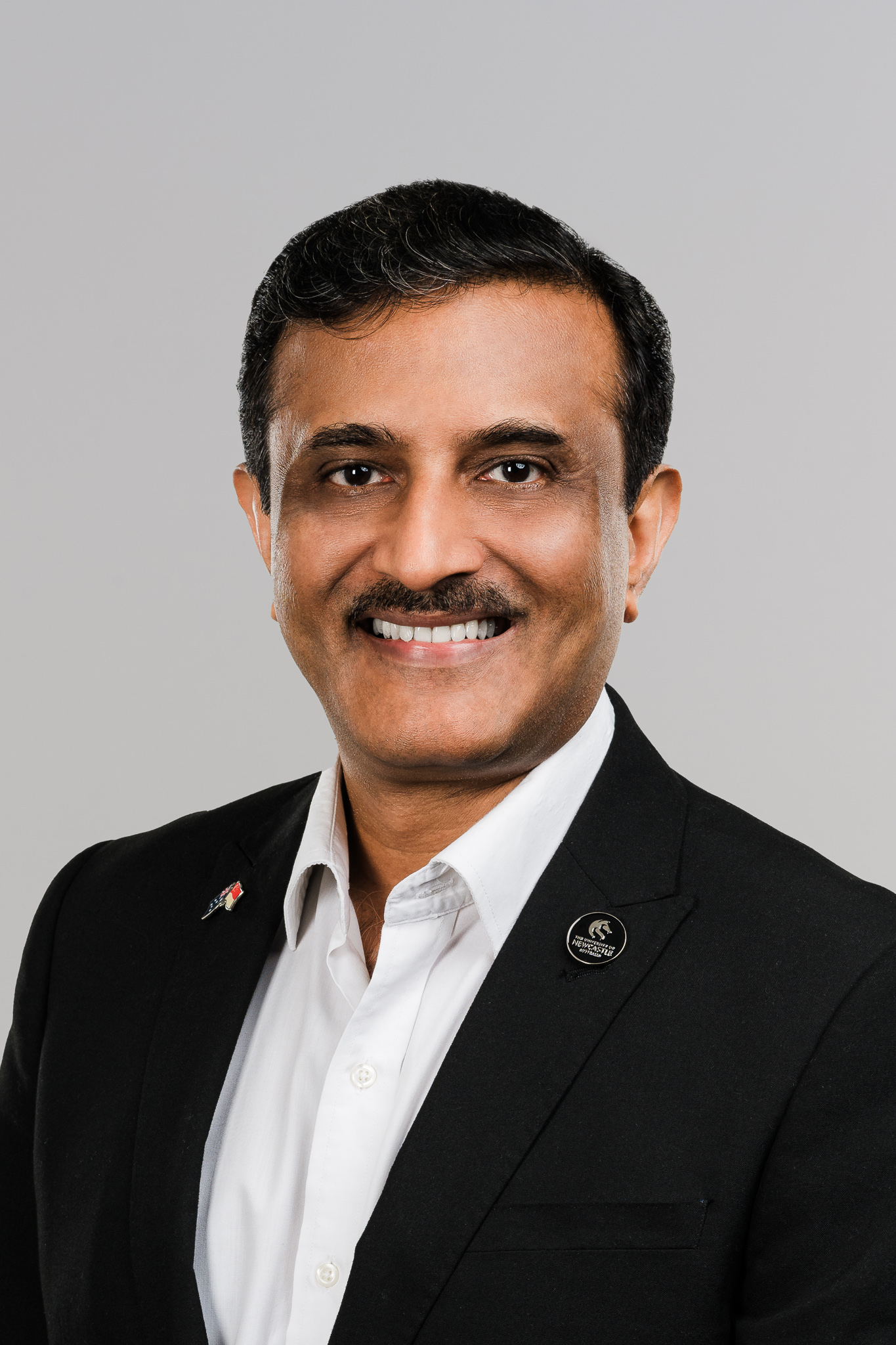
Professor Abhishek Singh Bhati is the Pro Vice-Chancellor and CEO at the Newcastle Australia Institute of Higher Education. He is a distinguished academic and administrator with a focus on tourism management and scholarship of learning and teaching. His research explores technology-driven tourism transformations, low-carbon tourism, and the alignment of tourism with United Nations Sustainable Development Goals (SDGs). Bhati’s work also emphasizes tourist behavior, resilience planning, and vandalism management in tourism settings. PhD (Tourism Management), James Cook University, Australia MBA (Marketing Management), Maastricht School of Management, Netherlands Bachelor of Arts (Economics), Bombay University, India Diploma in Adult and Continuous Education, Institute of Adult Learning, Singapore Graduate Certificate in Education (Tertiary Teaching), James Cook University, Singapore His research spans technology’s role in tourism, sustainable development, and educational innovation. Recent publications address energy-economic synergies, AI in tourism, and post-pandemic travel behavior. Bhati has secured grants from organizations like the World Wide Fund for Nature (WWF) and the Australian Government’s Office of Learning and Teaching (OLT). Scientific Honors: Fellow of the Higher Education Academy (FHEA)
Gina-Gail S. Fletcher is a Professor of Law and Associate Dean for Intellectual Life at Duke University School of Law. She specializes in financial regulation, market manipulation, and corporate governance, with a focus on racial inequality, ESG frameworks, and AI accountability in financial systems. Professor of Law, Duke University (2024) Associate Dean for Intellectual Life, Duke Law (2024) Member, U.S. SEC Investor Advisory Committee (2024) Member, FINRA Investor Issues Committee (2024) Her research integrates legal and policy analysis on financial systems, emphasizing transparency, equity, and stability. Key themes include: AI and transparency in financial regulation Racial equity in banking and lending practices Climate-conscious procurement policies ESG compliance and fraud Market manipulation and macroeconomic consequences Recent publications appear in Yale Law Journal , New York University Law Review , and Vanderbilt Law Review , with forthcoming work on AI regulation and racial complicity in finance. She received her J.D. cum laude from Cornell Law School and B.A. magna cum laude from Mount Holyoke College.
Filippo Mezzanotti is an Associate Professor of Finance at the Kellogg School of Management, Northwestern University. His research bridges corporate finance with innovation economics, fintech, and historical analysis of financial systems. He teaches Finance II (Corporate Finance), focusing on capital structure, investment decisions, and valuation methods. Doctor of Philosophy (2016), Business Economics, Harvard University Master of Arts (2014), Economics, Harvard University Master of Science (2010), Economics, Universita Commerciale Luigi Bocconi Bachelor of Arts (2008), Economics, Universita Commerciale Luigi Bocconi Mezzanotti's work examines how financial frictions shape real economic activity. Key areas include technology adoption dynamics during liquidity shocks, patent policy effects on corporate innovation, and private equity's role in crisis resilience. His empirical approach frequently leverages historical events like the Great Depression and Sherman's March for modern economic insights. Recent publications analyze critical issues in financial technology (mobile payments in India), corporate R&D allocation under funding constraints, and legal frameworks affecting patent litigation. His research reveals connections between demographic factors, debt restructuring mechanisms, and institutional recovery patterns. Faculty Research Fellow, National Bureau of Economic Research (2024-present)
Giacomo Calzolari is a Full-time Professor of Economics at the European University Institute (EUI) in Florence, Italy, and serves as Provost for Research and External Relations. He holds a Ph.D. from the University of Toulouse. His research focuses on Industrial Organization, Competition Policy, Artificial Intelligence, and Banking Regulation, with notable contributions to understanding algorithmic pricing, collusion, and regulatory frameworks. Education: Ph.D. in Economics from the University of Toulouse. Research Interests: Artificial Intelligence and Market Dynamics Competition Policy and Antitrust Economics Algorithmic Pricing and Collusion Banking Regulation and Supervision Behavioral and Experimental Economics Publications: Recent work includes studies on AI-driven markets, algorithmic collusion, and regulatory policy. His research emphasizes the intersection of technology and competition, with over 50 publications in top-tier journals like the American Economic Review and International Journal of Industrial Organization. Awards: Recognized with the 'Best Paper Award' from the Association of Competition Economics (2013) and the 'Young Economist Award' (2005). Advisory Roles: Advises the European Commission on competition policy and the European Parliament on AI in financial markets. Serves as Editor of the International Journal of Industrial Organization and European Economy - Banks and Regulation. Research Groups: Leads projects on digital transformations, technological change, and AI's impact on competition. Supervises numerous graduate students and collaborates with institutions like the Centre for Economic Policy Research (CEPR).
Professor Pinar Akman is a Professor of Law at the University of Leeds, specializing in competition law, particularly in digital markets. She holds positions as a judge at the UK's Competition Appeal Tribunal and a member of the Financial Conduct Authority's Innovation Advisory Group. Her roles include former directorships of the Jean Monnet Centre of Excellence on Digital Governance (2019-2023) and the Centre for Business Law and Practice (2017-2020). She was promoted to full Professor within five years of her PhD. Education: Holds LLB and LLM from the University of Ankara Law School (ranked first overall undergraduate), and a PhD from UEA Law School/ESRC Centre for Competition Policy, funded by ORSAS and UEA Scholarships. Her doctoral work focused on abuse of dominance under EU competition law. Research interests include competition law's application to digital markets, market power, online platforms, and the interplay of competition law with consumer and contract law. She emphasizes legal and economic foundations of competition policy, including historical origins and modern challenges in regulating tech giants. Awards: Philip Leverhulme Prize (£100k), Women@Competition 5-Star Award, and recognition as a top global competition scholar by Global Competition Review. Her research on digital markets and antitrust policy has been funded by UKRI, ESRC, and international bodies. Advising & Grants: Led a £4M ESRC grant for the Centre for Competition Policy (2009), and a UKRI-funded empirical study on digital platforms. Provides policy advice to the IMF, World Economic Forum, and international organizations like UNCTAD and OECD. Engages in global policymaking through roles with the Canadian Chamber of Commerce, ASEAN, and Bhutan. Labs & Teams: Senior Fellow at George Washington University's Competition & Innovation Lab, Affiliated Scholar at Berkeley's Dynamic Competition Initiative, and member of Stanford Law School's Computational Antitrust Advisory Board. Editorial roles include World Competition: Law and Economics Review and Oxford Competition Law.
Zakary Dahlheimer is an Adjunct Professor at Florida A&M University's School of Journalism & Graphic Communication (SJGC), where he teaches Reporting & Writing. He is also an evening anchor and investigative reporter at WCTV, the CBS affiliate in Florida's Big Bend region. His career includes coverage of major local and national stories across Florida, California, North Carolina, and Virginia. Dahlheimer holds a B.S. in Telecommunication from the University of Florida and an M.A. in Journalism from the University of Missouri. He is a testicular cancer survivor and advocate for the American Cancer Society. Education: University of Missouri: M.A. in Journalism (2022) University of Florida: B.S. in Telecommunication (2015) Research/Investigative Focus: Dahlheimer specializes in investigative reporting, political journalism, and health journalism. His work often addresses public health trends, fraud, and community issues. Recent investigations include cancer trends in young adults and mail fraud in Leon County. Awards: Regional Emmy Nominations Virginia Association of Broadcasters Award Florida Associated Press Broadcasters Association Recognition Community Engagement: Dahlheimer volunteers with the American Cancer Society and collaborates with local organizations like Midtown Reader for literacy initiatives. He also serves on the UF College of Journalism’s Advisory Council.