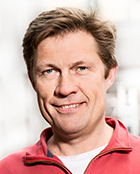
Torben M. Andersen is a Professor at the Department of Economics and Business Economics, Aarhus University. He holds an M.Sc. from the London School of Economics (1981), a Lic. Oecon from Aarhus University (1994), and a PhD from CORE, Université Catholique de Louvain (1986). His research focuses on the Nordic welfare model, public economics, labour economics, and pension economics. He has published over 400 articles in top journals and contributed to policy advisement for Denmark, the EU, OECD, and the World Bank. He currently chairs the DREAM modelling group, the Economic Council for Greenland, and the Danish pension fund ATP. He also serves on boards of Aarhus University Research Foundation, Systemic Risk Council Faroe Islands, and others. Key research areas include welfare state sustainability, public expenditure prioritization, and pension reform impacts. His recent work explores mortality risk hedging and wealth inequality dynamics. He is a fellow at CEPR, IZA, and CESifo.
Claus Thustrup Kreiner is a Professor of Economics and Director of the Center for Economic Behavior and Inequality (CEBI) at the University of Copenhagen's Faculty of Social Sciences, Department of Economics. He also serves as Area Director of Public Economics in the CESifo network and was co-editor of the Journal of Public Economics from 2014 to 2020. Kreiner has held various leadership positions including Director of the Economic Policy Research Unit (EPRU) since 2005 and Director of the Center of Excellence WEST from 2011-2013. Education: Ph.D. in Economics, University of Copenhagen, 1998 Visiting Ph.D. student, University of York, 1996 M.Sc. in Economics, University of Copenhagen, 1994 B.Sc. in Economics, University of Copenhagen, 1991 Claus Thustrup Kreiner's research primarily focuses on Public Economics , with secondary specializations in Labor Economics, Household Finance, Applied Microeconometrics, and Experimental Economics. His work examines inequality in income, wealth and health, optimal redistribution policy, and behavioral responses to public policy. Kreiner has conducted significant research using Danish administrative data to analyze tax compliance, labor supply responses, and inequality dynamics. His research often involves collaborations with institutions like Columbia University, London School of Economics, and UC Berkeley. His recent publications reveal a strong focus on inequality across multiple dimensions (income, wealth, health, life expectancy), tax policy design and compliance, labor market responses to policy changes, and the intersection of behavioral economics with public policy. Kreiner frequently employs high-frequency administrative data from Denmark to provide empirical evidence on how individuals and households respond to economic policies and shocks. Scientific Awards and Recognition: Appointed Knight of The Order of Dannebrog by Queen Margrethe II (2018) The Invisible Hand Award from the Society of Social Economics (2006, 2001) Best Teacher Award from the Study Board of Economics at University of Copenhagen (2002) Research Fellow at Centre for Economic Policy Research (CEPR), London (2009-) Kreiner has supervised numerous students primarily in Public Economics and has received multiple research grants including from the Danish Social Science Research Council (2003, 2006, 2009), International Growth Center (2009), and Danish National Research Foundation (1998-2003). He has served on important policy bodies including as co-chair of the Danish Economic Council (2010-2014) and member of the Danish Tax Commission (2008-2009). As Director of CEBI (Center for Economic Behavior and Inequality), Kreiner leads a major research center funded by the Danish National Research Foundation. He also directs the Economic Policy Research Unit (EPRU) and has been instrumental in establishing research collaborations through networks like CESifo. His work bridges academic research and policy application, as evidenced by his practical policy experience with government commissions.
Sara Green is an Associate Professor at the Department of Science Education, University of Copenhagen, specializing in the Section for History and Philosophy of Science . Her work bridges philosophy, biology, and biomedical ethics, focusing on the epistemic and social implications of datafication in healthcare and the ethical challenges of precision medicine and consumer health technologies. Green holds a PhD in Science Studies from Aarhus University and was a postdoctoral fellow at the University of Pittsburgh’s Center for Philosophy of Science. She leads the PROMISE and COPE projects and contributes to EU-funded initiatives like DataSpace , TRANSCEND , and REDESIGN . Research Themes: Philosophy of precision medicine and data-driven healthcare Ethics of patient-derived organoids and organ-on-chip technologies Epistemic standards in consumer medicine Interdisciplinary integration in systems biology Article Trends: Recent publications explore organoid ethics , datafication in medicine , and philosophical frameworks for emerging health technologies . Key sub-fields include biobanking, cross-border data governance, and temporal dimensions of personalized medicine. Scientific Recognition: DFF Research Project 1 (2020) Semper Ardens Accellerate Grant (2023) Silver Medal, Royal Danish Society of Science and Letters (2024) Werner Callebaut Prize (2015) EU SwafS-Horizon stipend (2020) Teaching & Supervision: She teaches philosophy of science to students in biology, chemistry, and sports science, supervising projects on philosophy of biology and medicine and co-supervising science communication research. Collaborative Networks: Green collaborates across Denmark, the EU, and the U.S., particularly on cross-border health data infrastructure and reduction of animal models through organoid technologies.
Ditte Alexandra Winther-Lindqvist is a Professor at the Danish Institute of Education (Aarhus University), specializing in Educational Psychology. Her work focuses on early childhood education, pedagogy of care, play theory, and grief psychology, with a strong emphasis on sustainability and ethical practices in educational settings. Research Interests: Ethics of care, pedagogy, children's wellbeing, play dynamics, grief in educational contexts, and sustainable development goals. Projects: Leads the UNESCO CHAIR initiative 'Supporting Early Years Care and Education' (2022–2027) and contributes to 'Strengthening pedagogical care in daycare institutions' (2024–2027). Scientific Awards: Recipient of the 2023 Award for best practice in School-Based Family Counseling for ‘Green transition and Worldcare in ECEC’. Collaborations: Active in international networks, including the International Society for Theoretical Psychology (ISTP) and the International Play Association, Denmark.
Ciprian Cimpan is an Associate Professor at the Department of Green Technology (IGT), University of Southern Denmark, and a key member of the SDU Climate Cluster and SDU Life Cycle Engineering. His research focuses on Circular Economy , Industrial Ecology , Waste and Resources Management , and Life Cycle Assessment , with a strong emphasis on sustainable growth and resource efficiency. Postdoctoral Fellow, Norwegian University of Science and Technology (2019–2021) His recent publications highlight applications of LCA in evaluating additive manufacturing , plastic packaging , and critical material recycling within green transition contexts. He also investigates systemic challenges in textile waste , ICT product obsolescence , and rebound effects in reuse practices . Scientific awards include the DANROAD Prize (2025) for innovative drug recycling. He supervises PhD student Bubinek R. and teaches courses on Eco-efficient Engineering , Waste Management , and Solid Waste Processing .
Navid Bayati is an Associate Professor at the University of Southern Denmark, affiliated with the Institute of Mechanical and Electrical Engineering and the Centre for Industrial Electronics. He leads the Control and Protection of Smart Grids (CAP-SG) group and focuses on renewable/hybrid power systems, microgrid protection, and grid code compliance. Education: Ph.D. in Power Systems & Microgrid Protection (2020, Aalborg University); M.Sc. in Power Systems (2017, Amirkabir University of Technology) His research spans renewable energy integration , transient analysis , grid interconnection , and digital twin applications . Recent work includes machine learning for carbon emission prediction, fault localization in DC microgrids, and supercapacitor resilience in hybrid systems. Collaborations include projects like IEA Wind Task 50 and RePoSys , addressing grid renovation, life cycle assessment, and digital twin resilience. His teaching portfolio covers power electronics , energy management , and microgrid control .
Lars Bo Jeppesen serves as Professor of Innovation Management at Copenhagen Business School's Department of Strategy and Innovation, focusing on digital economy innovation through crowd-based mechanisms, crowdfunding, user communities, and platform ecosystems. His work bridges academic research with practical applications for industry and policy. Education: Master's degree from University of Copenhagen PhD from Copenhagen Business School Professor Jeppesen's research examines how digital platforms transform innovation processes, emphasizing user-driven ecosystems and strategic implications for firms. He investigates crowdfunding dynamics, entrepreneurial financing mechanisms, and the interplay between intrinsic motivation and monetary incentives in crowd innovation, with findings applicable to both startups and established corporations. His recent publications (2020-2025) reveal consistent exploration of platform economics, digital business models, and innovation policy. Key trends include strategic responses to piracy, AI platform competition, freemium model optimization, and the role of social movements in non-commercial innovation, primarily published in top-tier journals like Research Policy and Strategic Management Journal. Scientific Awards: No awards documented in source material Professor Jeppesen advises European and Asian governments on innovation policy while collaborating with leading corporations through projects like the Danish User-Centered Innovation Lab (co-founded with MIT's Eric von Hippel). His current research initiatives include 'Crowdfunding for Youth Entrepreneurship in Tanzania' and 'The Co-Existence of Prosocial Intrinsic Motivation and Monetary Incentives,' supported by field experiments and ecosystem analyses. He directs the Danish User-Centered Innovation Lab, which integrates academic researchers and industry partners to develop practical innovation tools for capturing distributed knowledge, with applications in technology strategy and open innovation frameworks.
Matias Thuen Jørgensen is an Associate Professor and head of the Center for Tourism Research at Roskilde University, Denmark, within the Department of Social Sciences and Business. His interdisciplinary research bridges business studies, sociology, and human geography to examine tourism's societal impacts, with empirical focus on Chinese tourism markets and Nordic destinations. He holds a PhD in Tourism Management from The Hong Kong Polytechnic University (2017), awarded through the competitive Hong Kong PhD Fellowship Scheme. His educational foundation combines rigorous academic training with field expertise in tourism phenomena. The PhD research at Hong Kong Polytechnic University established his methodological approach to analyzing tourism distribution systems through Activity Theory and Actor-Network Theory frameworks. Jørgensen's research critically examines tourism's role in sustainable community development, emphasizing how mundane everyday experiences create destination value in Nordic contexts. His work explores social value creation through tourist-resident interactions, regenerative tourism models like CopenPay, and the socio-economic implications of tourism transitions in peri-urban areas. Key themes include the ethical dimensions of tourism development, community mobilization through social entrepreneurship, and the complex interplay between tourism policy and local realities. Analysis of his 15 most recent publications reveals dominant trends in regenerative tourism frameworks, micro-level host-guest interactions, and policy responses to overtourism challenges. His scholarship increasingly focuses on climate-responsive tourism models, ethical pricing mechanisms in aviation, and regulatory approaches to short-term rentals, demonstrating consistent evolution toward solution-oriented sustainability research. Notable recognitions include: Hong Kong PhD Fellowship Scheme (2014) Nomination for Danish National University Teaching Award (2023) Peter Keller Award (2022) Roskilde University Teaching Prize (2022) Teacher of the Year Award, Roskilde University (2022) As principal investigator on seven research projects totaling over 3 million DKK in funding, Jørgensen has secured grants from diverse sources including industry partnerships and public research councils. Current projects include the SeNSE initiative on sustainable nature-based tourism entrepreneurship and the Tourism Business Model Tool development. He actively supervises doctoral research on social value creation in urban tourism encounters while contributing to policy formulation through UNWTO engagements and frequent media commentary. Leading the Center for Tourism Research (CFTR), he fosters cross-disciplinary collaboration between academics, industry stakeholders, and policymakers. His recent activities include organizing the 2025 Academy of Management symposium on tourism transitions and establishing the 'Tourism and Everyday Life in Cities' research network, positioning CFTR at the forefront of contemporary tourism scholarship.
Teis Hansen is a Professor of Innovation and Entrepreneurship at the Department of Food and Resource Economics , University of Copenhagen, with a side-position at SINTEF 's Department of Technology Management in Norway. His academic background includes a PhD in Economic Geography (2012) and an MSc in Regional and Urban Planning Studies (2008, LSE). His research spans innovation studies, sustainability transitions, and economic geography , focusing on spatial innovation dynamics, transformative policy, green urban development, foundational economy, and technology transfer between developed and emerging economies. Empirical work covers bioeconomy, energy-intensive industries, maritime transport, plastics, and energy systems. Recent collaborations include international partnerships in Norway, Sweden, and Denmark. His 112 research outputs include 63 journal articles, 9 book chapters, and policy-relevant reports. Key publications address climate change mitigation frameworks, carbon capture feasibility, and circular bioeconomy transitions .
Jeppe Rich is a Professor at the Department of Technology, Management and Economics at the Technical University of Denmark (DTU). His primary research focuses on statistical and mathematical modeling applied to transport-related challenges, including transport demand modeling, discrete choice models, freight transport, cost-benefit assessments, and strategic long-term demand models. Rich holds a Mathematical Planning qualification from the University of Aarhus (1989–1995). He has held external positions as a Senior Consultant at Atkins A/S (2001–2002) and as a Researcher at the National Environmental Research Institute (1995–1998). His work aligns with UN Sustainable Development Goals related to sustainable cities and communities (SDG 11) and climate action (SDG 13). His research interests span transport policy, transportation science, and the application of advanced modeling techniques to address urban mobility challenges. Notable areas include EV infrastructure planning, bicycle network optimization, and cost-benefit analysis of transport projects. He supervises several PhD students in topics like electric freight transport, micromobility safety, and urban charging infrastructure. Rich has published extensively on transport policy, demand modeling, and sustainable mobility solutions. His work emphasizes interdisciplinary approaches to solving complex transport challenges, combining engineering, economics, and data science methodologies.
Anders Kalsgaard Møller is an Associate Professor in the Department of Culture and Learning at Aalborg University's Faculty of Humanities and Social Sciences. He is actively engaged in research and innovation in learning design, digital technologies, and artificial intelligence in education. His work is centered around the L-ILD (IT and Learning Design), Green Society, and MASSHINE Xlab – Design, Learning and Innovation research environments. His research interests span Learning Design , Computational Thinking , Artificial Intelligence in Education , Human-Robot Interaction , and Environmental Literacy . He investigates how emerging technologies can be integrated into educational practices to enhance collaborative learning, literacy development, and sustainable thinking. His work often involves participatory and co-design methods with educators and children. The recent publications of Anders Kalsgaard Møller reflect a strong trend toward the application of generative AI, robotics, and digital tools in language and primary education. His scholarly output emphasizes interdisciplinary collaboration, technological innovation, and real-world educational impact, particularly in K-12 and higher education contexts. Principal Investigator, 'Using artificial intelligence in English teaching at upper secondary schools' (2023–2026) Co-PI, 'Co-Designing Robot-Assisted Learning for Children' (ongoing) Co-PI, 'Labor market-oriented AI skills at cand.it.' (2024–2026) Co-PI, 'Understanding and fostering future consumers' environmental literacy' (2024–2025) Anders Kalsgaard Møller has been involved in media outreach, including coverage on children's interactions with social robots and discussions on AI in education. He has also contributed to academic leadership through conference organization and editorial roles, such as in the DLI conference series. He is affiliated with key research labs including: L-ILD – IT and Learning Design Green Society MASSHINE Xlab – Design, Learning and Innovation These labs focus on digital innovation, sustainability, and human-centered design in educational contexts.
Professor Christian Schultz (b. 1957) is affiliated with the Department of Economics at the University of Copenhagen under the Faculty of Social Sciences. His work spans political economy, competition economics, industrial organization, and market regulation, focusing on implications of imperfect information in economic and political systems. PhD (University of Copenhagen, 1989) Current: Professor of Economics (1995–present) Past: Director of Centre for Industrial Economics (2000–2008), Head of Department (2010–2023) His research examines how information asymmetries affect political campaigns, market collusion, and public policy effectiveness. Key contributions include work on price transparency, electoral polarization, and arms-length delegation of public services. Recent publications (2014–2024) focus on price transparency, healthcare economics, technology transfer, and market dynamics. Awards include the 2003 Invisible Hand Award for outstanding teaching. Supervised 7 PhD students and 100+ master's students. Leadership roles: Chairman of Danish Competition Council (2012–present), Chairman of Danmarks Nationalbank’s Board of Directors (2018–present). Editorial and advisory roles include membership in European Science Foundation panels and evaluation committees across Scandinavia.
Mogens Fosgerau is a Professor at the Department of Economics, University of Copenhagen, with a research focus on discrete choice theory, rational inattention, transportation and urban economics, congestion modeling, and entropy-based frameworks. He has held an ERC Advanced Grant (2017-2023) and completed a Grand Solutions project for the Innovation Fund Denmark (2016-20). Education: Mathematical Economics (Aarhus University, 1990), PhD in Mathematics (University College London, 1992). Current affiliations: Department of Economics (University of Copenhagen), Faculty of Social Sciences. Former roles: Guest Professor at DTU (2022-2023), member of the Commission for Green Transition of Passenger Cars (2019-2021). His research explores the intersection of information theory and discrete choice models, addressing complex substitution patterns and endogeneity issues through generalized entropy frameworks. He applies these models to transportation planning, urban economics, and climate policy analysis. Recent publications focus on perturbed utility models, inverse product differentiation logit, and rational inattention in spatial choice contexts. His work bridges theoretical econometrics with practical transport and environmental policy challenges. Awards: Recipient of the 2021 Transportation Science Meritorious Service Award. Former Editor-in-Chief of Economics of Transportation (2012-2020). Advising and Grants: Leads research projects funded by the European Research Council and Innovation Fund Denmark. Has participated in policy committees including the Danish Environmental Economic Council (2019-2025) and the Committee on Public Transport Mobility (2023-24).
Sara Shafiee is a Senior Researcher at the Department of Civil and Mechanical Engineering , Technical University of Denmark (DTU) . She specializes in product configuration systems, manufacturing engineering, and AI-driven innovation. Her work bridges technical systems with organizational agility, emphasizing sustainability and customer-centric design. External Roles: Founder & CEO of DivERS (Jan 2021–) External Lecturer at Copenhagen Business School (2022–2024) Senior Business Consultant at Haldor Topsoe AS (2017–2019) Research Focus: Her work addresses challenges in product configuration systems, generative AI applications, and sustainable construction. Key themes include: Optimal product design through recommendation systems Agile methodologies in knowledge-intensive development Environmental impact monitoring via configurators Publications Trends (2023–2025): Recent work explores AI-driven manufacturing optimization, consumer-centric innovation strategies, and the integration of environmental monitoring into design systems. High-impact areas include generative AI applications (13K+ downloads) and modular construction configurators. Awards: Agnes & Betzy Award (2025) Nordic Women in Tech Leadership Award (2022) Best Digital Startup (Venture Cup Denmark, 2021) Innovation Fund Denmark Role Model (2018) Advising & Grants: Supervised PhD projects on recommendation systems and configurator design. Lead PI of the RECODE project (DFF Grant DKK 10M+, 2024–2027) focusing on deep learning for engineer-to-order systems. Labs & Teams: Core member of DTU’s Design and Manufacturing Systems group, collaborating with industry partners like Haldor Topsoe and DivERS to develop scalable configurator solutions.
Ken Pfeuffer is an Associate Professor in the Department of Computer Science at Aarhus University, affiliated with the Faculty of Science. His research focuses on Human-Computer Interaction (HCI) , particularly in Virtual Reality (VR) , Augmented Reality (AR) , and Extended Reality (XR) systems. He leads projects like the Interdisciplinary Center for Extended Reality (ICXR) and the XCB Lab , exploring multimodal interaction techniques, eye tracking, and user authentication in immersive environments. His work emphasizes gaze-based interaction , multimodal input fusion , and user interface design for AR/VR applications. Recent studies investigate consumer behavior in virtual retail environments and the integration of touch, gaze, and gesture inputs for natural user experiences. Pfeuffer collaborates on adaptive UI toolkits and practical methods for mobile eye-tracking systems, prioritizing real-world usability and accessibility. Key contributions include Depth3DSketch for VR sketching, PinchCatcher for multi-selection, and EyeGuide for gaze-assisted 3D sketching. His research bridges theoretical HCI principles with industry applications, addressing challenges in immersion , accuracy , and user safety in XR systems.