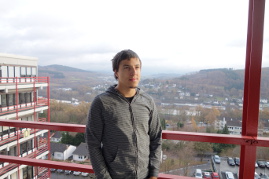
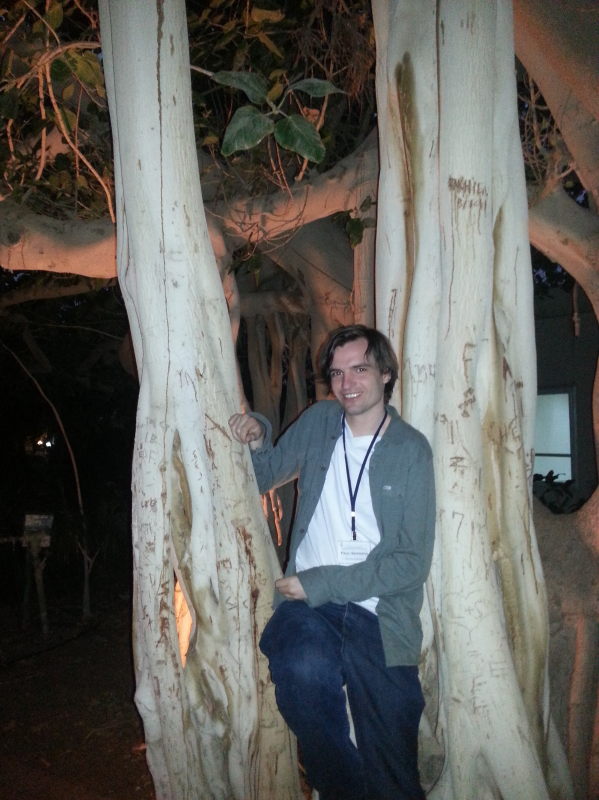
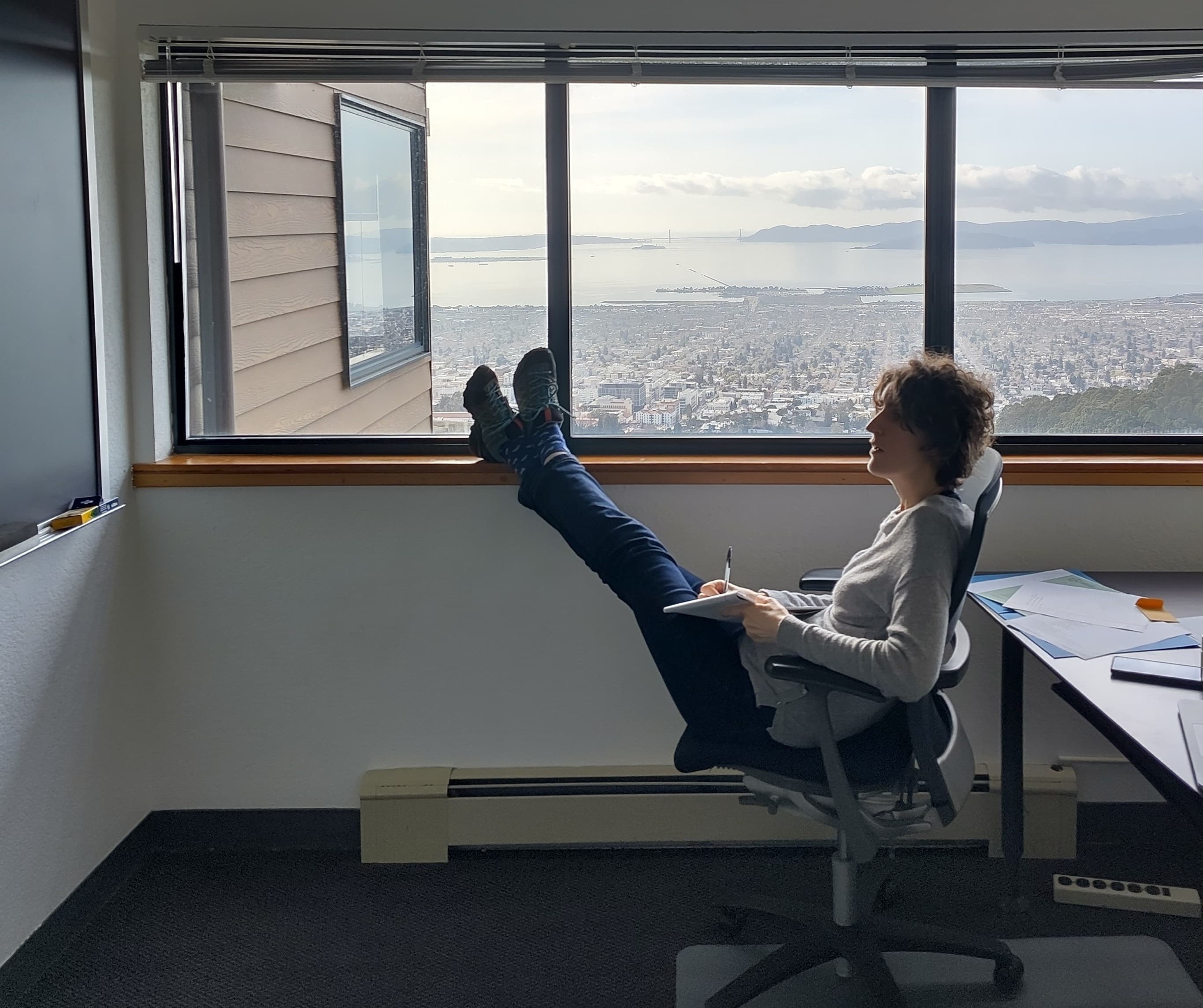
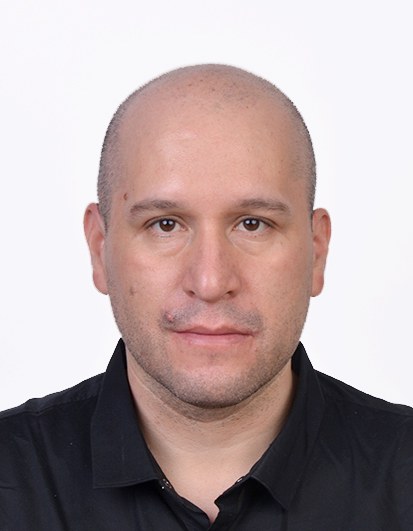
Danny Hucke is a researcher affiliated with the University of Siegen, Department of Electrical Engineering and Computer Science. His work focuses on advanced data compression techniques, algorithmic complexity, and formal verification of streaming systems. Education: PhD in Grammar-based compression for strings and trees (University of Siegen, 2019) Research Interests: Driven by challenges in grammar-based compression, empirical entropy metrics, and formal language processing in streaming environments, his research bridges theoretical computer science and practical algorithm design. Key areas include: Data Compression for Trees and Strings Sliding-Window Algorithms Circuit Complexity Algorithmic Entropy Analysis Scientific Contributions: His work has been recognized with a Best Paper Award at SPIRE 2016. Publications span top-tier venues like IEEE Transactions on Information Theory , ACM TOCT , and conferences including ICALP, STACS, and LATIN. Contact: Department of Electrical Engineering and Computer Science, University of Siegen, Hölderlinstrasse 3, D-57076 Siegen. Email: hucke@eti.uni-siegen.de . Phone: +49-271-740-3415. Office: Room H-A 7104. Collaborations: Conducted research within the group of Prof. Markus Lohrey, collaborating extensively with Moses Ganardi, Louisa Seelbach, and Eric Nöth.
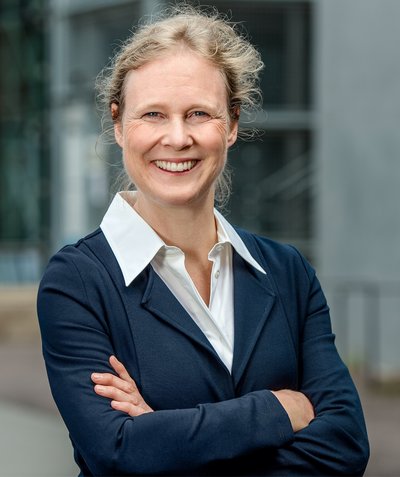
Dr. Yvonne Pietsch is a literary scholar working at the Goethe and Schiller Archive in Weimar, Germany, and participates in the Children's University program at Bauhaus University Weimar. She specializes in the study of Johann Wolfgang von Goethe's extensive correspondence, examining approximately 15,000 surviving letters through meticulous scholarly analysis. Her research focuses on uncovering new insights about Goethe's multifaceted life as both a poet and natural scientist, theater director, library administrator, and art connoisseur. Dr. Pietsch collaborates with fellow scholars to produce critical editions of Goethe's letters that include explanatory notes and contextual information, making these historical documents accessible in both print publications and digital formats. She finds particular fulfillment in discovering previously unnoticed details within the manuscripts that shed new light on Goethe's intellectual processes and personal relationships. As an educator, Dr. Pietsch is passionate about sharing her archival work with children through the Children's University lectures. She aims to transport young audiences into historical contexts, drawing meaningful connections between Goethe's era and contemporary life while emphasizing reading as 'the most beautiful adventure in the world.' Her approach reflects her childhood love of books and enduring fascination with how stories are constructed, who tells them, and their impact on audiences across time.
Marc Alexa is a Professor at the Technische Universität Berlin , leading the Department of Computer Graphics within the Institute of Computer Engineering and Microelectronics . His research spans computational geometry, rendering, and human-computer interaction, with a focus on differentiable rendering, mesh processing, and geometric modeling. PhD (2002) and MSc (1997) from Technische Universität Darmstadt under advisors Prof. Encarnacao and Prof. Gross (ETH Zurich) Research interests include: Differentiable rendering frameworks Geometric stylization and manifold reconstruction Optimization of polygonal and tetrahedral meshes Eye-tracking applications in mental imagery and visual perception Scientific awards include: ACM Fellow (2024) SIGGRAPH Academy inductee (2022) ERC Advanced Grant for geometric computation (2022) Eurographics Fellow (2018) Engineering Science Prize (2012) His recent publications (2023-2025) focus on differentiable acoustic path tracing, Poisson manifold reconstruction, and shadow mapping optimization. He has served as Editor-in-Chief of ACM Transactions on Graphics (2018-2021) and chaired key conferences like SIGGRAPH 2013 Technical Papers .
Professor Ralph Bergmann is a distinguished academic at the University of Trier, where he holds the position of Professor of Business Information Systems since 2004. He also serves as the research group leader for Experience-Based Learning Systems (EBLS) at the German Research Center for Artificial Intelligence (DFKI) Trier branch since 2020. His academic career spans multiple institutions with appointments at the University of Hildesheim (2001-2004) and the University of Kaiserslautern (1997-2001). Dr. Bergmann's research focuses on the integration of data-oriented AI methods with semantic technologies to create hybrid AI systems. His work centers on experience-based learning systems that combine machine learning, case-based reasoning, ontologies, and knowledge graphs for modeling explicit knowledge. This research enables the redesign, adaptation, and flexible execution of processes with applications across diverse domains including Industry 4.0, construction, crisis management, service, medicine, cooking, and political argumentation. His recent publications demonstrate a strong trend toward integrating traditional case-based reasoning with modern AI techniques like large language models and knowledge graphs. The research shows increasing application in healthcare (particularly oncology and emergency response), IoT-enabled process monitoring, and argumentation analysis. His work bridges theoretical AI foundations with practical implementations across multiple industries. Professor Bergmann has led approximately 35 research projects funded by prestigious organizations including the European Union, German Research Foundation (DFG), Federal Ministry of Education and Research (BMBF), and the State of Rhineland-Palatinate. With an h-index of 40, he has authored more than 200 scientific publications including four books and 13 conference proceedings. He actively contributes to the academic community through service on editorial boards including Engineering Applications of AI and the International Journal of Intelligent Information Technologies. His leadership extends to program committees for major conferences in artificial intelligence and case-based reasoning. Professor Bergmann heads the Artificial Intelligence and Intelligent Information Systems research group at the University of Trier and leads the Experience-Based Learning Systems research group at DFKI. His teams work on multiple projects including AI-AIM (AI-based anonymization in medicine), KIAFlex (interactive AI assistance for predictive and flexible control in discharge and transition management), DZW (Digital Twin Water Management), myRPA (experience-based Robotic Process Automation), and SPELL (Semantic Platform for Intelligent Decision and Operational Support in Control Centers).
Prof. Clemens Thielen holds the Professorship for Optimization and Sustainable Decision Making at TUM Campus Straubing, Technical University of Munich. He previously served as Junior Professor at TU Kaiserslautern (2013–2019) and was appointed to the Professorship for Complex Networks at TUM Campus Straubing in 2019. His research focuses on discrete mathematical optimization, including network optimization, approximation algorithms for multiobjective problems, and practical applications like healthcare scheduling and infrastructure planning. He earned his PhD in Mathematical Optimization from TU Kaiserslautern in 2010, with studies at the University of Cambridge. Notable awards include the 2024 EURO Prize for OR for the Common Good and a 2018 teaching nomination. His work bridges theoretical advancements and real-world applications such as flood mitigation, traffic emission reduction, and crane logistics optimization. Education: PhD in Mathematical Optimization, Technical University of Kaiserslautern (2010) Studies in Mathematics at Technical University of Kaiserslautern and University of Cambridge Research Interests: Network optimization and approximation algorithms Multiobjective decision-making and sustainable resource allocation Applications in healthcare, transportation, and infrastructure Awards: EURO Prize for OR for the Common Good (2024) Nomination for Teaching Award of Rhineland-Palatinate (2018) Labs/Teams: Active in the Optimization and Sustainable Decision Making research group at TUM Campus Straubing, collaborating on projects such as municipal flood mitigation and healthcare scheduling.
Alexander Dietz is a Lecturer in the Department of Mathematics at Technische Universität Darmstadt. His research focuses on geometry and approximation, with specialized interests in volumetric subdivision, subdivision surfaces, and elliptic PDEs on subdivision surfaces and volumes. He has contributed to isogeometric analysis and geoscience software tools such as standardized Schoeller diagrams. He has presented at conferences including the Rhein-Ruhr-Workshop (2020–2022), the International Conference on Approximation Theory (2023), and the International Geometry Summit (2023). His teaching includes pre-course mathematics for computer scientists and courses on constructive geometry and mathematics for engineering disciplines. Notable achievements include the Higher Education Teaching Certificate (2018–2020), a research stay at USI Lugano (2023), and the 2023 Athene Award for Good Teaching in Mathematics at TU Darmstadt.
PD Dr. Alden Marie Seaburg Waters is a Researcher at the Institute for Analysis within the Faculty of Mathematics and Physics at Leibniz University Hannover. Their primary roles include advancing research in partial differential equations, spectral theory, and applied mathematics. They are actively involved in teaching, including courses on Calculus of Variations and Optimal Control during the winter semester 2023/24. Research Interests: Alden’s work focuses on dispersive estimates for wave and Maxwell equations, stability problems in inverse scattering, and optimization techniques. They specialize in spectral and scattering theory with applications to electromagnetic phenomena and nonlinear elasticity. Their research bridges theoretical analysis with practical applications in fields like mathematical physics and biomedical imaging. Publications Trends: Alden’s recent work emphasizes dispersive estimates in exterior domains (e.g., toroidal geometries and spherical exteriors), the interplay between trace formulas and scattering phenomena, and low-regularity solutions for wave equations. Their contributions span mathematical physics, control theory, and inverse problems, with a focus on analytical rigor and interdisciplinary applications. Awards and Grants: No scientific awards or grants are explicitly listed in the provided texts. Funding sources or grant details are not mentioned. Labs/Teams: While specific lab affiliations are not detailed, their research collaborates with international teams on projects involving scattering theory, optimal control, and mathematical modeling.
Prof. Christoph Knochenhauer is a Professor of Financial Mathematics at the Technical University of Munich (TUM), affiliated with the TUM School of Computation, Information and Technology. His academic career includes a PhD in Mathematics (2015) from Technical University of Kaiserslautern and Dublin City University, followed by a postdoctoral position at the University of Trier. He served as Junior Professor for Stochastics and Quantitative Financial Mathematics at TU Berlin (2019) before joining TUM in 2023. His research focuses on financial mathematical applications of stochastic control theory, machine learning methods in finance, and probabilistic analysis of partial differential equations. Recent work explores optimal investment strategies for retail and institutional investors, dynamic decision-making under uncertainty, and numerical methods for stochastic systems. Key contributions include explicit solutions for optimal investment problems and convergence analyses of deep learning algorithms for PDEs. Prof. Knochenhauer has been recognized with the Joseph A. Schumpeter Prize (2017) and the Gauss Young Researcher Award (2015). His publications span topics like mean field games, fractional Brownian motion models, and systemic risk valuation. While no advising records or grants are explicitly listed, his work underscores advancements in stochastic finance and computational methods.
Prof. Dr. Simone Warzel is a Professor of Mathematical Quantum Physics at the Technical University of Munich (TUM), leading the Chair of Mathematical Quantum Physics. She holds academic positions in the TUM School of Computation, Information, and Technology and the Department of Mathematics. Her research focuses on mathematical physics, particularly quantum systems, including disordered systems, many-body quantum systems, and spectral theory. Education: Completed her PhD in Erlangen, followed by postdocs at Princeton University and other institutions. Joined TUM in 2008. Research Interests: Interplay of randomness and quantum effects (e.g., quantum glasses), correlated many-body systems (fractional quantum Hall, quantum spin systems), and techniques spanning analysis, probability (random operators), and statistical mechanics. Key Awards: John von Neumann Fellowship (2013), Young Scientist Award (2009), Alfred P. Sloan Fellowship (2007). Grants: Collaborative DFG Grants (2019–), DFG Grants (2014–2018), NSF Grants (2003–2005). Labs/Teams: Active in Munich Center for Quantum Science and Technology (MCQST), International Association of Mathematical Physics (IAMP).
Eitan Yaakobi is a Professor at the Computer Science Department of the Technion – Israel Institute of Technology, with a courtesy appointment in the Electrical and Computer Engineering Department. He holds a B.A. in Computer Science and Mathematics, an M.Sc. in Computer Science from the Technion, and a Ph.D. in Electrical Engineering from UC San Diego. His research focuses on information and coding theory, with applications in non-volatile memories, DNA storage, and distributed storage systems. He has been affiliated with the TUM Institute for Advanced Study (2018–2022) as a Hans Fischer Fellow and held a visiting position at Nanyang Technological University (2023–2024). Education: B.A. in Computer Science and Mathematics, Technion (2005) M.Sc. in Computer Science, Technion (2007) Ph.D. in Electrical Engineering, UC San Diego (2011) Research Interests: Information theory, coding theory, DNA storage, non-volatile memories, distributed storage systems, and private information retrieval. His work emphasizes error-correcting codes for emerging storage technologies like racetrack and DNA memories. Publications: Over 70+ peer-reviewed articles, including seminal work on WOM codes, burst error correction, and DNA storage coding. Recent trends include optimizing coding schemes for DNA synthesis and addressing errors in biomolecular storage systems. Awards: Multiple Technion Excellence Teaching Awards (2016, 2021), Marconi Society Young Scholar Award (2009), and Intel Ph.D. Fellowship (2010–2011). His research has been supported by grants like the ERC Consolidator Grant and EIC Pathfinder Challenge. Advising & Grants: Supervised over 30 graduate students and postdocs. Current lab members include Ph.D. researchers in coding theory and DNA storage. Active collaborations with institutions like UCSD’s Center for Memory and Recording Research. Labs/Teams: Leads a research group at the Technion focusing on coding for next-generation storage systems. Collaborates with interdisciplinary teams on biomolecular data storage and emerging memory technologies.
Paul Seiferth is affiliated with the Department of Computer Science at Freie Universität Berlin. His research focuses on computational geometry, algorithms, data structures, and graph theory. He has contributed to topics like Voronoi diagrams, dynamic planar graphs, unit disk routing, and spanner construction. His work emphasizes algorithmic efficiency, time-space trade-offs, and geometric data structures. Education : PhD (2012–2016), Freie Universität Berlin Master's (2010–2012), Freie Universität Berlin Research Interests : His research addresses fundamental problems in computational geometry and graph theory, with applications to wireless networks and geometric algorithms. Key themes include dynamic data structures for proximity problems (e.g., Voronoi diagrams), routing in unit disk graphs, and efficient spanner constructions for directed transmission graphs. Key Contributions : His work on time-space trade-offs for Voronoi diagrams and dynamic planar Voronoi diagrams has advanced algorithmic techniques for geometric problems. He also developed efficient routing schemes for unit disk graphs and reachability oracles for transmission graphs, balancing theoretical guarantees with practical efficiency. Teaching : He teaches ProInformatik I: Logik und Diskrete Mathematik . Labs/Teams : Associated with the AG Theoretische Informatik research group at Freie Universität Berlin.
Alice Rizzardo is a Senior Lecturer at the University of Liverpool's Department of Mathematical Sciences . Her research focuses on algebraic geometry , particularly through the lens of derived categories and triangulated categories , employing techniques from homological algebra , representation theory , and noncommutative geometry . Research Trends: Her recent work explores non-Fourier-Mukai functors , triangulated category structures , and enhancements of derived categories . She investigates how these tools interact with Fourier-Mukai transforms , Hodge theory , and stability conditions , often addressing foundational questions in category theory . Advising: She supervised PhD student Felix Küng , whose research on non-Fourier-Mukai functors now continues at the Université Libre de Bruxelles. Collaborations and Seminars: She is an active organizer of the Liverpool Algebraic Geometry group , coordinating seminars on topics like approximable triangulated categories , Homotopy Type Theory , Hodge theory , and Fourier-Mukai transforms across institutions including Columbia University, SISSA, and the University of Edinburgh.
Dr. Edgar Landinez Borda is a researcher at the Jülich Supercomputing Center (JSC) , Forschungszentrum Jülich GmbH. His work focuses on high-performance computing (HPC), quantum physics, and statistical physics, with a strong emphasis on quantum Monte Carlo methods and electronic structure theory. Research Areas: Quantum Monte Carlo simulations, machine learning integration in quantum physics, and computational modeling of many-body systems. Key Contributions: Development and optimization of quantum Monte Carlo software (e.g., QMCPACK), charge density prediction models, and finite-size extrapolation techniques. Collaborations: Engaged in open-source quantum chemistry library projects like TREXIO. His recent publications highlight advancements in quantum simulation accuracy, machine learning applications for many-body systems, and scalable computational methods for materials science.
Dr. Toni Volkmer is a researcher affiliated with the Faculty of Mathematics at Chemnitz University of Technology. His work focuses on computational mathematics and signal processing, particularly in high-dimensional data analysis and sparse Fourier transforms. His research intersects numerical analysis, approximation theory, and algorithm design for efficient data processing. Key research areas include Sparse spectral estimation Rank-1 lattice sampling Multivariate function approximation High-dimensional data analysis Fast matrix-vector operations Graph Laplacian computations His publications demonstrate expertise in developing sublinear-time algorithms for harmonic analysis and creating efficient numerical methods applicable to modern data science challenges. While no formal awards are listed, his contributions to scientific computing have been documented in multiple peer-reviewed publications since 2012.
Professor Benedikt Kriegesmann is a faculty member at the Structural Mechanics in Lightweight Construction Institute at Hamburg University of Technology (TUHH). His research focuses on structural mechanics of composite materials, with particular expertise in topology optimization, robust design, probabilistic analysis, and buckling problems. He has made significant contributions to the field of lightweight composite structures, especially in the context of aerospace applications. His research interests include: Structural Mechanics of Fiber Composite Structures Topology and Robustness Optimization Probabilistic Analysis Methods Buckling Analysis of Cylindrical Shells Lightweight Construction Techniques Uncertainty Quantification in Structural Design Kriegesmann's publication record shows a strong focus on developing advanced computational methods for structural optimization under uncertainty. His recent work (2023-2025) demonstrates increasing sophistication in handling complex loading conditions, manufacturing variabilities, and multi-material systems. His research has particular relevance to aerospace applications where lightweight structures must meet stringent reliability requirements. His work spans both theoretical developments in optimization algorithms and practical applications to real-world engineering problems, with numerous publications in top journals like Structural and Multidisciplinary Optimization, Thin-Walled Structures, and International Journal for Numerical Methods in Engineering.