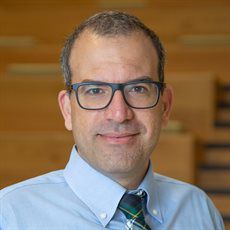
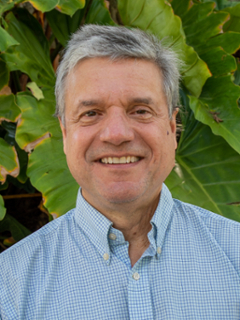
Dr Giang Nguyen is an Associate Professor at the School of Architecture and Civil Engineering, University of Adelaide. Their research focuses on constitutive modeling of engineering materials, computational solid mechanics, and micromechanics of failure. Nguyen's work bridges theoretical, experimental, and numerical approaches to understand material behavior across scales, particularly in soils, rocks, and cement-based materials. Their contributions include advancements in smoothed particle hydrodynamics (SPH) for modeling geomechanical processes and fracture mechanics. Research interests emphasize: Constitutive modeling under multi-axial loading conditions Failure mechanisms in quasi-brittle materials Hydro-mechanical coupling in partially saturated soils 3D printing applications in construction materials Large deformation analysis using SPH Publications span topics like earthquake-induced liquefaction, backward erosion pipelines, and energy-based fracture criteria. Nguyen has developed novel testing methods (e.g., AUSBIT) to capture snapback behavior in indirect tensile testing. Their work integrates experimental validation with advanced computational frameworks.
Gunn Astrid Baugerud is a Professor at OsloMet - Storbyuniversitetet's Faculty of Social Sciences, Department of Social Sciences – Everyday life under different living conditions. Her research focuses on forensic psychology, child abuse investigation techniques, and integrating artificial intelligence into forensic interviewing. She leads projects like the Next Generation Avatar for Information-Gathering Interviews (ARGI) and Barneavhørsprosjektet, aiming to improve investigative practices through technology. Her work emphasizes improving the quality of forensic interviews with children, particularly those exposed to abuse. She has pioneered AI-driven child chatbots and avatar-based training tools for professionals such as police, social workers, and healthcare providers. Key projects include developing digital education programs using AI and cognitive psychology principles to prevent child maltreatment. Research highlights include national studies on preschool-aged abuse victims' disclosures and comparative analyses of 2D/3D virtual environments in interview training. Her dissemination includes workshops at international symposiums on child abuse and presentations to Nordic social work institutions. She collaborates with global institutions like the National Children's Advocacy Centers and the Canterbury Centre for Policing Research.
Dr. Konstantinos Skalomenos is an Assistant Professor of Structural Engineering/Materials Engineering at the University of Birmingham's School of Engineering. He also holds an external appointment at the University of West Attica, Greece. His expertise spans structural dynamics, earthquake engineering, and sustainable materials. He completed his PhD at the University of Patras (2014) and held research fellowships in Kyoto University (2015-2019). His research focuses on enhancing structural resilience through advanced materials and retrofitting techniques, with a strong emphasis on earthquake-resistant design. Dr. Skalomenos has secured over £1.5M in research funding, leading projects on steel bracing systems, composite structures, and infrastructure resilience. He actively advises on disaster prevention and serves on technical committees like IStructE's Seismic and Dynamic Events Panel. Education: PhD in Structural Engineering and Structural Dynamics, University of Patras, 2014 MSc in Seismic Design of Structures, University of Patras, 2009 Diploma in Civil Engineering, University of Patras, 2007 Research Interests: Dr. Skalomenos investigates resilient structural systems, including buckling-reduced steel braces, concrete-filled steel tubular columns, and advanced retrofitting techniques. His work integrates experimental and numerical methods to improve structural efficiency and safety. Recent trends in his publications highlight innovations in steel connection design, composite materials, and seismic risk mitigation. Awards: 2023 Young Scientist Medal (IAAM) Nominated for 2023 Smeaton Medal SDEE Ahmet Çakmak 2021 Best Paper Award Advising & Grants: He mentors PhD/MSc students on topics like multi-objective steel bracing design and high-strength steel analysis. Leads the Structures theme in the National Buried Infrastructure Facility (NBIF) and collaborates with industry partners (e.g., Nippon Steel, Arup). Over 30 funded projects, including 14 as PI, demonstrate his leadership in applied research. Labs/Teams: Coordinates interdisciplinary teams in disaster prevention and material innovation, with projects extending to China, Japan, and Greece.
Valerio De Biagi is an Associate Professor in the Department of Structural, Geotechnical and Building Engineering (DISEG) at the Polytechnic University of Turin, Italy. He is a member of the Interdepartmental Center SISCON (Safety of Infrastructures and Constructions) and serves as Vice Coordinator of the PhD program in Civil and Environmental Engineering. He also acts as the Partnership Agreement Coordinator with STRADA DEI PARCHI, reflecting his strong engagement with industry and infrastructure safety. Research Interests: Structural robustness and progressive collapse Natural hazards (rockfalls, avalanches, debris flows) Structural health monitoring and damage modeling Reliability and risk assessment of civil infrastructure Mechanics of granular materials (snow) His recent research output shows a strong trend toward probabilistic risk assessment, experimental and numerical modeling of impact events, and the development of resilient structural systems. He frequently applies advanced computational methods, including finite element analysis and generative AI, to simulate extreme loading scenarios and infrastructure response. Scientific Roles: Effective Member, SISCO - Italian Society of Building Science (2019–present) Guest Editor, Applied Sciences (2020–present) Evaluator for Swiss National Science Foundation (MINT 2023, COST 2022) Advising and Grants: He actively supervises multiple PhD students across several cycles and leads numerous funded research projects, including competitive national grants (PRIN), PNRR initiatives, and commercial research contracts with public infrastructure agencies. His projects focus on structural safety assessment, development of monitoring protocols, and risk mitigation strategies for bridges, tunnels, and rockfall-prone areas. Labs and Teams: He leads research teams focused on structural complexity, natural hazard interaction, and granular material mechanics. His work involves experimental campaigns, field surveys, and back-analyses of real-world structural failures.
Michele Trancossi is a Senior Lecturer in the ACES school at Sheffield Hallam University, United Kingdom, where he has been employed since November 2015. He holds a PhD in Industrial Engineering from the Università degli Studi di Modena e Reggio Emilia, Italy, awarded in 2009. He also serves as a Visiting Scientist at the Department of Electromechanical Engineering, Universidade da Beira Interior, Portugal, since 2019. PhD in Industrial Engineering, Università degli Studi di Modena e Reggio Emilia (2006–2009) His research focuses on thermodynamics, fluid dynamics, aerospace propulsion, and energy efficiency, with a particular emphasis on the Constructal Law, Bejan number, Coanda effect, and plasma actuators. He investigates applications in sustainable building design, UAVs, airships, and thermal management systems. His work integrates theoretical modeling with experimental validation, especially in heat transfer and fluid flow optimization. The recent publications of Michele Trancossi demonstrate a strong trend in applying second-law thermodynamics and exergy analysis to diverse engineering challenges, ranging from aerodynamics and propulsion to sustainable architecture and indoor climate control. His work frequently explores innovative configurations such as stair-shaped plasma actuators, container house energy systems, and high-altitude airships, often integrating renewable energy sources and Industry 4.0 principles. Member, American Physical Society (2020–present) Member, American Society of Mechanical Engineers – Heat Transfer Division (2009–present) Associate, Society of Automotive Engineers International – Aerospace and Automotive (2008–present) Member, ASTM International (2020–present) Michele Trancossi has led and contributed to numerous research projects on energy-efficient vehicle design, thermodynamic optimization, and advanced propulsion systems. His collaborations span institutions in Portugal, Italy, and the UK, involving interdisciplinary teams focused on aerospace, mechanical, and energy engineering. While specific grant details are not listed, his extensive publication output in high-impact journals and conferences indicates sustained research activity and funding support. He supervises research in thermal systems, fluid dynamics, and sustainable technologies, though no named students are listed in the provided data. He is actively involved in research teams working on the ACHEON propulsion system, Coanda effect applications, and energy self-sufficient vehicles. His work often involves computational fluid dynamics (CFD), experimental testing, and thermodynamic modeling in collaboration with international researchers such as J. Pascoa, G. Cannistraro, and A. Dumas.
Paul Wu is an Associate Professor in the School of Mathematical Sciences at Queensland University of Technology (QUT), Faculty of Science, where he also serves as an industry research fellow in the strategic partnership between the Centre for Data Science (CDS) and AIS/QAS. He leads the sports systems domain within CDS and applies statistical and machine learning models to complex systems across sports, marine science, and defence sectors. PhD, Queensland University of Technology Master of Engineering Science (Computer and Comm Engineering), Queensland University of Technology Bachelor of Engineering (Electrical and Computer Engineering), Queensland University of Technology His research focuses on Bayesian statistics, dynamic Bayesian networks, state space modelling, and simulation techniques. He works closely with domain experts to solve real-world problems in sports performance, ecological resilience, and human systems. His interdisciplinary work spans sports science , marine ecology , and defence applications . Paul’s recent publications demonstrate a strong trajectory in predictive analytics for elite sports and ecosystem modelling, particularly using Bayesian frameworks. His work on swimming performance prediction has informed national training strategies and contributed to competitive success. He has also advanced methods in clustering, model adaptation, and psychosocial risk assessment. His scientific contributions have been recognized through impactful collaborations with elite sports organizations including the Australian Institute of Sport, Swimming Australia, and the West Coast Eagles. Testimonials highlight his role in transforming data analytics in sports injury recovery and performance optimization. Applied Bayesian models in elite sports decision-making Developed predictive tools for marine ecosystem resilience Collaborated on over 30 industry and government projects Supervises research in complex sports data analytics Paul leads a dynamic research environment focused on translating statistical innovation into practical impact across diverse domains.
Yang Liu is a Lecturer at the University of Leicester, United Kingdom, and previously served as a Postdoctoral Research Associate in the Department of Materials at Imperial College London (2019–2024). His research spans two key areas: failure mechanisms of metallic materials using crystal plasticity modelling and water systems engineering, with a focus on sustainability and integrated modelling. He holds an Academic Visitor affiliation at Imperial College’s Faculty of Engineering. Research interests include water quality management, socio-hydrological phenomena, resilience assessment frameworks, and the application of nature-based solutions. He has developed the WSIMOD Python package for simulating water systems and contributed to global infrastructure sustainability studies. His work emphasizes interdisciplinary approaches, blending hydrological models, urban-rural coordination, and meta-modelling to address water management challenges. He has authored numerous papers on topics such as constructed wetlands, catchment classification, and cost-efficient resilience strategies.
Dr. Veronika Kuchta is an Assistant Professor at Florida Atlantic University's Department of Mathematical Sciences, specializing in post-quantum cryptography and its applications to blockchain. She holds a PhD in applied cryptography from the University of Surrey (2016) and has held roles including Honorary Research Fellow at The University of Queensland (UQ) School of Mathematics and Physics (2020–2022), Research Fellow at Monash University (2018–2020), and postdoc at Université libre de Bruxelles (2016–2018). Education: PhD in Applied Cryptography, University of Surrey, UK (2016) Diploma in Mathematics, Heidelberg University, Germany (2010) Research Interests: Her work focuses on constructing quantum-resistant cryptographic primitives, including lattice-based schemes, zero-knowledge proofs, and their integration into real-world systems like blockchain. She explores topics such as post-quantum verifiable random functions, cryptographic accelerators, and privacy-preserving authentication protocols. Key Projects: Formal Verification of Post-Quantum Cryptographic Primitives (UQ Cyber Seed Funding, 2021–2023) Algorand Centre of Excellence on Sustainability Informatics (2022–2023) Grants & Funding: Noted for contributions to blockchain security and lattice-based protocols, her work is supported by industry and institutional grants, including the Monash University Open Grant for the Algorand Centre of Excellence. Labs/Teams: Collaborates with interdisciplinary teams on cryptographic protocol design and hardware-accelerated cryptography (e.g., TPU-based cryptographic acceleration).
Haitham Kanakri is a Lecturer in the Department of Electrical and Computer Engineering at Purdue University's Indianapolis campus. His research focuses on power electronics, biomedical engineering, and electromagnetic systems with applications in medical devices, renewable energy systems, and semiconductor technologies. He is affiliated with Purdue Engineering and contributes to interdisciplinary projects spanning nanoengineering, sustainable housing design, and neurostimulation therapies for Alzheimer’s disease. Key research interests include capacitorless power converter designs, planar electromagnetic components, and neuroengineering innovations. His work integrates nanotechnology fabrication processes with traditional electrical systems to achieve compact, high-performance solutions. Recent projects explore electromagnetic field therapy for neurological disorders and high-efficiency DC-AC conversion systems for electric vehicles. Notable contributions include developing portable neurostimulation devices using meander line antennas and advancing resonant converter technologies for renewable energy applications. His work bridges theoretical electromagnetic models with practical engineering solutions, particularly in transformer design and semiconductor cooling systems. While no specific awards are listed, his publications indicate sustained innovation in power electronics and biomedical engineering. Academic advising and grant activities are not detailed in available records. Collaborations likely involve multidisciplinary teams given the breadth of his research portfolio.
Victor J. Milenkovic is a Professor and Department Chair in the Department of Computer Science at the University of Miami's College of Arts and Sciences. His research focuses on computational geometry, geometric algorithms, and their applications in robotics, computer-aided design (CAD), and high-performance computing. He specializes in developing robust algorithms for handling degenerate cases in geometric computations, free space construction for robotic motion planning, and efficient implementations of geometric operations using modern hardware like GPUs. Key contributions include: Advanced techniques for detecting degenerate predicates in computational geometry GPU-accelerated Minkowski sum computations Robust free space construction for polyhedra Geometric rounding methods for preserving mesh topology His work emphasizes practical implementations with provable correctness and efficiency, validated through applications in CAD, robotics, and HPC environments. No academic awards are explicitly listed in the provided materials. Advising and grants: No student advisees or grant details are provided in the profile. His research has been applied to problems in algorithmic robustness, geometric modeling, and parallel computing. Labs/Teams: No specific lab or team affiliations are mentioned beyond his departmental role.
Hanyi Min is an Assistant Professor at the University of Illinois Urbana-Champaign with dual appointments in the School of Labor and Employment Relations and the Department of Psychology. Her research integrates psychometrics, organizational psychology, and machine learning to address critical challenges in human resources and employment relations. Her primary research focuses on item response theory, measurement invariance across demographic variables, and machine learning applications for personnel selection. Key interests include employee turnover prediction, work passion validation, political diversity in organizations, and age-related measurement issues. She develops advanced psychometric techniques like item-focused trees to ensure fair assessment across diverse populations while leveraging recommender systems for workforce analytics. Recent publications reveal a strong trend toward hybrid methodologies combining classical psychometrics with machine learning to solve practical HR problems. Her work emphasizes predictive validity in personnel selection, context-specific measurement invariance, and the socio-political dimensions of workplace diversity. Current research bridges psychological theory with computational approaches to improve organizational decision-making.
Dr. Margarita Panayiotou is a Lecturer in Educational Psychology at the Manchester Institute of Education (University of Manchester), specializing in adolescent mental health, psychometric analyses, and social media impacts. She has led multiple large-scale school-based mental health intervention projects including the HeadStart evaluation (2016–2023) and the Good Behaviour Game (2017–2020). Her methodological expertise includes structural equation modeling (SEM), Monte Carlo simulations, and network analysis. She founded the MIE SEM group in 2018 to promote collaborative research in advanced quantitative methods. Her academic journey includes a PhD in Clinical Psychology from the University of Edinburgh (2015) and an MA in Psychology from the University of Cyprus (2011). Her research focuses on refining mental health measurement tools, such as the WHOQOL-BREF, and evaluating intervention efficacy through advanced statistical techniques like complier average causal effect (CACE) estimation. Key Projects: HeadStart, Good Behaviour Game, INSPIRE trial, AWARE trial Methodologies: SEM, Monte Carlo simulations, latent class analysis, panel networks SDG Contributions: Education (Goal 4), Good Health (Goal 3) Her recent work highlights the nuanced relationship between social media usage and adolescent mental health, emphasizing the need for context-aware measurement frameworks. Awards include the 2020 RSSG Excellence Award (Highly Commended) and 2019 Exceptional Performance Reward.
Stefanie Jasser, MSc, is a researcher in the Software Engineering and Construction Methods (SWK) group at the University of Hamburg, Department of Informatics. Her work focuses on integrating security into software architecture design and evolution, with a particular emphasis on modeling security constraints and ensuring conformance. Her research interests include: Security by Design in Software Engineering Architectural Constraints for Security Secure Software Evolution Mitigating Code Vulnerabilities Her publications highlight trends in architectural security rules, legacy system protection, and constraint-based approaches to software development. She also contributes to teaching roles in software engineering and architecture at both University of Hamburg and NORDAKADEMIE.
Cris Hein serves as a Researcher in Environmental Science at the National Renewable Energy Laboratory (NREL), where he leads the environmental portfolio within the National Wind Technology Center. He coordinates the Bats and Wind Energy Cooperative and acts as operating agent for the International Energy Agency Wind Technology Collaborative Program's Task 34. His educational background includes: Bachelor of Science in Geology from Texas A&M University Master of Science in Biology from Texas State University PhD in Forestry and Natural Resources from the University of Georgia For over two decades, Hein has specialized in bat ecology and behavior, with more than ten years focused on wind energy environmental interactions. His research develops evidence-based strategies to minimize wildlife impacts from wind turbines, particularly through advanced monitoring systems and operational mitigation techniques. Current work emphasizes offshore wind environmental effects and bat fatality reduction protocols across North American wind facilities. Analysis of his 2024-2025 publications reveals three dominant research trajectories: 1) Gulf of Mexico offshore wind environmental assessments, 2) marine mammal monitoring during offshore construction, and 3) validation of curtailment as the most effective bat fatality mitigation strategy. His work consistently bridges ecological research with practical wind industry applications, showing particular expertise in translating field data into operational guidelines. As program coordinator for the Bats and Wind Energy Cooperative, Hein manages multi-stakeholder collaborations between government agencies, industry partners, and conservation organizations. His leadership in IEA Task 34 facilitates international knowledge exchange on wind energy environmental effects, directing research funding toward high-impact conservation solutions. Hein's laboratory operations center on NREL's National Wind Technology Center environmental research group, which conducts field studies at operational wind facilities nationwide. The team specializes in developing monitoring technologies and analyzing wildlife-turbine interaction data to inform industry best practices and regulatory frameworks.
Becky Reichard is a Full Professor in the Division of Behavioral and Organizational Sciences and the Drucker School of Management at Claremont Graduate University, serving as Academic Director of the Doctorate in Executive Management program and founding faculty director of LeAD Labs (Leader Evaluation, Assessment, and Development). A nationally recognized expert in leadership and organizational behavior, she bridges scholarly rigor with applied impact in inclusive leadership development. Her educational background includes: PhD in Management from the University of Nebraska-Lincoln MS in Industrial and Organizational Psychology from Missouri State University BS in Psychology from Missouri Western State University Reichard's research accelerates leadership growth among historically underrepresented populations (women, BIPOC, LGBTQ+) by examining psychological mechanisms including feedback receptivity, goal setting, self-views, and implicit theories of leadership. She uniquely explores how non-work contexts like family, community, and identity shape leader development trajectories, emphasizing practical applications for organizational settings. Her publication portfolio reveals consistent focus on leader development mechanisms, diversity in leadership, and psychological capital. Key trends include bibliometric analyses of leadership constructs, multisource feedback systems for marginalized groups, and cross-cultural leadership development frameworks. Work spans top journals including The Leadership Quarterly and Academy of Management Learning & Education, demonstrating theoretical depth with real-world applicability across nonprofit, educational, and global contexts. No specific scientific awards, prizes, or fellowships are mentioned in the provided text. Reichard has graduated over 20 PhD students and co-authored publications with 25 student collaborators. Through LeAD Labs, she secured $940,000 in funding from 22 sources, employing 100+ graduate students on applied projects including assessment centers and executive coaching for clients like the Museum Leadership Institute and Right to Play Africa. LeAD Labs (founded 2013) bridges leadership research and practice through assessment centers, 360-degree feedback systems, executive coaching, and developmental workshops. The lab supports diverse organizations from local nonprofits to global institutions including University of Cape Town, translating research into actionable leadership development strategies.