Liza J. Shapiro is a Professor in the Department of Anthropology at the University of Texas at Austin, affiliated with the College of Liberal Arts. Her research focuses on the functional morphology, ontogeny, and evolution of primate locomotion, employing quantitative comparative analysis of musculoskeletal systems in extant and extinct primates alongside biomechanical studies in both laboratory and field settings. Her work emphasizes the vertebral musculoskeletal system in primates and investigates quadrupedal locomotion mechanics. Recent publications explore lemur locomotor mechanics, wild primate limb kinematics, and the role of compliant substrates in augmenting leaping behavior. She has also contributed to debates on hominin locomotor evolution through fossil analysis. Shapiro teaches courses including Primate Anatomy , Biological Anthropology , and Primate Evolution , with active research programs involving collaborations with scholars like Andrew Barr and Brett Nachman. She contributes to the Academic Phylogeny of Biological Anthropology project and maintains field and laboratory research methodologies.
Gerardo Schneider is a Full Professor in Computer Science at the University of Gothenburg, Sweden, and holds a joint appointment at Chalmers University of Technology. He serves as Head of the Data Science and Artificial Intelligence (DSAI) Division and has previously led the Formal Methods Division and acted as Director of Graduate Studies. University of Gothenburg: 2009–present Chalmers University of Technology: 2009–present Uppsala University: 2002–2003 University of Oslo: 2005–2009 His research focuses on formal methods for software engineering, including contract specification and analysis , privacy policy formalization , model checking , and runtime verification . He works on verification of real-time systems, embedded systems (e.g., smart Java cards), and blockchain-based smart contracts. Key projects include: X-LEGAL (2020–2023): Smart Legal Contracts (Swedish Research Council) PolUser (2016–2019): User-Controlled Privacy Policies (Swedish Research Council) ARVI (2014–2018): Runtime Verification Beyond Monitoring (ICT COST Action) ReMU (2013–2017): Reliable Multilingual Digital Communication (Swedish Research Council) He has supervised numerous PhD and Master’s students in formal methods, blockchain security, and privacy compliance. His tools include SPeeDI (Polygonal Hybrid Systems Verification), CLAN (Contract Normative Conflict Detection), and AnaCon (Controlled Natural Language Analysis).
Radu Ioan Bot is a Professor and Dean of the Faculty of Mathematics at the University of Vienna, where he also serves as Head of the Department of Mathematics. His primary affiliations include the Department of Mathematics (Oskar-Morgenstern-Platz 1, 1090 Wien) and the Research Network Data Science (Währinger Straße 29, 1090 Wien). Bot's research centers on optimization theory with emphasis on convex/nonconvex optimization, monotone operators, and dynamical systems. He develops fast algorithms for variational inequalities and monotone inclusions by bridging continuous-time dynamics with discrete optimization methods. His work frequently addresses bilevel optimization, Tikhonov regularization, and second-order dynamics, yielding accelerated convergence rates for complex problems. Analysis of his 15 most recent publications (2023-2025) reveals dominant trends in time-scaling techniques, vanishing damping dynamics, and structured splitting methods. Key contributions include unifying Nesterov acceleration with Heavy Ball dynamics, developing reflected forward-backward algorithms for constrained optimization, and establishing strong convergence guarantees for monotone operator flows. These advances demonstrate consistent innovation in accelerating optimization while maintaining theoretical rigor. No scientific awards were mentioned in the provided source material. Details regarding student advising and research grants were not specified in the available information, though his leadership roles as Dean and Department Head indicate significant administrative responsibilities alongside active research. Bot participates in the University of Vienna's Research Network Data Science, suggesting interdisciplinary engagement in data-driven methodologies with potential applications in machine learning and computational mathematics.
Teresa Fort is an Associate Professor at the Tuck School of Business at Dartmouth College , focusing on international trade, industrial organization, and political economy. She teaches core microeconomics and seminars on firm globalization, while maintaining affiliations as a Faculty Research Fellow at the National Bureau of Economic Research (NBER) and a Research Affiliate at the Centre for Economic Policy Research (CEPR). Her work bridges economic theory with empirical analysis using U.S. Census Bureau data. PhD , University of Maryland (2012) MA , University of Maryland (2008) BA , University of Virginia (2000) Her research explores global production fragmentation , technology's impact on offshoring , and globalization's heterogeneous effects . Key findings include: technology's disproportionate role in domestic production reorganization, the rise of factoryless goods producers redefining manufacturing statistics, and evidence on how trade policies create interdependent sourcing dynamics . Recent publications in Review of Economic Studies and Journal of Political Economy Macroeconomics examine tariff escalation welfare effects and multinational firm trade patterns . Her work has been featured in major media outlets including Financial Times , The Wall Street Journal , and Marketplace . NBER Faculty Research Fellow CEPR Research Affiliate Coauthor of influential studies on global value chains She actively participates in academic conferences, recently discussing topics like multinational firm strategies and labor mobility during recessions . Her empirical methods often involve novel data infrastructure projects, including redesigning the U.S. Census Bureau's Longitudinal Business Database and County Business Patterns imputation techniques.
Britta Peis is a Professor of Management Science at RWTH Aachen University since September 2013. She studied Mathematics and Sports Sciences at the University of Cologne and German Sport University Cologne, respectively. Her academic journey includes positions at TU Dortmund (2006-2007), TU Berlin (2007-2010), and a visiting professorship at Otto-von-Guericke University Magdeburg (2010-2011). Her research focuses on Combinatorial Optimization , Algorithmic Discrete Mathematics , Routing and Scheduling , Robust Optimization , and Algorithmic Game Theory . Her work spans theoretical and applied domains, including network flow analysis, auction algorithms, and strategic decision-making in complex systems. Recent publications (2025-2024) highlight advancements in dynamic auction mechanisms, Stackelberg game formulations, and train routing algorithms. Earlier works (2022-2018) explore matroid theory, packet routing with priority lists, and sensitivity analysis in polymatroid optimization. Key trends include algorithmic design for competitive networks and robustness in time-dependent flows. She is affiliated with the Graduiertenkolleg UnRAVeL (Aachen Institute for Discrete Mathematics and Logic) and contributes to the Chair of Management Science's research agenda in combinatorial optimization and algorithmic game theory.
Tamar Gutner is Professor at American University's School of International Service (SIS), where she previously served as Associate Dean for Faculty Affairs and Graduate Education and directed the MAIR, GGPS, and IER MA programs. Her leadership extends to program development and faculty mentorship, recognized by the 2017 Outstanding Faculty Mentor award. Education: Ph.D. in Political Science, Massachusetts Institute of Technology M.A. in International Relations, Johns Hopkins University School of Advanced International Studies (SAIS) B.S. in Radio/TV/Film, Northwestern University Professor Gutner's research examines the performance and effectiveness of international organizations, particularly international financial institutions. Her work analyzes institutional collaboration between the IMF and World Bank, the design of the Asian Infrastructure Investment Bank (AIIB), and environmental governance in multilateral development banks. She employs theoretical frameworks from agency theory and institutional analysis to investigate mandate-performance gaps in global governance structures, with regional expertise in Central and Eastern Europe and emerging economies. Her publication trends reveal deepening focus on inter-organizational dynamics since 2020, shifting from single-institution analyses to collaborative mechanisms between multilateral entities. Recent work emphasizes evaluation methodologies for IO collaboration, with increasing attention to China's role in reshaping global financial governance through institutions like the AIIB. Scientific Awards: American University William Cromwell Award for Outstanding Teaching (2025) Darrell Randall Award for Outstanding Service (2014, 2024) Council on Foreign Relations International Affairs Fellowship (2019) Multiple AU SIS Faculty Research and Curriculum Development Grants Professor Gutner has secured significant research funding from the Council on Foreign Relations, Brookings Institution, MacArthur Foundation, and International Studies Association. As a mentor, she has guided numerous graduate students through AU's international relations programs, with former advisees now working in international organizations and policy institutions. Her 2019 fellowship at the IMF's Independent Evaluation Office informed both her scholarly work and practical contributions to institutional evaluation frameworks. Her professional engagement includes regular participation in major conferences like the American Political Science Association and International Studies Association, where she presents on MDB collaboration strategies and global governance innovations. Current projects examine evolving corporate strategies in multilateral development banks as accountability mechanisms.
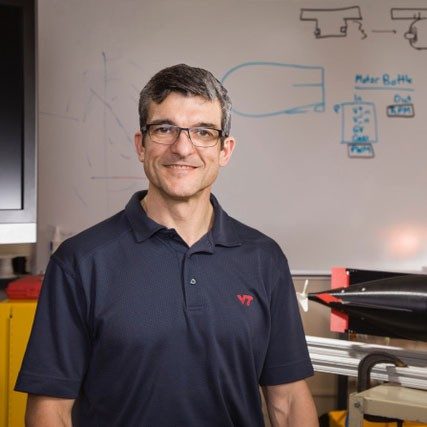
Daniel J. Stilwell is a Professor in the Bradley Department of Electrical and Computer Engineering at Virginia Polytechnic Institute and State University (Virginia Tech), and Co-Director of the Center for Marine Autonomy and Robotics. He holds affiliations including the Seale Coastal Observatory Faculty Fellow role. His research focuses on autonomous underwater vehicles (AUVs), marine robotics, control systems, and sensor networks. He earned his Ph.D. in Electrical Engineering from Johns Hopkins University (1999), M.S. from Virginia Tech (1993), and B.S. in Computer Engineering from the University of Massachusetts (1991). His notable contributions include advancements in AUV control, underwater acoustic communication, multi-agent systems, and sensor network optimization. Key projects include the "Unconventional Marine Platforms" funded by the Office of Naval Research and collaborative subsea mapping initiatives. His work bridges theoretical control systems with practical robotic applications in marine environments. Dr. Stilwell has received prestigious awards such as the NSF CAREER Award and ONR Young Investigator Program Award. His research emphasizes robust control strategies, adaptive systems, and decentralized learning algorithms. He leads efforts in experimental validation of AUV control systems and underwater sensor networks, contributing to both academic and military applications.
Dr. Mellinee Lesley is a Professor in the Language, Diversity & Literacy Studies program at Texas Tech University's College of Education. She serves as Associate Vice Provost for Outreach and Engagement, leading the Community Engaged Learning initiative. Previously, she worked as a high school English teacher and directed a developmental reading program. Ph.D. in Language in Education, Reading/Writing/Literacy from University of Pennsylvania M.A. in English, Rhetoric and Teaching of Composition from New Mexico State University B.A. in English from University of Iowa Her research focuses on critical literacy , disciplinary writing , and equity in education , particularly for marginalized student populations. She explores intersections of media literacies , gender identity , and literacy reform in K-12 settings. Recent publications highlight trends in adolescent writing pedagogy , critical media frameworks , and community-engaged scholarship . Her work bridges high-stakes testing contexts with student-centered literacy approaches . Community Engagement Scholarship Award for Exemplary Projects (APLU/W.K. Kellogg Foundation) Fellow of the National Writing Project Dr. Lesley mentors graduate students in engaged scholarship and examines the democratization of knowledge through collaborative research methodologies . She co-founded the Llano Estacado Writers' Alliance to support equitable literacy practices.
Noah Feldman is the Felix Frankfurter Professor of Law at Harvard University, Chair of the Society of Fellows, and founding director of the Julis-Rabinowitz Program on Jewish and Israeli Law. He holds a D.Phil from Oxford and a J.D. from Yale Law School, with clerkships at the U.S. Supreme Court and D.C. Circuit Court of Appeals. His research focuses on constitutional law, ethics, governance design, and law and religion. A prolific writer, he has authored 10 books including To Be a Jew Today (2024) and The Broken Constitution (2021). He advises global tech firms on AI ethics and governance, notably creating Facebook’s Oversight Board. Feldman is a fellow of the American Academy of Arts and Sciences and hosts the Deep Background podcast. His consulting firm, Ethical Compass, specializes in governance solutions for ethical challenges in technology and public policy. Education: A.B. summa cum laude from Harvard, D.Phil. (Oxford), J.D. (Yale) Key Roles: Senior constitutional advisor to Iraq’s Coalition Provisional Authority (2003), legal advisor to Tunisian constituent assembly post-Arab Spring Research Themes: AI ethics, constitutional history, free speech, and religious law His recent articles analyze legal trends like the Supreme Court’s conservative shift and antisemitism’s modern manifestations. He combines academic rigor with public engagement, lecturing globally and appearing on major news programs.
Harsha Gangammanavar is an Associate Professor in the Department of Operations Research and Engineering Management (OREM) at Southern Methodist University (SMU), affiliated with the Data Science Institute. He holds a Ph.D. in Operations Research and M.S. in Electrical Engineering from The Ohio State University, and a B.E. in Electronics and Communication Engineering from Visvesvaraya Technological University, India. Education: Ph.D. in Operations Research, The Ohio State University M.S. in Electrical Engineering, The Ohio State University B.E. in Electronics and Communication Engineering, Visvesvaraya Technological University Research Interests: His work focuses on stochastic programming, large-scale computational optimization, and their applications in infrastructure systems, healthcare, and wireless communication. Key areas include optimization under uncertainty, stochastic decomposition methods, and scalable algorithms for power systems and renewable energy integration. Recent Activities & Awards: Recipient of NSF XTRIPODS grant for collaborative research in data science (2024). DOE Office of Science grant for multiscale stochastic optimization (2022). ONR grant for decomposition-based stochastic models in discrete-event systems (2022). Awarded INFORMS Undergraduate Student Paper Award (2021) and INFORMS Minority Affairs Poster Competition (2016). Advising & Grants: Current advisees include Ph.D. students Ishara A.A.D.H., Jackson Forner, Chhavi Sharma, and Zhiyuan Zhang. Former students Niloofar Fadavi, Sakitha Ariyarathne, and others have secured roles in industry and academia. Active in securing grants from AFOSR, ONR, DOE, and NSF. Labs & Teams: Leads research on stochastic optimization algorithms, power grid resilience, and healthcare applications through interdisciplinary collaborations. Open to motivated students for Ph.D. research in optimization and data science.
Alannah Oleson is an Assistant Professor in the Department of Computer Science at the University of Denver's Ritchie School of Engineering and Computer Science. Her work focuses on inclusive design, computing education, and addressing equity issues in technology. She is actively involved in the KIHA Innovation Labs, exploring human-centered approaches to computing education and HCI. Her research investigates how demographic factors influence learning outcomes in computing courses, develops pedagogical methods for teaching inclusive design (e.g., the CIDER framework), and examines the ethical implications of technology in K-12 and university settings. Notable areas include algorithmic fairness, gender bias in software systems, and culturally responsive computing education for underrepresented groups. Dr. Oleson's research emphasizes practical methods for integrating critical thinking into software design processes, with recent work exploring peer feedback systems for equity analysis in large courses and curriculum reforms to promote ethical awareness. Her contributions bridge theory and practice, aiming to make computing education more equitable and socially responsible.
Prof. Sara Merino Aceituno is a Professor at the Faculty of Mathematics, University of Vienna, leading research in kinetic theory and its applications to biology, medicine, and social sciences. She holds roles as Vice-Dean of the Faculty and Head of the Institute of Mathematics. Her work bridges mathematical models with experimental data, focusing on emergent phenomena in collective dynamics, opinion formation, and cell behavior. She teaches advanced courses on kinetic theory, biomathematics, and mathematical strategies for learning. Her contributions include modeling cell delamination, nematic alignment, and swarm dynamics through PDEs and probabilistic methods. Collaborations with experimentalists drive her interdisciplinary research. She actively engages in education, advising, and public outreach, including a video series explaining mathematical patterns in nature. Her research emphasizes understanding macroscopic patterns arising from microscopic interactions in complex systems. Education: Holds a PhD in Mathematics, with expertise in kinetic theory and applied partial differential equations. Teaching and leadership roles reflect her commitment to academic excellence and student support. Her work integrates experimental and computational models to study clonal dynamics in tissues and mechanical constraints in epithelial layers. She has authored over 20 papers on topics ranging from active matter to opinion formation networks, contributing to both theoretical advancements and practical applications in biology and social sciences. Research focuses on deriving hydrodynamic and continuum models from particle systems, analyzing stability and bifurcations in collective behavior. Grants and collaborations include the Vienna Biocenter PhD Program and experimental groups in cell biology. Her lab explores how environmental factors influence particle swarms and how mechanical forces shape cell cycles in pseudostratified epithelia.
Prof. Gary Shiu is a Professor of Physics at the University of Wisconsin-Madison, leading research at the intersection of string theory, particle physics, and cosmology. He is affiliated with the Department of Physics and has held academic appointments at institutions like the Hong Kong University of Science and Technology and the CERN. His research focuses on quantum gravity, the Swampland program, inflationary cosmology, and AI applications in physics. He has received notable awards including the Guggenheim Fellowship, Kavli Frontiers Fellowship, and Chancellor’s Distinguished Teaching Award. Education: PhD in Physics (Cornell University, 1998), BSc in Physics (Chinese University of Hong Kong, 1993). Academic roles include founding director of the Center for Fundamental Physics at HKUST and co-initiator of the Physics ∩ ML seminar series. He advises graduate and undergraduate students in theoretical physics and cosmology, with notable advisees contributing to projects in dark energy, string vacua, and machine learning. Research highlights include formulating the Weak Gravity Conjecture in AdS space, developing methods for cosmological parameter inference using topological data analysis, and exploring the String Genome Project. His work bridges theoretical physics with experimental observables, leveraging advanced computational techniques and interdisciplinary collaborations. Key awards include the Kellett Mid-Career Award, Vilas Associate Award, and multiple fellowships from prestigious societies. He actively participates in international conferences and editorial boards, contributing to initiatives like the Gordon Research Conference on String Theory and Cosmology. Labs/Teams: Theoretical and Computational Cosmology Group, AI ∩ Universe Initiative, and collaborations in string phenomenology and machine learning applications.
Iti Chaturvedi is a Lecturer in the Department of Information Technology at James Cook University (JCU). She holds a Ph.D. in Computer Engineering from Nanyang Technological University, Singapore. Her research focuses on signal processing and AI applications in social media, including emotion recognition, speech analysis, and sentiment analysis. She has been recognized as a Top 2% Most Cited Researcher globally (2022) and received the JCU CSE Early Career Researcher Award (2020). She teaches courses such as Machine Learning and Data Science, Programming III, and Design Thinking I. Current research projects include sentiment prediction from social media (since 2020). She serves as an Associate Editor for the Expert Systems journal (2023) and has been an ARC Assessor (2020). Key contributions include work on speech emotion recognition, constrained manifold learning for videos, and multimodal emotion recognition systems. Her research outputs span journals like Expert Systems , Signal Processing , and conferences including IJCNN and AAAI.
Sonja Wogrin is a University Professor (Univ.-Prof.) at Graz University of Technology (TU Graz), where she has been heading the Institute for Electricity Economics and Energy Innovation since August 2021. She holds a Dipl.-Ing. in Technical Mathematics from TU Graz (2008), a Master of Science in Computation for Design and Optimization from MIT (2008), and a doctorate in Electricity Systems from Universidad Pontificia Comillas (2013). Her educational background includes: Doctorate in Electricity Systems, Universidad Pontificia de Comillas (June 2013) Dipl.-Ing. in Technical Mathematics, Graz University of Technology (October 2008) Master of Science in Computation for Design and Optimization, MIT (June 2008) Professor Wogrin's research focuses on decision support systems in the energy sector, optimization methodologies, and particularly the problem of generation capacity expansion. Her work spans several key areas including bilevel programming, capacity expansion planning, energy storage systems, and time series aggregation for energy system optimization. She has made significant contributions to understanding how to integrate renewable energy sources into power systems while maintaining economic efficiency and grid stability. Her research often addresses the challenges of decarbonizing electricity systems through advanced mathematical modeling and optimization techniques. Her recent publications demonstrate a strong focus on improving the computational efficiency of energy system models while maintaining accuracy, with particular attention to the integration of renewable energy sources, energy storage systems, and the development of resilient energy communities. She has pioneered work on time series aggregation methods that balance computational tractability with model accuracy, which is crucial for long-term energy planning under uncertainty. Professor Wogrin has received several prestigious awards and fellowships including: 4th EASE Student Award for "Co-Optimisation of energy storage technologies in tactical and strategic planning models" (2019) Beca de movilidad para investigadores "NILS Ciencia y Sostenibilidad" (2015) Beca Erasmus "Personal Docente/Investigador" de formación (2016) Beca Iberdrola de ayuda a la investigación en energía y medio ambiente (2020) She leads multiple significant research projects including EU - NetZero-Opt, RINGs, iKlimET, V2G-QUESTS, and CIDEAL, which focus on optimizing energy systems for net-zero emissions, resilient energy networks, climate and energy system modeling, vehicle-to-grid integration, and industrial decarbonization. Her work has substantial practical implications for energy policy and grid operations in Austria and beyond. Professor Wogrin collaborates extensively with industry partners including Austrian Power Grid AG, KELAG, and Netz Niederösterreich, ensuring her research addresses real-world energy challenges. Professor Wogrin leads the research group at the Institute for Electricity Economics and Energy Innovation, which develops advanced optimization models for energy systems. Her team has created the LEGO (Low-carbon Expansion Generation Optimization) model, an open-source tool for energy system optimization that has gained international recognition. The group's work spans from fundamental optimization methods to practical applications in energy system planning and operation, with a strong emphasis on computational efficiency and model accuracy.