Dritan Nace is a Professor in the School of Engineering at the University of Evry , specializing in network optimization , robust resource allocation , and communication systems . His work bridges computer science , operations research , and telecommunications , focusing on max-min fairness , elastic routing , and survivable network design . Recent research includes: Probabilistic controller placement for 5G networks (2025) Robust VNF reconfiguration models (2024) Weather-resilient FSO network optimization (2021) His scientific contributions span: Network Fairness : Foundational work on max-min fairness and flow thinning 5G Optimization : Innovation in virtual network function placement Air Traffic Systems : Chance-constrained flight level assignment models Nace's collaborative work with researchers like Michal Pióro and Jacques Carlier has shaped telecom infrastructure design and resource-constrained scheduling methodologies.
Georgios Ellinas is a Professor at the University of Cyprus, specializing in optical networking, machine learning for network management, and UAV swarm coordination. His research spans critical areas such as Elastic Optical Networks (EONs) , Physical Layer Security , and Multi-Agent Reinforcement Learning for autonomous systems. Recent work includes quantile regression models for handling uncertainty in network traffic, edge-assisted collision warning systems for urban mobility, and multi-task learning architectures for drone state identification. He applies distributed estimation techniques to jamming aerial targets and explores probabilistically robust trajectory planning for autonomous vehicles. His contributions extend to fair resource allocation in optical networks, UAV swarm coordination using ROS-LoRa integration, and quantum key distribution optimization. Collaborations with researchers like Tania Panayiotou and Panayiotis Kolios highlight his interdisciplinary approach.
Aida Maraj is a mathematician holding a W2 professorship at the Max Planck Institute of Molecular Cell Biology and Genetics (MPI CBG) in Dresden, where she leads the Algebraic Statistics for Biology research group. She is also a Young Investigator in the Department of Mathematics at TU Dresden and maintains an affiliation with the Department of Mathematics at the University of Tirana. Her academic journey includes a PhD from the University of Kentucky (2015-2020), followed by postdoctoral positions at the Max Planck Institute for Mathematics in the Sciences, University of Michigan, and Harvard University. Dr. Maraj's research focuses on applied and asymptotic algebra and geometry with applications in statistics and biology. Her work employs tools from algebraic geometry, commutative algebra, combinatorics, formal language theory, and symbolic computation to address complex biological questions. She has developed expertise in discovering algebraic and geometric properties of hierarchical models and Gaussian models, particularly in high-dimensional settings where classical statistical methods fail. Her recent publications demonstrate growing interdisciplinary impact, bridging mathematical theory with biological applications in areas like cnidarian morphogenesis, tissue remodeling, and biomechanical determinants of shape diversity. She actively organizes major academic events including the Dive into Research in Dresden program for summer 2026 and has co-organized the CIMPA summer school Mathematical Methods in Data Analysis at the University of Tirana in 2022. Among her scientific recognitions are the NSF Grant DMS2306672 as Principal Investigator and a Simons Travel Grant. She previously received the IBL Desapio fellowship during her time at the University of Michigan. Currently mentoring 5 postdocs (Soham Basu, Danai Deligeorgaki, Oskar Henriksson, Carlotta Langer, Maximilian Wiesmann) Supervising 2 PhD students (Yue Jiao, Se Eun Choi) Hosting multiple interns annually including Joan Pascual Ribes, tahda queer, and Joseph Leach Organizing the 2026 Combinatorics in Algebraic Statistics and Game Theory summer research program Dr. Maraj maintains strong connections with Albanian academic institutions and has been instrumental in creating opportunities for Albanian students through international collaborations. Her work exemplifies the growing importance of algebraic methods in modern biological research and data analysis.
Sylvie Putot is a Professor of Computer Science at École Polytechnique, where she is affiliated with the LIX (Computer Science Laboratory) and a member of the Cosynus research team. Her office is located in the Alan Turing Building in Palaiseau. She is actively involved in research, teaching, and organizing the LIX Seminar series. PhD in Computer Science, École Polytechnique (specific year not provided) Previous affiliation: CEA LIST, where she contributed to the FLUCTUAT static analyzer Her research focuses on the formal verification of numerical programs, hybrid systems, and cyber-physical systems. She employs abstract interpretation, particularly using zonotopic domains, to analyze floating-point computations, rounding errors, and robustness. Her work bridges theoretical computer science with practical applications in safety-critical domains such as aerospace, robotics, and embedded systems. She is also extending these methods to ensure the safety and explainability of AI systems. The recent publications highlight a strong trend toward formal methods for AI safety, mobile robotics, and quantified reachability. Her work consistently involves collaboration with Eric Goubault and others, and spans from foundational static analysis to applied verification in complex systems. Keywords across publications include formal methods, verification, cyber-physical systems, abstract interpretation, and AI safety. Scientific Awards No specific awards mentioned in the provided text. She advises numerous PhD students on topics related to verification, robotics, and numerical analysis. Her research is funded by major projects such as SAIF (Safe AI through Formal methods), FARO (algorithmic foundations of robot swarms), and ANR projects like NusSCAP and COVERIF. She has led or participated in many national and international research initiatives. She is a key member of the Cosynus team at LIX, which focuses on the co-design of safe and intelligent systems. She organizes the monthly LIX Seminar, fostering academic exchange within the laboratory and the broader Institut Polytechnique de Paris community.
Lukas Fervers is a Researcher in the Methodological Consulting Board Department at the Deutsches Institut für Erwachsenenbildung - Leibniz Centre for Contemporary Education Research (DIE). He has been with DIE since 2022, previously serving as a PostDoc in the Department of Teaching, Learning, Consulting (2020-2021). His academic journey includes postdoctoral work and project leadership at the University of Cologne since 2017, research associate position at the Institute for Applied Economic Research in Tübingen (2013-2020), and doctoral studies at the Research Institute Center for Social Policy at the University of Bremen (2012-2018). Dr. Fervers specializes in empirical labor market and educational research , with particular expertise in intervention and evaluation research and applied econometrics , especially causal inference methods. His work bridges economic theory with practical policy implications, focusing on how interventions affect educational outcomes, labor market participation, and social inequalities. He has developed sophisticated methodological approaches to evaluate the effectiveness of various social and educational programs. Analyzing his recent publication record (2022-2025), Fervers demonstrates a strong focus on pandemic-related labor market disruptions , gender inequalities in education and employment , and the effectiveness of counseling interventions in educational settings. His work frequently employs randomized controlled trials and natural experiments to establish causal relationships, reflecting his methodological expertise in causal inference. The interdisciplinary nature of his research spans economics, education, sociology, and gender studies, with a consistent emphasis on policy-relevant findings. Dr. Fervers has been actively involved in multiple collaborative research projects, often working with interdisciplinary teams across German research institutions. His work on the Early Prevention of Dropout project demonstrates his commitment to translating research into practical educational interventions. While specific grant information isn't detailed in the provided text, his consistent publication output across multiple high-impact journals suggests successful research funding. His methodological consulting role at DIE places him at the intersection of research design and practical application, where he likely supports other researchers in developing rigorous evaluation frameworks for educational and social programs. This position leverages his dual expertise in both substantive policy areas and advanced quantitative methods.
Prof. Dr. Manfred Meyer is a faculty member at the Westfälische Hochschule , affiliated with the Department of Mechanical Engineering (FB 6) and the Institute of Empirical Economic and Social Research . He serves as an International Coordinator and has been associated with the university since September 2002. Education: Diplom in Computer Science with a minor in Economics from the University of Kaiserslautern Research and Teaching: His teaching focuses on Foundations of Computer Science 1 and 2 for Business Informatics and Mechatronics programs, alongside a specialized course in Constraint Processing . Research areas include Online Marketing , Business Process Optimization , IT Strategy , and the application of Artificial Intelligence to combinatorial problems. He has contributed to methods for developing large-scale business software systems. Professional Background: Prior to joining Westfälische Hochschule, he worked as a researcher and project leader at the German Research Center for Artificial Intelligence (DFKI) for 5.5 years, a consultant at sd&m AG for 2.5 years, and served as a Professor of Business Informatics at Schmalkalden University of Applied Sciences for 5.5 years, where he co-founded the Center for E-Business Technologies, Applications, and Systems (CETAS) .
Dr. Tim Bode is a Researcher at Forschungszentrum Jülich's Peter Grünberg Institute (PGI), leading the Institute for Quantum Computing Analytics (PGI-12) and the Helmholtz Enterprise-funded Quicopt project. His work develops quantum-inspired optimization software to solve industrial-scale discrete and continuous optimization problems. His research focuses on: Quantum Optimization Quantum Algorithms Quantum Simulation Operations Research Recent publications (2023-2025) analyze adiabatic bottlenecks in quantum annealing, develop mean-field optimization frameworks, and expose limitations in quantum approximate optimization for higher-order constraints. His benchmarks demonstrate competitive performance against classical solvers like Gurobi on laptop hardware. Dr. Bode actively collaborates internationally, presenting at NASA Ames, University of Minnesota, and German Aerospace Center (DLR). He developed the open-source QAOA.jl toolkit for quantum optimization algorithms. The Quicopt research group operates within Forschungszentrum Jülich's quantum computing ecosystem, leveraging institutional HPC resources for algorithm development and industrial application testing.
Dr. Xingang Wen is a postdoctoral researcher at Bielefeld University , affiliated with the Faculty of Mathematics and the Institute of Mathematical Economics (IMW) . He contributes to the CRC 1283 'Taming uncertainty and profiting from randomness and low regularity' under project C2: Innovation dynamics in market uncertainty and credit-constrained firms . His research intersects mathematical economics and operations management, focusing on strategic investment decisions under uncertainty. Research Areas: Investment under uncertainty, capacity management, environmental and energy economics, real options, dynamic game models. Projects: CRC 1283 C2 project, renewable energy policy analysis, financial constraint modeling. His publications analyze how firms make capacity, innovation, and R&D investment decisions when facing demand uncertainty, financial constraints, and environmental regulations. Key topics include double marginalization, subsidy retraction effects, and bankruptcy risks. Articles employ mathematical economics, operations research, and game theory to model strategic interactions in uncertain markets.
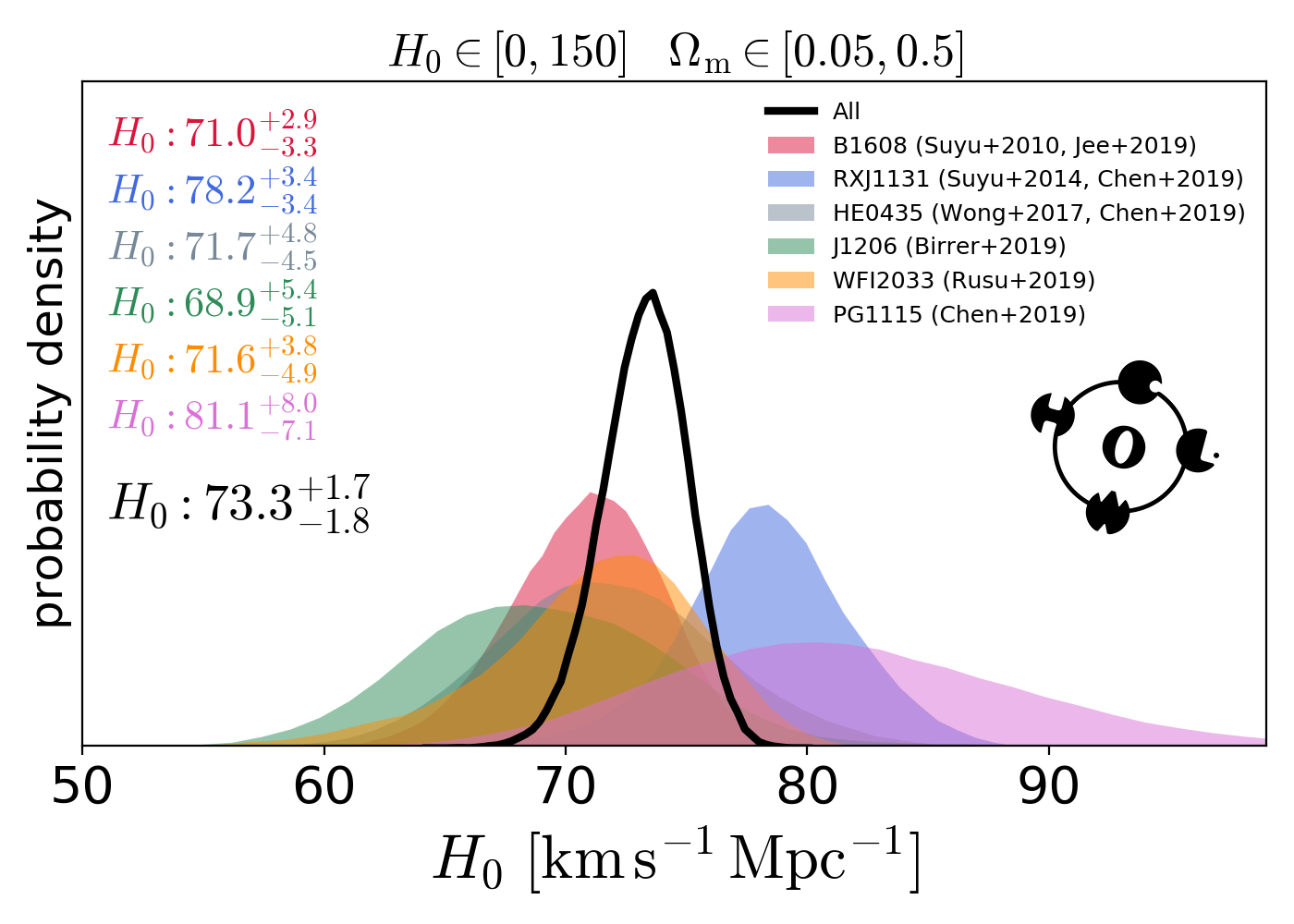
Prof. Sherry Suyu is an Associate Professor of Observational Cosmology at the Department of Physics, Technical University of Munich (TUM), School of Natural Sciences . She leads the H0LiCOW and HOLISMOKES programs, focusing on measuring the Hubble constant (H₀) through gravitational lensing and studying dark energy, galaxy evolution, and supernovae via lensed systems. Research Focus : Observational cosmology, gravitational lensing, dark energy, supernova progenitors, galaxy dark matter halos Key Projects : H0LiCOW (H₀ measurement), HOLISMOKES (supernova studies) Her recent publications (2010–2020) analyze time-delay distances in lensed quasars to constrain cosmological parameters like H₀ (73.3 ± 1.7–1.8 km/s/Mpc in flat ΛCDM) and probe tensions between early- and late-Universe observations. She employs tools such as Hubble Space Telescope , Keck adaptive optics , and lenstronomy/GLEE lensing software. She teaches courses including Gravitational Lensing , Experimental Physics , and Supernova Seminars , with mentoring in TUM's Bachelor’s Physics Program . Her work involves collaborations with institutions in Germany, the U.S., Switzerland, Japan, and other countries.
Prof. Dr. Dezső Szalay is a Full Professor of Economics at the University of Bonn , holding a W3 professorship since 2009. His research spans Contract Theory , Information Economics , Game Theory , and Industrial Organization , with applications to Financial Contracting and Microeconomic Policy . Education: Ph.D. (summa cum laude) from University of Mannheim (2001), MSc from University of Basel (1995). His research focuses on strategic communication, information design, and optimal contracting. Key themes include delegation mechanisms , organizational incentives , and regulatory design under uncertainty. Recent work examines communication dynamics under catastrophic risks. His publications appear in top journals like American Economic Review , Journal of Economic Theory , and Review of Economic Studies , with trends showing increasing emphasis on information aggregation , multidimensional screening , and strategic risk management . Scientific Awards: Fellow of CEPR (Industrial Organization Program) Excellence in Refereeing Award, American Economic Review (2009) FAME Publication Award (2005) Swiss Science National Foundation Scholarship (1998) Deutsche Forschungsgemeinschaft Scholarship (1996) He has served on organizing committees for major conferences like ESSET and SET , and his teaching includes Microeconomics (Master) and Research Module in Microeconomic Theory .
Arne Meier is a Professor at Leibniz Universität Hannover, affiliated with the Faculty of Electrical Engineering and Computer Science and the Institute of Theoretical Computer Science. He heads the Algorithms research group, focusing on theoretical aspects of computer science with applications to artificial intelligence and database systems. Meier obtained all his academic degrees—Bachelor's, Master's, PhD, and Habilitation—at Leibniz Universität Hannover, establishing a strong foundation in theoretical computer science. His academic journey at the same institution reflects his deep commitment to advancing research in computational theory. Meier's research spans several interconnected areas in theoretical computer science. His primary focus is on complexity theory, particularly the parameterized complexity of problems in non-classical logics with applications to AI. He also investigates enumeration algorithms and the logical foundations of artificial intelligence. His work bridges theoretical computer science with practical applications in knowledge representation and reasoning systems. He has a notable interest in LaTeX and typography, having developed the 'timeline' package for creating timelines in LaTeX documents. His recent publications (2023-2025) demonstrate a consistent focus on the intersection of logic, complexity, and artificial intelligence. Meier's work shows progression from foundational research in dependence and team logics toward more applied areas in argumentation theory and database systems. His research increasingly addresses computational challenges in AI systems, particularly in reasoning under uncertainty and handling inconsistent information. Meier actively contributes to the academic community through extensive program committee service for major conferences including AAAI (2021, 2023, 2024, 2025), IJCAI (2021-2025), and FoIKS (2024 as Co-Chair, 2026). He has also served as a reviewer for numerous conferences and journals in theoretical computer science and artificial intelligence. His current research projects include the DAAD-funded 'Applications and Complexity of Logics in Semiring-Team-Semantics' (2024-2025) and the DFG project 'Team Logics: New Bridges to Database Repairs' (2023-2026). Previously, he led the DFG project 'Nonclassical logics: parametrised and enumeration complexity' (2013-2022) and the MWK project 'Innovation Plus: Komplexität von Algorithmen' (2020-2022). Meier leads the Algorithms research group at Leibniz Universität Hannover, which focuses on theoretical aspects of algorithms with applications to logic and artificial intelligence. The group's work spans complexity theory, logical formalisms, and their applications to computational problems in knowledge representation and database systems.
Bodo Rosenhahn is a Full Professor at Leibniz University Hannover, heading the Institute for Information Processing since September 2008. His research focuses on automated image interpretation with profound expertise in Computer Vision, Machine Learning, and Big Data Analysis. He has established himself as a leading researcher through extensive contributions to the field and successful industry transfer of his work. Rosenhahn received his Computer Science education at the University of Kiel, earning his Dipl.-Inf. in 1999 and Dr.-Ing. in 2003. His academic journey included a postdoctoral position at the University of Auckland (2003-2005), funded by the German Research Foundation, followed by senior researcher work at the Max-Planck Institute for Informatics in Saarbruecken (2005-2008). His research interests span multiple cutting-edge areas including Computer Vision, Machine Learning, 3D Human Pose Estimation, Motion Capture, Object Tracking, Anomaly Detection, and Reinforcement Learning. His work bridges theoretical foundations with practical applications, particularly in medical imaging, autonomous systems, and industrial quality control. The group he leads has developed innovative approaches for video-based motion capture, semantic scene analysis, and multi-object tracking that have achieved state-of-the-art results in numerous challenges. His most recent publications demonstrate strong trends toward explainable AI systems, uncertainty quantification in vision models, robust multi-model fitting techniques, and the integration of quantum principles with machine learning. These works reflect his commitment to developing both theoretically sound and practically applicable computer vision solutions that address real-world challenges in industry and medicine. DAGM-Prize 2002 Dr.-Ing. Siegfried Werth Prize 2003 DAGM-Main Prize 2005 ERC-Starting Grant 2011 (EUR 1.43 million) CVPR 2017 Multi-Object Tracking Challenge PhysRev-A Editors Suggestion 2023 TÜV-Süd Innovation award 2018 As head coach of the LUH AI competition team, Rosenhahn has mentored numerous students who have achieved success in international competitions. His research has been supported by prestigious grants including the ERC Starting Grant and POC Grant. He has also received the Erskine Fellowship for research at the University of Canterbury. Since 2023, he serves as associate editor for IEEE TPAMI, the highest-ranked journal in computer science. Rosenhahn leads a vibrant research group focused on automated image interpretation with multiple ongoing projects including Multiple People Tracking, Relational Object Tracking, Physics-based modeling, Video-based Motion Capture, and Quantum Learning. His group has developed significant datasets such as the Multimodal Motion Capture Indoor Dataset (MPI08) and Multimodal Motion Capture Dataset (TNT15) that have become valuable resources for the computer vision community. The group maintains strong industry connections, successfully transferring research into practical applications while continuing to push the boundaries of fundamental research in computer vision and machine learning.
Dr. Frank Hannig is a Professor at the Department of Computer Science, Friedrich Alexander University Erlangen-Nuremberg (FAU), Germany. He serves as the Head of the Architecture and Compiler Design Group within the Hardware-Software-Co-Design department (Department 12). With a career spanning over two decades at FAU since 2003, he has established himself as a leading researcher in hardware-software co-design, compiler design, and embedded systems. Dr. Hannig received his Diploma degree in Electrical Engineering/Computer Science from the University of Paderborn in 2000, followed by his Dr.-Ing. degree in Computer Science from FAU in 2009 with a thesis on "Scheduling Techniques for High-Throughput Loop Accelerators." He completed his habilitation (Dr.-Ing. habil.) in 2018 with a thesis titled "Domain-specific and Resource-aware Computing," which qualifies him for a full professorship in the German academic system. His research focuses on hardware-software co-design, compiler design for embedded systems, reconfigurable computing, parallel systems, and machine learning acceleration. Dr. Hannig has made significant contributions to domain-specific and resource-aware computing, with applications in image processing, automotive systems, and edge AI. His work bridges the gap between high-level programming models and efficient hardware implementations, particularly for resource-constrained environments. Dr. Hannig's recent publications reveal a strong trend toward efficient machine learning deployment on embedded devices and microcontrollers, with particular emphasis on memory optimization, hardware acceleration, and low-precision computing. His research spans multiple domains including computer architecture, machine learning, and embedded systems, with a focus on practical implementations for real-world applications. Dr. Hannig serves as an Associate Editor for IEEE Embedded Systems Letters and the Journal of Real-Time Image Processing. He has organized numerous prestigious conferences including SLOHA 2021, ARC 2021, and Euro-Par 2021, demonstrating his leadership in the academic community. As an educator, Dr. Hannig teaches courses on Domain-Specific and Resource-Aware Computing on Multicore Architectures, Parallel Systems, and Embedded Systems. He has supervised numerous students through lectures, exercises, and seminars covering electronic system level design and multi-core architectures. Dr. Hannig leads several significant research projects including InvasIC (DFG Transregional Collaborative Research Centre), ExaStencils (Advanced Stencil-Code Engineering), and HBS (DFG Research Training Group on Heterogeneous Image Systems). His work with the HIPAcc open-source project has contributed to domain-specific language and compiler development for image processing applications.
Kalja Kanellopoulos serves as a Researcher at the Institute for Media Research within the Faculty of Philosophy at Chemnitz University of Technology. Since April 2012, she has been integral to the DFG-funded Research Training Group 'CrossWorlds' (Connecting Virtual and Real Social Worlds), conducting interdisciplinary work at the intersection of social sciences and computer science to overcome constraints in media-mediated communication through studies of communication, emotions, sensomotorics, and learning. Her academic foundation includes a Magister degree (Master's equivalent) in Sociology, General Rhetoric, and Modern German Literature (2004-2011), featuring an international semester at the National and Kapodistrian University of Athens (2007-2008). Prior professional experience encompasses research assistance for the 'Historical Dictionary of Rhetoric' at Tübingen University (2010-2012) and industry work at CeveyConsulting GmbH (2006-2010). Kanellopoulos specializes in Qualitative Social Research, Science and Technology Studies, and Human-Computer Interaction, with concentrated focus on museum contexts. Her ethnographic doctoral project examines innovative communication at interactive museum interfaces under Prof. Claudia Fraas' supervision. She develops frameworks merging design thinking with social inquiry to investigate materialities and aesthetics of digital systems, emphasizing playful interaction and user experience in cultural spaces. Her 2012-2014 publications reveal strong thematic cohesion around interactive museum technologies, particularly multitouch and tabletop systems. These works demonstrate consistent application of Human-Computer Interaction principles to cultural education, with recurring emphasis on collaborative interfaces, visitor experience optimization, and interdisciplinary co-design. The research consistently emerges from CrossWorlds' collaborative environment, reflecting integration of social science methodologies with technical development. As an active member of ACM, Deutsche Gesellschaft für Soziologie (including its Qualitative Methods section), European Sociological Association, and Gesellschaft für Informatik (including Human-Computer Interaction groups), she bridges computational and social domains. Her DFG-funded CrossWorlds work (2012-2018) established platforms for examining virtual-real social connections through interdisciplinary teamwork. Kanellopoulos operates within CrossWorlds' interdisciplinary network of computer scientists and social scientists, contributing to projects that analyze communication constraints across virtual-real boundaries. Her team develops methodological approaches for studying interaction in cultural contexts, producing collaborative outputs for ACM conferences and INTERACT, while advancing understanding of digital systems in educational and heritage settings through materiality-focused investigations.
Vincent Küszter is affiliated with the Chair of Computer Graphics and Visualization at Chemnitz University of Technology. His academic background includes a PhD in Computer Science (2012–2016) under Prof. Dr. Guido Brunnett, supported by the DFG Graduate Program 'Crossworlds,' and prior degrees in Applied Computer Science and Intelligent Media/Virtual Reality. Research Focus: Real-time computer graphics, Virtual Reality (VR), Augmented Reality (AR), and sensomotorics. Key Projects: Investigated multi-user interaction in VR environments with individual views, explored stereoscopic systems, and improved collision handling in clothing simulations. Collaborations: Worked with Dr. Daniel Pietschmann and interdisciplinary teams bridging technology and social sciences.