معرفی
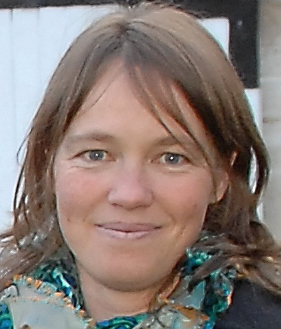
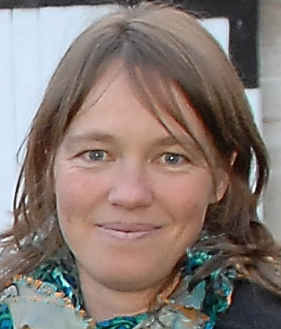
Sylvie Putot is a Professor of Computer Science at École Polytechnique, where she is affiliated with the LIX (Computer Science Laboratory) and a member of the Cosynus research team. Her office is located in the Alan Turing Building in Palaiseau. She is actively involved in research, teaching, and organizing the LIX Seminar series.
- PhD in Computer Science, École Polytechnique (specific year not provided)
- Previous affiliation: CEA LIST, where she contributed to the FLUCTUAT static analyzer
Her research focuses on the formal verification of numerical programs, hybrid systems, and cyber-physical systems. She employs abstract interpretation, particularly using zonotopic domains, to analyze floating-point computations, rounding errors, and robustness. Her work bridges theoretical computer science with practical applications in safety-critical domains such as aerospace, robotics, and embedded systems. She is also extending these methods to ensure the safety and explainability of AI systems.
The recent publications highlight a strong trend toward formal methods for AI safety, mobile robotics, and quantified reachability. Her work consistently involves collaboration with Eric Goubault and others, and spans from foundational static analysis to applied verification in complex systems. Keywords across publications include formal methods, verification, cyber-physical systems, abstract interpretation, and AI safety.
Scientific Awards
- No specific awards mentioned in the provided text.
She advises numerous PhD students on topics related to verification, robotics, and numerical analysis. Her research is funded by major projects such as SAIF (Safe AI through Formal methods), FARO (algorithmic foundations of robot swarms), and ANR projects like NusSCAP and COVERIF. She has led or participated in many national and international research initiatives.
She is a key member of the Cosynus team at LIX, which focuses on the co-design of safe and intelligent systems. She organizes the monthly LIX Seminar, fostering academic exchange within the laboratory and the broader Institut Polytechnique de Paris community.
حوزههای پژوهشی