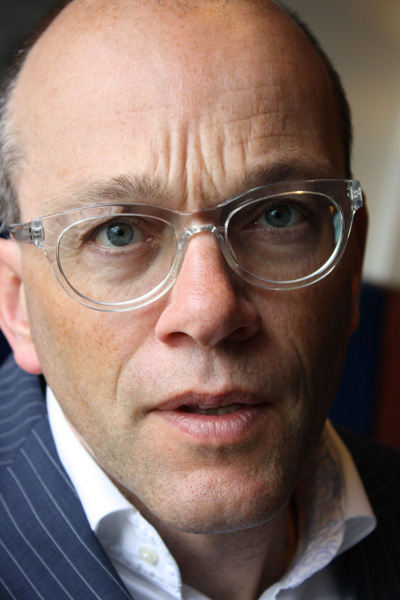
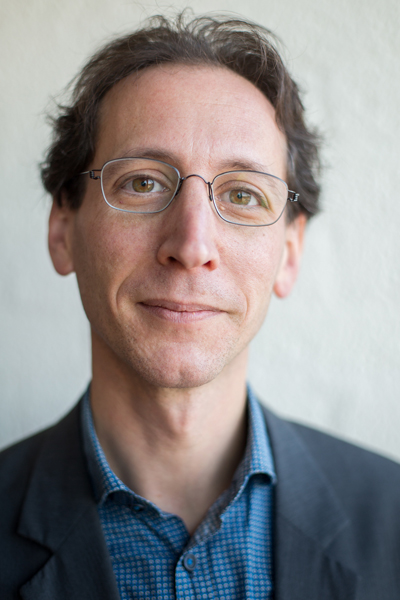
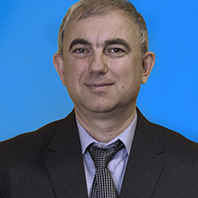
Joost-Pieter Katoen is a full Professor at RWTH Aachen University and Head of its Computer Science Department since 2012. He also holds a part-time (20%) Professorship at the University of Twente . His research focuses on model checking , probabilistic verification , formal semantics , and software verification , with applications in aerospace systems. His work has led to significant tools like MRMC (probabilistic model checker), COMPASS (AADL analysis tool-set), and libalf (learning automata library). He has authored over 18 international projects (total €5.2 million) and graduated 12 PhD students. Scientific Awards : Member, German National Academy of Sciences (Leopoldina), 2024 ACM Fellow, 2020 ERC Advanced Grant, 2018 Honorary doctorate, Aalborg University, 2017 Teaching Award, RWTH Aachen, 2010 Philips Early Career Development Award, 1988 Research Trends (from articles): His recent work spans probabilistic program verification , quantitative game theory , Markov chain analysis , and parameter synthesis for stochastic systems, with applications in AI, quantum computing, and fault tree analysis. Leadership & Service : Katoen co-founded the QEST conference , chairs ETAPS steering committee, and has led numerous program committees (CONCUR, TACAS, QEST). He has served on editorial boards and organized conferences/seminars globally.
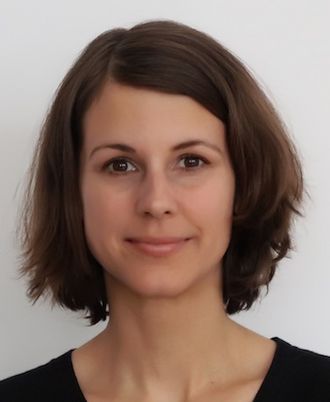
Jennifer Culbertson is an Associate Professor at the University of Edinburgh, where she has been a faculty member since 2014 when she took up a Chancellor's Fellowship, later being promoted to Reader (equivalent to Associate Professor) in 2018. She is a founding member of the Centre for Language Evolution at Edinburgh and maintains an active research program in experimental linguistics and cognitive science. Dr. Culbertson obtained her PhD in Cognitive Science from Johns Hopkins University in 2010, with her dissertation receiving the Robert J. Glushko Prize for Outstanding Dissertations in Cognitive Science in 2011. Her primary research investigates how languages are shaped by learning and use, with particular focus on grammatical structures (like word order) and morphological categories (gender and person systems). She employs experimental and computational methods to explore how typological universals arise from properties of the human cognitive system. Her work bridges theoretical linguistics, cognitive science, and language evolution, examining the cognitive constraints that influence linguistic patterns across diverse languages and learning contexts. She frequently uses artificial language learning paradigms to isolate specific cognitive mechanisms underlying language structure. Analysis of her recent publications reveals a consistent focus on cognitive biases in linguistic structure, particularly in word order and morphological systems. Her research increasingly incorporates cross-population studies (including work with autistic learners) and developmental perspectives to understand how language patterns emerge across different populations and throughout the lifespan. She examines how simplicity principles, communicative efficiency, and statistical learning shape linguistic structure. Dr. Culbertson's scientific contributions have been recognized with several prestigious awards: Robert J. Glushko Prize for Outstanding Dissertations in Cognitive Science (2011) ERC Starting Grant Young Academy of Europe membership (2019) Her research has been supported by over €2 million in funding from the ESRC and ERC. While specific advisees aren't mentioned in the provided text, her active publication record with numerous co-authors suggests she mentors graduate students and early-career researchers. Her work has significant implications for understanding language universals, language acquisition, and the cognitive foundations of linguistic structure. As a founding member of the Centre for Language Evolution at Edinburgh, Dr. Culbertson collaborates with an interdisciplinary team investigating the biological, cognitive, and cultural foundations of human language. Her research often intersects with psychology, cognitive science, and computational linguistics, contributing to a comprehensive understanding of language as both a cognitive and social phenomenon.
Philipp Haindl is a lecturer at the Department of Computer Science and Security at St. Poelten University of Applied Sciences. His work focuses on software engineering, cybersecurity, and AI integration in education and manufacturing. Software Engineering Cybersecurity Artificial Intelligence DevOps Quality Assurance Research Interests: Dr. Haindl explores software metrics, inter-service security in microservices, and AI tools like ChatGPT in programming education. He investigates quality models and non-functional requirements in DevOps environments. Publications: Recent work includes studies on ChatGPT's impact in software engineering education, systematic reviews of microservice security, and frameworks for human-AI teaming in manufacturing.
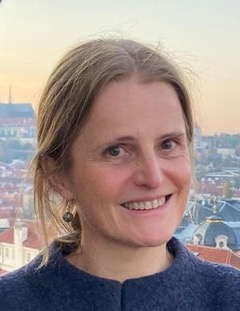
Sophie N. Parragh is Professor and Head of the Institute of Production and Logistics Management at Johannes Kepler University Linz, where she also serves as program director of the master's degree program in Economic and Business Analytics. She received her PhD from the University of Vienna in 2009 and completed her habilitation in 2016, following postdoctoral research at the IBM Center for Advanced Studies in Porto and a visiting professorship at the Vienna University of Economics and Business. Her research focuses on developing exact and heuristic optimization algorithms for complex logistics and transportation problems. Key areas include vehicle routing, green logistics, disaster relief distribution planning, scheduling, and multi-objective optimization. She has particular expertise in branch-and-bound, branch-and-price, column generation, and metaheuristics approaches to solve challenging combinatorial optimization problems. Dr. Parragh's publication record shows a consistent trend toward increasingly complex multi-objective problems, with recent work focusing on electric vehicle routing, multi-echelon production planning under uncertainty, and bi-objective facility location problems with applications in disaster relief. Her research bridges theoretical optimization methods with practical applications in logistics and transportation. Scientific Awards: ÖGOR (Austrian Society for Operations Research) dissertation prize doc.award from the University of Vienna Hertha Firnberg Postdoc fellowship from the Austrian Science Fund (FWF) Dr. Parragh has served as department editor for OR Spectrum and as associate editor for Transportation Science, Transportation Research Part B: Methodological, INFORMS Journal on Computing, and Networks. She has led and participated in numerous third-party funded research projects in operations research, including work in healthcare logistics, field staff routing, production planning, and electric vehicle routing. In 2021-2022, she co-organized the monthly VeRoLog webinar series, demonstrating her active engagement with the international operations research community. She maintains strong research collaborations across Europe, evidenced by her co-authored publications with researchers from institutions in Austria, France, Portugal, Denmark, and beyond. Her work consistently addresses both theoretical challenges in optimization and practical applications in industry and public service contexts.
Gerhard Friedrich is a Full Professor at the University of Klagenfurt, leading the Institute for Artificial Intelligence and Cybersecurity. He previously served as Dean of the Faculty of Technical Sciences (2013–2021). His roles include Coordinator for International Relations of the Faculty of Engineering and Member of the Faculty Conference of Technical Sciences. He holds a PhD in Computer Science from Vienna University of Technology and has extensive industry experience, including heading departments at Siemens Austria and research roles at Siemens Corporate Research and Stanford Research Institute. Research focuses on knowledge-based systems, recommender systems, configuration and planning, and production informatics. His work bridges theoretical AI with practical applications in manufacturing, software development, and business processes. He has authored a book on recommender systems (translated into Japanese and Chinese) and contributed to prestigious journals like Artificial Intelligence and IEEE Transactions . He has organized major conferences such as the German Conference on Artificial Intelligence (2016) and served as editor and program committee member for leading venues. His awards include Fellowships from the European and Asia-Pacific AI Associations (2012, 2023). His advising and grants include leadership in applied AI projects and international collaborations. He directs the Intelligent Systems and Business Informatics research group, emphasizing interdisciplinary innovation.
Tim Schrabback is a Full Professor at the Institute for Astro- and Particle Physics , Faculty of Mathematics, Computer Science and Physics, University of Innsbruck . He leads research in extragalactic astrophysics, focusing on weak gravitational lensing, galaxy clusters, and cosmology through major international collaborations such as the Euclid Mission , eROSITA , DES , SPT , and HSC . His research interests include: Observational cosmology using galaxy clusters Weak and strong gravitational lensing Dark energy and large-scale structure X-ray and Sunyaev-Zel'dovich cluster surveys Machine learning applications in astrophysics Calibration of space-based instruments His recent publications (2023–2025) span high-impact journals including Astronomy & Astrophysics , Physical Review D , and Monthly Notices of the Royal Astronomical Society . The work emphasizes cosmological parameter estimation , cluster mass calibration , systematic error mitigation in weak lensing , and multi-messenger cosmology . A strong trend is the integration of data from optical, infrared, X-ray, and microwave surveys to constrain models of dark energy and modified gravity. Scientific contributions include: Leading roles in Euclid’s weak lensing and cluster science working groups Co-authorship on foundational Euclid mission papers Key contributions to eROSITA all-sky survey analysis Development of shear calibration techniques using deep learning Mass calibration of galaxy clusters via weak lensing He actively participates in advising and collaborative research, working closely with postdocs and early-career scientists such as Sebastian Grandis , Florian Kleinebreil , Henrik Jansen , and Lukas Linke . He has secured access to major datasets and leads analysis efforts in joint cluster cosmology programs. His public engagement includes frequent outreach lectures on astrophysics and telescope observation, particularly through the annual Astronacht events at the University of Innsbruck. He has also contributed to media interviews on cosmological tensions and galaxy cluster physics. He leads or participates in several research labs and teams: Euclid Weak Lensing Science Working Group eROSITA Cluster & Cosmology Working Group Institute for Astro- and Particle Physics Observing Team Alpine Cosmology Collaboration
Leonhard Summerer is an Associate Professor at the Faculty of Mathematics, Department of Mathematics . His research primarily focuses on Diophantine Approximation , Geometry of Numbers , and Parametric Approximation . His work explores the Approximation Property in parametric settings, Lattice Theory , and Linear Dependence in number theory. Recent publications include studies on Jarník’s identity, simultaneous approximation to multiple reals, and geometric interpretations of number-theoretic problems. He has authored numerous peer-reviewed articles and contributed chapters to educational books such as 77-mal Mathematik für Zwischendurch , emphasizing mathematical outreach and pedagogical innovation . Active in academic discourse, he has delivered talks on topics like Packings and Tilings in Z and Simultane Approximation m reeller Zahlen since 2006.
Prof. Gao Huijun is a Full Professor at the School of Aeronautics and Astronautics, Harbin Institute of Technology (HIT), where he also serves as Director of the Research Institute of Intelligent Control and Systems. He holds honorary positions at The University of Hong Kong and the University of Alberta. His research focuses on networked control systems, robotics, and signal processing, with over 380 SCI publications and an H-index of 120. Positions: Director of Interdisciplinary Science Research Center (2019–present), Dean of School of Science (2015–2019), and Honorary Professor at The University of Hong Kong (2009–present). Education: Ph.D. in Control Science and Engineering from HIT (2005), postdoc at University of Alberta (2005–2007). Research interests span networked control systems, multi-agent systems, and opto-mechanical integration. His work has led to 100+ patents and prestigious awards like the IEEE Fellow (2013) and National Natural Science Award (2014). Editorial roles include Co-Editor-in-Chief of IEEE Transactions on Industrial Electronics and Senior Editor roles in multiple journals. He has advised over 30 doctoral students, many of whom hold academic or industry leadership roles. Key Awards: National Natural Science Award (2014), China Youth May Fourth Medal (2011), Highly Cited Researcher (2014–2020). Grants: Chief Scientist of National Key R&D Programs, Director of China Postdoctoral Science Foundation. Labs/Teams: Leads the Research Institute of Intelligent Control and Systems, focusing on interdisciplinary projects like AOI systems and industrial robotics.
Ivan Berend is a distinguished Professor of History at the University of California Los Angeles (UCLA), holding positions since 1990. He previously served as Director of UCLA's Center for European and Eurasian Studies (1993–2005), President of the Hungarian Academy of Sciences (1985–1990), and Rector of the Budapest University of Economics (1973–1979). His academic journey includes roles at Columbia University, Oxford, and other global institutions. Education: Summa cum Laude M.A. (1949–1953), Doctorate in Economics (1957), Ph.D. in History (1958), and Habilitation degree (1962) from Hungarian institutions. His research focuses on Central and Eastern Europe's economic, social, and ideological history, particularly modernization processes and transitions from state socialism to capitalism. Research interests include 19th–20th century European history, European Union dynamics, and peripheral economic development. His work analyzes post-WWII economic challenges and EU integration. He has authored 28 books and over 120 studies, with recent publications addressing contemporary European history and transition economies. Major awards include the Konstantin-Jirasek Gold Medal (2000), Honorary doctorates from Glasgow and other universities, and membership in the British Academy and Academia Europaea. He has held leadership roles in international organizations like the International Committee of Historical Sciences (President, 1995–2000) and advised Hungarian governments on economic reforms (e.g., transition to market economy, privatization). Key contributions include lectures at global forums (World Economic Forum, Davos), keynote addresses at UN meetings, and presiding over academic bodies. His work bridges historical scholarship with contemporary policy analysis, emphasizing Europe's peripheral regions and systemic transitions.
Wei Li is a Professor at the School of Computer Science and Engineering, Beihang University (since 1986), and Director of the State Key Laboratory of Software Development Environment (since 1992). He has held visiting positions at institutions including the University of Minnesota and Universität Saarlandes. Education: Ph.D. in Computer Science, University of Edinburgh (1979–1983) B.Sc. in Mathematics, Peking University (1961–1966) Research Interests span Mathematical Logic, Concurrent Programming Languages, Satisfiability Problems, Artificial Intelligence, Software Crowdsourcing, and Big Data. His work includes foundational contributions to logical frameworks for belief revision and specification evolution, with applications in software trustworthiness and constraint satisfaction. Publication Trends reveal a focus on formal methods (R-calculus, open logic systems), software crowdsourcing, and phase transitions in constraint satisfaction problems. His research integrates theoretical rigor with practical applications in information science and engineering. Scientific Awards include: Chinese Government Award for Publishing (2017) Tsiolkovsky Medal (2007) National Prize of First Class for Achievements in Education (2005) Ho Leung Ho Lee Prize (1998) Academician, Chinese Academy of Sciences (1997) He also supervised 8 post-docs, 52 Ph.D., and over 100 graduate students.
Lena Silbermayr is an Associate Professor at the Department of Information Systems and Operations Management, Vienna University of Economics and Business (WU). She leads research at the Institute for Production Management, focusing on inventory management, sustainable supply chains, and behavioral operations. Her work bridges theoretical and applied aspects of supply chain coordination through contracts and risk modeling. Diploma in Business Mathematics, Vienna University of Technology PhD in Logistics and Operations Management, University of Vienna Habilitation in Business Administration, WU Vienna Her research spans inventory management (including perishables and transshipment), sustainable supply chain design (with recycled materials and environmental constraints), and behavioral operations (exploring decision-maker psychology in decentralized systems). She also investigates non-cooperative game theory and stochastic optimization for supply chain coordination. Recent publications address bullwhip effect mitigation via horizontal information sharing, Mean-CVaR risk modeling , and humanitarian procurement-fundraising interplay . Her work integrates mathematical rigor with practical applications in manufacturing and retail. Lena leads funded projects like CREATE_AT (circular timber supply chains, 2024-2027) and FOODIS (cross-border food chain sustainability, 2023-2026). Current roles include researcher in the Production Planning MAGNA Heavy Stamping project and project management for sustainability reporting initiatives. She teaches Operations and Supply Chain Management courses at WU, with office hours by appointment. Her team at the Institute for Production Management includes collaborators like Martin Waitz, Emel Arikan Fichtinger, and Werner Jammernegg.
Anne Piéjus is a Researcher at the French National Centre for Scientific Research (CNRS) , affiliated with the Institute of Music Research (IReMus) in Paris. A specialist in Early Modern Music , her multidisciplinary work bridges literature, performing arts, history, and intellectual history, with a focus on digital humanities and enriched music editions. Founded the "Mercure galant" program for text-music-image editions Active in scholarly societies and leads the European seminar "Building Relationships in a changing world" Member of the executive committee of the "Concepts et langages" Doctoral School (500 students) Her research spans music-theater intersections , sung poetry , digital music archives , and sacred music in Renaissance Rome . Key projects include critical editions of Racine's works and studies on Jesuit school spectacles. Recent publications highlight 16th-17th century European music , music censorship , and digital resource integration . Awards include dual 2015 honors from the Institut de France, Prix des Muses (2001), and CNRS grants. Thorlet Prize (2015) Alfred Verdaguer Prize (2015) Prime d'Encadrement de Recherche (2016, renewed 2020) Piéjus supervises graduate trainees, curates exhibitions, and contributes to musicological societies. Her work emphasizes digital humanities and interdisciplinary methodologies to connect historical music resources.
Stefan Rass is a Professor at the Institute of Networks and Security within the Faculty of Engineering & Natural Sciences at Johannes Kepler University Linz (JKU), where he leads the LIT Secure and Correct Systems Lab. As Principal Investigator for FFG-funded projects including reSilienz (digital supply chain resilience, 2023–2025) and ITPUK (AI signature verification, 2022–2024), he bridges theoretical game theory with practical cybersecurity solutions for critical infrastructures and robotics systems. His research spans game-theoretic security models (patrolling games, defense-in-depth strategies), quantum cryptography (QKD network architectures), and cyber deception frameworks like Honeyquest for measuring honeypot effectiveness. Recent work addresses robotics security benchmarking (RobotPerf), cryptographic instruction chaining for control flow protection, and risk assessment methodologies for interdependent infrastructures. His mathematical decision-making approach integrates bounded rationality and stochastic modeling to solve real-world security challenges. Professor Rass actively shapes the field through program committee roles (ARES 2023), peer reviews, and invited talks on security transparency. His current projects focus on cost-benefit-aware monitoring for cyber-physical systems and quantum key distribution standardization, reflecting Austria’s strategic priorities in digital resilience. The LIT Secure and Correct Systems Lab under his direction develops foundational theories while deploying tools for industrial applications, particularly in critical infrastructure protection and secure robotics workflows.
Olivier Hekster is a Professor in Ancient History at Radboud University Nijmegen, where he has been a faculty member since 2004. He serves as Chair of Ancient and Medieval History and is affiliated with the Radboud Institute for Culture and History. Hekster is an elected member of the Royal Netherlands Academy of Arts and Sciences (KNAW) since 2020 and has held prestigious fellowships including the Humboldt Fellowship (2012-2013) and WWU Fellowship at Münster (2020-2021). He previously served as Director of the Institute for Historical, Cultural and Literary Studies (2015-2019) and Head of the History Department (2010-2012). Hekster's educational background includes: PhD in Roman History (cum laude), Radboud University Nijmegen, 2002 MA in Roman History (with distinction), University of Nottingham, 1998 MA in Ancient History (cum laude), Radboud University Nijmegen, 1997 Erasmus student at Terza Università di Roma, 1995 Hekster's research focuses on Roman history, particularly the impact of the Roman empire in its wider world. His primary interests include the power and imagery of Roman emperors, dynastic power and self-representation, Roman emperorship, Late Antiquity, the city of Rome, Roman numismatics, and theater and gladiatorial games in antiquity. He approaches these topics through interdisciplinary methods, examining how traditions influence new systems of rule and how power is communicated, contested, and accepted in changing societies. His work bridges historical analysis with contemporary questions about leadership, tradition versus innovation, and ancient globalization. Analysis of Hekster's publications reveals a consistent focus on Roman imperial power structures, with particular attention to how emperors established legitimacy through tradition while navigating political change. His work spans from early imperial periods through Late Antiquity, with increasing attention to methodological questions about historical contingency and scale. The interdisciplinary nature of his research is evident in collaborations with computer scientists on facial recognition of emperors and with numismatists on coinage analysis. His scholarship demonstrates a progression from specific case studies of individual emperors toward broader theoretical frameworks for understanding imperial transformation. Hekster has received numerous prestigious awards and grants: 2017 Ammodo KNAW Award for Humanities 2016-2021 NWO VICI grant: 'Constraints and Tradition. Roman power in changing societies (50 BC – AD 565)' 2017 GRAVITATION grant for the program Anchoring Innovation 2012-2013 Alexander von Humboldt Fellowship 2009-2014 NWO Open competition Humanities grant 2003 Keetje Hodshon Prize for best historical dissertation Hekster has led significant research initiatives including the GRAVITATION program 'Anchoring Innovation' and the NWO VICI project 'Constraints and Tradition.' As chair of the international Impact of Empire network since 2006, he has fostered collaborative research across institutions. His grant success demonstrates the high regard for his methodological innovations in connecting ancient history with contemporary theoretical questions. While specific student advisees aren't listed in the provided materials, his leadership roles suggest extensive mentorship of junior scholars through the Impact of Empire network and departmental responsibilities. Hekster chairs the international Impact of Empire network, which connects scholars studying the Roman Empire's influence. He has also been instrumental in establishing interdisciplinary research frameworks through the 'Anchoring Innovation' program, which examines how societies integrate novelty while maintaining tradition. His work bridges traditional historical scholarship with digital humanities approaches, as evidenced by his collaboration on facial recognition methodologies for identifying Roman emperors.
Saso Dzeroski is a Professor and Department Head at the Department of Knowledge Technologies, Jožef Stefan Institute, Slovenia. He holds concurrent roles as a guest professor at the Faculty of Computer and Information Science, University of Ljubljana, and a full professor at the Jožef Stefan International Postgraduate School. His primary affiliation is with Jožef Stefan Institute, where he has served as Scientific Councillor since 2006 and Department Head since 2020. Former roles include Professor at the School of Environmental Sciences, University of Nova Gorica (1999-2014). Education: PhD (1995 - youngest in Computer Science in Slovenia), MSc (1991), and BSc (1989) in Computer Science from the University of Ljubljana. Research focuses on machine learning, data mining, and their applications in environmental and life sciences. Key areas include constraint-based mining, ensemble learning, inductive logic programming, and predictive modeling. He has coordinated major EU projects such as MAESTRA (FET Open, ranked 1st/318 proposals), HBP’s SARSCARUB subproject (ranked 1st/87), and LANDMARK (H2020). Awards: ECCAI Fellow (2008), Jožef Stefan Golden Emblem Prize (1996), ERCIM Fellowship (1995-1996). Leadership: General/Program Chair for ECML/PKDD 2017, ICML 2005/1999, and other major conferences. Editorial board member of journals like Machine Learning, Journal of Machine Learning Research, and Ecological Modelling.