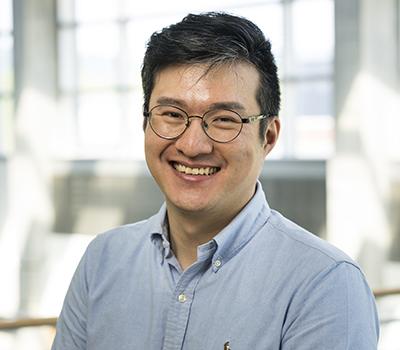
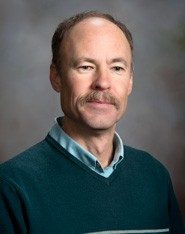
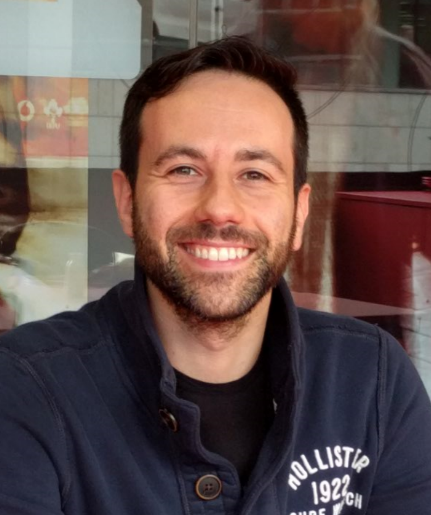
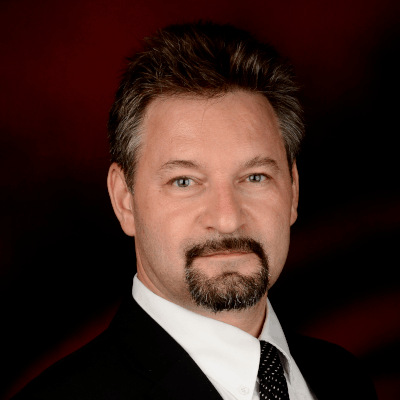
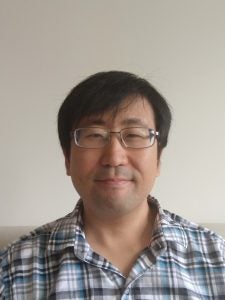
Sanghyun Hong is an Assistant Professor at Oregon State University's School of Electrical Engineering and Computer Science , focusing on Trustworthy AI and Cybersecurity . He holds a Ph.D. in Computer Science from the University of Maryland, College Park (2021) and a B.S. in Electrical Engineering and Computer Science from Seoul National University (2015). His research bridges machine learning , security , and privacy-preserving systems . Current research themes: Robustness of AI systems to adversarial attacks Privacy-preserving machine learning Security of pre-trained and large language models Hardware fault vulnerabilities in neural networks Cybersecurity workforce development Publication Trends (15 most recent): Focus on adversarial machine learning (jailbreaking LLMs, membership inference) Advances in physics-informed neural networks and time series forecasting Key contributions to AI security and malware detection Interdisciplinary work in visualization design and tsunami warning systems Scientific Accolades : Google Faculty Research Award (2023) Samsung Global Research Award (2022, 2023, 2024) DARPA Riser (2022) NSF SFS Award (co-PI, 2023) USENIX Enigma Speaker (2021) Academic Leadership : Mentors 5 Ph.D. students and has graduated 8 M.S. and B.S. students. Currently developing next-generation auditing frameworks for AI systems while on medical leave until Winter 2026.
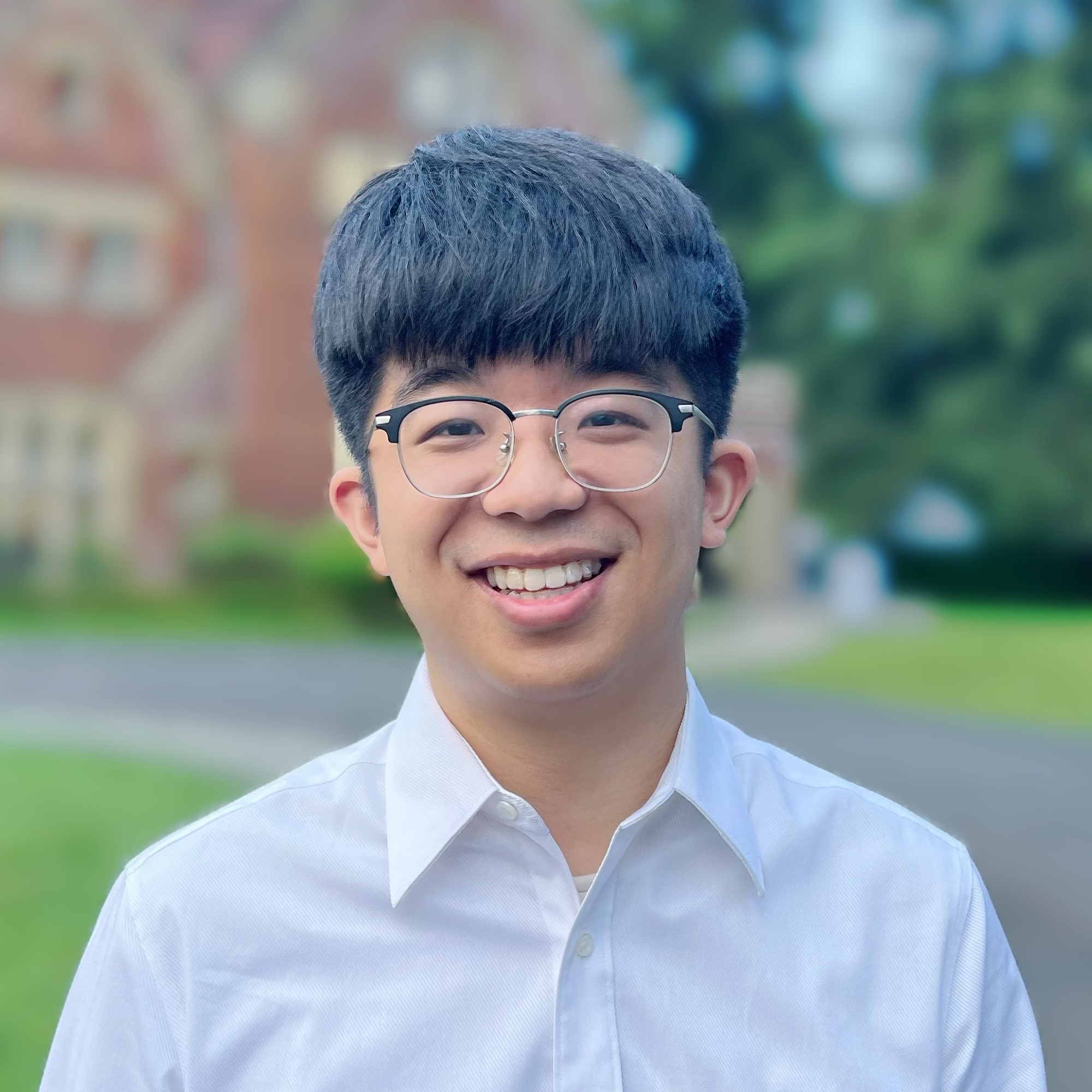
Zhijian Liu is a Research Scientist at NVIDIA with a PhD from MIT, advised by Song Han. His work focuses on efficient machine learning and systems through sparse computation and hardware-aware neural network design. Rising Star in Data Science (UChicago/UCSD) Rising Star in ML and Systems (MLCommons) Qualcomm Innovation Fellowship awardee Research highlights include: SPVCNN++ for LiDAR segmentation HAQ framework in Intel OpenVINO TorchSparse framework for 3D CNN efficiency His recent publications explore: Efficient visual language models (NVILA) Contextual sparsity in LLM fine-tuning (SparseLoRA) Training-free acceleration of diffusion LLMs Query-aware visual sparsity mechanisms Contact: zhijian@mit.edu
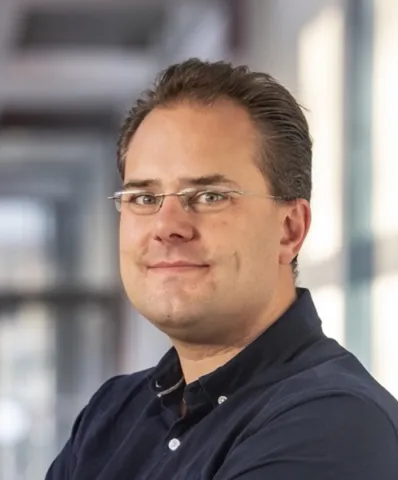
Matthew B. Blaschko is a Professor in the Department of Electrical Engineering at KU Leuven, Belgium. He serves as director of the KU Leuven ELLIS unit and is a fellow in the ELLIS Health program. He is a Core PI in the Flanders AI Research Program, working as a workpackage lead for Decision Support Systems and Medical Imaging. Blaschko is also a member of the KU Leuven Institute for Artificial Intelligence and one of the leaders of the working group on Machine Learning and Data Science. Professor Blaschko received his B.S. from Columbia University, M.S. from the University of Massachusetts Amherst, and Dr. rer. nat. from Technische Universität Berlin (awarded for work at Max Planck Institutes Tübingen). He was a Newton International Fellow at the University of Oxford and received his Habilitation (HDR) from École Normale Supérieure de Cachan. Prior to joining KU Leuven, he was a Permanent Research Scientist in the INRIA Saclay Research Center and a Faculty Member at Ecole Centrale Paris. His research focuses on machine learning techniques applied to visual data, with particular emphasis on calibration in deep learning, medical image analysis, and federated learning. Blaschko's work bridges theoretical foundations with practical applications, as evidenced by technology developed in his research being incorporated into MONA, software for ophthalmic image analysis. His research group has made significant contributions to the fields of model calibration, uncertainty estimation, and medical imaging analysis, with recent publications showing strong trends toward improving reliability of AI systems in medical contexts and advancing theoretical understanding of calibration metrics. Professor Blaschko has been recognized with several awards including the Université Paris-Saclay STIC Doctoral School Best Scientific Contribution Award, Best Paper Award at CVPR 2008, Main Award at DAGM 2008, and Best Student Paper Award at ECCV 2008. Professor Blaschko has supervised numerous PhD and Master's students, with current and former students including Deniz Soysal, Claire Marchal, Dongli Xu, Sebastian Gruber, Jiameng Li, Marco Mezzina, and many others working on diverse topics from Alzheimer's disease analysis to surgical phase recognition. His research has been supported by various funding sources including the Flanders AI Research Program. He has co-organized several influential workshops including the "Another Brick in the AI Wall: Building Practical Solutions from Theoretical Foundations" at CVPR 2025, Commands 4 Autonomous Vehicles workshop at ECCV 2020, and the Learning from Limited Labeled Data workshop series at NIPS 2017 and ICLR 2019. His laboratory focuses on machine learning for medical image analysis, with applications in ophthalmology, neurology, and surgical robotics. The group maintains active collaborations with medical institutions and participates in international challenges such as the KNee OsteoArthritis Prediction (KNOAP2020) challenge.
Devis Tuia serves as Associate Professor at the Swiss Federal Institute of Technology Lausanne (EPFL), holding appointments in the Institute of Environmental Engineering (IIE) within the School of Architecture, Civil and Environmental Engineering (ENAC). He leads the Environmental Computational Science and Earth Observation Laboratory (ECEO) since 2020 and contributes to EPFL's Doctoral Program in Civil and Environmental Engineering. His academic journey began in Lausanne with studies at UNIL and EPFL, culminating in a PhD in remote sensing from UNIL. Postdoctoral research followed at institutions in Valencia, Boulder, and EPFL, focusing on machine learning model adaptation. He progressed from Research Assistant Professor at University of Zurich to Associate and Full Professor at Wageningen University before joining EPFL. Tuia's research bridges Earth observation with artificial intelligence, specializing in interpretable deep learning for environmental applications. His lab develops algorithms for making remote sensing accessible, with particular emphasis on digital wildlife conservation through automated censuses using drone and satellite imagery. Current projects tackle the 'black box' problem in environmental modeling while advancing spatial intelligence for sustainable urban development. His 2023-2025 publication portfolio reveals three dominant trends: (1) species distribution modeling using incomplete observations, (2) multimodal fusion of satellite/drone data with textual descriptions, and (3) interpretable AI frameworks for environmental decision-making. This work consistently addresses real-world challenges like wildfire forecasting and biodiversity monitoring. As an educator, Tuia supervises 12 current PhD students and has graduated 4 former EPFL doctoral candidates. His teaching portfolio includes Frontiers of Deep Learning for Engineers , Sensing and Spatial Modeling for Earth Observation , and Image Processing for Earth Observation courses. The ECEO laboratory maintains active collaborations with ESA-NASA initiatives and conservation organizations globally.
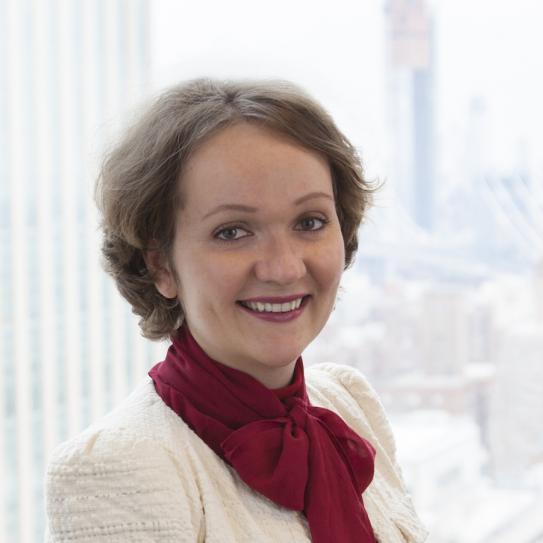
Anna Choromanska is an Associate Professor in the Department of Electrical and Computer Engineering at NYU Tandon School of Engineering, with affiliations to NYU Center for Data Science (CDS), NYU Center for Urban Science and Progress (CUSP), NYU Center for Advanced Technology in Communications (CATT), and the C2SMART Center. Her research focuses on deep learning optimization, generalization, and applications in autonomous driving and large-scale data analysis. She holds an Alfred P. Sloan Fellowship and NSF CAREER Award, and her work impacts industries like NVIDIA and Facebook. She directs the Learning Systems Laboratory (LSL), emphasizing interdisciplinary experimental/theoretical work. Research Interests: Machine Learning fundamentals, DL optimization, continual learning, autonomous vehicle systems, large data analysis. Her lab explores DNN learning dynamics, training architecture design, and scalable algorithms. Professional Impact: Over 50 invited talks, workshop organization for top ML conferences, and contributions to open-source projects like Vowpal Wabbit. Her algorithms are deployed in production systems at Facebook and Baidu. Awards: NSF CAREER Award Alfred P. Sloan Fellowship IBM Global University Program Academic Award (2x) Columbia University Presidential Fellowship Advising & Labs: Leads LSL, supervising interdisciplinary projects in optimization and autonomy. Actively involved in NYU's Modern AI seminar series and industry partnerships through CATT. Personal Interests: Accomplished pianist, salsa dancer, and fashion design enthusiast with notable performances and certifications in dance and music.
Professor Thomas Blumensath is a Professor of Signal and Image Processing at the University of Southampton and a Fellow at the Alan Turing Institute. He is the Academic Lead in Image Processing and Reconstruction at the University's μ-VIS X-ray Imaging Centre and Director of Research at the Institute of Sound and Vibration Research (ISVR). His research focuses on advanced algorithms for solving inverse problems in tomographic imaging, combining machine learning, optimization, and statistical methods. Key areas include X-ray tomography strategies, GPU-accelerated reconstruction, and multimodal imaging applications. Education: B.Sc. (Hons) Music Technology and Audio System Design, University of Derby (2002) PhD in Electronic Engineering (Bayesian Signal Processing), University of London (2006) Research Interests: Professor Blumensath's work spans theoretical and applied signal/image processing, with emphasis on tomographic imaging techniques. His current projects address efficient reconstruction methods, spectral X-ray CT, and applications in manufacturing and plant science. He collaborates with advanced imaging facilities like Diamond Light Source and ISIS neutron imaging beamline. Key Contributions: His research bridges computational methods (e.g., compressed sensing) with practical imaging challenges, including limited-angle tomography and stereo imaging strategies. He leads the National Research Facility for Lab X-ray CT and has developed the TIGRE reconstruction toolbox. Grants & Projects: Active funding includes EPSRC projects on tomographic sensitivity monitoring and CT-based manufacturing inspections. Completed projects cover constrained reconstruction, AM process verification, and industrial CT metrology. Awards: Alan Turing Institute Fellowship Teaching & Leadership: He teaches modules on machine learning, biomedical image processing, and robotics. Leads the BEng Control Engineering program at the Joint Education Institute with Harbin Engineering University. Labs/Teams: Active in the Signal Processing, Audio and Hearing research group (SPAH) and the Institute for Life Sciences. Oversees the μ-VIS X-ray Imaging Centre's research initiatives.
Dr. Kevin Kochersberger is an Associate Professor in the Department of Mechanical Engineering at Virginia Tech , with a career spanning academic research, technical innovation, and educational leadership. His work focuses on autonomous aerial systems , robotic control , and applied aerodynamics , particularly through the Uncrewed Systems Laboratory . Kochersberger's research has pioneered UAV-based radiation detection , 3D terrain mapping , and low-resource drone applications , including establishing the African Drone and Data Academy in Malawi . Education: Ph.D., Mechanical Engineering, Virginia Tech (1994) M.S., Mechanical Engineering, Virginia Tech (1984) B.S., Mechanical Engineering, Virginia Tech (1983) A.S., Engineering Science, Jamestown Community College (1981) Kochersberger's publications demonstrate expertise in UAV path planning , smart material actuation , and radiation source localization , with over $9M in research funding. His scientific awards include AIAA Associate Fellow (2009) and Aviation Week Aerospace Laureate (2003). Notable projects involve helicopter-deployable robotic systems and urban canyon navigation without GPS. Recent articles highlight BVLOS drone simulators , 2.5D terrain mapping , and autonomous negative obstacle traversal , reflecting his focus on real-time adaptive control and heterogeneous robotic systems . He teaches Drone Technology and Flight Operations and Advanced Design Projects , emphasizing student-driven innovation and industry collaboration .
Michael Muehlebach leads the independent Learning and Dynamical Systems research group at the Max Planck Institute for Intelligent Systems in Tuebingen, Germany. His interdisciplinary work bridges machine learning, dynamical systems theory, and control engineering to develop algorithms for cyber-physical systems with theoretical guarantees and practical implementations. Dr. Muehlebach received his B.Sc. and M.Sc. in Mechanical Engineering from ETH Zurich in 2010 and 2013, specializing in robotics and control systems. He completed his Ph.D. at ETH's Institute for Dynamic Systems and Control under Prof. R. D'Andrea in 2018, followed by postdoctoral research with Prof. Michael I. Jordan at UC Berkeley. His research focuses on constrained optimization, reinforcement learning, and control theory with applications in robotics. He pioneered approaches that express constraints in terms of velocities rather than positions, enabling more efficient optimization algorithms. His work spans theoretical foundations to physical implementations, including the One-Wheel Cubli balancing robot and electromagnetic navigation systems. Recent publications reveal a strong trend toward physics-informed machine learning, particularly for robotics applications requiring real-time performance and safety guarantees. Dr. Muehlebach has received numerous prestigious awards: Outstanding D-MAVT Bachelor Award Willi-Studer prize for best Master's degree ETH Medal and HILTI prize for doctoral thesis Branco Weiss Fellowship (2018) Emmy Noether Fellowship (2020) Amazon Fellowship (2024) He actively mentors doctoral researchers including Hao Ma, Melis Ilayda Bal, and Onno Eberhard, with research supported by multiple grants. His group maintains strong collaborations with Bernhard Schölkopf's Empirical Inference group at the Max Planck Institute. The Learning and Dynamical Systems group develops innovative hardware and software platforms, including Floaty (a wind-harnessing flying robot), advanced electromagnetic navigation systems, and data-efficient learning methods for robotic table tennis. Their approach combines rigorous theoretical analysis with practical validation on physical systems, emphasizing the integration of known physical structure into machine learning algorithms to improve sample efficiency and ensure generalization.
Quoc Thong Le Gia is an Associate Professor in the School of Mathematics & Statistics at the University of New South Wales (UNSW), Sydney. He holds a PhD in Mathematics from Texas A&M University (2003), an MS in Mathematics from Texas A&M University (2000), and a BSc in Mathematics and Computer Science from UNSW (1998). His research focuses on Numerical Analysis , Approximation Theory , Partial Differential Equations , and Stochastic Processes , with particular expertise in problems on spherical domains. His work bridges theoretical mathematics with practical applications in computational science, data science, and machine learning. Le Gia's recent publications demonstrate a strong focus on numerical methods for PDEs on spheres, stochastic analysis, and machine learning applications. His work shows consistent progression from theoretical foundations to practical implementations, with increasing interdisciplinary applications in recent years. L. F. Guseman Prize in Mathematics, Texas A&M University (2003) As a dedicated academic mentor, Le Gia has supervised numerous PhD, Master's, and Honours students across computational mathematics and data science topics. He has secured significant research funding through ARC Discovery Projects including DP220101811 (2022-2024) and DP180100506 (2018-2020). Professionally, he serves as External Associate Editor for Frontiers in Applied Mathematics and Statistics , Secretary for ANZIAM's Computational Mathematics Group, and Co-chair of Mathematics of Computation and Optimisation (AustMS Special Interest Group).
Gian Antonio Susto is an Associate Professor at the Department of Information Engineering , University of Padova . With a Ph.D. in Information Technology and post-doctoral experience at National University of Ireland, Maynooth, he leads research in Machine Learning , Semiconductor Manufacturing , and Industrial IoT . His work bridges Anomaly Detection , Continual Learning , and Algorithmic Fairness with applications in Hydroelectric Power Plants , Particle Accelerators , and Smart Mobility . B.Sc. and M.Sc. in Controls Engineering, University of Padova (cum laude) Ph.D. in Information Technology, University of Padova (2013) Post-Doc at National University of Ireland, Maynooth (2012-2013) Assistant Professor at University of Padova (2013-2021) His research focuses on Explainable AI , Virtual Metrology , and Deep Learning for manufacturing and infrastructure monitoring. Recent projects include the AIMS5.0 (AI for Manufacturing Sustainability) and MICS (Circular Economy in Italy) initiatives. His publications span Engineering Applications of Artificial Intelligence , IEEE Transactions , and Information Processing & Management , with 15+ recent papers on topics like Fault Diagnosis , Continual Learning , and Fair Ranking . Key scientific awards include: IEEE CCTA Best Student Paper Award (2021) IP&M 2020 Ph.D Paper Award Best Industry Paper Award, European Workshop on Advanced Control and Diagnosis (ACD 2019) He has supervised Ph.D. students on projects involving Particle Accelerators , Plant Behavior Modeling , and Explainable AI , with alumni now at institutions like Max Planck Institute , IBM , and Scripps Research . Current teaching includes Reinforcement Learning and Explainable Machine Learning at graduate and Ph.D. levels.
Christian Poellabauer is a Professor at Florida International University (FIU) in the Knight Foundation School of Computing and Information Sciences, serving as Interim Associate Dean for Research and Graduate Studies in the College of Engineering & Computing. He holds a Ph.D. from Georgia Institute of Technology (2004) and a Diplom-Ingenieur from TU Vienna (1998). His research focuses on mobile sensing, data analytics, and healthcare technologies, leading the MOSAIC Lab which develops solutions for healthcare, IoT, and smart cities. He previously led the Mobile Computing Lab at the University of Notre Dame and held leadership roles in data science institutes. Research Interests: His work spans digital biomarkers for neurodegenerative diseases, speech analysis for mental health, wearable device authentication, and wireless sensor networks. The MOSAIC Lab addresses challenges like real-time sensor data analysis on constrained devices and translating insights into clinical applications. Teaching: He has taught courses on Operating Systems, Mobile Computing, and Smart Health at both FIU and Notre Dame. Recent courses include COP4610 (Operating Systems Principles) and COP5614 (Graduate Operating Systems) at FIU. Service: He serves as Associate Editor for IEEE Transactions on Network Science and Engineering, and has organized conferences like ICNC 2023 and IEEE MASS 2021. His academic service includes roles on editorial boards and technical program committees for major conferences in distributed computing and networking. Advising & Labs: Advises current Ph.D. students in areas like multi-modal sensing for affective computing and mental health crowdsensing. Past students have pursued roles in academia and industry (e.g., Rose-Hulman Institute of Technology, Facebook, Microsoft). The MOSAIC Lab collaborates on projects like digital clinical outcome assessments and motor impairment detection.
Anna Levina is an Assistant Professor for Computational Neuroscience at the University of Tübingen , affiliated with the Department of Computer Science under the Faculty of Science. Her research focuses on the self-organization of neuronal activity, critical dynamics in neural networks, and the excitation/inhibition balance in cortical circuits. Current positions: Assistant Professor (since 2018), Group Leader (2017-2018), Equality Officer (Computer Science) Previous roles: IST Fellow (2015-2017), Associated Researcher (2011-2015), Postdoc/PI (2011-2015), Postdoc (2008-2011) Her research integrates mathematical modeling , statistical physics , and computational neuroscience to study criticality phenomena, neural avalanches, and adaptive network dynamics. Key interests include: Self-organized criticality in neural systems Excitation/Inhibition balance mechanisms Network topology and dynamics Timescale analysis in neural processing Stochastic modeling of neural activity Recent publications reveal trends in understanding critical dynamics across biological and artificial networks, with applications to memory systems, sensorimotor integration, and disease modeling. She has received recognition as an IST Fellow .
Ameet Talwalkar is an Associate Professor in the Machine Learning Department at Carnegie Mellon University and Chief Scientist at Datadog. He holds a PhD from the Courant Institute at NYU (2010) where he received the Janet Fabri Prize for Best Thesis. His professional achievements include co-founding Determined AI (acquired by HPE), creating MLlib in Apache Spark, co-authoring the textbook 'Foundations of Machine Learning,' and spearheading the MLSys conference. Talwalkar's research focuses on fundamental challenges in machine learning systems, including distributed ML, federated learning, neural architecture search, and human-AI interaction. His work bridges theoretical foundations with practical applications across domains like computational biology, PDE solving, and code generation. Current interests include AI for science, specialized model development, and agent-based systems. His publications demonstrate strong focus on ML systems optimization, foundation model evaluation, and interpretable AI. Recent works investigate specialized foundation models, PDE-solving frameworks, code generation tools, and human-AI interaction paradigms. The research consistently targets efficiency, scalability, and practical deployment challenges. Best Paper Award at EAAMO 2023 Best Student Paper at NYAS ML Symposium 2009 Runner-up for Best Real-world Application at Socal ML Symposium 2017 Janet Fabri Prize for Best PhD Thesis (2010) Talwalkar leads the CMU MLSys Lab focused on scalable ML systems and has served as Board President for the MLSys conference series. His educational contributions include developing courses like 'Machine Learning with Large Datasets' and creating the LEAF benchmark for federated learning and NAS-Bench-360 for neural architecture search.
Jee Choi is an Assistant Professor in the Department of Computer and Information Science within the College of Arts and Sciences at the University of Oregon. His research focuses on developing high-performance algorithms for big data analytics, particularly in tensor decomposition and parallel computing systems. Education: PhD in Electrical and Computer Engineering, Georgia Institute of Technology, 2015 MS in Electrical and Computer Engineering, Georgia Institute of Technology, 2004 BS in Electrical and Computer Engineering, Georgia Institute of Technology, 2000 Research Interests: Dr. Choi specializes in High Performance Computing with expertise in parallel algorithm design, performance modeling, and energy efficiency. His work targets Tensor Decomposition & Data Mining for big data, developing scalable solutions for sparse and dense tensor computations. He advocates leveraging HPC systems to transform massive datasets into societal benefits through efficient data mining techniques. Publication Trends: Choi's recent publications (2021-2025) demonstrate consistent innovation in tensor decomposition methodologies, with increasing focus on adaptive storage (Alto), streaming data factorization, and energy-aware autotuning. His work spans GPU clusters, distributed systems, and emerging architectures, maintaining strong connections to real-world big data challenges while advancing theoretical algorithm design. Professional Background: After completing his PhD under Richard Vuduc at Georgia Tech (notable for SpMV GPU autotuning and Energy Roofline Model), Choi conducted DoD-funded research on tensor decomposition at IBM Watson Research Center (2015-2018) before joining the University of Oregon faculty.
Michael Mühlebach is a Research Group Leader at the Max Planck Institute for Intelligent Systems in Tübingen, Germany, leading the independent Learning and Dynamical Systems group. His academic journey began at ETH Zurich where he earned his B.Sc. (2010) and M.Sc. (2013) in mechanical engineering, specializing in robotics, systems, and control. He completed his Ph.D. at ETH Zurich in 2018 under Prof. R. D'Andrea, followed by postdoctoral research at UC Berkeley with Prof. Michael I. Jordan. Dr. Mühlebach's research spans machine learning, dynamical systems, control theory, and optimization . His work bridges theoretical foundations with practical applications in robotics, developing methods that incorporate physical constraints and system dynamics into learning frameworks. His group focuses on online learning, physics-informed machine learning, and large-scale optimization for cyber-physical systems, with applications in electromagnetic navigation, robotic table tennis, and energy-efficient flight systems like the shape-changing robot Floaty . His publication record shows a strong focus on constrained optimization, with recent work exploring decision-dependent stochastic optimization, nonlinear feedback, and the theoretical foundations of reinforcement learning. His research integrates perspectives from control theory, dynamical systems, and optimization to develop algorithms with strong theoretical guarantees and practical performance. Outstanding D-MAVT Bachelor Award Willi-Studer prize for best Master's degree ETH Medal and HILTI prize for doctoral thesis Branco Weiss Fellow (2018) Emmy Noether Fellowship (2020) Amazon Fellowship (2024) Dr. Mühlebach actively mentors doctoral researchers and is seeking talented students for PhD and Master's projects. His research group has received funding from multiple prestigious fellowships and maintains collaborations across institutions including ETH Zurich, UC Berkeley, and various Max Planck research units. The group's work spans theoretical developments to practical implementations on robotic systems, demonstrating strong connections between mathematical theory and physical realization.