Dr. Piotr Bartmiński is an Adjunct Professor at the Department of Geology, Soil Science and Geoinformation, Faculty of Earth Sciences and Spatial Management, Maria Curie-Skłodowska University. His work focuses on environmental telemetry, soil science, and polar ecosystems, with a particular emphasis on organic matter dynamics and spectral soil properties. Education: Not explicitly stated in the provided text. Affiliation: Institute of Earth and Environmental Sciences, Maria Curie-Skłodowska University. Dr. Bartmiński's research spans Arctic and temperate soil systems, with key interests in: Soil spectroscopy and classification Impact of land use on soil chemistry Ecotoxicology of biogas residues and industrial byproducts Pedogenesis in technosols and loess-derived soils His publication record shows a strong focus on: Arctic soil properties (Spitsbergen, Bellsund Coast) Land use effects on selenium, arsenic, and phosphorus content Methodological advancements in soil particle analysis Ecological impacts in protected areas (Roztoczański National Park) Dr. Bartmiński leads the NCN Sonata 11 project on hyperspectral imaging for vegetation season parametrization. He collaborates with researchers across Poland and participates in multi-center studies. His publications have amassed over 29 total impact factor points, with an h-index of 9 (Google Scholar). Available for consultation via email or Microsoft Teams, Dr. Bartmiński frequently works in the field but maintains academic engagement through teaching and research activities.
Peter Taylor is an Honorary Associate Professor at the Fenner School of Environment & Society, Australian National University (ANU). He is a former policy advisor with over 30 years of leadership in natural resources policy, focusing on Indigenous land and sea management, conservation strategies, and marine protected areas. He contributed to establishing Australia’s National Reserve System and currently serves as Vice President of the ACT Woodlands and Wetlands Trust, overseeing wildlife recovery and conservation programs. Education: Bachelor of Arts (Biology) Graduate Diploma in Continuing Education His research interests include valuing Indigenous knowledge in land management, sustainable landholder practices, and documenting colonial exploration's impacts on Indigenous communities. He leads a project on the 1872 Hann Expedition to Cape York, collaborating with Traditional Owners, museums, and Indigenous organizations to analyze historical impacts and scientific collections. His publications focus on colonial expeditions' ecological and cultural legacies, blending historical analysis with environmental science. His work bridges Indigenous knowledge systems with scientific documentation, particularly in biodiversity and territorial documentation. Collaborations include partnerships with the Royal Botanic Gardens, Balkanu Cape York Development Corporation, and herbaria in Melbourne and Brisbane. While no formal grants are listed, his projects emphasize community-driven conservation and historical reconciliation.
Joseph M. Luna, PhD is an Assistant Professor in the Department of Biochemistry at Case Western Reserve University's School of Medicine. He leads the Luna Lab, which focuses on RNA-binding proteins (RBPs) in viral infections and cellular stress responses. His work uses positive-sense RNA viruses as models to study viral replication, innate immunity, and host-pathogen interactions. Member of the Center for RNA Science and Therapeutics Member of the Cancer Genomics and Epigenomics Program at Case Comprehensive Cancer Center Director of the Advanced RNA Profiling Core PhD from The Rockefeller University (2015) Postdoctoral training at The Rockefeller University Research interests include: - Subcellular RBP:RNA interaction mapping using novel spatial CLIP techniques - Dynamics of RBPs during viral infections (HCV/SARS-CoV-2) - RBP networks in innate immunity - Development of advanced RNA-profiling methods Recent work emphasizes: - Spatial resolution of RNA interactions in viral replication organelles - CRISPR-based screening for host factors in coronavirus infections - Systems-level modeling of RBP activities Key achievements include: - Co-developed SARS-CoV-2 replicon systems enabling antiviral research - Identified miR-122 sequestration mechanisms in hepatitis C infection - Trained students from underrepresented groups in biomedical research Labs/Teams: - Advanced RNA Profiling Core facility director - Collaborations with virology, immunology, and systems biology groups
Marie Fujitani serves as Professor of Human Geography with focus on Marine and Coastal Sustainable Development at the University of Bremen and Research Group Leader at the Leibniz Centre for Tropical Marine Research (ZMT) in Bremen, Germany. She operates within Programme Area 3 - Land-Ocean Fluxes and Transformation and leads the Working Group on Deliberation, Valuation and Sustainability, maintaining her office at Fahrenheitstr. 6, Room 3113. Her academic foundation includes a Ph.D. in Marine Reserves with Fisheries Management (2014) and Master's degree in marine reserve assessment (2010), both from Arizona State University. These qualifications underpin her interdisciplinary approach to coastal sustainability challenges. Dr. Fujitani's research program centers on natural resource management, deliberative governance processes, and sustainable coastal livelihoods, with particular emphasis on recreational/commercial fisheries and sustainable tourism systems. Her work systematically examines how ecological constraints and social dynamics interact to shape voluntary conservation investments and community-based management outcomes in marine environments. Analysis of her 14 peer-reviewed publications (2012-2021) reveals consistent interdisciplinary scholarship bridging human geography, environmental economics, and fisheries science. Key trends include economic valuation of river biodiversity, values-based modeling of environmental behavior, and development of deliberative frameworks for comanagement - with strong geographic focus on European freshwater systems and Costa Rican coastal fisheries. As Research Group Leader at ZMT, she directs methodological development in participatory valuation techniques and social-ecological systems analysis, emphasizing practical applications for coastal zone management through collaborative knowledge exchange with stakeholders and policymakers.
Marc Los Huertos is the Stephen M. Pauley Professor of Environmental Analysis at Pomona College, where he has served since 2014. He coordinates the Environmental Analysis Program, teaching courses such as Ecology of Inland Waters , Environmental Science and Statistics , and Food, Land, and the Environment . His research focuses on nitrogen biogeochemistry, sustainable agriculture, aquatic ecology, and climate change impacts on water systems. Ph.D., UC Santa Cruz M.A., San Francisco State University B.A., UC Santa Cruz Los Huertos investigates nitrogen cycling in soil, water, and air, with projects evaluating greenhouse gas emissions from farms, stream habitat quality, and nutrient dynamics in estuaries. His work bridges environmental science and policy, including collaborations with farmers to improve soil and water quality. His recent publications span aquatic ecology, nitrogen pollution, and sustainable agricultural practices. Articles address topics like shrimp aquaculture effluent in mangroves, metal sequestration in bioswales, and nitrate dynamics in the Pajaro River. This corpus reflects interdisciplinary approaches to environmental analysis, combining field studies, modeling, and policy evaluation. Los Huertos actively mentors students in biogeochemistry, aquatic ecology, and environmental monitoring. He has secured grants from agencies like the USDA, EPA, and California Air Resources Board to support research on agroecosystem sustainability, wetland pathogen removal, and groundwater recharge. His projects emphasize applied solutions for coastal and agricultural conservation. He contributes to environmental education through a forthcoming textbook on inland water ecology and partnerships with regional farmers to mitigate ecological impacts of land use.
Dr. Julia Palliwoda is a researcher at the Department of Computational Landscape Ecology within the Helmholtz Centre for Environmental Research – UFZ in Leipzig, Germany. Her work focuses on urban ecology , ecosystem services , and interdisciplinary research connecting environmental science with social dynamics. Current research projects include the SolaRegio initiative on solidarity agriculture in regional innovation ecosystems (since 2023) Prior projects encompass Bioshare (2020-2021) and the UrbanGaia PhD program (2017-2021) Her research explores: Urban Green Infrastructure and its role in biodiversity-human interactions Food System Sustainability through community-supported agriculture (CSA) models Policy Implementation Challenges for green infrastructure concepts Scientific achievements include: Contributing to the BiodivERsA Prize-winning TALE project (2021) on agricultural landscapes Co-authoring the Atlas of Ecosystem Services (2019), a comprehensive 414-page reference work
Lena Fletcher is a Senior Lecturer II and Program Director in the Natural Resources Conservation (NRC) program at the University of Massachusetts Amherst, within the Department of Environmental Conservation, College of Natural Sciences. She is actively involved in undergraduate teaching, advising, and program leadership, with a strong commitment to inclusive, equitable, and contemplative pedagogy. Her work fosters student-driven learning through civic engagement and team-based instruction in environmental conservation and sustainability sciences. Her primary research and academic interests include: Forest ecology and old-growth forests Invasive species and ecological change over time Environmental conservation and sustainability science Contemplative and active learning pedagogies Climate change education and citizen science Science education for K–12 STEM teachers The recent publications reflect a strong interdisciplinary focus on applying technology and community engagement to environmental challenges. Trends include using smartphone-based tools for invasive species identification, exploring structural retention in forest regeneration, and assessing landowner participation in carbon markets. Her work bridges ecological science with practical, community-oriented solutions and innovative teaching methods. Her scientific contributions and leadership have been recognized through multiple fellowships: Scholarship of Teaching and Learning (2024–2026) Inclusive Excellence Program (2021–2022) Sustainability Curriculum Fellowship (2019–2020) Fellowships for Innovative Teaching (2014–2015) Civic Engagement and Service Learning Fellowship (2014–2015) Lena leads key educational initiatives such as the Contemplative Pedagogy Group and was the Campus Program Leader for the Doris Duke Conservation Scholars Program (2019–2024). She has not advised graduate students, focusing instead on undergraduate mentorship, curriculum development, and community outreach through programs like the Environmental Community Outreach Club and the 'Outsmart Invasive Species' project. She has also contributed to major professional reports on Massachusetts forest reserves and long-term ecological monitoring. She is actively involved in lab and team-based educational programs such as the iCons (Integrated Concentration in Science) program and leads field-based and online courses that integrate contemplative practices and civic engagement. Her leadership extends to curriculum initiatives promoting sustainability and inclusive excellence across the campus.
Daniel A. Jaffe is a Professor of Lawyering Skills at the School of Law, Case Western Reserve University, and Co-Director of the Legal Writing, Leadership, Experiential Learning, Advocacy, and Professionalism (LLEAP) program. He joined the faculty in 2006 after 16 years in legal practice specializing in education and labor law at Squire, Sanders & Dempsey, LLP, and later at Squire Patton Boggs LLP (2013-2015). Jaffe also taught as an adjunct professor at Cleveland Marshall College of Law and served as Executive Director of the Clean Air Conservancy. Specialties: Public School Legal Issues, Public Sector Labor Relations, Public Meetings and Records. Education: Juris Doctor (1989) and Bachelor of Arts (1983) from Columbia University. He is the author of Baldwin’s Ohio School Law , a practice-oriented guide for elementary and secondary school law in Ohio. His work focuses on integrating legal writing, advocacy, and professionalism into law education.
Robert B. Powell is the George B. Hartzog, Jr. Endowed Professor in Philosophy, Parks, and Environmental Ethics in the Department of Parks, Recreation, and Tourism Management at Clemson University's College of Behavioral, Social and Health Sciences. He also serves as Director of the Institute for Parks, an interdisciplinary institute focused on research, training, and outreach for park and protected area management. With over 100 publications and extensive international experience across 40+ countries, Dr. Powell is a leading scholar in environmental education, interpretation, and park management. Dr. Powell earned his Ph.D. in Forestry and Environmental Studies from Yale University in 2005, followed by an M.E.M. in Environmental Management from Yale in 2001. His undergraduate degree is a B.A. in Interdisciplinary Studies from the University of North Carolina-Chapel Hill (1983). Dr. Powell's research focuses on environmental education and interpretation, parks and protected area management, ecotourism, outdoor recreation, and biodiversity conservation. His work examines the human dimensions of conservation, exploring how interpretation and educational programs influence visitor experiences, environmental literacy, and conservation behaviors. He investigates effective strategies for park management, with particular attention to equity, accessibility, and the impacts of sociopolitical contexts on environmental education outcomes. His international research spans over 40 countries across 6 continents, addressing cross-cultural dimensions of conservation education and sustainable tourism. Recent work emphasizes evidence-based approaches to improve environmental education field trips for adolescents, with a focus on how preparation, setting, and teaching methods influence learning outcomes. Dr. Powell's recent publications (2023-2025) demonstrate a strong focus on evidence-based environmental education, particularly examining what makes field trips effective for adolescent learners. His work explores how factors like naturalness of settings, preparation activities, teaching approaches, and sociopolitical contexts influence educational outcomes. He also investigates strategic planning for interpretive services in the National Park Service and barriers to participation in environmental education programs. Dr. Powell has received numerous honors for his contributions to environmental education and conservation: 2023 College of Behavioral, Social and Health Sciences Outstanding Journal Publication Award 2022 Outstanding Contributions to Research in Environmental Education Award from the North American Association for Environmental Education 2016 Bronze Medal (Co-Recipient) from the Viet Nam Urban Planning Awards for "Best Regional Plan" for Dong Van Karst Plateau Global Geo-Park Planning 2016 Clemson University College of Health, Education, and Human Development Excellence in Research Award 2014 Clemson University Calhoun Honors College and Pearce Center Thoughts Worth Thinking Speaker Dr. Powell has mentored numerous graduate students, many of whom are co-authors on his publications. His research program is supported by substantial external funding, with over $5 million in grants since 2007 from diverse sources including the National Science Foundation, National Park Service, US Forest Service, and various foundations. Current major projects include a $1.983M NSF grant on enhancing outdoor STEM learning for youth and a $923,905 National Park Service grant on evidence-based learning networks for interpretation. As Director of the Institute for Parks, Dr. Powell leads an interdisciplinary team focused on providing research, training, and outreach to support park and protected area management. The Institute serves as a hub for collaboration among researchers, practitioners, and students interested in parks and protected areas. Dr. Powell also collaborates extensively with researchers at Virginia Tech (particularly Dr. Martha Monroe Stern), UNC-Wilmington, and international partners on environmental education and conservation projects worldwide.
Indraneel Chakraborty is a Professor and Department Chair of Finance at the University of Miami's Miami Herbert Business School. He also serves as Associate Dean for Graduate Business Programs and holds a cross-appointment in the College of Arts and Sciences. His research focuses on banking, financial intermediation, corporate finance, and applied economics. Ph.D. in Finance, The Wharton School, University of Pennsylvania (2010) M.S. in Electrical Engineering and Computer Science, MIT (2003) B.Tech. in Computer Science Engineering, IIT Guwahati (2001) - President of India Gold Medalist His work examines financial market regulation, monetary policy transmission, tax policy implications, and energy economics. Key publications explore topics like credit default swaps, financial statement complexity, housing market effects, venture capital signaling, and cross-country labor supply dynamics. Recent articles analyze fund liquidity requirements, skilled labor in bank lending, renewable energy contracts, and financial integration through production networks. These works span finance, economics, and energy policy with specific subfields in systemic risk, credit allocation, and market design. Notable awards include the University of Miami Provost's Research Award (2024), multiple Excellence in Teaching Awards (2018-2024), Douglas D. Evanoff Best Paper Award (2016), and Marshall Blume Award (2013). He received the President of India Gold Medal (2001) and National Talent Scholar (1995). He has industry experience in financial instruments at Citigroup (2005) and Citadel Investment Group (2003-2005). His technical background includes patents in wireless power management and network protocols from earlier career stages.
Gregory DiLisi is a Professor at John Carroll University in Ohio, with appointments in both the Physics and Education departments. He holds a Ph.D. in Condensed Matter Experimental Physics from Case Western Reserve University and a B.S. from Cornell University. Education: B.S. in Applied and Engineering Physics (Cornell), M.S. and Ph.D. in Condensed Matter Experimental Physics (Case Western Reserve). Dr. DiLisi's research spans two major domains: (1) experimental physics focusing on liquid crystals and complex fluids in microgravity environments, and (2) science education innovation, emphasizing case studies and problem-solving pedagogy in STEM. His publications cover topics ranging from liquid crystal viscoelasticity to forensic physics case studies. Recent work includes Case Studies in Forensic Physics (2025) and research on liquid bridge stability across gravity extremes. His experimental physics articles frequently appear in journals like Physical Review A and Liquid Crystals , while education-focused works are featured in The Physics Teacher and The Journal of STEM Education . Scientific Awards: NASA Educator Fellow (Cassini, Stardust), Chair of JCU's Education Department, President of Ohio AAPT, The Physics Teacher editorial board member, Case Western Reserve's teaching excellence award. Dr. DiLisi has secured over 40 grants as Principal Investigator, including funding from NSF, NASA, and the American Association of Physics Teachers for projects such as "Stability of Liquid Bridges under Varying Total Body Force" and "Project WISE: Women in Informal Science Education." He mentors extensively through educational outreach initiatives and serves as a consultant for STEM programs.
Jens Emborg serves as Associate Professor in the Department of Food and Resource Economics at the University of Copenhagen's Faculty of Science, specializing in the Section for Environment and Natural Resources. Born February 14, 1960, he maintains active research and teaching roles with international engagement, particularly through the Wangari Maathai Institute for Peace and Environmental Studies at University of Nairobi. His research spans forest ecology and environmental conflict management, characterized by an interdisciplinary approach integrating natural and social sciences. He has developed influential teaching initiatives including a Conflict Management Course serving 60-100 MSc students annually and an Advanced Conflict Management Course. His work bridges research, policy, and practical applications across Europe, USA, and Africa. Recent publications demonstrate strong focus on Kenyan forest conflicts, land cover changes, and trust dynamics in natural resource management. His 104 research outputs include significant contributions to journals like Frontiers in Communications and Applied Geography , with recurring themes in spatiotemporal conflict analysis, institutional governance, and capacity building in resource management contexts. Emborg coordinates strategic research programs and maintains active field engagement in policy settings. His current work emphasizes capacity building at the Wangari Maathai Institute, continuing his career-long commitment to connecting academic research with real-world environmental governance challenges.
Lars Graudal serves as Senior Advisor in the Department of Geosciences and Natural Resource Management at the University of Copenhagen's Faculty of Life Sciences. He has been Head of Division for Forest Genetic Resources and the LIFE Arboretum at the Danish Centre for Forest, Landscape and Planning since 2004. With twenty-five years of professional experience, including ten years in management roles, Graudal has extensive field experience from over fifty missions to more than twenty countries, primarily in tropical regions. His expertise spans project appraisal, formulation, implementation, and evaluation, with significant fund-raising capabilities that have supported numerous international forestry initiatives. His research interests focus on: Use and conservation of genetic resources of trees International policy dialogue in forestry and environment Biodiversity conservation and climate change mitigation Desertification prevention and biomass for energy development Agroforestry systems and landscape restoration Tree seed and seedling sector development Graudal's recent publications demonstrate a strong emphasis on creating practical resources for forest management, including global databases for agroforestry species and native trees. His work bridges scientific research with practical application in international development contexts, particularly in tropical countries, with publications receiving significant attention across academic and policy circles. His professional activities include: Chair of Food and Agriculture Organisation of the United Nations committees (2011-2012) Member of Danish Ministry of Science committees (2011-2012) Member of Danish Planting Associations (2011-2012) Member of Danish Ministry of Foreign Affairs committees (2011-2012) Former Member of FAO Panel of Experts on Forest Gene Resources (2001-2007) His research has been widely disseminated, with 175 recorded publications across multiple formats including reports, journal articles, and book chapters, demonstrating his significant contribution to the field of forest genetic resources and international forestry policy.
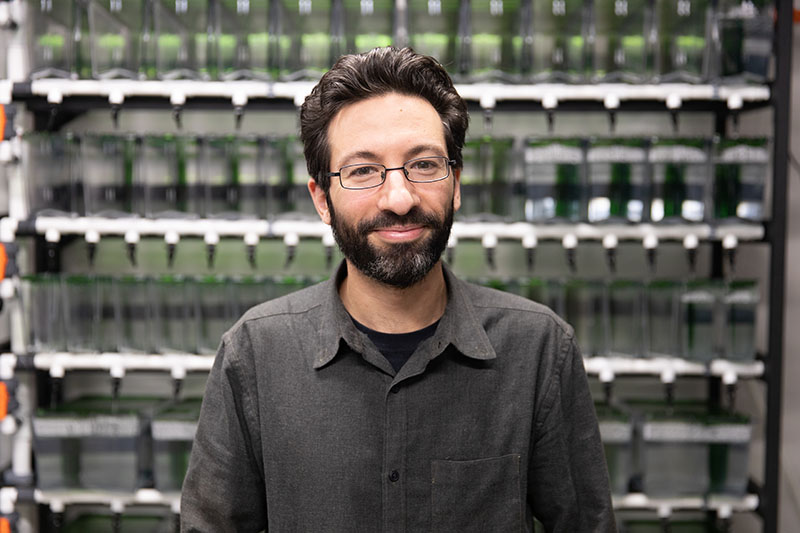
Dr. Justin Kenney is an Assistant Professor in the Department of Biological Sciences at Wayne State University . He conducts cutting-edge research using zebrafish and mice to investigate fear memory mechanisms , whole-brain imaging , and neural network analysis . His lab website ( kenneylab.com ) and Twitter account ( @Fish4Brains ) reflect his commitment to modern neuroscience methodologies. PhD in Psychology/Neuroscience (2010) from Temple University BS in Physics and BA in Philosophy from Case Western Reserve University (2003) Dr. Kenney's research focuses on individual behavioral differences , neural network dynamics , and advanced imaging techniques like light-sheet microscopy . His work establishes zebrafish as a powerful model for studying fear-related behaviors and brain-wide functional networks . Recent publications demonstrate his leadership in creating 3D zebrafish brain atlases and investigating chemogenetic effects on memory consolidation. Dr. Kenney teaches Molecular and Cellular Neurobiology (BIO4690/BIO6490) and Research Practice courses (BIO4990/BIO6890). His Human Frontiers Science Program fellowship supports his innovative work, which has been featured in university spotlights examining minnow brain function to understand human cognition. His network-based approach combines graph theoretical analysis with in vivo validation to identify memory consolidation hubs . This methodology has revealed critical roles for hippocampal-thalamic circuits and lateral septal nuclei in contextual fear memory, advancing both theoretical understanding and experimental validation of brain networks.
Amanda Carter serves as an Assistant Professor in the Department of Biological Sciences at Northern Arizona University. Her research profile indicates active scholarly engagement with 24 publications spanning 2013-2024, an h-index of 13, and 438 citations according to Scopus metrics. She maintains an active research program with recent outputs including a 2024 book chapter on reptile sex determination. Dr. Carter's research centers on thermal biology and sex determination mechanisms, with fingerprint analysis revealing dominant focus areas: Sex Determination (100%), Sex Ratio (88%), Temperature-Dependent Sex Determination (79%), and Trachemys scripta biology (79%). Her work examines how climate variation affects developmental processes in reptiles and insects, particularly investigating temperature fluctuations, heat waves, and mean temperature shifts. Key model organisms include red-eared slider turtles (Trachemys scripta) and dung beetles (Onthophagus taurus, Phanaeus vindex). Her publication trends show increasing interdisciplinary impact, with 2024's book chapter synthesizing reptile reproductive biology, 2022 editorial on Anthropocene sex ratios, and multiple 2020-2021 studies on insect thermal plasticity. Research outputs demonstrate strong ecological relevance, evidenced by media coverage including 15 news outlets, 4 X posts, 1 Facebook page, and 32 Mendeley readers for key publications. No formal scientific awards are documented in the provided materials. Her advising activities show no listed students in the available records. Current research appears focused on climate change impacts on developmental plasticity across life stages, with recent work exploring metabolic tradeoffs in beetle pupae and thermal sensitivity in reptile sex determination systems.