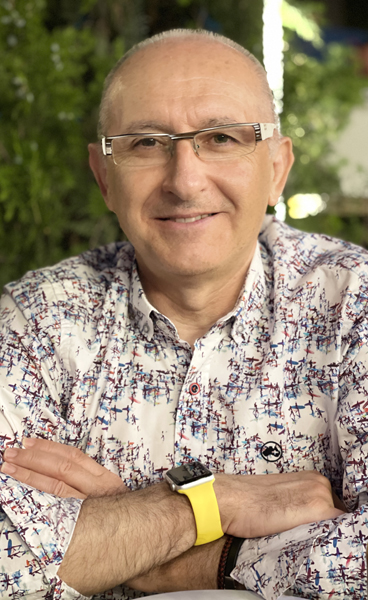
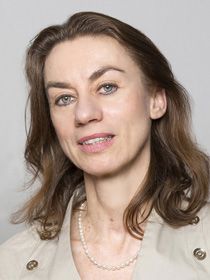
Zeta Avarikioti is an Assistant Professor in the Department of Security and Privacy at TU Wien (Vienna University of Technology). Her research focuses on distributed systems, blockchain scalability, and cryptoeconomic incentives. She holds a PhD from ETH Zürich (advised by Roger Wattenhofer) and completed postdoctoral work at ISTA/Columbia University and TU Wien. Education PhD in Computer Science, ETH Zürich (Advisors: Roger Wattenhofer) Postdoctoral Fellowships: ISTA/Columbia University & TU Wien Research Interests Zeta's work addresses challenges in blockchain systems, including: Scalability and interoperability of Layer-2 protocols Cryptoeconomic incentive design Security of payment channel networks Privacy-preserving transaction mechanisms Notable Projects Ark : Novel Bitcoin Layer-2 protocol CoRaF : Cross-Research Framework for Payment Channels SCALE2 : Scalable Layer-2 Solutions Lab Affiliations Zeta collaborates with teams including the SFB SPyCoDe research consortium and the Vienna Center for Cryptocurrency Technology .
Enrique Herrera-Viedma is a Full Professor in Computer Science and AI at the University of Granada (UGR) since 2007. He currently serves as Vice-President for Research and Knowledge Transfer at UGR (2015-present) and held leadership roles in IEEE System, Man & Cybernetics Society, including Vice-President for Publications (2019-2020) and Vice-President for Cybernetics (2021-2023). His research spans computational intelligence, fuzzy decision-making systems, and consensus models. IEEE Fellow (2021) IFSA Fellow (2021) Highly Cited Researcher (Computer Science, Engineering) by Clarivate Analytics (2014-2020) Andrew P. Sage Best Transactions Paper Award (2016) 2011 IEEE Transactions on Fuzzy Systems Outstanding Paper Award His publications focus on consensus reaching processes , computing with words , linguistic modeling , and social network analysis . His work integrates fuzzy systems , optimization models , and trust mechanisms in group decision-making contexts. Articles highlight distributed linguistic trust , non-cooperative behavior management , and feedback mechanisms to enhance decision-making efficiency. He contributes to prestigious institutions like the Royal Institute Elcano (Spain) and Ulster University's Artificial Intelligence Research Center. His h-index (85 in WoS, 101 in Google Scholar) reflects his significant impact, with over 560 peer-reviewed papers and 50 highly cited works.
Univ.-Prof. Dr. Stefanie Auer is Dean of the Faculty of Health and Medicine at the University of Continuing Education Krems , Austria. She is a leading academic in dementia prevention, brain health, and public health interventions for older adults. Her work bridges clinical research, health policy, and community engagement. Her research interests focus on dementia prevention, brain health promotion, aging, psychogeriatrics, and health economics . She investigates lifestyle interventions, early detection models, and cost-effective care strategies. Her work emphasizes public awareness, education, and interdisciplinary collaboration to improve dementia care systems. The recent publications highlight a strong trend in dementia prevention, cost-effectiveness analysis, behavioral interventions in neurocognitive disorders, and public health education . Her work spans clinical research, health services, and societal engagement, often involving international collaborations and policy-relevant outcomes. Reduction and prevention of agitation in persons with neurocognitive disorders: an international psychogeriatric association consensus algorithm Mindfulness in Persons with Mild Dementia and Their Caregivers: Exploring Trait Rumination as a Clinical Outcome Measure Cost-Effectiveness of Prevention for People at Risk for Dementia: A Scoping Review and Qualitative Synthesis Attitudes towards dementia prevention in Austria—Results of an exploratory study Kunst zur Förderung der Hirngesundheit Dr. Auer leads significant research projects funded by national and international bodies, including the FWF and Austrian federal ministries. Her grants support initiatives such as Healthy Museum , Lower Austria's 1st Brain Health Action Day , and Demenz.Aktivgemeinde . While no formal advisees are listed, her leadership in PhD studies and research service indicates mentorship and academic supervision. She is actively involved in organizing conferences and public outreach, enhancing the impact of her research. She leads and contributes to interdisciplinary research groups focused on evidence-based health research and preventive and regenerative medicine . Her initiatives often involve collaborations with public institutions, healthcare providers, and community organizations to implement and evaluate dementia-friendly practices.
Dr. Ali Ozkes is a Research Professor at the Institute for Public Management & Governance and an affiliated researcher at the Competence Center for Applied AI & Scientific Computing at Vienna University of Economics and Business. He also holds a part-time professorship at SKEMA Business School. His academic journey includes a habilitation from University Paris 1 Panthéon-Sorbonne, a doctorate from École Polytechnique in Paris, a master's from Istanbul Bilgi University, and bachelor's degrees from the University of London and LSE. Dr. Ozkes' research spans several interconnected fields: Collective decision-making processes and consensus building Ethics of artificial intelligence and human-AI interaction Public administration and organizational behavior Behavioral social sciences and social choice theory Strategic decision-making in public and nonprofit sectors His recent publications (2024-2025) show a strong focus on the intersection of AI ethics, public administration, and organizational decision-making. Key themes include consensus building in leadership teams, ethical frameworks for AI in public sector applications, and cognitive models of decision-making. His work frequently appears in top journals across management, public administration, and AI ethics domains. Scientific recognition includes: WU Visiting Fellowship for Japan (2019) Dr. Ozkes actively supervises graduate students and has served on numerous doctoral committees. His research is supported by multiple interdisciplinary projects, including 'Morality, social choice and artificial intelligence' (2019-2021) and 'Establishment of an international research center for experimental financial markets' (2020-2025). He has collaborated with institutions worldwide including Aix-Marseille University, Caltech, Lund University, and Waseda University. Dr. Ozkes contributes significantly to academic service as co-editor of code and data for Management Science and co-editor of a special issue of Theory and Decision. He is also a member of several prestigious academic societies including the Academy of Management, Association for Computing Machinery, and Society for Social Choice and Welfare. His expertise was instrumental in developing the Code of Conduct for General Purpose AI Models under the EU AI Regulation.