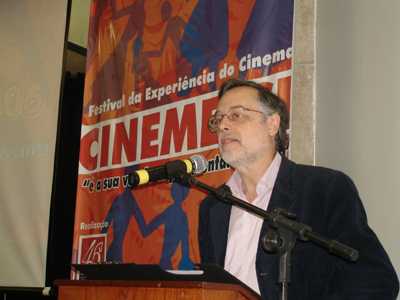
Prof. Ismail Xavier is a prominent Brazilian film scholar affiliated with the Institute of Film and Television at Universidade de São Paulo. He has served as a visiting professor at New York University, Sorbonne Nouvelle in Paris, and the University of Chicago. His academic work focuses on the intersection of aesthetics, politics, and cultural identity in Brazilian cinema, particularly Cinema Novo and its contemporary evolution. Xavier's research examines the mythical role of the Sertão (Brazilian backlands) in shaping national identity and its connection to migration narratives. His seminal book Allegories of Underdevelopment (1997) remains a foundational text in Brazilian modern cinema studies. At the Center for Intercultural Studies (ZIS) in Mainz, he delivered a guest lecture exploring how Cinema Novo's legacy informs contemporary Brazilian films through themes of migration and cultural transformation. As a key figure in film historiography, Xavier has edited critical volumes on cinema history and theory while analyzing the interplay between film movements like Tropicalismo and broader sociocultural contexts. His work bridges cinematic analysis with intercultural studies, emphasizing visual representation in postcolonial frameworks.
Stephan Conermann serves as Professor of Islamic Studies and Dean of the Faculty of Arts and Humanities at the University of Bonn, where he has held continuous academic appointments since 2003. His institutional leadership includes directorship of the Annemarie Schimmel Kolleg (2010-2022), Bonn Center for Transcultural Narratology, and significant administrative roles culminating in his current deanship since 2023. Academic Background: Doctorate in Oriental Philology/Islamic Studies (Kiel University, 1996, magna cum laude) Magisterstudium in Asian History, Oriental and Slavic Philology (Kiel University, 1992) Conermann's research examines pre-modern Islamic societies through narrative strategies in historiography, with specialized focus on Mamluk Sultanate governance (1250-1517), Delhi Sultanate/Mughal transitions, and Transottomanica mobility dynamics. His work uniquely connects asymmetrical dependencies (particularly slavery systems), power structures, and global entanglements across South Asia, Middle East, and Eastern Europe. His extensive publication portfolio shows consistent thematic evolution toward comparative frameworks analyzing slavery beyond Eurocentric models, narrative construction of power across cultures, and mobility as historical catalyst. Recent scholarship increasingly integrates transcultural methodology with digital humanities approaches. Academic Leadership: Supervised 290+ theses (59 PhD, 96 Magister, 47 Master, 88 Bachelor) Acquired ~9 million euros in third-party funding (DFG, BMBF, DAAD) Editor of 15+ publication series including Mamluk Studies and Dependency and Slavery Studies Conermann directs the Bonn Center for Transcultural Narratology and co-leads the EXC 2036 'Beyond Slavery and Freedom' cluster, fostering interdisciplinary research on pre-modern dependency systems through international collaborations across Europe, Asia, and the Americas.
Prof. Dr. Ulrike Freitag is Director of the Leibniz-Zentrum Moderner Orient (Berlin) and holds a special professorship in Islamic Studies at Freie Universität Berlin. Her research focuses on social and cultural history of the Arab world, urban history, and transregional connections in the Indian Ocean. She has directed major projects like 'An Oasis Facing Globalisation: Hegra’s History since the 19th Century' and authored seminal works such as A History of Jeddah . Education: Habilitation (Islamic Studies, 2002, Bonn), PhD (1991, Freiburg), MA (1987, Freiburg). Key research stays include Damascus (1984-85, 1987-90), Yemen, and Southeast Asia. Research Interests: Urban development, migration networks, Ottoman heritage, Saudi state formation, and transregional Islamic dynamics. Current projects explore Jeddah’s urban history and transregional entanglements in the Arabian Peninsula. Engagement: Editorial roles for Journal of Arabian Studies , ZMO Studien , and advisory boards for institutions like the Leibniz Institute of European History. Awarded fellowships from Käthe-Hamburger Kolleg and LUCIS. Supervised over 20 doctoral theses on topics ranging from Ottoman governance to Gulf intellectual history. Publications: Over 150 articles, 8 monographs, and 6 edited volumes. Her work blends archival research with transregional perspectives, emphasizing marginalized voices and material culture. Recent focus on pandemic impacts and Saudi-Iranian geopolitical dynamics.
Jan Logemann serves as substitute professor of American History at the University of Göttingen for the 2025/26 academic year, with prior acting professorships at Johannes Gutenberg University Mainz, Ruhr University Bochum, and University of Kassel. He remains a Research Associate at Göttingen's Institute of Economic and Social History since 2014 and serves as Affiliated Faculty at the University of Glasgow's School of Social Sciences. His academic credentials include a Doctorate in Modern History from Pennsylvania State University (2007), Master of Arts in History from Humboldt University of Berlin (2002), and undergraduate studies across Humboldt University, Free University of Berlin, and Pennsylvania State University (1996-2002). Logemann's research centers on transnational economic history, examining how European émigrés shaped consumer capitalism through retail, credit systems, and design innovations. His work bridges funeral industry commercialization, elite migration patterns, and German-American comparative frameworks, revealing capitalism's cultural dimensions through household consumption and border dynamics. His scholarship demonstrates consistent focus on transatlantic perspectives in economic history, with publications exploring consumer culture's evolution from 20th-century émigré influences to contemporary funeral markets. This interdisciplinary approach connects business history with social anthropology and design studies. Scientific recognition includes: Fellow in the History of Consumption, German Historical Institute Washington (2009-2010) Research Fellow, German Historical Institute Washington (2010-2014) He directs the Erasmus Mundus MA "Global Markets, Local Creativities" (GLOCAL) program and led the BMBF-funded Junior Research Group "Transatlantic Perspectives" (2010-2014), analyzing European immigrants' views of America. His academic service includes peer review for Business History Review, Journal of Design History, and Journal for Historical Research in Marketing. Logemann actively contributes to research networks through the Program Director role for GLOCAL and maintains affiliations with multiple transatlantic academic associations.
Prof. Waldemar Kolanus leads the Molecular Immunology and Cell Biology department at the University of Bonn's Life & Medical Sciences Institute (LIMES) . His research bridges immunoregulation , stem cell dynamics , and metabolic stress responses in immune cells. Unit 2 member at LIMES Principal investigator in SFB 704 and ImmunoSensation Cluster Leads a multidisciplinary lab with postdocs, PhD students, and technical staff His work focuses on intracellular signaling pathways connecting immune activation to tissue homeostasis, particularly through: Cytohesin proteins in integrin-mediated adhesion and migration TRIM71 in stem cell regulation and congenital hydrocephalus High-salt environments affecting macrophage function Publication trends show expertise in immune cell migration , genetic models , and chemical inhibition , with frequent use of mice and zebrafish for in vivo studies. Key articles explore: TRIM71's dual role in auditory development and germ cell maintenance Cytohesin family's Golgi regulation and insulin signaling Ruxolitinib's off-target migration inhibition of dendritic cells Contact details: Address: LIMES Institute, Carl-Troll-Straße 31, Bonn Email: kolanus.sekretariat@uni-bonn.de Phone: +49 228 73-62788
Zaur Gasimov is a Lecturer at Johannes Gutenberg University Mainz and currently serves as DAAD Departmental Coordinator and Co-Head at the Faculty of Economics and Administrative Sciences, Turkish-German University. He holds a habilitation in Modern History and Eastern European History, with a focus on Eastern European History, political science, and sociology. Education : B.A. in International Relations from Baku State University; M.A. from Catholic University of Eichstätt-Ingolstadt; Doctorate in Eastern European history Research : Concentrates on Russian-Turkish relations, nationalism in Eastern Europe, cultural transfer processes, and historical narratives. His habilitation thesis analyzed Polish-Turkish anti-Soviet alliances. Publications : Authored monographs on Prometheism, Azerbaijani historiography, and Russification policies. Collaborated on comparative studies of cultural transfer and Ottoman-Russian entanglements.
Ghazal Aarabi is an Associate Professor at the Department of Periodontology, Preventive Dentistry and Dental Conservation within the University Medical Center Hamburg-Eppendorf (UKE). She actively participates in clinical research projects and publications focusing on oral-systemic health connections. Researcher in periodontal epidemiology Key contributor to the Hamburg City Health Study (HCHS) Principal investigator in migration health research (MuMi Study) Research Focus spans three main areas: Periodontal-Brain Interactions through inflammatory pathways Oral Health Literacy among migrant populations Oral-Cardiovascular Links in aging populations Selected Publications (2018-2022) demonstrate her work in: Periodontal disease and cerebral microangiopathy Dental care utilization during pandemics Oral health disparities in migration contexts Current Projects include: PAROCARD : Oral health and cardiovascular surrogate markers MuMi : Migrant oral health promotion Cerebral Microangiopathy study in periodontitis patients
Prof. Dr. Oliver Krüger is a behavioral ecologist and evolutionary biologist at Bielefeld University 's Faculty of Biology , where he leads the Department of Animal Behaviour since 2013. His research spans avian and marine mammal systems, focusing on life history strategies, parasite-host interactions, and environmental adaptation. Education: Biology studies at Bielefeld University (1994-1996) MSc in Oxford (1996-1997) PhD at Bielefeld University with Fritz Trillmich and Jan Lindström (1998-2000) Research Themes: Behavioral ecology, evolutionary biology, and population dynamics across tropical and temperate ecosystems. Key projects include NC³ (Niche Choice/Construction) and studies on Galápagos sea lions, common buzzards, and pinniped species. Scientific Leadership: Spokesperson, SFB TRR 212 "NC³" (2018-2025) Advisory Board member: German Ornithologists Union, IUCN SSC pinniped group, German Primate Centre Peer review roles: Humboldt Foundation, DFG, HFSP, NSF Awards: Leopoldina Prize (2001) Niko Tinbergen Award (2008) DFG Heisenberg Professorship (2010-2015)
Wolfgang Forster is a Professor of Civil Law, Comparative Legal History and Legal Philosophy at the University of Tübingen, where he has been teaching since 2011. He served as Dean of the Faculty of Law from October 2020 to September 2022. Prior to his appointment at Tübingen, he was Professor of Civil Law and Legal Philosophy at the University of Giessen from 2007 to 2011. He completed his habilitation at LMU Munich in 2005 with a thesis on insolvency law history and earned his doctorate in 2000 with research on Karl Christian Friedrich Krause's legal philosophy. Forster studied law and philosophy at the Ludwig Maximilian University of Munich from 1987 to 1992, supported by the German Academic Scholarship Foundation and the Bavarian Scholarship for Gifted Students. He passed his first state examination in law in 1992 and his second in 1995. Between 1995 and 2000, he served as a research assistant at KU Eichstätt/Ingolstadt before becoming a research assistant at FAU Erlangen from 2000 to 2003 and at LMU Munich from 2003 to 2007. His research focuses on Civil Law, particularly the general part of the law of obligations, contract law, and family law; German and Spanish legal history, especially regarding insolvency law; History of Canon Law; and Legal philosophy and history of legal philosophy, with special emphasis on Karl Christian Friedrich Krause's legal philosophy. His work bridges historical legal scholarship with contemporary legal theory, examining how historical legal concepts inform modern jurisprudence. Forster's approach combines meticulous historical research with philosophical analysis, revealing continuities and transformations in legal thought across centuries. His publications demonstrate a consistent focus on the intersection of legal history, philosophy, and practical application. Forster has published extensively on Krausist legal philosophy, Spanish legal history, insolvency law development, and historical aspects of family law. His work shows particular strength in analyzing how legal concepts migrate across national boundaries and historical periods, with recurrent attention to German-Spanish legal connections. Hermann Conring Prize 2010 (for his habilitation thesis) Max Weber Prize of the Bavarian Academy of Sciences (for his dissertation) Faculty Prize of the Faculty of Law of the LMU Munich (for his dissertation) Forster has received significant research funding, including publishing support from the German Research Foundation for his habilitation thesis. He co-organized the 40th German Legal Historians' Day in 2014 and was a co-applicant for the interdisciplinary research training group 'Ambiguity: Production and Reception' approved by the DFG in 2013. He has also served as a visiting professor at the University of Wisconsin Law School in Madison, USA. His work demonstrates strong institutional support and recognition within the German and international legal academic community.
Dr. Jochen Lingelbach is a Research Associate at the Chair of African History within the Faculty of Cultural Studies at the University of Bayreuth, working in the Cluster of Excellence "Africa multiple. Reconfiguring African Studies" since 2019. He earned his doctorate in 2018 from the Institute of African Studies at the University of Leipzig, where he had previously worked as a doctoral student and research assistant in the DFG Research Training Group "Fracture Zones of Globalization" from 2012-2016. Prior to that, he was a Research Associate at the Centre Marc Bloch in Berlin (2016-2017). His academic background includes studies in Geography and African Studies at the University of Leipzig and the University of Dar es Salaam (2003-2010). Dr. Lingelbach's research focuses on migration history, particularly colonial history (with emphasis on German and British contexts), the history of East Africa (especially Tanzania and Uganda), and the history of refugee camps and international refugee aid organizations. His work demonstrates a strong interdisciplinary approach that bridges historical analysis with contemporary refugee studies. His publication record reveals consistent scholarly output with a clear thematic focus on refugee movements during and after World War II, particularly examining Polish refugees in colonial Africa. His recent work has expanded to include comparative analyses of refugee experiences across different historical periods, including connections to contemporary refugee situations such as the Ukrainian crisis. The publications demonstrate expertise in both European and African historical contexts, with particular attention to the intersections of race, colonial administration, and refugee status. Dr. Lingelbach is actively involved in several academic networks including the Working Group Africa in the Refugee Research Network, the Network for Displaced Persons Research, and AEGIS CRG African Migration, Mobility, and Displacement (AMMODI). His current research project, "Africa in the Global History of Refugee Camps (1940s to 1950s)," builds upon his completed doctoral work on "Polish refugees during and after the Second World War in East and Central Africa," demonstrating a sustained commitment to understanding refugee movements within colonial contexts and their implications for contemporary refugee studies.
Prof. Dr. Manja Stephan is a Professor for Transregional Central Asian Studies with a focus on Islam and Migration at the Institute of Asian and African Studies (IAAW) at Humboldt University of Berlin since May 2020. She also serves as Project Director of the Berlin Graduate School Muslim Cultures and Societies (BGSMCS) since 2011. Previously, she was a Junior Professor for Cross-Sectional Issues of Islam in Asian and African Societies at the same institution from 2010 to 2020. Her educational background includes a Doctorate from Martin Luther University Halle/Wittenberg (2009), preceded by doctoral studies at the Max Planck Institute for Social Anthropology (2007-2003) and Ruhr University Bochum (2005-2002). She earned her MA in Ethnology and Central Asian Studies from Humboldt University, Free University of Berlin, and University of Leipzig in 2002. Prof. Stephan's research focuses on the anthropology of transregional Islam, Muslim mobilities and religious geographies, and transregional Central Asia and Gulf Studies (particularly Tajikistan, Uzbekistan, Kyrgyzstan, and the United Arab Emirates). Her work also examines Muslim professionalism, religious economies, material religion, and cultural heritage policies. Her current research projects include 'Women's Pathways to Professionalization in Muslim Asia' (funded by DFG) and 'De:Link // Re:Link' (funded by BMBF), which explore gender, religious knowledge, and transregional connections in Muslim Asia. Her scholarly work demonstrates a consistent focus on translocal Muslim networks connecting Central Asia and the Gulf region, particularly examining how Tajik migrants navigate religious, economic, and social landscapes across these regions. A significant strand of her research investigates women's professionalization within Muslim contexts, highlighting how religious knowledge intersects with gender and economic mobility. Principal Investigator at the Berlin Graduate School for Muslim Cultures and Societies (BGSMCS) Member of the European Association of Social Anthropologists (EASA) Member of the American Association of Anthropologists (AAA) Member of the Central and West Asia and Diasporas Research Network (CWADRN) Member of the German University Association (DHV) Prof. Stephan has supervised numerous theses and dissertations, with a particular focus on transregional Central Asian studies and Muslim cultures. Her current research projects, funded by the German Research Foundation (DFG) and the German Federal Ministry for Education and Research (BMBF), support graduate students and early-career researchers working on Muslim Asia and transregional connections. She has organized multiple academic events including workshops, lecture series, and summer schools focused on Muslim women's professionalization, cultural heritage in Central Asia, and transregional studies. She leads the ANOR Central Asian Studies Book Series published by DeGruyter and has organized numerous academic events including the Berlin Transregional Talks lecture series and workshops on museums as cultural infrastructures in Central Eurasia.
Christian Weigel serves as a Researcher at the Department of Ancient History within the Institute for Historical Science at the University of Bonn, a position he has held continuously since October 2016. His academic career includes prior roles as a lecturer (2014-2016) and research associate in the DFG-Graduiertenkolleg 1878 on pre-modern economic spaces (2013-2016), demonstrating deep institutional integration at Bonn. His educational foundation includes: Magister degree (2012) in Ancient History, Political Science, and Public Law from the University of Bonn Advanced studies (2005-2012) in Ancient History, Political Science, and Public Law Foundational studies (1999-2005) in Medieval/Modern History, Political Science, and Law Weigel's research interrogates Greek family structures through ancient novels while examining economic and social frameworks of antiquity. His focus on demographic patterns, ancient international law, and literary sources reveals innovative methodological approaches to social history. Recent work analyzes how ancient novels function as socioeconomic mirrors, particularly regarding slavery, migration, and gender dynamics in Greco-Roman societies. His publication trajectory (2015-2019) demonstrates consistent exploration of antiquity's socioeconomic textures through diverse lenses—from piracy in ancient fiction to Cold War-era science fiction's classical reception. This body of work establishes connections between ancient economic mentalities and modern cultural productions while maintaining rigorous historical analysis of demographic patterns and legal frameworks. As an active conference participant, Weigel has presented at major venues including the German Historians' Congress and German Sociological Association meetings. His teaching portfolio reveals substantive engagement with students through specialized courses on Homer's society, Roman slavery, Greek federalism, and ancient demographics, often incorporating field components like Adriatic coast excursions.
Thomas Beikler serves as a Professor in the Department of Periodontology, Preventive Dentistry and Dental Conservation at the University Medical Center Hamburg-Eppendorf (UKE), which operates under the Faculty of Medicine. His academic credentials include dual doctoral degrees as indicated by his title 'Univ.Prof.Dr.Dr.' Dr. Beikler's research spans multiple dimensions of periodontal science and oral-systemic health connections. His work investigates the relationship between periodontal disease and various systemic conditions including hypophosphatasia, liver cirrhosis, depression, and neurological changes. He has made significant contributions to understanding oral health literacy, particularly among German adult populations with migration backgrounds through the MuMi Study. His research methodology frequently employs large population-based studies like the Hamburg City Health Study to establish epidemiological connections between oral and general health. His publication record demonstrates a strong interdisciplinary approach, bridging dentistry with neurology, hepatology, psychiatry, and public health. Notable research directions include microbiome-based therapies for periodontitis, the role of biomarkers in oral health assessment, and the development of innovative dental education models in Germany. Dr. Beikler has led significant research projects including the 'Transplantation of a healthy oral donor microbiome for periodontal therapy' (2016-2019), which explored cutting-edge approaches to treating periodontal disease. He has also contributed to dental education reform through the iMED DENT program, Germany's first model dental study program.
Sebastian Henn is a Professor of Economic Geography at the Institute of Geography, Friedrich Schiller University Jena, where he has held the Chair since 2014. He serves as Dean of Studies for the Faculty of Chemistry and Geosciences (since 2020) and Deputy Director of the Leibniz ScienceCampus "Eastern Europe - Global Area". His research spans transnational entrepreneurship, knowledge-based regional development, cluster dynamics, polarization/peripheralization, and migration studies . Education: Dipl.-Geogr. (University of Mannheim, 2001); Dr. rer. nat. (University of Halle, 2006); Habilitation (University of Halle, 2014) Key research areas include spatial perception, mobilities, health geography, and global-local interactions in sectors like pharmaceuticals, medical technology, and the diamond industry. Publications (2013-2024) focus on global production patterns, cluster evolution, regional embitterment, and the role of transnational entrepreneurs in industries from Gujarat to Antwerp. His 2023 work explores populist resentments in rural regions and health infrastructure disparities in Thuringia. Awards include the 2017 Journal of Economic Geography Best Referee Award. He co-edits the Springer series "Perspectives in Human Geography" and holds leadership roles in academic societies like the Schumpeter Centre for Social and Economic Change. Editorial and Review Activities : Active on boards of the Journal of Economic Geography and ZFW journal. Regular reviewer for 20+ journals and funding bodies including DFG and DAAD. Leads research on BRIC investments, Southern multinationals, and spatialization processes under globalization .
Jule Thober is a Scientific Manager at the Helmholtz Centre for Environmental Research - UFZ , leading Topic 5 "Landscapes of the Future" in the Helmholtz Program and managing the Integration Platform "Robust Pictures of the Future". She contributes to cross-disciplinary research in Smart Models / Monitoring and Computational Hydrosystems , focusing on agent-based models, sustainable land management, and climate risk analysis. Roles : Scientific Manager (2022–), Postdoc (2017–2021), PhD Student (2013–2016) Projects : Copernicus Contract Ulysses 2, LandYOUs Game Development Research Interests center on socio-environmental systems, integrating agent-based models with ecological economics. Her work explores decision-making under climate uncertainty, land use policy, and resilience of pastoral systems through computational methods. Publication Trends (15 most recent) span ecological complexity, environmental informatics, and computational hydrosystems. Key themes include agent-based land use models , climate risk mitigation , and participatory decision support tools . Collaborations involve UFZ departments, international institutions, and interdisciplinary teams in Germany and abroad. She contributes to Helmholtz POF IV programs and EU-funded initiatives like 4DHydro.