Matthew Sparke is a leading academic in critical geography, focusing on the intersections of geopolitics, geoeconomics, and capitalist development. His work interrogates the dialectical relationships between spatial fixity and capitalist expansion, emphasizing how hegemonic shifts in global power structures—particularly the rise of China and the decline of Western dominance—redefine geoeconomic and geopolitical discourses. Sparke's scholarship synthesizes Gramscian and conjunctural analysis to reveal how territorial visions, cultural power, and economic statecraft interweave in global conflicts. Key Contributions: Dialectical analysis of geopolitics/geoeconomics, critical theory of globalization, and conjunctural methodologies. Research Themes: US-China competition, Belt and Road Initiative, neoliberalism, and security-driven economic policies. His articles highlight the instrumentalization of geoeconomic concepts by state actors and the need for critical approaches to counter discursive determinism. Sparke's work bridges urban, regional, and international scales, offering a multidisciplinary lens on global capitalist tensions.
Mia Liinason is a Professor of Gender Studies at Lund University, affiliated with the LU Profile Area: Human Rights and eSSENCE: The e-Science Collaboration. She holds a PhD in Gender Studies from 2011 and has held academic positions at the University of Gothenburg before joining Lund University in 2021. Her research focuses on intersections of transnational feminism, queer studies, digital cultures, and religiosities/secularities. She leads major projects like Liveability at the crossroads of religion, gender and sexuality and TechnAct: Transformations of Struggle , exploring digital technologies' impact on social movements and LGBTQ+ communities' lived experiences within religious contexts. Her work addresses global issues such as hate speech mitigation (via the NETHATE network), language evolution’s cultural impact (in the Change is Key! program), and transnational activism across Scandinavia, Russia, and Turkey. Awards include the Wallenberg Academy Fellowship (2015) and Wallenberg Scholar (2024). Recent publications analyze secular-religious divides in LGBTQ+ rights, Sámi cosmology, and digital protest dynamics. She supervises PhD students and contributes to interdisciplinary initiatives like the Futures of Democracy Graduate School. Key research themes include gender struggles in new political conjunctures, AI’s societal impacts, and the role of hope in feminist theory. Her projects often bridge qualitative methods with computational social sciences, reflecting her commitment to interdisciplinary collaboration.
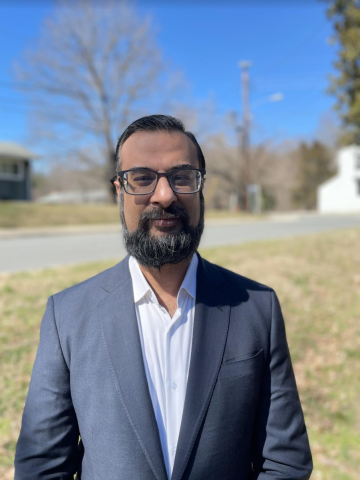
Tayyab Safdar is an Assistant Professor of Global Studies & Engagements and Director of the Global Security & Justice Track at the University of Virginia. He holds an MPhil and PhD in Development Studies from the University of Cambridge. His research focuses on South-South Development Cooperation, particularly Chinese investment in Belt and Road Initiative (BRI) countries like Pakistan, analyzing the political and economic dynamics of infrastructure projects such as the China-Pakistan Economic Corridor (CPEC). He has published in journals including Journal of Contemporary Asia and provided expert testimony to the US-China Economic and Security Review Commission. Education: PhD in Development Studies, University of Cambridge MPhil in Development Studies, University of Cambridge Research Interests: Safdar explores how emerging powers like China reshape global development dynamics through infrastructure investment, focusing on local political economies and elite interactions. His work bridges political economy, international relations, and development studies, with a regional specialization in South Asia. Key Contributions: His analysis of CPEC’s structural challenges and Pakistan’s political settlements has informed debates on BRI’s socio-economic impacts. Recent work examines China’s response to geopolitical shifts, such as post-Afghanistan strategies. Labs/Teams: Engaged with interdisciplinary research networks focusing on global development, security, and infrastructure governance at UVA and the University of Cambridge.
Dr. Gavin Maclean is a Lecturer in Sociology within the School of Applied Sciences at Edinburgh Napier University, where he focuses on the interconnections between culture, economy and nature. His work bridges sociological theory with practical research on contemporary social issues, particularly examining how plants, bureaucracy, and sustainability intersect with everyday life and work practices. Dr. Maclean received his academic training at Heriot-Watt University, where he earned a degree in Management, a Masters by Research in Social Research, and a PhD that examined the conflict between artistic freedom and commercial pressures within the recorded music industry. His research spans several interconnected areas: Environmental sociology with a focus on plants, crofting, gardening, and kitchen practices Bureaucracy and its role in contemporary society Digital labor and its implications for work organization Cultural studies and conjunctural analysis Social justice issues related to migration, asylum, and temporary accommodation Sustainability practices in professional settings Analysis of Dr. Maclean's recent publications reveals a strong focus on the intersection of environmental concerns, labor practices, and social justice. His work on "photosynethics" examines how energy crises impact professional kitchen work and sustainability practices. Simultaneously, his research on asylum seekers explores the commodification of temporary housing and the stigmatization processes that affect vulnerable populations. These seemingly disparate research streams are connected through his interest in how bureaucratic systems mediate human-nature relationships and social inequalities. Dr. Maclean has successfully secured research funding from prestigious sources including: British Academy/Leverhulme Small Research Grant (£1,869) for "Photosynethics: Responsibility, Sustainability and Plant Work in Professional Kitchens" (2022-2023) Economic and Social Research Council (£53,468) for "Investigating the use of temporary accommodation to house asylum seekers and refugees during the COVID-19 outbreak" (2020-2022) NHS Fife (£9,989) for "Ageing Workforce and Employers in Fife" (2016) Additional funding from EPSRC, Carnegie Trust, and other bodies As an academic supervisor, Dr. Maclean currently guides multiple doctoral students across diverse research topics including songwriting creativity, natural area volunteering in Scotland, and whisky production microbiology. His supervision approach reflects his interdisciplinary interests, supporting research that bridges sociology with environmental studies, cultural analysis, and organizational theory. His current projects indicate a continued focus on the relationship between human labor, environmental constraints, and social justice issues.
Gökbörü Sarp Tanyildiz is an Assistant Professor of Sociology at Brock University's Faculty of Social Sciences. His interdisciplinary research focuses on Marxist, feminist, anti-racist, and queer thought, examining how embodied social relations (race, gender, sexuality) are conceptualized under late capitalism and shape cultural/political formations. Research explores: Concept formation methodologies Decolonization and Marxism Social reproduction theories Urbanization processes Protest cultures Subjectivity formation Publications include the monograph 'Grounding Critique' (2024) and co-edited volume 'A Feminist Urban Theory For Our Time' (2021). His articles investigate the everyday manifestations of power in social/spatial/political thought. He teaches undergraduate courses in sociological theory, gender/families, and social justice research, plus graduate seminars on racial capitalism and gender/sexuality studies. Education includes PhD from York University, MA from Brock University, and BA from Ankara University.
Lawrence Grossberg is the Morris Davis Distinguished Professor of Communication Studies and Cultural Studies at the University of North Carolina at Chapel Hill. He serves as Co-Director of the University Program in Cultural Studies and holds an adjunct appointment in Anthropology. Grossberg has advised over 50 doctoral students, emphasizing mentorship alongside scholarship. His research focuses on cultural studies, U.S. political culture, and contemporary theory, with notable works critiquing the ontological turn and redefining conjunctural analysis. **Education**: B.A. in Philosophy at University of Rochester, postgraduate study at Birmingham's Centre for Contemporary Cultural Studies, Ph.D. in Communication from University of Illinois. Academic roles include teaching at Purdue University and University of Illinois before joining UNC in 1994. **Research**: Explores cultural studies methodologies, U.S. political conjunctures, and critiques of neoliberalism. Recent publications analyze Trump's political ascendancy, affect theory, and the paradoxes of leftist movements. **Awards**: Recognized by ICA, NCA, ACS, and UNC for scholarship, teaching, and mentoring. His work bridges theory and activism, advocating for radical contextualism in understanding cultural and political dynamics. **Grants & Labs**: No specific grants/labs listed, but his interdisciplinary program in Cultural Studies fosters collaborative research. Ongoing projects include critiques of capitalism and the ontological turn in theory.
Professor Dimitrios Theodossopoulos is Professor of Social Anthropology in the School of Anthropology and Conservation at the University of Kent and Director of the Centre for Ethnographic Research. His work has profoundly shaped political anthropology through ethnographically grounded studies of resistance, populism, austerity, and indigenous representation in Latin America and Southeast Europe. Education & Affiliations Professor of Social Anthropology, University of Kent Director, Centre for Ethnographic Research Member, School of Anthropology and Conservation Research Interests Professor Theodossopoulos’s research threads together political anthropology, cultural critique, and innovative multimodal methods. He interrogates non-hegemonic politics, populist discourse, and the ethics of solidarity during austerity. A distinctive contribution is his development of graphic ethnography , a visual-literate approach that wields cartoons, sketches, and photography as analytical tools rather than mere illustration, pushing ethnographic reflexivity toward new political and representational horizons. Long-term fieldwork among the Emberá in Panama underpins his explorations of indigenous modernities, exoticisation, and tourism imaginaries. By critiquing ethnographic nostalgia and the politics of authenticity, he foregrounds local epistemologies and the transformative potential of engaged anthropology. Publication Trends Across 73+ works, his recent outputs reveal a concentrated focus on three interlocking themes: (1) de-essentialising hegemony through the critical legacies of Gramsci, Williams, and Hall; (2) advancing graphic ethnography as collaborative, multimodal praxis; and (3) dissecting generational historicity and affective structures of feeling under austerity. These contributions appear in flagship journals such as Focaal , Journal of the Royal Anthropological Institute , Cultural Anthropology , and innovative multimodal venues like Entanglements . Scientific Awards & Recognition No specific named prizes or fellowships are listed in the provided materials; recognition is evidenced through sustained editorial roles, invited encyclopaedia entries, and continuous funding for doctoral supervision. Supervision & Mentorship In 24 years of fieldwork in Greece and Panama, Professor Theodossopoulos has supervised 20+ PhD students to completion (seven since 2019 alone) and currently mentors six active doctoral researchers. Topics range from climate activism and refugee volunteerism to indigenous tourism and medical pluralism, reflecting his broad theoretical and regional expertise. Labs & Teams He leads the Centre for Ethnographic Research, fostering interdisciplinary collaboration in multimodal ethnography, and is a key figure in the Graphic Anthropology network that experiments with visual-textual dialectics for public engagement.
Michael Hoyler is a Professor of Human Geography and Head of the Department of Geography and Environment at Loughborough University, UK. He has been a pivotal contributor to the Globalization and World Cities (GaWC) research network since 1999, collaborating on foundational studies in relational urban geography. His work focuses on global city functions, polycentric urban regions, and global urban networks, with a particular emphasis on advanced producer services and economic expansion dynamics. Hoyler curates the GaWC website and has authored/co-authored influential texts such as Global Urban Analysis and Megaregions: Globalization’s New Urban Form? . His research integrates spatial analysis with socio-economic processes, examining how cities interact within global networks and how governance structures shape polycentric development. Hoyler’s interdisciplinary approach bridges urban theory with empirical studies, addressing topics like media cities, financial centers, and the geopolitical dimensions of urbanization. His recent work explores comparative urbanism frameworks and the evolving role of cities in globalization. Key contributions include analyzing global city connectivity through firm networks and advocating for methodological innovation in global urban research. He has published extensively in Environment and Planning A , Regional Studies , and Urban Studies , often co-editing special issues that advance the field. Hoyler’s work underscores the importance of spatial networks in understanding contemporary urban systems, with implications for policy, planning, and global economic strategies. Honors and awards are not explicitly mentioned in the provided texts, but his academic leadership and prolific publications reflect significant scholarly recognition. His research extends beyond academia through collaborations with policy institutions, emphasizing applied urban governance and spatial planning challenges in polycentric regions.
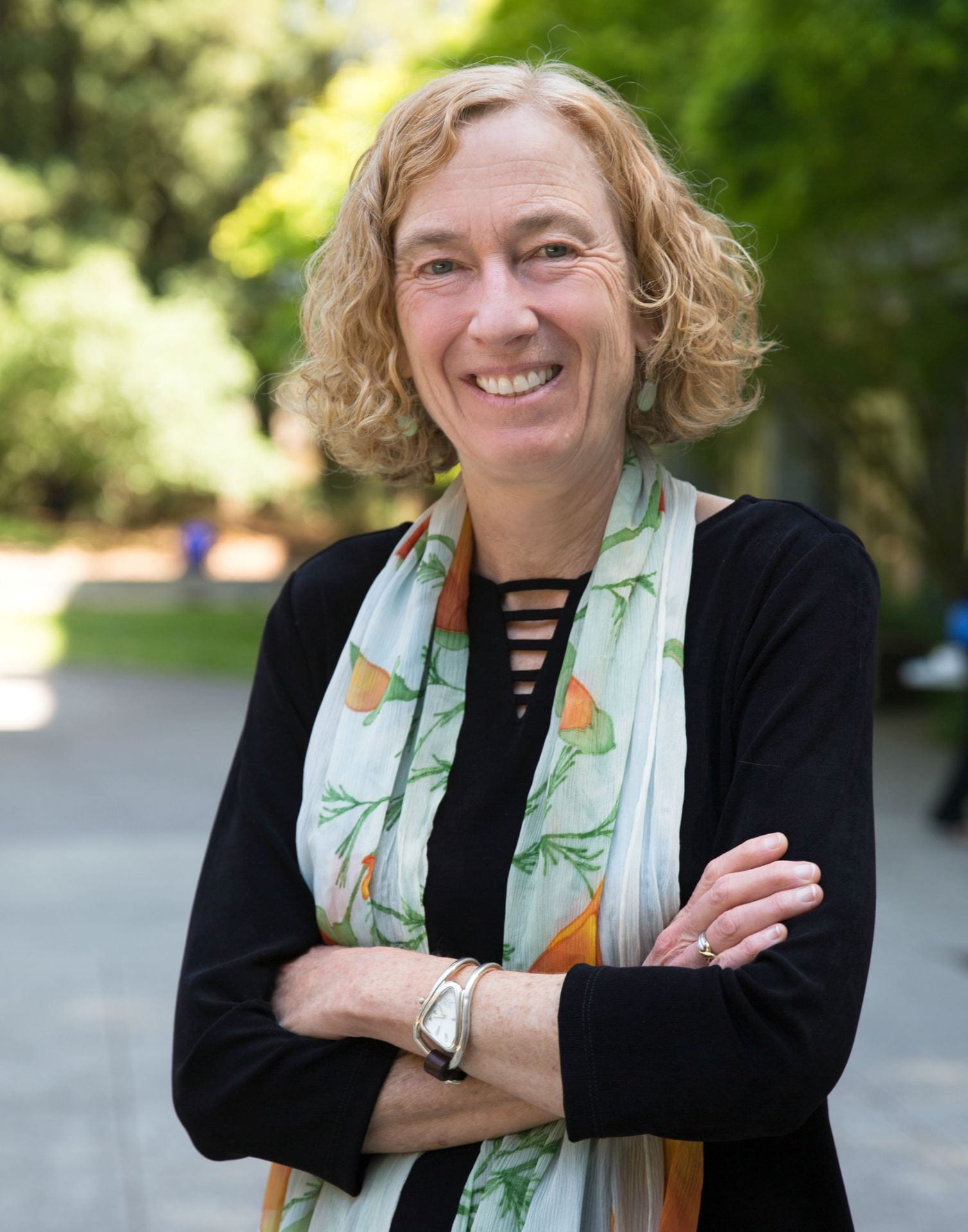
Katharyne Mitchell serves as a Distinguished Professor of Sociology at the University of California, Santa Cruz, where she is based in the Department of Sociology within Rachel Carson College. Her research critically examines the spatial dimensions of migration, containment, and humanitarian activism, with particular focus on forced labor camps, asylum centers, and deportation facilities. Her scholarship explores the physical environments and historical contexts of spaces of containment, while simultaneously investigating the role of faith-based organizations in migrant protection. She analyzes transnational church networks, policy impacts of religious activism, and evolving sanctuary practices, emphasizing migrant agency and spatial resistance against racialized violence. Her work bridges critical geography, political sociology, and migration studies through interdisciplinary frameworks that challenge conventional humanitarian governance. Recent publications reveal consistent thematic trajectories: sanctuary movements as sites of geosocial solidarity against hotspot geopolitics, neoliberal critiques of philanthrocapitalism in university settings, and pandemic-exposed spatial inequalities. Her research demonstrates how grassroots activism creates counter-geographies of refuge while exposing the humanitarian new world order's structural contradictions. Temporal analyses of memory and insurgent temporalities feature prominently across her migration-related scholarship. Scientific Awards: Alexander von Humboldt research award Her current Alexander von Humboldt-funded research investigates spaces of containment through historical-geographical analysis. She engages in scholar-activism collaborations addressing neoliberal university challenges, particularly regarding foreclosure crises and political engagement. Her pandemic-related work examines local inequities in Santa Cruz while connecting to global patterns of unequal geographies, demonstrating consistent commitment to linking academic research with community-based social justice initiatives.
Shanyang Zhao serves as Professor in the Department of Sociology within Temple University's College of Liberal Arts, with additional affiliation in the Asian Studies Program. His academic profile demonstrates sustained engagement with foundational sociological questions through contemporary lenses. His research program centers on five interconnected domains: Sociology of Knowledge and epistemological paradoxes of situated truth Self and Self-Concept development in digital environments New Media's impact on social capital and identity formation Mental Health epidemiology and diagnostic frameworks Metatheoretical foundations of sociological inquiry Currently, Professor Zhao investigates the paradox of situated knowledge—examining how context-bound humans pursue objective knowledge while navigating inherent biases. His work challenges assumptions about scientific veracity, questioning whether relative truth criteria invalidate research purposes and exploring distinctions between social and natural sciences. This existential embedment theory framework represents his most significant contemporary contribution. Analysis of his 2014-2024 publications reveals three dominant trajectories: (1) self-theory reconceptualization through Jamesian frameworks, (2) digital sociology examining social media's impact on self-presentation and social capital, and (3) mental health epidemiology using population survey data. His interdisciplinary approach consistently bridges phenomenological theory, evolutionary perspectives, and empirical social research. No scientific awards were documented in the source materials. Information regarding student advising, grant funding, laboratory resources, or collaborative teams was not provided in available documentation. His teaching responsibilities include specialized courses in Sociology of Truth, Sociology of the Self, and quantitative methods.
Simon DAWES is a Lecturer at the University of Versailles Saint-Quentin-en-Yvelines (UVSQ), affiliated with the Institute of Cultural and International Studies (IECI) and the Department of Languages. He is associated with the Center for the Cultural History of Contemporary Societies (CHCSC) and teaches courses in British Civilization and Cultural and Creative Industries. His research spans media theories, neoliberalism, public sphere dynamics, and critical analyses of race and intersectionality. Lecturer in British Civilization and Cultural/ Creative Industries UVSQ (University of Versailles Saint-Quentin-en-Yvelines), France CHCSC (Cultural History of Contemporary Societies Lab) Teaches courses on UK Civilization, British Film, TV Comedy, Media Regulation, and Intercultural Communication His research focuses on media studies, neoliberalism's impact on public spheres, press freedom, and intersections of race, racism, and Islamophobia. Recent publications examine Stuart Hall’s neoliberal conjunctures, media freedoms, and historical shifts in broadcasting regulation. He contributes to international peer-reviewed journals like Javnost - The Public and Theory, Culture & Society . Contact: simon.dawes@uvsq.fr | Personal Website
Victoria Allen is a Scientific Associate and post-doctoral researcher in the Department of English at Kiel University, specializing in Cultural and Media Studies with expertise in British and Irish cultural production. Her academic work combines conjunctural analysis, critical theory, and qualitative research methods to examine representation, identity, and memory in contemporary media contexts. Her research interests encompass Industrial Memory in North(east)ernness , gender studies, football culture, urban and landscape settings, and audio-visual media including advertisements, social media, films and television series. She applies these interests to teaching British and Irish Literature and Cultural Studies, with particular focus on music, football culture, exhibitions, and landscape representations. Allen's scholarly output demonstrates consistent engagement with working-class representations , regional identity in Northern England, and the politics of cultural memory. Her publications reveal a trajectory from examining football fan cultures to analyzing industrial heritage and memory politics in post-industrial communities, with increasing attention to gender and intersectionality. BritCult Award 2021 for PhD dissertation Co-organized 'The Refuge of Football' conference (2022) Guest editor for special journal issue on Raymond Williams As an educator, Allen has taught numerous courses at Kiel University since 2016 including 'Music and Migration in the UK', 'Myth and Memory in Irish Popular Media', and 'Screen Landscapes in Irish and UK Screen Media'. Her teaching reflects her research interests in the politics of representation, particularly regarding northern identities and working-class experiences.
Wenying Fu is a Senior Lecturer in the Department of Geography at Northumbria University since 2018, previously serving as Associate Professor in Human Geography at South China Normal University. Her expertise centers on regional innovation systems, global production networks, and informal economies. She holds a PhD in Economic and Cultural Geography from Leibniz University of Hannover (2011). Key research contributions include a Springer monograph Towards a dynamic regional innovation system: Investigation into the electronics industry in the Pearl River Delta , and peer-reviewed articles in journals like Economic Geography , Research Policy , and Environment and Planning A . Funded by the National Natural Science Foundation of China (NSFC) and Regional Studies Association, her work examines state infrastructural power, decarbonization strategies, and China's industrial policies. Current supervision includes Tadhg Camm's PhD project on grassroots economies in China. Her research bridges critical geography and policy analysis, with recent focus on entrepreneurial ecosystems, AI industry governance, and Sino-German production networks.
Benjamin Little is an Associate Pro-Vice-Chancellor and Civic Associate Professor in Media & Cultural Politics at the University of East Anglia (UEA). He co-leads UEA's civic engagement initiatives, including the groundbreaking Civic Charter process and its resulting book. His research focuses on participatory methods, digital culture, and the intersection of celebrity with political power. Little has held roles at Middlesex University and currently serves as Founding Chair of the London College of Political Technology and External Examiner at Goldsmiths. Education: PhD in Comic Books, Politics and Readers from Middlesex University (2010), awarded the John A. Lent Scholarship for outstanding research in comic art. His doctoral work analyzed British comics' influence on American culture. Research Interests: Little investigates participatory democracy, digital media's role in activism, and the sociopolitical implications of tech industry leaders. He co-authored The New Patriarchs of Digital Capitalism , examining figures like Musk and Zuckerberg. His work bridges academia, activism, and policy, emphasizing collaboration and civic responsibility. Awards: Recipient of the prestigious John A. Lent Scholarship (2008) recognizing exceptional research in comic art studies. Advising & Grants: Supervises PhD projects on digital politics and activism. Leads the ARISE project on regional resilience and innovation, funded by the Economic and Social Research Council. Co-edited Soundings: A Journal of Politics and Culture for 13 years, fostering dialogue between academia and activism. Labs/Teams: Active in the international Teaching Social Action leadership group, training educators to integrate student-led campaigns into pedagogy. Co-founded UEA's Civic Charter initiative, a model for university-community partnerships nationally.
Irene Viparelli is a Researcher specializing in Political Philosophy and Contemporary Philosophy, with a focus on Marxist theory and 19th-century revolutionary thought. She holds a Master's Degree in Philosophy from the University of Naples Federico II (2004) and a PhD in 'Ethics and Political-Legal Philosophy' from the University of Salerno (2008). She completed a post-doctoral scholarship at Portugal's Foundation for Science and Technology since 2009, with prior research at the École Normale Supérieure in Lyon (2008-2009). Her research critically examines Marx's theories, Althusserian structuralism, and Negri's biopolitical concepts, emphasizing historical conjunctures and revolutionary dynamics. Her work bridges philosophy and political action, analyzing themes such as class struggle, revolutionary praxis, and the interplay between ideology and material conditions. Key publications include studies on Althusser vs. Negri theoretical frameworks (2012), Marx's 1848 writings (2009), and educational theory in Marxist contexts (2011). Her publications span journals like Logos , Revista Germinal , and Archivio di storia della cultura , with contributions to edited volumes on contemporary political philosophy and critical theory. Research collaborations include organizing academic events such as the IVas Jornadas de Jovens Investigadores de Filosofia (2013).