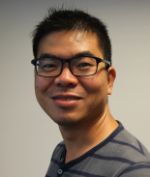
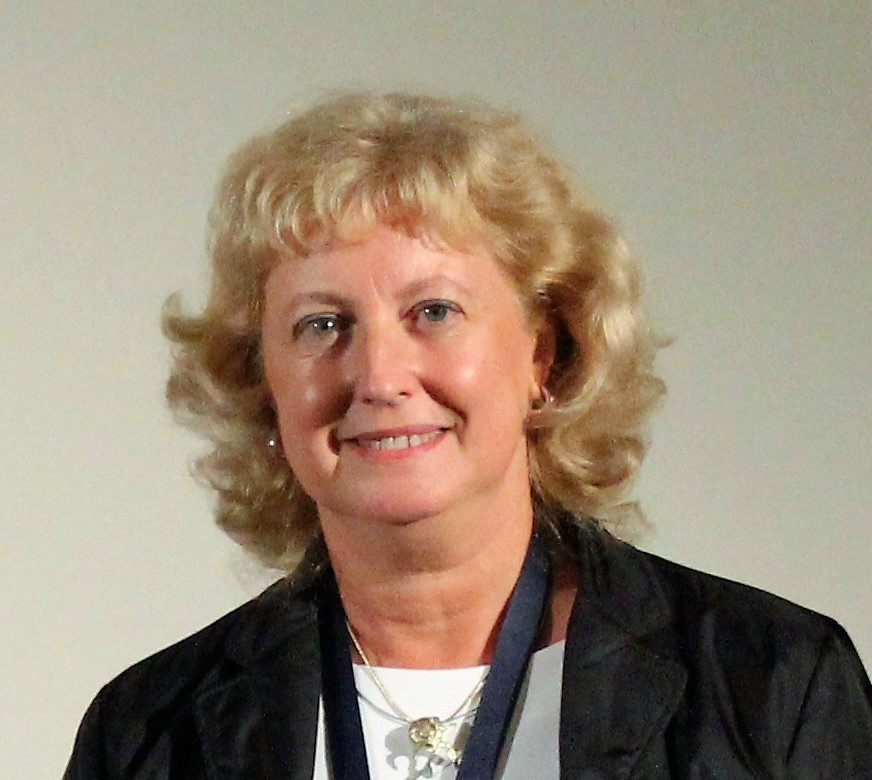
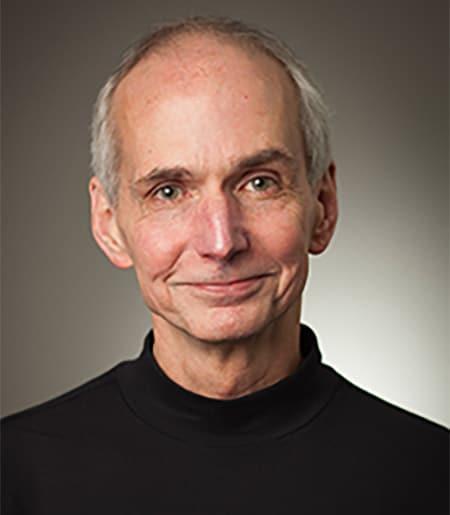
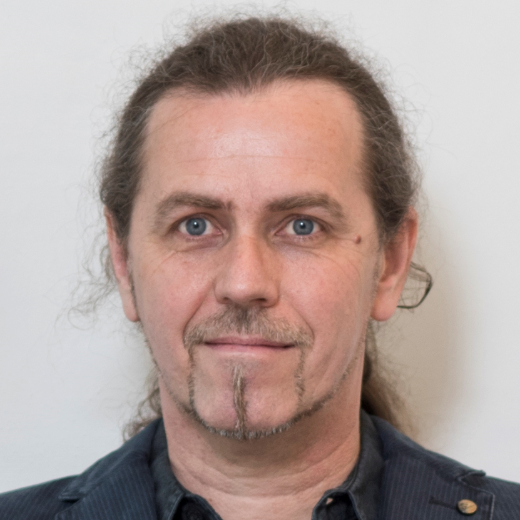
Tak Shing Chan is a researcher in the Mechanics research group at the Department of Mathematics, University of Oslo. His work focuses on wetting dynamics, droplet behavior, capillarity, and micro-nano fluidics, with applications in soft matter physics and biophysics. He employs analytical and numerical methods to study phenomena such as viscoelastic perturbations, elastocapillary effects, and interfacial instabilities. His research contributes to understanding adhesive mechanisms in biological systems and optimizing fluidic systems in engineering contexts. Key projects include the Dynamic wetting on soft solids (DyWeSS) initiative. His publications span topics like capillary bridges, film deposition, and the physics of adhesive organs in animals. Collaborations with institutions like the Norwegian Geotechnical Institute and international universities highlight his interdisciplinary approach. His work bridges fundamental fluid mechanics with applied problems in materials science and biophysics.
Prof. José Neto is a Professor at Télécom SudParis, part of the Institut Polytechnique de Paris, affiliated with the SAMOVAR research department. His work focuses on combinatorial optimization, mathematical programming, and graph theory. He has contributed to polyhedral studies of cut and assignment polytopes, spectral bounds for graph partitioning, and optimization algorithms for mixed-variable and blackbox problems. His research spans topics like network pricing complexity, domination in graphs, and robustness verification in neural networks. He has published extensively in top journals such as Mathematical Programming, Discrete Applied Mathematics, and Networks. Key contributions include developing efficient algorithms for combinatorial pricing, analyzing optimization relaxations, and exploring structural properties of discrete mathematical objects. His work bridges theoretical foundations and practical applications in operations research, with recent interests in binarized neural network verification and mixed-variable optimization. He has collaborated on projects related to cloud virtual machine mapping and combinatorial pricing models. Labs/Teams: Active member of the SAMOVAR laboratory, specializing in applied mathematics and optimization research.
Marina Indri is a Tenured Associate Professor in the Department of Electronics and Telecommunications at Politecnico di Torino, Italy. She serves as a member of the Interdepartmental Center PIC4SeR for Service Robotics and chairs the Robotics Laboratory (1999–present). With over 100 publications, her work bridges industrial robotics , mobile robotics , and Industry 4.0 . Education: Laurea (Electronic Engineering, cum laude , 1991) Ph.D. (Systems Engineering, 1995) Research Interests: Specializing in Collision detection and avoidance for industrial manipulators Friction modeling and compensation Path planning and autonomous navigation Smart manufacturing systems Human-robot collaboration Awards: James C. Hung Best Paper Award (ETFA 2013, 2024) euRobotics Technology Transfer Prize (2014, 2017) Leadership: As IEEE Senior Member , she chairs the IEEE Industrial Electronics Society’s Factory Automation Technical Committee and serves on editorial boards for IEEE Transactions on Industrial Informatics and IEEE/ASME Transactions on Mechatronics . She leads projects like SpaceItUp! (space robotics) and PNRR FAIR (AI-driven manufacturing).
Professor David Tozer is a distinguished academic in the Department of Chemistry at Durham University, specializing in advanced quantum chemical methodologies. His research focuses on refining Density Functional Theory (DFT) to enhance accuracy in electronic structure calculations for chemically relevant systems. His research interests span Methodological Developments in Density Functional Theory , Theoretical Spectroscopy , and Excited States . Key contributions include developing improved exchange-correlation functionals (B97-2, KT series), pioneering Coulomb-attenuated approaches for charge-transfer states, and resolving failures in NMR shielding predictions through optimized Kohn-Sham potentials. His work bridges theoretical innovation with chemical applications, particularly in organofluorine conformational studies and temporary anion stability. Analysis of his 15 most recent publications reveals dominant trends in adiabatic connection formalism (40%), excited-state dynamics (30%), and exchange-correlation functional development (30%). His research consistently addresses DFT's limitations in long-range interactions, conical intersections, and electron affinity calculations through rigorous mathematical frameworks. Professor Tozer actively supervises postgraduate researchers, including Jack Taylor. His international collaborations span Helgaker (Oslo), De Proft (Brussels), Ruud (Tromsø), and Cohen (Cambridge), driving cross-institutional advances in computational quantum chemistry.
Gian Domenico AMENDOLA is a Professor at the Department of Computer Engineering, Modeling, Electronics and Systems at the University of Calabria, Italy. His research focuses on microwave engineering, antenna design, and advanced wireless communication systems for 5G, satellite, and automotive applications. Research areas include phased arrays, millimeter-wave systems, dielectric spectroscopy, and RF front-end design. Recent publications highlight innovations in Ka/Ka-band duplexers, E-band backhaul antennas, and AI-driven control for phased arrays. He contributes to technologies for SatCom on the Move user terminals and high-frequency waveguide transitions. Key collaborations involve BiCMOS-based millimeter-wave components and multilayer frequency-selective surfaces.
Kurt Anstreicher is a Professor of Business Analytics at the University of Iowa's Tippie College of Business, with complementary appointments in the Department of Computer Science and Department of Industrial Engineering. He holds the Gary C. Fethke Chair in Leadership. His research focuses on mathematical programming, optimization, interior-point algorithms, and nonlinear programming. Anstreicher earned his Ph.D. from Stanford University in 1983 and a B.A. from Dartmouth College in 1978. Research interests include optimization theory and methods, particularly in nonconvex programming, convex relaxations, and algorithm design. His work addresses challenges in quadratic programming, semidefinite optimization, and global optimization techniques. Recent contributions explore applications in trust-region subproblems, copositive cones, and maximum-entropy sampling. Publications span topics like convex hull representations, Kronecker product constraints, and spherical codes. His work bridges theoretical advancements and practical computational methods, with implications for operations research, data analysis, and engineering systems.
James Renegar is the Class of 1912 Professor of Engineering in the Department of Mathematics at Cornell University, affiliated with the College of Engineering. His research focuses on optimization algorithms, particularly linear programming, hyperbolic programming, and convex optimization. He explores foundational questions in computational complexity, such as the existence of polynomial-time algorithms for solving systems of linear inequalities. His work bridges applied mathematics and theoretical computer science, emphasizing algorithm design and analysis. Notable contributions include advancements in first-order methods, subgradient techniques, and the generalization of central paths in optimization. His research also delves into hyperbolic polynomials and their role in modern optimization frameworks. Renegar has authored influential works on interior-point methods and has contributed to understanding the geometry of optimization problems. He has been funded through grants like the NSF CCF AF: EAGER project assessing first-order methods for conic optimization.
Andreas Heinrich Hamel is a Tenured Full Professor at the Faculty of Economics and Management , Free University of Bozen-Bolzano, Italy. His research focuses on advanced mathematical fields including convex and variational analysis, set-valued optimization, mathematical finance (market models with transaction costs), mathematical economics (incomplete preferences and game theory), and multivariate statistics (quantiles). Academic Rank: Professor Institution: Free University of Bozen-Bolzano School: Faculty of Economics and Management Professor Hamel co-developed the groundbreaking area of Set Optimization , with applications in mathematical finance, economics, statistics, game theory, and multi-criteria decision making. His work includes inventing set optimization approaches to risk measures for multivariate positions and developing optimization methods for economics and business applications. Recent publications highlight his expertise in set-valued risk measures, variational principles, and duality theories. His research spans topics such as cone distribution functions, multivariate shortfall risk measures, and utility maximization under transaction costs, reflecting interdisciplinary contributions to financial mathematics and optimization.
Prof. Etienne de Klerk is a Full Professor in the Department of Econometrics and Operations Research at Tilburg University, Netherlands. He holds affiliations with the Tilburg School of Economics and Management (TISEM) and has held academic positions at Nanyang Technological University (Singapore), University of Waterloo (Canada), and Delft University of Technology (Netherlands). His research focuses on mathematical programming, optimization, and operations research, with notable contributions to semidefinite programming, polynomial optimization, and interior point methods. Education & Career: PhD (exact title not specified) Assistant Professorships at TU Delft (1998–2003) Associate Professor at University of Waterloo (2003–2005) Full Professor at Tilburg University since 2009 Part-time Professor at TU Delft (2015–2019) Research Interests: Semidefinite programming, polynomial optimization, convex optimization, interior point methods, approximation theory, and algorithmic convergence analysis. His work bridges theoretical foundations with practical applications in engineering and machine learning. Awards & Grants: VIDI Grant (NWO) ENW-GROOT Grant (NWO) 2017 Best Paper Prize (Optimization Letters) Co-recipient of Canadian Foundation for Innovation’s New Opportunities Fund Recent Research Trends: Recent articles emphasize optimizing algorithms (e.g., DCA convergence analysis, predictor-corrector methods) and theoretical advancements in polynomial approximation and positivstellensatze. Collaborations span global institutions in optimization and applied mathematics. Supervision & Projects: Lead researcher on grants like POEMA and MINOA, focusing on polynomial optimization and training early-stage researchers. Actively involved in editorial roles for SIAM Journal on Optimization and INFORMS Journal on Computing. Labs & Teams: Research group in Operations Research at Tilburg University, collaborating on projects like semidefinite programming applications and machine learning optimization.
Prof. Dr. Ender CİĞEROĞLU is a Professor in the Department of Mechanical Engineering at Middle East Technical University (METU), Ankara, Turkey. He holds a Ph.D. and M.S. from The Ohio State University, and B.Sc./M.Sc. degrees from METU. His research focuses on nonlinear vibrations, friction modeling, gear dynamics, structural dynamics, and vibration control. He has authored over 40 journal articles and conference papers in leading journals like Nonlinear Dynamics and Mechanical Systems and Signal Processing. His work includes development of microslip friction models and advanced vibration analysis techniques for turbomachinery and mechanical systems. Awarded the 2011-2012 METU Educator of the Year Award, Prof. CİĞEROĞLU is an active member of ASME and has served as conference secretary for multiple Savunma Teknolojileri Kongresi events. He has supervised numerous undergraduate research projects on mechanical vibrations and numerical methods. Prof. CİĞEROĞLU teaches courses such as Nonlinear Vibrations, Numerical Methods, and Mechanical Design. His contributions include developing educational resources like Mathcad tutorials for engineering students and actively participating in academic service roles including editorial work for conferences and journals.
Shaunak Bopardikar is an Associate Professor in the Department of Electrical and Computer Engineering at Michigan State University (MSU), affiliated with the Center for Connected Autonomous Networked Vehicles for Active Safety (CANVAS). He holds a B.Tech. and M.Tech. from IIT Bombay and a Ph.D. from UC Santa Barbara. His research focuses on scalable computation, cyber-physical systems security, and autonomous motion planning. Previously, he worked as a Staff Research Scientist at United Technologies Research Center and a postdoctoral researcher at UC Santa Barbara. Education: B.Tech. and M.Tech. in Mechanical Engineering (CADA), Indian Institute of Technology Bombay (2004) Ph.D. in Mechanical Engineering (Dynamics and Control), University of California, Santa Barbara (2010) Research Interests: Dr. Bopardikar explores advanced methods for autonomous systems, including randomized algorithms for large-scale optimization, adversarial motion planning, and resilient cyber-physical systems. His work integrates game theory, control systems, and sensor networks to address challenges in autonomous vehicle safety, perimeter defense, and multi-agent collaboration. Key Research Trends: His recent publications emphasize game-theoretic approaches to security, optimal motion planning under uncertainty, and multi-fidelity modeling for sensor systems. He has contributed to frameworks for secure route planning, dynamic sensor selection, and adversarial emulation in cyber-physical systems. Teaching and Advising: He teaches courses in control systems and has an open Ph.D. position for students interested in his research areas. His group focuses on collaborative projects with industrial and academic partners. Labs and Affiliations: His work leverages the CANVAS center to advance connected autonomous vehicle technologies, emphasizing real-world applications of theoretical advancements.
Shaunak D. Bopardikar is an Associate Professor in the Department of Electrical and Computer Engineering at Michigan State University. He specializes in motion planning for autonomous vehicles, cyber-physical systems security, and randomized algorithms. Prior roles include Staff Research Scientist at United Technologies Research Center and Postdoctoral Researcher at the Center for Control Dynamical Systems and Computation. His teaching includes courses like ECE 313 (Control Systems), ECE 416 (Digital Control), and graduate-level courses on game theory and linear systems. Research interests focus on autonomous systems, adversarial motion planning, and sensor selection. Key trends in his work include applying game theory to security challenges and developing scalable algorithms for high-dimensional systems. He leads research on perimeter defense strategies, cooperative robotic systems, and stealth-resilient control mechanisms. Current funding includes the NSF CAREER Award for attack-resilient multi-agent systems. His advising focuses on doctoral candidates interested in his research areas.
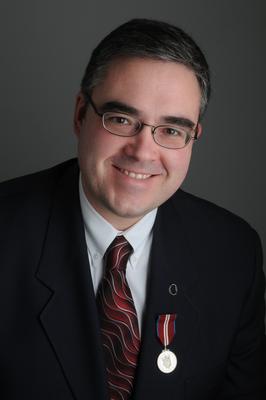
Miguel F. Anjos is a Professor in the School of Mathematics at the University of Edinburgh, where he serves as Deputy Head of School and Head of the research theme Data and Decisions. He also holds an Associate Professor position at Polytechnique Montréal in the Department of Mathematics and Industrial Engineering. Additionally, he chairs the Mathematical Optimization Society (2023-2025) and serves as Vice-President (International Activities) of INFORMS. His research focuses on mathematical optimization to solve large-scale discrete nonlinear optimization problems in engineering applications, particularly in conic optimization for facility layout problems and optimal power flows in electricity grids. His work addresses critical challenges in smart grid development, including efficient network utilization, renewable energy integration, energy storage, and customer participation in grid operations. He has extensive industry experience working with National Grid ESO, Hydro-Québec, Schneider Electric, Rio Tinto, and EDF. His publications reveal a strong focus on optimization methods applied to energy systems, with recent work spanning bilevel optimization, robust optimization with uncertainty quantification, electric vehicle infrastructure planning, and carbon credit markets. His research consistently bridges theoretical optimization with practical engineering applications. Canada Research Chair in Nonlinear Discrete Optimization in Engineering (2011-2016) NSERC-Hydro-Québec-Schneider Electric Industrial Research Chair in Smart Grid Optimization (2016-2019) INRIA International Chair for Optimizing Smart Grids (2016-2021) Winner of MOPTA 2020 and 2024 competitions Queen Elizabeth II Diamond Jubilee Medal (2012) Fellow of the Humboldt Foundation, EUROPT, and Canadian Academy of Engineering Professor Anjos has supervised numerous PhD students and postdoctoral fellows, with graduates securing positions at academic institutions including University of Tennessee, Western Ontario University, and industry roles at Amazon, CAISO, and major consultancies. He maintains three benchmark datasets (QAPLIB, FLPLIB, and the Jones Benchmark) as a service to the optimization community.
Professor Jeya Jeyakumar is a leading applied mathematician at the School of Mathematics and Statistics of the University of New South Wales (UNSW) , internationally recognized for pioneering contributions to mathematical optimization. His work bridges rigorous theoretical analysis with practical computational methods, advancing fields like global optimization, robust decision-making, and machine learning-inspired models. PhD in Optimization, University of Melbourne His research focuses on transforming complex mathematical concepts into robust optimization frameworks for uncertainty quantification, risk minimization, and multi-stage decision-making. Key applications include medical decision support tools (e.g., Alzheimer’s detection via handwriting analysis), radiation therapy planning, and Huntington’s disease characterization. Recent work spans distributionally robust optimization, polynomial optimization, and convexifiable systems. His 15 most recent publications address topics like data-driven optimization over measure spaces, adjustable robustness in medical contexts, and algebraic approaches to fuzzy sets. 2025: Marguerite Frank Award for EURO Journal on Computational Optimization 2019: Joint winner of Journal of Global Optimization Best Paper Prize 2017: Optimization Letters Best Paper Prize Professor Jeyakumar has secured multiple ARC Discovery Project grants (e.g., $471,300 in 2025 for risk-aware optimization) and industry collaborations. He supervises HDR students in areas like two-stage robust optimization and feature selection under uncertainty.
Louis Dupaigne is a Professor of Mathematics at the Camille Jordan Institute (ICJ) and the Claude Bernard Lyon 1 University . His research focuses on nonlinear analysis and partial differential equations (PDEs) of elliptic type, with a particular emphasis on semilinear elliptic equations , Lane-Emden systems , and singular solutions . He has authored a book on PDEs accessible to M2 students. Dupaigne actively contributes to mathematical research , with recent publications addressing topics such as Liouville-type theorems , nonlocal equations , and conformal geometric inequalities . His work often involves collaboration with researchers like Alberto Farina , Juan Dávila , and Ivan Gentil , covering areas from fractional Laplacians to anisotropic media in singular elliptic equations. He supervises doctoral students, including Francesco Pagliarin , and has mentored former students such as Troy Pettit and Simon Zugmeyer . Dupaigne co-organizes the Optimal Functional Inequalities working group and participates in scientific outreach through the laboratory's public dissemination activities. His teaching includes courses on climate transitions , applied analysis , and complex analysis .