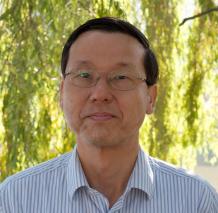
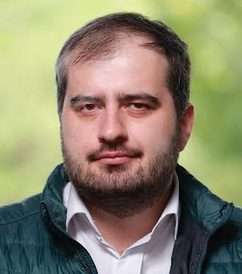
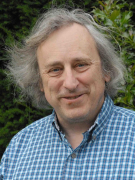
Raymond O. Wells is a Distinguished Professor of Mathematics at the School of Computer Science & Engineering, Constructor University. Previously, he held roles as Professor of Mathematics and Vice President for External Affairs at Jacobs University Bremen, and served as Professor Emeritus at Rice University. His academic journey includes a BA in Mathematics from Rice University (1962) and a PhD from New York University (1965). His research focuses on complex analysis, wavelet theory, differential geometry, and the history of mathematics. Notable contributions include foundational work on complex manifolds, cohomology in theoretical physics, and applications of wavelet analysis in signal processing. He has authored influential books such as *Differential Analysis on Complex Manifolds* and *Wavelet Analysis: The Scalable Structure of Information*. Wells has received prestigious awards including the Guggenheim Fellowship (1974–1975) and Humboldt Senior Scientist Award. Beyond academia, he has served as President of the Boulder Philharmonic Orchestra and the Boulder Ensemble Theatre Company. His career reflects a blend of mathematical rigor and interdisciplinary engagement, spanning academic leadership, research innovation, and cultural contributions.
Giovanni Catino is a Professor of Mathematics at Politecnico di Milano, specializing in Differential Geometry and Partial Differential Equations. His research focuses on geometric analysis, Ricci solitons, Einstein manifolds, and curvature functionals. He has authored multiple influential papers and books, including the award-winning monograph 'A Perspective on Canonical Riemannian Metrics' (2020). Catino is actively involved in academic activities, organizing conferences like the 'Differential Geometry, Analysis and Epistemology in Milan' (2025) and 'Perspectives in Geometric Analysis' (2025). His work bridges geometric structures with analytical techniques, addressing rigidity phenomena, curvature inequalities, and geometric flows. Key contributions include studies on critical metrics for quadratic curvature functionals, Liouville theorems in sub-Riemannian geometries, and rigidity of Einstein manifolds. He has co-authored over 50 peer-reviewed publications and edited volumes on calculus and geometric analysis. Catino's research also extends to pedagogical contributions, such as textbooks on calculus and problem-solving for undergraduate students. His awards include the prestigious 2020 Ferran Sunyer i Balaguer Prize recognizing his monograph's impact on the field. Catino collaborates internationally, with publications in top journals like Journal of Differential Geometry and Advances in Mathematics , and frequently participates in seminars and workshops on geometric analysis.
Wenhao Zhang is an Assistant Professor in the Lyda Hill Department of Bioinformatics at UT Southwestern Medical Center, with a secondary appointment in the Peter O’Donnell Jr. Brain Institute. He holds the Lupe Murchison Foundation Scholar in Medical Research award. His research bridges computational neuroscience and biomedicine, focusing on neural circuits' role in information processing and developing brain-inspired algorithms. He collaborates with experimental neuroscientists, psychologists, and computer scientists to translate theoretical insights into practical applications. Education: B.E. in Biomedical Engineering from Shanghai Jiao Tong University (2009), Ph.D. in Theoretical Neuroscience from the Institute of Neuroscience, Chinese Academy of Sciences (2016). Postdoctoral training includes the University of Chicago (2020–2021), University of Pittsburgh (2018–2020), Carnegie Mellon University (2016–2017), and Hong Kong University of Science and Technology (2015–2016). Research interests center on biologically plausible normative theories for information processing in neural circuits and artificial systems. Key areas include Bayesian inference, multisensory integration, neural circuit dynamics, and the development of brain-inspired machine learning algorithms. His work employs methods like nonlinear dynamics, Bayesian inference, and information theory to study how perception and decision-making emerge from neural circuits. Recent publications emphasize theoretical frameworks for neural computation, such as motion planning circuits using Lie group theory, inhibitory interneurons' role in Bayesian sampling efficiency, and grid cells' spatial representation mechanisms. His lab also explores place cell dynamics and recurrent network models for equivariant representations. Scientific Award: Lupe Murchison Foundation Scholar in Medical Research Zhang advises PhD students including Armand Rathgeb, Zimei Chen, Yi Ren, and Eryn Sale, as well as visiting scholars like Junfeng Zuo and Xinruo Yang. His lab collaborates with institutions such as UCLA, Peking University, and the University of Rochester. Funding includes travel grants for students, e.g., Eryn Sale’s 2024 Cosyne award. He directs the Computational Neuroscience Lab (CNL) at UT Southwestern, which combines normative theories with biologically detailed models to study neural circuit principles underlying cognition. The lab actively pursues interdisciplinary research, using techniques from mathematics and computer science to inform experimental neuroscience and vice versa.
Professor Benjamin Béri is a faculty member in the Cavendish Laboratory (Department of Physics) at the University of Cambridge, holding the position of Professor of Theoretical Physics. His research group operates within the Theory of Condensed Matter (TCM) Group at the Ray Dolby Centre, JJ Thomson Avenue, Cambridge. Béri's research centers on topological phases of quantum matter, where collective behavior of particles produces nonlocal order characterized by topological invariants rather than conventional parameters. His work explores systems ranging from solid-state electron devices to ultracold atomic gases, with emphasis on phenomena like impurity-immune conducting boundaries and exotic quasiparticles for quantum information processing. Key areas include Majorana fermions, topological quantum computing, and non-equilibrium dynamics in many-body systems. Recent publications reveal a pronounced focus on topological quantum error correction (surface codes, Floquet codes), Sachdev-Ye-Kitaev model applications, and braiding protocols for Majorana zero modes. His group demonstrates consistent innovation in connecting abstract topological concepts to experimental quantum computing architectures, particularly through studies of delocalization effects and dynamical phase transitions. Professor Béri leads an active research team comprising postdoctoral fellows Dr. Jan Behrends and Dr. Jack Kemp, alongside research students Mircea Bejan, Vedant Motamarri, Cory Aitchison, and Campbell McLauchlan within the TCM Group's framework.
Craig A. Tracy is a Distinguished Professor Emeritus of Mathematics at the University of California, Davis. His primary affiliation is with the Department of Mathematics, where he has contributed extensively to mathematical physics, probability, and integrable systems. His research focuses on random matrix theory, statistical mechanics, and stochastic processes, particularly the asymmetric simple exclusion process (ASEP). He is renowned for co-developing the Tracy-Widom distribution, pivotal in random matrix theory and describing fluctuations in growth models and particle systems. Tracy's work often intersects with quantum mechanics and nonlinear equations, including studies on Bose and Fermi gases, Ising models, and Painlevé transcendents. His collaborations with Harold Widom have produced foundational results in integrable systems and their applications. His awards and honors, detailed in 'Awards.pdf', reflect his contributions to mathematical physics. He has advised numerous PhD students, many of whom now contribute to academia and industry. Tracy's research is supported by the National Science Foundation (NSF), and he maintains an active presence in lectures, courses, and publishing.
Julian Philip Vivian is a Research Fellow affiliated with the Marketing and Communications Research Office. His work focuses on immunology, structural biology, and molecular mechanisms of immune recognition, particularly involving HLA molecules, T-cell receptors, and NK cell interactions. Recent research includes structural studies of HLA-TCR interactions in psoriasis, functional analysis of MR1-restricted T-cells, and investigations into HLA polymorphism effects on immune responses in viral infections and drug hypersensitivity. He has contributed to SARS-CoV-2 immunopathology models and HLA engineering techniques. Publications highlight expertise in X-ray crystallography, immunopeptidome profiling, and receptor-ligand dynamics. No formal awards, educational background, or advisory details were explicitly mentioned in the provided texts.
Anna Wienhard is an Honorary Professor at the University of Leipzig's Mathematical Institute and Director of the 'Geometry, Groups, and Dynamics' division at the Max Planck Institute for Mathematics in the Sciences. Her research focuses on geometric structures, representation varieties, and their applications in mathematics and data science. She leads collaborative initiatives like the International Max Planck Research School and ScaDS.AI, integrating geometric methods with machine learning. Research Interests: Her work spans higher Teichmüller theory , Anosov representations , and geometric structures on manifolds. Recent projects explore applications of Higgs bundles, moduli spaces, and persistent homology in quantum dynamics and data analysis. Publications: Her 2025 papers advance Anosov representation theory and total positivity, while 2021 works apply geometric methods to machine learning. Earlier contributions include foundational studies on maximal surface group representations and Hitchin components. Awards: Membership in the Hector Fellow Academy (2021). Grants: Leads AEI-DFG projects on stability and representation varieties, and coordinates DFG-funded clusters like STRUCTURES and SFB/TRR 191. Teaching: Oversees doctoral training programs and collaborates with Leipzig University’s Mathematical Institute. Labs/Teams: Directs the Max Planck division, collaborates with ScaDS.AI, and chairs international workshops on Teichmüller theory and geometric dynamics.
Marcin Lis is a Professor and Prorektor ds. Studenckich i Współpracy z Otoczeniem at WSB University, focusing on digital transformation, university-enterprise collaboration, and sustainability. His academic work bridges management studies, quality systems, and international relations. Research interests emphasize digital innovation in industry (Industry 4.0/5.0), AI applications in manufacturing and decarbonization, and strategic partnerships between educational institutions and businesses. His work also explores energy efficiency, organizational change, and regional development challenges in Poland and beyond. Recent publications address AI-driven industrial transformation, university-industry partnership models, and sustainable energy solutions. Collaborations include projects with colleagues like Katarzyna Szczepańska-Woszczyna and Zdzisława Dacko-Pikiewicz on topics ranging from statistical mechanics to knowledge transfer systems. Lis has contributed to studies on smart cities, cross-border cooperation, and the role of innovation in economic resilience. His administrative role supports student affairs and institutional partnerships, aligning with his research emphasis on collaborative ecosystems.
Daniel Polani is Professor of Artificial Intelligence at the University of Hertfordshire, leading research in adaptive systems and cognitive architectures. His work integrates information theory with robotics to model intelligent decision-making processes in biological and artificial systems. Core research themes: Information-theoretic foundations of cognition Embodied intelligence in robotics Intrinsic motivation systems Perception-action loop modeling Recent publications (2023-2025) explore robot learning with Lyapunov stability, decentralized traffic optimization, and information-theoretic analysis of cognitive systems. Research advances principled approaches to AI that mimic biological information processing.
Petar Tadic is a Research Associate at the School of Mathematical & Computer Sciences, Department of Mathematics, Heriot-Watt University. His research focuses on theoretical physics and mathematical physics, particularly conformal field theory (CFT), AdS/CFT correspondence, and quantum field theory. He explores bootstrap methods, hydrodynamics, and holographic systems. Key research interests include the application of conformal bootstrap techniques to quantum many-body systems, the study of hydrodynamic dispersion relations at finite coupling, and the analysis of stress tensor correlators in CFTs. His work bridges algebraic structures (e.g., Catalan numbers) with physical phenomena, often leveraging holographic duality to connect gravitational and field-theoretic frameworks. His recent articles emphasize advancements in the five-point bootstrap formalism and the exploration of thermalization processes in large-N conformal field theories. These studies contribute to understanding non-equilibrium dynamics and equilibration mechanisms in strongly coupled systems. No scientific awards or grants are explicitly listed, and there are no documented advisees. His research aligns closely with the university’s theoretical physics and mathematical sciences initiatives.
Prof. Atsushi Higuchi is a Professor of Mathematics at the University of York, specializing in theoretical physics. His research focuses on the intersection of general relativity and quantum field theory, particularly quantum field theory in de Sitter spacetime and its implications for inflationary cosmology. He has held postdoctoral positions at institutions including Yale University, University of Wisconsin-Milwaukee, and the University of Bern before joining York in 1996. His research group, the Mathematical Physics and Quantum Information Research Group , explores topics such as quantum entanglement, black hole physics, and semiclassical gravity. He has authored over 100 publications and received the Outstanding Referee for the American Physical Society award in 2008. His work includes studies on gravitational bremsstrahlung, Hawking radiation, and the Unruh effect, often using advanced mathematical techniques like group theory and operator extensions. Prof. Higuchi has led research projects funded by the Royal Society and EU, including studies on quantum field theory in de Sitter space and infrared aspects of perturbative quantum gravity. He has also hosted visiting scholars and participated in international collaborations, contributing to interdisciplinary areas like quantum information science.
Vlad Margarint is a Tenure-Track Assistant Professor in the Mathematics & Statistics Department at the University of North Carolina at Charlotte. His research focuses on mathematical physics, probability theory, and their intersections with statistical mechanics and random matrix theory. He holds a DPhil (PhD) from the University of Oxford (2015-2019) under Professors Dmitry Belyaev and Terry Lyons, and an MSc from ETH Zürich (2013-2015) under Prof. Antti Knowles. His work bridges Schramm-Loewner Evolutions (SLE), random matrices, and probabilistic number theory, with recent contributions to understanding zero distributions of random zeta functions and connections between SLE and RMT. Key research areas include: Random Riemann Zeta/Diophantine L-functions and probabilistic Riemann Hypothesis analogues Interplay between SLE and Random Matrix Theory (e.g., using Dyson Brownian motion drivers) Long-range statistical mechanics models and local limit theorems Deterministic Loewner theory and Bessel process applications He has taught at UNC Charlotte (Probability Theory I, Statistics), CU Boulder, NYU Shanghai, and Oxford. Recent talks include Duke University, IHES Paris, and KTH Stockholm. His work appears in journals like Random Matrices: Theory and Applications, Electronic Communications in Probability, and Journal of Statistical Physics.
Dr. Olivier Sète is a Professor in the Department of Mathematics at Ulm University, Germany, serving in the Academic Affairs Committee for Mathematics. His research focuses on numerical mathematics, complex analysis, and their applications in astrophysics and natural sciences. Key areas include approximation theory, Helmholtz equation methods, conformal mapping, potential theory, and gravitational lensing modeling. He has authored/co-authored over 25 publications since 2013, with notable contributions to rational approximation algorithms (e.g., the AAA algorithm), conformal mapping techniques, and stochastic partial differential equations. His work bridges theoretical mathematics with computational methods, addressing challenges in gravitational lensing and wave propagation. Dr. Sète collaborates with institutions globally, including co-authors like Jörg Liesen and Klaus Schiefermayr. His research has been cited extensively in numerical analysis, complex analysis, and astrophysics. He maintains an active private homepage and is affiliated with zbMATH, MathSciNet, and Google Scholar. Current projects include advancing conformal mapping for lemniscatic domains and exploring uncertainties in the Helmholtz equation's wavenumber. He advises on academic affairs and contributes to Ulm University's mathematical curriculum development.
Kosio Beshkov is a Postdoctoral Fellow in Condensed Matter Physics at the University of Oslo, specializing in the intersection of topological data analysis and machine learning. His research focuses on theoretical frameworks for understanding neural network representations and biological neural systems. His primary research interests include: Theory of deep neural networks in overparametrized regimes Topological data analysis of neural manifolds De novo protein design using evolutionary algorithms and geometric modeling Connections between network representations and topological spaces Recent publications demonstrate strong trends in computational neuroscience, with 7 papers from 2021-2025 spanning journals like PLoS Computational Biology and iScience. His work consistently applies polyhedral geometry, quotient spaces, and homology to neural representation problems, while expanding into protein language models and gene therapy applications. Current technical approaches combine: Topological data analysis for high-dimensional neural data Geometric deep learning for robust representations Biophysically-detailed neuron modeling Protein structure-geometry relationships
Malcolm Perry is a Professor of Theoretical Physics at Queen Mary University of London, previously holding a professorship at the University of Cambridge's Department of Applied Mathematics and Theoretical Physics. He is a Fellow of Trinity College, Cambridge, and a member of the Centre for Fundamental Physics and the Relativity and Gravitation research group. His research focuses on black hole physics, quantum gravity, string theory, and cosmology. Perry's work includes the Myers-Perry metric (with Robert Myers) and significant contributions to resolving the black hole information paradox with Stephen Hawking and Andrew Strominger. He has received awards from the Gravity Research Foundation and the Sloan Research Fellowship. Education: King Edward’s School, Birmingham Bachelor's in Physics, St John’s College, Oxford PhD in Theoretical Physics (supervised by Stephen Hawking), King’s College, Cambridge Research Interests: Perry advances understanding of black hole thermodynamics, gravitational waves, and the interplay between quantum mechanics and general relativity. His work spans Euclidean quantum gravity, soft hair conjectures, and higher-dimensional spacetime models in string theory. Grants & Collaborations: Perry co-leads the Amplitudes, Strings and Duality grants (STFC-funded), collaborating with experts like Andreas Brandhuber and David Berman. These projects explore string theory and gauge/gravity dualities. Awards: Gravity Research Foundation Award Sloan Research Fellowship Labs/Teams: Perry contributes to Queen Mary's Centre for Fundamental Physics and the Relativity and Gravitation group, advancing interdisciplinary research in theoretical physics.