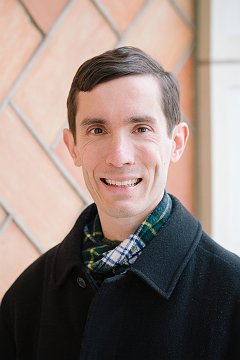
James Riely is a Professor in the School of Computing at DePaul University , United States. His research focuses on Programming Languages , Concurrency , and Formal Methods , particularly in modeling Relaxed Memory and Security in distributed systems. He has contributed to leading conferences like POPL , SPLASH , and VMCAI , addressing topics such as Concurrent Programming , Event Structures , and Security Automata . Education : PhD in Computer Science from University of North Carolina at Chapel Hill (1999). Research Trends : His work spans Relaxed Memory Models , Software Verification , and Security Protocols , often integrating Formal Verification and Concurrency Theory . Key contributions include modeling Speculative Execution Attacks and designing Security Automata for enforceable policies. Conference Involvement : Active in program committees for POPL , VMCAI , and PPoPP , with session chair roles in tracks like Separation Logic and SLE .
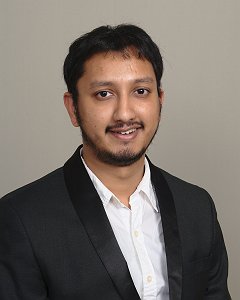
Ankush Das is a tenure-track assistant professor in the Computer Science Department at Boston University. His research focuses on programming languages with applications in cryptographic protocols, distributed systems, and probabilistic and machine learning models. Prior to joining Boston University, he worked as an applied scientist at Amazon in the Automated Reasoning Group until December 2023. Dr. Das received his PhD from Carnegie Mellon University in 2021, where he was advised by Prof. Jan Hoffmann and worked closely with Prof. Frank Pfenning. He completed his undergraduate studies at IIT Bombay, India in 2015. His research interests span a wide range of topics within programming languages, with specific focus on resource analysis, session types, distributed protocols, and language design for smart contracts on the blockchain. He is particularly interested in developing type systems that can ensure safety and efficiency properties in concurrent and distributed systems. His work has led to the development of domain-specific languages like Nomos for implementing smart contracts and Rast for resource-aware session types with arithmetic refinements. Dr. Das's publication record demonstrates a consistent focus on advancing type theory and its applications to practical systems. His work frequently appears in top-tier programming languages conferences such as POPL, PLDI, and ICFP. A notable trend in his recent work is the extension of session types to handle probabilistic computations and resource-aware programming, reflecting the growing importance of these areas in modern distributed systems. His scientific achievements have been recognized with several prestigious awards: Distinguished paper award at POPL 2024 for "Parametric Subtyping for Structural Parametric Polymorphism" Best system description paper award by a junior researcher at FSCD 2020 for "Rast: Resource-Aware Session Types with Arithmetic Refinements" Dr. Das is actively mentoring PhD and undergraduate students at Boston University. His current advisees include Anthony DeRossi, Toby Ueno, Brendan Coyne, Qiancheng Fu, June Wunder, Sam Buxbaum, and Sakshi Sharma. He is looking for motivated PhD students to join his research group, with opportunities to work on cutting-edge problems in programming languages and their applications to distributed systems and security. At Boston University, Dr. Das leads research efforts in programming language theory and its applications. His work bridges theoretical foundations with practical implementations, particularly in the areas of smart contracts and distributed protocols. He has collaborated extensively with researchers from Carnegie Mellon University, including his former advisors Jan Hoffmann and Frank Pfenning.
Roel Mehlkopf serves as a part-time Assistant Professor at TIAS Business School, where he holds the position of Academic Director for the Netspar Pension Innovation program. Concurrently, he works as a Senior Advisor at Cardano Risk Management, specializing in lifecycle investment policy design and financial risk management for pension funds. His educational credentials include a cum laude graduation in Financial Econometrics (2006) and a PhD in Finance from Tilburg University (2011), complemented by a visiting scholar appointment at the University of Pennsylvania. His legislative contributions to the Netherlands' Improved Premium Scheme Act demonstrate practical policy impact. Research Focus: Mehlkopf's work centers on pension system design, longevity risk economics, and life cycle consumption models. His publications reveal strong emphasis on household welfare dynamics, macro-longevity risk sharing, and pension innovation frameworks. Current research explores heterogeneous effects of home equity utilization in retirement and behavioral aspects of pension enrollment decisions. His 2014-2024 publications exhibit consistent thematic progression from foundational pension design theory toward applied solutions for demographic and financial risks. Key journals include Journal of the Economics of Aging and Insurance Mathematics & Economics , with notable collaborations through Netspar and Tilburg University. As Academic Director of the Netspar Pension Innovation program, Mehlkopf bridges academic research and industry implementation. His dual affiliation with TIAS Business School and Cardano Risk Management enables direct translation of theoretical insights into pension fund risk management practices, particularly regarding lifecycle investment strategies and regulatory compliance.
Omar I. Al-Bataineh is a Research Scientist at Gran Sasso Science Institute (GSSI) in Italy, specializing in software engineering and formal methods. His work bridges theoretical foundations with practical applications in automated program repair and software verification. Education: Ph.D. in Computer Science, University of Western Australia Additional degrees from University of New South Wales and Jordan University of Science and Technology His research centers on three interconnected themes: (1) Multi-fault Automated Program Repair addressing complex bug interactions, (2) Formal Methods for Reliable Repair ensuring provable correctness, and (3) Termination-Aware Repair integrating performance considerations. He develops lightweight test oracles and context-sensitive repair techniques to overcome patch overfitting and scalability limitations in real-world systems. Recent publications reveal strong focus on multi-fault scenarios (60% of 2025 output), with growing emphasis on formal verification (30%) and performance-aware repair (10%). Key venues include ASE, ICSME, and SANER where he explores program slicing, oracle design, and fault interaction analysis. Awards: Best Paper Award at QRS 2022 for advancing automated program repair capabilities Prior to GSSI, he held research positions at Simula Research Laboratory, National University of Singapore, and Nanyang Technological University. His teaching experience includes Advanced Computer Security at UNSW and Java Programming at UWA, though current academic instruction isn't emphasized in recent activities. He maintains active contributions to workshops like APR@ICSE and FASE, focusing on practical tool development.
Dr. Si Liu is a researcher at ETH Zürich's Institut für Informationssicherheit, specializing in distributed systems and database verification. His research focuses on developing formal methods to ensure consistency and isolation guarantees in database transactions, DNS security, and neural network verification. His work bridges theoretical computer science with practical system design, creating tools like Plume for black-box isolation checking and techniques for compositional DNS attack analysis. Recent projects include NOC-NOC for optimal distributed transactions and abstraction-based DNN verification. Dr. Liu has contributed significantly to protocol design for internet architectures and database concurrency models, with publications spanning top conferences including EuroSys, OSDI, and USENIX Security.
Zvonimir Rakamaric is a Professor in the Department of Computer Science at the University of Utah. His primary research focuses on formal methods, software verification, and numerical analysis, with an emphasis on ensuring correctness and reliability in software systems. He leads efforts in developing tools and techniques for verifying complex systems, including formal verification of floating-point arithmetic, compiler optimizations, and concurrent/distributed systems. Key Roles: Formal Methods Researcher, Software Verification Specialist, Floating-Point Arithmetic Expert Affiliations: University of Utah School of Computing Research interests span formal verification tools (e.g., SMACK, Dafny), static analysis, and numerical error analysis. His work addresses challenges in safety-critical systems, including embedded software, high-performance computing, and compiler optimizations. Collaborations include institutions like Sandia National Labs and Microsoft Research. Publications emphasize rigorous methods for analyzing floating-point precision, equivalence checking, and tool development for formal verification. His work bridges theoretical foundations with practical tool implementations, contributing to open-source verification frameworks widely adopted in academia and industry.
Elisabeth Grohmann is a Professor of Microbiology at the Berlin University of Technology (Department of Life Sciences and Technology) and holds concurrent roles as a Professor and Group Leader in the Department of Infectious Diseases at the University Hospital Freiburg. Her career includes positions such as Visiting Researcher at the University of the Basque Country (Spain) and postdoctoral fellowships in Spain and Austria. She specializes in microbial genetics, conjugative plasmids, antibiotic resistance, and environmental microbiology. Her research focuses on mechanisms of horizontal gene transfer, biofilm formation, and the impact of wastewater irrigation on microbial communities. Education: PhD in Molecular Biology (Graz University of Technology, 1994), Habilitation in Molecular Biology (Technical University of Berlin, 2003). Research Interests: Conjugative plasmid transfer in Gram-positive bacteria, antibiotic resistance dissemination, microbial biofilms, environmental microbiology, and pathogen adaptation in extreme environments such as space habitats. She leads the AG Grohmann lab, which investigates antimicrobial resistance mechanisms and develops novel antimicrobial surface coatings. Publications: Over 100 peer-reviewed articles, including studies on type IV secretion systems, AGXX antimicrobial coatings, and the role of wastewater irrigation in ARG spread. Key contributions include identifying TraG/TraM proteins in Enterococcus conjugation and demonstrating the efficacy of AGXX coatings against multi-resistant pathogens. Lab Members: PhD students (e.g., Michelle Bölcke, Florian Martin), postdocs (Leila Soufi, Daniela Wischer), and collaborations with institutions like the University of Freiburg and the ISS space mission teams.
Prof. Dr. Alfons Kemper is a Full Professor of Computer Science at Technische Universität München (TUM), leading the Chair of Database Systems (Computer Science III) within the School of Computation, Information and Technology. He has held academic roles since 1984, including Dean of the Faculty of Computer Science at TUM (2006–2010) and Head of the Department of Computer Science at TUM since 2022. His research focuses on optimizing database systems for distributed and main-memory environments, with contributions to query optimization, transaction management, and hybrid OLTP/OLAP systems. Education: M.Sc. (1981), Ph.D. (1984) from USC Los Angeles; Habilitation (1991) from Karlsruhe Institute of Technology. Research Interests: Main-memory database systems, distributed database architectures, query optimization techniques, and hardware-aware database designs. His work emphasizes leveraging modern hardware (e.g., HTM) and addressing data explosion challenges in both enterprise and scientific applications. Awards: ACM Fellow (2022), ICDE Ten-Year Influential Paper Award (2021), Fellow of GI (2016). Major publications include the seminal textbook Database Systems: An Introduction (10th ed., 2016) and foundational work on HyPer, a hybrid main-memory database system. Leadership: Organized VLDB 2017 in Munich, served as PC co-chair for ICDE 2017. Active in academic governance, including roles at the Free University of Bozen-Bolzano and TUM's Bavarian Elite Master Program in Software Engineering.
Peter M. Chen is the Arthur F. Thurnau Professor in the Department of Electrical Engineering and Computer Science (EECS) at the University of Michigan, part of the College of Engineering. He leads research in operating systems, distributed systems, and persistent memory technologies. His work includes foundational contributions to virtualization (e.g., ReVirt), reliable memory systems (Rio), and non-volatile memory semantics. He is a member of the Software Systems Lab and collaborates with the Computer Engineering Lab. Education and affiliations: Ph.D. in Computer Science (implied through career trajectory), affiliated with EECS and multiple labs at U-M. His research interests span speculative execution, security in distributed systems, and high-performance storage. He has advised over 20 graduate students, many of whom have contributed to seminal papers in systems research. Awards include the Arthur F. Thurnau Professorship and multiple best paper awards at top conferences like OSDI and SOSP. His work on ReVirt pioneered virtual machine logging for intrusion analysis, and Rio revolutionized reliable memory caching. Current projects focus on persistent memory programming models and wear management in NVM technologies. Key grants and teams: Active in NSF-funded projects on persistent memory systems and security. Collaborates with industry through partnerships in cloud computing and mobile systems optimization. His lab develops open-source tools like Rio and Vista, emphasizing practical system implementations alongside theoretical contributions.
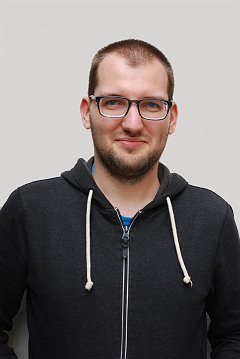
Jan Henrik Röwekamp is a researcher at the Department of Computer Science, University of Hamburg. His work focuses on theoretical computer science with emphases on Petri nets, distributed systems, algorithm design, and computational geometry. He holds a Master's (2013) and Bachelor's (2011) degree from the same institution. His research includes distributed simulation of Petri nets via web-based stateless services, containerization strategies for Petri net simulations, and applying Petri nets to computer vision tasks like Euclidean distance approximation. He has contributed to modeling IoT/Edge Computing architectures using Petri nets and explored distributed execution frameworks for reference nets using virtual machines. Publications span international workshops such as PNSE'19, PNSE'18, and AWPN 2017. His work bridges theoretical foundations with practical implementations in distributed systems and software engineering.
Dmitriy Traytel is an Associate Professor at the Department of Computer Science (DIKU), Faculty of Science, University of Copenhagen, where he leads the Software, Data, People & Society (SDPS) section. He earned his PhD from TU München under the supervision of Tobias Nipkow in 2015 and previously held a senior researcher position at ETH Zürich's Information Security Group. His primary research interests include interactive theorem proving, runtime verification, logic, automata, decision procedures, and coinduction. He works extensively with the Isabelle/HOL proof assistant, developing foundational theories and verified tools. His work bridges theoretical logic and practical system verification, focusing on correctness, expressiveness, and scalability. The recent publications highlight a strong focus on verified runtime monitoring, formalization of logical systems, and efficient query evaluation. Key themes include the development of formally verified monitoring tools (e.g., TimelyMon, WhyMon, VeriMon), foundational work on corecursion and datatypes in Isabelle, and translations of logical formalisms into executable and verifiable code. Several publications have received distinguished paper awards, indicating high impact in the programming languages and verification communities. Distinguished Paper Award, POPL 2025: 'Barendregt Convenes with Knaster and Tarski: Strong Rule Induction for Syntax with Bindings' Distinguished Paper Award, POPL 2023: 'Admissible Types-to-PERs Relativization in Higher-Order Logic' Distinguished Paper Award, ATVA 2018: 'Optimal Proofs for Linear Temporal Logic on Lasso Words' Best Student Paper Award, FSCD 2016: 'Formal Languages, Formally and Coinductively' Traytel has (co)supervised numerous PhD, MSc, and BSc students, many of whose projects contribute directly to his research agenda in verified systems and formal methods. He is actively involved in the academic community, serving on program committees for POPL, ITP, RV, and CPP, and has chaired conferences such as CPP 2023 and 2024. His tools, including TimelyMon, VeriMon, and WhyMon, are practical outcomes of his research, enabling scalable, explainable, and trustworthy runtime verification. He leads a research group focused on trustworthy stream processing, distributed streaming computations, and explainable monitoring. His work often involves collaboration with researchers at ETH Zürich and other institutions, particularly in the areas of security and monitoring.
Azalea Raad is a researcher at Imperial College London, actively contributing to the fields of programming languages, formal methods, and concurrency. She has a strong presence in top-tier academic conferences such as POPL, PLDI, SPLASH, and ICFP, serving in key roles including program committee member, session chair, and organizing committee member across multiple tracks and co-located events. Her research interests center on weak memory concurrency, non-volatile memory, program logics, separation logic, concurrent reasoning, and verification . She has pioneered work in incorrectness logic and under-approximate reasoning , enabling scalable bug detection in concurrent and persistent systems. Her work bridges formal theory with practical systems challenges, particularly in memory models and semantics for C/C++ and assembly-level concurrency. The recent publications highlight a strong trend toward formalizing memory persistency , extending memory models , and developing logical frameworks for bug detection . The keywords across her work include concurrency, verification, program logics, and systems correctness, with sub-fields spanning separation logic, incorrectness logic, TSO, RDMA, and crash consistency. Her research increasingly focuses on scalable and compositional methods for analyzing unsafe libraries and binaries. She has contributed to academic service through organizing workshops such as O'Hearn Fest , The Future of Weak Memory , and Incorrectness , and has co-chaired the Student Research Competition at POPL. While no grants are explicitly mentioned, her leadership in multiple conference tracks suggests active involvement in funded research and student mentorship. Azalea Raad leads or contributes to collaborative research teams focused on formal semantics and verification tools, often working within frameworks like Isabelle/HOL and developing new logical systems for program analysis. Her personal website, https://www.SoundAndComplete.org , serves as a hub for her research outputs and projects.
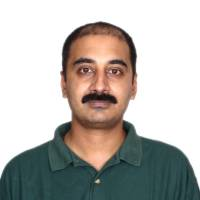
K Narayan Kumar is a full-time Professor of Computer Science at the Chennai Mathematical Institute (CMI) in Chennai, India. He has been affiliated with CMI since at least 2003, where he teaches courses ranging from programming fundamentals to advanced topics in automata theory and verification. His research focuses on automata models for distributed systems, logic, and verification methods. Research Interests: Automata models for distributed systems Logic and formal verification Theoretical computer science Professional Activities: Active in organizing and participating in international conferences (e.g., FSTTCS, CONCUR, ATVA) Co-Chair of 29th FSTTCS (2009) and 3rd AATS (2011) Member of scientific committees for Informatics Olympiads Teaching: Current courses: Introduction to Programming in Python, Algorithms Past courses: Haskell programming, Automata Theory, Verification, Networks, and more
Igor Walukiewicz is a Researcher at the Laboratoire Bordelais de Recherche en Informatique (LaBRI) , affiliated with Université de Bordeaux , France. His work focuses on Concurrency Theory , Model Checking , Timed Automata , Higher-Order Model Checking , and Automata Theory . His recent research explores parametric systems , timed automata , and higher-order concurrency . Articles highlight advancements in verification techniques , synthesis of distributed algorithms , and partial-order reduction methods . Key subfields include deadlock avoidance , active learning , and logical frameworks for timed systems . He has secured significant ANR grants such as FREDDA (FoRmal Methods for Distributed Algorithms) and Ticktac (Verification of Real-Time Systems). He contributes to tools like TChecker , a model-checking tool for real-timed systems developed at LaBRI. Walukiewicz participates in editorial and organizational roles, including the Fundamenta Informaticae editorial board and HIGHLIGHTS conference steering committee. He has presented at major venues like LICS , CONCUR , and ICALP .
Bryan Parno is a Professor at Carnegie Mellon University, holding the Kavčić-Moura Chair in Electrical and Computer Engineering and Computer Science. His work bridges theoretical and practical aspects of secure systems verification, focusing on formal methods to ensure rigorous security guarantees. Research Areas: Secure systems, formal verification, cryptography, concurrency, distributed systems Key Contributions: Development of Verus, Leaf, IronFleet, and FastVer2 for verified secure systems Awards: Jay Lepreau Best Paper (OSDI 2025), IEEE Cybersecurity Award for Practice (2024), Distinguished Artifact Award (SOSP 2024) His recent publications demonstrate a focus on scalable formal verification across diverse domains, including Rust programming, WebAssembly sandboxing, and cryptographic protocols. Tools like Verus and OwlC enable provably correct implementations with performance optimizations. Scientific recognition includes: ACM Doctoral Dissertation Award (2011) IEEE Golden Core Recognition (2023) Forbes 30-Under-30 (2011) Sloan Research Fellowship (2018) Multiple best paper awards at USENIX Security, CAV, and IEEE S&P Parno advises PhD students in secure systems and contributes to critical infrastructure projects like Project Everest. His lab develops open-source tools for verified cryptography and systems programming.