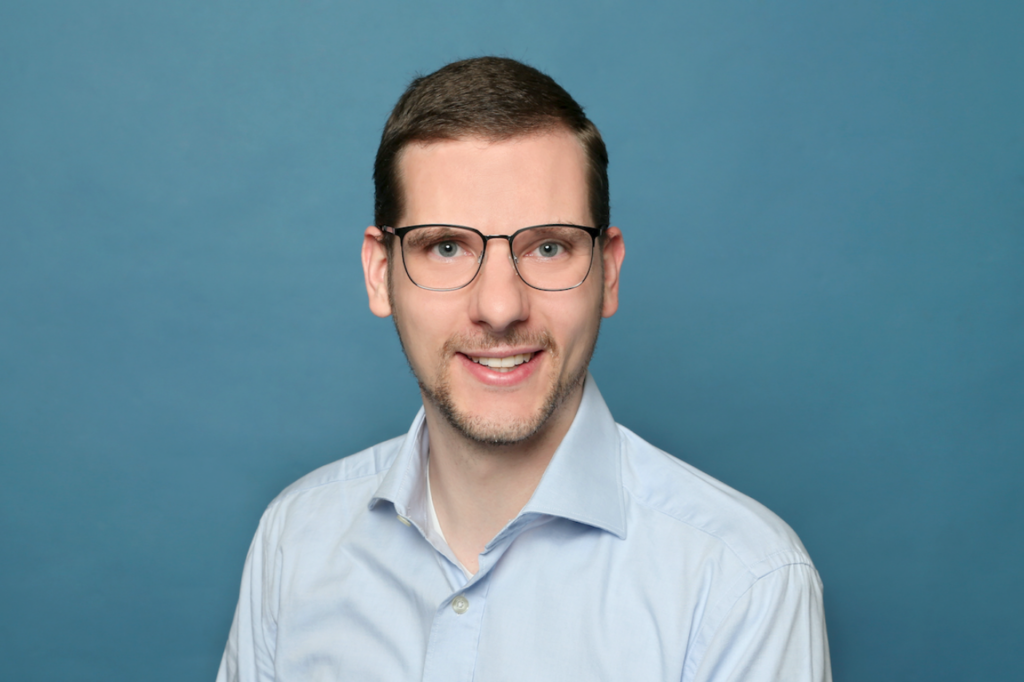
Giacomo Alliata is a Doctoral Assistant at the Laboratory for Experimental Museology (eM+) within EPFL's College of Humanities (CDH) and Digital Humanities Institute (DHI). He is concurrently enrolled as a doctoral student in the Digital Humanities program (EDDH) at EPFL. His office is located at Rue des Jordils 41, 1025 St-Sulpice, Switzerland. His research focuses on interdisciplinary intersections of technology and cultural heritage, particularly in digital museology, immersive storytelling, and computational approaches to humanities scholarship. This aligns with eM+'s mission to innovate in digital heritage preservation and experiential media.
PD Dr. Mateusz Dolata is Professor (since 2025) at Zeppelin University, Germany, holding the ZF Endowed Chair of Artificial Intelligence. Concurrently, he continues as a senior researcher in the Department of Informatics at the University of Zurich, Switzerland. His expertise lies at the intersection of human-AI collaboration, sociotechnical systems, and digital transformation of advisory services, with a particular focus on healthcare and finance. Education 2025 – Professor (ZF Endowed Chair of AI), Zeppelin University, Germany 2024 – Venia Legendi (Habilitation) in Informatics, University of Zurich, Switzerland 2018 – Doctor of Science in Informatics, University of Zurich, Switzerland 2012 – Master of Science in Media Informatics, RWTH Aachen University, Germany 2010 – Bachelor of Arts in Computational Linguistics and Philosophy, University of Heidelberg, Germany Research Interests Dolata’s research agenda centers on human-AI collaboration in organizational contexts , spanning ethical AI design, multimodal conversational agents, and service innovation. Recent emphases include: AI-mediated customer feedback management (ReAdvisor project) Human-drone collaboration for emergency response Sociotechnical and algorithmic justice in ride-hailing and finance Digital agents supporting chronic-care patients and community health workers Conversational AI in financial advisory encounters Publication Trends Between 2024 and 2025, Dolata has published prolifically in premier venues such as CHI, ECIS, HICSS, JMIR, and IEEE TSE. Themes converge on designing AI artifacts that mediate human collaboration —whether in large-scale brainstorming, community health, persuasive mobile apps, or crisis informatics. Empirical methods blend design-science research with qualitative field studies, underscoring an integrative sociotechnical lens. Scientific Awards & Service General Conference Co-Chair, ECSCW 2021 Steering Committee & Publicity Co-Chair, EUSSET (since 2019) Associate Editor/Editorial Board Member for MISQ, ISJ, JIT, EJIS, BISE, CSCW journal Reviewing roles for ICIS, ECIS, HICSS, WI, ACM CSCW, CHI, INTERACT, DESRIST Advising & Funding Landscape Dolata has supervised more than 60 bachelor’s and master’s theses on topics ranging from conversational agents in banking to drone-supported emergency response. His projects are supported by Swiss and EU funding streams, including the ReAdvisor, Human-Drone Collaboration, and ComBaCaL initiatives. Active collaborations involve interdisciplinary teams across computer science, medicine, public administration, and finance. Labs & Teams He leads the Human-AI Collaboration research cluster at the University of Zurich’s Department of Informatics, while also directing the AI & Work research group at Zeppelin University. The teams comprise doctoral researchers, post-docs, and industry partners exploring next-generation AI services.
Alexander Lill is a Ph.D. student and research assistant at the Human Aspects of Software Engineering Lab (HASEL) within the Department of Informatics at the University of Zurich . Concurrently, he works as an AI Engineer at appliedAI Initiative GmbH since July 2025. His academic journey includes a B.Sc. (2015) and M.Sc. (2018) in Computer Science from Technische Hochschule Ingolstadt and Technical University of Munich , respectively. Education B.Sc. in Computer Science, Technische Hochschule Ingolstadt (THI), 2015 M.Sc. in Computer Science, Technical University of Munich (TUM), 2018 Lill's research focuses on Software Developer Productivity , examining factors like team communication , remote work dynamics , and developer information needs . His recent work explores hybrid team productivity, knowledge reuse in developer chat platforms, and psychological factors in remote work environments. Key trends in his publications (2022-2025) include: Team productivity measurement frameworks Behavioral nudges for collaborative efficiency Integration of historical knowledge into real-time developer workflows Personality trait analysis in remote workplace interactions As a teaching assistant and seminar lead, he contributes to courses like Software Evolution and Developer Productivity (SEDP) , Fundamentals of Software Systems (FSS) , and Software Engineering Lab . He has supervised 13 Master's and Bachelor's theses with co-supervisors like Anastasia Ruvimova and André Meyer . Labs/Teams HASEL Lab (University of Zurich) appliedAI Initiative (since 2025) MOVE-II Nanosatellite Project (TUM) 2015-2018 European Space Agency (2018-2020)
Dr. Hy Dao is Full Professor and Vice-Director at the Institute of Environmental Sciences, University of Geneva, where he leads the Department of Geography and Environment. He concurrently heads the Metadata & Socio-Economics Unit at GRID-Geneva (UN Environment Programme). His academic credentials include a PhD in Human Geography from the University of Geneva and postgraduate training at the International Institute for Aerospace Surveys and Earth Sciences (ITC, Netherlands). Professor Dao's research spans: Geospatial technologies (GIS, remote sensing, webmapping) Environmental risk assessment and planetary boundaries Sustainable territorial development and cohesion metrics Population mapping methodologies E-learning in geosciences His work emphasizes quantitative modeling of environmental risks, territorial downscaling of sustainability frameworks, and participatory spatial planning approaches. His publications (2001-2025) demonstrate strong thematic coherence, focusing on: Climate change vulnerability and adaptation strategies Geospatial data semantics and infrastructure Disaster risk reduction frameworks Sustainable development indicators Participatory mapping methodologies Notably, 60% of recent publications address climate adaptation technologies and spatial governance. Professor Dao leads significant research initiatives including: TRACES (2021-2025): Developing semantic environmental trajectories using big data CATI-GE Geoportal: Territorial inequality analysis for Geneva Canton He currently supervises doctoral candidates working on geospatial applications in mining governance, ecosystem services policy, and smart city development. As Director of Geomatics programs and representative to the Geneva Land Information System, he bridges academic research and spatial data governance.
Prof. Dr. Johan Gaume serves as Associate Professor at ETH Zurich's Department of Civil, Environmental and Geomatic Engineering, concurrently holding the position of Deputy Head of the Institute for Geotechnical Engineering and leading the Chair of Alpine Mass Movements (Professur Alpine Massenbewegungen). His research concentrates on geotechnical phenomena in alpine environments with particular expertise in: Granular material behavior in snow avalanches Natural hazard simulation and modeling Geomechanics of mass movement processes Computational methods for geohazard prediction Prof. Gaume actively contributes to academic instruction through courses such as "Granular Mechanics" (101-0328-00L) scheduled for Autumn Semester 2025, demonstrating ongoing engagement with the ETH Zurich academic community.
Anastasia Remizova is a Doctoral Assistant at the Lab for Statistical Mechanics of Inference in Large Systems (SMILS) within the School of Computer and Communication Sciences (IC) at EPFL. She is concurrently enrolled in the Doctoral Program in Computer and Communication Sciences . Additionally, she serves as Treasurer of the Association des Étudiants Russophones . Her research interests revolve around Machine Learning , Computer Vision , and Statistical Mechanics , focusing on topics like stochastic gradient dynamics, image inpainting, and adversarial learning. Recent publications highlight contributions to test risk analysis in weak feature scenarios and resolution-robust image restoration techniques. While no scientific awards are explicitly mentioned, her work demonstrates engagement with cutting-edge interdisciplinary research at the intersection of inference algorithms and large-scale systems. She is affiliated with the SMILS lab, where her doctoral research likely intersects theoretical and applied aspects of statistical mechanics in modern AI systems.
Leello Tadesse Dadi is a Doctoral Assistant at the Laboratory for Information and Inference Systems (LIONS) within the School of Engineering at EPFL. He is concurrently enrolled in the Doctoral Program in Computer and Communication Sciences under the EDIC program. His research focuses on energy storage systems, photovoltaic integration, and materials science, leveraging his affiliation with the LIONS lab for interdisciplinary work. He holds a staff status at EPFL and is based in office ELD 244. Lab Affiliation: LIONS Lab (EPFL STI IEM) Doctoral Program: EDIC (Computer & Communication Sciences) His research interests span advanced materials for energy applications, solar energy harvesting, and information systems. While no specific publications are listed for him, his doctoral program and lab affiliation suggest work at the intersection of energy technologies and computational methods.
Michalis Kokologiannakis is a Tenure Track Assistant Professor of Computer Science at ETH Zurich's Department of Computer Science (D-INFK). Previously, he was a postdoctoral researcher at the Max Planck Institute for Software Systems (MPI-SWS), where he completed his doctorate. His research focuses on programming languages, formal software verification, and automated reasoning, with a particular emphasis on concurrency, weak memory models, and algorithmic techniques for scalable verification of concurrent data structures. Education: PhD in Computer Science, Max Planck Institute for Software Systems (MPI-SWS) MEng in Electrical and Computer Engineering, National Technical University of Athens (NTUA) Research Interests: Developing algorithms for analyzing large-scale concurrent program executions Formal verification of software correctness using mathematically rigorous techniques Tools like GenMC and Kater for weak memory model analysis Practical applications of research in non-academic contexts Teaching Philosophy: Advocates for interactive, dialogue-based education that connects students with cutting-edge research tools and methodologies. Envisions integrating his group's research software into classroom experiences. Labs/Teams: Collaborates with the Institute for Programming Languages and Systems at ETH Zurich to address challenges in verification and concurrency research.
Marcela Delgado Velasco is a Doctoral Assistant at the École Polytechnique Fédérale de Lausanne (EPFL), affiliated with two research units: the Media and Design Laboratory (LDM1 under School of Computer and Communication Sciences and LDM2 under School of Architecture, Civil and Environmental Engineering). She is concurrently enrolled in the Doctoral Program in Architecture and Sciences of the City (EDAR) within EPFL's doctoral framework. Her research interests intersect media design, urban studies, and architectural sciences, leveraging interdisciplinary approaches. Marcela holds offices in EPFL's BC 121 (IC/IINFCOM) and BP 4232 (ENAC/IA), reflecting her dual affiliation. As a doctoral candidate, her work likely focuses on integrating computational methods with urban or architectural design, though specific research topics are not detailed in the provided materials. No academic awards or publications are explicitly mentioned in her profile.
Reinhard Bürgy is a Part-Time Lecturer at the Department of Computer Science, Lucerne School of Computer Science and Information Technology, Hochschule Luzern (Lucerne University of Applied Sciences and Arts), Switzerland. He concurrently serves as a Solution Architect for Decision Support & Operations Research at Polypoint AG. His academic background includes roles as Senior Assistant and Postdoctoral Researcher at the University of Freiburg and Polytechnique Montréal. Education: PhD in Economics (Operations Research focus) from University of Freiburg (2014), Master in Business Informatics from University of Freiburg (2009). Research focuses on quantitative decision support systems for industry and services, exact/heuristic optimization methods, combinatorial optimization, integer programming, algorithms & data structures, and operations/service management. Key application areas include production planning, sustainable logistics systems, and workforce scheduling in retail and healthcare. His publications emphasize scheduling optimization (job shop, employee scheduling), logistics network design, and infrastructure resilience. Notable work includes convex cost job shop scheduling and decomposition heuristics for large-scale employee scheduling problems. Advising and grants: No specific students or grants mentioned. Active in industry-academia collaboration through Polypoint AG and prior academic roles.
Mathias Bücherl is a Lecturer at the Lucerne School of Computer Science and Information Technology, part of Lucerne University of Applied Sciences and Arts. He concurrently serves as the Group CISO of Heidelberg Materials, a Fortune 500 enterprise, where he directs global Cyber Security and Resilience strategies. Previously, he held leadership roles in Cyber Security at Deutsche Telekom AG (2013–2020) and Axians (2020–2023), overseeing business units with P&L responsibility in EMEA, APAC, and the Americas. His education includes a Master’s in IT Management from FOM University of Applied Sciences (Nuremberg) and a Bachelor’s in Business Computer Science from Cooperative State University Stuttgart. Professional training through IHK Regensburg qualified him as an IT Specialist in System Integration. Bücherl’s expertise spans Information Security Governance, Risk & Compliance (GRC), Security Operations, Resilience Management, and Industrial/OT Security. He teaches subjects like Information Security Management, OT & Critical Infrastructure Security, and Resilience & Business Continuity Management.
Benjamin Emmenegger is a Lecturer at the Lucerne School of Computer Science and Information Technology (HSLU) since September 2021. He concurrently serves as a Gemeinderat (Municipal Councilor) for Neuenkirch since 2018 and CEO of ajato GmbH since 2015. His professional background includes roles in corporate management, financial/IT consulting, and public sector controlling. PhD Student in Computer Science at University of Freiburg (since 2021) Master of Arts in Business Innovation from University of St. Gallen (2015–2019) Bachelor of Science in Business Informatics from HSLU (2012–2015) Research focuses on conversation theory-based communal participation systems, objective decision-making in public administration, and internal control systems in government. His work emphasizes applying fuzzy voting techniques to improve public decision-making processes and reduce corruption risks. Key projects include Participatory Financial Planning and contributions to spatial planning methodologies. Recent publications explore empirical evidence on fuzzy voting impacts and large-scale group decision frameworks. Awarded the 3000 Award «Gesundes Luzern» in November 2024 Advisory experience includes leading the Begegnungsplatz Sempach Station project and multiple municipal infrastructure initiatives. Active in corporate governance roles and community development.
Ladan Pooyan-Weihs is the Head of Program at the Lucerne School of Computer Science and Information Technology (Lucerne University of Applied Sciences and Arts). She holds a PhD in Computer Science from Berlin University of Technology (2000) and a Master's in Computer Science from the same institution (1992). Her research focuses on digital transformation, cryptography, database modeling, and interdisciplinary studies in technology's societal impacts. She also lectures in discrete mathematics and statistics. Professional highlights include leadership roles at Atos AG (2006–2016) and senior management consulting at Theorem (2002–2006). She is a Diversity Officer at the Information Technology Department (2018), ICT Expert at Innosuisse (2019), and board member of OpenData.CH. Academic contributions span theoretical computer science (e.g., process calculi formalisms) and applied research in data-driven business transformation. Her publications emphasize bridging theory and practice, with recent work on digital transformation frameworks and foundational studies in concurrent systems. Awards include a prestigious German Research Foundation (DFG) scholarship supporting collaborative research in Edinburgh and Amsterdam.
Prof. Dr. Sabine Sulzer serves as Vice Dean of the Lucerne School of Engineering and Architecture at Lucerne University of Applied Sciences and Arts (HSLU). She concurrently heads Bachelor's and Master's Programmes in Energy and Environmental Systems Engineering, and oversees the Vice Dean's Office. Prior roles include Program Director for the BSc in Energy and Environmental Systems Engineering and leadership in knowledge transfer for the Swiss Competence Center for Energy Research (SCCER FEEB&D). Her professional experience spans innovation management at Sulzer Pumps and computational fluid dynamics (CFD) expertise. She earned a PhD in CFD from ETH Zurich, focusing on flood discharge modeling, with a research fellowship at Consejo Superior de Investigaciones Cientificas (Madrid). Education: PhD in Computational Fluid Dynamics (ETH Zurich), Rural Engineering studies at ETH Zurich Key Roles: Vice Dean, Lecturer, SCCER FEEB&D Project Leader, Innovation Manager at Sulzer Research Focus: Sustainable Energy Systems, Energy Efficiency in Buildings, Decentralized Energy Networks, Business Model Innovation Her research emphasizes energy transition strategies, including district-level energy management, thermal networks, and user-centric building systems. Projects like the Uettligen Energy Concept and SCCER initiatives highlight her work in bridging academic research with practical implementation. She has authored over 30 publications on topics ranging from CFD applications to energy policy frameworks. Notable Projects: SCCER FEEB&D, LUCCERNE, Decentralized Energy Systems, Hybrid Energy Storage Solutions Grants & Collaboration: Active in SCCER-funded projects, Swiss Federal Laboratories for Materials Science (Empa) collaborations, and industry partnerships.
Chang Xu serves as a Doctoral Assistant at the Environmental Computational Science and Earth Observation Laboratory (ECEO) within the Institute of Civil and Environmental Engineering at EPFL's School of Architecture, Civil and Environmental Engineering. He is concurrently enrolled in the Doctoral Program in Civil and Environmental Engineering (EDCE) at EPFL Valais Wallis campus in Sion, Switzerland. His research centers on Environmental Science and Computational Science with specialized focus in Earth Observation , Remote Sensing , and Geoinformatics . He develops computational models for environmental monitoring and sustainable resource management, leveraging earth observation data to address civil engineering challenges in environmental systems. The ECEO laboratory, where he conducts research, pioneers advanced methodologies in environmental computational science and satellite-based earth observation technologies for global sustainability applications.