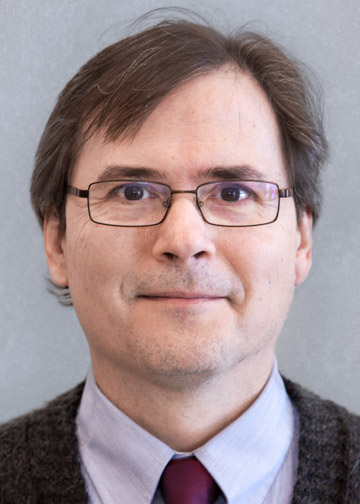
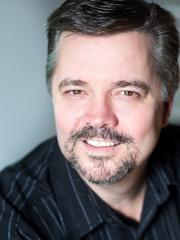
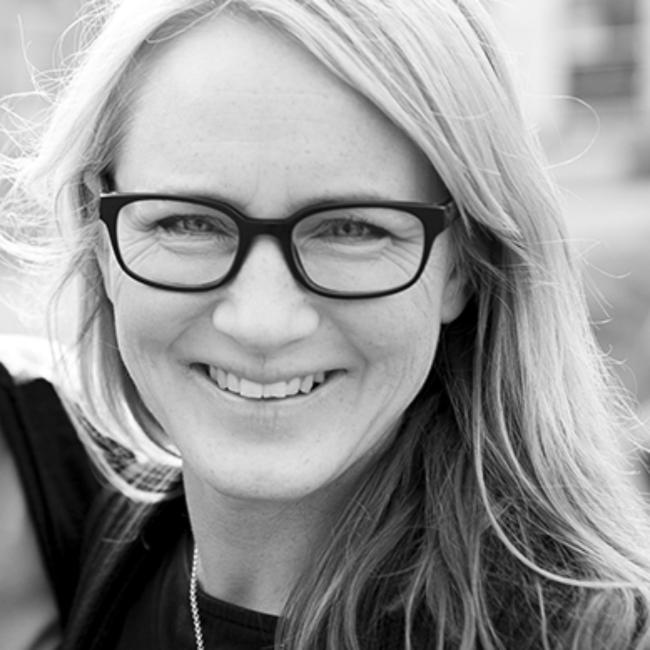
Nanette Nielsen is a Professor at the Department of Musicology, University of Oslo (UiO), and a core member of the RITMO Center for Interdisciplinary Research on Rhythm, Time, and Movement. She has been affiliated with UiO since 2015, following academic roles at the University of Nottingham (2009–2015) and the University of East Anglia (2005–2009). Education: BA in Musicology and Philosophy, University of Copenhagen MMUS and PhD, Royal Holloway, University of London Her research bridges music and philosophy, focusing on ethics, aesthetics, and phenomenology in 20th- and 21st-century contexts. She explores film music, rhythm and temporality in musical experience, popular music, Scandinavian music, and opera/music criticism during the Weimar Republic. Recent publications reflect an interdisciplinary lens combining 4E/4A cognition (Embodied, Embedded, Enacted, Extended + Affect, Agency, Affordance, Autonomy) with music phenomenology. Key themes include audience engagement, dynamic listening, and music as a cognitive scaffold. Scientific Awards: 2014 Jerome Roche Prize for her article on Ernst Krenek's Jonny spielt auf She leads research projects such as Bodies in Concert and contributes to groups like Engagement and Absorption and Nordic Sounds: Critical Music Research Group .
James A. Davis serves as Professor of Musicology and Chair of the Music History Area at the School of Music, State University of New York at Fredonia. He holds a PhD in music history and theory from Boston University, following an MM in composition from the University of Texas and a BS in Music from the University of Colorado at Denver with emphasis in scoring and arranging. Davis's scholarly work centers on the music and musicians of the American Civil War, with significant contributions to understanding Civil War-era music, patriotism in songs, military bands, and musical expression during this historical period. His research extends to music history pedagogy, American popular music of the 19th and 20th centuries, and the history of bands. His teaching interests include American Music, 18th- and 19th-century concert music, the history of popular music, and music history pedagogy. His publications reveal a consistent focus on Civil War music, with recent articles examining topics like "Old 100th" hymns, Civil War bandsmen and humor, patriotism in songs, and the role of dance during the war. His scholarly output demonstrates both chronological depth in historical research and contemporary relevance in music pedagogy approaches. Davis has presented papers at major academic conferences including the American Musicological Society, Society for American Music, College Music Society, Society for Ethnomusicology, Society for Military History, Music Library Association, and American Culture Association. He serves as the founding Editor for The Teaching of Music History Series with Routledge. His research appears in prestigious journals including American Music, College Music Symposium, Journal of Military History, Journal of Band Research, and Journal of American Culture, as well as pedagogical journals like International Journal of Teaching and Learning in Higher Education and Philosophy of Music Education Review.
Maralie Armstrong Rial is an Adjunct Assistant Professor in the Department of Modern Culture and Media at Brown University, and also serves as a Critic in Digital + Media and Lecturer in the Film/Animation/Video Department at Rhode Island School of Design (RISD). Her practice spans intermedia art, performance, sound, and video, focusing on the refraction of self through media analogous to light/sound through water. She performs solo as VALISE and collaboratively as Humanbeast with Eli V Manuscript. Education BFA in Sculpture, Kansas City Art Institute MFA in Digital + Media, Rhode Island School of Design Research & Practice Her work integrates hydrophone recordings of industrial-impacted waterways (e.g., Blackstone Valley, East Rivers) to explore ecological memory and sonic legacies. Notable projects include AURA , an immersive soundwork documenting environmental soundscapes across seasons, set for release via Spectral Affect. She frequently performs in spatial audio formats, such as the 10.2-channel surround concert with RISD’s Studio for Research in Sound and Technology (SRST). Collaborations & Exhibitions Humanbeast: 10-year anniversary performance at Fourth World Festival VALISE performances at Pioneer Works, Lump Gallery, and Issue Project Room Residencies including Wedding Cake House and SRST spatial audio projects Labs & Affiliations Affiliated with RISD’s Studio for Research in Sound and Technology (SRST), focusing on experimental spatial audio and interdisciplinary sound practices.
Fernando Lopez-Lezcano is a Lecturer at Stanford University's Center for Computer Research in Music and Acoustics (CCRMA) where he has been working since 1993. His work combines music composition, electronic engineering, and programming with a focus on spatial audio and sound diffusion technologies. He was the Edgar Varese Guest Professor at TU Berlin during the Summer of 2008 and is the 2014 winner of Stanford's Marsh O'Neill Award for Exceptional and Enduring Support of Stanford University's Research Enterprise. Lopez-Lezcano's research interests center on computer music, spatial audio technologies, and sound diffusion systems. He has pioneered work in High Order Ambisonics (HOA), developing novel decoders and reverberation architectures for immersive sound environments. His work on the SpHEAR Project has created innovative 3D-printed soundfield microphone arrays, while his development of the GRAIL (Giant Radial Array for Immersive Listening) has revolutionized concert speaker arrays for HDLAs (High Density Loudspeaker Arrays). He has also created numerous open-source tools and software environments for spatial sound composition and diffusion. His recent creative output demonstrates a consistent exploration of 3D sound spatialization, modular synthesis, and interdisciplinary collaborations. Across his compositions, he frequently integrates custom-built hardware like his modular synthesizers (including the famous 'El Dinosaurio' built in 1980-81) with sophisticated software environments written in SuperCollider. His work often bridges acoustic and electronic sound sources, creating rich spatial experiences that explore the relationship between technology and artistic expression. Among his notable achievements is the 2014 Marsh O'Neill Award, recognizing his exceptional support of Stanford's research enterprise. This prestigious award was inspired by Marsh O'Neill, Associate Director of the W.W. Hansen Laboratories, and honors outstanding staff members who support faculty research activities. Lopez-Lezcano has mentored numerous students in the development of musical instruments and performance systems, most notably the 'Ensemble AnaLocos' (Analógicos Locos or 'Crazy Analogs') which created the 'Noise Toaster' synthesizers. He has also developed important infrastructure for CCRMA including 'Planet CCRMA,' a collection of open-source audio software for Linux. His teaching includes the 'Sound in Space' course (Music 222), which covers historical background, techniques, and theory on the use of space in music composition and diffusion. He directs the CCRMA Stage concerts and has been instrumental in developing CCRMA's spatial audio infrastructure, including the GRAIL system used in Bing Concert Hall. His work with the SpHEAR Project has advanced 3D sound recording techniques, while his collaborations with performers like Michiko Theurer (violin) and Chris Chafe (celletto) have produced innovative interdisciplinary performances.
Dr. Shaun Brown is the Director of Performance and Voice Performance Fellow at The University of Queensland's School of Music, within the Faculty of Humanities, Arts and Social Sciences. He holds a Doctor of Musical Arts from the University of North Texas and a Master's from UQ. His career spans over three decades with Opera Queensland, where he has performed in over 50 productions, including Don Giovanni, Carmen, and Così fan Tutte. Internationally, he has collaborated with institutions like Opéra de Lyon and the Center for Contemporary Opera in New York. His research focuses on vocal performance practices, particularly Erich Korngold's early Lieder. Notable performances include roles in Britten’s War Requiem, Bach’s St Matthew Passion, and Handel’s Messiah. Recent engagements include OQ’s Festival of Outback Opera productions and recitals with Brisbane Music Festival. He actively participates in workshops, masterclasses, and community arts initiatives. Education: Doctor of Musical Arts, University of North Texas Masters (Coursework), The University of Queensland Research interests emphasize historical vocal performance techniques, interpretation of 20th-century Lieder, and contemporary opera. His 2016 thesis on Korngold’s works highlights interdisciplinary approaches to vocal pedagogy and musical analysis. Though no explicit awards are listed, his critical acclaim and long-term institutional contributions reflect professional recognition. He oversees performance training at UQ, mentoring emerging artists through Opera Queensland’s Young Artist program. Collaborations include Brisbane Chorale, Queensland Youth Orchestras, and festivals like Jimbour’s Outback Opera. Key venues include Queensland Performing Arts Centre, Lyric Theatre, and St John's Cathedral, showcasing his versatility across operatic, concert, and recital formats.
Rhonda S. Hackworth is an Associate Professor of Music Education at the University of Mississippi, where she serves as Head of Music Education and Graduate Program Coordinator. She holds a Ph.D. in Music Education from the University of Missouri-Kansas City Conservatory of Music and an M.M. in Vocal Performance. Current role: Associate Professor of Music Education Key responsibilities: Graduate Program Coordinator, thesis/dissertation director Previous institutions: Rutgers University, Syracuse University, University of Missouri-Kansas City Research Interests Dr. Hackworth specializes in vocal health for music educators and students, with a secondary focus on music perception. Her work examines vocal hygiene practices, the impact of teaching experience on vocal health, and musical tension in Debussy’s compositions. She has published extensively in journals like the Journal of Research in Music Education and International Journal of Music Education , and her research spans both empirical studies and literature reviews. Publications Trends Her scholarship bridges music education and vocal health, particularly addressing how pedagogical practices affect vocal wellness. Subfields include behavioral intervention strategies, multilingual text analysis in vocal works, and choral participation models. Professional Engagement Dr. Hackworth presents research at international and national conferences, with presentations in Greece, China, and Italy. She also performs as an alto soloist in concert, opera, and musical theater settings.
Christof Weiß is a Professor for Computational Humanities at the CAIDAS / Institute of Computer Science, Julius-Maximilians-Universität Würzburg (JMU), Germany. He serves as Head of the DFG-funded Emmy Noether group on Computational Analysis of Music Audio Recordings: A Cross-Version Approach. His academic journey includes previous positions as Visiting Researcher at University Télécom Paris (2021), Visiting Lecturer at Karlsruhe University of Music (2020, 2021), and Research Assistant at International Audio Laboratories Erlangen (2015-2022) and Fraunhofer Institute for Digital Media Technology (2012-2015). His educational background encompasses a PhD in Media Technology from University of Technology Ilmenau (2017), Concert Diploma in Composition from Würzburg University of Music (2012), Physics Diploma from University of Würzburg (2012), and Music Diploma in Composition from Würzburg University of Music (2011). This unique combination of technical and artistic training forms the foundation of his interdisciplinary research approach. Weiß's research operates at the critical intersection of computer science and musicology, developing novel computational methods for analyzing musical structures in audio recordings. His work bridges technical audio processing with musicological insights, creating methodologies for tonal analysis, key estimation, and cross-version comparison of musical performances. His approach combines deep learning techniques with music theory to extract meaningful patterns from large music corpora, enabling new forms of musicological corpus studies that were previously impossible. His recent publications reveal a clear research trajectory toward integrating advanced machine learning with fundamental musicological questions. The consistent theme across his work involves analyzing classical music structures through computational lenses, with particular emphasis on cross-version consistency in performances, tonal complexity measurement, and developing datasets that support computational musicology. His publications span both highly technical audio processing journals and musicology-focused venues, demonstrating his commitment to bridging these disciplines. Best paper award at the 4th conference on Computational Humanities Research (CHR), 2023 KlarText award for science communication of the Klaus Tschira Foundation, 2018 2nd prize at Festival Pablo Casals composition competition, Prades (France), 2013 Youth Cultural Advancement Award (Kulturförderpreis) of the city of Amberg, Germany, 2011 As principal investigator of the DFG Emmy Noether group, Weiß leads a multidisciplinary research team investigating computational analysis of music audio recordings through a cross-version approach. His research has secured significant funding including the prestigious Emmy Noether program, supporting doctoral and postdoctoral researchers working on various aspects of music information retrieval and computational humanities. His collaborative network spans institutions across Europe, including University Télécom Paris, Queen Mary University of London, and multiple German research centers. Weiß leads the Computational Humanities research group at CAIDAS, which focuses on developing computational methodologies for music analysis with particular emphasis on classical repertoire. The lab creates specialized datasets (including the Wagner Ring Dataset and Schubert Winterreise Dataset), develops algorithms for structural music analysis, and applies these tools to address musicological questions that require computational scale and precision. Their work bridges the gap between technical audio processing capabilities and humanities research questions, creating new pathways for understanding musical structure and evolution.
Lorenzo Medel is a pianist and instructor currently pursuing his Doctorate in Piano Performance and Literature at the Eastman School of Music, where he also completed his Bachelors and Masters degrees. He teaches through the Eastman Community Music School and has served as a teaching assistant in Secondary Piano and Class Piano. His career highlights include awards in prestigious competitions, a focus on Filipino music advocacy, and roles as a collaborative pianist and chamber coach. Eastman School of Music: Pursuing Doctorate in Piano Performance and Literature Eastman School of Music: Bachelors and Masters in Piano His research and professional interests span piano performance , collaborative piano , and chamber music coaching , with a dedication to music education and community engagement . Medel actively promotes Filipino classical compositions in concerts and has taught at Silliman University in the Philippines. His accolades include scholarships and competition victories in the Philippines, alongside recognition for excellence in accompanying. Howard Hanson Scholarship Avis H. and Vaughan Scholarship V. R. Gray Scholarship George Eastman Grant 2018 Excellence in Accompanying Award Medel has participated in festivals such as Art of the Piano, Chautauqua Institution, and Bowdoin Student Music Festival. He combines his musical expertise with a passion for card magic, envisioning future interdisciplinary performances.
Taylor H Black is an Associate Professor of English at Duke University, Trinity College of Arts & Sciences, specializing in 20th Century American Literature , Popular Music Studies , and Queer Theory . He is currently working on two book projects: Cult of Personality: An American Romance and Butterfly on the Wheel , a critical biography of Quentin Crisp and cultural history of New York's Downtown Arts scene in the 1980s. Education: Ph.D., Rutgers University (2015) B.A., CUNY Hunter College (2007) Black's research explores the intersections of literature, music, and queer identity , focusing on how style functions as a cultural force beyond social categorization. His work traces stylistic evolution in American arts and media, particularly through figures like Bob Dylan and Quentin Crisp. His scientific award includes the Langford Lectureship Award (2025) from Duke University. Black's teaching portfolio includes courses on American literature, film, and critical theory, such as America Dreams American Movies II and Criticism and the Arts .
Joseph Lanza is a Lecturer and Director of the Early Music Studio at the Don Wright Faculty of Music, University of Western Ontario. He previously served as Concertmaster of Orchestra London for over 25 years, performing solo works across diverse concert series. A dedicated chamber musician, he has performed extensively in small ensembles in London, Toronto, and internationally. His specialization in 17th- and 18th-century music led to mastery of period instruments, including Baroque violin under mentors like Jeanne Lamon and Jaap Schroder. He balances performance with teaching private lessons and university-level classes. Lanza's family background includes a legacy in orchestral music, having studied violin from age 7 with his father and renowned concertmasters like William de Pasquale and Joseph Silverstein. He is married to Orchestra London oboist Jennifer Short, with whom he shares a daughter, Heather, and a Shetland sheepdog, Fergus. His research interests focus on historical performance practices, particularly in Baroque violin, and he has collaborated with ensembles such as Tafelmusik Baroque Orchestra and Opera Atelier, with notable recordings and international tours.
Dr. Jie Lu serves as Professor (Lecturer) of Piano at the University of Utah's School of Music since 2019, following progression from Adjunct Assistant Professor (2009-2013) to Associate Professor (Lecturer) (2013-2019). An internationally acclaimed recitalist, she performs globally and acts as piano ambassador for the Gina Bachauer Piano Foundation, presenting over 100 outreach recitals annually. Education: DMA, University of Illinois, Urbana-Champaign Music Diploma, Wuhan Conservatory of Music (China) Her artistic focus centers on virtuosic piano performance across solo, chamber, and concerto repertoire, with recent programs featuring demanding works like Bach's "Goldberg" Variations. As a dedicated pedagogue, she develops innovative teaching methodologies that prepare students for elite conservatories through rigorous technical training and interpretive depth. Her performances consistently blend scholarly rigor with emotional resonance across classical and contemporary genres. Artistic Output: Dr. Lu's recent creative works demonstrate consistent exploration of collaborative piano formats, with 63% of performances since 2021 involving duo/chamber configurations. Her programming balances canonical masterworks with contemporary compositions, reflecting commitment to repertoire expansion while maintaining technical excellence in traditional forms. Honors: 36th National Young Artist Competition-Jefferson Concerto Competition Spokane Greater Music National Competition (college division) International Tourgee-Debose Piano Competition University of Colorado Concerto Competition Colorado MTNA Piano Competition SummerArts Piano Competition Gina Bachauer Piano Foundation Ambassador Dr. Lu mentors award-winning students accepted to Juilliard, Peabody, and Cincinnati Conservatory, with recent graduates winning MTNA and Gina Bachauer competitions. Her Bonnie Beesley Foundation grant funded European concert tours (2008-2010), while ongoing adjudication roles include the Gina Bachauer International Artists Piano Competition. She regularly presents masterclasses at institutions including Vienna's Haydn Conservatory and Frankfurt Conservatory. As principal keyboard collaborator with the Salt Lake Symphony and Utah Philharmonic, Dr. Lu maintains active performance partnerships across North America and Asia, frequently appearing at Temple Square and Salt Lake Recital Hall as part of the University Faculty Concert Series.
Olga Wołkowa serves as a Senior Lecturer at the Academy of Music in Bydgoszcz, Poland, with a career spanning over four decades in opera and concert performance. She has held positions as repetiteur at Opera Nova in Bydgoszcz since 1993 and previously served as chief repetiteur and Artistic Council member at the Donetsk Opera and Ballet Theatre (Ukraine) from 1984 to 1993. She graduated from the Kharkiv Conservatory (Ukraine) in 1978 under Professor Maria Yeshchenko's piano instruction. Wołkowa's professional expertise encompasses: Opera preparation and performance across major works including Mozart's Don Giovanni, Rossini's The Barber of Seville, and Ravel's The Child and the Spells Vocal competition accompaniment for prestigious events like the S. Moniuszko Competition and Ada Sari Competition International concert performances as both soloist and collaborator throughout Poland, Ukraine, Russia, Estonia, Italy, and Germany Her contributions include extensive radio/television recordings, preparation of harpsichord/celesta parts for operas, and accompaniment for the Festival of Music Competition Winners in Bydgoszcz.
Jessica Edlom serves as a PhD student and adjunct teacher at Karlstad University, actively contributing to strategic communication research within the global music industry. Her work bridges academic theory and practical industry challenges, with particular focus on digital transformation and fan-brand relationships. Her core research examines strategic communication practices, fan engagement dynamics, and transmedia marketing strategies in music. She investigates how artists like ABBA and Taylor Swift leverage phygital experiences to cultivate fan communities, exploring tensions between commercial imperatives and authenticity. Key interests include pandemic-era industry adaptation, value co-creation mechanisms, and the commodification of fan participation through choreographed engagement. Analysis of her publication timeline reveals a clear evolution from foundational studies on Nordic music branding (2017-2019) toward cutting-edge explorations of immersive technologies and fan experience design (2023-2025). Recurring thematic threads include the strategic mobilization of fan communities through social media, authenticity maintenance in digital branding, and industry adaptation to technological disruption. Her methodological approach frequently employs strategy-as-practice frameworks to uncover practitioner-level tensions in brand work.
Phillip Shovk is a Lecturer in Piano and Collaborative Piano at the Sydney Conservatorium of Music, University of Sydney. A renowned concert pianist, chamber musician, and pedagogue, he holds a Master of Fine Arts from Moscow State Conservatory under Valery Kastelsky. His accolades include the 1987 Vanni di Motta Competition Laureate, Hephzibah Menuhin Prize (1988), and Best Accompanist at the 1994 Tchaikovsky Competition. Education: Began studies with Anatole Mirosznyk, continued at Sydney Conservatorium High School under George Humphrey, then Moscow State Conservatory with Valery Kastelsky. Research interests focus on piano performance, collaborative music, and pedagogy, particularly exploring Russian and European classical traditions. His performances span 20+ countries, emphasizing Romantic and 20th-century repertoire. Teaching roles include positions at Paris' Conservatoire Rachmaninoff, Australian Institute of Music, and Chetham’s School of Music. He has adjudicated major competitions like the Sydney International Piano Competition and Singapore National Piano Competition. Recordings include Tchaikovsky/Mussorgsky (Master Performers) and Mozart Violin Sonatas for two pianos (Toccata Classics).
Anna Mikolon is a Professor at the Academy of Music in Gdańsk, where she serves as Head of the Inter-Faculty Department of Accompaniment since 2022. She also works as a pianist-repetiteur in the Faculty of Vocal and Acting and as a piano teacher and accompanist at the Complex of Music Schools in Gdańsk-Wrzeszcz. PhD in Musical Arts (2018) Doctoral studies at the Academy of Music in Gdańsk Graduated from Grażyna Bacewicz State Primary School of Music and Fryderyk Chopin State Secondary School of Music Her research focuses on Vocal Music , Chamber Music , and Music Pedagogy , with notable monographs on the interpretation of Shostakovich's works and the role of imagination in pianist education. Recent publications explore Ukrainian influences in Noskowski's piano music and social impacts of children's songs. Anna's artistic career spans 1,300+ concerts across Europe, including collaborations with the Baltic Opera and participation in festivals like Gdańsk Music Summer. She has received the Cultural Scholarship of the City of Gdańsk and multiple competition awards as an accompanist. Her scientific awards include: First Prize, Early Music Competition (Łódź) First Prize, Solfeggio Competition (Łódź) Cultural Scholarship of the City of Gdańsk (2017) She has contributed to numerous student awards through her accompaniment and teaching, and her work integrates interdisciplinary influences from theatre, literature, and visual arts into musical interpretation.