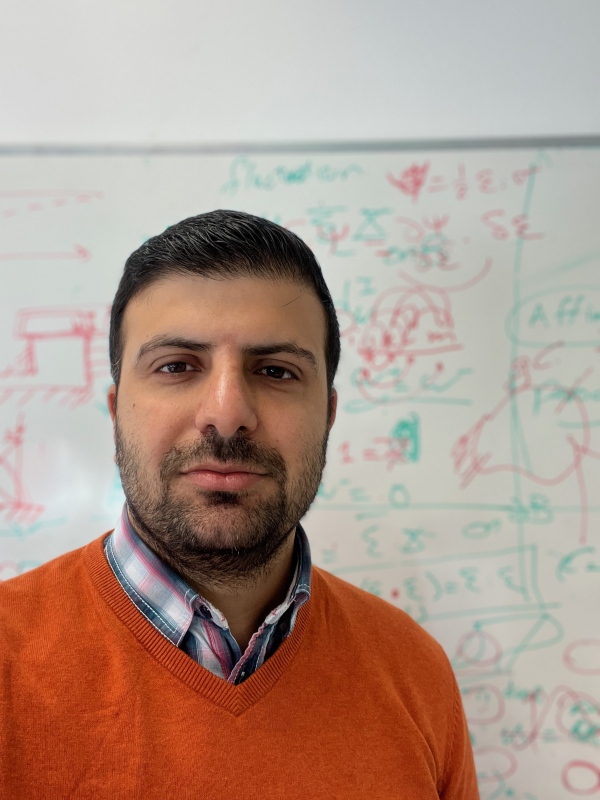
Mohammad Sarhil is a researcher at the University of Duisburg-Essen and a PostDoc at TU Dortmund University, affiliated with the Institute of Mechanics and Jörg Schröder's Lab. He holds a Dr.-Ing. (PhD) in Mechanics with distinction from 2024. Diploma in Structural Engineering (2012) from Latakia University, Syria M.Sc. in Computational Mechanics (2015) from University of Duisburg-Essen His research focuses on phase-field modeling , micromorphic continua , and metamaterials , particularly for fatigue analysis in fiber-reinforced concrete and higher-order homogenization theories. Key trends include finite element formulations, parameter identification, and multiscale residual stress analysis. Scientific recognition includes: DAAD scholarship Best Graduate award (Latakia University) His work bridges computational mechanics, generalized continuum theories, and fracture mechanics with applications in structural and materials engineering.
Jens Wackerfuß is a Full Professor of Structural Analysis and Executive Director of the Institute of Structural Mechanics at the University of Kassel, Germany, positions he has held since 2014. He also leads an Emmy Noether Junior Research Group at the university, demonstrating his significant research leadership. His academic background includes a Dr.-Ing. (Civil Engineering) from Technical University Darmstadt in 2005 and a Dipl.-Ing. (Civil Engineering) from the same institution in 1997. His professional journey includes post-doctoral work at UC Berkeley (2007-2008) and leadership of an Emmy Noether Junior Research Group at Technical University Darmstadt (2010-2013). Professor Wackerfuß's research spans computational mechanics with particular expertise in nonlinear finite element methods, advanced beam formulations, multiscale methods, and molecular mechanics. His work bridges theoretical developments with practical engineering applications, and he has developed the research code dockSIM for computational structural analysis. His teaching portfolio includes Structural Analysis I and II for Bachelor's students and Finite Element Methods, Material Models, and Multiscale Methods for Master's students. His recent publications (2022-2024) reveal a strong focus on constraint handling in finite element analysis, graphene modeling, and innovative structural formulations. Key trends include efficient methods for nonlinear multi-point constraints, coupling different structural elements, and applying computational methods to nanoscale materials. His scientific achievements have been recognized with several prestigious awards: Emmy Noether Programme of the German Research Foundation (DFG) in 2010 Zienkiewicz Medal and Prize in 2009, London (UK) Research fellowship of the German Research Foundation (DFG) at TU Darmstadt in 2008 Research fellowship of the German Research Foundation (DFG) at UC Berkeley in 2007 Professor Wackerfuß supervises doctoral and master's students through his Research Colloquium for Thesis and Doctoral Students. His grant portfolio includes significant funding from the German Research Foundation (DFG), particularly through the Emmy Noether Programme which supports outstanding early-career researchers. He leads the Institute of Structural Mechanics at the University of Kassel and maintains the research code dockSIM. His team focuses on developing advanced computational methods for structural analysis, with particular expertise in nonlinear systems, constraint handling, and multiscale modeling approaches that bridge molecular and continuum mechanics.
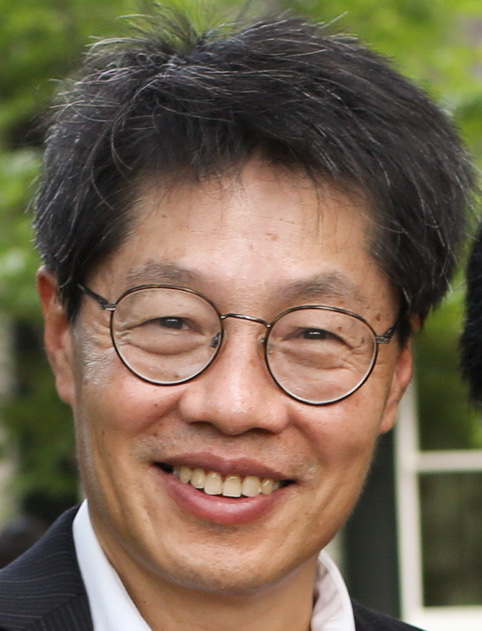
Jian-Guo Liu is a Professor of Mathematics and Physics at Duke University, with primary affiliations in the Departments of Mathematics and Physics. His research encompasses applied mathematics, partial differential equations, kinetic theory, computational fluid dynamics, and stochastic algorithms. Professor Liu's work bridges theoretical modeling and numerical methods, particularly in complex systems involving nonlinear dynamics, fluid behavior, and emergent phenomena. Research interests focus on multiscale modeling of physical systems, including stochastic processes in chemical reactions, fluid-structure interactions, and materials science. Recent publications demonstrate strong emphasis on mathematical foundations of biological and physical systems, with recurring themes in Fokker-Planck dynamics, mean-field games, tumor growth modeling, and computational methods for interfacial phenomena. Publications showcase consistent focus on analytical and numerical solutions to high-dimensional problems, with applications ranging from medical imaging to electrochemistry. The work exhibits advanced techniques in asymptotic analysis, stochastic approximations, and geometric evolution equations.
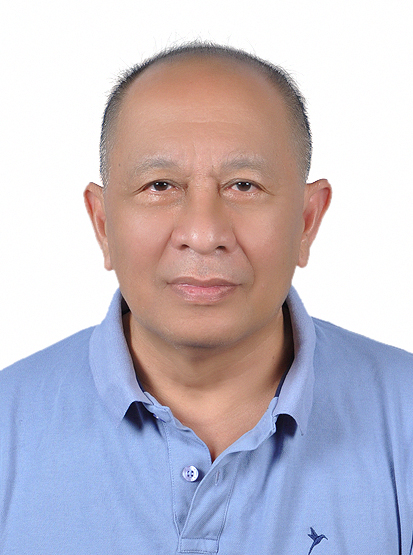
Prof. Mohd Halim Bin Mohd Shariff serves as a Professor in the Department of Mathematics at Khalifa University, bringing extensive international experience from academic positions across the UK, Malaysia, Brunei, and UAE. His foundational expertise stems from advanced degrees in Engineering Mathematics from UK institutions. Education PhD in Engineering Mathematics, University of Newcastle Upon Tyne, UK MSc in Engineering Mathematics, University of Newcastle Upon Tyne, UK BSc in Maths-with-Engineering, Nottingham University, UK Research Focus : His work bridges theoretical and applied mechanics through specialized domains including Elasticity, Continuum Mechanics, and Damage Mechanics, with significant contributions to computational methods like Finite Element analysis and large-scale parallel computing. He extends this expertise into interdisciplinary areas such as Bio-Mechanics, Smart Materials, and Electro-Magneto Mechanics, addressing complex problems in Metal Forming Optimization and Residually Stressed Materials. Awards Stanford/Elsevier Top 2% scientists list (sustained recognition across multiple years) Academic Leadership : Prof. Shariff has guided three PhD candidates and over 20 MSc students to graduation while serving as an external examiner for graduate theses. His research impact is amplified through multiple external grants supporting his computational mechanics investigations.
Yu Bai is a Doctoral Researcher at the Department of Information and Communications Engineering, Aalto University, specializing in communication engineering and machine learning. Their work spans wireless networks and photonic systems, combining advanced AI techniques with physical layer innovations.
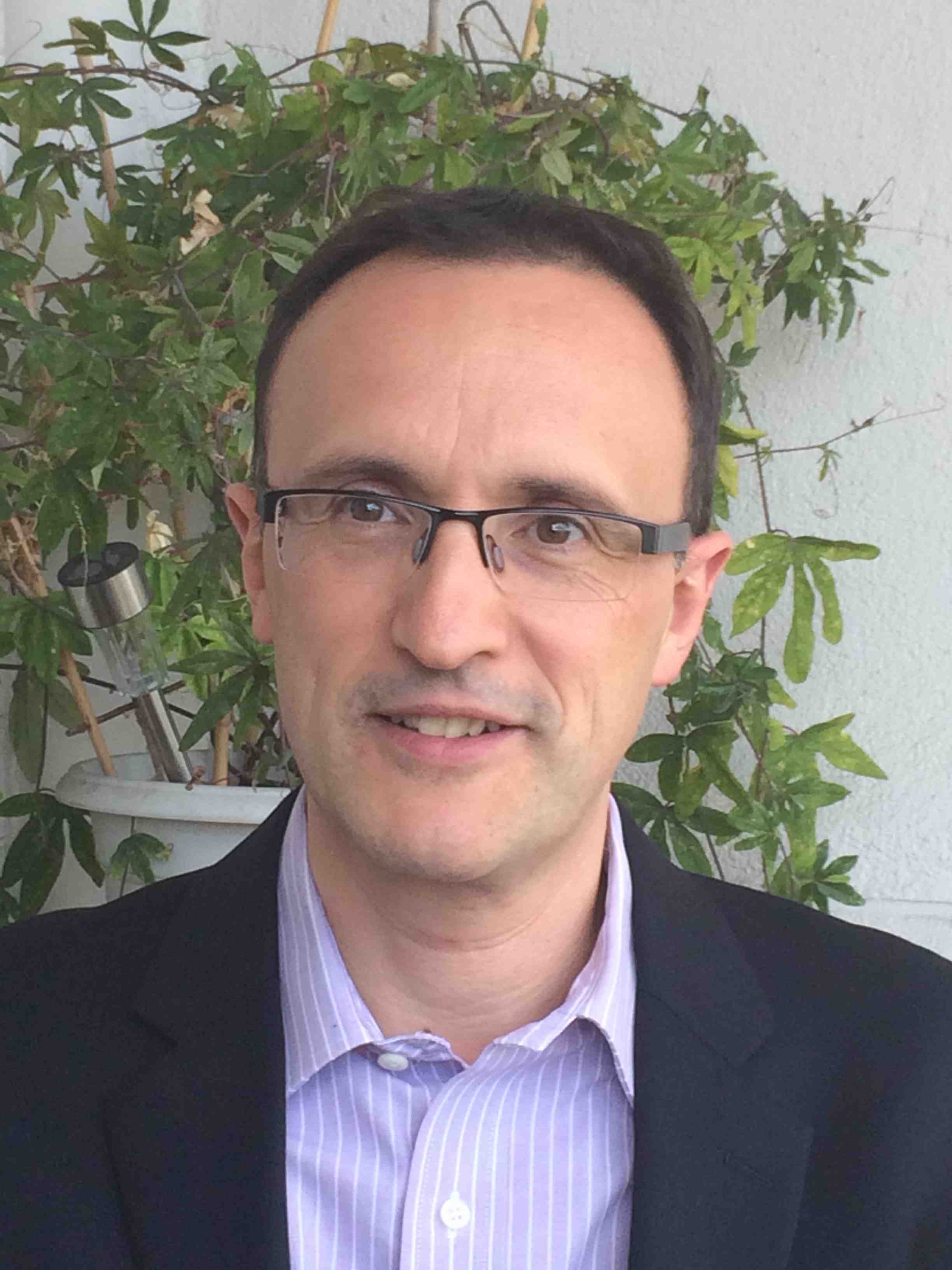
Eric Cancès is a Professor at Ecole des Ponts ParisTech and affiliated with INRIA Paris as part of the Molecular and Multiscale Modeling team. His research focuses on mathematical analysis of electronic structure models for quantum chemistry and materials science, algorithms for electronic structure calculations, numerical analysis of eigenvalue problems, implicit solvent models, and molecular dynamics. He has made significant contributions to the development of continuum solvation models, multiscale methods, and computational frameworks for quantum chemistry. Research Interests Mathematical foundations of quantum chemistry Algorithmic development for electronic structure Implicit solvent models and continuum electrostatics Multiscale and domain decomposition techniques Greedy algorithms for high-dimensional problems Scientific Awards Le Rivot prize (French Academy of Sciences, 1992) Best PhD award (Ecole des Ponts, 1998) Blaise Pascal prize (SMAI and French Academy of Sciences, 2009) Ordway visiting professor (University of Minnesota, 2013-2014) Invited lecturer at ICM (2014) Publications span over two decades, addressing Hartree-Fock and Kohn-Sham models, quantum Monte Carlo methods, domain decomposition for solvation models, and multiscale approaches. His work emphasizes mathematical rigor combined with computational efficiency, with recent studies on perturbation methods, polarization energy calculations, and embedded corrector problems for homogenization.
Jean-Philippe Groby is a Research Director at CNRS working at the Laboratory of Acoustics of the University of Le Mans (LAUM), UMR6613 CNRS. He leads the "Acoustic Materials" research team, one of three research teams at LAUM, and chairs the Technical Committee "Acoustic Materials" of the European Acoustics Association (EAA). He also serves as an associate editor for npj Acoustics. Education: Habilitation à Diriger des Recherches (2017): "Acoustic wave propagation in lossy, structured and periodic media" at Université du Maine PhD (2005): "Modélisation de la propagation des ondes élastiques générées par un séisme proche ou éloigné à l'intérieur d'une ville" at Université de la Méditerranée - Aix-Marseille II Research Interests: Jean-Philippe Groby specializes in acoustic wave propagation through various media, with particular focus on metamaterials and porous media . His research spans theoretical modeling, experimental characterization, and practical applications of acoustic materials. His work has significant implications for noise control in urban environments, automotive and aerospace industries. He has pioneered techniques for designing materials that can manipulate sound waves with unprecedented precision, including perfect absorbers and diffusers that operate at subwavelength scales. Publication Trends: Groby's recent publications (2023-2025) demonstrate a strong focus on dual-function acoustic metamaterials that can simultaneously absorb and diffuse sound, Willis coupling phenomena in complex materials, and advanced characterization methods for anisotropic porous media. His work increasingly bridges theoretical acoustics with practical engineering applications, particularly in room acoustics, aerospace noise control, and architectural sound design. A notable trend is the development of causality-driven designs that optimize acoustic performance while minimizing material usage. Professional Activities: Associate Editor, npj Acoustics Chair, Technical Committee "Acoustic Materials" of the European Acoustics Association Editor of the book "Acoustic Waves in Periodic Structures, Metamaterials, and Porous Media: From Fundamentals to Industrial Applications" (Springer, 2021) Research Leadership: As leader of the "Acoustic Materials" team at LAUM, Groby oversees a vibrant research group focused on developing innovative acoustic solutions. His team has established strong collaborations with international research institutions and industry partners, particularly in the automotive and aerospace sectors. They have developed several patented technologies for sound absorption and control, including metaporous materials and acoustic meta-lenses.
Andrija Stanisic serves as a PreDoc Researcher in the Distributed Systems research area at the Faculty of Informatics, Vienna University of Technology (TU Wien). Holding an MSc degree, he actively contributes to the NexaSphere project (2025-2027) from his office at Argentinierstrasse 8, Room EA0318, with primary contact via andrija.stanisic@tuwien.ac.at. His research centers on Distributed Systems with specialized focus in Artificial Intelligence applications for 6G Networks and 3D Network Continuum modeling . He investigates how compound AI frameworks can optimize next-generation wireless infrastructure through spatially-aware network design, bridging theoretical distributed computing with practical telecommunications challenges to enhance scalability and resource allocation. His sole documented publication, "A Novel Compound AI Model for 6G Networks in 3D Continuum" (2025), represents cutting-edge convergence of AI and telecommunications engineering. This work establishes foundational methodologies for spatial network modeling in 6G contexts, contributing to broader disciplines including Computer Science and Telecommunications through innovative AI-driven network optimization approaches. Scientific Awards: No awards, fellowships, or medals were documented in the provided information. Stanisic currently participates in the NexaSphere research project (2025-2027) as a core team member. No formal student advising responsibilities or grant leadership roles were indicated, consistent with his PreDoc researcher status. He operates within the Distributed Systems research group at TU Wien's Faculty of Informatics, collaborating on advanced network architectures and AI integration projects within this specialized technical environment.
Francisco Federico Garcia Crespi serves as a Professor in the Department of Computer Engineering at Miguel Hernández University of Elche, Spain. His office resides in the Computer Technical Architecture Laboratory, and he actively contributes to the IoT-edge-clOud cOnTiNuum research group focused on orchestration and validation of distributed computing systems. His academic responsibilities include coordinating core courses across two bachelor's programs: Bachelor's in Computer Engineering: Computer Fundamentals (2784) and Operating Systems Design (2812) Bachelor's in Telecommunications Technology Engineering: Computer Architecture (2269) and Digital and Home Automation (2276) Dr. Garcia Crespi's research spans Computer Architecture, IoT, Edge and Cloud Computing, and Digital Systems, with emphasis on seamless integration of edge-cloud continuum technologies. His work addresses orchestration challenges in heterogeneous computing environments while supporting educational initiatives in AI applications for learning. He maintains active teaching duties through scheduled tutorials and continuing education programs in artificial intelligence.
Clara Iversen serves as a Senior Lecturer at Uppsala University's Department of Social Work, holding the academic merit of Docent. Her work bridges social psychology and practical healthcare applications through rigorous conversation analysis. Her research centers on interaction dynamics across critical domains: suicide prevention helplines where she examines racial discourse and empathy calibration; dementia care involving social robots where she investigates emotional labor and ethical frameworks; and child welfare interviews analyzing agency and disclosure. Her methodology consistently employs conversation analysis to dissect institutional interactions, revealing how professionals navigate tensions between policy constraints and human needs. Analysis of her 15 most recent publications (2022-2025) shows a pronounced shift toward technology-mediated care (robotics in dementia care) while maintaining core focus on crisis communication . Key thematic clusters include: (1) ethical dilemmas in non-human care agents, (2) anti-racism implementation within unconditional support frameworks, and (3) emotional labor in third-party help-seeking scenarios. Her work increasingly integrates posthumanist perspectives with practical intervention design. Iversen maintains active collaborations with Marcus Persson, David Redmalm, and Marie Flinkfeldt across multiple publications. She has authored the doctoral thesis Making Questions and Answers Work: Negotiating Participation in Interview Interaction (2013) and co-edited Samtal i socialt arbete (2022), establishing herself as a key contributor to conversation-analytic approaches in social work practice.
C. David Remy serves as Professor at the Institute of Nonlinear Mechanics , University of Stuttgart , where he holds administrative responsibility for the Computational Mechanics of Materials and Structures (COMMAS) program, specifically managing student affairs and program coordination from Room 3.133 at Pfaffenwaldring 9, 70569 Stuttgart. His research spans critical domains in mechanical engineering: Computational Mechanics (core methodology) Nonlinear Mechanics (fundamental focus) Materials Science (constitutive behavior) Structural Engineering (application domain) Continuum Mechanics (theoretical basis) Computational Structural Dynamics (specialized application) Professor Remy's work emphasizes advanced computational modeling of material deformation and structural responses under nonlinear dynamic conditions, with direct relevance to aerospace, civil infrastructure, and mechanical system design where traditional linear assumptions fail. His leadership in the COMMAS program indicates significant contributions to graduate education in computational engineering methodologies. No scientific awards were documented in the source material. As COMMAS program administrator, he oversees student mentorship in computational mechanics though specific advisees remain unlisted; no grant details were provided. The Institute of Nonlinear Mechanics functions as his primary research unit, housing specialized computational laboratories for mechanics simulation.
RAZAFINDRALANDY Dina is a Teacher-Researcher at the University of La Rochelle, affiliated with the E1 - M2N team. Her research focuses on fluid mechanics, turbulence analysis, and geometric integration methods in applied mathematics. Fluid mechanics and turbulence modeling via symmetry groups Differential geometry applications to partial differential equations Development of time integrators using divergent series resummation Her recent work explores advanced techniques like Lie symmetry groups and discrete exterior calculus to preserve physical properties in numerical simulations. She has contributed to geometric integrators for stiff/non-stiff problems and turbulence model construction. RAZAFINDRALANDY collaborates with researchers such as Aziz Hamdouni and Rama Ayoub, with publications spanning Discrete and Continuous Dynamical Systems , HAL , and conference proceedings. She is actively involved in computational mechanics and numerical physics research.
Dr. Marcus Mäder is a Researcher at the Chair of Vibroacoustics of Vehicles and Machines within the Department of Engineering Physics and Computation at the Technical University of Munich . He specializes in aeroacoustics, numerical mechanics, and machine learning applications in acoustics, with a focus on source identification, acoustic metamaterials, and uncertainty quantification. His work bridges experimental and computational approaches in vibroacoustics. Research Topics: Aeroacoustics Acoustic Metamaterials Machine Learning in Engineering Experimental Vibroacoustics Uncertainty Quantification Fluid-Structure Interaction Recent Publications highlight advancements in neural network-driven object classification, energy harvesting from coupled systems, and physics-informed modeling for acoustic boundary conditions. His collaborations span interdisciplinary projects in automotive noise reduction, structural dynamics, and metamaterial design. Teaching Contributions: Experimental Vibroacoustics Machine Learning in Computational Engineering Mechanics Industrial Applications of Vibroacoustics
Firas Al-Doghman is a Lecturer at the School of Computer Science, University of Technology Sydney. With expertise in Machine Learning, Cybersecurity, and Internet of Things (IoT), he teaches subjects like iOS Applications, Networking, and Data Engineering while conducting research on smart algorithms and their cybersecurity applications. PhD in Computer Engineering and Data Management (UTS, 2020) Teaching since 2017 at UTS Former Associate Researcher/Lecturer at UNSW ADFA Research focuses on: Machine Learning integration with cybersecurity Blockchain applications in real estate Edge computing security frameworks Consensus-based data aggregation Publications highlight advancements in: Cybersecurity for supply chains Fractional NFTs in property ownership Carbon credit price prediction models Secure microservices orchestration Key collaborations include researchers from UNSW and industry partners.
Prof. Dr.-Ing. Annika Raatz serves as the Dean of the Faculty of Mechanical Engineering at Leibniz University Hannover and Executive Director of the Institute for Assembly Technology and Robotics. She leads task groups in advanced manufacturing and contributes to collaborative research centers CRC 1368 Oxygen-free Production CRC 871 Regeneration of Complex Capital Goods Her work bridges academia and industry through roles in the Leibniz School of Optics and Photonics , PhoenixD Cluster , and the German Research Foundation .