Dr. Subramaniam Balakrishnan is a Professor in the Department of Mechanical Engineering at the University of Manitoba's Price Faculty of Engineering. He holds a Bachelors and Masters from the Indian Institute of Technology (IIT), Madras, and a Ph.D. in Mechanical Engineering from the University of Manitoba (1983). His research focuses on Manufacturing Automation, including robotics, computerized machine tool control, sensor integration, and enhancing controller intelligence through custom models. Currently, he has no graduate student opportunities available. Educational Background: Ph.D., Mechanical Engineering, University of Manitoba (1983) Masters, Mechanical Engineering, IIT Madras Bachelor's, Mechanical Engineering, IIT Madras Research Interests: Dr. Balakrishnan specializes in advancing manufacturing automation through integrated technologies such as robotics and sensor systems. His work emphasizes practical applications of intelligent control systems in industrial settings. Labs/Teams: No specific labs or teams explicitly mentioned in the text.
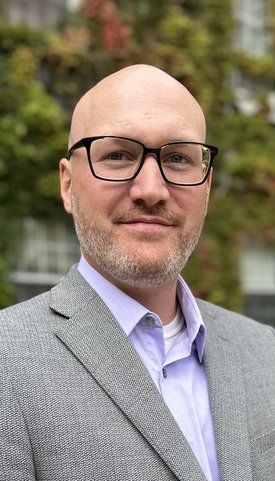
Justin M. Ryan serves as a Part-Time Lecturer in the Department of Mathematics at Syracuse University's College of Arts and Sciences. He is affiliated with the Auerbach Lab at SUNY Upstate Medical University, focusing on interdisciplinary research at the intersection of mathematics and medical science. His work bridges differential geometry, data science, and applied mathematics to address complex problems in epilepsy, cardiac physiology, and autonomic nervous system dysfunction. Research interests include computational biology applications to medical diagnostics, particularly in distinguishing epileptic versus psychogenic seizures through cardiac biomarkers. He has contributed to understanding SUDEP (Sudden Unexpected Death in Epilepsy) mechanisms and genetic models of epilepsy-related cardiac disorders. Ryan has secured multiple grants as a co-investigator, including NIH funding for genetic rabbit model development and wearable diagnostics research. His academic contributions span pure mathematics (e.g., pseudo-Riemannian Lie groups) to clinical applications (e.g., ECG-based seizure classification tools). He maintains active collaborations through professional memberships in the American Epilepsy Society and International Society for Computerized Electrocardiography. Grants: NIH R61/R33, University of Rochester Translational Research, Dravet Syndrome Foundation Key Lab Affiliation: Auerbach Lab @ SUNY Upstate Publications Highlight: 2023 Seizure Biomarker Study in Seizure Journal
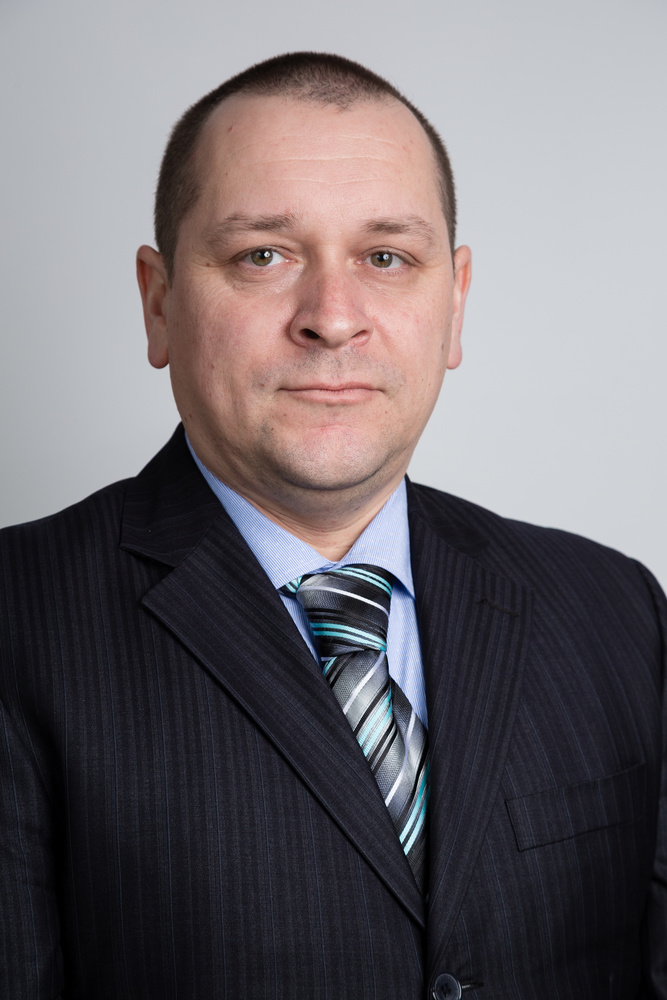
Andras Andrei is a Professor at the Department of Mechanical, Industrial and Transport Engineering, University of Petroșani. His work focuses on mining equipment design, computational mechanics, and geomechanical analysis. He specializes in numerical simulations using FDEM and COMSOL Multiphysics, with a strong emphasis on improving mining operational efficiency and safety through advanced modeling techniques. Research interests include: Rock mechanics and material behavior under extreme conditions Optimization of bucket wheel excavators and cutting teeth Thermal and mechanical stress analysis in mining machinery Integration of AI and data science in mining systems Recent studies highlight innovations in slope stability assessment, microwave-enhanced rock excavation, and energy-efficient mining technologies. His work has addressed challenges in lignite extraction, tailings pond management, and hard rock excavation systems. Notable contributions include: Development of FDEM-based models for lignite shear strength analysis Advancements in brake system thermal management for mine hoists Studies on cutting efficiency improvements through geometric optimization His research bridges theoretical computational methods with practical mining applications, aiming to enhance both operational safety and environmental sustainability in mining operations.
Josep Maria Porta Pleite is an Associate Researcher at the Institut de Robòtica i Informàtica Industrial (IRI), a joint center of the Spanish National Research Council (CSIC) and Universitat Politècnica de Catalunya (UPC). He leads the Kinematics and Robot Design (KRD) research group and has been actively contributing to robotics and computational kinematics since 2007. His work bridges theoretical algorithm development and practical applications in robotics, molecular biology, and environmental toxicology. Porta’s research spans motion planning , robot kinematics , SLAM , and planning under uncertainty . He has made significant contributions to solving complex kinematic problems in closed-chain systems and molecular conformational spaces. His work often involves developing efficient algorithms and open-source software tools such as the CuikSuite , Cuik-KDtree , and Pose SLAM , which are widely used in robotics research. His recent publications (2019–2025) reveal a strong trend toward interdisciplinary applications, particularly in zebrafish behavioral analysis and neurotoxicology , where computational methods are applied to assess environmental contaminants. He also continues to advance core robotics problems, including trajectory optimization, hand-eye calibration, and closed-form solutions in rotation geometry. His work appears in top-tier journals such as IEEE Transactions on Robotics , Mechanism and Machine Theory , and Science of the Total Environment . Porta has served as an associate editor for IEEE Transactions on Robotics (2015–2018) and has supervised numerous students and collaborators. He has led long-term software development efforts and secured research funding through national and European projects. Scientific Contributions: Lead developer of the CuikSuite for motion analysis of closed-chain systems. Coordinator of the KRD research group since 2011. Contributor to ambient intelligence and robot localization during his postdoc at the University of Amsterdam. He advises multiple students in robotics, computer vision, and biomedical applications, and his team develops tools for path planning, singularity analysis, grasp optimization, and molecular modeling. There is no indication of part-time status, retirement, or former affiliation.
Dr. Jason Yeatman is an Associate Professor at Stanford University, holding appointments in the Graduate School of Education, Department of Psychology, and the Division of Developmental and Behavioral Pediatrics at the School of Medicine. His research focuses on understanding the neural mechanisms of reading development, dyslexia, and designing literacy interventions. He directs the Brain Development and Education Lab, employing neuroimaging techniques to study how reading instruction shapes brain circuits. He earned his PhD in Psychology at Stanford, studying the neurobiology of literacy. After a faculty position at the University of Washington, he returned to Stanford. His work bridges neuroscience, education, and technology, with a focus on scalable assessments like the Rapid Online Assessment of Reading (ROAR) tools. Research interests include brain development, learning sciences, and educational equity. He teaches courses such as 'The Science of Reading' and mentors numerous graduate and postdoctoral students. His lab develops open-source tools for neuroimaging analysis and collaborates on large-scale projects like the Human Connectome Project. Key contributions include identifying neural correlates of reading skill, studying white matter plasticity in children, and advancing adaptive testing methods for literacy screening. His work emphasizes translating neuroscience insights into practical educational strategies.
Marie A. Abate is Professor of Clinical Pharmacy and Assistant Dean for Assessment and Strategic Planning at West Virginia University School of Pharmacy. She directs Programmatic Assessment and the 40-year-old West Virginia Center for Drug and Health Information (WV CDHI), serving as a statewide drug information resource for healthcare providers and the public. BS, University of Michigan, 1979 PharmD, University of Michigan, 1981 AAS, Macomb County Community College, 1975 Her research integrates forensic toxicology (opioid/benzodiazepine fatalities), drug information accessibility, and educational assessment. She developed predictive models for overdose deaths through WV Medical Examiner collaborations and created nationally adopted tools for student self-assessment and portfolio evaluation in pharmacy education. Publication analysis reveals consistent contributions to drug safety epidemiology and educational methodology, with recent work focusing on social media pharmacovigilance and forensic concentration databases that inform public health interventions. Scientific recognition includes: Innovations in Teaching award from the American Association of Colleges of Pharmacy She has secured $2M+ across 30+ projects from CDC, NSF, and National Institute of Justice. Her mentorship develops critical literature evaluation skills through the WV CDHI and experiential rotations, emphasizing evidence-based practice in drug information services. The WV CDHI under her leadership provides essential medication safety resources across West Virginia, supporting clinical decision-making and public health initiatives through evidence-based drug information dissemination and forensic data analysis.
Jinki Kim serves as an Assistant Professor in the Department of Mechanical Engineering at Georgia Southern University, where he has been a faculty member since 2018. His research program bridges mechanical systems, materials science, and computational methods, with particular emphasis on experimental techniques for structural assessment and manufacturing processes. Professor Kim's academic credentials include a Ph.D. in Mechanical Engineering from the University of Michigan (2017), complemented by both M.S. and B.S. degrees in Mechanical and Aerospace Engineering from Seoul National University (2008 and 2006 respectively). His educational foundation supports his interdisciplinary research approach spanning mechanical systems and experimental dynamics. Research interests center on Smart Materials and Structures , Structural Health Monitoring , and Advanced Manufacturing , with specific expertise in video-based motion estimation, piezoelectric systems, and machine learning applications. His work demonstrates strong connections to piezoelectric engineering (81% fingerprint match) and structural health monitoring (51%), while contributing to UN Sustainable Development Goals in sustainable industrialization. Recent projects integrate deep learning with traditional engineering methods to solve practical problems in bioprinting and infrastructure assessment. Publication trends from 2023-2024 reveal significant focus on applying computational techniques to manufacturing and structural monitoring challenges. Five recent papers demonstrate consistent methodology using video-based vibration analysis combined with machine learning, particularly in bio-printing quality control and soil mechanics characterization. This work shows increasing interdisciplinary collaboration across mechanical, civil, and biomedical engineering domains. Professor Kim currently leads an active NSF grant ($500,000, 2023-2025) as Principal Investigator for bio-printed construct evaluation research. While specific student advising details aren't provided in the source material, his educational publication suggests active engagement in curriculum development for mechatronics and machine learning integration. His research group likely supports graduate students working on video-based monitoring systems and manufacturing applications. Though no formal lab name is specified, Professor Kim's research group focuses on experimental validation of structural systems using non-contact measurement techniques. The group's work combines mechanical testing with computational analysis, particularly in additive manufacturing quality assurance and structural health monitoring applications, utilizing video-based vibrometry as a core methodology.