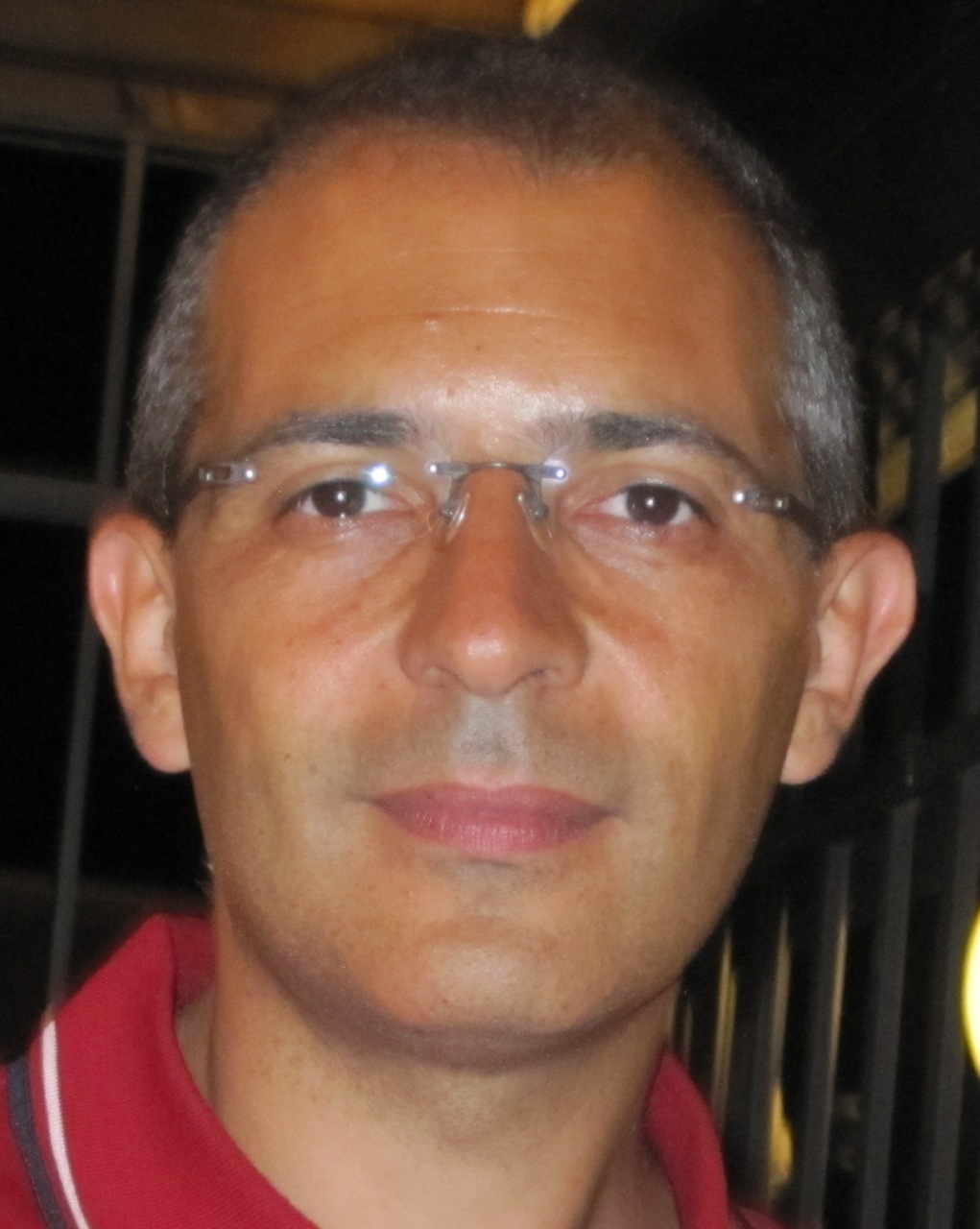
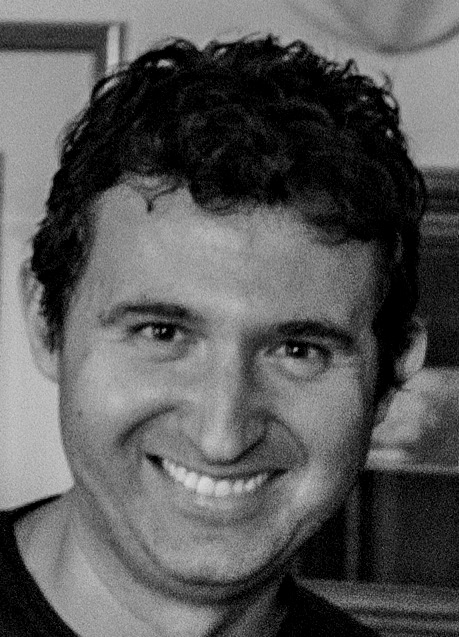
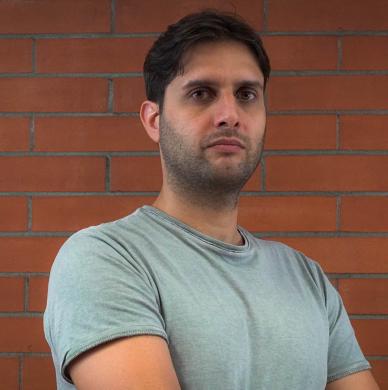
Matteo Sonza Reorda is a Full Professor at the Polytechnic University of Turin, affiliated with the Department of Automatic Control and Computer Science (DAUIN). He holds roles such as Partnership Agreement Coordinator with SMAT and has served as Vice-Rector for Research (2021–2024). His research focuses on fault tolerance, hardware reliability, and AI acceleration, with contributions to GPU/CNN reliability, self-test libraries, and defect-oriented testing. Education: M.S. in Electronics Engineering, Politecnico di Torino (1986) Ph.D. in Computer Engineering, Politecnico di Torino (1990) Research Interests: His work spans automatic test equipment, circuit reliability, GPU fault tolerance, neural network hardening, and embedded systems safety . He leads the Electronic CAD & Reliability Group and collaborates with institutions like the ISI Foundation and the National Research Council (CNR). Publications & Impact: With over 180 publications, his recent work emphasizes AI accelerator reliability, fault injection techniques, and safety-critical systems. Key trends include GPU resilience for CNNs, self-test library optimization, and radiation fault modeling in neural networks. Awards & Recognition: IEEE Fellow (2016–) Multiple best-paper awards at IEEE conferences (DDECS, DATE, etc.) Grants & Collaborations: Coordinator of EU projects (RESCUE, TUTORIAL) Partnerships with EDF, Marelli Europe, and SMAT Lead on National HPC/Quantum Computing Spoke 1 (2022–2025) Labs/Teams: Leads the CAD Group and collaborates with the French-Italian LIA LAFISI lab on hardware-software integration.
Rita Cucchiara is a Full Professor at the Department of Engineering 'Enzo Ferrari' of the University of Modena and Reggio Emilia. She leads the AImageLab research laboratory, part of the Artificial Intelligence Research and Innovation Center (AIRI) in Modena. Her research focuses on Computer Vision, Pattern Recognition, Machine Learning, and Multimedia, with applications in video surveillance, medical imaging, human-centered AI, and generative models. She is actively involved in interdisciplinary projects like ELIAS (European Lighthouse for AI Sustainability) and ELSA (European Lighthouse on Secure AI). Her recent roles include being elected Rector of the University of Modena and Reggio Emilia in 2025. She has organized and participated in major AI events, including workshops at NeurIPS, CVPR, and ECCV, and has contributed to advancements in multimodal models, deepfake detection, and trustworthy AI. Education details are not explicitly provided, but her extensive academic and research experience at the University of Modena underscores her expertise. She collaborates with institutions like NVIDIA, CINECA, and industry partners such as Digital Design and NVIDIA's AI Technology Center. AImageLab's projects include developing systems for medical imaging, ethical AI, and generative adversarial networks (GANs) for design surfaces. She co-organizes initiatives like the ELLIS Summer School on Large-Scale AI and contributes to policy discussions on AI ethics and societal impact. Her work spans from foundational research (e.g., vision transformers, continual learning) to applied projects (e.g., DDGan system for surface printing). Key grants and collaborations include the FAIR project and PNRR-M4C2 initiatives. She advises students and researchers in AI, with 7 PhD positions funded under national programs. Her leadership roles in AIRI and AImageLab highlight her commitment to bridging academia and industry, fostering innovation in AI-driven solutions for sustainability and healthcare.
Oswald Lanz is a tenured full professor at the Faculty of Engineering of the Free University of Bozen-Bolzano , leading the Visual Computing Lab . He holds a Ph.D. in Computer Science and a Mathematics degree from the University of Trento. Prior to his current role, he was a researcher and head of research at FBK Trento. He is an endowed professor collaborating with Covision Lab , an AI hub in Bressanone, and coordinates the board of professors for the PhD in Computer Science program since 2025. His research focuses on Computer Vision, Deep Learning, and Video Analytics , with applications in sports technology, medical imaging, and industrial automation. Key achievements include the Amazon AWS Machine Learning Research Award (2020) , ACM Multimedia Best Paper (2015) , and Best Student Paper at ICIAP (2007) . He co-organized the ELLIS-VISMAC Winter School (2025) and chaired ICIAP 2019 . His work spans novel view synthesis, action recognition, and anomaly detection, supported by patents in video tracking and detection. He teaches courses like Deep Learning and Artificial Intelligence in undergraduate and graduate programs. Recent projects such as 5VREAL integrate 5G, edge computing, and AI for sports analysis. His collaborations bridge academia and industry, exemplified by his role in Covision Lab and multidisciplinary initiatives like DSS4LCO for food supply chains. Lanz’s publications emphasize spatiotemporal modeling, neural architecture search, and hybrid machine vision systems.
Battista Biggio is a Full Professor at the University of Cagliari, Italy, affiliated with the Department of Electrical and Electronic Engineering under the Faculty of Engineering and Architecture. His research focuses on machine learning security, adversarial attacks, and cybersecurity. He co-founded the cybersecurity firm Pluribus One and has pioneered foundational work in poisoning attacks and adversarial robustness. Education: MSc (2006), PhD (2010). He holds editorial roles as Associate Editor-in-Chief for Elsevier's Pattern Recognition Journal and serves on IEEE TNNLS and IEEE CIM editorial boards. His awards include the 2022 ICML Test of Time Award and the 2021 Pattern Recognition Medal. He chairs IAPR TC1 and organizes conferences like S+SSPR and AISec. Research interests span adversarial machine learning, malware detection, and secure AI systems. He leads initiatives such as the sAIfer Lab and co-develops the SecML-Torch library. Teaching includes courses on Machine Learning Security and Industrial Software Development. Notable contributions include seminal papers like 'Poisoning Attacks against Support Vector Machines' and 'Wild Patterns.' He manages over 10 research projects and advises on AI security for industrial applications. His work bridges academic research with practical cybersecurity solutions.
Sebastiano Battiato is a Full Professor of Computer Science at the University of Catania's Department of Mathematics and Computer Science. He serves as Scientific Coordinator of the PhD Program in Computer Science and Deputy Rector for Strategic Planning and Information Systems at the University of Catania. As Director and Co-Founder of the International Computer Vision Summer School (ICVSS), he has significantly contributed to computer vision education globally. Education: Bachelor's degree in Computer Science (summa cum laude), University of Catania, 1995 Ph.D. in Computer Science and Applied Mathematics, University of Naples, 1999 Professor Battiato's research primarily focuses on Computer Vision, Imaging Technology, and Multimedia Forensics . His work spans from developing ISP algorithms for embedded devices to creating advanced techniques for image enhancement, coding, and forensic analysis. He has pioneered research in social media forensics, developing methods to determine if images have been processed through specific social platforms. His research has practical applications in assistive technologies, retail, digital marketing, and medical fields. His scholarly output shows a consistent focus on digital forensics and image processing, with an increasing emphasis on social media forensics in recent years. The research trajectory demonstrates progression from foundational image processing techniques to sophisticated forensic applications capable of addressing modern challenges like deepfakes and social media manipulation. Scientific Awards: 2017 PAMI Mark Everingham Prize for the series of annual ICVSS schools 2011 Best Associate Editor Award of IEEE Transactions on Circuits and Systems for Video Technology Professor Battiato has coordinated IPLab's participation in numerous large-scale research projects funded by national and international bodies as well as private companies. He has served as principal investigator on many international and national research projects, demonstrating strong leadership in securing research funding. His editorial work includes serving as associate editor for the SPIE Journal of Electronic Imaging and IET Image Processing Journal, and membership on several other editorial boards. As Director of IPLab research lab (http://iplab.dmi.unict.it), Professor Battiato leads a team focused on computer vision and digital forensics. The lab collaborates extensively with law enforcement agencies through iCTLAB, a university spinoff he founded that provides digital forensic services. IPLab is recognized for its contributions to image/video forensics, with techniques implemented in commercial forensic software like AMPED Authenticate.
Vincent Lepetit currently serves as a Director of Research at École des Ponts ParisTech since 2019. His prior academic appointments include: Full Professor at the Institute for Computer Graphics and Vision, Graz University of Technology, Austria Senior Researcher at the Computer Vision Laboratory (CVLab) of École Polytechnique Fédérale de Lausanne (EPFL), Switzerland His research resides at the critical intersection of Machine Learning and 3D Computer Vision, with concentrated efforts on advancing 3D scene understanding from images. This work integrates deep learning methodologies with geometric computer vision to solve complex perception challenges, driving innovations in computational intelligence and visual recognition systems. His expertise spans both theoretical foundations and practical implementations across computer vision subdomains. Prof. Lepetit maintains significant leadership roles within the computer vision community, consistently serving as area chair for premier conferences including CVPR, ICCV, and ECCV. He further contributes through editorial positions as associate editor for top-tier journals such as IEEE Transactions on Pattern Analysis and Machine Intelligence (PAMI), International Journal of Computer Vision (IJCV), and Computer Vision and Image Understanding (CVIU), shaping research standards across the field. No scientific awards or honors were explicitly documented in the provided source material. While the text confirms his past affiliation with EPFL's Computer Vision Laboratory (CVLab), current laboratory or team leadership details remain unspecified. Information regarding doctoral advisees, research grants, or funding mechanisms was not included in the available documentation, though his editorial and conference leadership roles indicate substantial research influence.
Laura Brandolini is a Researcher at the Department of Industrial and Information Engineering, University of Pavia, where she collaborates with the Computer Vision and Multimedia Laboratory. She simultaneously serves in the university's ICT area, administering over 200 central servers including backup systems, virtualized services, and hardware infrastructure. Her educational background includes: Master in Computer Engineering (cum laude), University of Pavia, 1998 PhD in Industrial and Information Engineering, University of Pavia, 2013 Dr. Brandolini's research integrates computational topology with practical imaging applications, specializing in Reeb graph computation for 3D mesh segmentation and medical shape analysis. Her work bridges theoretical computer science with clinical neuroscience, particularly in developing topological descriptors for brain structures like the striatum. This interdisciplinary approach enables novel solutions for surface mesh processing in both industrial and medical contexts. Her 2012 publications reveal a consistent focus on computational geometry applied to medical imaging, demonstrating how Reeb graph theory can simplify complex 3D shape analysis. These works established foundational techniques for efficient mesh segmentation with applications in neuroimaging and computer-aided diagnosis systems. She has received the following recognition: Best Student Paper Award at ICPRAM 2012 Dr. Brandolini maintains active industry engagement through her PMP certification (held since 2004) and PMI-NIC involvement, while her dual roles demonstrate unique synergy between academic research and enterprise IT operations. Her current work combines server infrastructure management with advancing computer vision methodologies.
Gabriella Casalino is an Assistant Professor at the University of Bari Aldo Moro, Department of Computer Science, and a key researcher at CILAB - Computational Intelligence Lab. Her work focuses on Computational Intelligence methods for interpretable data analysis, particularly in eHealth, Data Stream Mining, and eXplainable Artificial Intelligence (XAI) within medical and educational domains. She has contributed to innovative approaches in smartphone-based health monitoring, fuzzy logic applications, and remote vital sign detection via photoplethysmography. Education : Ph.D. in Computer Science, with advanced training at institutions like Universitat de Girona and Université de Mons. Research Trends : Recent publications highlight applications of evolving granular computing, neuro-fuzzy systems, and explainable AI in hypertension prediction, bipolar disorder monitoring, and educational data analysis. Key subfields include remote health monitoring, medical data streams, and hybrid AI models. Grants : Research funded by AIRC (Italian Cancer Research Foundation), focusing on computational methods for healthcare challenges. Labs & Collaborations : Active in CILAB, collaborating on projects involving mHealth solutions, cardiovascular risk assessment, and intelligent educational systems.
Luca Sterpone is a Full Professor at the Department of Control and Computer Science (DAUIN), Politecnico di Torino. He serves as Head of the Control and Computer Engineering Department (2023-2027), coordinates the Aerospace and Safety Computing Lab, and is a member of the Academic Senate and Power Electronics Innovation Center (PEIC). His research spans reconfigurable computing, fault tolerance, and radiation effects analysis in electronic systems. Professor since 2021 Department Head (DAUIN) since 2023 Coordinates international collaborations with ESA, AMD Xilinx, NVIDIA, and Thales Alenia Space Develops radiation-hardened FPGA tools (SETA, VERI-Place, PyXEL) 2007 EDAA Outstanding Dissertation Award and 2005 IEEE Best Paper Award Research Focus : Designing radiation-tolerant systems for aerospace, including fault-tolerant AI accelerators, FPGA reliability, and software-based error mitigation. He investigates soft error propagation in nanoscale circuits and develops tools for radiation sensitivity analysis in VLSI. His work integrates hardware-software co-design for mission-critical applications. Awards : EDAA Outstanding Dissertation Award (2007) IEEE European Test Symposium Best Paper (2005) SMACD Best EDA Tool Award (2018) ARC Best Paper candidate (2018) Teaching : He leads courses in Reconfigurable Computing (PhD level), GPU Programming , and Operating Systems . He has formal responsibility for teaching roles across 9 bachelor's and 7 master's years, and mentors multiple PhD students. Collaborations : Coordinates with the European Space Agency (ESA), University of Bielefeld, Universidad de Sevilla, and industrial partners like AMD Xilinx, NVIDIA, and General Motors. He leads projects such as RESCHIP4EU, VEGAS, and TERRAC for radiation-hardened computing solutions.
Fabrizio Falchi is a researcher at the Artificial Intelligence for Media and Humanities (AIMH) Lab of the Institute of Information Science and Technologies (ISTI) within Italy's National Research Council (CNR). He also maintains an associate position at the Biorobotics Institute of Scuola Superiore Sant'Anna. His work focuses on developing advanced multimedia retrieval systems, with the VISIONE platform being his most notable contribution, which has won international competitions including the Video Browser Showdown in 2024 and placed second in 2023. Falchi's educational background includes: Ph.D. in Information Engineering from University of Pisa (Italy) Ph.D. in Informatics from Faculty of Informatics of Masaryk University of Brno (Czech Republic) M.B.A. from Scuola Superiore Sant'Anna in Pisa His research spans deep learning, convolutional neural networks, deep features extraction, similarity search algorithms, distributed indexing systems, multimedia information retrieval, computer vision applications, and peer-to-peer systems. Falchi has made significant contributions to fine-grained visual understanding, cross-modal retrieval (particularly image-text matching), and robustness of deep learning systems against adversarial attacks. His work demonstrates a strong focus on practical applications of these technologies, particularly in video retrieval systems and safety monitoring solutions. Analysis of Falchi's recent publications reveals a strong focus on video and image retrieval systems, with the VISIONE platform being central to his work. His research shows increasing emphasis on fine-grained understanding in computer vision, cross-modal retrieval, and addressing practical challenges like cross-resolution face recognition. Recent work demonstrates innovation in making these systems more efficient through techniques like knowledge distillation (ALADIN) and leveraging virtual worlds for training data. His publications consistently bridge theoretical advances with practical applications in surveillance, safety monitoring, and multimedia search. Falchi's work has received significant recognition: Best paper award at CBMI 2024 for 'Is ClLIP the main roadblock for fine-grained open-world perception?' VISIONE 2024 won the Video Browser Showdown competition in Amsterdam VISIONE obtained second place at Video Browser Showdown 2023 in Bergen Best Paper Award for 'Learning Safety Equipment Detection using Virtual Worlds' at CBMI 2019 Falchi collaborates extensively with researchers at ISTI-CNR, particularly within the AIMH Lab. His work on VISIONE involves collaboration with Giuseppe Amato, Paolo Bolettieri, Fabio Carrara, Claudio Gennaro, Nicola Messina, Lucia Vadicamo, and Claudio Vairo. As co-chair of Ital-IA 2023, the 3rd National Conference on Artificial Intelligence, he plays an active role in the academic community. He is a member of ACM (since 2012), the Computer Vision Foundation, the Italian Association for Computer Vision Pattern Recognition and Machine Learning (CVPL), and the CINI Lab on Artificial Intelligence and Intelligent Systems. Falchi is a key member of the Artificial Intelligence for Media and Humanities (AIMH) Lab at ISTI-CNR, where he leads research on video retrieval systems. The lab has developed the award-winning VISIONE platform, which combines multiple scientific results in content-based video retrieval. His team focuses on developing systems that enable users to search for target videos using textual prompts, drawing objects and colors, or images as query examples. The lab's work demonstrates strong interdisciplinary collaboration, bridging computer science with practical applications in media, safety monitoring, and urban environments.
Donato Romano serves as Associate Professor at The BioRobotics Institute of Scuola Superiore Sant'Anna, Italy, where he coordinates the Bio-Robotic Ecosystems Lab and co-founded the spin-off company HUBILIFE srl. His interdisciplinary work bridges robotics, biology, and AI to develop biohybrid systems for biodiversity preservation, sustainable environmental management, and life support in extreme scenarios including space exploration. With over 90 publications and an H-index of 27 (Scopus, March 2025), he has established significant academic leadership through editorial roles across 12+ international journals. Romano's educational foundation includes advanced degrees with honors: an M.Sc. in Agriculture Science and Technologies (2014) and a PhD in BioRobotics (2018), both from Scuola Superiore Sant'Anna. His academic journey includes visiting scholar positions at Khalifa University and substantial industry-academia collaboration through HUBILIFE srl, which commercializes bioinspired devices for human daily life improvement. His research program focuses on bioinspired and biomimetic robotics with particular emphasis on animal-robot interaction, biohybrid systems, and natural intelligence. Key projects address critical global challenges: SENSORBEES develops biohybrid environmental surveillance for ecological monitoring; REGOLIFE investigates lunar soil-terrestrial organism interactions for space agriculture; and OCEAN ROBOCTO explores marine ecosystem solutions. This work demonstrates a strategic progression from fundamental behavioral studies toward applied ecological and extraterrestrial systems. Analysis of his recent publications reveals strong trends in AI-driven behavioral analysis, with deep learning increasingly applied to entomological studies and pest management. The research spans agricultural applications (precision monitoring traps, larval detection systems), ecological conservation (biodiversity surveillance), and extreme-environment adaptation (lunar regolith studies). A distinctive feature is the consistent integration of biohybrid approaches where living organisms and robotic systems create synergistic capabilities exceeding either component alone. Romano's scientific recognition includes election as Junior Fellow of the Italian Academy of Engineering and Technology (2025), the Lucani fuori dal Comune award (2024), and multiple best-thesis prizes. His editorial leadership spans high-impact journals including IEEE Transactions on Medical Robotics and Bionics and Pest Management Science, where he serves as Associate Editor. As principal investigator, Romano coordinates major international projects totaling over €15M in funding: HORIZON-EIC's SENSORBEES (2024-2029), ASI's REGOLIFE (2024-2027), National Geographic's OCEAN ROBOCTO (2024-2026), and PRIN's COSMIC (2023-2025). His teaching portfolio includes PhD courses in Biosystems for Biorobotics and M.Sc. instruction in Bionics Engineering at Scuola Superiore Sant'Anna and University of Pisa. The Bio-Robotic Ecosystems Lab under Romano's direction pioneers biohybrid technologies where living organisms and robotic systems create integrated solutions. Current initiatives include SENSORBEES' environmental monitoring swarms, REGOLIFE's moonworm colonization systems, and HUBILIFE's commercial vector-control devices. The lab maintains active collaborations with space agencies, agricultural institutes, and conservation organizations, positioning biohybrid systems as next-generation tools for planetary-scale challenges.
Enzo Mastinu is an electronic engineer specialized in embedded systems for biomedical applications, holding an Associate Professor qualification in Bioengineering. He earned his bachelor's and master's degrees in electronic engineering from the University of Cagliari and a PhD in biomedical signals and systems from Chalmers University of Technology, Sweden. His research focuses on advanced prosthetics and neuroprostheses for upper limb amputations, incorporating embedded systems design, control algorithms, sensory feedback, signal processing, AI, and osseointegration. Key projects include the HAND and HAND2 initiatives, funded by the EU and the Italian Ministry of Research, aiming to develop semi-autonomous prosthetic hands. He has published 25 journal articles (75% in Q1) and 21 conference papers, contributing to a PCT patent. Mastinu is a Senior Member of IEEE EMBS and RAS, reviews for ~90 journals/conferences, and edits Transactions on Medical Robotics and Bionics (IEEE) and Scientific Data (Nature). He has supervised ~40 students across PhD, master's, internships, and postdocs, and teaches courses in biomedical engineering and STEM education. His scientific awards include the Marie Skłodowska-Curie Fellowship (2021), National Qualification as Associate Professor (2024), and a Young Researcher Grant (2025). Research emphasizes clinical implementation of prosthetics with neural feedback and intuitive control, as highlighted in high-impact journals like the New England Journal of Medicine.
Giulia Boato is an Associate Professor at the University of Trento’s Department of Information Engineering and Computer Science (DISI). She teaches courses in Probability and Multimedia Data Security. Her expertise spans Cyber Security, Digital Forensics, and Multimedia Analysis, focusing on image and signal processing for data protection, forensics, and anti-forensics. She collaborates internationally with institutions like Tampere University of Technology and Dartmouth College, co-advising PhD students and contributing to European projects like LIVINGKNOWLEDGE and GLOCAL. Education: PhD in Information and Communication Technology (2005), M.Sc. in Mathematics (2002), Scientific Lyceum (1998) with bilingual Italian-German certification. Past roles include Assistant Professor at DISI (2006–2018) and visiting researcher at the University of Vigo (2006) and University of Innsbruck (2018). Research interests include multimedia data protection, image forensics (tampering detection, computer vs. natural data discrimination), and intelligent data management. She leads projects on social media forensics, event-based retrieval, and synthetic media detection. Awards include Best Paper at IEEE WIFS 2012 and Top 10% Paper at MMSP 2012. Professional contributions include roles as co-chair of workshops, Technical Program Committee member for ICIP and ICC, and reviewer for journals like IEEE Transactions on Information Forensics and Security. She has advised PhD theses and contributed to datasets like TrueFace and WILD for synthetic media analysis.
Michele Gattullo serves as an Assistant Professor within the Department of Mechanics, Mathematics & Management at the Polytechnic University of Bari, Italy, specializing in design methods for industrial engineering (ING-IND/15). His research bridges cutting-edge extended reality technologies with practical industrial applications, focusing on human-centered solutions for manufacturing, maintenance, and workplace design. Dr. Gattullo's research portfolio centers on Augmented Reality, Virtual Reality, and Biophilic Design, with significant contributions to Human-Computer Interaction in industrial contexts. He investigates how nature-inspired elements in virtual workspaces enhance employee well-being and productivity, while simultaneously developing practical AR tools for assembly guidance, technical documentation, and maintenance support. His work uniquely integrates ergonomics, cognitive psychology, and industrial engineering to optimize human-technology interaction in complex production environments. Analysis of his 15 most recent publications reveals two dominant research trajectories: biophilic design frameworks for virtual/metaverse workspaces (2023-2025) and industrial AR authoring methodologies. The biophilic stream establishes evidence-based guidelines for digital nature integration, while the AR stream delivers validated tools like ADAM and minimal AR approaches that streamline technical documentation creation. Both trajectories emphasize user experience validation through rigorous industrial studies, demonstrating strong interdisciplinary impact across computer science, industrial engineering, and environmental psychology. Scientific Awards: No awards or honors were documented in the available sources. Advising and Grants: The provided materials contain no information regarding graduate student supervision, research grants, or funding sources. His academic profile emphasizes publication output over mentoring activities or project financing details. Laboratories and Teams: While Dr. Gattullo's research involves advanced XR technologies, the source text does not specify laboratory facilities, research groups, or collaborative teams associated with his work at Politecnico di Bari.
Mauro Barni serves as a Full Professor in the Department of Information Engineering and Mathematical Sciences at the University of Siena, where he teaches Cybersecurity, Information Theory, and Mathematical Statistics. His office hours are held Fridays from 3:00 PM to 5:00 PM via online appointment, reflecting his active engagement with students. Professor Barni's research spans multimedia security and digital forensics, with emphasis on deep learning applications for digital watermarking, deepfake detection, and synthetic image attribution. His work addresses critical challenges in adversarial machine learning, steganography, and image manipulation detection, contributing significantly to cybersecurity and intellectual property protection frameworks. Analysis of his 2021-2025 publications reveals dominant trends in neural network watermarking robustness, synthetic media detection, and defenses against backdoor attacks. His research consistently bridges theoretical foundations with practical implementations, focusing on real-world applications like printer source attribution and physical-domain adversarial scenarios. He leads the VIPP (Vision, Image Processing, and Pattern Recognition) research group, which maintains dedicated virtual classrooms for collaborative projects in computer vision and multimedia security. The group actively develops methodologies for image forensics, synthetic media analysis, and security countermeasures against emerging threats.