Antonio Pietrabissa is an Associate Professor at the Department of Computer, Control, and Management Engineering “Antonio Ruberti” (DIAG) of the University of Rome Sapienza, where he earned his degree in Electronics Engineering (2000) and PhD in Systems Engineering (2004). He has been teaching Automatic Control and Process Automation since 2010 and holds the National Scientific Qualification as Full Professor in Systems and Control Engineering (09/G1). Research interests include networked systems, robust control, Markov decision processes, and deep reinforcement learning. His work spans telecommunications, biomedical applications, and space systems, with a focus on federated learning and decentralized control. He has authored ~70 journal papers (Scopus h-index 22) and co-invented a patent for model predictive control in motor disability assistance. Awards include the 2021 Cybersecurity Award and ETRI Journal Best Paper. Current projects are NANCY (6G networks) and CADUCEO (AI-driven medical diagnostics). He is also CEO of Sapienza startup Automation Intelligence and Control (AICO), commercializing AI solutions for space, telecom, and biomedical sectors.
Francesco Ragusa is a Research Fellow at the University of Catania, Italy, holding an Industrial Doctorate in Computer Science (2021). He spent part of his PhD at the University of Hertfordshire, UK. His work focuses on First Person (Egocentric) Vision, including Human-Object Interaction, Industrial Applications, and Augmented Reality. He co-founded NEXT VISION s.r.l., an academic spin-off from the University of Catania since 2021. Key projects include the MECCANO dataset for industrial human-object interactions and the EGO-EXO4D initiative analyzing skilled human activity from multi-perspective views. Research interests span Computer Vision, Pattern Recognition, and Machine Learning. He contributed to seminal datasets like MECCANO and ENIGMA-51, advancing understanding of human behavior in industrial settings. His work emphasizes practical applications, such as wearable assistive systems and visual navigation solutions. Ragusa has delivered tutorials at major conferences (e.g., ICIAP, VISIGRAPP) on First Person Vision’s history, challenges, and trends. He actively promotes industrial collaborations and has secured grants including PNRR MUR (Code E63C22001940006) and EU funding under Next Generation EU. His teaching and professional activities include organizing workshops on egocentric vision for AI-driven assistants and industrial safety systems. Current research directions involve multimodal synthetic data utilization, gaze-based interaction analysis, and cross-modal fusion for human-robot collaboration.
Lucia Seminara serves as an Associate Professor in the Department of Naval, Electrical, Electronic, and Telecommunications Engineering (DITEN) at the University of Genoa's Polytechnic School. She teaches Electronic Devices, Sensors, and Sensing Systems for Master's programs in Electronic Engineering and Engineering for Natural Risk Management, while also contributing to Philosophy of Medicine for Philosophical Methodologies. As a member of the Joint Teacher-Student Commission, she bridges academic governance with pedagogical innovation in engineering education. Her research pioneers tactile sensing systems using piezoelectric polymers (PVDF) and electronic skin for robotics and prosthetics. She investigates indentation mechanics on soft electronic skin, grasping speed sensitivity, and hierarchical sensorimotor control frameworks for human-in-the-loop robotic hands. Key innovations include machine learning-based contact force estimation and electrotactile feedback systems that restore natural touch perception in prosthetic devices, addressing critical gaps in sensory substitution technology. Analysis of her 2021-2025 publications reveals escalating integration of machine learning with tactile sensing, particularly in symmetry detection for efficient haptic exploration and transdisciplinary human-in-the-loop applications. Recent work emphasizes real-world implementations like post-stroke rehabilitation systems and high-bandwidth human-machine interfaces, demonstrating a strategic shift from foundational sensor development toward clinically viable solutions with measurable user impact. Dr. Seminara's research lineage includes significant contributions to the Roboskin project (2013), which established large-area tactile sensor arrays for robotics. Her current work extends this foundation through investigations into viscoelastic properties, stress transmission modeling, and AI-driven tactile perception, positioning her at the forefront of intelligent electronic skin development with active collaborations across engineering, neuroscience, and clinical rehabilitation domains.
Giovanni Maria Farinella is a Full Professor at the Department of Mathematics and Computer Science, University of Catania, Italy. He is the Founder Member of the IPLAB Research Group at University of Catania since 2005, an Associate Member of the Computer Vision and Robotics Research Group at University of Cambridge since 2006, and an Associate Member of the Italian National Research Council since 2018. He serves as Scientific Advisor of the NVIDIA AI Technology Centre and board member of the CINI Laboratory of Artificial Intelligence and Intelligent Systems. Dr. Farinella obtained his degree in Computer Science (summa cum laude) from the University of Catania in 2004 and was awarded a Doctor of Philosophy (Computer Vision) from the same institution in 2008. He has obtained the National Scientific Qualification to Associate Professor in 2013-2014 and to Full Professor in 2018. His primary research interests focus on First Person (Egocentric) Vision, Computer Vision, Pattern Recognition, and Machine Learning. Dr. Farinella has pioneered research in egocentric video analysis, object interaction detection, activity recognition, and scene understanding from a first-person perspective. His work bridges theoretical computer vision with practical applications in industrial settings, healthcare, and cultural heritage sites. His recent publications demonstrate a clear trajectory toward more sophisticated, real-time egocentric vision systems capable of understanding complex human activities, anticipating actions, and detecting procedural mistakes through integration of visual analysis, gaze tracking, and large language models. Dr. Farinella has published extensively in top-tier computer vision venues, with his most recent work focusing on egocentric action anticipation, mistake detection in procedural tasks, and the integration of multimodal large language models with visual understanding. His research shows strong emphasis on practical industrial applications while advancing fundamental computer vision techniques. PAMI Mark Everingham Prize 2017 Intel's 2022 Outstanding Researcher Award Dr. Farinella has served as Associate Editor for IEEE Transactions on Pattern Analysis and Machine Intelligence, Pattern Recognition - Elsevier, and International Journal of Computer Vision. He has held leadership roles as Area Chair for CVPR 2020/21/22/23, ICCV 2017/19/21/23, ECCV 2020, and as Program Chair of ECCV 2022. He founded and directs the International Computer Vision Summer School (since 2006) and the Medical Imaging Summer School (since 2014). As PI of the EGO4D project, he helped create one of the largest egocentric video datasets with over 3,670 hours of footage from 923 participants across 74 locations worldwide. His IPLAB research group leads multiple significant projects including VALUE, ENIGMA, and FIPEVIS, with strong industry collaborations.
Giulia Orrù is an Assistant Professor of Computer Engineering at the University of Cagliari, Italy, affiliated with the Department of Electrical and Electronic Engineering. She holds an M.S. and Ph.D. in Electronic Engineering and Computer Science from the same institution. Her research focuses on biometric recognition, presentation attack detection, deepfake forensics, and cybersecurity. She is a core member of the Pattern Recognition and Applications Laboratory (PRA lab), contributing to projects like BullyBuster (anti-bullying detection systems) and LivDet competitions (fingerprint liveness detection). Dr. Orrù has authored numerous publications in top-tier conferences and journals, with a strong emphasis on advancing secure authentication systems and combating adversarial attacks in biometrics. She actively serves as a referee for pattern recognition and cybersecurity venues. Teaching activities include courses such as Technologies for Information Security and Artificial Intelligence and Security . Research interests span multimodal biometrics, 3D face reconstruction for surveillance, AI-driven anti-bullying systems, and deepfake detection algorithms. Her work bridges theoretical advancements (e.g., diffusion models for anomaly detection) with real-world applications like forensic recognition and crowd analysis. Notable projects include the Synthetic Data for Face Recognition (SdFR) initiative and contributions to the Face Deepfake Detection Challenge. Dr. Orrù's lab explores cutting-edge techniques in EEG-based personal recognition and vulnerability analysis of medical AI systems. She maintains active participation in international research networks and has developed open-source tools for evaluating biometric system resilience against spoofing attacks.
Dr. Niki Martinel is Associate Professor of Computer Vision and Machine Learning at the University of Udine's Department of Mathematics, Computer Science and Physics. His research advances machine learning methodologies with applications spanning medical imaging, underwater enhancement, and anomaly detection. Research specialties include deep learning architectures (Capsule Networks, Mamba models), self-supervised approaches, and feature representation techniques. Recent work focuses on improving robustness in challenging imaging conditions through physics-informed models and domain adaptation techniques. Publications demonstrate consistent innovation in imaging applications, particularly medical artifact reduction and underwater enhancement. Recent work shows strong emphasis on efficient architectures for mobile deployment and physics-aware models for scientific applications. Research collaborations extend to healthcare diagnostics, sports analytics, and marine robotics, showcasing cross-disciplinary applications of computer vision technologies.
Rosita Guido is an Associate Professor in the Department of Mechanical, Energy and Management Engineering at Università della Calabria, specializing in Operations Research (MATH-06/A). Her academic role focuses on mathematical optimization and artificial intelligence applications across healthcare, manufacturing, and sustainable systems. She teaches graduate courses including Tools and Methods for Innovation in Healthcare and Business Intelligence within the Management Engineering program. Her research interests span healthcare optimization, predictive maintenance, machine learning applications, and sustainable supply chain management. Guido develops advanced mathematical models and algorithms for complex decision problems under uncertainty, with particular emphasis on healthcare systems optimization, tool condition monitoring, and resource allocation. Her methodological expertise includes mathematical programming, combinatorial optimization, stochastic programming, and hybrid AI techniques. Analysis of her recent publications reveals a strong interdisciplinary focus bridging engineering and healthcare. Key trends include the application of machine learning (particularly SVMs and CNNs) to medical diagnostics, optimization of healthcare operations (patient admission scheduling, bed management), and integration of AI with IoT for industrial applications. Her work demonstrates consistent innovation in solving real-world problems through mathematical modeling and algorithm development. As an active member of the Operations Research (Ricerca Operativa) research group at DIMEG, she contributes to projects addressing logistics optimization, green transportation systems, energy infrastructure management, and clinical process optimization. The group maintains international collaborations with prestigious research centers and companies including Amazon. Guido's teaching portfolio includes graduate-level courses in Management Engineering, where she integrates her research expertise into curriculum development. Her academic service includes participation in departmental governance and research initiatives within the Department of Mechanical, Energy and Management Engineering.
Elena Toscano is a researcher in the Department of Mathematics and Computer Science at the University of Palermo. She specializes in numerical analysis, machine learning, and computational mathematics, with a focus on mesh-free methods like Smoothed Particle Hydrodynamics (SPH) and applications to physics, engineering, and interdisciplinary fields. Teaching: Numerical Analysis (Master's in Informatics and Mathematics, 2025/2026) Research Areas: Signal/image processing, SPH consistency restoration, genetic algorithms for tomography, and mathematical-literary collaborations (e.g., Oulipo). Her publications span computational physics, machine learning, and mathematical modeling, emphasizing numerical stability and interdisciplinary innovation.
Prof. Christian Cipriani is the Director of the BioRobotics Institute at Scuola Superiore Sant'Anna (SSSA) and Head of the Artificial Hands Area. He holds a Ph.D. in Biorobotics Science and Engineering (2008) and a Laurea degree in Electronic Engineering (2004). His academic career includes roles as Assistant (2011), Associate (2014), and Full Professor (2016) at SSSA. He leads research on mechatronic prosthetics, control systems, and bidirectional interfaces, sponsored by the ERC, EU, and Italian ministries. Key projects include the ERC-funded MYKI (2016-2021) and the DeTOP Project (H2020-ICT). Research Interests: His work focuses on advanced robotic hands, control architectures, non-invasive feedback, and clinical experimentation. He co-founded Prensilia S.r.l., a spin-off commercializing robotic hands. Awards: ERC Starting Grant, National Scientific Habilitation as Professor (2017), Premio Capitani dell'Anno (2015), and Fulbright Scholarship (2012). Grants & Projects: Coordinated over 40 national/international projects, including MY-HAND (FIRB 2010), WAY (EU-FP7), and ARLEM (2018-2022). Labs & Teams: Leads the Artificial Hands Area within the BioRobotics Institute, fostering innovation in prosthetics and neurorehabilitation.
Francesco GUARNERA is a Researcher at the Department of Mathematics and Computer Science of the University of Catania. He earned his B.Sc. (2009) and M.Sc. (2018) in Computer Science from the University of Catania (summa cum laude), followed by a Ph.D. in Mathematics and Computer Science (2022) from the same university, with research conducted at the University of Hertfordshire, UK. Research Focus: Computer Vision, Artificial Intelligence, and Deep Learning applied to forensic and medical imaging. Key Projects: JPEG compression trace analysis, document authentication via fingerprint extraction, medical image classification/segmentation (MRI, CT-scans), and Agent-Based Modeling for drug evaluation. Collaborations: Rizzoli Orthopedic Institute, iCTLab, COMBINE Group, Garibaldi Hospital, and CoEHAR. His publications span journals like MDPI Journal of Imaging , Elsevier JVCI , and IEEE Access , with topics covering Deepfake detection, pollen classification, and forensic methodologies. He co-supervised multiple M.Sc. theses and contributed to international summer schools (ICVSS, IFOSS) as an organizer and participant.
Muhammad Sajjad is an Associate Professor at the Department of Computer Science, Islamia College University Peshawar, Pakistan, and an ERCIM Research Fellow at the Norwegian University of Science and Technology (NTNU), Norway. His academic career spans teaching, research leadership, and editorial contributions to international journals. Education: Master’s in Computer Science (2012) from the College of Signals, National University of Sciences and Technology (NUST), Pakistan; Ph.D. in Digital Contents (2015) from Sejong University, South Korea. His research focuses on computer vision , image processing , and deep learning , with applications in medical imaging , fog computing , and autonomous navigation . He leads the Digital Image Processing Laboratory, mentoring students in areas like multi-modal data mining and video analytics . He has authored over 65 peer-reviewed publications and serves as an Associate Editor for IEEE Access and a Guest Editor for IEEE Transactions on Intelligent Transportation Systems .
Riccardo Rizzo is a researcher at the National Research Council of Italy ( CNR ), affiliated with the School of Medicine and Surgery at the University of Palermo. His work bridges mathematics, computer science, and biomedical applications. Research Interests Deep learning for medical imaging (MRI, X-ray, histopathology) Graph neural networks in bioinformatics and protein analysis Explainable AI for healthcare diagnostics Clustering algorithms in marine biology and metagenomics Scientific Contributions His recent publications highlight trends in interpretable machine learning for histopathological image classification, bacterial taxonomy, and ecological pattern recognition. Key methodologies include transformers, metric learning, and graph-based approaches. Contact Email: riccardo.rizzo@cnr.it Office: National Research Council of Italy, via Ugo La Malfa 153, Palermo
Riccardo Renzulli is a Researcher at the Department of Computer Science, University of Turin, focusing on object-centric representation learning, medical image analysis, and AI-based computer vision applications. His research emphasizes capsule networks, deep learning models for hierarchical relationships, and applications in healthcare and aerial/satellite imagery. Education: MSc and BSc in Computer Science from University of Turin (2018 and 2015). Previous research with Prof. Valentina Gliozzi explored description logics and non-monotonic reasoning. Professional experience includes a 2022 post at Aalto University (supervised by Prof. Ville Kyrki and Francesco Verdoja) and roles at Addfor and Machine Learning Reply as a deep learning scientist. Research interests span concept learning, few-shot learning, interpretability, and medical imaging. Notable work includes visual localization systems for UAVs, AI-assisted diagnosis for COVID-19 via CXR analysis, and lung nodule segmentation using DeepHealth Toolkit. He contributed to the UniToChest dataset for cancerous nodule detection. His recent publications (2022-2025) address efficient neural architectures, medical imaging applications, and 3D scene modeling. Collaborations include EIDOSLAB, with research emphasizing scalable compression, entropy-based pruning, and ensemble methods for neural networks.
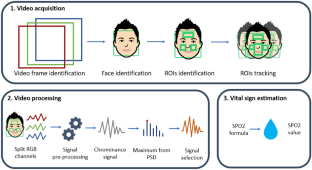
Gianluca Zaza is an Assistant Professor (non-tenure track) in the Computer Science Department at the University of Bari Aldo Moro, where he conducts research in healthcare technology and artificial intelligence applications. His work focuses on developing contact-less monitoring systems for vital signs and cardiovascular risk assessment using advanced computational techniques. Dr. Zaza's research interests span mHealth, remote patient monitoring, cardiovascular risk assessment, fuzzy inference systems, photoplethysmography, computer vision, and healthcare technology. His work demonstrates a strong focus on applying computational intelligence to solve real-world healthcare problems, particularly in the context of non-invasive monitoring solutions. His recent publications reveal a clear trend toward developing contact-less monitoring systems for vital signs, with particular emphasis on blood oxygen saturation and cardiovascular risk assessment. These works leverage neuro-fuzzy systems, remote photoplethysmography, and video imaging techniques to create practical healthcare solutions that have gained significant relevance during the pandemic era. Member of GNCS-INDAM (Gruppo Nazionale per il Calcolo Scientifico) of Istituto Nazionale di Alta Matematica Research supported by INdAM GNCS within the project 'Computational Intelligence methods for Digital Health' Associated with CITEL - Centro Interdipartimentale di Telemedicina Dr. Zaza's research has practical applications in telemedicine and remote patient monitoring, with potential to reduce the need for physical contact during health assessments, which became particularly valuable during the COVID-19 pandemic. His work bridges the gap between computer science, biomedical engineering, and clinical practice through innovative technological solutions.
Roberto Oboe is an Associate Professor at the University of Padova's Department of Management Engineering. His research focuses on advanced motion control systems, mechatronics, and robotics, with notable contributions to remote handling systems for nuclear facilities, admittance control methodologies, and sensor technology integration in industrial and aerospace applications. He has led projects involving SPES (Selective Production of Exotic Species) facility automation, haptic feedback systems, and UAV localization. His technical work spans multiple disciplines including robotic control, nuclear engineering safety protocols, and sensor-based anomaly detection. Key projects include the development of intelligent remote handling systems for radioactive materials and the optimization of bilateral teleoperation systems. He actively contributes to IEEE editorial boards and serves as a Ph.D. examiner. Research highlights include: Admittance control frameworks for high-stiffness robotic interactions Pioneering work on MEMS-based mirror control systems Development of semi-quantitative risk assessment methodologies Advancements in indoor UAV navigation systems Publications emphasize practical applications with over 50 peer-reviewed articles since 2016, covering topics from neuronal avalanche analysis to industrial servopositioner improvements.