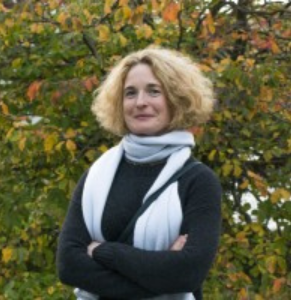
Peter Mooney is a Lecturer in the Department of Computer Science, Faculty of Science & Engineering at Maynooth University. His research focuses on Volunteered Geographic Information (VGI), OpenStreetMap, spatial data analysis, and geospatial data integration in applications such as environmental monitoring and pervasive health systems. Institution: Maynooth University School: Faculty of Science & Engineering Department: Computer Science Role: Lecturer Mooney's research explores the use of crowdsourced geospatial data, particularly through OpenStreetMap, analyzing data quality, community roles, and integration into location-based services. His work bridges technical analysis with policy considerations in geospatial data management. Recent publications highlight his contributions to understanding spatial data dynamics, including attribute changes in OpenStreetMap, characteristics of edited objects, and applications of VGI in environmental systems. He also investigates the intersection of haptics and GIS for novel interaction methods. Contact: peter.mooney@mu.ie
Kevin Meehan is Lecturer in Computing at ATU, Principal Investigator at Mathematical Modelling and Intelligent Systems for Health and Environment (MISHE), and Principal Investigator at Wireless Sensor Applied Research (WiSAR). His research explores computer vision, machine learning, and intelligent systems. Research focuses on: Deep learning approaches for computer vision Graph neural networks for biological applications Context-aware computing systems Pedestrian trajectory prediction Immune response classification His recent publications develop novel machine learning architectures for motion prediction and biological network analysis. He has secured over €400,000 in research funding and collaborated with 45+ SMEs on technology projects.
Dr. Brian Mac Namee is an Associate Professor at the School of Computer Science, University College Dublin (UCD), and UCD Site Director at the Insight SFI Research Centre for Data Analytics since 2024. His research focuses on interactive machine learning, emphasizing human-centered model training, with applications in healthcare, agriculture, space technology, and virtual reality. He co-authored the textbook Fundamentals of Machine Learning for Predictive Data Analytics , translated into five languages. Education includes a PhD (2004) and BA (Mod) from Trinity College Dublin. He previously co-founded the Applied Intelligence Research Centre at Technological University Dublin and was a founding co-PI at CeADAR. He chairs the Artificial Intelligence Association of Ireland and directs training at Krisolis Ltd. Notable awards include the 2016 Data Science Award for Best Academic Research Team and UCD's Fiosraigh Research Excellence Award (2013). His teaching spans advanced machine learning, data science projects, and programming courses. He leads grants such as the SFI-funded Machine Learning & Virtual Reality for Pilot Training and co-directs the SFI Centre for Research Training in Machine Learning.
Dr. Rob Brennan is an Assistant Professor in the School of Computer Science at University College Dublin. With 25 years of academic and industry experience, he specializes in data governance, AI ethics, and cybersecurity. His research integrates socio-technical systems analysis, data protection frameworks, and healthcare risk management. He leads the Value and Risk research challenge within the ADAPT Centre's Transparent Digital Governance initiative and coordinates projects like the ARK platform for risk governance. Education: BSc in Physics, Dublin City University MSc, Queen's University Belfast PhD in Governance, Dublin City University Professional Diploma in University Teaching and Learning, University College Dublin Research Interests: Data Governance & AI Accountability GDPR Compliance & Privacy Engineering Healthcare Risk Management Knowledge Graphs & Linked Data Cybersecurity & Incident Response Key Contributions: Co-PI of Science Foundation Ireland's Empower Data Governance project Coordinator of the €4M H2020 ALIGNED project on software/data engineering Developed the ARK platform for risk governance in healthcare and cybersecurity Grants & Awards: Best Paper Award at Extended Semantic Web Conference 2023 Principal Investigator for grants including the ARK-Virus platform (SFI-funded) Teaching & Mentorship: Coordinates courses on Cyber Risk Assessment, Incident Response, and Data Protection Supervises PhD students focusing on data governance and AI ethics Co-developed the MA in Data Protection and Privacy Law with Computing Professional Activities: Member of FAccT 2023 Program Committee Co-chair of the Irish Conference on Artificial Intelligence and Cognitive Science Contributor to international standards (OMG, IETF, 3GPP)
Dr. Ellen Rushe is an Assistant Professor at Dublin City University's School of Computing specializing in deep learning with limited supervision. Her research develops solutions for audio-visual data challenges including sign language recognition (SignOn Project), novelty detection, and domain adaptation for sports analytics. Previously a Research Fellow at Trinity College Dublin and Postdoctoral Fellow at UCD, she holds an MSc in Computer Science from UCD and BA in Music Technology from Maynooth University. Research focuses on: Limited-label learning paradigms Sign language recognition for low-resource languages Domain adaptation in sports video analysis Novelty detection in data streams
Dr. Andrew McCarren is an Associate Professor and Head of the School of Computing at Dublin City University (DCU). He holds a PhD and BSc from DCU and is a funded investigator in the Insight Centre for Data Analytics. His research focuses on applying data analytics to Fintech, Agriculture, Health, and Sports Performance. As a former industry professional with 20+ years experience in Agri, Engineering, and Pharmaceuticals, he bridges academic and industrial collaboration. Professional Affiliations: Fellow of Royal Statistical Society and Advance HE Key Roles: PI on SFI/EI projects, Visiting Professor at Princess Nourah bint Abdulrahman University Research spans software engineering (microservices architecture), health informatics (exercise interventions), and agri-tech (automated food processing). Over 100 publications across data science, sports analytics, and engineering.
Brendan Murphy is a Full Professor in the School of Mathematical Sciences at University College Dublin since 2015, previously holding a Professor role at the same institution (2007-2015) and a Lecturer position at Trinity College Dublin (1999-2007). He is a Principal Investigator at the Insight Centre for Data Analytics and actively works in Machine Learning & Statistics. Research Focus: His work centers on Model-based clustering Mixture models Applications in sports analytics, food science, microbiome studies, and public health Bayesian statistical methods High-dimensional data analysis Article Trends: Murphy's recent publications (2024-2025) emphasize soft clustering techniques, Bayesian mixture models, and their applications across diverse domains including metabolomics, political science, and oceanography. His work addresses challenges in variable selection, robust classification, and multi-omics integration.
Prof. Kathleen Curran is a Professor at University College Dublin (UCD) and director of the UCD machine learning in medical imaging and diagnostics innovative research lab ( https://www.ucd-ml-mi.com/ ). She serves as an Affiliated Principal Investigator in the Centre for Biomedical Engineering, an INSIGHT funded investigator, and a funded investigator in the Science Foundation Ireland centre for research training in machine learning (ML-Labs). Her research integrates artificial intelligence, computer vision, and clinical medicine to develop interpretable AI solutions for medical diagnostics. Key focus areas include fetal ultrasound imaging, cardiac MRI reconstruction, neuroimaging for Alzheimer's disease and multiple sclerosis, and biomarker discovery for conditions like lymphangioleiomyomatosis and placenta accreta spectrum. She pioneers techniques in diffusion models, explainable AI, and multi-modal learning to address challenges in low-data medical scenarios. Analysis of her recent publications reveals dominant trends in applying generative models for medical data augmentation, developing uncertainty-aware diagnostic systems, and creating interpretable clinical AI tools. Her work consistently targets high-impact clinical applications including fetal development monitoring, cardiovascular disease management, and neurological disorder detection, with strong emphasis on real-world clinical implementation. Scientific recognition includes: 2019 InterTrade Ireland FUSION Project Exemplar Award (with Axial Medical Printing Ltd.) Three Enterprise Ireland Commercialisation Fund awards as Principal Investigator Horizon Europe consortium funding for SMASH-HCM project (Stratification, Management, and Guidance of Hypertrophic Cardiomyopathy Patients using Hybrid Digital Twin Solutions) Prof. Curran leads significant research funding initiatives including Horizon Europe and multiple Enterprise Ireland awards. Her group actively collaborates with industry partners like Axial Medical Printing Ltd. and participates in national research centers such as INSIGHT and ML-Labs, driving translational AI research from bench to bedside. The UCD machine learning in medical imaging and diagnostics lab ( https://www.ucd-ml-mi.com/ ) serves as her primary research hub, fostering interdisciplinary collaborations between computer scientists, clinicians, and biomedical engineers to advance clinical AI solutions.
Patrick Denny is an Associate Professor at the University of Limerick, affiliated with the Department of Computer Science & Information Systems, the Centre for Sustainable Digital (Re)Manufacturing, and Lero – the Research Ireland Centre for Software. His research focuses on computer vision, automotive systems, and medical imaging, with notable contributions to object detection, instance segmentation, and image processing in autonomous vehicles and healthcare. He holds patents in automotive camera systems and has authored over 38 research papers. His work addresses challenges such as rain impact on automated vehicle perception, medical image classification using graph neural networks, and optimizing camera exposure for automotive applications. He collaborates extensively on projects involving V2X communications and intelligent transportation systems. Denny’s research also extends to waste management through computer vision and medical imaging innovations. Patents: Over 10 patents in automotive imaging, including systems for calibrating image-capturing devices and thermal infrared sensors. Key Research Themes: Automotive perception, computer vision algorithms, medical image analysis, and sensor optimization. He actively engages in interdisciplinary projects, combining machine learning with real-world applications in transportation and healthcare.
Prof. Paul F. Whelan is a Full Professor and holds a Personal Chair in Computer Vision at Dublin City University's School of Electronic Engineering. He joined DCU in 1990 and established the Vision Systems Laboratory (1990) and the Centre for Image Processing & Analysis (CIPA, 2006). His research focuses on image segmentation, mathematical morphology, texture analysis, and their applications in medical imaging, industrial vision, and computer-aided diagnosis. He has authored 3 books and over 190 peer-reviewed publications, filed 7 patents since 2007, and spun out Jaliko Ltd to commercialize imaging technology. Education: BEng (First Class Honours) in Electronic Engineering, DCU MEng in Electronic & Computer Engineering, University of Limerick PhD in Computing Mathematics/Computer Vision, Cardiff University Professional Roles: Director of CIPA (2006–2015) Elected Member of DCU Governing Authority (2006–2011) President of Irish Pattern Recognition and Classification Society (1998–2007) Member of IAPR Governing Board & IFCS Council Research Contributions: Developed the NeatVision/IPA Toolbox (Java/MATLAB), licensed biomedical technology, and contributed to €7M+ in competitive research funding. His work bridges translational research in medical imaging and industrial applications. Affiliations: Fellow of IET, Senior Member of IEEE, Chartered Engineer, and Royal Irish Academy nominee (2009–2013).
Brendan Jackman is a Lecturer in the Department of Computing and Mathematics at South East Technological University (SETU), where he contributes to the Automotive Control Group. His work bridges computer science and automotive engineering, focusing on embedded and real-time systems for intelligent vehicles. His research interests include: Automotive control systems and embedded software In-vehicle networks (CAN, FlexRay, OSEK) Model-driven architecture and UML for automotive software Advanced Driver Assistance Systems (ADAS) Fuzzy logic and intelligent control systems Automotive diagnostics and ODX standards His publications from 2005 to 2018 reveal a strong focus on real-time automotive software, network integration, and intelligent diagnostics. Key themes include timing modeling, migration from CAN to FlexRay, and model-based development using UML and MDA. His work often appears in SAE Technical Papers and IEEE conferences, indicating strong industry and academic engagement. Brendan Jackman has supervised at least five research projects, reflecting his role in mentoring students in automotive software and control systems. His research has practical applications in adaptive cruise control, power steering, and diagnostic gateways. He has contributed to software integration frameworks that improve vehicle software quality and interoperability across OEMs. He is actively involved in teaching and research, with no indication of retirement or part-time status. His ORCID profile and institutional page confirm ongoing academic activity.
Siobhan Mullan is a Professor at the School of Veterinary Medicine, University College Dublin. A veterinary surgeon who transitioned from clinical practice to research and teaching, she focuses on delivering large-scale, long-term improvements in animal welfare. She serves on the Farmed Animal Welfare Advisory Committee (FAWAC) and the Advisory Council on Companion Animal Welfare (ACCAW), influencing national policy. Her educational background includes a PhD from the University of Bristol. As a foundation diplomate of the European College of Animal Welfare and Behavioural Medicine (AWSEL sub-speciality), she ranks among only 120 EU-recognized veterinary specialists in this field. Mullan's research centers on developing valid methodologies to assess animal welfare that drive large-scale improvements across multiple species. Her work spans: Farmed animal welfare assessment methodologies Companion animal ethics and welfare Racehorse welfare in training and post-racing careers Veterinary ethics through her 'Everyday Ethics' column and co-authorship of 'Veterinary Ethics- Navigating Tough Cases' Her recent publications reveal a focus on practical welfare assessment tools across diverse species, from cattle and pigs to racehorses and companion animals. She has pioneered innovative approaches including machine vision monitoring for dairy welfare and ethical frameworks for animal welfare labeling, often bridging traditional welfare science with cutting-edge technology. Her scientific recognition includes being a foundation diplomate of the European College of Animal Welfare and Behavioural Medicine. Her policy influence extends through FAWAC and ACCAW memberships, where she helps shape animal welfare standards. Mullan supervises PhD students and has led significant projects including the AssureWel project and the Christian Ethics of Farmed Animal Welfare funded by the Arts and Humanities Research Council. Her collaborative approach spans multiple disciplines, working with industrial partners to integrate welfare outcome assessments into farm assurance schemes, delivering documented benefits for over 2 million farm animals annually. Her research team develops welfare assessment protocols emphasizing both scientific validity and practical implementation. She champions multi-disciplinary collaborations that combine animal welfare science with ethics, policy development, and technological innovation to create meaningful improvements in animal lives.
Jonny O'Dwyer is a Lecturer in the Department of Accounting and Business Computing at the Faculty of Business and Hospitality. His research focuses on affective computing, leveraging eye tracking, speech, and head cues for continuous emotion prediction. He employs machine learning and computer vision techniques to advance human-computer interaction and emotion recognition systems. O'Dwyer has published four peer-reviewed conference papers, with two in 2017 and two in 2019, exploring multimodal data fusion and real-time affect prediction models. His work emphasizes interdisciplinary approaches, combining artificial intelligence with bioinformatics to address challenges in emotion analysis. Recent studies highlight applications in facial expression analysis, convolutional neural networks, and discrete-time feature extraction. O'Dwyer’s contributions aim to enhance communication environments and human-computer interfaces through multimodal sensing and open-source software integration.
Ben Bartlett is a Researcher at the University of Limerick's School of Engineering, specializing in robotics and unmanned systems for environmental and infrastructure applications. His work bridges engineering innovation with practical solutions for challenging real-world environments. His research focuses on: Development of UAV systems for wildlife monitoring and offshore wind farm surveys Cooperative multi-robot path planning for bridge and infrastructure inspection Fault-tolerant control systems for inaccessible environments Maritime robotics using integrated aerial and surface vehicles Automated 3D reconstruction of unknown structures using LiDAR Analysis of his 2023-2025 publications reveals a consistent trend toward real-time, automated systems that balance wide-area coverage with high-resolution precision. His work demonstrates particular strength in adapting robotic systems to dynamic environments like offshore wind farms, aging infrastructure, and maritime settings, with emphasis on efficiency, safety, and cost-effectiveness through modular design and fault tolerance. Contact: Ben.Bartlett@ul.ie
Courtney Ford is a Postdoctoral Research Fellow at the School of Information and Communication Studies, University College Dublin (UCD), affiliated with the Insight Centre for Data Analytics. She actively contributes to the DiversiFAIR project, a European initiative addressing intersectional fairness in artificial intelligence across the European Union. Her academic foundation includes a PhD completed in 2024 at ML Labs, UCD, supervised by Professor Mark Keane. Her doctoral research centered on Explainable AI, specifically investigating the integration of domain expertise with image data analysis to enhance model interpretability. Dr. Ford's research expertise spans Explainable Artificial Intelligence (XAI), Fairness in AI systems, AI Bias typology development, AI Regulatory Compliance frameworks, Computer Vision applications, and Human-AI Interaction dynamics. Her current DiversiFAIR project work involves creating interactive tools for mapping AI regulatory documents and constructing comprehensive taxonomies of AI biases and associated societal harms, emphasizing practical implementation across European contexts. She collaborates within the DiversiFAIR consortium to advance equitable AI deployment through interdisciplinary research and policy engagement.