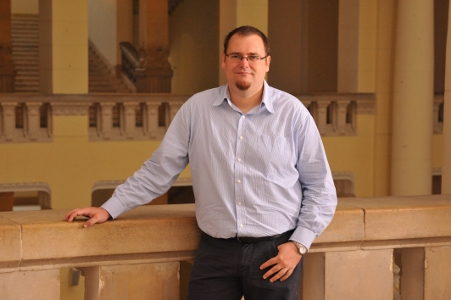
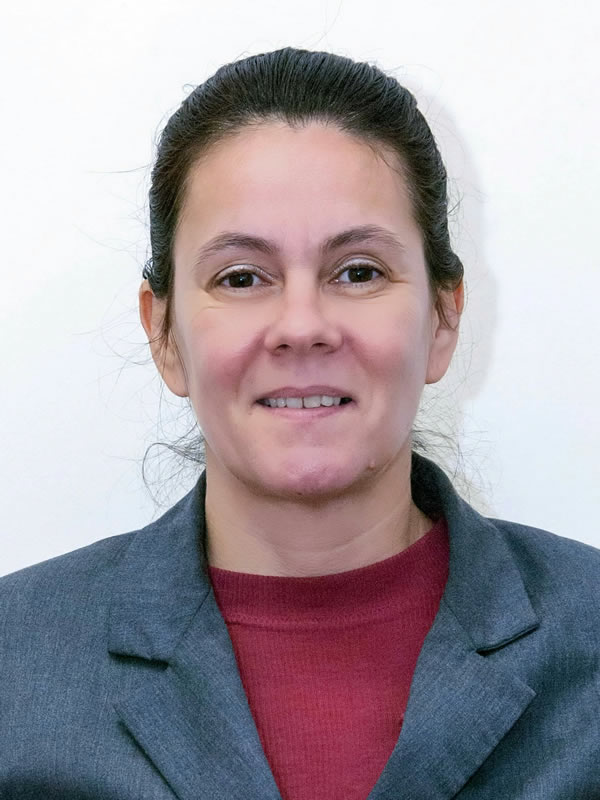
Dr. TUCHBAND Tamás is an Assistant Professor at the Department of Geodesy and Surveying, Faculty of Civil Engineering, Budapest University of Technology and Economics (BME). He teaches courses such as Structural Geodesy and Surveying, with a focus on high-accuracy GPS positioning and atmospheric modeling. PhD in Earth Sciences (2015) MSc in Land Surveying and Geomatics Engineering (2008) His research emphasizes tropospheric and ionospheric models in GNSS applications, including precise point positioning and water vapor estimation. Recent work explores EGNOS calibration and motion capture systems for geodetic precision. Scientific awards include the #építő250 Scholarship . He serves as Secretary of the Youth and Education Section at the Hungarian Society of Surveying, Mapping and Remote Sensing.
László Blázovics is a Senior Lecturer at the Department of Automation and Applied Informatics, Budapest University of Technology and Economics. He leads the Applied Mobile Research Group (AMORG) focusing on mobile computing and distributed systems. His office is located at Q.B222, Magyar tudósok krt. 2., Budapest 1117, Hungary, with contact available via phone (+36 1 463-1648) and email. His primary research explores: Swarm robotics including drone coordination, uniform dispersal algorithms, and obstacle avoidance Distributed systems featuring sensor networks, multi-robot frameworks, and decentralized algorithms Mobile technologies spanning 5G networks, VR teleoperation, and cognitive communication AI applications such as human activity recognition and sensor fusion techniques Publication analysis reveals consistent focus on autonomous systems since 2011, with recent expansion into 5G-enabled applications and AI-driven solutions. Earlier work established foundations in swarm robotics and distributed algorithms, while recent publications demonstrate applied research in VR streaming, drone networks, and neural networks. He maintains active involvement in the Applied Mobile Research Group (AMORG), developing simulation frameworks for multi-robot systems and investigating cognitive drone applications.
Kovács Viktor is an assistant lecturer in the Department of Automation and Applied Informatics at the Budapest University of Technology and Economics (BME). His office is located in building Q, room B222 on the Magyar tudósok körútja campus in Budapest. Research interests span computer vision and image processing with a strong emphasis on 3-D data analysis, head-mounted projection displays, and robust feature extraction from range images. He also contributes to process automation in pharmaceutical manufacturing and investigates communication-control co-design for connected vehicles in 5G networks. Across 15 recent publications (2012–2022) one observes a clear trajectory from fundamental computer-vision algorithms—edge detection, corner classification, plane segmentation—to applied engineering solutions such as real-time granulation monitoring and immersive 3-D display systems. Medical data analytics and diffusion MRI modeling further diversify his portfolio, illustrating a blend of theoretical depth and practical impact. Contact & Resources E-mail: Kovacs.Viktor@aut.bme.hu Phone: +36 (1) 463-1648 Profiles: BME Publication Registry , ResearcherID , Google Scholar
Ákos Nagy is a Senior Lecturer at the Department of Automation and Applied Informatics, Budapest University of Technology and Economics. His work focuses on robotics, control systems, and optimization algorithms. Contact details include an email address ( Nagy.Akos@aut.bme.hu ) and office location at Q.B212, Magyar Tudósok krt. 2, Budapest 1117, Hungary. Robotics and Motion Planning Control Systems Optimization Efficient Algorithm Design Autonomous Vehicle Navigation His research includes trajectory planning for robot manipulators, image processing for line tracking, and speed planning algorithms. He also explores path tracking for non-convex constraints and applications in connected car systems using 5G. Publications emphasize time-optimal solutions and efficient computational methods. Key collaborations and applications involve autonomous vehicles in narrow environments, geometric planning for car-like robots, and joint communication-control system design. Current projects likely focus on integrating real-time control with emerging communication technologies.
JUHÁSZ Attila is an Associate Professor at the Department of Photogrammetry and Geoinformatics, Budapest University of Technology and Economics. His research focuses on geoinformatics, remote sensing, and GIS applications for military historical reconstruction, particularly using LiDAR data to detect World War II-era objects and landscapes. Department: Photogrammetry and Geoinformatics University: Budapest University of Technology and Economics Email: juhasz.attila@emk.bme.hu His research integrates LiDAR, photogrammetry, and GIS to analyze historical military sites, including bomb craters, defense lines, and battlefield topography. Key methodologies include spatial data fusion, digital surface modeling, and automated feature detection. JUHÁSZ Attila’s publications reveal trends in applying geospatial technologies to historical reconstruction, with a focus on World War II-era military objects, terrain analysis, and spatiotemporal data management. His work bridges digital archaeology and military history through advanced geospatial techniques.
József Bokor is a Professor at the Budapest University of Technology and Economics and holds multiple leadership roles at the Hungarian Academy of Sciences, including Director for Scientific Affairs at the Computer and Automation Research Institute and Head of Systems and Control Laboratory since 1987. His work bridges theoretical and applied research in control systems, with a focus on vehicle mechatronics and transportation automation. D.Sc. in Engineering Sciences (1990), Ph.D. (1977), and M.Sc. (1972) in Electrical Engineering Research spans system theory, robust control, signal processing, and fault detection with applications in nuclear reactor safety, vehicle control, and energy forecasting Leadership roles at MTA SZTAKI and BME His research integrates nonlinear systems analysis, geometric parameter-dependent models, and vision-in-the-loop control systems for road vehicles. Collaborations include MIT, Technical University Delft, and University of Minnesota. Bokor has received numerous accolades, including the Széchenyi Prize (2007), Simonyi Károly Prize (2010), and Commander's Cross of the Order of Merit of Hungary (2013). He has authored 580+ publications with 1626 citations (H-index 21).
Dr. KAPITÁNY Kristóf is an Associate Professor at the Department of Photogrammetry and Geoinformatics within the Faculty of Civil Engineering at Budapest University of Technology and Economics. His office is located in Room K. ép / I. em. 31/8, with consultation hours every Wednesday from 12:00-13:00. He teaches courses including Civil Engineering Informatics (BMEEOFTAT42) and Numerical Methods (BMEEOFTMK51, BMEEOAFMB51). His research centers on advanced imaging and computational techniques for civil engineering, with key focus areas: Object reconstruction from image series (CT/X-ray analysis of cerebral vasculature, concrete, asphalt, and artworks) Geospatial analysis of urban systems (e.g., bike-sharing networks) Material science applications (organic insulation via SEM, fiber-reinforced concrete) AI-driven efficiency in construction (algorithmic design, digital twins) Recent publications (2015-2024) demonstrate strong emphasis on computed tomography for material diagnostics, with growing exploration of AI strategies. Key domains include structural material degradation analysis, non-destructive testing, geospatial data processing, and heritage conservation, reflecting consistent innovation in imaging methodologies. Awards include the #építő250 Scholarship for academic merit. No information is currently available regarding student supervision, research grants, or laboratory affiliations.
Dr. Balázs Harangi is an Associate Professor and Deputy Head of Department at the University of Debrecen's Faculty of Informatics, Department of Data Science and Visualization. His work intersects medical image processing, machine learning systems, and computer vision. Research interests include: Medical Image Processing Computer Vision Texture Analysis Deep Learning & Artificial Intelligence Data Analysis Complex Systems He is affiliated with the University of Debrecen, where he contributes to educational and research activities in data science, machine learning, and visualization. His contact details include email harangi.balazs@inf.unideb.hu and office location at the Faculty of Informatics building, floor 1, I121 (Lecturers’ room).
Dr. Takács Bence Géza serves as an Associate Professor at the Department of Geodesy and Surveying within the Faculty of Civil Engineering at Budapest University of Technology and Economics (BME). With over two decades of academic engagement, he maintains active roles in teaching core surveying courses, supervising student research projects (TDK), and leading departmental field practice programs. His institutional responsibilities include serving as the department's TDK coordinator and field practice course supervisor, while maintaining professional affiliations with the Hungarian Academy of Sciences, Hungarian Chamber of Engineers, and Hungarian Society of Surveying. Education: PhD in Earth Sciences, Budapest University of Technology and Economics (2005) MSc Land Surveyor and Geomatics Engineer, Budapest University of Technology and Economics (1999) Dr. Takács specializes in Global Navigation Satellite Systems (GNSS) and Engineering Geodesy with particular expertise in Safety of Life applications, Performance Based Navigation procedures, and infrastructure monitoring systems. His research bridges theoretical geodesy with practical civil engineering challenges, focusing on bridge load testing, road infrastructure quality control, and modernization of cadastral systems through point cloud technologies. Recent work demonstrates strong emphasis on ionospheric modeling for GNSS integrity, EGNOS network deployment, and open-source solutions for coordinate transformations, reflecting his commitment to advancing both academic knowledge and industry standards in geospatial engineering. Analysis of his publication record (2014-2021) reveals a clear trajectory toward practical implementation of geodetic techniques in critical infrastructure projects. His work consistently addresses safety-critical applications in aviation navigation (PBN4HU, BEYOND projects), structural monitoring of bridges (Rákóczi Bridge, Komárom Bridge), and modernization of land registry systems. The integration of machine learning for ionosphere modeling and open-source GIS development highlights his innovative approach to solving complex geospatial problems across civil engineering and transportation domains. Scientific Awards: Academy of Sciences Youth Award (2004) Award for consultation of student research projects, BME (2007) Rector's Award (2021) Hazay Prize (2021) Dr. Takács actively supervises student research through TDK programs and coordinates comprehensive surveying field practice courses. His research leadership spans major projects including PBN4HU (implementing Performance Based Navigation at Hungarian airports), BEYOND (building EGNSS capacity across multimodal domains), and EDCN (operating EGNOS monitoring stations). These initiatives demonstrate significant grant acquisition capabilities with direct applications to aviation safety, road infrastructure monitoring, and national geodetic infrastructure. His work bridges academic research with practical industry implementations through collaborations with the Paksi Nuclear Power Plant, Budapest Metro, and Hungarian road construction authorities. As a key member of the Committee on Geodesy and Geoinformatics at the Hungarian Academy of Sciences and serving on multiple certification committees for the Hungarian Chamber of Engineers, Dr. Takács shapes national standards for geospatial practice. His departmental leadership in surveying field courses and TDK supervision creates pipelines for next-generation geospatial professionals, while his professional qualifications as a certified designer (GD-T) and expert (GD-Sz) in land surveying ensure industry relevance of academic training.
Kovács László is a Professor at the Department of General Informatics within the Faculty of Information Technology at the University of Miskolc, Hungary. With a continuous academic career spanning from 1995 to present, he has established himself as a leading researcher in artificial intelligence, machine learning, and process mining. His work bridges theoretical computer science with practical applications in various domains including robotics, natural language processing, and educational technology. Professor Kovács' research interests focus on artificial intelligence, machine learning, process mining, natural language processing, graph theory, and formal concept analysis. His work demonstrates a strong emphasis on neural network applications, knowledge representation, and the development of novel algorithms for complex data structures. He has made significant contributions to the fields of explainable AI, event log analysis, and intelligent tutoring systems, with particular attention to the application of graph-based methods in knowledge representation. Analysis of his recent publications (2024-2025) reveals a strong trend toward interdisciplinary AI applications, particularly in process mining, educational technology, and robotics. His work shows increasing integration of neural network architectures with formal concept analysis, demonstrating innovation in knowledge representation techniques. The research spans theoretical foundations in lattice theory and concept hierarchies to practical implementations in robotic control systems and educational platforms, reflecting a balanced approach between theoretical computer science and applied AI. Professor Kovács has served as editor for significant publications including 'Artificial Intelligence Research at the University of Miskolc: Development of an analytical and robotic process automation system for high-load customer service' (2024), demonstrating leadership in his field. His research has been published in high-impact journals including Knowledge-Based Systems (SJR D1), Expert Systems with Applications (SJR D1), and Mathematics (SJR Q2), indicating the quality and significance of his contributions to the academic community.
György Eigner is a Professor at Obuda University, specifically at the John von Neumann Faculty of Informatics, where he serves as dean. He is affiliated with the Physiological Controls Research Center in Budapest, Hungary. His academic career includes leadership roles as president of the AI Transition Committee and as a senator on the University Council broad. Dr. Eigner's work bridges engineering and medical applications, focusing on control systems for physiological processes. Dr. Eigner earned his PhD in Applied Informatics from Obuda University in 2017, following his Biomedical Engineer MSc from Budapest University of Technology and Economics (2011-2013) and Mechatronics BSc from Obuda University (2006-2011). His educational background reflects his interdisciplinary approach that combines engineering principles with medical applications. Dr. Eigner's research focuses on applying control theory and engineering principles to physiological systems. His work spans several key areas: Development of control systems for diabetes management, including artificial pancreas algorithms Tumor growth modeling and control through anti-angiogenic therapy Medical device development, particularly for respiratory support systems Application of machine learning in healthcare monitoring and prediction Robotics for educational and medical applications Industry 4.0 implementations in manufacturing and healthcare settings His recent publications demonstrate a clear trend toward practical implementations of theoretical control systems. The research shows increasing focus on real-world applications of control theory in medical contexts, particularly in personalized patient care systems. His work on the Mass Ventilation System during the COVID-19 pandemic exemplifies this practical orientation. Additionally, there's a growing emphasis on integrating Industry 4.0 technologies with traditional medical systems, as seen in his work on digital twins and real-time locating systems for healthcare applications. Dr. Eigner has received several notable awards for his contributions to the field: Young Researcher of the Year Award (2019) Dean's commendation (2018) IEEE SMCS - Outstanding Contribution Award (2016) IEEE SMC 2016 - Best Conference Paper Finalist As a professor and dean, Dr. Eigner has advised numerous students on research projects related to control systems and medical applications. His research has been supported by various grants focused on developing innovative medical technologies and control systems. He has collaborated extensively with researchers across multiple disciplines, including medical professionals, engineers, and computer scientists, to develop practical solutions for healthcare challenges. Dr. Eigner leads research activities at the Physiological Controls Research Center at Obuda University. This center focuses on developing control systems for physiological processes, with particular emphasis on diabetes management, tumor growth control, and respiratory support systems. The center works closely with medical institutions to ensure that theoretical developments translate into practical clinical applications. Recent projects include the development of the Mass Ventilation System for pandemic response and the PlatypOUs mobile robot platform for STEM education.
Dr. LOVAS Tamás is an Associate Professor and Head of the Department of Photogrammetry and Geoinformatics at the Faculty of Civil Engineering, Budapest University of Technology and Economics (BME). He also serves as a Representative and Coordinator for the Specialization in Construction Information Technology Engineering (MSc) within the Faculty Council. His expertise spans geoinformatics, civil engineering, and transportation systems, with a focus on laser scanning, point cloud integration, and smart infrastructure solutions. Education: While formal education details are not explicitly provided, his academic role and publications suggest a strong background in civil engineering and geomatics. His courses include topics like Intelligent Transport Systems (BMEEOFTMF61), ITS GIS (BMEEOFTMF62), and Laser Scanning (BMEEOFTDT81). Research Interests: Dr. Lovász’s work centers on leveraging geospatial technologies for infrastructure analysis, including urban land cover classification , automated road surface segmentation , and scan-to-BIM workflows . He pioneers applications in transportation safety, autonomous vehicle HD mapping, and disaster risk assessment using RPAS and LiDAR. His team develops AI-driven strategies for point cloud data and digital twins, enhancing infrastructure monitoring and urban planning. Key Achievements: He has been awarded the Magyar Felvételi információ #építő250 ösztöndíj and contributed to projects like the ZalaZONE automotive proving ground’s HD mapping workflow. His research bridges academic innovation with practical engineering solutions, such as optimizing electric vehicle charging station placement and assessing rockfall hazards in volcanic regions. Grants & Advising: His work includes funded projects on laser scanning for bridge load testing and steel section inspection. While specific grant details are not listed, his publications reflect sustained engagement with industry-relevant research. He advises on complex construction IT projects and guides students through MSc specializations in construction information technology. Labs & Teams: His department collaborates with the Vásárhelyi Pál Doctoral School of Civil Engineering and Earth Sciences , focusing on geomatics, geotechnical engineering, and infrastructure systems. His team integrates cutting-edge technologies like LiDAR, photogrammetry, and AI to advance civil engineering practices.
Prof. György Györök serves as a Professor and Dean at Óbuda University's Alba Regia Faculty. His work bridges electrical engineering, environmental science, and embedded systems. He leads research in analog circuit design, fault detection systems, and sustainable industrial processes. His recent studies include innovation ecosystem modeling (Triple Helix Model), FPAA applications in signal processing, and environmental impact assessments of industrial processes. Research interests focus on pragmatic electrical engineering solutions, machine learning-driven systems, and sustainable technology development. Notable areas include battery management systems for electric vehicles, real-time fault detection algorithms, and environmental impact analysis of manufacturing processes. His publications reflect interdisciplinary innovation, combining hardware-software co-design with environmental and educational technology applications. He has pioneered FPAA-based measurement tools and smart monitoring systems for industrial and academic use. No awards are explicitly mentioned, but his extensive publication record indicates significant contributions in technical fields. As dean, he oversees academic governance while maintaining active research in embedded systems and sustainable engineering. Collaborations likely involve industry partners given his focus on pragmatic engineering solutions. His work integrates cutting-edge technologies like neural networks with traditional analog circuit design for real-world applications.
Dr. Éva Hajnal is an Associate Professor and Vice Dean for Research at the Alba Regia Technical Faculty of Óbuda University. Her work focuses on interdisciplinary research spanning environmental monitoring technologies, artificial intelligence applications in agriculture, and sensor development. She leads efforts in livestock health monitoring using rumen bolus sensors and has contributed to ecological assessment methodologies using diatoms. Her email is hajnal.eva@amk.uni-obuda.hu , and she is located at Room 25 in Building K on Budai út 45. Her research integrates computer science with ecological challenges, addressing issues like groundwater quality and wind energy modeling. Research interests include: Biosensor development for livestock health AI-driven environmental data analysis Ecological status assessment using diatoms Virtual reality and motion tracking systems Online mapserver technologies Recent work emphasizes long-term rumen temperature analysis, low-computational algorithms for cattle heart rate estimation, and multilingual handwritten character datasets. Her research trends show strong focus on applying computational methods to ecological and agricultural challenges. She has contributed to projects like wastewater management control systems and biodiversity indices for freshwater ecosystems. No specific scientific awards are listed. Her administrative role as Vice Dean for Research involves overseeing research strategy and collaboration at the faculty level. No advising or grant details are provided in available texts. Her work is associated with the university's technical faculty and environmental engineering teams, contributing to both academic and applied research initiatives.
Géza Várady is an Associate Professor at the University of Pécs (PTE), holding roles such as Vice Dean for Scientific Affairs at the Faculty of Engineering and Information Technology. He has served as Head of the Department of Technical Informatics and has held various academic leadership positions. His career spans over two decades, with research focusing on computer vision, image processing, and lighting technology. He holds a PhD from the Doctoral School of Informatics at the University of Pannonia. Education includes a Master’s degree in Computer Engineering and a PhD in Informatics. He has also held research positions internationally, such as a Leonardo Fellowship at Schefenacker GmbH in Stuttgart, Germany. His research interests include mesopic vision models, color correction systems, 3D depth sensing using monocular cameras, and drone-based applications. He leads the drone research team and has supervised doctoral students in areas like image data correction and 3D modeling. Notable achievements include the 2024 Publication Excellence Award, IBM Faculty Awards for adaptive lighting systems, and the Walsh Weston Award for contributions to lighting science. He actively participates in academic governance, serving on national committees like the Hungarian Academy of Sciences’ Engineering Sciences Committee and the John von Neumann Computer Society. Publications span over 100 articles in journals like Lighting Research and Technology and Technical Gazette , focusing on topics ranging from photogrammetry to autonomous drone control. He has authored textbooks on MPI programming and computer architecture.