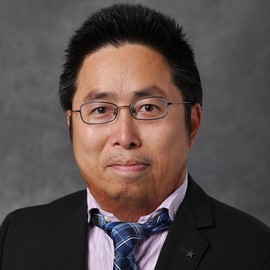
Norma Latif Fitriyani is an Assistant Professor at the Department of Artificial Intelligence and Data Science at Sejong University, South Korea . She holds a Ph.D. in Engineering from Dongguk University (2021), an M.S. in Industrial Management from National Taiwan University of Science and Technology (2016), and a B.Eng. in Computer Science from UIN Sunan Kalijaga (2014). Research Interests: Her work focuses on Health Informatics , Machine Learning , and Artificial Intelligence , with applications in disease prediction, energy systems, and agricultural technology. She leads the Data Driven Decisions Lab , which emphasizes data mining, statistical learning, and AI for business efficiency. Recent Publications: In the past year, she has contributed to advancements in lithium-ion battery health estimation, wheat disease detection, and fake news classification. Her research spans interdisciplinary domains including healthcare, environmental sustainability, and financial security.
Lino António Antunes Fernandes Costa is an Associate Professor (with tenure) at the Department of Production and Systems, School of Engineering, University of Minho, Portugal. He conducts his research activities at the ALGORITMI R&D Centre as a member of the Systems Engineering and Operational Research (SEOR) research group. His academic credentials include a PhD in Production and Systems Engineering, an MSc in Informatics, and a DEng in Informatics and Systems Engineering. These qualifications form the foundation for his interdisciplinary research bridging engineering, computer science, and mathematical optimization. Dr. Costa's research focuses on multi-objective optimization, nonlinear optimization, evolutionary algorithms, and applied statistics. His work demonstrates significant application to real-world industrial problems, particularly in manufacturing optimization, agricultural technology (with emphasis on olive cultivation), emergency response systems, and quality control. His methodological approaches often combine traditional optimization techniques with modern machine learning and artificial intelligence methods. His publication record shows a clear evolution toward Industry 4.0 applications, with recent work emphasizing the integration of optimization techniques with smart manufacturing systems, agricultural technology, and emergency management. His research demonstrates strong interdisciplinary connections between operations research, computer science, and domain-specific applications in manufacturing and agriculture. h-index: 17 Total Publications: 126 Total Citations: 1,193 Q1/Q2 Journal Publications: 40 Dr. Costa serves as a regular reviewer for prestigious journals including IEEE Transactions on Evolutionary Computation, Evolutionary Computation, IEEE Intelligent Systems, and European Journal of Operational Research. He has contributed to over 40 international scientific events as a program committee member, including major conferences such as ACM GECCO, IEEE CEC, and EMO. His professional activities extend to project-based learning initiatives in industrial engineering education, demonstrating his commitment to both research and teaching excellence. His laboratory work centers around the ALGORITMI Centre's SEOR research group, where he collaborates on developing optimization frameworks for distributed manufacturing systems, agricultural technology applications, and emergency resource management. Current projects include applying multi-objective optimization to olive cultivation challenges and developing intelligent systems for firefighting resource allocation.
Professor Mark Hansen is a distinguished academic at the University of the West of England (UWE Bristol), holding a professorship in the Department of Engineering, Design and Mathematics within the Faculty of Environment and Technology. He is a key member of the Centre for Machine Vision at the Bristol Robotics Laboratory, where his work bridges theoretical computer vision with practical applications across multiple industries. His research portfolio spans academic and commercial projects, with a strong emphasis on translating laboratory innovations into real-world solutions through close industry partnerships. Professor Hansen earned his academic credentials from prestigious institutions, completing a BSc(Hons) in Psychology and an MSc in Computer Science at the University of Bristol before earning his PhD at UWE in 2012 with a thesis titled "3D Face Recognition Using Photometric Stereo." His educational background in both psychology and computer science has uniquely positioned him to develop biometric systems that incorporate human perception principles. Professor Hansen's research interests center around computer vision and machine learning, with particular expertise in photometric stereo techniques for 3D acquisition. His work spans multiple domains including agricultural technology (agri-tech), livestock welfare monitoring, microplastic detection, and precision farming systems. He has pioneered applications of photometric stereo for face recognition, plant phenotyping, and animal biometrics, demonstrating exceptional versatility in applying core computer vision techniques to diverse problems. His research consistently emphasizes practical implementation, with numerous projects resulting in commercialized technologies that address real-world challenges in agriculture and environmental monitoring. Analysis of Professor Hansen's recent publications reveals a strategic expansion of his core expertise in photometric stereo and 3D vision into increasingly diverse application domains. While maintaining his foundational work in biometrics and face recognition, he has successfully transitioned these techniques to agricultural contexts (pig and cow identification), environmental monitoring (microplastic detection), and sustainable food production systems (aquaponics optimization). His publication pattern shows a clear progression from fundamental computer vision research to applied interdisciplinary work addressing global challenges in food security, environmental sustainability, and animal welfare. Highly commended prize for innovation at the National Potato Industry Awards for the Harvesteye system Associate Editor for Elsevier's Computers and Electronics in Agriculture Featured on BBC Click for 3D Handprint Recognition research Featured on Netflix's "Connected" S1Ep1 for Pig Face Recognition work Professor Hansen has supervised six PhD students to completion with projects including "3D video based detection of early lameness in dairy cattle" and "3D plant phenotyping system using photometric stereo," and currently supervises seven additional PhD students through UWE, the Farscope CDT and SWBio schemes. His research is supported by substantial grant funding from diverse sources including InnovateUK, BBSRC, AHRC, EPSRC, JPIAMR, and international collaborations with institutions such as Imperial College, Notre Dame University, Bristol University, Manchester University, SRUC, and others. Current major projects include Intellipig (pig health monitoring), Mealworm protein production automation, FARM interventions to Control Antimicrobial Resistance, Pig ID tracking systems, and microplastic monitoring in home environments. Professor Hansen leads research within the Centre for Machine Vision at the Bristol Robotics Laboratory, a world-class facility that fosters interdisciplinary collaboration between computer scientists, engineers, and domain experts from agriculture, environmental science, and healthcare. His team includes three dedicated research staff working on 3D Face Recognition, Photometric Stereo, 3D acquisition technologies, reflectance mapping, and agri-technology applications. The collaborative nature of his work is evident in the extensive network of academic and industry partners spanning multiple continents, reflecting the practical impact and interdisciplinary relevance of his research.
Mattias Dahl is a Professor at the Faculty of Engineering, Blekinge Institute of Technology, affiliated with the Department of Mathematics and Natural Sciences since 1993. His research spans systems engineering, applied mathematics, and their applications in simulation, optimization, and modeling of technical systems, particularly in intelligent transport systems (ITS) through collaborations with Swedish Transport Agency and Administration. He has developed measurement systems using drones and satellites, focusing on area-wide change analyses and commercialization of research outputs. Education: B.Eng. in Electrical Engineering, Chalmers University M.Eng. in Computer Engineering, Luleå University of Technology Licentiate in Telecommunication Theory, Lund University of Technology PhD in Applied Signal Processing, Blekinge Institute of Technology (2000) His research emphasizes optimization of technical systems, self-learning methods, and artificial intelligence, with industry collaborations resulting in patents in mobile communication and computer vision. Recent work includes AI-driven weed seed reduction, railway capacity optimization (KAJT), and charging station allocation for EVs. He has contributed to projects like ADAS and Combating Reindeer Poaching with Drones, while also reviewing grants for international journals. Key scientific awards include the Teknikbrostiftelsen scholarship and Vinnova verification funds. His 15 most recent publications focus on radar interference mitigation, traffic data analysis, drone calibration, and charging infrastructure optimization.
Professor Frank Narve Rosell is a distinguished researcher at the University of South-Eastern Norway, where he serves in the Institute for Nature, Health and the Environment within the Faculty of Technology, Natural Sciences and Maritime Studies. Based at the Bø campus, he has established himself as a leading expert in behavioral ecology, particularly in the chemical communication systems of mammals. With a Dr.scient (PhD) in Zoology from NTNU (2002), an MSc in Zoology (1994), and a Bachelor's in Chemical Engineering (Biotechnology) from Høgskolen i Østfold (1991), Professor Rosell brings a unique interdisciplinary perspective to his work. His educational background in both biology and engineering informs his methodological approach to wildlife research. Professor Rosell's research primarily focuses on the behavioral ecology of Eurasian beavers (Castor fiber), with a continuous long-term study spanning over 25 years since 1997. He has live-trapped and studied nearly 600 individual beavers, collecting data from over 1,500 trappings. His work examines scent marking behavior, territoriality, and the ecological impact of beavers as 'ecosystem engineers.' Complementing this, he has made significant contributions to understanding canine olfaction, authoring the internationally recognized book 'Secrets of the Snout: The Dog's Incredible Nose.' Analysis of his recent publications reveals a consistent focus on innovative wildlife monitoring techniques, beaver ecology, and conservation applications. His work spans from fundamental behavioral studies to practical conservation solutions, with increasing emphasis on non-invasive monitoring methods and interdisciplinary approaches to wildlife management. Nomination to Dog Writers Association of America 2018 Annual Writing Competition for 'Secrets of the Snout: The Dog's Incredible Nose' Recognized as the most productive beaver researcher in the world in 2018 Extensive publication record including 148 scientific papers and multiple books Professor Rosell has supervised 13 PhD students, 56 Master's students, and 49 Bachelor's students to completion. His current research is supported by multiple grants from Norwegian funding agencies including the Norwegian Food Safety Authority, Norwegian Environment Agency, and NFR. His work combines long-term ecological monitoring with innovative approaches to wildlife conservation, maintaining a strong connection between fundamental research and practical applications. Leading the Norwegian Beaver Project, Professor Rosell's research team employs advanced techniques including bio-logging, camera trapping, and chemical analysis to understand beaver behavior and ecology. His work has direct applications to wildlife management and conservation policy, reflecting his commitment to ensuring research informs practical conservation efforts.
Dr. Mualla Keten Gökkuş is a Researcher at Nevşehir Hacı Bektaş Veli University's Faculty of Engineering and Architecture, with prior affiliations at Kahramanmaraş Sütçü İmam University. She holds a PhD in Biosystems Engineering with a specialization in Land and Water Resources. Her research explores: Water-yield relationships under deficit irrigation Drought resistance mechanisms in crops like maize, sorghum, and soybean Application of stress indices (CWSI/WDI) for irrigation scheduling Agricultural technology integration including ANFIS modeling and image processing Her publications demonstrate consistent focus on optimizing water use efficiency in arid-region agriculture. Awards: TÜBİTAK Publication Incentive Award (2024) Research Projects: She has led/contributed to national projects including: Groundwater quality mapping using GIS Fertilization optimization in red pepper cultivation Maize-bean intercropping systems under water stress Currently advising one master's student, she previously held administrative roles as Deputy Director of the university's Research Center.
Dr. Sigfredo Fuentes is an Associate Professor in Digital Agriculture, Food and Wine Sciences (DAFW) at the School of Agriculture, Food and Ecosystem Sciences (SAFES), Faculty of Science, University of Melbourne, Australia. He also serves as a Distinguished Visiting Professor in Digital Agriculture and Food Sciences at Tecnológico de Monterrey's School of Engineering and Sciences. Additionally, he is the international coordinator of the Vineyard of the Future (VoF) initiative, an international collaboration focused on establishing a fully instrumented vineyard using IoT for data capture and analysis of climate change in viticulture. Dr. Fuentes holds a Ph.D. in Plant Physiology from Western Sydney University, an Agronomist degree from University of Talca, and a B.Sc. in Agricultural Sciences from University of Talca. His extensive educational background provides a strong foundation for his interdisciplinary research that bridges plant science, agricultural engineering, and digital technologies. His research spans multiple domains within digital agriculture, with a particular focus on applying machine learning and AI to solve complex agricultural challenges. Dr. Fuentes has developed innovative approaches for plant physiology assessment using image analysis, created digital tools for precision viticulture, and pioneered applications of biometric technologies for both plant and animal monitoring. His work on digital twins for agriculture represents a cutting-edge approach to modeling and optimizing agricultural systems. Dr. Fuentes has received significant research funding, including a project on deep learning modeling for hyperspectral imagery funded by the Australian Government Department of Defence. His involvement with the Centre of Excellence in Plants for Space (P4S) demonstrates his forward-thinking approach to agricultural challenges, with research aimed at developing plants to support long-duration space missions to the Moon (2030) and Mars (2040) in collaboration with NASA. His scholarly contributions include over 216 academic publications that demonstrate consistent output across multiple high-impact journals in agriculture, food science, and digital technologies. His recent work shows a clear trajectory toward increasingly sophisticated applications of AI and machine learning in agricultural contexts, with publications spanning plant pathology detection, wine quality assessment, animal biometrics, and climate-resilient crop development. Dr. Fuentes has successfully managed over 30 research projects, demonstrating strong leadership in securing and executing research funding. His international collaborations, particularly through the Vineyard of the Future initiative, highlight his ability to build and maintain productive research networks across institutional and national boundaries. His research group focuses on developing practical digital solutions for real-world agricultural challenges, with particular emphasis on sustainability, precision agriculture, and climate adaptation. The integration of UAVs, satellite remote sensing, and IoT technologies in his research represents a comprehensive approach to digital agriculture that spans multiple scales from individual plants to entire farming systems.
Dr. Alfadhl Y. Alkhaled serves as Assistant Professor in the Department of Agriculture, Food, and Resource Sciences at the University of Maryland Eastern Shore's School of Agricultural and Natural Sciences since October 2024. His expertise bridges agricultural engineering and data science for sustainable farming solutions. His academic foundation includes: PhD in Agricultural Mechanization and Automation Engineering, University Putra Malaysia (2019) MS in Agricultural Mechanization and Automation Engineering, University Putra Malaysia (2015) BE in Electronics (Bio-Instrumentation Engineering), Multimedia University (2012) Dr. Alkhaled's research pioneers AI-driven agricultural innovation , focusing on hyperspectral remote sensing , non-destructive quality assessment , and smart farming systems . His work develops machine learning models for yield prediction, disease detection in crops like oil palm and potatoes, and postharvest preservation techniques – directly addressing food security challenges through sensor fusion and IoT integration. His 15+ recent publications (2020-2025) reveal a clear trajectory toward data-intensive precision agriculture , with increasing emphasis on multi-sensor integration (acoustic, hyperspectral, dielectric) and AI optimization for crop management. Key application areas include potato nitrogen management, apple quality monitoring, and oil palm disease detection. Notable recognitions include: People's Choice Award for Best 3MT Presentation (2020) University of Kentucky 3MT 2nd Place (2020) University Putra Malaysia Best Thesis Award (2019) Gold Medal for Cooking Oil Quality Detector (i-ENVEX 2014) As an active researcher and educator, Dr. Alkhaled secures continuous funding evidenced by his publication pipeline and prior fellowships. He mentors students through AGME 283 coursework and research projects, emphasizing hands-on sensor technology experience. His teaching innovation extends to developing the Spectroscopy Analysis curriculum and delivering specialized guest lectures on digital farming. Dr. Alkhaled leads research initiatives in agricultural sensor development and data analytics, with current projects focused on magnetically treated irrigation systems, hyperspectral nitrogen management, and synergistic drying techniques – positioning his team at the forefront of climate-resilient farming solutions.
Yuzhen Lu is an Assistant Professor in the Department of Biosystems & Agricultural Engineering at Michigan State University (MSU), with a joint appointment between the College of Agriculture & Natural Resources and College of Engineering. Before joining MSU in January 2023, he was an Assistant Professor at Mississippi State University (2020-2022) and a Postdoc Research Scholar with USDA-ARS and North Carolina State University. Dr. Lu earned his Ph.D. in Biosystems Engineering from Michigan State University in 2018. His academic journey reflects a strong foundation in engineering applications for agricultural systems, with a focus on bridging technological innovation with practical farming needs. Dr. Lu's research focuses on developing and deploying sensing and automation/robotics technologies for smart agriculture and food systems. His expertise spans optical instrumentation, machine/computer vision, image analysis, and applied machine learning. His work addresses critical challenges across the agricultural value chain, from in-field applications to postharvest processing, with particular emphasis on specialty crop production. His research integrates engineering principles with agricultural science to create practical solutions for real-world farming challenges. Analysis of Dr. Lu's recent publications reveals a strong trajectory in agricultural technology development, with emphasis on machine vision systems for quality assessment, precision agriculture applications, and robotics for agricultural tasks. His work shows increasing integration of advanced AI techniques with traditional engineering approaches to solve practical agricultural problems, particularly in specialty crop production, livestock monitoring, and food processing. Recognized among the World Top 2% Scientists based on Standford and Elsevier Data in 2025 Dr. Lu actively mentors a diverse team of graduate students, postdocs, and undergraduate researchers. His research is supported by multiple competitive grants from USDA-NIFA, MSU AgBioResearch, MDARD, and other funding agencies, totaling over $2 million in active funding. His projects range from developing vision-guided robotic systems for selective harvesting to non-destructive sensing technologies for food quality assessment, demonstrating both academic rigor and practical applicability. Dr. Lu leads a dynamic research laboratory focused on non-destructive sensing (machine vision, optical imaging, and spectroscopy) and automation/robotics technologies for addressing practical needs in agricultural systems. His team collaborates with industry partners, government agencies, and academic institutions to develop and transfer engineering solutions for smart and sustainable agriculture & food systems, with particular emphasis on specialty crop industries where labor shortages and quality demands create significant challenges.
Dr. hab. inż. Piotr Zapotoczny, Professor at the University of Warmia and Mazury, specializes in Systems Engineering within the School of Technical Sciences. His research focuses on applying image analysis and hyperspectral imaging to evaluate food quality, particularly in agri-food products and granular mixtures. Scientific Discipline: Mechanical Engineering, Food and Nutrition Technology Email: zap@uwm.edu.pl ORCID: https://orcid.org/0000-0003-3051-6940 His work explores: Physical properties of biological materials Image analysis for food quality Drying technology for edible insects Optimization of agricultural processes His recent publications (2025–2017) show expertise in computer vision, hyperspectral imaging, and thermophysical analysis of agricultural products. Key subfields include granular mixture identification, fungal infection detection, and sustainable food processing techniques. He supervises doctoral projects in Polish but not foreign candidates, with laboratory infrastructure available for research tasks.
Miranda Haus serves as an Assistant Professor in the Molecular Plant Sciences Program at Michigan State University, with additional appointments in the BioMolecular Science Gateway and Cell & Molecular Biology Program. Her research focuses on plant root architecture, development, and responses to abiotic and biotic stressors. Dr. Haus investigates root system formation under environmental challenges including climate change, CO2 fluctuations, and pathogen attacks. Her work integrates genetic analysis in model systems (Arabidopsis) with crop studies (common bean, grapevine), employing image-based phenotyping and molecular techniques to explore stress adaptation mechanisms. Key research areas encompass stomatal physiology, disease resistance breeding, and root-pathogen interactions. Publication trends (2013-2025) reveal strong emphasis on agricultural applications, particularly developing image-analysis tools for disease assessment and identifying genetic resistance in legumes. Her work bridges fundamental plant science with sustainable crop production, addressing emerging challenges in weed management under climate change and trans-generational stress responses.
Xiaoye Tong is an Assistant Professor in the Department of Geosciences and Natural Resource Management at the University of Copenhagen's Faculty of Science. Their research focuses on applying remote sensing and geospatial technologies to address critical environmental and agricultural challenges, with expertise spanning multiple continents and environmental systems. Dr. Tong's research interests include: Remote sensing applications for environmental monitoring Climate change impacts on agricultural systems Land cover and land use change analysis at high resolutions Forest and agroforestry monitoring using satellite technologies Greenhouse gas emissions from agricultural landscapes Climate extremes and soil exposure dynamics Through innovative integration of satellite data and machine learning techniques, Dr. Tong's work provides critical insights into global environmental changes, with particular focus on agricultural systems under climate stress. Their research portfolio demonstrates methodological sophistication in handling large geospatial datasets and translating technical findings into actionable environmental knowledge. Dr. Tong's publications have appeared in high-impact journals including Nature Communications, Nature Food, Nature Sustainability, and Earth System Science Data, with significant media and policy attention. The research on greenhouse cultivation received coverage from 11 news outlets and was shared by 416 X (Twitter) users, while the work on farmland tree decline in India was referenced in policy sources and covered by 8 news outlets. Dr. Tong maintains an active research profile with 33 research outputs, including collaborations with prominent researchers in the field such as Rasmus Fensholt and Martin Brandt. Their December 2021 presentation on agroforestry systems in Peru demonstrates their international research engagement and interdisciplinary approach to environmental challenges.
Christian Andreasen is an Associate Professor at the University of Copenhagen's Department of Plant and Environmental Sciences, where he leads the Plant Protection research group in the Section for Crop Sciences. He earned his MSc in Agronomy (1986) and PhD in Weed Science (1990) from the Royal Veterinary and Agricultural University (now University of Copenhagen). His academic career includes roles as Assistant Professor (1991-1995), Associate Professor (1995-present), and Head of Crop Sciences (2004-2015). His research spans weed biology, sustainable crop protection, and seed technology, with emphasis on: Non-chemical weed control (laser weeding, thermal methods) Crop-weed interactions in changing climates Seed science and quinoa cultivation in tropical zones Biodiversity conservation in agricultural systems Publications (2019-2025) demonstrate strong focus on sustainable agriculture technologies, particularly laser-based weed control, climate adaptation of crops, and biochar soil applications. Research consistently addresses herbicide alternatives, precision agriculture, and resilience of crops like quinoa under abiotic stresses. He actively advises PhD candidates and has supervised 10+ doctoral projects. Major grants include Horizon 2020's WeLASER project (2021-2024) on autonomous laser weeding, AC/DC Weeds (2021-2022) for perennial weed management, and Sweedhart (2016-2019) on harvest weed seed control. Leads field and laboratory facilities at Taastrup Campus, collaborating internationally through NIBIO (Norway) and DanSeed consortium.
Eufemia Tarantino is Full Professor of Geomatics at the Polytechnic University of Bari, working within the Department of Civil, Environmental, Land, Building Engineering and Chemistry (DICATECh). She has held academic positions at the university since 2002, progressing from Assistant Professor to Associate Professor and achieving Full Professor status in 2019. Professor Tarantino serves as Coordinator of the MSc Course of Environmental and Territorial Engineering, is a Member of the Executive Council, and oversees the student career fair. Her research expertise spans cartography, GIS, remote sensing, and geomatics, with particular focus on: Analysis of metric characteristics and extraction of 2D/3D geometric primitives from satellite/aerial/UAV data Multi-temporal analysis and change detection for environmental and cultural heritage monitoring Development of web-based GIS for interactive geospatial analysis Professor Tarantino's publication record includes over 180 scientific contributions in international databases. Her recent work (2023-2026) demonstrates continued productivity with numerous book chapters and journal articles focused on soil sealing dynamics, precision viticulture, marine pollution monitoring, urban growth analysis, and advanced remote sensing techniques. Her research shows strong application to environmental monitoring, cultural heritage preservation, and sustainable spatial planning. As an active member of the international geospatial community, she serves on the editorial boards of 'Remote Sensing' and 'ISPRS International Journal of Geo-Information' and reviews for approximately 18 international journals. Her teaching responsibilities include Cartography, GIS, and Remote Sensing courses at undergraduate and graduate levels, as well as Advances in Geomatic Engineering at the PhD level. Professor Tarantino's work demonstrates strong international collaboration and application to real-world environmental challenges, with recent projects addressing soil sealing, marine plastic pollution, precision agriculture, and climate-related phenomena using advanced geospatial technologies.
Associate Professor Biplob Ray serves as Head of Course for Postgraduate ICT Courses at the School of Engineering and Technology, Central Queensland University. With over 15 years of academic experience, he has progressed from ICT Lecturer (2015-2019) to Senior Lecturer (2020-2022) and currently holds the position of Associate Professor (2023-Present). His research is centered at the Centre for Intelligent Systems within the Institute for Future Farming Systems, where he leads multidisciplinary projects with significant industry and government funding. Dr. Ray holds a PhD from Deakin University (2015), Master of Information Technology from University of Ballarat (2008), and Graduate Certificate in Education Tertiary Teaching (2013). His academic journey began with a BSEng in Computer Engineering, followed by professional experience as Analyst Programmer at Telstra and Systems Programmer in the Philippines. His research focuses on the intersection of Artificial Intelligence, Internet of Things, and Cybersecurity, with practical applications spanning smart farming, environmental monitoring, and energy systems. His multidisciplinary approach has secured over $3 million in research funding from Australian federal government and industry sources since 2016, including significant projects like the $1.28 million 'Intelligent, Adaptable, and User-Friendly Weed Management system' and the $513,268 'AI-SSPCAS' project with CSIRO Data61. Dr. Ray's publication record shows consistent high-quality output with approximately 15-20 papers annually, primarily in IEEE and Elsevier journals. His work demonstrates strong translational impact, with multiple projects featured in media outlets including ABC News, Channel 7, and Australian Tree Crop magazine. His research has directly contributed to practical implementations such as smart irrigation systems for Cairns Regional Council and cybersecurity solutions for small businesses. 2025 Australian Awards for University Teaching (AAUT) 2024 Vice-Chancellor's Award of Commendation for Outstanding Researcher (Mid-Career) 2023 Vice-Chancellor's Award for Exemplary Practice in Learning and Teaching 2021 Vice-Chancellor's Award for Exemplary Practice in Learning and Teaching (Tier 1) 2019 Vice-Chancellor's Award for Exemplary Practice in Learning and Teaching 2016 'RISING STAR of 2016' award from CQUniversity Dr. Ray currently supervises fifteen research students across PhD and Master's programs, with active grants supporting multiple research positions. His leadership extends to professional service as Vice-Chair of IEEE Victorian Section (2024-2025), former Chair of IEEE Victoria IoT Community, and member of the Engineering Institute of Technology Course Advisory Committee. The Centre for Intelligent Systems fosters interdisciplinary collaboration with regular seminars, industry partnerships, and international research connections, providing students with rich opportunities for professional development.