
Anis Yazidi is a Professor at Oslo Metropolitan University, affiliated with the Faculty of Technology, Art and Design and the Department of Information Technology. His research focuses on Artificial Intelligence, Machine Learning, Medical Technology, and IoT Security, with a particular emphasis on Applications of AI in Healthcare, EEG Signal Processing, and Digital Transformation. Active research projects include AI Mind (dementia diagnostics), Glycopathology in dry eyes, and Pain and mental distress analysis Completed projects: Digital hate speech analysis, AI in reproductive technology, Nano-antibiotics development His recent publications (2023-2025) demonstrate expertise in: Tsetlin Automaton algorithms for concept learning EEG classification using visibility graphs and vision transformers AI ethics frameworks for medical practice Deepfake detection methodologies Collaborative work spans institutions in Norway, Czech Republic, and international AI research communities.
جستوجوی استاد و پژوهشگر
استاد راهنما، استاد دانشگاه یا پژوهشگر مناسب برای مسیر پژوهشیتان را پیدا کنید و با او ارتباط بگیرید.
نمایش ۷۲۱-۷۳۵ از ۹٬۴۰۷ استاد راهنما
اطلاعات این پروفایلها از صفحات عمومی دانشگاهها جمعآوری شده و ممکن است بهروز نباشد.
Zhe Houمشاهده پروفایل
مدرس ارشد
Zhe Hou is a Senior Lecturer at the School of Information and Communication Technology , Griffith University, Australia. His academic journey includes a PhD in automated reasoning for separation logic from the Australian National University (2015) and prior research roles at Nanyang Technological University, Singapore (2015-2017). He joined Griffith University in 2017 and became permanent faculty in late 2019. Research Interests : Formal methods for software verification Automated reasoning with logical frameworks Blockchain technology and security Quantum computing verification Integration of LLMs with rigorous reasoning Sports analytics via model checking Recent Publications demonstrate expertise in neural-symbolic reasoning, blockchain security, quantum SAT solvers, and runtime verification frameworks. His work combines formal logic with machine learning for applications in cybersecurity and AI trustworthiness. Scientific Awards : ACM SIGSOFT Distinguished Paper Award (2025) Supervision Roles : Principal/Associate Supervisor for 6+ doctoral projects in blockchain security, AI verification, and network security. Professional Activities : Editor for Springer-Nature and Formal Aspects of Computing special issues, conference chair for ICFEM, ICECCS, and ISACE symposia.

Robert Bruce Findler is a Professor of Computer Science at Northwestern University, specializing in programming languages and software engineering. He serves as a core developer of the Racket programming language and has contributed extensively to language design, macro systems, and gradual typing. Affiliation: Department of Electrical Engineering and Computer Science, McCormick School of Engineering Research Interests: Programming Languages (PL), Domain-Specific Languages (DSLs), Macro Systems, Gradual Typing, Contracts His work spans both theoretical and practical domains, including the development of Racket's Redex framework for semantics engineering and innovative approaches to contract systems in gradual typing. He has been actively involved in the PL community through committee memberships and program organization. Recent research focuses on macro systems (Rhombus), contract optimization (Collapsible Contracts), and language interoperability (The Functional, the Imperative, and the Sudoku). His GitHub contributions reflect ongoing development in Racket and related tools. Key Collaborations: Racket development ecosystem, PLDI/POPL/ICFP/SPLASH conferences Committee Roles: ICFP Programme Committee, REBLS Program Committee, POPLmark Retrospective Panelist
Manuel Riggerمشاهده پروفایل
استادیار
- Software Engineering
- Programming Languages
- Systems
- +۴ مورد دیگر
Manuel Rigger is an Assistant Professor at the National University of Singapore (NUS), leading the TEST Lab (Trustworthy Engineering of Software Technologies) within the PL/SE group at the School of Computing. His research focuses on improving the reliability of data-centric systems through automated testing frameworks and formal methods. Education : PhD from Johannes Kepler University Linz (supervised by Hanspeter Mössenböck), postdoctoral work at ETH Zurich (Advanced Software Technologies Lab under Zhendong Su). Research Interests : Automated testing of database systems Programming language design and verification Incremental build systems Formal methods for software reliability Key Contributions : Developed tools like SQLancer (for finding bugs in databases) and CERT (performance issue detection). His work has uncovered over 800 bugs in real-world systems. Awards : Recipient of the ERC Consolidator Grant (2025) for groundbreaking research in software security and testing. Service Roles : Organizer of ICFP/SPLASH 2025 Outdoor Activities, committee member for OOPSLA Review, PLDI Artifact Evaluation, and ICSE Program Committee. Also actively involved in organizing workshops (e.g., Fuzzing & Software Security Summer School 2025).
Thomas Henzinger is a Professor at the Institute of Science and Technology Austria (ISTA), where he leads the Henzinger Thomas Group focused on improving software reliability through mathematical methods. He previously served as ISTA's President (2009–2022) and held academic positions at EPFL, Max Planck Institute, UC Berkeley, and Cornell University. Education: Dipl.-Ing. in Computer Science (Johannes Kepler University, Austria), M.S. in Computer and Information Sciences (University of Delaware), PhD in Computer Science (Stanford University), and Honorary Doctorates from Fourier University (France) and Masaryk University (Czech Republic). The group's research spans concurrent systems , embedded systems , quantitative model checking , runtime monitoring , and trustworthy AI . They develop tools like HyTech and VAMOS, emphasizing predictability, robustness, and fairness in safety-critical software. Recent publications highlight trends in quantitative automata , fairness in AI , quantum algorithms , and automata theory , reflecting interdisciplinary applications from cyber-physical systems to neural networks. Collaborative projects include SPyCoDe (security foundations) and VAMOS (software monitoring). Honors & Awards: 2024 Fellow of the Royal Society 2020 Member, US National Academy of Sciences 2015 Royal Society Milner Award 2012 Wittgenstein Award 2006 ACM and IEEE Fellow 1995 NSF CAREER and ONR Young Investigator Awards Henzinger advises current and former PhD students including Mahyar Karimi, Pavol Kebis, and Mathias Lechner. His grants include ERC Advanced Grants (QUAREM, VAMOS) and FWF funding (Wittgenstein Award, NFN RISE). Labs & Teams: He leads the Henzinger Thomas Group at ISTA, collaborating with FORSYTE (TU Wien) and contributing to EU-funded initiatives. The group integrates postdocs, PhD students, and interns in formal methods and system verification.

Volker Dellwoمشاهده پروفایل
دانشیار
Prof. Dr. Volker Dellwo is an Associate Professor of Phonetics and head of the Department of Computational Linguistics. His research focuses on phonetics, speech recognition, computational linguistics, and dialectology, with applications in forensic analysis, voice biometrics, and multimodal emotion recognition. Academic Rank: Associate Professor Department: Computational Linguistics His work explores phonetic convergence , speaker discrimination, and the role of prosodic features in voice recognition. Recent studies analyze whispered speech processing, cross-dialect accommodation, and neural mechanisms of speaker identity encoding. Key article trends include self-supervised learning for speech recognition , multimodal emotion detection , and forensic voice analysis . Subfields span acoustic variability, temporal envelope dynamics, and voice quality metrics. Publications emphasize computational phonetics , cross-linguistic studies , and neural network applications in speaker identification. Research also addresses challenges in forensic audio analysis and synthetic speech dataset generation.

Sean Wilsonمشاهده پروفایل
پژوهشگر
Sean Wilson is a Researcher at the Georgia Institute of Technology , affiliated with the College of Engineering and the School of Electrical and Computer Engineering . He serves as the Collaborative Autonomy Branch Chief at the Georgia Tech Research Institute (GTRI) and Director of the Robotarium Lab (https://www.robotarium.gatech.edu/), which provides free remote access to robotic hardware for algorithm testing. Educational Background: B.A. in Physics and Mathematics from State University of New York at Geneseo (2012) M.S. and Ph.D. in Mechanical Engineering from Arizona State University (2017) Dr. Wilson's research focuses on remotely-accessible robotic hardware , collaborative autonomy , and control of multi-agent and swarm robotic systems . His recent publications emphasize distributed control, swarm robotics, and bio-inspired robotic behaviors. The Robotarium Lab he directs enables global access to robotics testbeds for control research. Research Themes (2014-2023): Remote-access robotics (5), swarm coordination (7), bio-inspired algorithms (3), barrier functions (2), multi-robot systems (9), and control theory (4). Sean operates from the Robotarium Lab (Office Location: CCRF B11-3133D) as part of Georgia Tech's Institute for Robotics and Intelligent Machines (IRI) core faculty. His work bridges robotics infrastructure development with theoretical control research.
Hans Tompitsمشاهده پروفایل
دانشیار
Hans Tompits is an Associate Professor in the Department of Knowledge-Based Systems at Technische Universität Wien (Vienna University of Technology). His research focuses on computational logic, declarative logic programming, and formal methods, with a particular emphasis on Answer-Set Programming (ASP). He coordinates the Master's program in Logic and Computation and leads projects in areas such as formal methods for optimization, fault-tolerant autonomous systems, and algorithmic composition. His work bridges theoretical advancements with practical applications, including tools like SeaLion (an ASP IDE with debugging support) and dlvhex (an ASP-based semantic web reasoner). He has contributed to foundational topics like program equivalence, debugging techniques, and integration of ASP with external systems. His recent projects address challenges in autonomous vehicle architectures, music composition algorithms, and safety-critical system design. Tompits has published extensively on topics ranging from nonmonotonic reasoning and modal logics to the development of declarative programming tools. His interdisciplinary approach spans computer science, mathematics, and AI, with applications in both academic and industrial contexts.

Jonathan Ragan-Kelley is the Esther and Harold E. Edgerton Assistant Professor of Electrical Engineering & Computer Science at MIT and an Assistant Professor of EECS at UC Berkeley. He leads the Visual Computing group at CSAIL, focusing on high-efficiency visual computing, compilers, and architectures for image processing, machine learning, and 3D rendering. His research bridges systems, compilers, and hardware design, emphasizing scalable solutions for computational challenges. Education: PhD in Computer Science from MIT (2014), postdoc at Stanford University, and visiting researcher at Google. He co-created the Halide language and has developed multiple domain-specific languages (DSLs) and compiler systems. Research interests include compiler optimization, scheduling languages (e.g., Exo), and efficient computing frameworks. He has received awards such as the NSF CAREER Award and ACM SIGGRAPH’s Significant New Researcher Award. Awards: ACM SIGGRAPH Award, NSF CAREER, Intel Outstanding Researcher Award Key Contributions: Halide compiler framework, Exo scheduling language, machine learning acceleration techniques Labs/Teams: Visual Computing at MIT CSAIL
- Network Security
- Data Security
- Cryptography
- +۵ مورد دیگر
Prof. Dr. Jörg Schwenk is a Professor and Chair of Network and Data Security at Ruhr-University Bochum's Faculty of Computer Science. He has held this position since 2003 and serves as Deputy Managing Director of the university's Computer Center. From 2007 to 2010, he was Managing Director of the Horst Görtz Institute for IT Security. His office is located at Universitätsstr. 150, 44801 Bochum (Room MC 4/110), with contact via email at joerg.schwenk@rub.de. His research focuses extensively on practical aspects of information security, particularly in: Cryptographic protocol analysis (TLS, SSH, Noise Protocol) Web and browser security vulnerabilities (XS-Leaks, DOM security) Document security flaws in PDF, OOXML, and OpenDocument formats Email encryption weaknesses and authentication mechanisms Network security implementations and powerline communications Recent publications demonstrate a strong emphasis on discovering and mitigating critical vulnerabilities in widely used protocols and file formats. His work frequently involves developing automated analysis tools (e.g., TLS-Anvil, XSinator) and reveals systemic security issues in standards implementations. Research outputs consistently target top-tier security venues (USENIX Security, CCS, NDSS) with findings that directly impact real-world systems. Schwenk leads a research group at the Horst Görtz Institute focusing on network and data security. The group maintains an active publication record in applied cryptography and systems security, frequently collaborating with industry partners to address emergent threats. His team's work on TLS vulnerabilities (ALPACA, Raccoon attacks) and document security (PDF/OOXML signature flaws) has significantly influenced protocol designs and standardization efforts.
Xuming Heمشاهده پروفایل
دانشیار
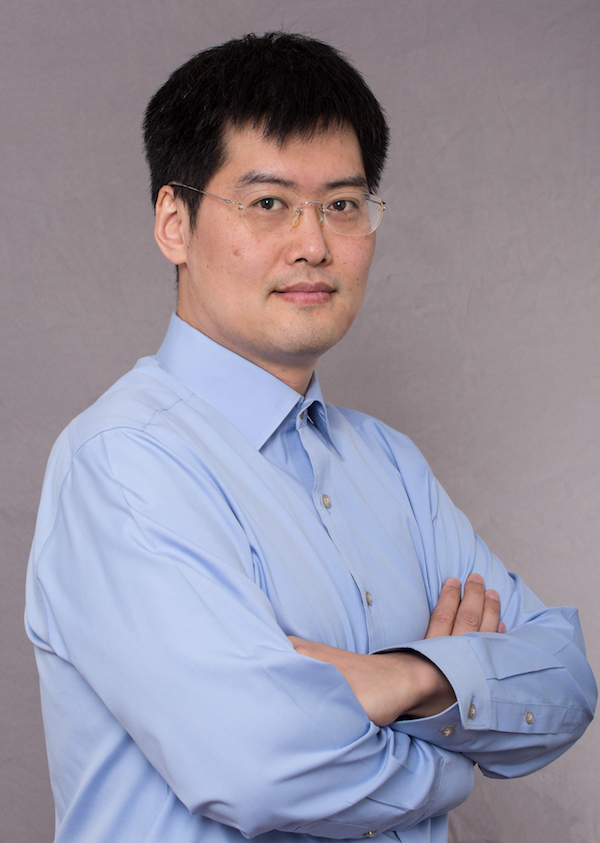
Xuming He is an Associate Professor at the School of Information Science and Technology (SIST), ShanghaiTech University, where he leads the PLUS Lab. His research spans computer vision and machine learning with a focus on developing algorithms that operate effectively under limited supervision and evolving data conditions. His core research interests include weakly-supervised and few-shot learning for scenarios with sparse annotations, continual learning frameworks for knowledge retention during sequential task acquisition, semantic segmentation techniques for scene understanding, and multimodal vision-language representations. He emphasizes interpretable machine learning to build transparent AI systems capable of human-understandable reasoning, addressing critical challenges in model trustworthiness and deployment reliability. Recent publications reveal strong trends toward novel class discovery in long-tailed recognition scenarios, physics-informed generative modeling for scientific applications, and robust segmentation under distribution shifts. His work increasingly integrates large language models for multimodal reasoning while maintaining focus on efficiency in resource-constrained environments like robotic grasping and medical imaging analysis. He actively mentors students, having supervised Qian He to PhD completion and Chuanyang Hu to Master's degree in 2023. He welcomes prospective graduate students through ShanghaiTech's Computer Science & Technology program and offers undergraduate research projects requiring minimum six-month commitments. The PLUS Lab under his direction drives innovation in learning under supervision constraints, with recent work spanning medical tumor analysis, cross-view geolocation, photonic computing, and semiconductor design verification. The lab's research bridges theoretical advances with practical applications across healthcare, robotics, and scientific discovery domains.

Sara Magliacaneمشاهده پروفایل
استادیار
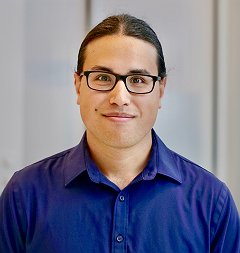
Sara Magliacane is an Assistant Professor at the University of Amsterdam and a Research Scientist at the MIT-IBM Watson AI Lab . She leads research at the intersection of causality and machine learning , focusing on improving AI robustness, generalization, and safety through causal reasoning. Her work spans causal representation learning , causal discovery , and causality-inspired ML in domains like reinforcement learning and dynamical systems. PhD in Artificial Intelligence (2017), VU Amsterdam MSc in Computer Engineering (2011), Politecnico di Milano/Torino BSc in Computer Engineering (2008), Università degli Studi di Trieste Her research explores causal variable identification from high-dimensional data (e.g., images, sequences) and causal graph discovery for domain adaptation. Methods include CITRIS , FANS-RL , and SNAP , with applications in embodied AI and biomedical data. The group emphasizes theoretical guarantees and scalable algorithms for real-world systems. Recent work trends include temporal causal modeling , intervention-efficient learning , and nonstationary reinforcement learning . Publications cover topics like causal discovery in partially observed settings , causal graph pruning , and sample-efficient concept learning , often combining neurosymbolic approaches with deep learning. Scientific Awards : ELLIS Scholar Sara supervises PhD students across universities (UvA, University of Pisa) and collaborates with institutions like TU Delft , Harvard , and IBM Research . She co-organizes workshops at premier conferences (NeurIPS, ICML, AISTATS) and teaches causality courses at the University of Amsterdam and Harvard Data Science Initiative. Her lab, Amsterdam Machine Learning Lab (AMLab) , investigates causal structure in embodied agents , safe reinforcement learning , and hybrid dynamical system modeling . The group maintains active partnerships with institutions such as MIT-IBM Watson AI Lab , Qualcomm , and Adyen .
Carlo Angiuliمشاهده پروفایل
استادیار
Carlo Angiuli is an Assistant Professor of Computer Science at the Department of Computer Science in the Luddy School of Informatics, Computing, and Engineering at Indiana University. His research focuses on programming languages and logic through the lens of type theory, particularly dependent types, proof assistants, and homotopy type theory. He is currently coauthoring a book on dependent type theory with Daniel Gratzer. Ph.D. in Computer Science from Carnegie Mellon University (CMU) Develops programming language foundations and computational interpretations of type theory Active in the HoTTEST Summer School organization and PL Wonks seminar group Recipient of multiple prestigious awards for type theory research His recent publications explore universe polymorphism, cubical type theory, and the intersection of category theory with programming language design. As a community builder, he organizes international research seminars and maintains experimental proof assistants like RedPRL. His teaching includes advanced courses on modern dependent types and foundational computer science topics. Scientific Awards : Best Paper Award (FSCD 2019) CMU School of Computer Science Distinguished Dissertation Award He contributes to proof assistant development and hosts the PL Wonks research group at Indiana University.
Hannah Blumمشاهده پروفایل
دانشیار
Hannah Blum serves as the Alain H. Peyrot Associate Professor in Structural Engineering within the Department of Civil and Environmental Engineering at the University of Wisconsin-Madison. Her research program focuses on infrastructure resilience, next-generation structural design methodologies, and advanced visualization techniques including extended reality applications, supported by funding from federal agencies, industry associations, and private companies. Her academic credentials include a PhD in Civil Engineering from the University of Sydney (2017), complemented by MS (2012) and BS (2010) degrees in Civil Engineering from Johns Hopkins University. Dr. Blum's research program spans critical domains in structural engineering with particular emphasis on steel systems. Key focus areas include: Steel, cold-formed steel, and stainless-steel structural systems Steel deck and joist system behavior Structural stability and reliability analysis Virtual and augmented reality applications in structural steel fabrication Data-driven approaches to structural engineering problems Analysis of her 15 most recent publications (2023-2025) reveals a concentrated research trajectory centered on data-driven design methodologies, advanced material systems (particularly stainless steel and high-strength alloys), and immersive technology integration. Notable trends include machine learning applications for buckling prediction, experimental validation of novel structural systems, and mixed-reality solutions for fabrication processes. Her distinguished recognition includes: University of Wisconsin-Madison Chancellor’s Teaching Innovation Award (2024) College of Engineering Harvey Spangler Award for Innovative Teaching (2023) American Institute of Steel Construction Terry Peshia Early Career Faculty Award (2023) Structural Stability Research Council McGuire Award for Junior Researchers (2022) Structural Stability Research Council Yoon Duk Kim Young Researcher Award (2021) Dr. Blum actively mentors graduate students through CIV ENGR 790 (Master's Research) and 890 (Pre-Dissertator's Research) courses while securing diverse research funding streams. Her professional service includes active participation in steel design standards committees for structural, cold-formed, and stainless-steel systems through organizations like the Structural Stability Research Council. Her experimental and computational research requires specialized facilities for structural testing and digital visualization, though specific laboratory names are not documented in the provided materials. Current projects demonstrate strong industry collaboration, particularly with steel manufacturing and construction technology firms.
Stefan Kowalewski serves as Professor of Embedded Software at RWTH Aachen University, leading the Chair of Embedded Software (Informatik 11) within the Department of Computer Science. His research spans critical domains including medical cyber-physical systems, automotive software, and industrial automation, with over 150 publications demonstrating sustained scholarly impact. Professor Kowalewski's work focuses on three interconnected research pillars: Embedded Systems Verification: Pioneering model checking techniques for PLC code, particularly addressing state space challenges in GRAFCET-based specifications Medical Cyber-Physical Systems: Developing safety-critical software for mechanical ventilation, extracorporeal membrane oxygenation, and ARDS diagnosis systems with strong clinical collaborations Automotive Software: Creating verification frameworks and safety architectures for automated vehicles through projects like UNICARagil Recent publications reveal an increasing integration of AI techniques with traditional verification methods, particularly for medical applications involving neonatal care and critical respiratory support. His 2024-2025 work shows particular emphasis on timing isolation in vehicle communication systems, middleware performance evaluation, and robust AI models for medical diagnosis. Professor Kowalewski maintains active collaborations with RWTH Aachen University Hospital's medical departments and automotive industry partners. His laboratory operates specialized facilities including the Cyber-Physical Mobility Lab for vehicle research and in-vivo testing setups for medical device validation. He has supervised numerous doctoral candidates, with recent students focusing on topics like ARDS classification algorithms, GRAFCET verification techniques, and safety architectures for software-defined vehicles. His educational contributions include developing remote teaching platforms for cyber-physical systems education.