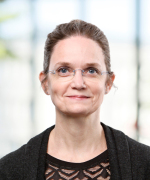
Maya Persico is a Research Fellow at the University of Hamburg's Faculty of Education, affiliated with the Department of General, Intercultural and International Comparative Education as well as Educational Psychology (EW1). She specializes in digitalisation in education and focuses on open educational resources (OER), OER policies, and the integration of generative AI in collaborative learning environments. Her work also addresses teachers' future competences and self-regulated learning methodologies. Research Interests: OERlab UHH initiatives Twin Transformation-related OER development Open education policy frameworks at universities Role of AI in computer-supported collaborative learning (CSCL) Professional development of educators in digital age competencies Lab/Affiliations: Active contributor to the OERlab UHH, focusing on innovative educational resource creation and policy analysis. Advising & Grants: No specific grants or advising roles listed in current profile. Office hours available by arrangement (Tuesday 10-12 AM & 4-6 PM via in-person or Zoom).
Peter Reimann is a Professor of Education at the Sydney School of Education and Social Work, University of Sydney, where he serves as co-director of the Centre for Research on Learning and Innovation (CRLI). He is also affiliated with the Sydney Environment Institute, the University of Sydney Nano Institute, and the Charles Perkins Centre. His academic career spans several decades with significant contributions to the learning sciences and educational technology fields. Professor Reimann's research focuses on the intersection of cognitive science and learning technologies, particularly how digital environments enable complex learning and shared knowledge. His work includes investigating how technology can support complex learning processes, the development of shared knowledge, and innovation in teaching practices. His current research interests encompass learning sciences, psychology of education, assessment and evaluation, and learning technologies and new media. His recent work has increasingly focused on knowledge mobilization infrastructure, particularly modeling educational design principles as knowledge graphs. His publications reveal a strong emphasis on computer-supported collaborative learning (CSCL), educational design principles, and the application of semantic web technologies to educational knowledge representation. Recent articles indicate a growing focus on knowledge graphs, design principle synthesis, and the infrastructure for knowledge mobilization in educational contexts. His work bridges theoretical learning science with practical applications in educational technology. Student Exchange Scholarship, The Deutsche Akademische Austauschdienst Habilitation Stipend from the Deutsche Forschungsgemeinshaft (DFG) Heinz-Maier-Leibnitz prize for PhD Thesis Professor Reimann actively supervises PhD students working on topics including digital tools in STEM education, scenario-based learning for teacher development, and AI-assisted design thinking. He has been involved in numerous research projects including ARC Discovery Projects, ARC Linkage projects, and European Commission-funded initiatives like Next-Tell. His editorial work includes serving on the boards of leading journals such as the Journal of Computer-Assisted Learning, International Journal of Computer-supported Collaborative Learning, and Educational Psychologist. He directs the CRLI (Centre for Research on Learning and Innovation), which has grown to include over 20 researchers and PhD students. His work often involves interdisciplinary collaboration across education, computer science, and cognitive science domains, reflecting his commitment to bridging theoretical learning science with practical educational applications.
Prof. Dr.-Ing. Thomas Andreas Herrmann is a faculty member at the Department of Information and Technology Management (IMTM) within the Institute of Applied Work Science (IAW) at Ruhr-University of Bochum, Germany. With a career spanning decades, he specializes in socio-technical systems, human-computer interaction, and collaborative process design. Education : Master of Communication Science (1983) at University of Bonn, PhD in Computer Science (Software Engineering) at Technical University of Berlin (1986) Key Research : Design of socio-technical processes, creativity enhancement in service engineering, human-centered AI, privacy in collaborative systems, and organizational knowledge management. Article Trends : Recent work focuses on AI integration in socio-technical contexts, hybrid collaboration environments, and ethical system design. His publications bridge theoretical frameworks (e.g., heuristic evaluation) with practical applications in healthcare, education, and industrial settings. Grants & Projects : Led initiatives like KoLiBRI , MARIS , and SeeMe , funded by entities such as the German Federal Ministry of Education and Research (BMBF) and the European Union.
Friedrich W. Hesse is the Scientific Director of the Research Cluster Digitization, Diversity and Lifelong Learning at FernUniversität in Hagen since 2020 and was its Founding Director in 2019. He previously held leadership roles, including Scientific Vice President of the Leibniz Association (2010–2018) and Founding Director of the Leibniz Institute for Knowledge Media (IWM). His research focuses on learning with digital media , leveraging Artificial Intelligence for personalized learning, mitigating information processing biases (e.g., confirmation bias), and enhancing computer-assisted collaboration through group awareness and multi-touch technologies. His work explores the physical design of digital teaching/learning settings , integrating real and virtual spaces. Recent publications emphasize collaborative problem solving , decision-making under cognitive load , and social dynamics in digital education . He has secured funding from the DFG , BMBF , EU , and Leibniz Association . Scientific Awards: Fellow of the International Society of the Learning Sciences (ISLS) Hesse serves on advisory boards for institutions like the Humboldt Institute for Internet and Society and Global Learning Council (GLC). His academic journey includes a chair in Applied Cognitive and Media Psychology at the University of Tübingen (1999–2019) and a habilitation at Göttingen University (1989).
Jennifer Hochstein is a Researcher at the CATALPA Research Cluster, focusing on Stereotype Threat within the DFG-funded MULTIDIVERSE-CSCL project. She investigates psychological processes in diverse virtual learning environments at the FernUniversität in Hagen. Education: BSc in Psychology (FernUniversität in Hagen, 2023) Diploma in Educational Sciences (University of Dortmund, 2002) Intermediate Diploma in Educational Sciences (Bergische Universität Wuppertal, 2000) Research Focus: Her work examines stereotype effects in digital education, particularly how social identity and chronic disease/disability stereotypes impact collaboration in Computer-Supported Collaborative Learning (CSCL) contexts. She develops interventions to optimize heterogeneous virtual study groups. Projects: Stereotype Threat Research Group MULTIDIVERSE-CSCL Project Recent Publications analyze stereotype dynamics in virtual learning spaces, emphasizing group interaction patterns and inclusive design principles for digital education systems.
Dr. Natalia Reich-Stiebert serves as Advisor for Science Management at CATALPA research center for digital education at FernUniversität in Hagen since May 2024. She combines her psychological expertise with organizational strategy to support researchers in planning and coordinating research activities, with special focus on junior researchers' development through tailored continuing education programs. Dr. Reich-Stiebert earned her PhD (Dr. rer. nat.) in Psychology from Bielefeld University in 2019, where she was part of the Cluster of Excellence Cognitive Interaction Technology (CITEC). She completed both her M.Ed. and B.A. in Psychology and Romance Philology at the Technical University of Dortmund and Ruhr-University of Bochum in 2013 and 2011 respectively. Her research spans interconnected domains at the intersection of psychology, education, and technology. She investigates mental labor - particularly the cognitive dimension of care work and gendered aspects of unpaid household labor. Her work on diversity and computer-supported collaborative learning examines how multi-attributional student diversity affects group dynamics in digital environments. She explores social robots in education through user acceptance studies and design preferences, while also studying learning analytics and test anxiety's relationship to student retention. Dr. Reich-Stiebert's publication trajectory shows progression from foundational human-robot interaction research to sophisticated analyses of diversity, identity, and learning outcomes in collaborative digital environments. Her recent work demonstrates expertise in analyzing multi-attributional diversity across gender, language, and cultural dimensions within CSCL contexts. As Science Management Advisor, she plays a strategic role in CATALPA's research ecosystem, facilitating interdisciplinary collaborations and coordinating initiatives that advance digital education research. Her work directly supports FernUniversität's mission as Germany's only distance teaching university, contributing to understanding how digital technologies can support diverse learners in collaborative learning environments.
Prof. Dr. Dipl. Psych. Karsten Krauskopf is a Professor of Psychology in Social Work at the University of Applied Sciences Potsdam (FH Potsdam), where he has served since April 2020. He is head of the Family Centre of the FH Potsdam and co-developer of the dual-digital Bachelor's program in Social Work (BASA Dual-Digital). His research focuses on multi-professional cooperation in inclusion pedagogy , social-emotional competence of educators , and digital tools in education . Education : Dr. rer. nat. (2012, Eberhard Karls University of Tübingen), Diplom in Psychology (2008, Humboldt University Berlin), B.A. in Asian-African Studies with Japanese specialization (2007, HU Berlin and Tôkai University, Japan) Professional Training : Psychodrama therapist (2014), further training in parent-infant psychotherapy (2019-2020), and analytical psychotherapy (2017-2022) His research integrates TPACK/TPCK for media competence in teachers, CSCL for digital collaborative learning, and psychodrama techniques for inclusive educational processes. Recent publications analyze self-efficacy in teacher education , video-based learning programs , and interdisciplinary case diagnostics for social work. He actively participates in professional associations like the European Association for Research in Learning and Instruction (EARLI) and the Deutsche Gesellschaft für Psychologie (DGPs). Projects such as SIB-Social Space and KindeL emphasize his work in digital age social work and early childhood counseling . He co-developed the Graphic Assessment of TPACK Instrument for reflective teaching practices and leads the Elternwissen event series for parents of infants.
Prof. Dr. Stefan Stürmer is the President of FernUniversität in Hagen since March 2025, with prior roles including Vice Rector for Teaching and Studies (2022–2025), founding Dean of the Faculty of Psychology (2018–2021), and Deputy Senate Chairman (2016–2018). He leads the Social Psychology Department and co-directs the CATALPA research center and Center for Learning and Innovation . Research Interests focus on group processes , intergroup relations , diversity in education , and distance learning psychology . He directs the Certificate Program in Psychology for Legal Professions and co-authored a nationally recognized study on family law report quality. His work spans 15+ years of funded projects like Diversity Inclusion in Media-Supported Distance Learning (NRW-funded), TransRegio E-Ass (DH-NRW), and NOVA.ea (Foundation for Innovation in Higher Education). Publications (15 most recent) reveal trends in computer-supported collaborative learning (CSCL) , diversity analytics , and social psychology applications for educational equity . Key subfields include multi-attributional diversity , virtual fast-friendship procedures , intercultural competence measurement , and test anxiety's impact on retention . Contact: stefan.stuermer | ORCID | Google Scholar
Jan-Bennet Voltmer is a Lecturer in Social Psychology at the Distance University's Faculty of Psychology. His academic career includes a Dr. phil. in Business Psychology from Leuphana University (2020), M.Sc. in Psychology from TU Braunschweig (2013), and B.Sc. in Business Psychology from Leuphana (2011). Research focuses on computer-supported collaborative learning (CSCL) , student diversity effects , and gendered mental labor . Notable projects include the DivAdapt study analyzing diversity in CSCL groups and a systematic review on unpaid cognitive labor disparities. He teaches empirical research methods (R workshops) and coordinates the M6b internship program. Recent work explores social identity threat in online learning environments, the role of communication tools in group cohesion, and the cognitive dimensions of household labor division. His articles consistently address intersectional diversity impacts and methodological innovations like topic modeling for educational data analysis. Award-winning TRUST teaching intervention (2024) demonstrates his commitment to intrinsic motivation in medical education. Presentations span interdisciplinary venues including FGSP conferences and CATALPA research clusters.
Mark Guzdial is a Professor at Georgia Institute of Technology's College of Computing, specializing in Computer Science Education research. His work focuses on media computation for teaching programming, learner-centered design, and collaborative learning environments. Key contributions include developing project-based learning frameworks and language-independent CS1 assessments. 2020: Strongly-themed CS1 curriculum design 2016: CS1 knowledge assessment replication studies 2006: CoWeb collaborative learning platform integration 2003: Media computation for non-majors 2001: CS1 programming skills assessment Research trends show sustained focus on making computing accessible through domain-specific pedagogy, with applications in Python programming, MATLAB instruction, and Squeak system design. His work bridges education theory with practical implementation across multiple computing subfields.
Dr. Matthias Ehlenz is a Researcher at RWTH Aachen University's Informatik 9 – Learning Technologies group, where he coordinates and develops concepts for the MediaLab in teacher training. He holds a Dr. rer. nat. (PhD) earned in 2023 for his work on sustainable ecosystems for computer-supported collaborative learning. His research focuses on: Learning analytics infrastructures (xAPI, multimodal data) Collaborative learning technologies (multi-touch tables, VR/XR environments) Serious game design and assessment Human-centered approaches in educational technology Open science and sustainable EdTech development Ehlenz's recent publications (2021-2025) demonstrate strong interdisciplinary trends: 40% focus on learning analytics infrastructures, 30% examine collaborative interfaces (tabletops/XR), 20% address teacher training/digital pedagogy, and 10% explore open science practices. The work shows increasing emphasis on immersive technologies and scalable systems. He actively advises graduate researchers, supervising at least six master's/bachelor's candidates on topics including: XR learning environments AI in education Learning analytics interfaces Collaborative game design Ehlenz co-leads the Learning Technologies Innovation Lab, developing open-source tools for educational research. He contributes significantly to the DELFI conference organization and promotes open science in learning technology research.