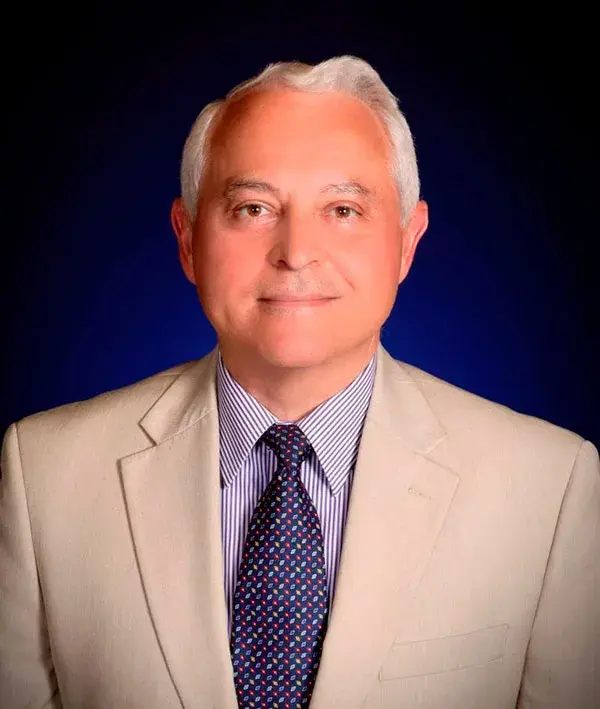
Dan M. Ionel, Professor and inaugural L. Stanley Pigman Chair in Power at the University of Kentucky (UK), directs the Power and Energy Institute Kentucky (PEIK). He is affiliated with the SPARK Laboratory in the Department of Electrical and Computer Engineering, focusing on renewable energy, electric machines, and smart grids. Alternative and Renewable Energy Technologies Electric Machines and Power Electronic Drives Electromagnetic Devices Electric Power Systems Energy Storage Smart Grids and Buildings His research integrates machine learning with electromagnetic design for applications like electric vehicles and aircraft propulsion. Recent work includes axial flux permanent magnet machines with Halbach arrays and cryogenic thermal management systems. Scientific awards include IEEE Fellowship. Research is sponsored by NSF, DOE, NASA, and industry partners like ANSYS, EPRI, and Regal Rexnord. Collaborations span national labs (NREL, ORNL), utilities (LG&E, TVA), and aerospace entities.
Dr. Kidambi Sreenivas is an Associate Professor in Mechanical Engineering at the University of Tennessee at Chattanooga (UTC), affiliated with the College of Engineering and Computer Science. He holds a PhD in Mechanical Engineering and specializes in computational fluid dynamics (CFD), with a focus on unstructured multi-physics flow solvers and applications in aerospace, environmental systems, and biomedical engineering. His research bridges academia and industry, collaborating with NASA, the U.S. Navy, Department of Energy, and private companies. Dr. Sreenivas' research interests include rotating machinery simulations, pre-conditioners for non-ideal fluids, and real-world applications such as submarine hydrodynamics, wind farm optimization, aerodynamic efficiency of vehicles, and contaminant dispersal modeling. He has pioneered methods for simulating complex geometries and physics, including high-fidelity simulations of hypersonic vehicles, weapons bay cavities, and shock-wave interactions. Recent work emphasizes advanced CFD methodologies for high-speed flows, thermal effects on turbulence, and aerothermal characteristics of hypersonic test articles. His collaborations have led to practical solutions for drag reduction on Class 8 trucks and improved accuracy in wind turbine modeling. Dr. Sreenivas also contributes to educational initiatives, such as developing PIV systems for undergraduate fluid mechanics labs. His advising and grants reflect partnerships with federal agencies and private sectors, focusing on projects like microplastic sampling devices for stormwater management. These projects highlight his interdisciplinary approach to solving real-world engineering challenges through cutting-edge computational methods.
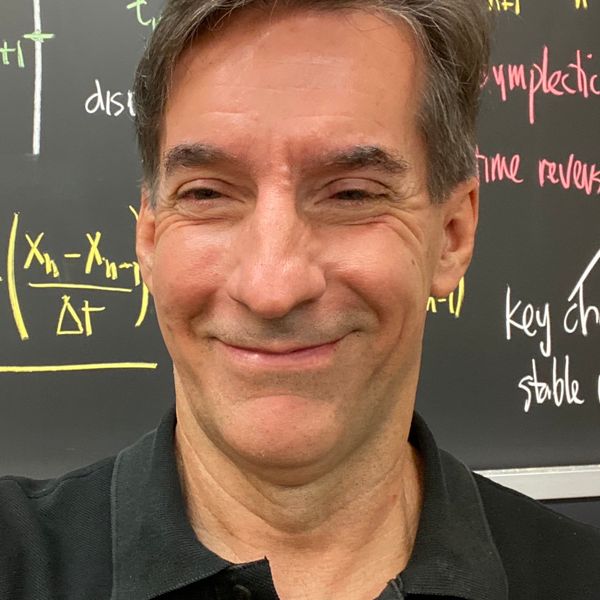
PJ Lamberson is an Associate Professor in the Communication Department at the University of California, Los Angeles (UCLA), serving as departmental Vice Chair and Director of Graduate Studies since 2023. He holds a Ph.D. in Mathematics from Columbia University (2006) and has held prior faculty positions at MIT Sloan School of Management and the Kellogg School of Management, where he also served as Associate Director of the Northwestern Institute on Complex Systems (NICO). His research focuses on social influence, networks, and collective intelligence, with interdisciplinary applications in political science, epidemiology, and computational social science. **Education**: B.A. Mathematics (University of Chicago, 2001), M.A., M.Phil., and Ph.D. in Mathematics (Columbia University, 2003–2006). He has received funding from NIH, UCLA, and other institutions for projects like "Team Dynamics, Networks, and Assembly (Team DNA)" ($1.7M) and "Network Games with Local Correlation and Clustering" ($5K). **Research Interests**: Explores how individual interactions aggregate into collective outcomes, including social contagion, network structures, and hybrid predictive systems. Recent work addresses voter turnout dynamics, obesity prevention via agent-based models, and optimal networks for problem-solving. **Awards**: IC2S2 Best Paper Award (2021), multiple Faculty Impact Awards (2013–2014), and recognition for contributions to teaching and interdisciplinary research. **Teaching**: Offers courses like Computational Communication (PhD), Social Networking (undergraduate), and Methodologies of Communication Research. Supervised over a dozen PhD and master’s students, including Gülşah Akçakır and Seonhye Noh. **Professional Roles**: Associate Editor of *System Dynamics Review*, contributor to international conferences, and frequent speaker on topics like computational social science and network theory.
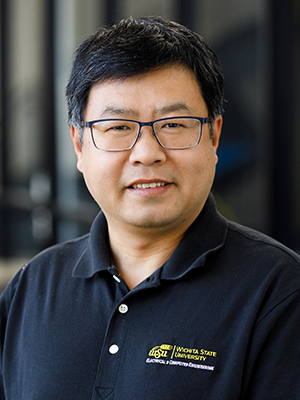
Chengzong Pang is an Associate Professor and MSECE Graduate Coordinator at the Department of Electrical and Computer Engineering, College of Engineering, Wichita State University. His work focuses on power systems, electrical engineering innovations, and renewable energy integration. He specializes in transient stability analysis, control systems, and smart grid technologies. Research Interests: Dr. Pang's expertise includes advanced control strategies for power electronics (e.g., PMSM, UPQC), machine learning applications for grid stability (LSTM/SVM), and energy storage solutions for renewable integration. His research also addresses challenges in microgrid operation, subsynchronous oscillation mitigation, and battery storage systems. Key Trends in Publications: Over 20 years of publications (2002–2022) emphasize: (1) Machine learning for power system analysis, (2) Control system design for renewable integration, (3) Grid stability enhancement via advanced algorithms, and (4) Smart grid infrastructure optimization. Recent works (2021–2022) highlight transient stability prediction and ANFIS-based power quality solutions. Labs/Teams: Active in energy systems research groups focusing on renewable integration and grid modernization, though specific lab names are not explicitly stated in the provided texts.
Dr. John Lehrter is a Professor of Marine Sciences and Associate Director of the Stokes School of Marine & Environmental Sciences at the University of South Alabama, as well as a Senior Marine Scientist at the Dauphin Island Sea Lab. He holds a Ph.D. in Marine Sciences from the University of Alabama (2003). His research focuses on coastal biogeochemistry, ecosystem modeling, and satellite ocean color remote sensing, with an emphasis on understanding eutrophication, hypoxia, and multiple stressor impacts on coastal ecosystems. Dr. Lehrter has advised numerous graduate and undergraduate students and leads a lab engaged in field studies, numerical modeling, and satellite data analysis. His work addresses societal challenges in coastal management and climate change adaptation. Research Interests: Multiple Stressor Impacts to Coastal Ecosystems, Marine Biogeochemistry, Ecosystem Modeling, Satellite Remote Sensing, and Hypoxia Dynamics. His lab develops tools to quantify nutrient pollution effects and predict ecosystem responses to management actions. Advising and Grants: Dr. Lehrter oversees a dynamic lab with graduate students, postdocs, and technicians. Current projects include modeling nutrient dynamics, satellite data applications for water quality, and experimental studies on multiple stressors (e.g., temperature, pH) impacting marine organisms. His lab collaborates with agencies like the EPA and NOAA, contributing to coastal policy and restoration efforts. Labs/Teams: Dauphin Island Sea Lab (DISL) and the University of South Alabama’s Stokes School of Marine & Environmental Sciences. The lab recently established a state-of-the-art facility for multiple stressor experiments on marine species.
John Straub is a Professor of Chemistry at Boston University, affiliated with the Chemistry Department. His research focuses on theoretical and computational studies of protein dynamics, thermodynamics, and phase transitions in molecular systems. He leads efforts to develop advanced algorithms for simulating phase changes in complex systems, including work supported by a National Science Foundation (NSF) grant (CH-1114676) to improve computational methods for phase transition modeling. His group has pioneered generalized simulated tempering and replica exchange algorithms, enabling more accurate simulations of phenomena like vapor-liquid phase changes and peptide aggregation. Dr. Straub also engages in science outreach through collaborations with the Pinhead Institute, supporting K-12 education programs and student internships. His research spans diverse topics such as cholesterol interactions in lipid membranes, amyloid fibril formation mechanisms, and the structural basis of protein aggregation in neurodegenerative diseases. His computational methods have been applied to study membrane proteins, lipid rafts, and the role of environmental factors in protein behavior. Key contributions include modeling amyloid-β aggregation pathways and investigating the impact of membrane composition on protein stability.
Jonathan Huggins is an Assistant Professor at Boston University, affiliated with the Department of Mathematics & Statistics and the Faculty of Computing & Data Sciences. He holds a Ph.D. in Computer Science from MIT (2018) and a B.A. in Mathematics from Columbia University (2012). His research focuses on developing fast, trustworthy machine learning and Bayesian methods that balance computational efficiency and statistical optimality, with applications in ecological forecasting and genomic data analysis. Education: Ph.D. in Computer Science, Massachusetts Institute of Technology (2018) B.A. in Mathematics, Columbia University (2012) Research Interests: Large-scale machine learning and Bayesian computation Robust statistical inference Applications in genomics and ecological modeling Algorithmic development for scalable inference Key Projects: Stochastic Methods for Data Science: A book on stochastic processes and algorithms VIABEL: A Python package for variational inference and diagnostics ShorTeX: A LaTeX package for mathematical writing Recent Articles: Focus on scalable Bayesian methods, error bounds for iterative algorithms, and mutational signature discovery. His work emphasizes reproducibility and robustness in statistical inference. Awards: Blackwell–Rosenbluth Award (Outstanding Junior Bayesian Researcher) Grants & Funding: Supported by NIH, NSF, and the Department of Defense. Active in advising students across multiple BU programs. Labs/Teams: Affiliated with the BU URBAN Program, Program in Bioinformatics, and Department of Computer Science.
John E. Straub is a Professor in the Department of Chemistry at Boston University (BU), where he leads the Straub Lab. His work focuses on molecular dynamics and thermodynamics of complex biomolecular systems, particularly protein aggregation and amyloid formation. He has authored influential books, including Proteins: Energy, Heat and Signal Flow and Mathematical Methods for Molecular Science , and has held leadership roles such as Chair of the Department of Chemistry at BU (2007-2012) and President of the Telluride Science Research Center (2006-2008). Education: BS in Chemistry (University of Maryland, 1982, advisor: Millard Alexander) MA (Columbia University, 1984) MPhil (Columbia University, 1986) PhD in Chemical Physics (Columbia University, 1987, advisor: Bruce Berne) NIH Postdoctoral Fellow in Chemistry (Harvard University, 1987-1990, advisor: Martin Karplus) His research interests span computational methods for enhanced sampling, reaction dynamics, and the interplay between protein structure and aggregation. He has pioneered studies on amyloid precursor proteins and cholesterol interactions in lipid bilayers, emphasizing the role of monomer structural ensembles in aggregation mechanisms. Articles from his lab highlight advancements in understanding lipid phase separation, amyloid fibril formation, and computational techniques like machine learning-derived variables and replica exchange methods. His work bridges theory and experiment, with collaborations across institutions globally. Scientific Awards: NIH Postdoctoral Fellowship (Harvard University, 1987-1990). Professor Straub has advised numerous students, many of whom hold academic positions at leading institutions, including Jianpeng Ma (Rice University) and Nicolae-Viorel Buchete (University College Dublin). His lab actively explores projects in computational biophysics, with ongoing work on lipid mixtures, sterol-derived Raman tags, and membrane protein interactions.
Nan (Nancy) Ma is a Tenure-Track Assistant Professor of Architectural Engineering and Director of the Laboratory for Healthy, Environmental, and Resilient Buildings (HERB-Lab) at Worcester Polytechnic Institute (WPI). Her research focuses on integrating architectural and computational methods to advance sustainable, occupant-centric buildings. She holds a PhD in Architecture (Building Technology Track) from the University of Pennsylvania, a Master of Architecture, and a Bachelor of Environments from the University of Melbourne. Her interdisciplinary work spans collaborations with public health, biostatistics, computer science, mechanical engineering, and pediatric psychology. Key research areas include building decarbonization, indoor environmental quality (IEQ) modeling, IoT-enabled smart buildings, and machine learning applications in architecture. Ma has been awarded the 2021 Best Paper Award from Building and Environment and secured grants from institutions like the Kleinman Center for Energy Policy and WPI’s GAPSA Fellowship. Her lab, HERB-Lab, emphasizes innovative solutions for healthy and resilient building systems. Ma’s contributions include pioneering studies on occupant behavior analysis via text-mining and blockchain-based energy management systems. She is actively involved in field studies assessing building envelope impacts on urban health risks and thermal comfort prediction using Bayesian neural networks.
Thomas Cohen is a Professor and Associate Chair in the Department of Physics at the University of Maryland. He holds a B.A. from Harvard College (1980) and a Ph.D. from the University of Pennsylvania (1985). A Fellow of the American Physical Society, he was also an NSF Presidential Young Investigator from 1990 to 1995. His teaching accolades include the Celebrating Teaching Award, Dean's Award for Excellence in Teaching, and Distinguished Scholar-Teacher Award. Cohen's research focuses on quarks, hadrons, and nuclei, with affiliations to the Maryland Center for Fundamental Physics. His work explores QCD dynamics, exotic hadrons, and quantum algorithms for particle physics. Recent contributions include studies on gauge invariance, heavy-ion collisions, and adiabatic quantum computing. His research spans theoretical particle physics, nuclear physics, and computational methods, with notable publications on QCD phase diagrams, tetraquark states, and adiabatic state preparation. Cohen actively collaborates on projects involving quantum simulations and high-energy physics phenomena. His awards reflect both scholarly and pedagogical excellence.
Jay D. Sau is a Professor of Physics at the University of Maryland, College Park, and Co-Director of the Joint Quantum Institute (JQI). His research focuses on theoretical condensed matter physics, particularly topological quantum computing, quantum many-body systems, and Majorana fermions. He holds affiliations with the Condensed Matter Theory Center (CMTC) and JQI. Sau received his Ph.D. from UC Berkeley in 2008. His work bridges theoretical concepts in topological materials, superconductivity, and quantum information processing. Research Interests: Sau's primary interests include applying topological principles to solid-state and cold-atomic systems for quantum computation. Key areas include topological superconductivity, Majorana fermions, quantum Hall effects, and spin-orbit coupled systems. His group explores phenomena like topological degeneracy, Weyl semimetals, and cold atomic gases. Awards: He has been recognized with the National Science Foundation CAREER Award (2016) and the Sloan Research Fellowship (2016). His work has been published extensively in high-impact journals and covers topics ranging from Majorana physics to quantum phase transitions. Advising & Labs: Sau mentors graduate students including Tamoghna Barik, Stuart Thomas, Huan-Kuang Wu, and Shuyang Wang. His research group collaborates on projects at JQI and CMTC, focusing on experimental realizations of topological qubits and quantum devices.
Jeffrey C. Suhling is the Quina Distinguished Professor and Department Chair of Mechanical Engineering at Auburn University . His research focuses on the mechanical and thermal behavior of lead-free solder alloys , particularly in automotive electronics and high strain rate applications . He has extensively studied the reliability of hybrid SAC-LTS solder joints under thermal cycling, vibration, and shock. Scientific awards : Quina Distinguished Professor His work integrates finite element modeling , microstructural analysis , and machine learning to predict solder joint failure and optimize material performance. Key areas include creep behavior , damage accumulation , and interfacial reliability in extreme environments.
Guang Lin is the Associate Dean for Research and Innovation in the College of Science and a Full Professor in the School of Mechanical Engineering and Department of Mathematics at Purdue University. He leads the Data Science Consulting Services and has dual appointments in Statistics and Earth, Atmospheric, and Planetary Sciences. His research focuses on AI, machine learning, uncertainty quantification, and computational science, with applications in fluid mechanics, materials science, and healthcare. Lin holds a Ph.D. from Brown University (2007) and has received numerous awards, including the NSF CAREER Award and Purdue’s University Faculty Scholar distinction. He has authored over 250 publications and secured grants totaling millions, including DOE and NIH funding. His interdisciplinary work bridges academia and industry, emphasizing AI-driven solutions for complex systems. Education: Ph.D. Applied Mathematics (Brown, 2007), M.S. Applied Mathematics (Brown, 2004), M.S. Mechanics (Peking University, 2000), B.S. Mechanics (Zhejiang University, 1997). Research Grants: Includes DOE-funded projects on machine learning for plasma-wall interactions and NSF grants for multiscale modeling. Service: Editorships in SIAM MMS, ASME Journal, and leadership in Purdue’s AI initiatives. Teaching: Courses on Uncertainty Quantification, Fluid Mechanics, and Data Science.
Yongshan Ding is an Assistant Professor of Computer Science and Applied Physics at Yale University. He leads the Quantum Systems Lab (QSL) and directs Yale's Quantum Science and Engineering Certificate program. Affiliated with the Yale Quantum Institute (YQI) and Computer Systems Lab (CSL), his research focuses on quantum computing systems spanning algorithms, architecture, and hardware/software co-design. Dr. Ding earned his Ph.D. from the University of Chicago and a B.Sc. from Carnegie Mellon University. He has received prestigious awards including the Siebel Scholarship (2020) and William Rainey Harper Dissertation Fellowship (2020). Research Interests: Quantum computing architectures, noise-resilient quantum algorithms, error correction methods, quantum compilation, hardware-software co-design, and NISQ system optimization. Editorial Roles: Editor at Quantum journal and Associate Editor at ACM Transactions on Quantum Computing . Labs: Founder of Yale's Quantum Systems Lab (QSL) and contributor to the Computer Systems Lab (CSL). Awards: Siebel Scholarship (2020) William Rainey Harper Dissertation Fellowship (2020) QCE Best Paper Award (2024) IEEE Micro Top Picks Honorable Mention (2023, 2020) IBM Q Best Paper Award, First Prize (2020) Mathematics Competition Runner Up (2016)
Karthik Dantu is an Associate Professor in the Department of Computer Science and Engineering at the University at Buffalo, State University of New York, within the School of Engineering and Applied Sciences. His research focuses on mobile sensor networks, robot networks, networked embedded systems, mobile computing, wireless networks, and embedded operating systems. He leads the Distributed Robotics and Networked Embedded Sensing (DRONES) Lab and has received significant funding including an NSF CAREER Award. Dr. Dantu's educational background includes: PhD in Computer Science from University of Southern California (2009) BE in Computer Science from Sri Jayachamarajendra College of Engineering (1999) His research interests center on algorithmic and systems challenges in Edge Computing Systems, with particular focus on enabling seamless vision sensing in cloud-edge environments. Dantu's work bridges mobile systems and robotics, developing novel approaches for UAV software, visual SLAM, and distributed sensing. His research addresses critical challenges in resource-constrained environments, security, and real-time performance for mobile and robotic systems, with emphasis on practical implementations that solve real-world problems in autonomous systems. Dr. Dantu's publication record shows a strong trajectory in mobile systems and robotics research, with increasing focus on edge computing applications for visual sensing. His recent work demonstrates expertise in adapting visual SLAM to edge environments, securing mobile systems through technologies like Rushmore, and developing novel approaches for UAV software reliability and depth sensing. The research spans theoretical algorithms and practical system implementations, with particular strength in bringing academic research to practical applications in robotics and mobile computing. Dr. Dantu has received several scientific honors: NSF CAREER Award on Enabling Seamless Vision Sensing in Cloud-Edge Systems Outstanding service award from the Office of International Services NSF Travel Grant for SenSys 2005 Conference Travel Grant for SIGCOMM 2002 As an advisor, Dr. Dantu has mentored numerous PhD students to completion, with graduates now working at companies like Samsung Research and Zoox Inc., or continuing academic careers as Assistant Professors. His research is supported by substantial grants including a DARPA OFFSET Sprint 4 award ($470k), an NSF CAREER award ($550k), and multiple NSF collaborative grants totaling over $1.5 million. He serves on numerous conference committees including Mobicom, MobiSys, and ICRA, demonstrating leadership in the mobile systems and robotics research communities. Dr. Dantu leads the Distributed Robotics and Networked Embedded Sensing (DRONES) Lab at UB, which focuses on developing algorithms and systems for mobile sensor networks, robot networks, and embedded sensing applications. The lab's work spans theoretical foundations to practical implementations, with particular expertise in UAV systems, visual SLAM, and edge computing for robotics, maintaining strong collaborations with industry partners and other academic institutions to advance the state of the art in mobile and robotic systems.