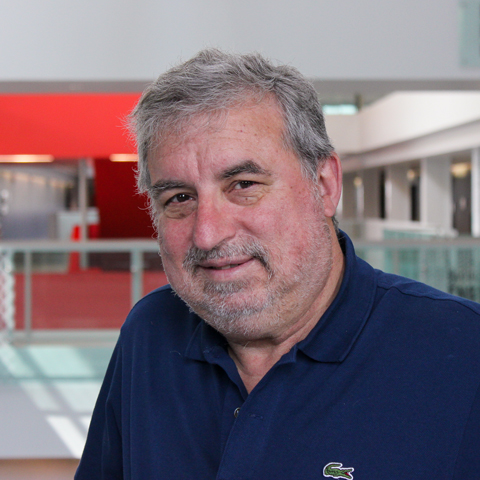
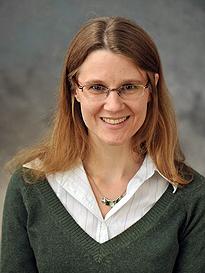
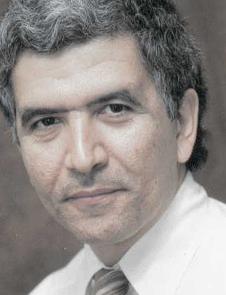
Pierre Nonnon is a Full Professor in the Department of Didactics at the Faculty of Education Sciences, University of Montreal, where he serves as head of the Educational Robotics Laboratory. His office is located at Marie-Victorin local F529, and he can be reached at pierre.nonnon@umontreal.ca or by phone at 514 343-7257. Professor Nonnon has pioneered research in Computer-Assisted Experimentation (ExAO) for over 30 years, developing foundational innovations including the 'appariteur-robot' (1973), 'cognitive lens' concept (1984), and 'Scientific Gymnasium in School' (1992). His work since 1995 focuses on reengineering science laboratories through microlaboratories implemented in secondary schools and colleges. His research spans science and technology didactics, educational robotics, experimental science instrumentation, and implementation of new science programs, emphasizing competency-based learning approaches in experimental sciences. Analysis of his 15 most recent publications (2004-2009) reveals consistent focus on portable microlaboratories, adaptive learning systems, and integration of computer-assisted experimentation in science education. His work demonstrates evolution from theoretical frameworks to practical implementations, with increasing emphasis on making science laboratories more accessible through portable, user-friendly technologies that support both teachers and students in experimental learning processes. Professor Nonnon has supervised 19 graduate students (16 Ph.D. and 3 Master's) from 1989-2016, contributing significantly to science education research. His teaching includes courses such as DID2215 Didactique de la technologie au secondaire, DID3371 Didactique des maths, des sciences et des technologies, and laboratory-focused courses in science-technology didactics. He has been instrumental in developing multiple educational programs including the Microprogramme de 1er cycle de qualification en enseignement, Baccalauréat in science and technology teaching, and Master's programs in education with options in secondary and higher education. His 2017-2020 research project 'Réalisation d'une nouvelle interface du MIcroLab ExAO' funded by Univalor demonstrates continued active research engagement.