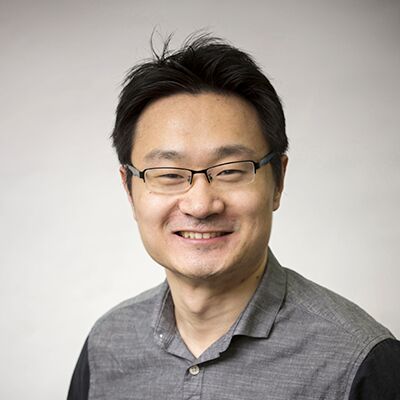
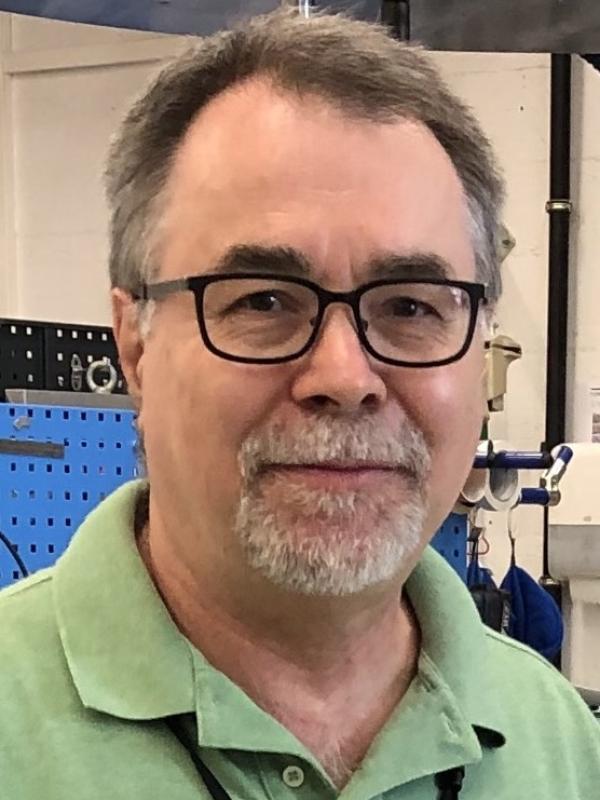
Yang (Gilbert) Ye is an Assistant Professor in the Department of Civil and Environmental Engineering at Northeastern University, joining in January 2025. His research focuses on human-AI/robot teaming, automation in engineering, and assistive technologies, with a particular emphasis on human-centric robotics and sensorimotor processes. He holds a PhD in Civil Engineering from the University of Florida (2024), advised by Dr. Eric Jing Du. **Affiliations**: Member of ASCE, IEEE, and HFES. His work integrates VR/AR, robotics (e.g., drones, exoskeletons), and AI to enhance civil engineering workflows and workforce training. He leads the Ye Lab, actively recruiting PhD students and postdocs with coding experience (Python/C++/C#) and backgrounds in engineering or computer science. **Key Research Themes**: Human-robot interaction, construction automation, exoskeleton training, and delayed feedback mitigation in teleoperation. Over 20 peer-reviewed publications in journals like ASCE JoCEN, IEEE Access, and Advanced Engineering Informatics. **Lab Opportunities**: PhD/postdoc applicants require strong academic records (GPA ≥3.5) and coding skills. Undergrad/master students can apply for thesis/research roles. Funding covers tuition, insurance, and stipends.
David Burton is a Senior Lecturer in the Department of Mechanical & Aerospace Engineering at Monash University, Faculty of Engineering. He leads the Monash Wind Tunnel Research Platform (MWTRP), a major research facility supporting experimental and applied aerodynamics research across multiple industries. Research Interests: His expertise lies in experimental fluid dynamics, with a focus on wind engineering, industrial aerodynamics, and aero-acoustics. Key areas include building, vehicle, and sports aerodynamics, flow control, and the impact of wind storms and cyclones. He integrates experimental testing with numerical simulation, particularly in complex bluff body flows and sustainable engineering design. The recent publication trends reflect a strong emphasis on postcritical flow over rough and multiple cylinders, aerodynamic modeling in sports (especially cycling), and real-world applications such as freight train aerodynamics and cyclone resilience. His work combines rigorous experimentation with practical engineering solutions. Scientific Awards: No specific awards mentioned in the provided text. Advising and Grants: David Burton is accepting PhD students and actively supervises research projects. He has served as Primary Chief Investigator on significant research grants, including 'Wind and Water Loading of Flags in Cyclones' (2021–2022) and 'Wind Comfort Simulation and New Engineering Design Process' (2022–2023), demonstrating sustained external funding and project leadership. Labs and Teams: He manages the Monash Wind Tunnel Research Platform (MWTRP), an ISO9001-accredited facility featuring the largest wind tunnel of its type in the Southern Hemisphere. The platform includes CNC machining, rapid prototyping, and a multidisciplinary team of postgraduate students, designers, technical officers, and postdoctoral researchers, supporting collaborations across automotive, defense, construction, UAVs, wind energy, and sports sectors.
Professor Manolis Gavaises is a leading academic in the field of mechanical engineering and computational fluid dynamics at City St George's, University of London, where he holds the position of Professor in the School of Engineering and Mathematical Sciences. He earned his PhD from Imperial College London and has been a faculty member since 2001, progressing to full Professor in 2009. His research is centered on advanced modeling of multi-phase flows, cavitation, and fuel injection systems, with extensive collaborations across Europe and industry partners such as Delphi, Caterpillar, and BP. Education: DIC, Mechanical Engineering, Computational Fluid Dynamics, Imperial College London, 1997 PhD, Mechanical Engineering, Computational Fluid Dynamics, Imperial College London, 1997 Diploma (5 years), Mechanical Engineering, National Technical University of Athens, 1992 His research interests span computational fluid dynamics, cavitation, fuel injection, atomization, high-pressure and supercritical flows, and alternative fuels . He has developed advanced numerical models and experimental techniques, including X-ray phase contrast imaging and high-pressure test rigs. His work integrates fundamental DNS and LES simulations with industrial applications in automotive, marine, aerospace, and medical devices such as heart valves. The recent publications reflect a strong trend toward real-fluid thermodynamic modeling (e.g., PC-SAFT), multi-component fuel behavior, cavitation erosion, and advanced diagnostics . His research increasingly incorporates machine learning and high-fidelity imaging to understand complex flow phenomena across energy, transportation, and biomedical domains. Scientific Awards and Recognitions: Richard Way Prize (1998) Arch T. Collwell Merit Award (1998) Best Oral Paper, SAE World Congress (2006) PE Publication Award, IMechE (2007) Best Presentation Award, Engine Combustion Processes (2009) Fellow, IMechE (2013) Fellow, IMA (2015) As a dedicated mentor, Professor Gavaises has supervised 13 PhDs to completion and currently guides 23 doctoral students. He has secured over €16 million in EU and UK funding, including multiple Horizon 2020 Marie Skłodowska-Curie ITN projects (CAFÉ, HAOS, IPPAD), which support 46 early-career researchers globally. He has created academic opportunities for post-docs and junior faculty, significantly advancing the research profile of his institution. He leads the International Institute of Cavitation Research (IICR), co-founded in 2011 with partners from Loughborough University, TU Delft, and Imperial College, supported by The Lloyd’s Register Foundation. His lab maintains strong experimental capabilities, including a 2000bar pressure flow rig with micro-transparent nozzles and collaborations with Argonne National Laboratory for X-ray imaging.
Sam Pizelo is an Assistant Professor of Game Studies at the Institute for Communication, Culture, Information & Technology (ICCIT), University of Toronto. His research investigates the role of games as modeling technologies in the development of computing, artificial intelligence, and neoliberal capitalism. He is actively engaged in both scholarly and creative practices, integrating media art, data science, and game design into his academic work. Research Interests: Sam's work spans game studies, digital humanities, media theory, and critical computing. He explores how games function as epistemic tools that shape knowledge production, particularly in technoscientific domains. His research connects historical analysis with contemporary digital methods to examine the cultural and philosophical implications of games. The recent publications reflect a strong focus on the historical and systemic roles of games in shaping modern computing and thought. Themes include the modeling revolution, systems thinking, and the deep cultural roots of game logic. His work bridges humanities scholarship with computational practice. Scientific Contributions: Co-creator of Project Quintessence , a corpus exploration framework combining machine learning and dynamic visualizations for archival research. Founding member of the Degrowth Game Design Project (DeGDP) , a multi-campus initiative exploring games for post-growth futures. Sam Pizelo is an active researcher and media practitioner without listed advisees or awards in the provided text. He maintains academic affiliations with the University of Toronto and previously held a visiting position at NYU.
Dr. Ryan B Graham is an Associate Professor in the School of Human Kinetics at the University of Ottawa , with cross-appointments to the Ottawa-Carleton Institute for Biomedical Engineering . He holds Adjunct Assistant Professor positions at Queen's University and University of Waterloo , reflecting his interdisciplinary collaborations in biomechanics and biomedical engineering. His research focuses on spine movement analysis , motion capture validation , and sensor technology applications in clinical and military contexts. Recent work includes developing markerless motion capture systems, assessing movement reliability, and modeling spine dynamics for injury prevention. Editorial Contributions: Associate Editor for Biomechanics and Control of Human Movement at Frontiers in Sports and Active Living Dr. Graham's academic network includes collaborations with institutions in Canada, the UK, and the Netherlands, with a focus on advancing biomechanical methodologies and their clinical translation.
Jonathan Fan is an Associate Professor at Stanford University in the Department of Electrical Engineering. His teaching portfolio includes graduate and undergraduate courses in electromagnetics, integrated circuit fabrication, and specialized studies across all quarters. EE 242: Electromagnetic Waves (Autumn) EE 312: Integrated Circuit Fabrication Laboratory (Winter) ENGR 42/EE 42: Electromagnetics and Applications (Spring) 11 independent studies and thesis courses (EE 190, EE 191, EE 300, etc.) His research focuses on nanophotonics and metasurface engineering , with particular emphasis on inverse design methodologies, machine learning -driven photonic optimization, and machine learning in electromagnetic simulation. His recent publications demonstrate a strong trend toward deep learning-enabled photonic design and high-speed optimization of complex optical systems. His work spans metamaterial fabrication , nonlocal effects in metasurfaces, and multi-functional optical devices such as spaceplates for aberration correction. Key technical contributions include physics-augmented neural networks , reparameterization techniques for design constraints, and topology-optimized metasurfaces .
Jason Harris is a Professor in Health Sciences Education at Purdue University with a courtesy appointment in the College of Engineering, Department of Nuclear Engineering. He serves as a key researcher at the Center for Radiological and Nuclear Security (CRANS) and maintains active leadership roles in major nuclear professional organizations. His academic credentials include: Ph.D. in Health Physics from Purdue University (2007) M.S. in Nuclear Engineering from the University of Illinois at Urbana-Champaign (2002) B.S. in Biology and Chemistry from the University of Tampa (1995) Dr. Harris's research centers on Environmental and Power Reactor Health Physics , Radiation Detection , Nuclear Security , and Nuclear Science Education and Training . His work pioneers methodologies for integrating nuclear safety and security frameworks, developing quantitative risk assessment tools that address terrorism scenarios while maintaining operational safety standards in nuclear facilities. Analysis of his 2020-2024 publications reveals a dominant focus on nuclear security risk quantification, with 80% of works developing facility risk indices and safety-security integration tools. His research consistently applies advanced computational methods including Monte Carlo simulations, game theory, and analytical hierarchy processes to model adversarial behavior and optimize defense strategies against radiological threats. Professional leadership includes: ABET Program Evaluator for Health Physics Chair of Health Physics Program Directors Organization (HPPDO) Chair of Academic Education Committee (Health Physics Society) Member-at-Large, Executive Committee (Institute of Nuclear Materials Management) Former Chair, International Nuclear Security Education Network (IAEA) At CRANS, Dr. Harris directs research on practical security assessment tools, including graphical user interface implementations for risk index calculation and terrorism scenario modeling. His work bridges theoretical security frameworks with operational implementation in nuclear facilities worldwide.
William Anderson is a Professor in the School of Aeronautics and Astronautics at Purdue University since 2001. He holds a Ph.D. in Mechanical Engineering (Pennsylvania State University, 1996), M.S. in Chemical Engineering (University of Arizona, 1984), and B.S. in Chemistry (Arizona State University, 1979). His research focuses on chemical propulsion systems, combustion dynamics, and rocket engine design methodologies. Key research areas include measurement and modeling of combustion instabilities, rocket combustor stability, and liquid propulsion systems. His work spans experimental and computational studies of thermoacoustic behavior, injector design, and hypergolic reaction mechanisms. He has led projects on resonance igniters, hydrogen peroxide/kerosene combustors, and multi-fidelity modeling frameworks. Anderson has been recognized with the C.T. Sun Research Award (2005) and multiple Best Paper Awards from AIAA conferences. He served as Global Engineering Program Director (2011–2014) and is an Associate Fellow of AIAA. His expertise is showcased in invited lectures at institutions worldwide, including Technical University of Munich and Harbin Institute of Technology. He has authored/co-authored books on rocket propulsion and combustion instability, including Rocket Propulsion (Cambridge University Press, 2018) and edited volumes such as Liquid Rocket Engine Combustion Instability (AIAA, 1995). His lab collaborates internationally on advanced propulsion technologies, emphasizing design, build, and test methodologies.
Dr. He Wang is an Associate Professor in the Department of Computer Science at University College London (UCL), affiliated with the Virtual Environment and Computer Graphics (VECG) group and the UCL Centre for Artificial Intelligence. He holds a Visiting Professorship at the University of Leeds and previously served as an Associate Professor and Lecturer there, as well as a Senior Research Associate at Disney Research Los Angeles. His research focuses on computer graphics, vision, and machine learning, with notable contributions to crowd simulation, generative models, and physics-informed neural networks. Dr. Wang earned his BEng from Zhejiang University and his PhD from the University of Edinburgh, followed by postdoctoral work at the University of Edinburgh's School of Informatics. He has been recognized as a Turing Fellow and serves as an Academic Advisor to the Commonwealth Scholarship Council and an Associate Editor of Computer Graphics Forum . His research spans cutting-edge topics including 3D reconstruction, adversarial attacks on motion recognition, and AI-driven groundwater modeling. He has supervised six PhD students to completion and actively engages in collaborative projects, consultancy, and grant evaluations. His lab welcomes students through dedicated recruitment channels.
Shili Lin is a Professor of Statistics at The Ohio State University's Department of Statistics, within the College of Arts and Sciences. She joined the faculty in 1995 after serving as the Neyman Visiting Assistant Professor at the University of California, Berkeley. Her expertise spans statistical genomics, bioinformatics, high-dimensional data analysis, Bayesian statistics, and Monte Carlo methods. Lin collaborates extensively with medical researchers to address challenges in genomic data such as ultra-high dimensionality, complex dependencies, and sparsity, focusing on diseases like cancer, multiple sclerosis, tuberculosis, and diabetes. She has contributed to developing computational tools for analyzing chromatin interactions, methylation patterns, and metagenomic samples. Lin holds a PhD from the University of Washington (1993). Her professional roles include serving as an Associate Editor for Biometrics , Statistical Applications in Genetics and Molecular Biology , and Statistics in Biosciences , as well as an Editorial Board member for Genetic Epidemiology . She is a standing member of NIH's Biostatistical Methods and Research Design Study Section and has served on multiple NSF and NIH grant review panels. Additionally, she is President Elect of the Caucus for Women in Statistics and has been a member of the ASA Committee on AAAS representation for six years. Her research interests emphasize statistical methodologies tailored to genomic data, including model selection, epigenetic analysis, and integrative approaches for multi-omics data. Lin's work often combines theoretical advancements with practical applications, such as predicting relapse in immune-mediated disorders and improving imputation techniques for single-cell Hi-C analysis. She has pioneered software tools like TopKLists and GrammR to facilitate ranked list aggregation and metagenomic data analysis. Lin's scientific accolades include ASA Fellowship (2004), AAAS Fellowship (2009), and membership in the International Statistical Institute (2014). Her contributions to statistical genetics and epigenomics have been recognized through grants and editorial leadership roles. While her research group focuses on cutting-edge methods, no formal advisees or students are explicitly listed in the provided materials.
Rafael Brüschweiler is a Professor and Ohio Research Scholar at The Ohio State University, holding joint appointments in the Department of Chemistry and Biochemistry and the Department of Biological Chemistry and Pharmacology. He serves as the NMR Executive Director for the Ohio State Campus Chemical Instrument Center and the NSF-funded National Gateway Ultrahigh Field NMR Center. His research focuses on biophysical chemistry, analytical chemistry, and computational modeling, emphasizing protein dynamics, metabolomics, and NMR method development. He received his Ph.D. from ETH Zurich and completed a postdoc at the Scripps Research Institute. His research integrates experimental NMR, molecular dynamics simulations, and machine learning to study protein structure-function relationships, metabolic pathways, and biomolecular interactions. Key areas include the dynamics of oncogenic K-Ras, glucokinase glucose sensing, and nanoparticle-assisted NMR techniques. His work is funded by the NIH and NSF, with applications in biomedical diagnostics and drug discovery. Dr. Brüschweiler leads a multidisciplinary lab training students and postdocs in NMR spectroscopy, computational methods, and metabolomics. His lab developed tools like DEEP picker and COLMAR for automated NMR data analysis, contributing to the SECIM metabolomics center. He actively recruits students interested in protein dynamics, computational modeling, or metabolomics.
Agnieszka Leszczynski is an Associate Professor in the Department of Geography and Environment at Western University. Her research focuses on digital geographies, platform urbanism, and the intersections of technology with urban development. She leads a SSHRC-funded project examining the visual aesthetics of urban platformization across Canada, Poland, and South Africa. Additional projects include studying digital experimentation in small Canadian cities and analyzing spatial relationships between urban platforms and gentrification. She teaches courses on GIScience, digital technology, and spatial research methods. Leszczynski actively supervises graduate students exploring topics like smart cities, platform urbanism, and spatial equity. Her work bridges theoretical and applied GIScience with critical urban studies. Education details are not explicitly listed in the provided text, but her academic contributions include over two decades of research output, including co-editing Digital Geographies (SAGE, 2019) and publishing widely in leading journals. She collaborates internationally on projects like the Esri Canada GIS Centre of Excellence and engages with equity, diversity, and decolonization initiatives in academia. Her research methodologies emphasize digital-visual approaches, glitch studies, and critical analyses of spatial technologies. Recent work explores how cities use digital aesthetics to achieve 'world-class' status, while other projects assess micromobility equity and conservation mapping in Patagonia. Leszczynski’s teaching portfolio includes graduate supervision on topics such as dockless micromobility systems and smart home analysis. Key funding sources include SSHRC grants supporting comparative urban studies and technology experimentation. She mentors students through Western’s Geography People’s Society and collaborates with interdisciplinary teams on spatial equity and platform urbanism challenges.
Buyung Kosasih is a Professor in the School of Mechanical, Materials, Mechatronic and Biomedical Engineering at the University of Wollongong. He has held this position since 2000 and focuses on teaching and research in mechanical engineering, including Machine Dynamics, Finite Element Methods, and Renewable Energy Technology. His research spans fluid dynamics in industrial processes, renewable energy systems, and aqueous lubrication. Key projects include 3D-printed surfboard fin optimization and steel coating dynamics. Research interests emphasize experimental and computational fluid dynamics, particularly in renewable energy turbines and tribological systems. Notable awards include the 2013 Outstanding Contribution to Teaching and Learning Award. He has supervised numerous students and led over 20 funded projects, including ARC grants for steel innovation and renewable energy. Collaborative work includes the Steel Research Hub and HVAC/cool roof efficiency studies.
Dr. Vikas Srivastava is an Associate Professor of Engineering and Director of the Graduate Program in Biomedical Engineering at Brown University's School of Engineering. His research focuses on solid mechanics, continuum biomechanics, and cell mechanics, with applications in materials under extreme environments and biomedical science. He leads the Srivastava Lab for Solid Mechanics and Biomechanics, which integrates computational models with experimental techniques to address interdisciplinary challenges. Dr. Srivastava holds a Ph.D. in Mechanical Engineering from MIT (2010) and previously held senior roles at ExxonMobil, including leadership in materials mechanics and deepwater drilling engineering. His academic career at Brown began in 2018, during which he has directed over 15 graduate students and secured notable funding. His research interests span mechanobiology, hydrogel-based drug delivery systems, AI-driven predictive modeling, and biomaterial innovations for cancer therapies. He has pioneered physics-informed neural networks for material characterization and developed novel hydrogels to enhance chemotherapy efficacy. Recent articles highlight advancements in polymer fracture modeling, machine learning for non-destructive evaluation, and predictive epidemiological modeling for pandemics. Dr. Srivastava has received the Dean’s Award in Bioengineering and was promoted to tenured Associate Professor in 2023. He actively mentors students through grants like the NSF Graduate Research Fellowship and leads initiatives in biomedical technology translation. The Srivastava Lab collaborates extensively across engineering, biology, and medicine to advance translational research in materials science and clinical applications.
Karen Panetta is a Professor at Tufts University School of Engineering with appointments in Electrical and Computer Engineering, Computer Science, Mechanical Engineering, and Academic Services. She currently serves as Dean of Graduate Education for the School of Engineering and holds the title of Distinguished Professor. Ph.D. in Electrical Engineering, Northeastern University M.S. in Electrical Engineering, Northeastern University B.S. in Computer Engineering, Boston University Dr. Panetta's research focuses on developing efficient algorithms for simulation, modeling, and signal and image processing for security and biomedical applications. Her work brings together artificial intelligence, machine learning, and visual sensing systems to create solutions for robot vision and biomedical imaging. She develops algorithms inspired by the human visual system to enable machines to 'see' like humans, with applications in homeland security, biomedicine, facial recognition, and search and rescue operations. Her research has significant humanitarian applications, addressing global challenges facing women and children. Dr. Panetta has received numerous prestigious awards including induction into the National Academy of Engineering (2023), the Presidential Award for Science and Engineering Education and Mentoring (2011), and the IEEE Award for Distinguished Ethical Practices (2013). She is a fellow of multiple prestigious academies including the National Academy of Inventors, European Academy of Sciences and the Arts, and IEEE. Member, National Academy of Engineering (2023) Presidential Award for Science and Engineering Education and Mentoring (2011) IEEE Award for Distinguished Ethical Practices (2013) Fellow, National Academy of Inventors Fellow, European Academy of Sciences and the Arts Fellow, Asia-Pacific Artificial Intelligence Association As an educator and mentor, Dr. Panetta founded the nationally acclaimed Nerd Girls program to promote engineering to young students, particularly women. She previously served as worldwide director for IEEE Women in Engineering and editor-in-chief of the IEEE Women in Engineering magazine. Her approach to graduate education emphasizes the importance of building strong collaborative relationships between faculty and students, with a focus on proactive communication and documentation of research progress. Dr. Panetta's humanitarian research applies engineering solutions to global challenges, including developing technology to help doctors find cancerous tumors, security screeners find concealed weapons, and law enforcement agencies find criminals and missing children. Her work demonstrates a commitment to 'Doing The Right Thing' by addressing issues affecting populations with limited resources or 'voice' in society.