Giulia Fanti is an academic researcher affiliated with Carnegie Mellon University in the Computer Science Department . Her research focuses on privacy-preserving technologies, blockchain systems, and machine learning mechanisms, with significant contributions to federated learning, differential privacy, and cryptocurrency network design. Key Research Areas : Privacy in blockchain, Generative Adversarial Networks (GANs), Federated Learning, Game Theory applications to decentralized systems. Recent Publications : Her work explores liquidity provisioning in decentralized finance, truncated consistency models for image generation, and private data valuation frameworks. She has contributed to venues like NeurIPS, ICLR, and SIGMETRICS, often addressing privacy-utility tradeoffs.
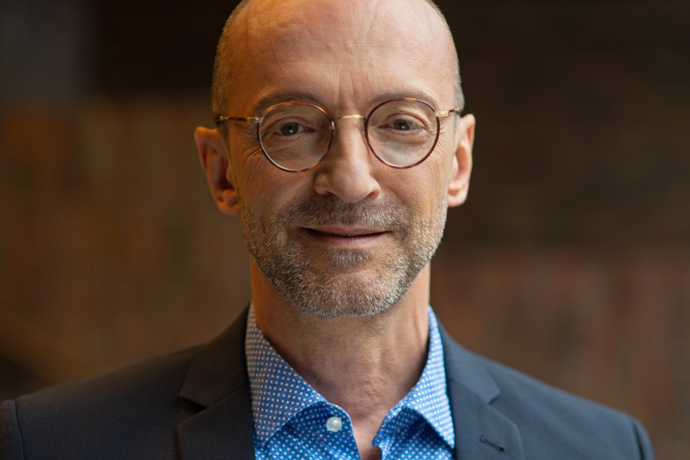
Dr. Simon Büchner is a Lecturer and Course Coordinator in the Life Sciences program at University College, University of Freiburg. He holds a PhD in Psychology and has been actively involved in interdisciplinary education and research since 2012. His academic affiliations include long-term roles in the SFB/TR 8 Spatial Cognition research consortium and leadership in curriculum development for Liberal Arts and Sciences. Education: PhD in Psychology, University of Freiburg (2010) MSc in Cognitive Psychology, University of Massachusetts, Amherst (2005) Undergraduate studies in Education, Cognitive Science, and Philosophy, University of Freiburg (2000–2003) Dr. Büchner's research focuses on perception, attention, and decision-making in spatial cognition and wayfinding. He employs eye-tracking, behavioral experiments, and self-assessment methods in both lab and field settings. His interests extend to applied cognition, visual attention, and consciousness, with a strong emphasis on interdisciplinary and educational applications. His recent publications reflect a consistent focus on methodological innovation in spatial cognition, particularly in mobile eye-tracking and collaborative navigation. Themes include gaze analysis, sign placement, and the cognitive structure of wayfinding tasks, demonstrating a trajectory rooted in empirical psychology and human-centered design. Scientific Awards and Recognitions: E-Teaching Fellowship, University of Freiburg (2023) Julie Johnson Kidd Travel Research Fellowship (2020) Fulbright Commission Scholarship Baden-Württemberg Foundation Scholarship Dr. Büchner has supervised thesis projects and introduced innovative teaching methods such as Problem-Based Learning and flipped classrooms. He has secured multiple grants through the Studierendenvorschlagsbudget for e-learning and blended learning initiatives, including robotics education and mathematics pre-courses. He also serves on the Board of Directors of University College Freiburg and the Board of Studies for Liberal Arts and Sciences. He is actively involved in academic service, including peer review for major journals and conferences such as the Cognitive Science Society, Spatial Cognition & Computation, and PLOS ONE. His leadership in the 2024 Interdisciplinary College (IK2024) on resilience and responsibility underscores his commitment to interdisciplinary education.
Jaime Delgado is a prominent researcher with over three decades of contributions to digital rights management, healthcare information systems, and security and privacy in eHealth. With an extensive publication record spanning from 1994 to 2025, Delgado has established themselves as a leading expert at the intersection of computer science and healthcare, developing practical frameworks that enhance security, privacy, and interoperability in medical systems. Delgado's research spans multiple critical domains: Digital Rights Management and Multimedia Content Security Healthcare Information Systems and eHealth Applications Security and Privacy in Medical Data Management Ontologies and Semantic Web Technologies for Healthcare Genomic Information Systems and FAIR Data Principles Trustworthy Media Systems and Provenance Tracking Analysis of recent publications (2021-2025) reveals a strategic shift toward healthcare applications, particularly focusing on security requirements for Internet of Medical Things (IoMT), privacy-enhancing techniques for medical data, and genomic information systems. Delgado's work demonstrates consistent development of practical architectures addressing real-world security challenges in healthcare settings, with increasing collaboration with medical professionals and participation in European health informatics initiatives like the MedSecurance Project. Delgado has received recognition for contributions to standardization efforts, particularly in developing frameworks for media trustworthiness and international standards for assessing trust in digital media. Their work on the JPEG Privacy and Security framework has significantly influenced industry practices. Through extensive collaboration with researchers like Silvia Llorente (43 joint publications), Eva Rodríguez (29 publications), and Rubén Tous (26 publications), Delgado has built a strong research network across European institutions. Their work consistently combines theoretical framework development with practical implementation considerations, addressing the critical balance between security requirements and clinical workflow usability. Delgado's laboratory work centers on developing secure frameworks for medical data management, with recent emphasis on genomic information systems, provenance tracking in eHealth, and security requirements for medical IoT devices. Their research group actively participates in European health informatics initiatives and contributes to international standards development, maintaining exceptional productivity with 4-7 publications annually in recent years.
Mark Last is a Professor at Ben-Gurion University in Beersheba, Israel, with a distinguished career spanning over three decades in computer science research. His work primarily focuses on data mining, machine learning, and natural language processing applications. His research interests encompass stream data mining, text summarization, fuzzy logic systems, and classification algorithms. Last has made significant contributions to developing techniques for analyzing dynamic data streams, multilingual text processing, and applying machine learning to real-world problems in healthcare, social media analysis, and security informatics. His work often bridges theoretical advancements with practical applications, particularly in handling non-stationary data and developing interpretable models. Recent research trends show a continued focus on stream data analysis, with applications expanding into social media monitoring, healthcare prediction systems, and multilingual content analysis. His work demonstrates consistent innovation in adapting machine learning techniques to evolving data environments and practical challenges. Mark Last has maintained a prolific publication record with over 175 publications documented in DBLP, collaborating extensively with researchers including Abraham Kandel, Marina Litvak, and Oded Maimon. His work has been published in top venues including IEEE Access, Machine Learning journal, and Expert Systems with Applications.
Helmut Hlavacs is a Professor at the University of Vienna's Faculty of Computer Science, with a distinguished career spanning over two decades in virtual reality, serious games, and human-computer interaction research. His work bridges computer science with psychological and medical applications, particularly in therapeutic contexts for children and adolescents. Dr. Hlavacs' research interests focus on virtual reality applications for healthcare, serious game design for therapeutic purposes, and innovative human-computer interaction techniques. His work demonstrates particular expertise in applying game technologies to address psychological conditions, medical treatments, and educational challenges. He has made significant contributions to VR therapy systems for anxiety disorders, stress management, and pediatric oncology support. Analysis of his recent publications reveals a strong trend toward integrating machine learning with virtual reality systems, developing novel game interfaces, and creating therapeutic applications for mental health conditions. His work spans technical computer graphics research, behavioral psychology studies, and practical healthcare implementations, demonstrating remarkable interdisciplinary reach. Dr. Hlavacs has collaborated extensively with medical researchers, particularly with Anna Felnhofer and Oswald D. Kothgassner on VR therapy applications, and with Amir Zaib Abbasi on consumer gaming behavior studies. His research has resulted in numerous serious games for healthcare applications, including systems for cancer patients, anxiety treatment, and vaccination communication. His laboratory work appears focused on developing the INTERACCT system for remote data entry by young leukemia patients, MindSpace for treating anxiety disorders in children, and various VR environments for therapeutic applications. Current projects indicate a strong emphasis on AI-driven game behavior, VR editor tools, and mobile gamification for behavioral change.
Abhradeep Thakurta is a researcher at Pennsylvania State University (College of Engineering, Computer Science and Engineering Department) and Microsoft Research Silicon Valley, focusing on Differential Privacy and Machine Learning . His work explores privacy-preserving techniques in optimization, model training, and data analysis. Key affiliations: Pennsylvania State University (College of Engineering), Microsoft Research Silicon Valley Academic rank: Researcher His research spans Differential Privacy in Stochastic Optimization , Convex Optimization , and Deep Learning . He investigates methods to enhance privacy guarantees while maintaining model accuracy and efficiency, particularly through matrix factorization, adaptive clipping, and noise correlation. Recent publications (2023–2025) highlight advancements in privacy amplification , checkpoint reuse , and secure model training . Collaborations include top researchers from institutions like Google, Stanford, and MIT.
Muhammad El-Hindi is a researcher at the Technical University of Darmstadt , focusing on database systems , blockchain technology , and secure data management . His work bridges theoretical innovation with practical applications in cloud computing, trusted execution environments, and decentralized systems.
Xiangyang Xue is a Professor at Fudan University in Shanghai, China, with an extensive research portfolio spanning computer vision, machine learning, and artificial intelligence. His work demonstrates significant contributions to object-centric representation learning, 3D reconstruction, person re-identification, and semantic segmentation. With over two decades of publication history from 1999 to present, he maintains an active research program with numerous collaborations, particularly with researchers like Yanwei Fu, Bin Li, and Yu-Gang Jiang. Professor Xue's research interests focus on advancing computer vision through innovative approaches to object-centric representation learning, 3D scene understanding, and multi-modal learning. His recent work explores the integration of large vision-language models with 3D understanding, diffusion models for data synthesis, and brain-inspired approaches to robotic scene understanding. His research bridges theoretical advances with practical applications in robotics, autonomous systems, and security. Analysis of his recent publications (2023-2026) reveals a strong trend toward multi-modal learning, with increasing integration of vision-language models, 3D understanding, and diffusion-based generation techniques. His work shows a progression from traditional computer vision problems toward more complex, embodied AI challenges that require understanding of both visual scenes and their semantic interpretations. Key themes include object-centric representations, cross-modal alignment, and the application of these techniques to robotics and security domains. Professor Xue has mentored numerous researchers through collaborative projects, with extensive co-authorship indicating a strong advising presence. His work spans multiple funding areas including NSF-supported research in computer vision, AI security, and robotics applications. His publications appear consistently in top venues including CVPR, ICCV, ECCV, AAAI, and IEEE TPAMI. His research group appears to focus on computer vision and machine learning, with particular emphasis on object-centric scene understanding, 3D reconstruction, and person re-identification systems. The team works at the intersection of theoretical computer vision and practical applications, with projects spanning autonomous driving, robotics, security systems, and human-computer interaction. Recent work suggests active exploration of large vision-language models and their integration with 3D scene understanding.
Markus Enzweiler serves as Professor of Computer Science and Autonomous Systems and Director of the Institute for Intelligent Systems at Esslingen University of Applied Sciences, Germany, within the Department of Computer Science and Engineering. His leadership role positions him at the forefront of intelligent systems research in applied academic settings. His research spans autonomous systems, computer vision, and robotics with emphasis on visual-inertial SLAM, semantic segmentation, and collective perception. Key contributions address real-world challenges in unstructured environments like agricultural fields and urban settings through efficient perception systems. Recent work focuses on lightweight monocular solutions, sensor fusion techniques, and computational efficiency optimization for autonomous vehicles. Analysis of his 2024-2025 publications reveals strong trends in collective perception infrastructure, NeRF/Gaussian Splatting integration for SLAM, and multi-sensor dataset development. His research consistently benchmarks computational costs against accuracy improvements while creating valuable resources like the OPNV public transportation dataset and Rover multi-season SLAM corpus. As Director of the Institute for Intelligent Systems, Enzweiler leads initiatives advancing autonomous driving technologies through practical implementations and industry-relevant research frameworks.
Muhammad Ahtisham Aslam is an Associate Professor at the COMSATS Institute of Information Technology (CIIT) in Lahore, Pakistan. He completed his Ph.D. in Computer Science at the University of Leipzig in 2007 and holds an MS in Computer Science from Hamdard University , Pakistan (2002). Ph.D., Computer Science, University of Leipzig, Germany (2007) MS, Computer Science, Hamdard University, Pakistan (2002) His research interests focus on Ontology Mapping , Linked Open Data , Web 2.0 , and Integration Engineering . He has contributed to tools like the BPEL4WS 2 OWL-S Mapping Tool V1.1 and Intelligent Proxy Firewall Server , emphasizing semantic service composition and cybersecurity. His publications span topics from semantic web services to database synchronization, with key works at conferences like CSCWD 2011 and BPM 2006 . He has presented at venues including ISWC 2007 and ESWC 2006 , focusing on bridging business processes with semantic technologies. Scientific Awards : 13th All Pakistan Dr. Abdul Qadir Khan Research Laboratories Software Competition Award Partial Support Scholarship for Ph.D. studies abroad by Pakistan’s Higher Education Commission (HEC) He has taught courses such as Internet Applications (KAU, Saudi Arabia) and Component Software (CIIT, Pakistan), covering topics from Software Engineering to Semantic Web Services .
Mario Jokisch is a Professor at the Faculty of Social Sciences and Health at Kempten University of Applied Sciences. He leads research initiatives at the Bavarian Center for Digital Care and Institute Management , focusing on digital literacy, eHealth services, and human-computer interaction in aging populations. His research spans Gerontechnology , Technology Acceptance Models , and Digital Inclusion Strategies . He has developed frameworks for assessing digital competence in elderly populations and investigates the psychological impacts of technology adoption in later life. Key article trends include eHealth literacy (2025), digital alienation theories (2024), and longitudinal studies of technology acceptance (2023-2022) Focus on ICT volunteering and digital competence frameworks for caregivers Examines rubber hand illusion applications in rehabilitation (2012)
Ben van Lier is a Guest professor at Rotterdam University of Applied Sciences, specializing in Strategy & Innovation. His work bridges cutting-edge technologies like blockchain and cyber-physical systems with philosophical and ethical frameworks. Research Interests: Ben focuses on blockchain technology, self-organizing systems, and the ethical implications of autonomous cyber-physical systems. His scholarship integrates complexity science and digital ecology to explore decentralized governance, moral machine design, and systemic security in industrial IoT environments. Publication Trends: His recent work (2015-2022) examines blockchain’s role in enabling autonomous collaboration, ethical AI, and the philosophical dimensions of digital ecosystems. Key themes include consensus mechanisms, emergent behavior in CPS, and trust protocols in decentralized systems. Labs and Collaborations: He contributes to research initiatives at Rotterdam UAS, exploring the intersection of technology, ethics, and systemic resilience in digital industrial ecosystems.
Andreas Dengel is a Professor of Computer Science at the Rhineland-Palatinate University of Technology (RPTU) and Managing Director of the German Research Center for Artificial Intelligence (DFKI) in Kaiserslautern. He leads the Smart Data & Knowledge Services research area and the DFKI Deep Learning Competence Center, with additional professorship rights at Osaka Metropolitan University since 2009. He earned his doctorate in Computer Science from the University of Stuttgart in 1989 following undergraduate studies in Computer Science with Economics at RPTU (then TU Kaiserslautern). His academic promotions progressed from C3 to W3 Professor at RPTU between 1993-2013. Professor Dengel's research centers on Machine Learning and Pattern Recognition with applications in Earth Observation, document analysis, and semantic technologies. His work bridges theoretical AI with industrial implementation, notably through NVIDIA-certified deep learning frameworks and multi-institutional Earth Observation projects. He pioneered quantified learning approaches for satellite data interpretation and human behavior modeling. Recent publications (2025) demonstrate his focus on diffusion models for geospatial data, multi-view learning for missing Earth Observation data, and gaze-based confidence detection systems. These works highlight cross-disciplinary integration of deep learning with environmental science and human-computer interaction. His extensive honors include: ICDAR Outstanding Achievement Award (2019) Order of the Rising Sun with Gold Rays (2021) Order of Merit of Rhineland-Palatinate (2022) IAPR Fellow distinction NVIDIA Pioneer Award He has secured over €100 million in third-party funding and supervised 500+ theses. His MIND graduate school supports 20 industry-sponsored students, while international exchange programs with Japanese institutions foster cross-border research. As FFPA Chairman and acatech member, he shapes national AI policy including Germany's "Lernende Systeme" platform. His leadership spans DFKI's Deep Learning Competence Center (NVIDIA Excellence Program awardee) and research groups developing Robust Machine Learning for defense systems, Ageing Smart environments, and Earth Digital Twin technologies through EU and national projects.
Professor Lars Wesemann is a distinguished faculty member in the Department of Chemistry at Eberhard Karls University of Tübingen, where he has served as a Professor since August 2003. He leads the Wesemann Working Group (AK Wesemann) within the Inorganic Chemistry section of the Faculty of Mathematics and Natural Sciences. His research group maintains active collaborations with numerous institutions and researchers worldwide, as evidenced by his extensive publication record. Professor Wesemann received his chemistry education at RWTH Aachen University, completing his diploma thesis in February 1988 under Professor Herberich. He earned his doctorate (Promotion) in June 1990 from the same institution. Following a postdoctoral fellowship at MIT with Professor Seyferth (1990-1991), he completed his Habilitation in June 1997 at RWTH Aachen. His academic career progressed through positions as Private Lecturer at RWTH Aachen (1997-1998), Acting Chair at the University of Karlsruhe (1998-1999), and University Professor at the University of Cologne (1999-2003) before joining the University of Tübingen. Professor Wesemann's research focuses on the chemistry of main group elements, particularly tin, germanium, and lead compounds. His work explores unusual bonding situations, low-valent species, and the reactivity of novel compounds. The Wesemann Working Group has made significant contributions to the understanding of stanna-closo-dodecaborate chemistry, multiple bond formation between heavier main group elements, and the coordination chemistry of unusual ligands. His research combines synthetic inorganic chemistry with detailed structural and spectroscopic characterization to elucidate reaction mechanisms and bonding principles. An analysis of Professor Wesemann's recent publications (2021-2023) reveals several key research trends. His group continues to pioneer the chemistry of heavier main group element multiple bonds, particularly exploring authentic double and triple bonds involving tin, germanium, and lead. The group has developed novel methodologies for synthesizing and stabilizing low-valent species, including stannaborenes, phosphastannenes, and germasilenylenes. A significant portion of recent work focuses on the reactivity of these unusual compounds with small molecules, demonstrating applications in small molecule activation and potential catalytic transformations. The Wesemann group also maintains a strong interest in boron cluster chemistry, particularly stanna-closo-dodecaborate derivatives and their transition metal coordination chemistry. Doctoral scholarship from the Chemical Industry Fund (1988-1990) Research scholarship (DAAD) (1990-1991) Heisenberg scholarship (1997-1998) Borchers Plaque RWTH Aachen (1990) Friedrich Wilhelm Prize (1990) Professor Wesemann has mentored numerous doctoral students, as evidenced by the extensive list of former employees with "Dr. rer. nat." designations. His group has secured significant research funding to support their synthetic and characterization work, including equipment for advanced spectroscopic and structural analysis. The Wesemann Working Group maintains strong international collaborations, particularly with researchers in the United States, as reflected in co-authored publications. The Wesemann Working Group operates within the Institute of Inorganic Chemistry at the University of Tübingen, with laboratory facilities in Building A on the 7th Floor. The group typically consists of current employees including PhD students, postdoctoral researchers, and technical staff, working collaboratively on various aspects of main group element chemistry. The group maintains active collaborations with theoretical chemists to complement their experimental work with computational studies of bonding and reactivity.
Prof. Dr. Emanuel Kitzelmann is a Professor of Applied Artificial Intelligence at Brandenburg University of Technology and Scientific Director of the AI Laboratory since 2023. His work bridges classical symbolic AI and modern machine learning, with a focus on integrating Large Language Models (LLMs) with structured knowledge bases like knowledge graphs and ontologies to enable reliable, explainable AI. He co-leads the SCALE-C research project on secure AI content generation for cybersecurity and directs the SmartRetrieve project on GraphRAG for campus chatbots. University: Brandenburg University of Technology Department: Computer Science and Media Rank: Professor His research spans hybrid neurosymbolic AI, inductive program synthesis, and robotics as AI application areas. Recent publications explore hallucination mitigation in LLMs, RAG techniques, and AI educational tools. He actively collaborates with industry partners like membraPure and REMINE GmbH, supervising student projects in cybersecurity, chatbots, and image-based analysis. Key initiatives include workshops on machine learning with ZF Getriebe Brandenburg and program committee roles for ECAI 2025 and IJCLR 2025.