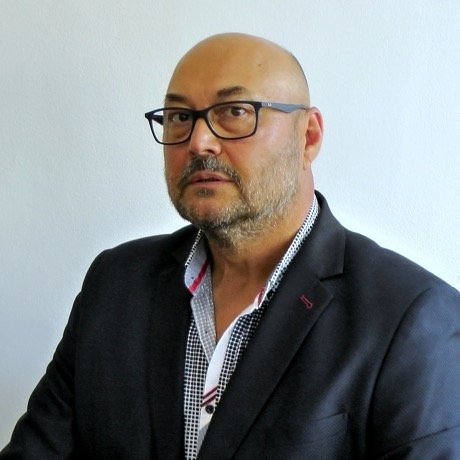
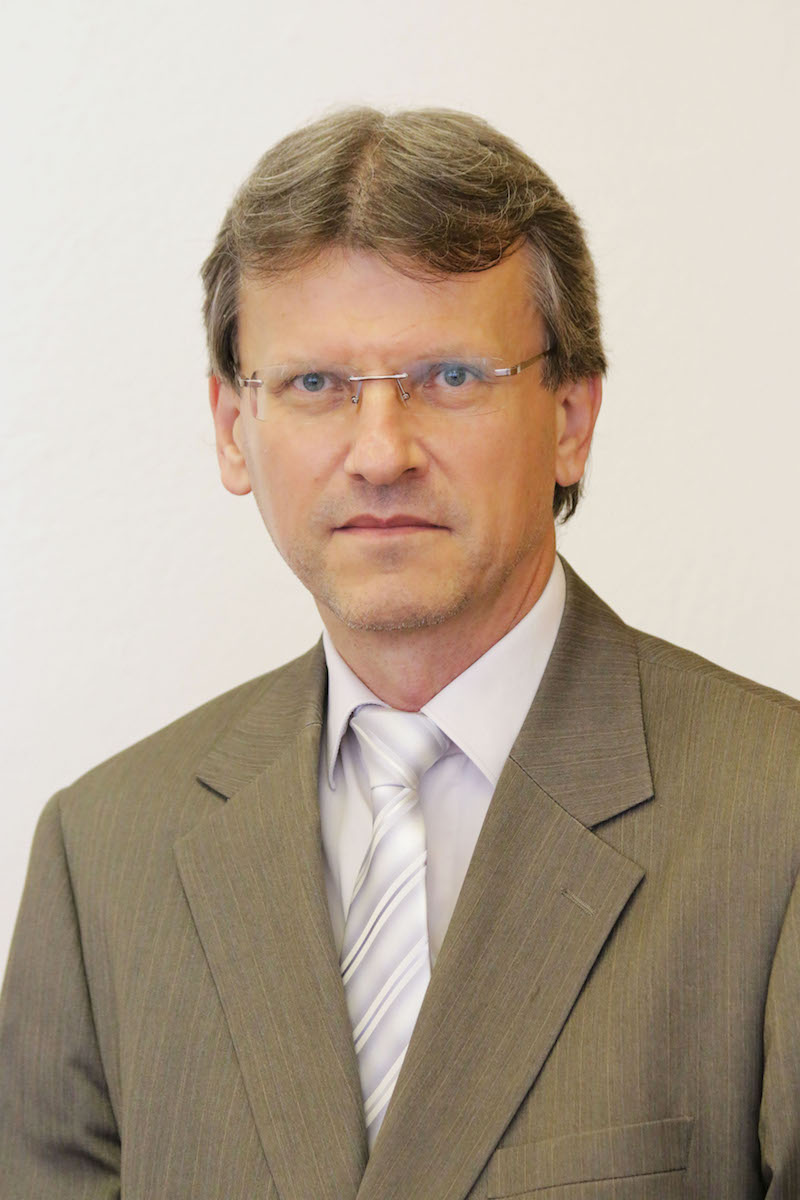
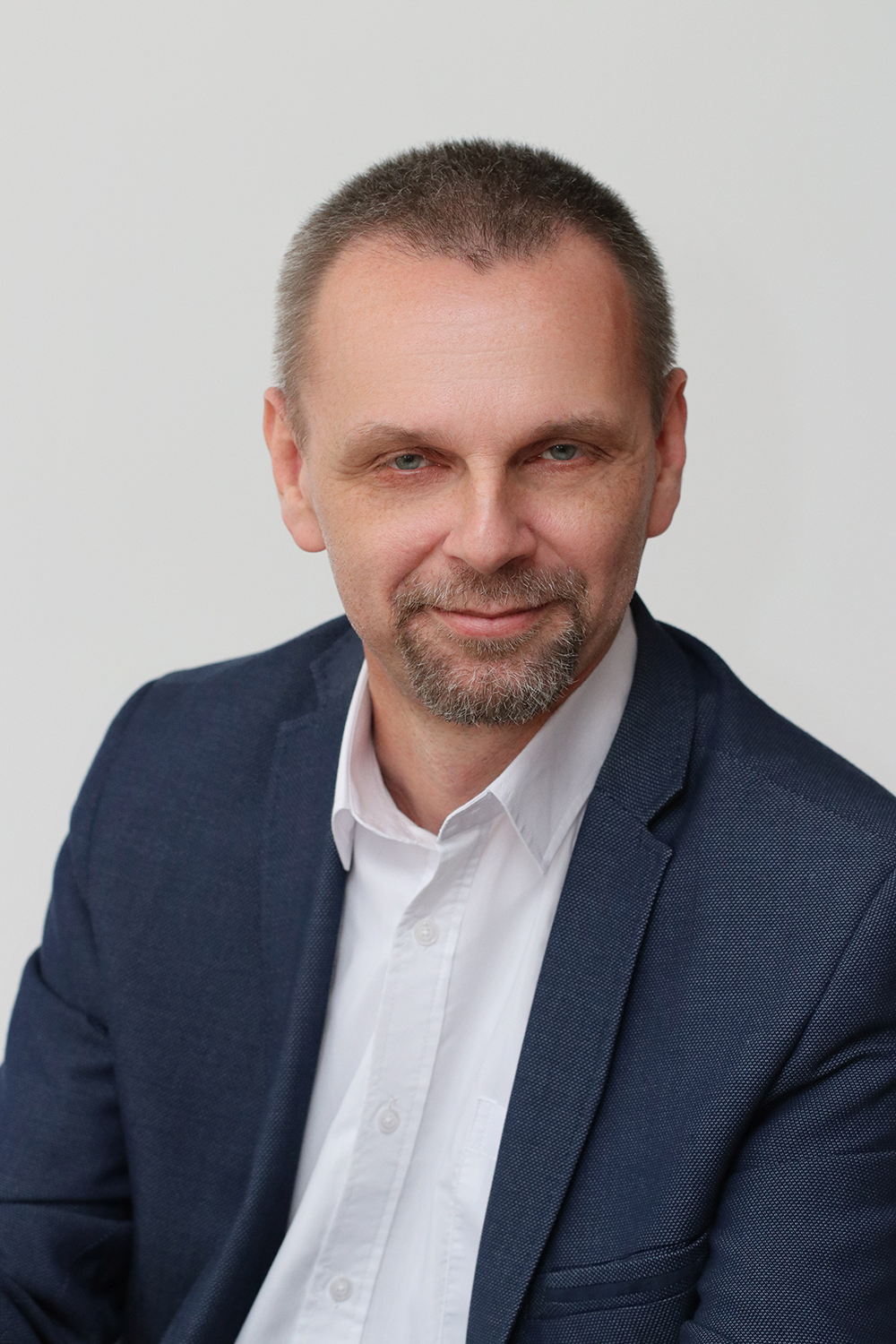
Assoc. Prof. Eva Chovancová PhD is an academic at the Faculty of Electrical Engineering and Informatics, Department of Computer Science, Technical University of Košice. Her roles include teaching Principles of Computer Engineering (PPI), Computer Engineering and Secure Hardware (PIaZH), and serving as a Study Advisor. Her research focuses on: Specialized multi-core processors for data processing acceleration Computer systems security She is a member of the Slovak Society for Applied Cybernetics and Informatics (SSAKI) at KPI FEI TU Košice. Her teaching involves managing lectures and exercises in: Number systems and VHDL language Security of information and communication systems Computer systems architectures
Dr. Igor Černák is a University Professor and Head of the Department of Informatics at Matej Bel University in Ružomberok, Slovakia. His professional address is located at Hrabovská cesta 1A, 034 01 Ružomberok. He can be contacted via phone at +421918 722 159 or email at igor.cernak@ku.sk. As a Professor in the Department of Informatics, his research interests span computer science, informatics, and related technical disciplines. Specific focus areas include algorithm design, programming languages, and data science applications. No detailed publications or awards are listed in the provided text, though his role as department head suggests significant contributions to academic administration and research leadership. No information on advised students, grants, or specific laboratory affiliations is available in the provided content.
Michal Rojček is a Deputy Head of Department and Secretary at the Department of Informatics, Faculty of Education, Catholic University in Ružomberok. He serves as a Special Assistant and oversees the e-Learning system at the faculty. Contact details: Office A406, Hrabovská cesta 1A, Ružomberok, Slovakia. Phone: +421 44 43 26 842.
Robert Gallas serves as a Lecturer in the Department of Computer Science at Matej Bel University (MBU) in Banská Bystrica, Slovakia. Holding the engineering title Ing. , he is an active university teacher with responsibilities spanning teaching and academic consultation across the institution's faculties. His research expertise centers on computational disciplines, with primary focus on: Information Systems design and management Software Engineering methodologies Artificial Intelligence applications Data Science analytics Computer Networks infrastructure Database Systems architecture Consultation hours are available Monday through Friday, and direct contact is facilitated via institutional email.
Jana Kodetová is a Research Fellow at the Department of Comenius Studies and Early Modern and Intellectual History, Institute of Philosophy, Czech Academy of Sciences. She is also a PhD student at Charles University in Prague, specializing in classical philology and early modern intellectual history. Her research focuses on digital humanities, Latin literature, and the study of alchemical and Paracelsian texts from the 16th and 17th centuries. She contributes to the TOME Project (The Origins of Modern Encyclopaedism: Launching Evolutionary Metaphorology), which examines the development of encyclopedic knowledge structures in early modern natural philosophy. Her work involves assembling and preprocessing digital corpora of historical texts, emphasizing philological rigor and computational methodologies. She collaborates with the Czech Academy of Sciences and participates in interdisciplinary research initiatives connecting philosophy, history, and digital scholarship. PhD Candidate, Charles University in Prague External Fellow, Department of Comenius Studies and Early Modern and Intellectual History Research Collaborator, TOME Project (ERC CZ)
Tünde Berta is a Lecturer at the Department of Pre-school and Elementary Education within the Faculty of Education at J. Selye University in Komárno, Slovakia. She has been employed at the university since 2004 and is currently pursuing her PhD in Pedagogy at J. Selye University (2024-). Her academic background includes a degree in Mathematics-Informatics from Comenius University's Faculty of Mathematics and Physics (1994-2000). Dr. Berta's educational journey began with her university studies in Mathematics-Informatics at Comenius University, followed by her current doctoral studies in Pedagogy at J. Selye University. Her professional development reflects a strong commitment to advancing educational practices, particularly in mathematics instruction and teacher development. Her research interests focus primarily on mathematics teaching methodology, with special emphasis on cooperative techniques and project methods in mathematics education. She has extensively explored continuing teacher education, adult education possibilities, teacher mentoring and its impact on classroom quality, and inclusive education approaches. Her work demonstrates a consistent dedication to improving teaching practices through evidence-based methodologies and innovative approaches that address the diverse needs of students in primary education settings. Analysis of Dr. Berta's publication record reveals a strong focus on practical applications of educational theory in mathematics instruction. Her recent work (2021-2024) shows increasing attention to teacher development, assessment methods, and the integration of technology in education. She frequently collaborates with colleagues like Zuzana Árki and Ladislav Jaruska, indicating active participation in research teams focused on improving mathematics education. Her publications span multiple languages (English, Hungarian, Slovak), reflecting her work within the Hungarian minority educational context in Slovakia. Her publications have received 5 citations according to institutional records 2 citations registered in citation indexes (Web of Science, Scopus) 3 citations in other databases Dr. Berta has been actively involved in developing educational materials and textbooks, including two versions of 'Project Teaching in School' (2022) in both Slovak and Hungarian. Her research often addresses the specific needs of Hungarian-speaking communities in Slovakia, particularly in the context of mathematics education and teacher development. She has participated in numerous international conferences, demonstrating her commitment to sharing knowledge across borders and engaging with the broader educational research community. Her work on cyberbullying during the pandemic period shows responsiveness to contemporary educational challenges.
Sándor Szénási is a Professor at the Department of Informatics within the Faculty of Economics and Informatics at J. Selye University, where he serves as the person responsible for the Applied Informatics study program. With over two decades of academic experience, he has established himself as a leading researcher in parallel programming, GPU programming, and image processing, with recent expansion into machine learning applications. Eötvös Loránd University, Faculty of Science and Informatics (2001-2004): Information technology teacher Budapest Polytechnic, John von Neumann Faculty of Information Technology (1997-2001): B. Engineer in Information Technology Óbuda University (2010-2013): PhD in Applied Informatics Habilitation at Óbuda University (2019): Information Science and Technology Professor inauguration at Óbuda University (2022) Szénási's research spans computational methods with practical applications across multiple domains. His early work focused on parallel and GPU programming for image segmentation and heat transfer simulation. More recently, he has integrated machine learning techniques with traditional computational approaches, particularly in metaheuristic optimization, speech processing, and inverse problem solving. His interdisciplinary research bridges computer science with transportation safety, manufacturing, and medical applications. His recent publications reveal a clear evolution toward hybrid computational approaches that combine machine learning with traditional algorithms. There is a strong emphasis on optimization techniques, particularly metaheuristics enhanced with machine learning components. His work spans diverse application areas including speech emotion recognition, autonomous vehicle control, additive manufacturing, and heat transfer simulation, while maintaining a core focus on computational efficiency and parallel processing. Szénási has been actively involved in multiple EFOP-funded research projects including 'Improvement of higher education institutes for better teaching quality and accessibility,' 'Dynamics and control of autonomous vehicles,' and 'Solving the Inverse Heat Conduction Problem with Machine Learning.' His collaborative work with researchers like Gábor Kertész, Zoltán Vámossy, and Imre Felde demonstrates his commitment to interdisciplinary research.
Robert Verner is an Associate Professor at the Department of Quantitative Methods within the Faculty of Economics and Business at the University of Economics in Bratislava. His work focuses on financial markets, optimization methods, and statistical modeling, contributing to both academic research and practical applications in business analytics. His recent publications span topics such as: Computational finance and machine learning Stock market forecasting with neural networks Risk analysis in insurance using AI Educational assessment frameworks He has also participated in international research initiatives and collaborative programs, including the Central Europe Connect initiative, which brings together students from leading business schools in Warsaw, Bratislava, and Vienna.
Prof. Martin Lukáčik, PhD, is a Professor at the Department of Operations Research and Econometrics, Faculty of Economic Informatics, University of Economics in Bratislava. His academic career spans over two decades, focusing on econometric modeling, macroeconomic analysis, and operations research applications. Education: 2005: PhD in Econometrics and Operations Research, University of Economics in Bratislava 1998: Master's in Operations Research and Econometrics, University of Economics in Bratislava His research interests include econometrics, operations research, spatial spillover effects, and fuel price asymmetry. Recent projects analyze pandemic impacts on EU economies, asymmetric fuel pricing, and spatial economic dynamics. He has supervised doctoral students such as Ádám Csápai (2021–2024), Martin Benkovič (2013–2018), and Patrik Kupkovič (2013–2016). Grants include VEGA 1/0052/24 (structural parameter estimation) and KEGA 026EU-4/2024 (interactive economics books). Prof. Lukáčik is actively involved in international collaborations, including ERASMUS+ mobilities in Prague, Ostrava, and Split. He serves on scientific councils and editorial boards for journals like Equilibrium .
Igor Košťál is an Assistant Professor at the Department of Applied Informatics within the Faculty of Economic Informatics at the University of Economics in Bratislava . His research focuses on Distributed Technologies , Parallelization of Applications , and Data Structure Optimization , particularly in the context of .NET frameworks and industrial robotics. University: University of Economics in Bratislava School: Faculty of Economic Informatics Department: Department of Applied Informatics Academic Rank: Assistant Professor Košťál's work emphasizes software performance testing , with publications analyzing execution efficiency in .NET applications using parallel programming , Dijkstra's algorithm , and symbol table implementations . His recent research explores modern UI development in mobile applications and algorithm optimization for industrial robotics. Key trends in his 15 most recent articles (2014-2022) include: Performance analysis of parallel and sequential algorithms in .NET environments Optimization of data structures (arrays, linked lists, skip lists) for search efficiency Integration of asynchronous methods in WCF services and clients Testing precision in KUKA welding robots through structured data extraction
Peter Procházka is an Assistant Professor at the University of Economics in Bratislava, affiliated with the Faculty of Economic Informatics and the Department of Applied Informatics . His teaching and research focus on IoT , UX Design , Multimedia Applications , and technical education. His research spans several subfields, including: IoT : Development of educational tools using Arduino, smart device integration, and open-source platforms. Generative AI : Prompt engineering for neural networks and machine learning applications. Web Analysis : SEO tools, linguistic summaries for data visualization, and compliance with public administration standards. His publications highlight a trend toward data-driven decision-making in technology, including big data, machine learning, and IoT frameworks. He has also contributed pedagogical works on computer hardware, multimedia, and IoT, alongside collaborative studies on digital citizenship and pandemic response in educational institutions.
Jan Melicher is a Professor in the Department of Theoretical Geodesy and Geoinformatics at the Faculty of Civil Engineering, Slovak University of Technology in Bratislava. His research focuses on Geodesy and Geoinformatics , with specialized expertise in theoretical geodetic modeling, spatial data systems, and precision surveying methodologies. His work bridges engineering applications with advanced computational techniques in earth measurement sciences. Contact: jan.melicher@stuba.sk , +421 232 888 348.
Róbert Gyepes is a Professor of Chemistry at the Faculty of Education, J. Selye University. He holds a PhD in Inorganic Chemistry from Charles University in Prague (1996) and completed habilitation there in 2005. Previously, he served as an Associate Professor at Charles University (2005–2010) before joining J. Selye University in 2010. His research focuses on structure determination via diffraction techniques and quantum-chemical computations, particularly in organometallic compounds and solid-state chemistry. Key projects include 'Vanadium compounds in catalysis and material chemistry' (VEGA-funded, 2017–2021) and 'CHARLES UNIVERSITY CENTRE OF ADVANCED MATERIALS' (CZ.02.1.01/0.0/15_003/0000417, 2017–2022). Dr. Gyepes has authored over 60 peer-reviewed articles, with recent work appearing in Inorganic Chemistry , Journal of Inorganic Biochemistry , and Organic & Biomolecular Chemistry . He advises students in chemistry education programs and collaborates on projects involving MOFs, antimicrobial agents, and materials synthesis. His contributions span over 200 publications in various categories, demonstrating expertise in both fundamental and applied chemical research.
Štefan Korečko is an Assistant Professor at the Technical University of Košice, contactable via stefan.korecko@tuke.sk and +421 55 6024313. He holds consultations Mondays 10:50-12:20 in room B507 (B535 old numbering) at Letná 9 building, and teaches Component Programming laboratory exercises across four weekdays in room L9-B529. His research centers on Formal Methods for specification, verification, and development of discrete systems using Petri Nets and B-Method, alongside discrete-event systems modeling/simulation, visualization of formally developed systems, and agent systems. These areas reflect deep expertise in theoretical computer science applied to complex system design. No scientific awards are documented in the provided materials. Information regarding student advisement, research grants, or laboratory team affiliations is absent from current records, though his teaching responsibilities indicate active curriculum development in programming education.
Šlapak Eugen is an Assistant Professor at the Technical University of Košice. His research focuses on autonomous driving systems, edge computing, and network optimization, with a particular emphasis on applying neural networks and blockchain technologies in vehicular and 5G networks. Eugen Šlapak holds a PhD in [specific field not explicitly stated, likely Engineering/Computer Science] and an Ing. (engineer) degree. His academic background combines technical expertise in telecommunications and computer science. His research interests span autonomous driving technologies, including simulation and control systems, as well as edge computing and metaverse integration. He also explores blockchain applications in vehicular networks, resource allocation in 5G and beyond, and the use of graph neural networks for network optimization. His work intersects machine learning, robotics, and telecommunications to address challenges in modern communication systems and intelligent transportation. Recent publications highlight advancements in neural radiance fields for industrial robotics, distributed edge video compression for autonomous driving, and blockchain-based resource allocation in connected vehicles. Earlier work includes optimization of UAV-assisted networks and HetNet topology design using machine learning clustering methods. While no formal awards are listed, his contributions to vehicular networks, edge computing, and AI-driven network design reflect significant scholarly impact. Advising details are not documented here, but his research collaborations likely involve cross-disciplinary teams focusing on autonomous systems and 5G infrastructure. No lab affiliations or teams are explicitly mentioned, though his teaching role in the course Stochastické modelovanie a analýza dát (SMaAD) suggests involvement in data analysis and stochastic modeling initiatives.