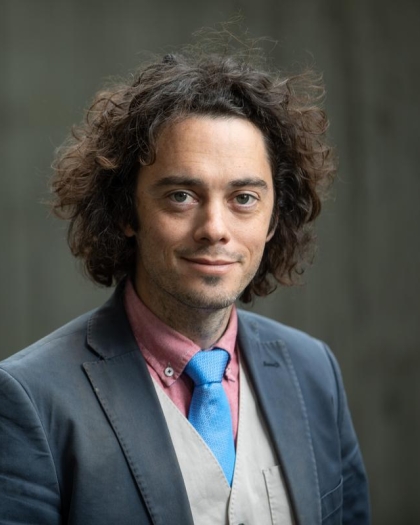
Dr. Ryan B Graham is an Associate Professor in the School of Human Kinetics at the University of Ottawa , with cross-appointments to the Ottawa-Carleton Institute for Biomedical Engineering . He holds Adjunct Assistant Professor positions at Queen's University and University of Waterloo , reflecting his interdisciplinary collaborations in biomechanics and biomedical engineering. His research focuses on spine movement analysis , motion capture validation , and sensor technology applications in clinical and military contexts. Recent work includes developing markerless motion capture systems, assessing movement reliability, and modeling spine dynamics for injury prevention. Editorial Contributions: Associate Editor for Biomechanics and Control of Human Movement at Frontiers in Sports and Active Living Dr. Graham's academic network includes collaborations with institutions in Canada, the UK, and the Netherlands, with a focus on advancing biomechanical methodologies and their clinical translation.
Terese Løvås serves as Vice Dean of Research and Innovation at the Faculty of Engineering, Norwegian University of Science and Technology (NTNU), where she leads strategic development of research and innovation activities. She concurrently holds the position of Professor of Combustion and Thermodynamics within the Department of Energy and Process Engineering. Her leadership responsibilities include oversight of Centers of Excellence, Horizon Europe projects, and PhD researcher training. Her research focuses on combustion engineering and alternative fuel technologies , particularly investigating ammonia and hydrogen combustion for zero-emission engines, biomass gasification processes, and reactive multiphase flow modeling. She heads the Engine Lab at NTNU and teaches Thermodynamics, Heat, and Combustion courses. Her work bridges theoretical modeling with experimental validation in sustainable energy systems. Løvås actively contributes to major research initiatives including LowEmission (SFI center), ACTIVATE (ammonia-powered agricultural vehicles), AMAZE (ammonia zero-emission), and CAHEMA (marine ammonia/hydrogen engines). Her publications reveal strong trends in ammonia combustion chemistry , emissions reduction , and advanced computational modeling for sustainable fuel systems, with increasing focus on nitrogen oxide formation mechanisms and dual-fuel strategies. Member of the Board of Directors, Combustion Institute (2022–present) Joint Editor, Proceedings of the Combustion Institute (2019–present) Alumni Fellow in Engineering, Churchill College, Cambridge University As Vice Dean, she manages NTNU's Research and Innovation Committee and represents the faculty in NTNU's Research and Innovation Committee. She supervises multiple PhD candidates and leads international collaborations through projects funded by the Norwegian Research Council, Nordic Energy Research, and EU programs. Her laboratory work focuses on optical engine diagnostics and advanced combustion testing. Løvås maintains active industry engagement through her leadership in the ComKin Research Group and membership in the Institute of Physics and Scandinavian-Nordic Section of the Combustion Institute. Her current work emphasizes practical implementation of ammonia-fueled engine technologies for marine and agricultural applications.
Marta Molinas is a Professor at the Department of Engineering Cybernetics within the Faculty of Information Technology and Electrical Engineering at the Norwegian University of Science and Technology (NTNU). Her research spans multiple interdisciplinary domains with a focus on EEG technology and brain-computer interfaces. She actively supervises numerous Master's projects and maintains extensive international collaborations with institutions including Kavli Institute for Systems Neuroscience, RIKEN Center for Brain Science, University of Tsukuba, Juntendo University, and several European universities. Professor Molinas' research interests center on developing innovative EEG technologies, particularly her FlexEEG concept for reduced-channel EEG systems with brain imaging capabilities. Her work integrates signal processing, artificial intelligence, and neuroscience to create practical applications in mental health, sleep research, neurorehabilitation, and human-computer interaction. She specializes in EEG source imaging, machine learning for brain signal analysis, and the development of brain-computer interfaces for various applications including locked-in syndrome communication, ADHD treatment, and driver monitoring systems. Her publication portfolio demonstrates strong trends in interdisciplinary research combining neuroscience with electrical engineering and artificial intelligence. The work shows particular emphasis on developing practical EEG-based systems that minimize invasiveness while maintaining analytical power, with applications spanning healthcare, rehabilitation, and human augmentation. Her research bridges theoretical signal processing with real-world implementations through numerous student projects and international collaborations. Professor Molinas actively supervises a large team of Master's and PhD students across multiple projects, with each project typically requiring two students working collaboratively. Her research is supported through numerous international collaborations with institutions in Japan, India, and Europe, indicating substantial research funding and project leadership. She has developed a pipeline of student projects that build upon previous work, creating a cumulative knowledge base within her research group. She leads the EEG ITK research team at NTNU, which focuses on developing the FlexEEG headset prototype featuring flexible, wireless, dry electrodes designed to move across the scalp. This team works at the intersection of neuroscience, electrical engineering, and computer science, developing applications for sleep research, mental health monitoring, neurorehabilitation, and brain-computer interfaces. The team collaborates extensively with international partners including the Kavli Institute for Systems Neuroscience, the International Institute of Integrative Sleep Medicine at University of Tsukuba, and several engineering departments across Europe and Asia.
Nadia Shardt is an Associate Professor in the Department of Chemical Engineering at the Norwegian University of Science and Technology (NTNU). Her research focuses on interfacial thermodynamics, particularly in systems with nanoscale curvature, with applications spanning atmospheric science, biomedical cryopreservation, and industrial process optimization. She contributes to teaching courses such as TKP4580 - Chemical Engineering Specialization Project and KP3100 - Chemical Engineering . PhD in Chemical Engineering (University of Alberta, 2019) BSc in Chemical Engineering (University of Alberta, 2015) Postdoctoral researcher at ETH Zurich (2020-2022) Her work addresses fundamental challenges in phase behavior under curvature constraints, combining microfluidic experimentation , Gibbsian thermodynamic modeling , and machine learning techniques to study systems like CO 2 storage media, cloud microphysics, and food emulsions. Recent publications emphasize surface tension modeling for complex multi-component systems and cryoprotectant loading efficiency. Scientific awards include the ETH Postdoctoral Fellowship Natural Sciences and Engineering Research Council of Canada (NSERC) Postdoctoral Fellowship Outstanding Academic Fellows Programme 2024-2028
Hans Christopher Bernstein is a Professor at the Norwegian Fisheries College, UiT The Arctic University of Norway, and affiliated with the Arctic Centre for Sustainable Energy (ARC). His research focuses on biotechnology, microbial ecology, synthetic biology, and microalgal carbon capture and utilization. University: UiT The Arctic University of Norway School: Norwegian Fisheries College Research Group: Microalgae & Microbiomes Research Centers: Arctic Centre for Sustainable Energy (ARC) Bernstein’s work explores the intersection of biotechnology and microbial ecology, particularly in synthetic biology applications for carbon capture. His research includes modeling microbial processes, studying lipidome plasticity in Arctic diatoms, and developing engineered genetic circuits for microbial consortia. Key trends in his publications involve marine microbiome dynamics, cold seep ecosystems, and daylight-driven carbon exchange in structured microbial communities. Recent articles highlight advancements in microalgal biotechnology for industrial carbon capture, synthetic genetic circuits, and spatiotemporal metabolic network models. His work spans both theoretical modeling (e.g., neighbor-dependent interaction inference) and applied biotechnological solutions (e.g., EcoFABS fabricated ecosystems).
Sverre Steen is a Professor and Head of the Department of Marine Technology at the Norwegian University of Science and Technology (NTNU). He leads the Kongsberg Maritime University Technology Centre focused on 'Ship Performance and Cyber-physical Systems' and is a member of the standing committee for the Symposium of Marine Propulsors. His research emphasizes ship propulsion, hydrodynamics, and big data analysis of in-service vessel performance. Key interests include seakeeping, high-speed marine vehicles, and model testing techniques. Steen teaches TMR 4217 Hydrodynamics of High-Speed Marine Vehicles , covering cavitation, experimental hydrodynamics, and propulsion systems. He collaborates internationally on projects like the Norwegian Ocean Technology Centre. His recent work explores wave-energy extraction via hydrofoil vessels, resistance modeling for fast ferries, and propulsion efficiency in real sea states. He has contributed to global shipping emission models (MariTEAM) and reliability analysis of structural components under vibration. Steen's publications span propulsion in waves, engine-propeller dynamics, and data-driven methods for ship performance monitoring. His applied research bridges experimental testing and computational modeling to address challenges in sustainable maritime transport and operational safety.
Jim Torresen is a Professor at the Norwegian University of Science and Technology (NTNU), specializing in Computer Science, Artificial Intelligence, and Robotics. He earned his M.Sc. and Dr.ing. (Ph.D.) in computer architecture and design from NTNU in 1991 and 1996 respectively, followed by industry experience in hardware design before transitioning to academia in 1999. Research Interests: His work spans Machine Learning, Evolvable Hardware, and Ethical AI, with notable contributions to music technology, facial expression recognition, and healthcare monitoring systems. He actively explores interdisciplinary applications of AI in creative domains and clinical environments. Publications & Editorial Roles: Torresen has published extensively in journals like Frontiers in Artificial Intelligence and Genetic Programming and Evolvable Machines . He serves as a Topic Editor for Frontiers in Explainable AI and has editorial roles in robotics and biomedical AI domains.
Molly Maleckar is a Research Professor at the Computational Physiology Department of Simula Research Laboratory , Oslo, Norway. Her work bridges computational modeling, cardiac electrophysiology, and biomedical applications, with a focus on arrhythmia mechanisms, fibrosis modeling, and machine learning integration in cardiac risk prediction. Research Interests include: Computational Cardiology Ion Channel Dynamics Machine Learning in Medicine Excitable Tissue Modeling Cardiac Fibrosis Analysis Biomedical Simulation Scientific Contributions span 15+ publications (2018-2024) addressing atrial fibrillation, calcium handling, and AI-driven ECG analysis. Key collaborative projects involve patient-specific ventricular modeling and educational initiatives like the Simula Summer School in Computational Physiology .
Guangyu Cao is a Professor at the Department of Energy and Process Engineering, Norwegian University of Science and Technology (NTNU). He holds leadership roles in multiple international organizations, including the European standards working group CEN TC156 WG18, REHVA's technical committee, and the editorial board of the Journal of Building Engineering (Impact Factor 5.318). His research focuses on indoor airflow dynamics, ventilation systems in healthcare settings, and airborne disease transmission mitigation, with a strong emphasis on surgical environments and school buildings. Education: PhD in Energy Engineering (2009), Helsinki University of Technology Senior Researcher at VTT Technical Research Center (2009-2014) Research Interests: Hospital ventilation optimization, thermal comfort in clinical settings, airborne infection control, and sustainable building environmental quality. He combines experimental studies with mathematical modeling to evaluate ventilation strategies, particularly in operating rooms and isolation wards. Projects: EU Marie Curie DTN HumanIC (2024–2027) EU H2020 iclimabuilt (2021–2025) NFR POSIred (2020-2024) Labs/Teams: Collaborates with St. Olav's Hospital on indoor environment projects and leads teams in Cold Climate HVAC and Healthy Building Europe initiatives.
Katrine Eldegard is a Professor at the Norwegian University of Life Sciences (NMBU), Faculty of Environmental Sciences and Natural Resource Management (MINA), Department of Ecology and Natural Resource Management (INA). She leads BatLab Norway and contributes extensively to national and international conservation science policy. Institution: Norwegian University of Life Sciences School: Faculty of Environmental Sciences and Natural Resource Management Department: Department of Ecology and Natural Resource Management Position: Professor Her research centers on understanding how human activities and land use affect natural ecosystems and species across taxa and spatial scales. She specializes in the behavioral, population, and community-level responses of mammals, birds, and insects to anthropogenic pressures such as energy infrastructure, transport networks, and forestry. A major focus is on bat ecology and conservation, pollination dynamics, and biodiversity monitoring in boreal and agricultural landscapes. Her recent publications reveal strong trends in climate change impacts on bat morphology and distribution, pollinator-plant interactions under environmental change, and the ecological consequences of infrastructure development. These works integrate field ecology with advanced modeling and policy-relevant assessments. She has played leading roles in key scientific committees: Chair, Mammal Committee, Norwegian Red List for Species (2021) Chair, Mammal Committee, Norwegian Alien Species List (2023) Member, Norwegian Scientific Committee for Food and Environment (VKM), CITES Expert Panel Norway’s representative, UNEP/Eurobats Advisory Committee Eldegard has supervised numerous research projects and collaborated with government agencies and private partners on applied ecology. She teaches courses including NATF200 Vern og forvaltning av norsk natur and the upcoming NATF300 Conservation Science. Her work is supported by extensive fieldwork, interdisciplinary collaboration, and integration of ecological theory with practical conservation. She leads BatLab Norway, a research group dedicated to advancing knowledge on bat ecology, behavior, and conservation through innovative methods including telemetry, acoustic monitoring, and landscape analysis.
Helge Langseth is a Professor at the Department of Computer Technology and Informatics , within the Faculty of Information Technology and Electrical Engineering at the Norwegian University of Science and Technology (NTNU). His research focuses on Artificial Intelligence , Machine Learning , and Probabilistic Graphical Models , particularly Bayesian Networks and their applications in Decision Support Systems . Langseth's work addresses Explainable AI (XAI) , Reinforcement Learning , and Recommender Systems . He has contributed to Bayesian Optimization , Probabilistic Modeling , and Robotic Control in oceanic environments. His recent publications emphasize transparency , fairness , and scalability in AI systems, with applications spanning maritime trade, migraine diagnosis, and power grid management. He is affiliated with the Intelligent Systems Research Group at NTNU and actively mentors doctoral and master's students. Co-authored works with Yanzhe Bekkemoen , Sverre Herland , and Jørgen Hanssen reflect his role in advising the next generation of AI researchers.
Snorre Aunet is a Professor at the Department of Electronic Systems at the Norwegian University of Science and Technology (NTNU), with additional roles as an Adjunct Professor at the Department of Informatics, University of Oslo. His academic career spans institutions in Norway, Germany, and the USA, including sabbaticals at Bielefeld University and University of California, San Diego. Education: Electronics Engineering (Trondheim Technical College, 1987), Informatics (UiO, 1993), and Physical Electronics (NTNU, 2002) Research Focus Dr. Aunet specializes in ultra-low-power mixed-signal integrated circuits and nanoscale CMOS technologies . His work includes innovative MEMS transducer designs for energy harvesting, digital IC development, and robust circuit solutions for emerging semiconductor challenges. Recent Publications His recent contributions include advancements in MEMS technology for sustainable energy systems, editorial leadership at NorCAS conferences, and policy discussions on the European Chips Act. These reflect expertise in both cutting-edge design and strategic technology development. Scientific Recognition 2019: Elected to Norwegian Academy of Technical Sciences (NTVA) 2015: Best Paper Award at Asia Symposium on Quality Electronic Design 2006: IEEE Senior Member (Electron Devices Society) 2003: Best Poster Award at Int'l Conf. on Evolvable Systems Leadership & Grants He has chaired multiple IEEE conferences and contributed to projects like Robust Ultra-Low-Power Circuits for Nano-Scale CMOS (NTNU/University of Paderborn). His career combines academic leadership with industry collaboration through Nordic Semiconductor and international research councils.
Jan Martin Nordbotten is a full-time Professor at the Department of Mathematics, University of Bergen (UiB), with adjunct positions at Princeton University and NORCE. His research focuses on applied mathematics, particularly in porous media, CO2 storage, fluid dynamics, and interdisciplinary applications in hydrology, biomedicine, and ecology. He completed his PhD at UiB in 2004 and became Norway's third youngest professor in 2007. His work emphasizes numerical methods, multiscale modeling, and experimental validation. Affiliations: UiB (full-time), Princeton (adjunct), NORCE (adjunct) Research Group: Center for Sustainable Subsurface Resources Research interests span mathematical modeling of subsurface processes, including flow in fractured media, geomechanics, and phase-field fracture. Notable contributions include analytical and numerical solutions for CO2 leakage, multiphase flow, and development of tools like DarSIA for image processing in porous media. Publications highlight advancements in mixed-dimensional models, finite element methods, and experimental validation of CO2 storage forecasts. His work bridges theoretical mathematics with practical applications in energy and environmental systems.
Roy Johnsen is a Professor in the Department of Mechanical and Industrial Engineering at the Norwegian University of Science and Technology (NTNU), specializing in corrosion and surface technology. With a Dr.ing. degree from NTH (1984), he has extensive industry experience from Statoil Research Centre (1985-1991) and CorrOcean (1991-2004), where he expanded the company globally. His current research focuses on hydrogen embrittlement, corrosion protection, and integrity management in offshore systems, with collaborations across Europe, Asia, and the Americas.
Hans Bihs is a Professor in the Department of Civil and Environmental Engineering, Faculty of Engineering. His research focuses on computational fluid dynamics (CFD), wave hydrodynamics, and wave-structure interaction using the open-source framework REEF3D. Key Research Areas: CFD simulations, wave modeling, floating body dynamics, ocean wave energy, aquaculture hydrodynamics, sediment transport, and high-performance computing. Projects: ERC Consolidator Grant PARTRES (2023-2028), EEA Grants Portugal SurfWave (2023), NFR KPN IPIRIS (2021-2025), EEA Baltic SolidShore (2021-2024), NTNU's MAPLE (2022-2025), and DigiCoast (2021-2024). Email: hans.bihs@ntnu.no His recent publications (2025-2020) analyze fluid-structure interaction, ship-induced waves, floating offshore wind turbines, submerged vegetation, and coastal structures using advanced CFD techniques. Topics include wave hydrodynamics, turbulence, and numerical modeling for marine and aquaculture systems.