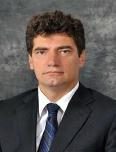
Telmo Henriques is a faculty member at ISCTE - Lisbon University Institute , affiliated with the Iscte Business School . He holds a PhD in Information Sciences and Technology from ISCTE and a Master's degree in Management from Universidade Autónoma de Lisboa. PhD in Information Sciences and Technology (ISCTE-IUL) MSc in Management (Universidade Autónoma de Lisboa) His research focuses on Information Systems , Organizational Development , and Action Research , with a particular emphasis on the human aspects of IT implementation, employee engagement, and leadership development. He has developed conceptual and process models for integrating organizational change with technological systems. Recent publications highlight his contributions to DevOps maturity models , design science research , and IT quality frameworks . His work often bridges the gap between technical systems and organizational behavior, emphasizing participatory dynamics and holistic improvement.
Dr. Giang Vu is an Assistant Professor in the School of Global Health Management and Informatics at the University of Central Florida (UCF), part of the College of Community Innovation and Education. He holds a D.D.S., M.S., and Ph.D. in Health Management and Policy. Prior to academia, he worked as a dentist and dental office manager in Vietnam and later transitioned to roles in the U.S., including dental assistant and manager while pursuing advanced studies at Georgia State University and the University of Louisville. His research focuses on preventive factors for adverse oral and general health outcomes, utilization of preventive care, and cost-saving strategies in dental prevention. He has taught courses in health data analytics, data mining, and electronic health records. His work includes leading a Medicaid-funded project ($450,000) and co-leading others totaling $1.3 million, analyzing large-scale healthcare data (e.g., Medicaid claims) to study oral-systemic disease links, post-ACA market shifts, and diabetes-related health disparities in Kentucky. Dr. Vu’s articles emphasize oral health’s role in systemic conditions like diabetes, leveraging AI, epidemiology, and data analytics. His work highlights the need for standardized electronic health records, AI-driven diabetes management systems, and addressing social determinants of health. He has no explicitly mentioned scientific awards but has demonstrated significant contributions through grant-funded research and academic leadership. As Associate Director of Health Data Analytics at UCF, he oversees projects integrating interdisciplinary approaches to healthcare challenges.
Carlos Hernandez Jerónimo is an Invited Assistant Professor at ISCTE-IUL's Marketing, Operations and General Management Department. He also serves as Executive Director of the Executive Master in Program and Project Management at ISCTE Executive Education. With a PhD in Business Administration from ISCTE and a Bachelor's in Computer Engineering from the University of Aveiro, he combines academia with consulting, specializing in strategic management, project methodologies, and benefits realization. His work spans sectors like healthcare, banking, and logistics, emphasizing data-driven decision-making and value measurement. Research focuses on business models, project management innovation, and citizen-centric strategies. He has designed over 300 courses and holds certifications including PMP, MCP, and ITIL. Professional experience includes founding Winning Scientific Management and serving as PMI Portugal's Vice-President. Key contributions include frameworks for benefits realization and digital transformation strategies.
Oleg Kirillov is an Associate Professor of Applied Mathematics at Northumbria University in Newcastle, UK, where he has been employed since 2016. He initially joined as a Vice-Chancellor's Senior Research Fellow, was promoted to Senior Lecturer in 2018, and to Associate Professor in Mathematics in 2022. He serves as the Foundation Year Programme Leader for the Department of Mathematics, Physics, and Electrical Engineering. His academic journey began at Lomonosov Moscow State University, where he earned his PhD in Theoretical (Mathematical) Mechanics in 2000. His international research career includes prestigious fellowships at institutions across Europe and Japan, including an Alexander von Humboldt Research Fellowship in Germany and a JSPS fellowship in Japan. Dr. Kirillov's educational background includes a BSc (Hons) in Mathematical Sciences from Moscow Institute of Physics and Technology (1993), an MSc in Mathematical Sciences (1995), and a PhD in Mathematical Sciences from Lomonosov Moscow State University (2000). He has also earned professional recognition as a Fellow of the Higher Education Academy (2018), Member of the London Mathematical Society (2018), and Fellow of the Institute of Mathematics and its Applications (2018). His research focuses on the mathematics of nonconservative and non-Hermitian models in physics and engineering, where he has made key theoretical contributions. Dr. Kirillov integrates perturbation methods for multiparameter matrix and non-self-adjoint differential operators with asymptotic methods for partial differential equations, singularity theory, and dynamical systems. A major focus of his work is the study of non-Hermitian eigenvalue crossings and their geometry. He and his co-authors developed the first analytical computation of geometric phase around exceptional points, validated by microwave cavity experiments. His work on differential operators in Krein spaces also contributed to magnetohydrodynamic dynamo theory. Dr. Kirillov's publication record shows a consistent focus on stability phenomena in complex systems, particularly where nonconservative forces play a key role. His research spans fluid dynamics, magnetohydrodynamics, structural mechanics, and mathematical physics, with particular emphasis on dissipation-induced instabilities. His work often bridges theoretical developments with experimental validation, as evidenced by studies on Ziegler's paradox and flutter instabilities that have been experimentally confirmed. Recent publications indicate a growing interest in visco-thermodiffusive effects in rotating flows and their stability properties. Fellow of the Higher Education Academy (FHEA) 2018 Member of the London Mathematical Society (MLMS) 2018 Fellow of the Institute of Mathematics and its Applications (FIMA) 2018 Nominated for the Student-Led Teaching Awards Alexander von Humboldt Research Fellow JSPS fellowship at Kyushu University Over 2,800 citations and an h-index of 28 (Google Scholar) Dr. Kirillov has successfully supervised PhD and MSc students at Northumbria University and co-supervised doctoral candidates in Germany and Italy. His research portfolio includes 21 competitive fellowships and grants, reflecting significant external funding for his work. He has organized 10 international research workshops and symposia, including events at prestigious institutions like BIRS (Canada) and CISM (Italy). Currently, he chairs the Organizing Committee of the 23rd International Couette-Taylor Workshop - ICTW2025. Dr. Kirillov contributes to the academic community as an Associate Editor for the journal Frontiers in Physics and through his leadership in organizing international conferences and workshops. His research group focuses on theoretical developments with applications in physics and engineering, particularly in understanding instability phenomena in complex systems. His monograph "Nonconservative Stability Problems of Modern Physics" (De Gruyter, 2013, 2021) has become a standard reference in the field.
Johan van Benthem is a Professor at the University of Amsterdam's Faculty of Science, Department of Mathematics and Computer Science, and holds concurrent appointments as Full Professor of Philosophy at Stanford University (2005–present) and University Professor of Logic at the University of Amsterdam (2003–present). His career includes prior roles at ZhongShan University (2005–), CSLI Stanford (2002–), and professorships at Groningen and Amsterdam spanning 1972–2005. His research centers on Logic , specializing in Model Theory and Modal Logic , with transformative applications across Philosophy , Linguistics , Computer Science , and Cognitive Science . This interdisciplinary approach bridges formal systems with human cognition, influencing AI, natural language processing, and philosophical semantics. Notable honors include: Spinoza Prize (1996), the Netherlands' highest scientific award Doctor honoris causa from Université de Liège (1998) University Professor title at Amsterdam (2003), a rare lifetime distinction Named professorships at Stanford (Henry Waldgrave Stuart, 2008) and Tsinghua (Weilun, 2008) Membership in Academia Europaea (1991) and Royal Dutch Academy of Sciences (1992) His leadership in logic communities includes founding roles in the European Association for Logic, Language and Information (FoLLI), where he received its first Honorary Membership (2004). While specific grants and student advisees aren't detailed here, his work has driven major collaborative projects in computational logic across Europe and Asia.
Tettamanti Tamás is a Full Professor and Deputy Head of the Department of Control for Transportation and Vehicle Systems at the Budapest University of Technology and Economics (Faculty of Transportation Engineering and Vehicle Engineering). He holds a DSc from the Hungarian Academy of Sciences and has extensive experience in academic roles, progressing from PhD student (2007–2010) to Associate Professor (2019–2024) and Full Professor (2025–present). His research focuses on road traffic modeling, control systems, and intelligent transportation solutions, with significant contributions to automated transport and emission analysis. Education highlights include a PhD in 2013 and habilitation in 2023, alongside a jazz trumpet diploma from Kőbánya Music Studio. He has led major projects like the EU-funded MoveCit initiative and collaborated with institutions like the HUN-REN Institute and BME ITS Ltd. His work spans academic leadership, industry partnerships, and international research networks (e.g., COST Actions TU1305 and CA162222). Key research interests include traffic simulation tools (SUMO, VISSIM), autonomous vehicle integration, and urban mobility optimization. He has developed Python tools for traffic emission analysis and co-authored manuals for simulation software. His awards include the BME Jubilee Medal (2023), Michelberger Price (2022), and repeated recognition as a 'Best 100 Professor'. Tettamanti has held editorial roles at IEEE Access and Communications in Transportation Research, and contributed to conferences like the European Control Conference and Transport Research Arena. His interdisciplinary approach bridges engineering, computer science, and environmental sustainability, addressing challenges in smart cities and automated driving systems.
**Jerry Horgan** is a Part-Time Lecturer (night-time) at the Department of Computing and Mathematics within the Walton Institute for Information and Communications Systems Science . He leads the IT Services Team (Infrastructure Group) and oversees the Research Data Centre. His expertise includes designing and securing research testbeds, satellite communications, quantum algorithms, and cybersecurity. He teaches Automated Cloud Services and Networks Infrastructure. Education: Masters Degree in IT Management, Maynooth University (2013–2014) Masters Degree in Communications Software (2006–2008) Bachelors Degree in Applied Computing (1999–2002) National Certificate in Industrial Computing (1997–1999) Research Interests: Quantum Algorithms, Quantum Communications, Satellite Communications, Cybersecurity, Testbeds, and Data Centre Management. His work aligns with UN Sustainable Development Goals, particularly in advancing secure and sustainable communication infrastructure. Technical Leadership: Manages infrastructure for research testbeds, cloud services, and IoT projects. His recent articles focus on quantum communication protocols, satellite-based security systems, and post-quantum encryption for embedded devices. Grants & Labs: Secured funding for research testbeds and platforms. Active in the IT Services Team and Research Data Centre, contributing to software-defined infrastructure and cloud service deployments.
Chaoru Lu is an Associate Professor of smart mobility at the Department of Civil Engineering and Energy Technology, Oslo Metropolitan University. His expertise spans intelligent transport systems, transport electrification, autonomous vehicles, and traffic flow theory. He holds a Ph.D. from Iowa State University (2017), an M.S. from Texas A&M University-Kingsville (2014), and a B.S. from Hunan University of Science and Technology (2011). Research focuses on optimizing transport systems through interdisciplinary approaches, including electric vehicle safety analysis, autonomous vehicle coordination, and sustainable infrastructure planning. He leads projects like the Net-Zero Future initiative to reduce the built environment’s carbon footprint. His work integrates AI, machine learning, and data-driven modeling to address modern transport challenges. Publications span over 39 peer-reviewed articles, covering topics like electric bus fleet management, autonomous vehicle tracking algorithms, and pandemic impacts on mobility. He collaborates with institutions globally, contributing to both academic and applied transport solutions. Research Groups: Transport, Infrastructure, and Urban development (TransFrUrban) Grants/Projects: Ongoing leadership in the Net-Zero Future project.
Professor Hafiz Alaka is an academic leader and researcher at the University of Hertfordshire, serving as Associate Dean and Director of the Big Data Technologies and Innovation Lab. He leads the 'Prediction of Climate and its Impacts (PCI)' group within the Centre for Climate Change Research (C3R). His expertise lies in applying contemporary technologies like AI, big data, and machine learning to construction, infrastructure, energy, and sustainability challenges. Research interests include offsite construction adoption, pollution prediction using IoT and big data, building energy optimization, and circular economy practices. His work emphasizes interdisciplinary collaboration with industry partners such as Balfour Beatty and Reusefully Ltd, and international collaborations in Malaysia, Nigeria, and Indonesia. He has secured over £10M in research funding and oversees strategic research initiatives at Hertfordshire Business School. Recent publications focus on AI-driven solutions for construction challenges, energy efficiency modeling, and environmental monitoring. Notable projects include developing prediction models for cement quality and mitigating digital transformation risks in Malaysia. He actively contributes to academic governance as an Innovate UK assessor and editorial board member of international journals. His leadership spans research policy development, grant administration, and fostering innovation ecosystems. He mentors PhD students and early-career researchers, emphasizing inclusive, dynamic environments for academic growth.
Prof. Martin Kropp is a Lecturer for Software Engineering and Programme Manager for the CAS Agile Organisation at FHNW University of Applied Sciences and Arts Northwestern Switzerland, within the School of Computer Science and FHNW Institute of Mobile and Distributed Systems. His research focuses on Agile Methodologies, Tool-supported Agile Collaboration, and Automated Software Construction/Testing. He actively contributes to the Swiss Agile Research Network (SARN) and Swiss Agile Study initiatives. Teaching responsibilities include courses on Software Construction, Testing & Quality Management, and .Net Framework/C# for the Bachelor of Computer Science, as well as the Master of Science in Engineering (MSE) in Software Engineering and Architecture. He has published extensively on Agile practices, DevOps metrics, and collaborative tools like aWall, emphasizing empirical studies and practical applications. Key research themes include Agile team dynamics, leadership in software development, and the integration of AI in testing and DevOps. His work bridges academic research and industrial practice, with notable contributions to conferences like ICSE, XP, and CHASE.
Martin Turner is a Business Relationship Manager for Research IT at the University of Manchester, specializing in e-Science and computational infrastructure. He also serves as an Honorary Lecturer in Computer Science. His roles include project management for UKRI grants and leadership in initiatives like the Harwell Imaging Partnership and the Scientific Computing Division at STFC. Research interests span visualization, image processing, and fractal geometry, with notable contributions including a book on Fractal Geometry in Digital Imaging and over 120 peer-reviewed publications. He has supervised 21 PhD/MPhil students and contributed to edited volumes such as Geographic Visualization: Concepts, Tools and Applications . Key awards include a short-term Fellowship with British Telecom. His work integrates real-world applications with cutting-edge imaging technologies, emphasizing collaboration and longitudinal research support. Projects involve visualization frameworks, tomography, and UAV-based computer vision applications. Advising focuses on MSc and PhD levels, while grants and collaborations address imaging science, geology, and computational methods. He leads teams in developing tools like the Core Imaging Library and SIRF framework, advancing tomographic and multi-channel imaging techniques.
Dr. Sasho Josimovski is a Full Professor at the Department of E-Business, Faculty of Economics within the Ss. Cyril and Methodius University in Skopje, North Macedonia. He holds leadership roles as Head of the Department of E-Business and member of the Dean's Board. His academic journey includes a PhD in 1996 from the Faculty of Economics, with a thesis on statistical analysis of economic time series. He has extensive international collaborations, including stays at institutions like Charles University (Prague), Arizona State University (USA), and the University of Deusto (Spain). Education Background: Bachelor's in Informatics (1987) from Faculty of Electrical Engineering, Skopje Master's in Computer Science (1992) with thesis on fractal characteristics of economic models PhD in Economic Analysis (1996) Research Interests focus on e-business innovation, digital transformation, gamification in education/HEIs, and consumer dynamics in digital markets. He actively coordinates postgraduate programs like E-Business Management (distance learning) and European studies in integration/communications. His work bridges technology adoption in SMEs, supply chain management, and the impact of social media on business strategies. Recent studies explore Gen Z perceptions of gamification in public policy and AI's role in consumer e-business experiences. Professional Activities include: Coordinator of academic teams for postgraduate programs Leadership in curricula development for e-business and IT fields International advisory roles and visiting scholar appointments Labs/Teams: Actively involved in multidisciplinary teams advancing e-commerce solutions, gamification frameworks, and digital strategies for SMEs in developing economies.
Dr. Patrik Elm is an Associate Professor at Linnaeus University specializing in information security and systems thinking. He holds a PhD in Computer Science from Blekinge Institute of Technology (2007). His research focuses on information security in public sector organizations, organizational complexity, and the interplay between human and technical factors in information systems. Dr. Elm has held leadership roles including department head and has led projects like RAPID (strengthening online education in Pakistan) and DI-PHDICTKES (developing ICT PhD programs in Kosovo). He co-supervises PhD students and reviews for international journals/conferences. His work bridges systems theory with practical governance models, particularly addressing GDPR compliance and data flow management. Education: PhD in Computer Science (2007) from Blekinge Institute of Technology. Leadership Experience: Department head roles, international university collaborations, and organizational development initiatives. Projects include: RAPID: Replicating pandemic-era distance learning practices in Pakistan. DI-PHDICTKES: Establishing ICT PhD programs in Kosovo. Seed Projects: Addressing challenges in lifelong learning and patient empowerment limits. Research Interests: Cybersecurity compliance, public sector IT governance, systems thinking pedagogy, and digital strategy inefficiencies. Publications emphasize secure data governance, pandemic-era educational shifts, and interdisciplinary systems approaches. Grants & Funding: Not explicitly listed but implied through project involvements. Labs/Teams: Involved in Linnaeus Knowledge Environments like Digital Transformations. Advising: Mentors multiple PhD students and participates in exam committees.
**Karen Rudie** is a Professor and Interim Director in the Department of Electrical and Computer Engineering at Queen's University, Canada. She holds a cross-appointment to the School of Computing and is affiliated with the Ingenuity Labs Research Institute. Her expertise lies in supervisory control of discrete-event systems, security, and secrecy protocols. Rudie earned her Ph.D. from the University of Toronto and has held visiting roles at the University of Michigan. She leads the Queen’s Discrete-Event Systems Lab (QDES), focusing on theoretical and applied research in control systems. **Education**: Ph.D. in Systems Control (University of Toronto, 1992), Postdoctoral Researcher at the Institute for Mathematics and Its Applications (1992-1993). **Research Interests**: Discrete-event systems, supervisory control theory, security mechanisms, and applications to industrial automation. Her work bridges theoretical foundations with practical implementations in manufacturing, healthcare, and cybersecurity. **Awards**: IEEE Fellow (2018), multiple Queen's Golden Apple Teaching Awards, and recognition as a 'Popular Prof' in Maclean's (2001-2005). She is a registered Professional Engineer in Ontario. **Grants & Leadership**: Editor of the Journal of Discrete Event Dynamic Systems, former IEEE Control Systems Society Board member, and frequent conference committee member (CDC, ACC, WODES). Her lab develops tools like IDES for discrete-event system modeling. **Lab & Teams**: Directs the QDES Lab, advancing methodologies for system control and security. Her group collaborates on projects like decentralized control architectures and cyber-physical system resilience.
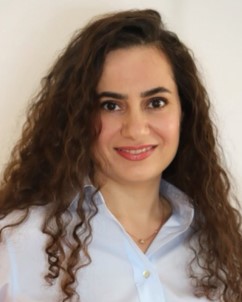
Jwan Khisro is a Postdoctoral Researcher at the University of Maryland's College of Information Studies. She holds a PhD in Informatics from the University of Gothenburg (2022), a Licentiate degree from Mid Sweden University (2019), and a Master's from the University of Gothenburg (2013). Her research focuses on governance of digital transformation in public sectors, enterprise interoperability, and digital ambidexterity. She has published widely in journals like Enterprise Information Systems and conferences such as AMCIS and HICSS. Her academic journey includes a lecturer/researcher role at the University of Gothenburg's Department of Applied IT (2014-2016). Her work examines digital infrastructuring challenges in municipalities, constraints in transformation processes, and strategic innovation models. Advised by Dr. Katrina Fenlon, her current focus includes AI ethics in digital government and equitable scientific research access policies. Key research themes span public sector IT governance frameworks, clinical inquiry methodologies in organizational studies, and multi-relation collaboration dynamics. She investigates how data quality and interoperability challenges impact Scandinavian energy markets and Swedish public services.