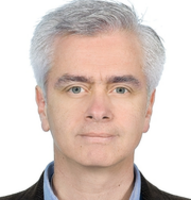
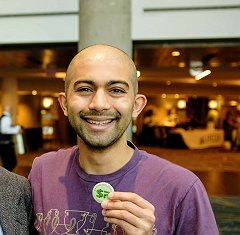
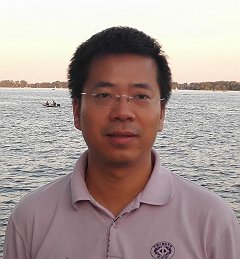
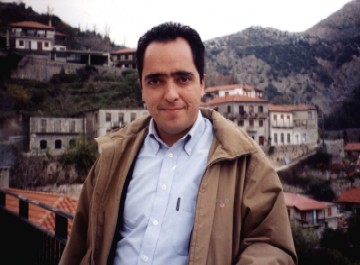
Badogiannis Efstratios is a Professor at the Department of Structural Engineering , National Technical University of Athens. He serves as Deputy Dean and works in the Reinforced Concrete Laboratory, Zografou Campus, Athens, Greece. Email: badstrat@central.ntua.gr Phone: +30 210 772 1266 Research Interests: Focus on sustainable concrete technology, pozzolanic materials (metakaolin, palygorskite clay), durability of lightweight and self-compacting concrete, seismic isolation systems for bridges, application of artificial neural networks in civil engineering, and mechanical/thermal activation of clays. Publication Trends: Recent work emphasizes AI-driven rheological modeling, seismic resilience of precast bridge systems, durability of concretes incorporating industrial by-products (e.g., by-pass filter dust, rice husk ash), and nano-materials for structural health monitoring. Laboratory Affiliation: Actively contributes to research at the Reinforced Concrete Laboratory, focusing on sustainability, corrosion resistance, and innovative construction techniques.
Sarah E. Chasins is an Assistant Professor in the Electrical Engineering and Computer Sciences (EECS) department at the University of California, Berkeley, with research spanning programming languages and human-computer interaction. She leads the PLAIT Lab (Programming Languages for Approachable and Inclusive Tools) and serves as a faculty affiliate at the Berkeley Institute for Data Science (BIDS). Her work bridges computer science with social sciences, climate reporting, legal systems, and biological research through extensive collaborations. Dr. Chasins' research focuses on democratizing programming for non-traditional programmers including scientists, social scientists, journalists, and data scientists. Her work emphasizes creating approachable programming tools that help practitioners reach correct programs while understanding, extending, and trusting those programs. She specifically investigates program synthesis, programming tools for scientific domains, and human-centered programming language design. Her research mission aims to make programming a path to a more informed and evidence-driven society rather than just a way to get wrong answers faster. Her recent publications demonstrate a clear trajectory toward making programming more accessible and understandable. The work spans code search techniques, program synthesis approaches, refactoring tools, and studies of how domain experts interact with programming languages. A consistent theme across her research is placing human needs at the center of programming language design and implementation. Dr. Chasins actively mentors PhD students including Justin Lubin, Eric Rawn, Parker Ziegler, Sarah "Slim" Lim, Hellina Hailu Nigatu, David Minh-Duy Cao, and Marlena Preigh. She has previously advised numerous master's and undergraduate students who have gone on to work in both academia and industry. Her teaching includes core courses like CS164 (Programming Languages and Compilers) and specialized courses like CS294-184 (Building User-Centered Programming Tools) and CS39-001 (Technology, Society, and Power). She maintains an active service record in the programming languages community, having served on program committees for major conferences including PLDI, POPL, OOPSLA, and SPLASH. Notably, she co-chaired the Student Research Competition at PLDI 2020 and 2021 and has been involved in organizing workshops focused on programming languages and human-computer interaction.
Scott Mahlke is a Professor and Associate Chair in the Electrical Engineering and Computer Science Department at the University of Michigan. He is affiliated with the Advanced Computer Architecture Laboratory and the Software Systems Laboratory, where he leads the Compilers Creating Custom Processors (CCCP) research group. His research focuses on compilers, computer architecture, and high-level synthesis, with particular emphasis on designing next-generation computer systems that overcome challenges in performance, power consumption, and reliability. His work bridges the gap between hardware and software through innovative compiler technology that enables customized processors and accelerators. Mahlke's publications demonstrate a strong focus on compiler techniques for exploiting instruction-level parallelism, memory system optimization, and application-specific processor design. His research spans from fundamental compiler algorithms to practical implementations in both general-purpose and embedded systems. National Science Foundation CAREER Award (2003) Morris Wellman Faculty Development Assistant Professor (2004) 2006 ISCA Most Influential Paper Award Multiple best paper awards at major architecture conferences As an advisor, Mahlke has chaired numerous Ph.D. dissertations and actively mentors graduate students in the CCCP group. His research is generously funded by the National Science Foundation, Gigascale Systems Research Center, ARM Ltd., Samsung Advanced Institute of Technology, and other major organizations. The CCCP group maintains strong industry partnerships that facilitate the transfer of research innovations to practical applications.
Todd Millstein is a Professor in the Computer Science Department at the University of California, Los Angeles (UCLA). He served as the Computer Science Department Chair from 2022-2025 and is also an Amazon Scholar. His research focuses on making software systems more reliable through programming languages techniques, with significant contributions to network verification and probabilistic programming. Millstein received his Ph.D. from the University of Washington Department of Computer Science, where he was a member of the Cecil group led by Craig Chambers. Prior to that, he completed his undergraduate studies at Brown University under the guidance of Paris Kanellakis and Pascal Van Hentenryck. Millstein's research spans several areas of programming languages and systems with a focus on reliability. He has made significant contributions to network verification, developing the Batfish network configuration analyzer which is now managed by Amazon Web Services and forms the basis of Oracle Cloud's Network Path Analyzer. His work has been recognized with the ACM SIGCOMM Networking Systems Award in 2025. He also works on interactive program verification through lemma synthesis and scalable reasoning methods for probabilistic programming languages. His research bridges programming languages theory with practical systems challenges, as highlighted in his SPLASH/OOPSLA 2024 keynote "Everything is a Program (even if it's not)". Millstein's recent publications demonstrate a consistent focus on verification and reliability across multiple domains. His work shows a progression from foundational programming language techniques to practical applications in networking and probabilistic systems. Key themes include data-driven approaches to program analysis, synthesis of verification artifacts, and applying programming languages techniques to non-traditional domains like network configuration. Millstein's scientific achievements have been recognized with numerous prestigious awards including an NSF CAREER Award, an ACM SIGPLAN Most Influential PLDI Paper Award, an ACM SIGCOMM Networking Systems Award, IEEE Micro Top Picks selection, best-paper awards from PLDI, OOPSLA, and SIGCOMM, a Microsoft Research Outstanding Collaborator Award, an Okawa Foundation Research Grant, an IBM Faculty Award, and a Facebook Research Award. He has also received both the Northrop Grumman Excellence in Teaching Award (for junior faculty) and the Eon Instrumentation Inc. Excellence in Teaching Award (for senior faculty) from UCLA Engineering. Millstein advises several Ph.D. students including Ana Brendel, Poorva Garg (co-advised with Guy Van den Broeck), Rajdeep Mondal (co-advised with George Varghese), and Rathin Singha (co-advised with George Varghese). His research has been supported by various grants including an NSF CAREER Award, Okawa Foundation Research Grant, IBM Faculty Award, and Facebook Research Award. He has also been a Co-Founder and Chief Scientist of Intentionet, which was later acquired by Amazon Web Services. Millstein is actively involved in the Batfish project, an open-source network configuration analyzer that has had significant practical impact. Batfish is now managed by AWS, powers Oracle Cloud's Network Path Analyzer, and is used by dozens of companies. His research group continues to work on network reliability, developing techniques for scalable BGP policy verification and behavioral testing of protocol implementations.
David Naumann is Professor and Department Chair of Computer Science at Stevens Institute of Technology. His leadership in the department and active research program positions him as a key figure in programming languages and formal methods research. Naumann's research focuses on formal methods and software security, with particular emphasis on relational and hyperproperty verification , fine-grained confidentiality/integrity policies , and program analysis and verification . His work bridges theoretical foundations with practical applications in security-critical systems. He has developed novel program logics and verification techniques that enable precise reasoning about information flow and security properties. His recent publications (2022-2025) reveal a strong trend toward modular relational verification techniques with applications to pointer programs, distributed systems, and concurrent applications. The research spans theoretical foundations (algebraic structures for alignment) to practical tools (WhyRel prototype), demonstrating both depth and breadth in addressing verification challenges. Naumann has served as program committee co-chair for IEEE Computer Security Foundations Symposium (2021-2022) and has been active on committees for POPL, CCS, CSF, ECOOP, and other top venues. His editorial service includes ACM Transactions on Programming Languages and Systems, Formal Aspects of Computing, and Journal of Object Technology. He leads the Cypress research group at Stevens Institute of Technology and has secured significant funding from NSF, Microsoft Research, and Siemens. His mentoring extends to numerous PhD students who have gone on to successful careers in academia and industry.
Mikros Emmanuel is a Professor in the Section of Pharmaceutical Chemistry at the University of Athens , affiliated with the Faculty of Pharmacy and Department of Pharmaceutical Chemistry . His academic career spans decades, with significant contributions to pharmaceutical chemistry and metabolomics. Education : Ph.D. and M.Sc. in Organic Chemistry (1988, 1984), Université PARIS XI; Diploma in Chemistry (1983), University of Athens. His research focuses on NMR spectroscopy, molecular structure analysis of biologically active compounds, structure-based drug design, and metabolomics. He has pioneered methods integrating NMR with computational tools for drug discovery and biomarker identification. Recent publications highlight his work in NMR-MS heterocovariance for drug screening, metabolomics in diagnostics, virtual screening for kinase inhibitors, and computational approaches in understanding metabolic disorders. Scientific Awards : DAAD Fellowship (Germany, 1996), Marie Curie Fellowship (European, 1994), CIES Fellowship (France, 1993), National Foundation Scholarship (ΙΚΥ Greece, 1985-88). He has taught undergraduate and graduate courses such as Inorganic Pharmaceutical Chemistry, Organic Spectroscopy, and Drug Design, while leading research initiatives in pharmaceutical chemistry and related fields.
Efthimios S. Skordas is an Associate Professor of Experimental Solid State Physics at the Department of Physics, National and Kapodistrian University of Athens. Born in Lefkada, Greece in 1960, he holds a Mathematics degree (1984) from the University of Crete and a Doctorate (1992) from Uppsala University, Sweden. His research focuses on seismicity analysis through the lens of natural time analysis, complex systems, and non-extensive statistical mechanics. University of Crete (1984, Mathematics) Uppsala University (1992, Doctorate) His work demonstrates deep expertise in earthquake prediction, detection of pre-seismic anomalies through geoelectric/magnetic field variations, and entropy dynamics under time reversal. Recent publications highlight applications of natural time analysis to diverse domains including cardiovascular health monitoring. He has authored over 120 peer-reviewed publications and two monographs, with an h-index of 32. Skordas' research bridges geophysics with interdisciplinary applications, showing particular emphasis on entropy fluctuations, order parameter analysis, and multi-scale seismicity patterns. His laboratory contributes to understanding the physical interconnection of seismic electric signals with earthquake dynamics.
Ioannis Tsaknakis is an Associate Professor at the Department of Electrical & Computer Engineering, School of Engineering, University of Peloponnese. He holds a PhD in computational geometry and multidimensional data structures from the University of Patras (2004) and has been actively involved in software systems research since 2004. His work spans Database Information Management , Big Data Systems , and Knowledge Mining , with a focus on data structures and computational geometry. Research Interests : Information Management in Databases Big Data Management Systems Computational Geometry Knowledge Mining in Databases/Web Publications highlight his contributions to IoT-driven educational frameworks, machine learning applications, and cryptographic systems for data security. He has taught courses on software design and data management since joining the University of Peloponnese in 2019. Contact : jtsaknakis@uop.gr . Office hours are in Building K (Monday & Tuesday, 8:00-9:00).
Maria Virvou serves as Professor and Chair of the Department of Informatics at the University of Piraeus, where she also directs the Graduate Program in Informatics and leads the Research Laboratory 'Software Technology'. She holds significant institutional leadership roles including membership in the University Senate and has chaired the Department of Informatics for multiple terms. As Editor-in-Chief of Springer book series 'Learning and Analytics in Intelligent Systems' and 'Artificial Intelligence-Enhanced Software and Systems Engineering', she maintains substantial academic influence across international scholarly platforms. Dr. Virvou earned her PhD in Computer Science and Artificial Intelligence from the University of Sussex with a scholarship from the State Scholarships Foundation, a Master of Science in Computer Science from University College London, and her undergraduate degree from the Department of Mathematics at the National and Kapodistrian University of Athens. Her educational background in both mathematics and computer science has provided a strong foundation for her interdisciplinary research approach. Professor Virvou's research spans Software Technology, Artificial Intelligence, Educational Software and Games, User Modeling, and Human-Computer Interaction. She has pioneered work in personalized interactive software systems, applying fuzzy logic and machine learning techniques to create adaptive educational environments. Her recent work demonstrates a strategic expansion into AI applications for healthcare, with significant contributions to medical diagnostics using large language models and multimodal AI systems. She has also made notable advances in smart tourism applications through personalization techniques. With over 400 publications to her name, Professor Virvou's scholarly output shows a clear progression from foundational work in user modeling toward increasingly sophisticated AI applications across multiple domains. Her publication trends reveal a strategic focus on explainable AI, multimodal systems, and practical implementations that bridge theoretical advances with real-world applications, particularly in healthcare and education sectors. Ranked #1 worldwide in 'User Modelling' publications (147,450 total publications) according to Scopus Ranked #1 worldwide in 'Educational Software' publications according to both Scopus and Microsoft Academic Search Recognized among the top 2% of most influential Artificial Intelligence scientists worldwide by Stanford University General Co-Chair at the 14th IISA Conference 2023 Invited Keynote Speaker at the 35th IEEE International Conference on Software Engineering Education and Training (CSEE&T 2023) As Director of the Research Laboratory 'Software Technology', Professor Virvou has built a robust research team focused on AI applications across multiple domains. She co-founded and co-chairs the IEEE Intelligent Information Systems and Applications international conference series, creating a significant platform for scholarly exchange. Her leadership extends to editorial roles with major academic publishers and active participation in international research collaborations that have secured substantial funding for innovative projects in AI and software engineering.
Laxman Dhulipala serves as an Assistant Professor in the Department of Computer Science at the University of Maryland, College Park, while also working as a research scientist at Google Research with the Graph Mining team. Dr. Dhulipala earned his Ph.D. from Carnegie Mellon University under Guy Blelloch's supervision and completed a postdoctoral fellowship at MIT with Julian Shun. His research centers on efficient parallel algorithms, particularly for parallel clustering and graph processing, along with developing computational models for emerging hardware technologies. His scholarly output demonstrates significant expertise across parallel computing domains, with particular emphasis on scalable graph algorithms, dynamic data structures, and computational geometry. Dr. Dhulipala's work bridges theoretical computer science with practical systems implementation, producing algorithms that achieve both theoretical optimality and real-world performance. His research group has made substantial contributions to benchmarking frameworks including the Graph Based Benchmark Suite (GBBS) and ParClusterers Benchmark Suite, establishing standardized evaluation methods for graph processing systems. The collective work shows progression from theoretical foundations to practical implementations that handle massive-scale datasets. Best Paper Award at SPAA 2022 Best Paper Runner Up at VLDB 2022 Distinguished Paper Award at PLDI 2019 Memorable Paper Award Finalist at NVMW'20 CMU's SCS Dissertation Award Honorable Mention As an educator, Dr. Dhulipala mentors numerous graduate students while teaching advanced courses in algorithm design and parallel computing. His research collaborations span multiple institutions including Carnegie Mellon University, MIT, and Google Research, reflecting his position at the intersection of academia and industry research.
Fei He is an Associate Professor at Tsinghua University's School of Software, where he leads the THUFV research lab focused on formal verification and program analysis. His research spans formal methods, automated reasoning, and program verification, with applications in concurrent systems, networking (P4 programs), and probabilistic systems. Education & Employment: PhD from Tsinghua University (2008) Visiting Scholar at Carnegie Mellon University (2010-2011) and Politecnico di Milano (2006-2007) Faculty positions at Tsinghua since 2008 (Assistant Professor 2008-2011, Associate Professor 2011-present) Research: He's developed innovative techniques in SMT solving for concurrency verification, termination analysis, and regression verification. His tools like Deagle have won gold medals at SV-COMP. Current work focuses on probabilistic program verification and network program analysis. Publications: His 80+ publications demonstrate consistent contributions across formal methods (PLDI, OOPSLA, ICSE), networking (NSDI, INFOCOM), and software engineering (TSE, TOSEM), with recent emphasis on data-driven verification and automated invariant inference. Awards: Gold Medals in SV-COMP ConcurrencySafety (2022, 2023, 2025) Best Paper Awards at PPoPP 2022 and SETTA 2022 Advising: Mentors 13 PhD/Master's students in THUFV lab, with graduates joining Huawei, MPI-SP, and research institutions. Secured multiple NSF China grants for trustworthy software research. Service: Associate Editor for Theory of Computing Systems, program committees for PLDI/ICSE/OOPSLA, and former Local Chair for ISSTA 2019.
Yannis Theodoridis is a Professor at the Department of Informatics, University of Piraeus, leading the Information Systems Laboratory (InfoLab). He specializes in spatiotemporal databases, mobility analytics, and maritime data science. His research focuses on trajectory analysis, location-based services, and big data frameworks for transportation and maritime surveillance. Key projects include the MOD (Moving Objects Databases) initiative, the ARGOS framework for real-time trajectory prediction, and contributions to the HERMES trajectory database engine. He has advised 7 PhD students and co-authored numerous papers in IEEE and ACM venues. His work addresses challenges like vessel collision risk assessment, urban mobility optimization, and maritime event detection. He serves on the editorial board of the International Journal of Data Warehousing and Mining and contributes to conferences like PCI and ECML PKDD. His labs emphasize interdisciplinary approaches to mobility data science, integrating machine learning with domain-specific analytics.
Ioannis Theodoridis is a Professor at the Department of Informatics, University of Piraeus, and Director of the Data Science Laboratory under the School of Information and Communication Technologies. His research focuses on data science, particularly large-scale data management and analysis, with applications in maritime informatics, spatiotemporal data, and mobility patterns. He holds editorial roles at ACM Computing Surveys and has contributed to numerous international conferences and journals. As a project leader in Horizon 2020 initiatives, he has coordinated research on data-driven solutions for maritime safety and urban mobility. He earned his Diploma (1990) and PhD (1996) in Electrical and Computer Engineering from the National Technical University of Athens (NTUA). His work includes developing scalable systems for maritime route forecasting (e.g., GMSA), frameworks for vessel trajectory prediction (e.g., VesselVision), and platforms like i4sea for fisheries monitoring. Contact: ytheod@unipi.gr .
Professor Gregoris Mentzas is a faculty member at the National Technical University of Athens, School of Electrical and Computer Engineering, where he directs the Division of Industrial Electric Devices and Decision Systems. His research focuses on AI-enabled decision systems, knowledge management, and semantic technologies applied to digital enterprises and e-government. With over 350 publications, he ranks among the top 2% most cited scientists globally. Research Interests: Artificial intelligence for decision augmentation, big data analytics in personalized health and smart mobility, semantic web technologies, and industrial internet of things. Current projects investigate trustworthy AI frameworks and hybrid intelligence systems for Industry 5.0. Teaching: Leads courses in Digital Enterprise Management, Strategic Information Systems, and Project Management at undergraduate and postgraduate levels, incorporating industry case studies and experiential learning approaches. Awards & Leadership: Top 2% Highly Cited Scientist (PLOS Biology 2021) 5 Best Paper Awards in international conferences Director of Information Management Unit (1997-present) Board Member of Institute of Communication and Computer Systems (2006-2009) Projects & Funding: Secured over €18 million in research grants through 60+ European projects with industry partners including SAP, IBM, and Siemens. Research outcomes led to three technology spin-offs.
Chr. Kavousianos is an Assistant Professor in the Department of Informatics at the University of Ioannina, Greece. He is actively engaged in research and teaching in the fields of VLSI design, testability, and low-power testing. He has been involved in major national and international research programs such as Heracleitus II, Pythagoras, and NSF-SRC (USA). Research Interests: His research focuses on advanced techniques in built-in self-test (BIST), test data compression, scan-based testing, fault tolerance, and embedded control architectures. He explores methods to reduce test data volume, power consumption during testing, and improve defect coverage in integrated circuits. Publication Trends: His recent publications (2004–2011) show a strong trend toward defect-aware testing, power-efficient test compression, and multicore SoC testing. He frequently collaborates with leading researchers, including Prof. Krishnendu Chakrabarty (Duke University). His work on multilevel Huffman coding and reseeding techniques has been highly influential, with one paper among the most accessed in 2004. Special Distinction for Excellent Academic Performance from TEE, 1996 Doctoral Scholarship 'In Memory of Professor Maritsa', 1999 Postdoctoral Scholarship from IKY, 2002 Advising and Grants: He has supervised multiple postdoctoral researchers, PhD candidates (e.g., Vasilis Tenentes, Emmanouil Kalligeros), and master’s students. He has led research projects such as 'Embedded Control Architectures' (Heracleitus II) and 'Design Techniques for Embedded Self-Control Circuits' (Pythagoras II). His international collaboration with Duke University included a postdoctoral research role in 2009. Labs and Teams: He leads a research group at the University of Ioannina with postdocs, PhD students, and visiting professors, including Prof. Krishnendu Chakrabarty. His team works on cutting-edge VLSI testing and design methodologies.