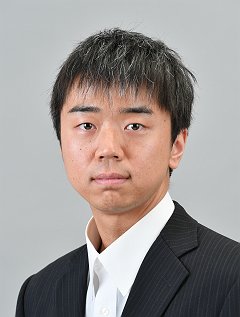
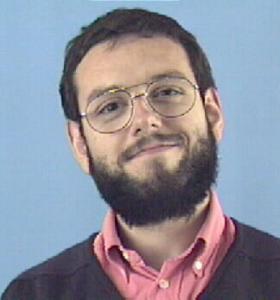
Taro Sekiyama is an Associate Professor at the National Institute of Informatics in Japan. His research focuses on programming language theory and applications, particularly in type systems, gradual typing, and program verification with effects. Academic Rank: Associate Professor University: National Institute of Informatics His research interests span type theory , polymorphic algebraic effects , gradual typing , and temporal verification . His work combines theoretical foundations with practical applications, including Rust programming language verification and effect handling. The analysis of Taro Sekiyama's publications reveals a consistent focus on: Algebraic effect systems Refinement type theory Gradual typing semantics Temporal verification techniques Neural-guided program analysis Effect handler design
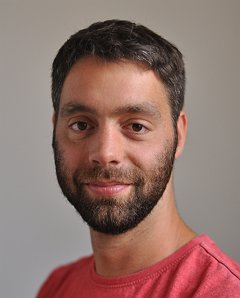
Philipp Schuster is a researcher at the University of Tübingen, Germany, specializing in programming languages, compiler design, and functional programming. His work focuses on effect handlers, type systems, and efficient code compilation, with a strong emphasis on lexical scope and formal verification. His research contributions include innovations in capability-passing style for effect handlers, direct-style compilation, and monomorphization techniques. He has actively participated in program committees and artifact evaluations for major conferences like ICFP, SPLASH, and APLAS. Key trends in his publications revolve around effect handling, lambda calculus, type safety, and compiler optimization. His work bridges theoretical foundations with practical implementations, aiming to improve modularity and runtime efficiency in functional programming languages. He has served on program committees and artifact evaluation panels for conferences such as ICFP, SPLASH, APLAS, and HOPE, demonstrating leadership and collaboration in advancing programming language research.
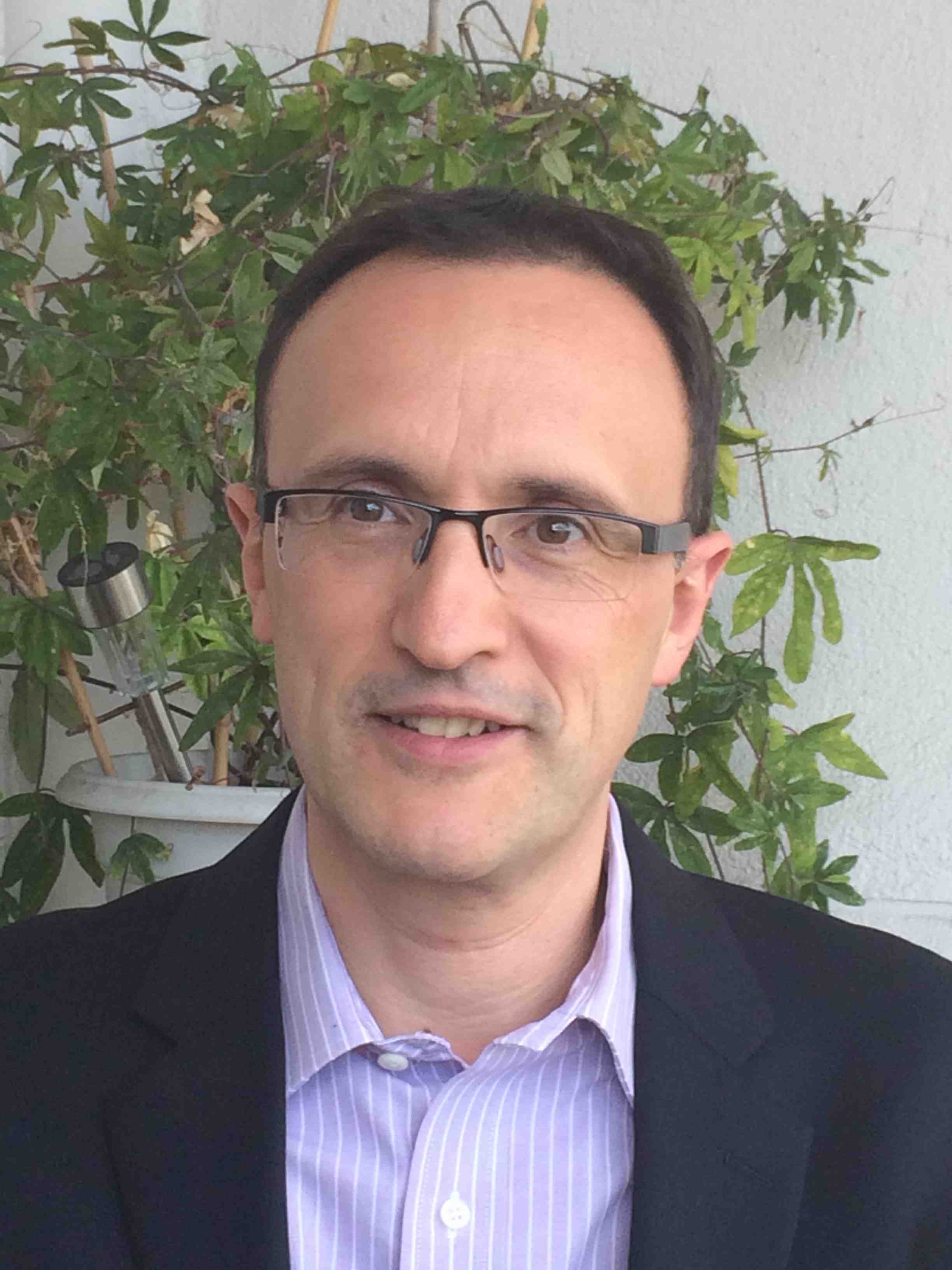
Ahmed Bouabdallah is a full-time researcher at IMT Atlantique's Department of Network Systems, Cybersecurity and Digital Law , with a focus on advanced network security solutions and distributed systems. His work bridges theoretical frameworks with practical implementations in emerging technologies. Key research areas: Cybersecurity, Internet of Things, Software Defined Networking Academic collaborations: Aalborg University, Inria, CNRS, Orange Labs His recent publications analyze AI-driven Kubernetes scaling, malware propagation in 5G networks, and WoT (Web of Things) security architectures. These works demonstrate his expertise in balancing operational costs with Quality of Service (QoS) requirements. From 2015 to 2024, his research trajectory shows increasing specialization in: Container orchestration security Intent-based network mitigation Microservices synchronization Smart space access control Emergency response systems Real-time policy evaluation While no formal academic awards are listed, his publications in Journal of Ambient Intelligence , IEEE , and Sensors indicate significant industry and academic impact.
S. Ananda Subrahmanya Sarma is a Researcher at the Center of Indology, French School of Asian Studies (EFEO) in Pondicherry since 1989, specializing in Śaiva studies, Kerala ritual manuals, and critical editions of Sanskrit/Tamil texts. His work bridges philology, religious studies, and digital humanities to illuminate understudied South Asian traditions. His academic foundation includes: Graduation and Post-Graduation in Sanskrit from Government Sanskrit College (University of Kerala), Trivandrum PhD from University of Calicut (1991) on critical edition of Kapilasmṛti Sarma's research centers on editing Śaiva ritual texts, particularly Kerala paddhatis, which were previously obscure. He pioneered international recognition of these manuals through publications and conference presentations. His Tamil Bhakti work includes the Digital Tēvāram project (2007) and NETamil project contributions on Vaiṣṇava studies. He uniquely combines textual scholarship with computer technology expertise to develop research tools and manage EFEO's digital infrastructure. Analysis of his recent publications reveals consistent focus on Śaiva-Vaiṣṇava dynamics, ritual evolution in Kerala, and traditional knowledge systems. Key trends include comparative studies of religious conflicts, documentation of vanishing ritual practices, and interdisciplinary exploration of Tantra's medical/philosophical dimensions. His critical editions make rare manuscripts accessible while his articles contextualize ritual changes across medieval to modern periods. Sarma actively collaborates in academic teams including the Bhaktimandākinī editing group with N.V.P. Unithiri and H.N. Bhat, and the EFEO Śaiva reading group. As a core member of NETamil under Dr. Eva Wilden, he advances Vaiṣṇava studies. Beyond research, he coordinates all computer systems at Pondicherry Center, maintaining hardware and developing software for projects like Pāṇiṇīya-Udāharaṇa-Kośa.
Nasmin Jiwani is a Research Scholar with 56 publications, an h-index of 20, and 921 total citations. Her academic work spans interdisciplinary applications of machine learning and deep learning techniques across medical diagnostics, cybersecurity, and IoT systems. Her research focuses on Medical Informatics where she develops AI-driven diagnostic tools for liver disease prediction, diabetic retinopathy classification, and acute lymphoblastic leukemia detection. In Cybersecurity , she pioneers image-based malware classification using deep learning architectures. Her IoT Systems research includes supply chain optimization and smart security applications. Recent work shows increasing emphasis on healthcare technology integration, particularly in cancer diagnostics and autism spectrum disorder analysis. Collaboration patterns indicate strong partnerships with Ketan Gupta (30 co-authored papers), J. Logeshwaran, and Neda Afreen across IEEE conferences and journals. Her publication trajectory demonstrates consistent output with 10+ papers annually since 2022, showing particular strength in translating theoretical machine learning models to practical healthcare and security applications.
Marion Paggetti is a Researcher-lecturer at Institut Agro Dijon, affiliated with the Vocational training and apprenticeships (FoAP) school and the Digital Innovation Laboratory for Businesses and Learning to Support Territorial Competitiveness (LINEACT). She is actively engaged in research on activity analysis, psychomotor therapy, and professional learning, with a focus on body-dominant inquiry and learning processes in human interaction professions. Her educational background includes: PhD in Educational and training sciences, CIRNEF (EA 7454), University of Caen-Normandie, 2020. Dissertation: "The psychomotor therapists' 'body-dominant inquiry'. Adjustment activity and learning the work" Psychomotor therapist qualification, Sorbonne-Université, 2015 Dr. Paggetti's research focuses on the analysis of adaptive, "body-dominant" activity in professions addressed to others, particularly in psychomotor therapy. She examines how professionals adjust their activities through bodily engagement with clients/patients. Her work also explores pedagogical and learning activities mediated by new technologies in higher education, especially in engineering schools. She investigates how professional experience is constructed through activity coupling between subjects, with particular attention to the micro-adjustments that occur in human interaction professions. Her recent publications demonstrate a consistent focus on activity analysis methodology, particularly the "micrological" approach to studying professional work. She frequently examines how professionals in human interaction fields (like psychomotor therapists, shepherds, and other care professionals) develop expertise through bodily engagement with their work. Her research bridges educational sciences, work analysis, and professional didactics, with increasing attention to digital technologies in professional learning contexts. Dr. Paggetti is actively involved in scientific communities, serving as a member of the Scientific Council of SNUP-Respir Formation. While specific awards aren't documented in the provided materials, her extensive publication record in reputable journals demonstrates recognition within her academic community. She currently supervises PhD candidate A. HELL, whose research examines "Learning and pedagogical uses of AI in the context of active pedagogy in engineering schools" (defense expected in 2027). Her research is supported through programs like JENII (2021-2025) and CAIRO Confluences, which focus on integrating digital technologies into professional education and active learning pedagogies. As part of LINEACT (Digital Innovation Laboratory for Businesses and Learning to Support Territorial Competitiveness), Dr. Paggetti contributes to research on how digital innovation can support professional learning and business competitiveness. Her work within this laboratory connects theoretical activity analysis with practical applications for professional development in various sectors.
Benoît Geller is a Full Professor at IP Paris (Institut Polytechnique Paris)-ENSTA in the Computer Science and Systems Engineering Unit (U2IS). He heads the Specialized Master on autonomous systems for Defense (ILEMs) and has extensive experience in wireless communications research, particularly focusing on security and safety for defense applications. Accreditation to Lead Research (HDR) in Information Sciences from University of Paris (2004) PhD in wireless communication networks from INPG (1992) Engineering Master in Telecommunications from ENSERB (1988) Professor Geller's research focuses on wireless network security, with expertise in protecting communications against environmental interference and intentional attacks. His work spans from theoretical foundations in information theory and coding to practical applications in underwater acoustic channels, tactical communications, and IoT networks. He has developed innovative approaches using finite fields algebraic error correcting codes, turbo and LDPC codes, cryptography, and Bayesian inference techniques. His publication record shows a consistent focus on underwater communication systems, signal processing techniques, and security mechanisms. The research demonstrates a progression from theoretical foundations to practical implementations, with recent work emphasizing energy efficiency and resistance to jamming in tactical communication scenarios. His work has significant applications for the French Ministry of Defense. Knight of Academic Palms (2018) IEEE Senior member (2010) French Navy Reserve Superior Officer (2006) Professor Geller has led numerous European projects including Mast AIDA, Medea+ INCA, Medea+ MIDAS, Newcom++, Horizon 2020 Bridges, and MarTERA Bioglider. With approximately 100 international publications and 4 pending international patents, his research has made significant contributions to the field of secure wireless communications. He previously served as head of the Multisensor and Information Team at SATIE lab (Ecole Normale Superieure Paris Saclay) before joining ENSTA Paris in 2007-08.
François Pessaux is a Professor and Teacher-researcher at ENSTA Paris, working within the Computer Science and Systems Engineering Unit (U2IS). His academic career spans several decades with significant contributions to programming language theory and formal methods. His research interests focus on Programming Languages , Formal Methods , Semantics of Programming Languages , Compilation , Proofs , and Hybrid Systems . Pessaux has developed extensive expertise in programming language semantics, particularly with functional languages like OCaml, and has made substantial contributions to formal verification techniques. His work bridges theoretical computer science with practical software development, especially for critical systems. His publication record shows a consistent focus on programming language design, semantics, and verification. Notable works include his comprehensive books on programming language concepts and his significant contributions to the FoCaLiZe environment, which supports formal integrated development for certified software. His research has evolved from foundational work on exception analysis in the 1990s to more recent comprehensive treatments of programming language semantics. Pessaux actively contributes to both research and education at ENSTA Paris, teaching foundational computer science courses including IN101 (Algorithms and Programming) and other advanced programming language courses. His teaching materials from recent academic years (2022-2023) demonstrate his ongoing commitment to computer science education. He is deeply involved with the FoCaLiZe project, which appears to be a formal integrated development environment for building certified software. This work connects programming language theory with practical software verification for critical systems, demonstrating his ability to bridge theoretical and applied computer science.
Eric Cancès is a Professor at Ecole des Ponts ParisTech and affiliated with INRIA Paris as part of the Molecular and Multiscale Modeling team. His research focuses on mathematical analysis of electronic structure models for quantum chemistry and materials science, algorithms for electronic structure calculations, numerical analysis of eigenvalue problems, implicit solvent models, and molecular dynamics. He has made significant contributions to the development of continuum solvation models, multiscale methods, and computational frameworks for quantum chemistry. Research Interests Mathematical foundations of quantum chemistry Algorithmic development for electronic structure Implicit solvent models and continuum electrostatics Multiscale and domain decomposition techniques Greedy algorithms for high-dimensional problems Scientific Awards Le Rivot prize (French Academy of Sciences, 1992) Best PhD award (Ecole des Ponts, 1998) Blaise Pascal prize (SMAI and French Academy of Sciences, 2009) Ordway visiting professor (University of Minnesota, 2013-2014) Invited lecturer at ICM (2014) Publications span over two decades, addressing Hartree-Fock and Kohn-Sham models, quantum Monte Carlo methods, domain decomposition for solvation models, and multiscale approaches. His work emphasizes mathematical rigor combined with computational efficiency, with recent studies on perturbation methods, polarization energy calculations, and embedded corrector problems for homogenization.
Louis Jachiet is an Associate Professor in the Department of Computer Science at Télécom Paris, affiliated with the DIG team. His research spans core areas of algorithmics, computational models, databases, and programming languages. Research Interests: Focus on algorithm design, RAM model analysis, database systems, and formal logic in programming languages. Contact: Professional email: louis.jachiet@telecom-paris.fr ; Personal email: louis@jachiet.com .
Christophe Després is an Assistant Professor at Le Mans University, France, since 2002, conducting research at the LIUM Laboratory (Laboratory of Image, Information and Human-Machine Interaction) within the IEIAH team. His work focuses on Technology Enhanced Learning with emphasis on developing software tools to assist teachers and learners in organizing educational activities, particularly through systems like Hop3x for programming education. His research spans Intelligent Tutoring Systems, Learning Analytics, and Synchronous Tutoring, with specific expertise in indicator-based teacher support, programming education environments, and adaptive learning scenarios. Key projects include HOP3X, APLG, Reflet, and Essaim, targeting practical implementations for real-time educational monitoring and intervention analysis. Analysis of his 15 most recent publications (2009-2016) reveals consistent focus on meta-indicators for teacher intervention effectiveness, self-regulation support mechanisms, and context-aware learning scenario engineering, predominantly applied to programming education and practical work environments. Scientific awards: No scientific awards explicitly mentioned in source materials Després has secured research funding through multiple collaborative projects including HOP3X and Essaim, focusing on educational software development for distance learning and programming education. He maintains active research partnerships with Pierre Jacoboni, Dominique Py, Aina Lekira, and Christophe Choquet, with significant contributions to IEEE ICALT and ITS conference proceedings. He operates within the LIUM Laboratory's IEIAH team (Environnements Informatiques pour l'Apprentissage Humain), specializing in human-computer interaction for educational contexts, with particular emphasis on real-time monitoring systems and teacher-learner interaction frameworks.
Pierre Jacoboni is an Assistant Professor at Le Mans University's LIUM Laboratory since 1994, specializing in Technology Enhanced Learning. His work focuses on developing software systems that assist educators and learners through intelligent tutoring environments and learning analytics. His educational background includes a Ph.D. in Computer Science from the University of Paris 6 (France) in 1993. This foundational expertise enabled his transition into educational technology research where he bridges computer science with pedagogical innovation. Dr. Jacoboni's research centers on intelligent tutoring systems with particular emphasis on programming education through his Hop3x environment. His work develops indicator-based approaches for teacher support, meta-indicators for intervention analysis, and context-aware learning scenarios. The recurring theme across his publications is enhancing educational effectiveness through real-time analytics and adaptive systems that support both teachers' regulatory processes and students' learning activities in practical work settings. Analysis of his publication trajectory (2009-2016) reveals consistent focus on teacher support systems and learning analytics. His research demonstrates progressive refinement of indicator-based methodologies, evolving from basic tracking systems to sophisticated meta-indicator frameworks that measure intervention effectiveness. The Hop3x environment represents his most substantial contribution, specifically designed for programming education through structured practical work environments. As a core member of the LIUM Laboratory, Dr. Jacoboni collaborates extensively with Christophe Despres, Dominique Py, and Aina Lekira on projects including PEPITE, LINGOT, DIADEME, SAAFIR, and the ongoing PEDALO initiative. While student advising isn't explicitly documented, his projects have directly influenced educational practices through implemented tools used in university teaching environments. The LIUM Laboratory serves as his primary research base, where he contributes to France's national efforts in educational technology. His work with the PEDALO project continues to develop methods for organizing training activities, with Hop3x remaining a key platform for programming education research and implementation.
Filippo Gatti is a researcher at the Paris-Saclay Mechanics Laboratory, specializing in high-fidelity physics-based earthquake simulations, AI applications in seismology, and soil-structure interaction dynamics. His work integrates advanced numerical methods with high-performance computing to model seismic wave propagation across heterogeneous geologies. Current research focuses on hybrid digital twins, neural operators, and physics-guided machine learning Active in 3D regional-scale simulations with spectral/finite element methods Collaborates on seismic safety analyses for critical infrastructure like nuclear power plants Recent publications highlight innovations in earthquake ground motion modeling, mesh generation techniques, and AI-enhanced physics simulations using technologies like GANs and diffusion models. His work demonstrates strong interdisciplinary connections between computational mechanics, geophysics, and artificial intelligence, particularly in developing predictive models for seismic risk assessment.
Philippe Riviere is an active researcher specializing in computational modeling of coupled heat transfer phenomena, with expertise spanning radiative transfer, natural convection, and plasma dynamics. His work focuses on the intricate interactions between fluid flow and radiation in complex systems including differentially heated cavities, atmospheric re-entry scenarios, and geological formations like shallow caves. His research interests center on developing advanced numerical models for radiation-convection coupling under extreme conditions. Key areas include turbulent flow regimes in cubic enclosures, non-equilibrium radiation effects in hypersonic flows, and multi-physics interactions involving moisture transport and Joule heating. He employs sophisticated techniques like Proper Orthogonal Decomposition, Large Eddy Simulation, and reduced-order modeling to analyze thermal instabilities and energy transfer mechanisms across varying Rayleigh numbers. Analysis of his 15 most recent publications (2024-2025) reveals a dominant focus on Rayleigh-Bénard convection under radiative effects, with significant contributions to modeling atmospheric re-entry phenomena and plasma applications. His work consistently addresses the computational challenges of spectral radiation modeling in turbulent media, demonstrating methodological innovations in subgrid-scale modeling and spectral vanishing viscosity approaches. Scientific Awards: No awards or honors mentioned in provided publication records Advising and Grants: No student advisement information available No grant funding details provided in publication metadata Labs and Teams: No laboratory affiliations or research team structures described Collaborative work indicates connections with VKI plasmatron facility and researchers specializing in gas radiation (Soufiani, Perrin, Soucasse)
Jean-Philippe Groby is a Research Director at CNRS working at the Laboratory of Acoustics of the University of Le Mans (LAUM), UMR6613 CNRS. He leads the "Acoustic Materials" research team, one of three research teams at LAUM, and chairs the Technical Committee "Acoustic Materials" of the European Acoustics Association (EAA). He also serves as an associate editor for npj Acoustics. Education: Habilitation à Diriger des Recherches (2017): "Acoustic wave propagation in lossy, structured and periodic media" at Université du Maine PhD (2005): "Modélisation de la propagation des ondes élastiques générées par un séisme proche ou éloigné à l'intérieur d'une ville" at Université de la Méditerranée - Aix-Marseille II Research Interests: Jean-Philippe Groby specializes in acoustic wave propagation through various media, with particular focus on metamaterials and porous media . His research spans theoretical modeling, experimental characterization, and practical applications of acoustic materials. His work has significant implications for noise control in urban environments, automotive and aerospace industries. He has pioneered techniques for designing materials that can manipulate sound waves with unprecedented precision, including perfect absorbers and diffusers that operate at subwavelength scales. Publication Trends: Groby's recent publications (2023-2025) demonstrate a strong focus on dual-function acoustic metamaterials that can simultaneously absorb and diffuse sound, Willis coupling phenomena in complex materials, and advanced characterization methods for anisotropic porous media. His work increasingly bridges theoretical acoustics with practical engineering applications, particularly in room acoustics, aerospace noise control, and architectural sound design. A notable trend is the development of causality-driven designs that optimize acoustic performance while minimizing material usage. Professional Activities: Associate Editor, npj Acoustics Chair, Technical Committee "Acoustic Materials" of the European Acoustics Association Editor of the book "Acoustic Waves in Periodic Structures, Metamaterials, and Porous Media: From Fundamentals to Industrial Applications" (Springer, 2021) Research Leadership: As leader of the "Acoustic Materials" team at LAUM, Groby oversees a vibrant research group focused on developing innovative acoustic solutions. His team has established strong collaborations with international research institutions and industry partners, particularly in the automotive and aerospace sectors. They have developed several patented technologies for sound absorption and control, including metaporous materials and acoustic meta-lenses.