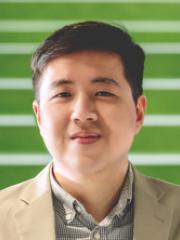
Xingnan Li is a Master of Research candidate at Macquarie University's Faculty of Medicine, Health and Human Sciences. His research focuses on biomedical imaging and computational methodologies in medical diagnostics. Role: Researcher (Master of Research candidate) Institution: Macquarie University Email: xingnan.li@hdr.mq.edu.au Research interests span: Digital pathology, immunofluorescence imaging, and machine learning applications in medical diagnostics. His recent work titled "Stain imputation in multiplex immunofluorescence imaging (SIMIF)" (2025) explores computational techniques for biomedical imaging. Keywords: Biomedical Imaging, Image Processing, Machine Learning Applications Sub-fields: Channel-wise Masking Algorithms, Computational Imaging
Saeed Ur Rehman serves as a Senior Lecturer in Cybersecurity and Networking within the College of Science and Engineering at Flinders University. He holds leadership positions as Course Leader for BIT and MIT (Networks and Cybersecurity) programs and Deputy Research Section Lead for Data and Information Sciences. His institutional affiliations include membership in the Centre for Defence Engineering Research and Training and the South Australia Cyber Security Innovation Node (SA Node) Advisory Board. Dr. Rehman's educational background includes: PhD in Electrical and Electronic Engineering from the University of Auckland (2015) Graduate Diploma in Higher Education from Unitec Institute of Technology (2016) Master of Engineering from the University of Auckland (2009) BSc Engineering from Pakistan (2004) His research spans cybersecurity, wireless communication, and network security with specific expertise in physical layer security, satellite communication, visible light communication, and fog computing. Dr. Rehman has developed innovative approaches in RF fingerprinting for device authentication and has contributed to vital sign monitoring technologies using radar systems. His work bridges theoretical security frameworks with practical applications in digital agriculture, vehicular networks, and energy harvesting systems. Analysis of his recent publications reveals a strong focus on emerging security challenges in next-generation networks, particularly addressing vulnerabilities in digital agriculture systems, privacy preservation in fog computing environments, and physical layer security enhancements for 6G networks. His research demonstrates consistent interdisciplinary collaboration across computer science, electrical engineering, and healthcare technology domains. Dr. Rehman has received significant recognition including: IEEE Senior Member status (2016) Fellowship from The Higher Education Academy, UK (2019) Cisco Networking Academy instructor certifications (2019, 2022) PhD Completion Award from University of Auckland (2014) As an active researcher and supervisor, he has secured substantial research funding including AUD$810,000 for the SmartSat CRC project (2020), AUD$150,000 from Defence Innovation Partnership (2023), and multiple grants from Flinders University and New Zealand institutions. He supervises PhD and Master's students in cybersecurity, with completed projects focusing on IoT security and privacy-preserving data aggregation, and current projects exploring intelligent reflective surfaces, RF emitter geolocation, and vehicular data communication frameworks. Dr. Rehman contributes extensively to the academic community as an IEEE Senior Member serving multiple societies, conference chair, journal editorial board member, and peer reviewer for numerous publications in his field.
Dr. Aliakbar Gholampour is a Senior Lecturer in Civil and Structural Engineering at the College of Science and Engineering, Flinders University. He earned his PhD in Structural Engineering from the University of Adelaide in 2019 and served as a Postdoctoral Research Fellow at the University of Melbourne until July 2020. He currently serves as Sustainable Construction Materials and Technologies Lead at Flinders University. Dr. Gholampour's educational background includes: PhD in Structural Engineering, University of Adelaide (2019) MSc in Structural Engineering BSc in Civil Engineering (Honours) His research focuses on sustainable infrastructure development through innovative materials and technologies. Dr. Gholampour specializes in recycling waste materials, industrial by-products, and fibers to develop sustainable construction materials. His work encompasses cementitious composites containing nanomaterials, smart multifunctional construction materials, 3D printable concrete, and advanced modeling of fiber-reinforced concrete. In structural engineering, he investigates the behavior, performance, and design of civil infrastructure with emphasis on resilience, sustainability, and management of deteriorating assets. Analysis of his recent publications reveals a strong focus on sustainable construction materials, particularly in recycling waste streams (foundry sand, plastic, glass, lead slag) for concrete production. His work integrates advanced computational methods including machine learning for material property prediction. The research trends show increasing emphasis on life cycle assessment, carbon reduction technologies, and the development of high-performance sustainable concrete alternatives using industrial by-products and recycled materials. Dr. Gholampour's scientific recognition includes: World's top 2% scientist by Stanford University and Elsevier (2021-2023) Emerging Research Leader Award, Flinders University (2023) Vice-Chancellor's Award for Early Career Researchers, Flinders University (2022) Finalist, SA Climate Leaders Awards (2024) Dean's Commendation for Doctoral Thesis Excellence, University of Adelaide (2019) His research is supported by significant grants including the International Clean Innovation Researcher Networks for Decarbonising the Building Industry (2023-2027), multiple Research Investment Funds from Flinders University, and the CRC-P grant for Recycling Waste Plastics. Dr. Gholampour serves as Special Issue Editor for multiple journals including Materials, Fibers, and Frontiers in Built Environment, and as Associate Editor for Frontiers in Built Environment Journal. He is a Steering Committee Member of the International Researcher Network for Decarbonising the Building Industry and a member of the Concrete Institute of Australia.
Simon Clarke is a Senior Lecturer at the Faculty of Science , Monash University . His research focuses on the evolution of nonlinear waves and their applications to geophysical flows, with expertise in numerical modeling, fluid dynamics, and wave instability. His research interests include: Nonlinear wave dynamics Geophysical fluid dynamics Internal and interfacial wave behavior Numerical methods for differential equations Recent publications highlight advancements in nonlinear wave modeling, including solutions to the Korteweg–de Vries equation and computational techniques for fluid flow analysis. Clarke served as a guest editor for The ANZIAM Journal in 2017, contributing to peer-review and editorial work.
Professor John Close is a Professor and Head of the Department of Quantum Science within the Research School of Physics and Engineering at the Australian National University (ANU). He has held this professorship since 2008 and previously served as Deputy Director of the School from 2012 to 2016. His leadership roles include Chair of the ANU Defence Working Group and Deputy Chair of ANU Academic Board (2015-2017), alongside being a Senior Fellow of the Higher Education Academy. His educational background includes: PhD in Physics from the University of California, Berkeley (1991) Postdoctoral Fellowship at the University of Washington, Seattle (1991-1994) Alexander von Humboldt Fellowship and Max Planck Research Fellowship at the Max Planck Institut für Strömungsforschung, Göttingen (1994-1998) Close's research centers on harnessing quantum fields to develop advanced quantum sensors for fundamental physics and interdisciplinary applications. His experimental and theoretical work spans quantum gravimetry, magnetometry, and Bose-Einstein condensate systems, with direct applications in mapping archaeological sites, volcanoes, aquifers, and mineral deposits. He actively explores quantum wavelet representations, higher-dimensional information processing, motion simulation, and biological quantum sensing through extensive collaborations with Earth Science, Biology, and Industry partners. Analysis of his recent publications reveals a dominant focus on compact mobile quantum sensing platforms, atom interferometry innovations, and sensor fusion techniques. His work bridges quantum physics with practical navigation, geophysical surveying, and environmental monitoring solutions, emphasizing real-world deployment of quantum technologies for precision measurements in gravimetry and inertial navigation. His scientific recognition includes: Alexander von Humboldt Fellowship (1994-1998) Queen Elizabeth II Fellowship (2000) National Teaching Award for Research Led Education (2006) As a former member of the Australian Research Council College of Experts (2015-2018), Close has significantly influenced national research funding while securing grants for interdisciplinary quantum projects. His educational leadership as Deputy Director of the Research School of Physics and Engineering (2012-2016) demonstrates commitment to research-led teaching, recognized by his national teaching award. Close leads the Atom Laser Research Group, driving experimental work in quantum sensor development and Bose-Einstein condensate applications. His team focuses on translating quantum phenomena into deployable technologies for defense, resource exploration, and environmental monitoring through industry and international academic partnerships.
Nichole Barry is a Scientia Lecturer (Level B) in the School of Physics at the University of New South Wales (UNSW), where she began her tenure-track journey in 2024. Previously, she has worked at the University of Melbourne and Curtin University, following completion of her PhD at the University of Washington. Dr. Barry earned her educational credentials from prestigious institutions: a Doctor of Philosophy in Physics from the University of Washington (2018), a Master of Science Minor in Astrobiology and a Master of Science in Physics from the University of Washington (2018 and 2016), and a Bachelor of Science in Physics from the University of California Davis, Integrated Studies Honors Program (2012). As an avid researcher in observational cosmology, radio science, and precision analysis, Dr. Barry specializes in Epoch of Reionisation searches, developing unique analysis approaches that push the boundaries of achieved precision within the radio-science community. Her work primarily focuses on the detection of the 21 cm cosmological signal using radio interferometers like the Murchison Widefield Array (MWA), with particular expertise in instrumental calibration, foreground removal, and power spectrum analysis. Her research bridges theoretical cosmology with practical observational techniques, making significant contributions to our understanding of the early universe. Analysis of Dr. Barry's most recent publications reveals a consistent focus on improving the precision and reliability of Epoch of Reionization measurements. Her work demonstrates increasing sophistication in handling instrumental systematics, foreground contamination, and radio frequency interference - the primary obstacles to detecting the faint cosmological signal. Recent papers emphasize the critical importance of accurate beam modeling, careful data processing pipelines, and innovative approaches to extracting the cosmological signal from noisy observational data. Discovery Early Career Researcher Award, Australian Research Council, 2024 ($381,237 AUD for three years) Astronomy Data & Compute Services Merit Allocation Program, six semesters from 2021 to 2024 ($217,000 AUD equivalent) Louise Webster Prize for Early Career Researchers from the Astronomical Society of Australia, 2023 (co-winner) Forrest Research Foundation Forrest Fellowship 2020 Laby ECR Travel Scholarship, 2019, 2021 Dr. Barry actively supervises research students, with Aman Chokshi being one of her current supervisees at the University of Melbourne. Her grant portfolio demonstrates strong research support, with significant funding from the Australian Research Council and other competitive programs. She is always welcoming conversations about pursuing Honours or PhD projects in early Universe cosmology using radio interferometers, indicating her commitment to mentoring the next generation of astronomers. As a key contributor to the Murchison Widefield Array (MWA) collaboration, Dr. Barry works within a large international team of radio astronomers focused on detecting the faint signal from the Epoch of Reionization. Her work involves close collaboration with researchers across multiple Australian institutions and international partners, contributing to one of the most promising approaches to studying the formation of the first stars and galaxies in our universe.
Associate Professor Robert Nordon is a faculty member at UNSW Sydney's Graduate School of Biomedical Engineering. He holds an MB BS, BMedSci, and PhD, with research focusing on advanced manufacturing and medical technologies. Since 2016, he has secured over $5M in research grants for projects in point-of-care diagnostics, cell/gene therapy manufacturing, and stem cell science. Research interests span three primary domains: Developing microfluidic single-use disposables for scalable clinical cell production Modeling cardiovascular development using stem cell-based microfluidic systems Creating computational tools for single-cell analysis and lineage tracking His publications (2017-2024) demonstrate strong emphasis on microfluidic device engineering, stem cell dynamics, and biomaterials development. Recurring themes include hematopoietic stem cell expansion, cardiac cell behavior, and peptide-based biomaterials. Significant grants include: ARC Linkage Grant LP160100570: Scaling microfluidics for cell manufacture (2016-2019) ARC Linkage Grant LP160100573: 3D microstructures for medical devices (2016-2019) ARC Linkage Grant LP190100029: Electrophoretic cell sorters (2020-2023) CRC-P: Microbioreactor for affordable cell/gene therapy (2021-2023) Current research trainees include Farzaneh Ziaee and Eric Du.
Professor Marcel Dinger is a prominent academic and researcher currently serving as Professor and Head of School for Biotechnology and Biomolecular Sciences at UNSW Sydney. With over 20 years of experience in genomics, he has established himself as a leading figure in both academic and entrepreneurial spheres within the field. He has published 153 papers with over 24,000 citations and maintains an h-index of 61 on Google Scholar. His leadership extends beyond academia as he serves as President of the Australasian Genomics Technologies Association (AGTA) and holds director positions at Pryzm Health and the National Centre for Indigenous Genomics (NCIG). Professor Dinger's research laboratory focuses on establishing new links between phenotype and genotype, particularly examining rare and complex diseases in relation to underexplored regions of the genome including pseudogenes, repetitive elements, non-canonical DNA structures, and noncoding RNAs. His work harnesses population-scale genomic datasets and sophisticated data science methods to bring an objective perspective to understanding how the genome stores information and how it is transacted in biology. His research interests span genomics, non-coding RNA biology, clinical applications of genomic medicine, and the development of computational approaches for analyzing complex genomic data. Analysis of Professor Dinger's recent publications reveals a strong emphasis on non-coding RNA research, particularly long noncoding RNAs and their roles in disease mechanisms. His work spans cancer genomics, neurological disorders, and fundamental genomic mechanisms including DNA secondary structures like i-motifs and G-quadruplexes. His research combines experimental approaches with advanced bioinformatics to address fundamental questions in genomic medicine and has significant translational implications for disease diagnosis and treatment. Highly Cited Researcher in Cross-Field category (2019, 2020, 2021) Fellow of the Faculty of Science (Research), Royal Society of Pathologists of Australasia (2016) NHMRC Career Development Award (2010) Queensland Government Smart Futures Fellowship (2009) Foundation of Research, Science and Technology New Zealand Postdoctoral Fellowship (2005) Professor Dinger has been instrumental in establishing and leading several significant research initiatives including Genome.One, one of the first companies globally to provide clinical whole genome sequencing services, and the Kinghorn Centre for Clinical Genomics at the Garvan Institute of Medical Research. His entrepreneurial experience includes founding four biotechnology and IT startups. He serves on multiple governance boards including the National Centre for Indigenous Genomics, focusing on using genomics to improve health outcomes for Australia's First Peoples. His laboratory at UNSW continues to advance our understanding of genomic regulation and its implications for human health and disease.
Dr. Glenn Myers is a Research Fellow in the Department of Materials Physics at Australian National University (ANU), where he works within the X-ray tomography and applications research group. His work focuses on advanced imaging techniques, particularly in the field of X-ray tomography and computed tomography. He collaborates extensively with researchers across multiple institutions and has made significant contributions to the development of imaging methodologies for both scientific and industrial applications. Dr. Myers' research interests span X-ray tomography, computed tomography, micro-CT imaging, image reconstruction algorithms, and beam hardening correction techniques. His work addresses fundamental challenges in imaging physics, including photon statistics, spectral information extraction, and dose reduction in imaging procedures. He has developed novel approaches for motion correction, alignment, and high-fidelity imaging of complex materials, particularly additively manufactured metal components. His research bridges theoretical physics with practical applications in materials science and non-destructive testing. Analysis of Dr. Myers' publication record reveals a strong focus on advancing X-ray imaging technologies, with particular emphasis on ghost imaging techniques, neutron imaging applications, and methods for improving image quality and reducing radiation dose. His work demonstrates consistent innovation in imaging methodology over the past decade, with applications spanning medical imaging, materials characterization, and environmental science. The interdisciplinary nature of his research connects physics, engineering, and materials science to solve complex imaging challenges. Key Collaborators: Andrew Kingston, Wilfred Fullagar, Shane Latham, Glenn Sheppard Research Group: X-ray tomography and applications group Primary Applications: Materials characterization, non-destructive testing, medical imaging
Ko, Jonghyeon is a researcher affiliated with the Ulsan National Institute of Science and Technology (UNIST) , specifically the Department of Materials Science and Engineering within the College of Natural Science and Engineering. His work spans multiple disciplines including process mining, anomaly detection, blockchain technology, AI computing, and environmental engineering. His research interests include: Anomaly detection in business process event logs Blockchain-based systems for nuclear/radioactive waste management AI computing using neuromorphic devices Statistical leverage and information-theoretic approaches to process mining Optimization of autonomous vehicle safety systems Recent publications demonstrate expertise in developing formal languages for data quality simulation, probabilistic trace alignment methods, and practical tools for anomaly detection like AIR-BAGEL. While no explicit scientific awards are mentioned in the text, his work has been published in venues such as Information Systems , npj Unconventional Computing , and Expert Systems with Applications .
Professor Stephen Loo is a distinguished academic and practitioner at the University of New South Wales, Faculty of Arts, Design & Architecture, where he serves as Professor in the School of Built Environment. With over 30 years of experience, he has established himself as a leading figure at the intersection of architecture, philosophy, art, performance, and science. His transdisciplinary approach has significantly influenced architectural theory and practice. Stephen Loo's research spans architectural theory and criticism, posthumanism, applied ethics, theatre and performance studies, cognitive neuropsychology, psychoanalytic theory, digital culture, and performance research. His work explores the complex relationships between design, philosophy, and ethics, with particular emphasis on posthuman approaches to architectural practice. His research interests include biophilosophy, ecological humanities, and experimental computational thinking, reflecting his commitment to pushing the boundaries of traditional architectural discourse. His recent publications reveal a trajectory moving toward increasingly speculative and interdisciplinary work, with growing emphasis on posthuman ethics, biopolitics, and the relationship between entomology, psychoanalysis, and ethics. This evolution demonstrates his capacity to integrate diverse theoretical frameworks into architectural practice. Professor Loo has held significant leadership positions including Chair of the National Education Committee at the Australian Institute of Architects (2010-2016) and President of the Australian Deans of the Built Environment and Design (2013-2016). He serves on the international Steering Committee for the Humanities Network Infrastructure (HuNI) and maintains active roles as PLuS Alliance Fellow, Visiting Professor at Arizona State University, and Adjunct Professor at the University of Tasmania. Beyond academia, Professor Loo is a founding partner of Mulloway Studio, an award-winning design practice whose projects have featured in the Venice Biennale in 2008 and 2014. He maintains an active performance-philosophy based art practice, exhibiting internationally, and participates in international collectives including the Food Art Research Network and The Food Project.
Professor Michelle Simmons is the Director of the ARC Centre of Excellence in Quantum Computation and Communication Technology at the University of New South Wales (UNSW Sydney). Her work focuses on advancing silicon-based quantum computing through atomic precision engineering, including projects on 2-qubit gates and logical qubit architectures. Involves cryogenic measurement and microwave spin control Collaborates with Silicon Quantum Computing Pty. Ltd. Her research spans fundamental quantum mechanics, device fabrication in CMOS cleanrooms, and error correction for scalable quantum systems. Recent publications highlight trends in quantum dot arrays, spin readout sensitivity, and interdisciplinary applications of quantum technologies. Professor Simmons received the Esther Hoffman Beller Lectureship (2022) for her contributions to qubit manufacturing. She leads a dedicated team at UNSW, working toward the development of high-fidelity quantum processors and exploring the intersection of quantum materials and computational innovation.
Professor Evgueni Jak is a distinguished Professor in Pyrometallurgy at the School of Chemical Engineering, The University of Queensland (UQ) . He co-founded and directs the Pyrometallurgy Innovation Centre (PYROSEARCH) , leading major research programs in copper and lead thermochemistry with industry partners like Aurubis, BHP, and Rio Tinto. Holding a Master’s in Metallurgy from St Petersburg Polytechnique University (1984) and a PhD in Pyrometallurgy from UQ (1995), he has authored over 400 scientific papers and secured substantial funding, including ARC Linkage (2002-06) and Trailblazer (2023-2026) grants. Education: Master of Engineering (Metallurgy), St Petersburg Polytechnique University, Russia (1984) PhD in Pyrometallurgy, The University of Queensland (1995) His research focuses on pyrometallurgy and high-temperature processing , including experimental phase equilibria, thermodynamic modeling of slag systems (e.g., Al2O3-CaO-FeO-Fe2O3-SiO2-PbO-ZnO), and viscosity modeling. Key contributions involve developing methodologies for measuring phase equilibria, optimizing industrial processes, and studying slag-refractory interactions. His 15 most recent articles highlight trends in thermodynamic modeling, element distribution in slag-metal systems, and sustainable metallurgy. Professor Jak has received numerous scientific awards , including the 2002 UQ Foundation Excellence Award , multiple Best Paper Awards from journals like Metallurgical Transactions and Canadian Metallurgical Quarterly, and the TMS Extraction and Processing Science Award (2018, 2020) . His work spans fundamental research and industrial applications , with a focus on computational thermodynamics and process optimization. He leads major collaborations with global companies and has contributed to the FactSage thermodynamic database.
Dr Kai Li Lim is the St Baker Fellow in E-Mobility at the Dow Centre for Sustainable Engineering Innovation , part of the Faculty of Engineering, Architecture and Information Technology at The University of Queensland (UQ) . Specializing in data engineering , telematics , and autonomous vehicle systems , his research examines electric vehicle (EV) usage patterns , charging reliability , and spatiotemporal data analysis to inform policy and sustainable transport strategies. Education : BEng (Hons) in Electronic and Computer Engineering (University of Nottingham), MSc in Computer Science (Lancaster University), PhD in Artificial Intelligence and Robotics (The University of Western Australia, funded by Australian Government Research Training Programme). Research Interests include: Electric vehicle telematics and data analytics Computer vision and deep learning for autonomous navigation Policy development for sustainable transport Infrastructure planning for EV and hydrogen systems Integration of cloud computing and IoT in mobility solutions Publication Trends reveal a focus on EV charging behaviors , data platform architectures , and autonomous driving frameworks , with recent work addressing regional emission disparities , modular safety systems , and online assessment integrity . Scientific Awards : St Baker Fellow in E-Mobility, Visiting Fellowship at UC Davis Electric Vehicle Research Center, Australian Government Research Training Programme (PhD funding). Supervision and Grants : Available for supervision, Dr Lim has secured funding from Energy Consumers Australia , iMove CRC , and Australian Urban Research Infrastructure Network (AURIN) for projects on EV charging incentives, freight emissions modeling, and longitudinal vehicle data databases. Labs and Collaborations : Collaborates with UC Davis Electric Vehicle Research Center , UQ School of Civil Engineering , and UQ School of Electrical Engineering and Computer Science . Leads the UQ Teslascope Project and contributes to the Green Australian Vehicle Ownership (GreenAVO) Capability for AURIN .
Professor Richard Morgan is an academic at the University of Queensland's School of Mechanical and Mining Engineering, where he served as Director of the Centre for Hypersonics from 1997 to 2021. His research specializes in hypervelocity aerothermodynamics, scramjet propulsion, and advanced hypersonic testing facilities. He lectures in mechanical and aerospace engineering and maintains an extensive international research program. His research focuses on: Development of hypervelocity impulsive facilities (including the 'X' series expansion tubes) Hypersonic aero-thermo-dynamics and radiation physics Scramjet propulsion systems for high-speed flight Planetary entry phenomena including ablation and radiation coupling Superorbital ground testing methodologies Analysis of recent publications reveals a dominant focus on experimental hypersonics, particularly in expansion tube facility development, radiation measurement techniques, planetary entry simulations, and aerodynamic heating. His work consistently addresses challenges in recreating extreme flight conditions for spacecraft and missile technologies. Awards and honors include: NASA Ames Honour Award (2010) for contributions to Hayabusa asteroid sample return mission observations UQ Excellence in Research Higher Degree Supervision Award (2012) He leads significant research collaborations with DSTG, NASA, ESA, Oxford University, and Ecole Centrale Paris, supported by continuous ARC funding since 1990 including current Discovery grants. His laboratory develops cutting-edge facilities like the X3 expansion tube and T6 Stalker Tunnel for hypersonic testing.