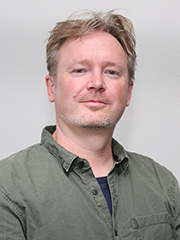
Justin David Calle is affiliated with the Professur Algorithmen und Didaktik at ETH Zurich, part of the School of Computer and Communication Sciences . He holds the role of Staff of Professorship for Algorithms and Didactics, contributing to the Department of Computer Science. His work focuses on algorithms and pedagogical approaches within computing education. No specific research awards, publications, or advisees are documented in the provided text.
Elizabeta Cavar is a Researcher in the Department of Computer Science at ETH Zurich, affiliated with the Professorship for Algorithms and Didactics. Her current research focuses on Algorithms and Computer Science Education , reflecting her role in a dedicated computer science professorship. Previously, she conducted experimental research in Condensed Matter Physics with emphasis on surface phenomena and nanoscale systems. Her publication record (2005-2011) reveals consistent use of scanning tunneling microscopy to investigate nanomaterials, including fullerene crystals, hexagonal boron nitride layers, and semiconductor nanowires. These studies centered on atomic-scale characterization of growth mechanisms, interfacial chemistry, and electronic properties in low-dimensional systems. She operates within the research infrastructure of the Professorship for Algorithms and Didactics at ETH Zurich, contributing to computer science education initiatives alongside algorithmic research.
Dr. Richard Kralovic is a Lecturer in the Department of Computer Science at ETH Zürich. His affiliation is with the Professur Algorithmen und Didaktik (Algorithms and Pedagogy Chair). He is based in CAB F 13.1 at Universitätstrasse 6, 8092 Zürich, Switzerland. His research interests are inferred from his department and chair, likely focusing on algorithms and the didactics of computer science, including educational methodologies in programming and theoretical computer science. No specific scientific awards or grants are mentioned in the provided information. His academic contributions are concentrated in his teaching and research within the Department of Computer Science at ETH Zürich.
Regula Lacher is a Researcher at ETH Zürich’s Department of Computer Science, affiliated with the Professorship for Algorithms and Didactics. Her work focuses on advancing computer science education through innovative pedagogical methods, emphasizing algorithm design, problem-solving techniques, and the integration of computational thinking into K-12 curricula. She specializes in developing tangible, non-digital teaching tools and game-based approaches to enhance abstract concept comprehension. Her research explores how informatics education can improve general educational outcomes, particularly through constructive induction and genetic Socratic methodologies. She has contributed to curriculum design frameworks for both Swiss Maturität and international K-12 systems, advocating for cross-disciplinary learning and teacher training programs. Publications span topics like robotics-based programming, cybersecurity education, and multilingual educational materials. Key themes include bridging concrete and abstract learning, promoting equity through accessible resources, and leveraging historical pedagogical tools like LOGO in modern classrooms. Her work addresses challenges in standardizing informatics education while maintaining adaptability for diverse cultural and linguistic contexts, as seen in her French and Italian language publications.
Dr. Yuka Asai is an Associate Professor and Division Chair of Dermatology at Queen's University. She holds cross-appointments at the Translational Institute of Medicine (TIME) and the School of Medicine within the Faculty of Health Sciences. Her research focuses on allergy, genetics, and epidemiology, particularly the interplay between skin health and systemic diseases, including the role of filaggrin mutations in peanut allergy. She has pioneered studies on the genetic and epigenetic basis of food allergies and skin-related systemic interactions. Education: BSc (First Class Honors, University of Alberta), MD (University of Saskatchewan), MSc in Epidemiology (McGill University), PhD (McGill University, 2018). Completed dermatology residency and training at McGill. Research interests include atopic dermatitis, epigenetic markers in skin diseases, and clinical guideline development. She leads initiatives on patient education, such as the PEEPS study, and investigates disparities in melanoma diagnosis. Her work bridges clinical practice and translational research, emphasizing evidence-based dermatology. Teaching: Known for engaging clinical and didactic training of residents and students. Services include consultation at Kingston General Hospital and outpatient care at Hotel Dieu Hospital. Grants and collaborations: Focus on food allergy genetics (e.g., START registry), epigenetic aging in atopic dermatitis, and population health studies on skin cancer. Active in national and international allergy and dermatology networks.
Alexandra Gasparinatou is a Teaching Professor at the Department of Informatics & Telematics, Harokopio University. She holds a PhD in Educational Technology from the National and Kapodistrian University of Athens, focusing on adaptive learning environments for distance education. Her academic background includes a BSc in Physics (University of Patras), MSc degrees in Medical Physics and Computational Mathematics & Informatics, and an MEd in Educational Sciences (Hellenic Open University). Her research interests center on educational technology, particularly adaptive online learning systems, informatics text comprehension, and learning styles in distance education. She has supervised multiple undergraduate and postgraduate theses and contributed to over 30 publications in peer-reviewed journals and conferences. Dr. Gasparinatou has collaborated with the Hellenic Open University since 2013 as teaching staff and has participated in educational training programs as a trainer. Her work emphasizes the integration of media and adaptive technologies to enhance learning outcomes in computer science education.
Dorthe Posselt is an Associate Professor at the Department of Science and Environment, Mathematics and Physics (IMFUFA) at Roskilde University. She is affiliated with the Centre for Frustrated Molecular Interactions and the Glass and Time research group. Her work focuses on interdisciplinary research spanning physics, biology, and chemistry, with emphasis on materials physics, molecular biophysics, and gender studies in STEM. Her research interests include nanoscale structure analysis, polymer physics, and the application of X-ray/neutron scattering techniques. She actively collaborates internationally, as evidenced by her 50+ research outputs and media engagements like "Nyt røntgenanlæg sætter skub i RUC's materialeforskning" (2023). Key contributions involve developing antimicrobial coatings for medical devices, studying biofilm dynamics, and investigating molecular interactions in complex materials. She has pioneered methodologies in solvothermal annealing and thin film characterization, as seen in her 2023 AIP Advances publication. Her work bridges fundamental science with practical applications in healthcare and sustainable materials. Posselt has delivered lectures at institutions like the University of Copenhagen and Technical University of Munich, and participates in beamtime studies at FRM2 (Germany). Her activities include organizing conferences and serving on review committees, reflecting her commitment to advancing both science and equity in physics education.
Arantza Campollo Urkiza is an Associate Professor in the Department of Languages, Arts, and Physical Education at the Complutense University of Madrid. She holds a PhD in Education, a Bachelor's in Musicology, a Piano Teaching Diploma, and a Master's in School Management. Her expertise spans interdisciplinary teaching, music education, and educational innovation. Her research focuses on disciplinary didactics, key competencies in education, and music education across different stages. She leads the Music Education from a Social and Psychological Perspective research group and has conducted projects such as: PR75/18-21612 on music's influence on adolescent stereotypes Madrid City Council project 115-2017 on music, equality, and adolescence Her teaching innovation projects include flipped classroom methodologies ( Project 120 ), creativity-centered pedagogy ( Project 365 ), and UDL approaches for entrepreneurship skills ( Project 231 ). Her publications address music's role in language development, STEM integration, and digital competence. Her work emphasizes interdisciplinarity and practical classroom applications, with a focus on leveraging music to address social and educational challenges.
Teresa Mateo-Girona is a full-time Assistant Professor at the Faculty of Education , Department of Language Didactics, Arts, and Physical Education , Complutense University of Madrid. She holds a PhD in Education and degrees in Hispanic and English Philology. PhD in Education (Complutense University of Madrid) Degree in Hispanic Philology (University of Murcia) Degree in English Philology (Complutense University of Madrid) Master's in Educational Innovation (Carlos III University of Madrid) Master's in Teacher Training for Spanish as a Foreign Language (University of Barcelona) Her research focuses on academic writing instruction , language teaching in primary/secondary education, digital tools for writing , and teacher training . Her recent work explores AI applications in reading strategies, multimodal argumentation, and labor-based grading models. She leads the Didactext research group and participates in international networks like RIEA-EA and ALES.
Prof. Dr. Marcus Schütte is a Professor of Mathematics Didactics - Primary School at the University of Hamburg's Faculty of Education. His academic journey includes roles at institutions like Leibniz University Hannover and TU Dresden, focusing on mathematics education and inclusive pedagogy. He holds a Dr. phil. from the University of Hamburg and completed his first state exam in Mathematics and Sport Education. Research interests include interactionist approaches to mathematics education, collaborative learning in heterogeneous groups, language in mathematics learning, and early mathematical development. Current projects involve AI-enhanced cooperative learning and inclusive mathematics education. Publications span monographs on collaborative mathematics learning environments, edited volumes on language and mathematics education, and articles in journals like ZDM and Journal für Mathematikdidaktik. His work emphasizes discourse analysis, inclusive teaching strategies, and interdisciplinary approaches to education.
Prof. Dr. Jens Siemon is a Professor of Educational Science at the University of Hamburg, specializing in Vocational Education and Media Professions. He holds a W3 professorship in the Department of Vocational Education and Lifelong Learning (EW 3) within the Faculty of Education. His academic journey includes a dual vocational training as a data processing clerk, studies in Business Education at Georg-August-Universität Göttingen (Dr. rer. pol., 2002), and international research collaborations in Spain and Australia. He has served as junior professor and later full professor since 2009. Research focuses include video-based learning analysis, game-based learning, computational thinking in education, and vocational training in the knowledge society. Key projects include the VIRTOOL project on virtual simulation tools and the Modellunternehmen A & S GmbH. He co-leads the EU-funded 'Professional teachers’ actions to promote subject-based learning' (ProfaLe) project and has secured over €6 million in third-party funding. Publications emphasize educational technology, video analysis methodologies, and teacher training. His work on automated classroom behavior analysis involves collaborations with Macquarie University and Fudan University. He supervises doctoral candidates like Anja Augsdörfer (2019) and Katharina Baumann (2015). The Videolabor at Hamburg provides technical support for student research in video analysis. Teaching contributions include courses on vocational informatics and media training. Recognized for integrating digital tools into education, he advocates for teacher competencies in the knowledge society. His research spans over 27 publications, emphasizing innovative pedagogical practices and evidence-based educational strategies.
Bastian Schmitt is a Researcher in the Department of Didactics of social sciences and mathematics and natural sciences (EW 5) at the University of Hamburg's Faculty of Education. His work focuses on mathematics and computer science education, particularly initial mathematical instruction. He is stationed at Alsterterrasse 1, Hamburg, with office hours on Thursdays from 2:00-3:00 p.m. in room 606 of building AT 1. Postal Address: Von-Melle-Park 8, 20146 Hamburg Contact: Phone +49 40 42838-8006 | Fax +49 40 42838-4459 His research emphasizes improving teaching methodologies in STEM fields, with a specific focus on foundational mathematics education and integrating computer science pedagogy into early-stage learning environments.
Rolf Jonas Persson is an Associate Professor in the Department of Physics at NTNU's Faculty of Natural Sciences. His interdisciplinary research spans physics education innovation, atomic/nuclear physics, and history of science. He develops novel educational approaches including video-based learning analytics, planetarium software applications, and smartphone-based physics experiments. His atomic physics research focuses on hyperfine structure anomalies and precise calculations of quantum electrodynamic effects in atomic systems. He co-authored Norway's leading physics didactics textbook and creates open educational resources on experimental methodologies. Recent publications demonstrate dual focus on advancing atomic physics theory and optimizing STEM pedagogy. He leads projects investigating eye-tracking analysis of instructional videos and developing concept inventories for physics education. He coordinates laboratory development initiatives and supervises student research in experimental physics education techniques.
Anna Axelsson is a Lecturer in the Department of Computing Education and Didactics at Lund University. Her research focuses on educational methodologies in computing, including active learning strategies, formative assessment, and the use of digital tools like Moodle in higher education. She has contributed to pedagogical innovations such as structured group study methods and teacher-supported summer learning programs. Her work emphasizes improving student motivation and academic performance through collaborative learning and effective assessment practices. Key contributions include conference papers presented at the Pedagogiska Inspirationskonferensen and other educational forums. No scientific awards or grants are explicitly mentioned in the provided materials. She has collaborated with colleagues on research projects, though specific student advising details are not available here.
Martina Landman is a PreDoc Researcher at the Department of Software Engineering within the Faculty of Informatics at Technische Universität Wien . She actively contributes to K-12 Computing Education through innovative teaching methods and outreach programs.