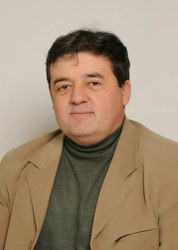
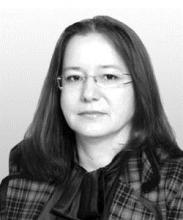
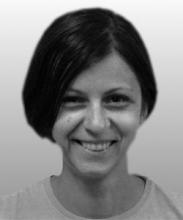
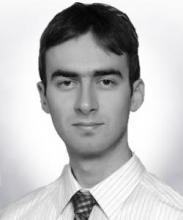
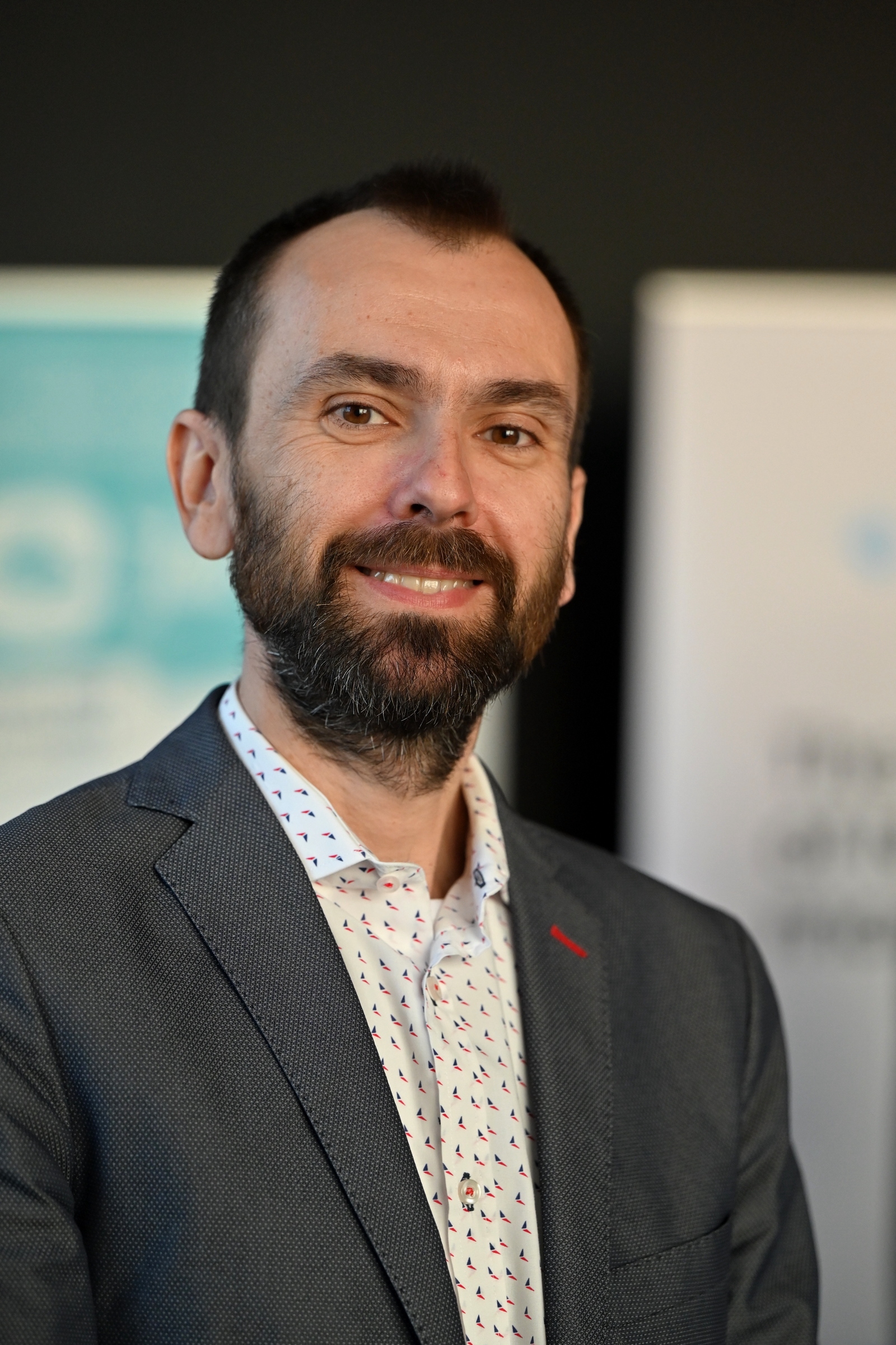
Zlatkova Aleksandra is affiliated with the Faculty of Electrical Engineering and Information Technologies at Ss. Cyril and Methodius University in Skopje. Her research spans interdisciplinary domains including Machine Learning , Signal Processing , and Energy Systems . Key contributions in Power Quality analysis using Convolutional Neural Networks Expertise in Federated Learning for Short-Term Energy Forecasting Developed the UbiLAB Framework for remote laboratory environments Explored Wavelet Transforms in Medical Image Processing Her work also addresses Smart Grid Security through Temporal Convolutional Networks and investigates Honeybee Swarming with Acoustic Signal Processing . Recent publications emphasize Multi-Horizon Forecasting and Deep Learning applications in energy and medical domains.
Dimirovski Georgi is a Professor at the Department of Control and Systems Engineering, Faculty of Electrical Engineering and Information Technologies, Ss. Cyril and Methodius University of Skopje. His research focuses on advanced control systems, neural networks, cyber-physical systems, and computational cybernetics. He has extensively contributed to theoretical and applied aspects of switched systems, nonlinear control, fault-tolerant mechanisms, and networked control systems. His work integrates methodologies such as Lyapunov theory, adaptive control, and reinforcement learning to address complex challenges in robotics, aerospace, and industrial automation. Recent studies emphasize resilient control under adversarial attacks, optimal resource allocation, and synchronization of dynamic systems. Key research trends include: (1) developing robust control strategies for systems with time-delays and uncertainties, (2) enhancing cybersecurity in cyber-physical systems through deception attack detection and mitigation, and (3) advancing machine learning techniques for real-time system estimation and prediction. Dimirovski has published over 200 peer-reviewed articles, with recent contributions appearing in top journals and conferences. His work frequently explores intersections between control theory and artificial intelligence, particularly in applications requiring safety-critical performance guarantees.
Dr. Aristotel Tentov is a Full Professor at the Faculty of Electrical Engineering, Computer Science Department of the University 'St. Kiril i Metodij' in Skopje, Macedonia. He holds a Ph.D. in Computer Science (1994), M.S. (1989), and B.S. (1983) from the same university. His career spans over three decades, progressing from Research Assistant (1985) to Assistant Professor (1994), Associate Professor (1999), and Full Professor (2004). His research encompasses Computer Architectures Multiprocessor Systems Networking (Wired/Wireless/ATM) Embedded Systems RFID Process Control Dr. Tentov authored/co-authored over 20 scientific papers and technical reports, with notable work on TCP performance modeling (2000–2001) and double-loop network analysis (1990s). Projects include NATO fighter avionics integration (1991) and EU-funded HeliNet stratospheric network design (2001). He led multiple industrial projects including control systems for zinc smelters, university computer networks, and the Macedonian Rosetta Stone deciphering initiative (2003–2005). His work bridges academic research with practical industrial solutions.
Prof. Ljupce Markuseski is an Associate Professor at the Economic Faculty of Prilep, part of the Ss. Cyril and Methodius University of Skopje. He holds a PhD in designing decision-making models and has extensive experience in quantitative methods, mathematical modeling, and decision theory. His career spans over three decades, beginning as a junior assistant in 1987 and advancing to his current rank in 2018. He has contributed to numerous international conferences and co-authored impactful papers on topics like decision support systems, knowledge management, and innovation financing. Education: Bachelor's in Economics, Economic Faculty of Prilep Master's thesis on optimizing technological processes (2004) PhD thesis on decision-making models (2010) Research focuses on mathematical modeling of economic phenomena, decision theory, and business systems optimization. His work bridges theoretical frameworks with practical applications in Macedonian companies, emphasizing technological adoption and sustainable economic practices. Recent articles highlight contributions to data mining, electronic commerce, and patent-driven business strategies. These reflect trends in leveraging technology for decision-making and market competitiveness. Awards and recognitions aren't explicitly mentioned, but his active participation in international academic networks underscores his scholarly impact.
Dejan Zdravevski is a Full Professor at the Faculty of Economics in Prilep, Macedonia. He holds academic roles including former Deputy Dean and has been involved in EU-funded international collaborations. His expertise spans Business Intelligence systems, strategic management, and IT applications in business processes. Education: Bachelor's in Economics (Statistical Cybernetics), Faculty of Economics in Prilep Master's in Business Administration (Thesis: Data Mining in Business Operations) PhD in Economics focusing on Business Intelligence Performance Modeling Research Interests: Dr. Zdravevski explores the application of advanced IT systems (e.g., cloud computing, autonomic systems) in Macedonian enterprises, business strategy, and labor market dynamics in the ICT sector. International Collaborations: Visiting scholar at University of Udine (Italy) and University of the West of England (UK) under Tempus projects. Grants & Awards: No specific grants or awards listed. Labs/Teams: No formal lab affiliations mentioned, but active in interdisciplinary research networks.
Nuhi Besimi is an Assistant Professor at the Faculty of Contemporary Sciences and Technologies, South East European University (SEEU). His research focuses on machine learning, data mining, AI applications in education and music, and disaster response systems. He has published extensively in conferences like MECO and IEEE, addressing topics ranging from ethno-fusion music datasets to low-cost machine learning architectures. His work includes creating benchmark datasets for ethno-fusion music, developing energy-efficient ML systems using Raspberry Pi clusters, and analyzing media bias through data mining. Besimi collaborates with institutions in Montenegro, Croatia, and Albania on interdisciplinary projects. Recent trends in his publications emphasize AI-driven solutions for education, music technology, and disaster management. He has contributed to fake news detection surveys and automatic literature review systems leveraging OpenAI tools. His research bridges theoretical data science with practical applications in diverse cultural and technological domains.
Halil Snopçe is a Part-Time Full Professor at the Faculty of Contemporary Sciences and Technologies within South East European University . His academic and professional work spans applied mathematics , blockchain technology , cybersecurity , and parallel computing . Doctor in Computer Science and Applied Mathematics (2007-2011), SEEU Master in Mathematics (2003-2007), University of Tirana Bachelor in Mathematics (1992-1997), St. Cyril and Methodius University Snopçe’s research focuses on mathematical transformations , systolic arrays , and blockchain applications in education and credentials verification. His work also addresses cybersecurity challenges , data mining , and parallel processing for computational efficiency. Recent publications highlight trends in blockchain technology for academic systems, parallel algorithms , and educational technology during the pandemic. His applied mathematics contributions include numerical analysis and linear algebra solutions. Snopçe has no listed scientific awards in the provided information. He has collaborated on student advising and interdisciplinary research projects, though specific advisees are not detailed.
Suzana Loshkovska, PhD , is a Full Professor at the Faculty of Computer Science and Engineering of Ss. Cyril and Methodius University in Skopje , Macedonia. Since 1992 she has held continuous academic appointments, interrupted only by a visiting-researcher stay at the Academy of Sciences of Lower Austria (1993–1994) where she designed a medical information system for Krems Hospital. Education : BSc (1989) and MSc (1992) in Computer Science and Automation, Faculty of Electrical Engineering, Skopje PhD (1995) in Technical Sciences, Technical University of Wien, Austria Research Interests span programming, visualization, human–computer interaction, virtual reality, medical imaging, and modelling/visualization of medical processes. Her work integrates advanced algorithmic techniques—such as hierarchical multi-label classification, support-vector machines, predictive clustering trees, and Bayesian networks—into practical medical and multimedia applications. Across more than one hundred peer-reviewed publications, her recent articles concentrate on content-based medical image retrieval , annotation of medical images , visual concept detection , and interactive medical systems . These contributions collectively advance computer-aided diagnosis, clinical decision support, and efficient management of large-scale medical data sets. Scientific Awards & Recognition : Member, Editorial Board, INFORMATICA (international journal, Slovenia) Projects & Funding : Principal investigator or participant in bilateral and EU-funded projects including SEE-ERA.NET Plus, TEMPUS DL@WEB, TEMPUS M.Sc. E-Learning, and multiple Macedonian Ministry of Science grants covering medical imaging, environmental modelling, distance learning, and electromagnetic-effects visualisation. While no specific research group or laboratory name is provided, her sustained involvement in national and international projects indicates active leadership within the university’s medical-informatics and multimedia-research community.
Simona Samardzhiska, Ph.D., is an Associate Professor at the Department of Computer Science and Engineering, Faculty of Computer Science and Engineering, Ss. Cyril and Methodius University in Skopje. Her academic work focuses on cryptography, network and information security, algorithm design, and data mining, alongside contributions to machine learning and artificial intelligence. Her research spans both theoretical and applied aspects of computer science, particularly in cybersecurity and algorithmic innovation. She has supervised 14 Ph.D. students and over 20 master's students, contributing significantly to academic mentorship. She is affiliated with the Laboratory of Cryptography and Security Technologies, advancing practical applications in security protocols. Her scholarly achievements include awards such as the 'Young Researcher' recognition from her university in 2007. Major Awards: Young Researcher award (2007)
Prof. Dr. Andreja Naumoski is a full professor at the Faculty of Computer Science and Engineering (FCSE) at Ss. Cyril and Methodius University in Skopje. Since 2009, he has contributed to teaching and research, leading courses in intelligent information systems and serving as head of the master’s program in Eco-Informatics and the Laboratory for Eco-Informatics since 2024. Focus areas: machine learning, GIS applications, environmental data modeling Specialties: Smart IoT systems, ecological modeling, data visualization His research emphasizes intelligent decision support systems applied to environmental domains, integrating GIS with machine learning for dynamic process prediction. He participated in international projects (Interreg IPA, Tempus, FP6) and authored over 100 papers in prestigious venues.
Артан Лума is a Full Professor at the Faculty of Contemporary Sciences and Technologies, South East European University (Tetovo, North Macedonia). He holds a PhD in Computer Sciences (Cryptography) from SEEU, a Master's in Multimedia, and an engineering degree in Informatics. His academic roles span over two decades, including Deputy Director of e-Learning Center and prior positions as Associate Professor (2015–2020), Assistant Professor (2010–2015), and Teaching Assistant (2003–2010). His research focuses on Cryptography, Cybersecurity, Blockchain Technology, and Data Mining, with notable contributions to academic credential verification systems, alignment of university curricula with job markets, and industrial IoT security. He has authored/co-authored over 40 peer-reviewed publications in venues like IEEE, International Journal of Online and Biomedical Engineering, and SAR Journal. Key Research Themes: Blockchain applications in education, cybersecurity frameworks for IIoT, parallel computing algorithms. Grants/Projects: Developed the North Macedonia Research Ranking Platform and collaborated on EU-funded projects aligning education with labor market needs. Educational Leadership: Pioneered e-Learning initiatives and curriculum modernization in Balkan universities.
Vladimir Atanasovski is an Adjunct Professor at the Department of Telecommunications, Faculty of Electrical Engineering and Information Technologies (FEIT) at Ss. Cyril and Methodius University in Skopje. He holds a Doctorate in Technical Sciences (2010), a Master’s in Electrical Engineering (2006), and a Bachelor’s in Electrical Engineering (2004), all from the University of Skopje. His career spans over 19 years at FEIT, progressing from Demonstrator (2004–2006) to Assistant Professor (2006–2010), Associate Professor (2010–2015), and Adjunct Professor since 2015. His research focuses on telecommunications , blockchain applications , and AI integration in academic systems. Notable areas include blockchain-based diploma verification systems, 5G network optimization, IoT traffic classification, and radio spectrum management. He has contributed to projects like eWALL for eHealth platforms and Flash Crowd Management in virtualized networks. Recent publications emphasize blockchain security , AI-driven credential verification , and 5G NR architecture . His work bridges academia and industry, addressing challenges in cybersecurity, network efficiency, and education technology. Vladimir’s expertise extends to collaborative projects with international partners, leveraging machine learning and cognitive radio networks for innovative solutions in telecommunications and smart systems.
Marija Kalendar is an Associate Professor at the Faculty of Electrical Engineering and Information Technologies (FEIT) of the Ss. Cyril and Methodius University of Skopje. She is affiliated with the Department of Computer Engineering and Informatics, where she contributes to research and teaching in computer science, AI, and network technologies. Her work spans machine learning applications, healthcare ethics in AI, IoT frameworks, FPGA implementations, and remote laboratory systems. Education: No explicit educational details provided in the text. Research Interests: Dr. Kalendar's research focuses on ethical AI (e.g., bias detection in medical datasets), federated learning for healthcare and IoT security, FPGA-based hardware designs for networking, and virtual laboratory frameworks. She also explores cryptocurrency price prediction using ML and LoRaWAN IoT limitations. Key Article Trends: Her recent work emphasizes AI ethics (racial bias in clinical AI), cybersecurity in IoT (federated learning for intrusion detection), and remote education infrastructure (UbiLAB framework). She also studies vital signs' role in bias and 5G network frameworks for mission-critical data. Grants/Advising: No specific grants or advising details provided. However, her involvement in collaborative projects (e.g., UbiLAB, federated learning frameworks) suggests interdisciplinary teamwork. Labs/Teams: Her affiliation with the Department of Computer Engineering and Informatics implies collaboration with FEIT's research institutes, though specific lab names are not mentioned.
Kjosev Josif is an academic affiliated with the Faculty of Electrical Engineering and Information Technologies at Ss. Cyril and Methodius University in Skopje. He holds a position in the Department of Electronics within the Institute of Electronics. His work focuses on practical applications of electronics in education and industrial systems, with a particular emphasis on power electronics, embedded systems, and circuit design. His research interests include developing educational tools using embedded systems (e.g., toys as teaching aids), optimizing power conversion techniques, and designing instrumentation for network infrastructure. He has contributed to advancements in switched-capacitor converters, stepper motor synchronization, and low-component-count power solutions. His publications reflect a blend of theoretical and applied electronics engineering, spanning from foundational circuit design (1996) to modern applications like 3D printer motor control (2018). While no formal awards are listed, his work demonstrates sustained engagement in both academic research and pedagogical innovation. He is currently active in the academic community, contributing to the Department of Electronics’ research and teaching activities without any indication of emeritus or retired status.
Pero Latkoski is a Professor at the Faculty of Electrical Engineering and Information Technologies (FEIT) of Ss. Cyril and Methodius University of Skopje, specializing in Telecommunications. He holds a PhD from FEIT (2010), M.Sc. (2006), and B.Sc. (2004) from the University of Technology in Skopje (ETF). His research focuses on wireless communication systems, spectrum management, heterogeneous networks, and protocol engineering. Notable contributions include work on cognitive radio networks, secondary spectrum usage (e.g., TVWS), and network function virtualization (NFV) architectures. He has led projects on RIWCoS platform development for heterogeneous networks and contributed to digital switchover (DSO) studies in Macedonia. Latkoski has authored over 60 peer-reviewed articles and two books. His recent work explores blockchain applications in education and healthcare, AI-driven perimeter security, and 5G/edge computing integration. He actively collaborates with institutions like SPRINGER, IEEE, and COST Action IC0902. Labs/Teams: Head of Telecommunications Institute at FEIT, RIWCoS platform developer, and contributor to COST Action IC0902 spectrum whitespace initiatives.