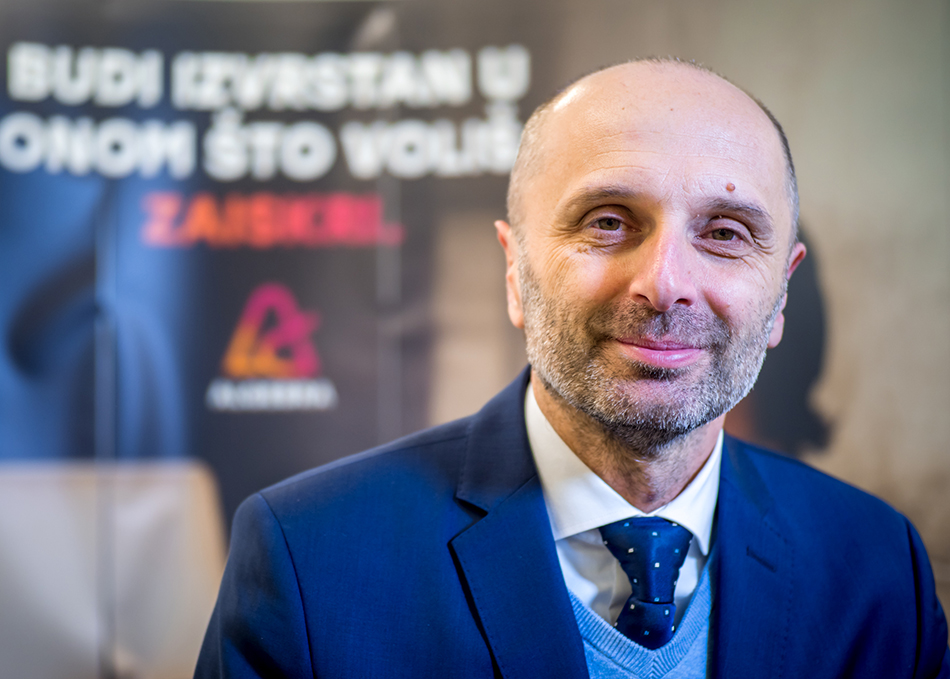
Krešimir Sikulin is a Lecturer at Algebra Bernays University , where he teaches in parallel with his professional IT career. He holds an engineering degree in computer science and has been active in both Croatia and the Netherlands. Born in Zagreb Graduated from Ruđer Bošković High School (1992) BSc in Computer Science Management from Technical University of Zagreb (2001) His research interests focus on emerging technologies including IoT, blockchain, and startup ecosystems. He emphasizes modern teaching methods in network and IT education. With a career spanning company ownership and IT sector employment, he combines practical experience with academic instruction. His work also touches on interdisciplinary themes at the intersection of technology and entrepreneurship.
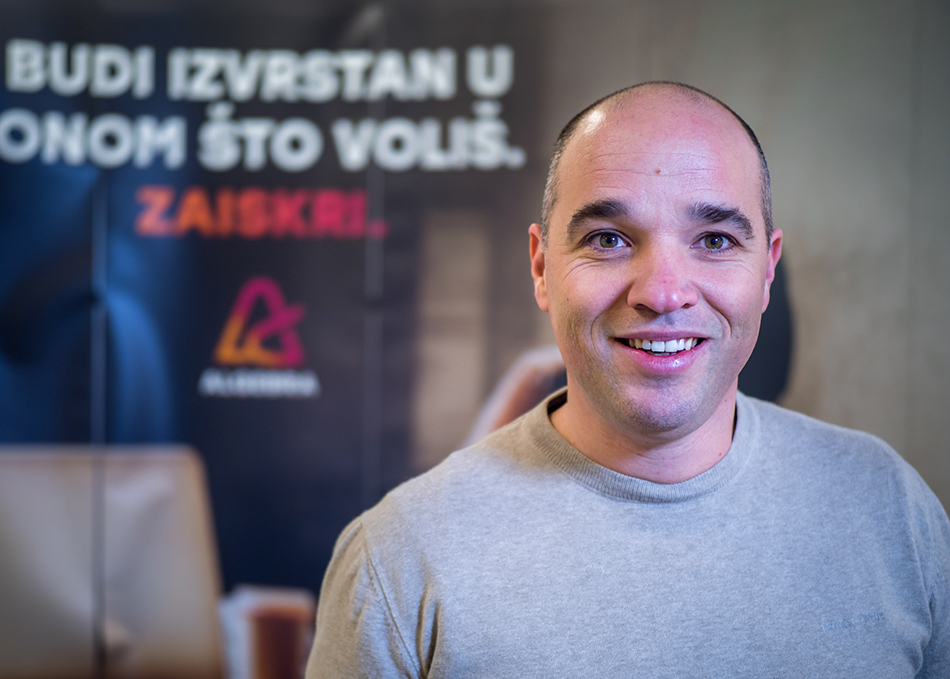
Dr. Mirko Talajić is a lecturer and Head of the Department at Algebra University, with expertise spanning game theory, IT systems management (including data science and analytical systems), and leadership/human resources management. He holds a doctoral candidate status at the Faculty of Information Studies in Novo Mesto, Slovenia, and has earned certifications as a trainer in emotional intelligence and leadership. Education: Graduated from the Faculty of Science and Mathematics (Department of Mathematics) in Zagreb, Master of Science in Game Theory applications at the Faculty of Economics, Zagreb. His research interests focus on strategic interactions, digital transformation, and AI-driven systems, with recent publications exploring machine learning in education, CNN-based defect detection in renewable energy systems, and game theory applications in workforce diversity and social media strategy. He also serves as CIO at the Agency for Commercial Activities (AKD) d.o.o., where he applies his technical and managerial expertise. Scientific awards: None explicitly mentioned. His academic collaborations and lectureships emphasize bridging theoretical research with practical applications in IT, business analytics, and leadership training.
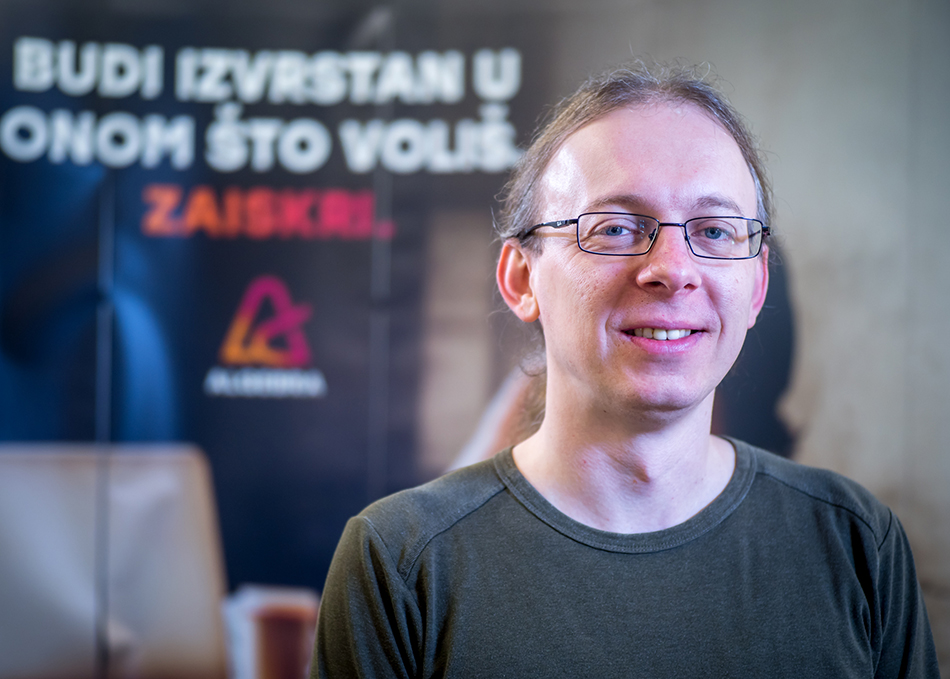
Dr. Alberto Teković is an academic affiliated with Algebra University , holding the rank of Associate Professor . He studied at the Faculty of Computer Science and Electrical Engineering (graduated 2000) and earned his Ph.D. in electrical engineering (major: radio communications) from the Faculty of Electrical Engineering and Computing, University of Zagreb (2007-2009). Primary research focus: Radio communications , Network optimization , and Electromagnetic effects in communication systems Industry experience: Senior Engineer for Radio Network Optimization at Vipnet d.o.o. (since 1999, with 9 years in radio network optimization) Academic contributions: Participated in the scientific project Electromagnetic effects and structures in communication systems (2007-2009), supported by the Ministry of Science, Education and Sports of Croatia.
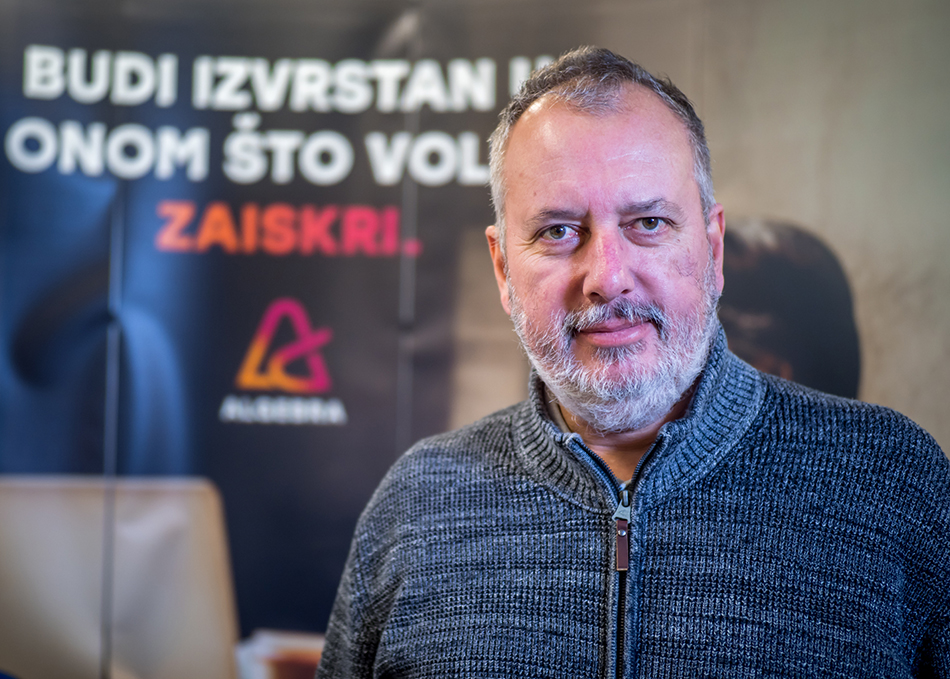
Assoc. Prof. Dr. Sc. Goran Đambić is an Associate Professor at Algebra University in Croatia, focusing on information sciences , computer science , and digital technologies applied to education and social/economic challenges. His work bridges software engineering , machine learning , and cybersecurity with pedagogical innovation in higher education. MSc in 2007, Faculty of Electrical Engineering and Computing, Zagreb His research emphasizes machine learning and automated assessment in education (via systems like AcpSQL), cybersecurity (honeypots), and IoT applications for environmental monitoring. He has published over 25 scientific papers and contributed to advancements in Kubernetes orchestration , ARM/RISC-V architectures , and LPWAN networks . Recent publications highlight trends in AI-driven education , smart public transport , and secure business systems . His work spans SQL query evaluation , containerization , and blockchain applications in communication systems. As a lecturer and researcher, he has held roles at Algebra University since 2007, advancing from lecturer to assistant professor and scientific associate . While no specific scientific awards are listed, his career reflects continuous engagement in digital transformation and pedagogical innovation .
Jurica Đurić is a Senior Lecturer at the Polytechnic of Contemporary Information Technologies (VsiTe) since 2021, conducting lectures and laboratory exercises. He has also been affiliated with the College of Information Technologies in Zagreb since 2009, where he taught multiple courses. His career spans roles such as Vice-Dean for Development and Economy, Head of the Undergraduate Professional Study of Information Technologies, and Head of the Department of Computer Systems and Networks. Education: Graduate Specialist Professional Study in Informatics, Technical University of Zagreb (2010) Professional Study in Programming, University Study Center for Professional Studies of the University of Split (2008) Research Interests: Focus on smart technologies (Arduino, Croduino, VIDI-X workshops) Applied projects: Cheatless application, Eter.io intelligent lighting, smart traction battery charger Software development for business systems, including web applications and educational tools Professional Contributions: Worked as Educational Coordinator at ROKO Labs, Programmer at ANDRITZ Digital Factory Ltd, and Web Application Programmer at Beta Tau Beta doo Participated in conferences (ICT Society Forum, Agency for Science and Higher Education) and TV appearances (Večernji TV) Developed practical applications for remote testing (Cheatless), IoT systems (Eter.io), and smart technology education Scientific Awards: Gold medal at ARCA international innovation fair Bronze medal at ARCA international innovation fair
Ivo Špigel is a Croatian academic and entrepreneur, currently serving as a Lecturer at the College of Computing within Algebra University . He is also a co-owner and board member of Perpetuum Mobile doo , one of Croatia’s earliest private IT companies, and a prominent figure in the European startup ecosystem. His work spans journalism, mentoring, and incubation initiatives. Špigel has contributed to technology media outlets such as Mreža , the Croatian edition of Forbes , and co-founded the tech portal Tech.eu . He has authored two publications: "Kud to ide?" (2009), a compilation of columns on IT and digital culture, and "The European Startup Revolution" (2015), a book documenting interviews with European entrepreneurs. As a mentor in programs like Seedcamp and Founder Institute , he supports early-stage startups. He co-founded the Zagreb Entrepreneurship Incubator (ZIP) , fostering innovation through mentorship networks and volunteer-driven initiatives. His teaching focuses on entrepreneurship and financing models for technology startups.
Assistant Professor Juraj Benić is a control engineer at the School of Applied Mathematics and Informatics, Josip Juraj Strossmayer University of Osijek, Croatia . His interdisciplinary work bridges control theory, fluid power systems, IoT, and data-driven maintenance , with applications ranging from forestry vehicles to unmanned aerial systems. Education PhD in Control Theory and Mechanical Engineering, 2022 – University of Zagreb, Faculty of Mechanical Engineering and Naval Architecture MSc in Control Theory and Mechanical Engineering, 2017 – University of Zagreb, Faculty of Mechanical Engineering and Naval Architecture BSc in Control Theory and Mechanical Engineering, 2015 – University of Zagreb, Faculty of Mechanical Engineering and Naval Architecture Research Interests Prof. Benić’s core research areas include: Energy-efficient direct-driven hydraulic (DDH) systems for mobile machinery Hybrid-electric powertrains for forestry skidders and multirotor UAVs IoT-enabled predictive maintenance using convolutional neural networks and vibration analysis Fuzzy-logic and ontology-based controllers for electro-hydraulic systems Human-robot interaction and context-aware robotics Computational linguistics and digital corpora of Croatian dialects Publication Trends Since 2018 he has produced more than 25 peer-reviewed works. The 2023-2024 journal articles focus on hybrid UAV propulsion and comparative energy efficiency of hydraulic systems , while earlier works delve into fuzzy control ontologies , predictive maintenance via IIoT and fuel-saving hybrid skidders . Interspersed linguistic contributions showcase his versatility in digital dialectology. Scientific Awards & Recognition While explicit awards are not listed, he has delivered invited lectures (University of Maribor, 2021) and participated in study visits (South Kazakhstan State University, March 2024), indicating growing international recognition. Supervision & Collaboration He collaborates closely with colleagues from the University of Zagreb and University of Osijek, co-authoring with researchers such as D. Pavković, Ž. Šitum, M. Cipek, and D. Brezak. Student supervision is implied through experimental rigs and project descriptions, although specific advisee names are not provided. Laboratory & Field Infrastructure Research is supported by fully instrumented hydraulic test benches, a retrofitted deep-drilling rig, IoT accelerometer networks, and field-measurement campaigns on commercial skidders equipped with telematics (WIGO-E) for long-term fuel and energy-data logging.
Professor Mirta Benšić is affiliated with the School of Applied Mathematics and Informatics at Josip Juraj Strossmayer University of Osijek. She leads the Probability, Mathematical Statistics and Data Science Research Group and teaches Multivariate Analysis , Statistics , and Probability and Statistics at the Faculty of Applied Mathematics and Informatics. Degrees: PhD in Mathematics, University of Zagreb (1997) MSc in Mathematics, University of Zagreb (1990) BSc in Mathematics and Physics, University of Osijek (1985) Her research focuses on statistical theory (estimators, asymptotic properties) and statistical applications in medical statistics, econometrics, environmental science, and food engineering. Recent work includes modeling SARS-CoV-2 immunity duration, radon concentration analysis in Montenegrin buildings, and nutritional improvements in food products. Key trends from her 15 most recent publications span biostatistics (prostate cancer MRI analysis), environmental science (radon studies), food technology (cocoa shell processing), and materials engineering (concrete with recycled rubber). Her methodological contributions include measurement error models, nonlinear regression, and multivariate analysis. Leadership and Projects: She led projects funded by the Croatian Science Foundation (e.g., Statistical aspects of parameter identification ), European Regional Development Fund, and Montenegrin Academy of Sciences. She served on editorial boards ( Mathematical Communications , Osječki matematički list ) and program committees for international statistical conferences.
Domagoj Matijević is an Associate Professor at the School of Applied Mathematics and Informatics within Josip Juraj Strossmayer University of Osijek . His academic career spans computational geometry, optimization algorithms, and bioinformatics applications. PhD in Computer Science (Algorithms and Complexity), Max-Planck-Institute for Computer Science, Saarbrücken (2007) MS in Computer Science, Saarland University (2002) BS in Mathematics and Computer Science, University of Osijek (2001) Research interests focus on Machine Learning , Computational Geometry , and Bioinformatics , particularly through software tools like Fortuna for RNA splicing analysis and Trajan for comparing single-cell trajectories. His work bridges theoretical computer science with practical implementations in C++ , Python , and CUDA for high-dimensional data processing. 2023 Best Paper Award at MIPRO's Artificial Intelligence Systems track Key contributor to Neural Network-Based Pollen Prediction and Well-Separated Pair Decomposition implementations Developed Trajan for dynamic pseudotime warping and Fortuna for novel splicing event detection Currently teaches Algorithm Complexity , Computational Geometry , and Embedded Systems . Past projects include NVIDIA-funded GPU implementations and German-Croatian collaborations on kinetic spanners.
Dr. Igor Stagljar is a Full Professor at the Department of Biochemistry and Department of Molecular Genetics, University of Toronto. His research focuses on membrane protein interactions and systems biology approaches to disease mechanisms. BSc in Molecular Biology, University of Zagreb PhD in Molecular Biology, ETH Zurich Postdoctoral work at University of Zurich and University of Washington Research interests span protein interaction networks, membrane protein analysis, and high-throughput proteomics. He developed technologies like MYTH , MaMTH , and SIMPL for studying integral membrane proteins. Recent work explores AI-driven drug discovery and ferroptosis pathways. Scientific accolades include membership in the Croatian Academy of Sciences and Arts. He serves on editorial boards of journals such as Journal of Molecular Biology and Molecular Systems Biology . As co-founder of Dualsystems Biotech and Perturba Therapeutics , he bridges academia and biotech innovation.
Vladimir Brajković is an Assistant Professor at the University of Zagreb, Faculty of Agriculture, Department of Animal Science. His research focuses on molecular genetics, mitogenome analysis, and conservation genetics of domestic and wild animals. Education: PhD in Agricultural Sciences (2019) Master in Animal Genetics and Breeding (2013) Bachelor in Engineering of Animal Sciences (2011) His research interests span laboratory methods for molecular biodiversity, archaeogenetics, and bioinformatics tools for genome analysis. Key projects include exploring mitogenome effects on dairy cattle traits and bridging animal genetics with archaeology in Croatia. His recent publications highlight mitochondrial genomics, SNP chip developments, and phylogenetic modeling. Notable trends in his work include: Mitochondrial DNA's role in livestock productivity Integration of pedigree and molecular data Y-chromosome variability in swine populations Biotechnological applications for conservation As a coordinator in multiple Croatian Science Foundation projects, he has advanced mitogenome sequencing and bioinformatics tool development, including the MaGelLAn software package for maternal lineage analysis.
Lana Filipović serves as Assistant Professor at the Department of Soil Amelioration, Division for Agroecology, Faculty of Agriculture, University of Zagreb, with office location in 5th pavilion, 2nd floor, room 038. Her academic qualifications include: PhD in Agricultural Sciences, University of Zagreb Faculty of Agriculture (2011-2016) MSc in Agroecology and Microbial Biotechnology in Agriculture, University of Zagreb Faculty of Agriculture (2008-2010) BSc in Agroecology, University of Zagreb Faculty of Agriculture (2005-2008) Dr. Filipović's research centers on critical soil-plant interactions, with emphasis on trace metal bioavailability (particularly copper and cadmium), soil salinity impacts on plant physiology, and rhizosphere dynamics . Her experimental framework integrates soil biological properties, organic matter content, and root-microbial relationships through comprehensive laboratory analyses of soil, water, and plant tissues. This work addresses agricultural contamination and stress adaptation mechanisms in Mediterranean environments. Her publication portfolio (2012-2018) reveals consistent methodological rigor combining field experiments with numerical modeling. Key themes include heavy metal mobility in compost-amended soils, plastic mulch effects on soil hydrology, and salinity-organic matter interactions in faba bean systems. These studies demonstrate her expertise in translating complex soil processes into practical agricultural solutions through both experimental validation and computational simulation. No scientific awards or major honors are documented in the available information. As principal coordinator for multiple nationally and internationally funded projects, Dr. Filipović directs research on subsurface flow processes (Croatian Science Foundation, 2020-2025), agroecosystem monitoring under salinization risks (EU programs, 2020-2023), and biodegradable polymer membrane applications. Her teaching portfolio includes Caninology at the Faculty of Agriculture and Biogeochemistry at the Faculty of Science, reflecting interdisciplinary engagement beyond her core soil science expertise. Her research network spans CSIRO/Australia, UC Riverside, ZALF/Germany, and INRA/France through repeated collaborative visits. Professional affiliations with the Soil Science Society of Croatia (since 2015) and Soil Science Society of America (since 2019) demonstrate active participation in the global soil science community.
Juraj Ovčar is a Researcher at the Ruđer Bošković Institute , affiliated with the Division of Theoretical Physics and Laboratory Condensed Matter and Statistical Physics . His work focuses on computational and theoretical studies in materials science, chemistry, and physics. Research associate since 2020 Research Interests Juraj's research spans: Computational modeling of molecular interactions in aqueous environments Stability and electronic properties of halide perovskites Photoinduced effects in materials Crystal engineering and structure prediction Surface chemistry and dynamics Publications Trends Juraj's recent publications (2020–2025) highlight interdisciplinary studies combining computational methods with experimental validation, focusing on materials for optoelectronics, molecular dynamics, and surface reactions. Laboratory Affiliation He contributes to the Condensed Matter and Statistical Physics laboratory, advancing theoretical frameworks for advanced materials.
Ana Čipak Gašparović serves as Head of Laboratory at the Ruđer Bošković Institute's Division of Molecular Medicine, leading the Laboratory for Membrane Transport and Signaling in Zagreb, Croatia. Her primary institutional affiliation is with this premier Croatian research institute, where she directs cutting-edge investigations into redox biology and cancer mechanisms. Her research focuses on oxidative stress pathways, particularly the role of lipid peroxidation products like 4-hydroxynonenal (4-HNE) in cancer progression. Key areas include aquaporin-mediated oxidative stress responses in breast cancer, NRF2 signaling modulation, and peroxiporin functions in therapy resistance. Her work demonstrates how chronic oxidative stress promotes epithelial-mesenchymal transition and cancer stem cell phenotypes through molecular changes involving aquaporins and redox-sensitive transcription factors. Analysis of her 15 most recent publications reveals consistent emphasis on aquaporin-3/5 dynamics in breast cancer redox regulation, with growing exploration of NRF2-peroxiporin crosstalk in therapy resistance. Her team has established critical links between AQP3, PI3K/Akt signaling, and oxidative stress adaptation across varying malignancy levels. Dr. Čipak Gašparović actively mentors the next generation of scientists, supervising multiple PhD candidates across Croatian universities. Her laboratory maintains collaborative projects including Croatian-Austrian bilateral research on breast cancer stem cells. As a principal investigator, she directs laboratory operations while maintaining active participation in international scientific societies including the Society for Free Radical Research and COST networks focused on redox biology. Her leadership extends to developing specialized methodologies for lipid peroxidation product detection and cellular redox status assessment.
Katja Ester serves as Senior Research Associate at Ruđer Bošković Institute's Division of Molecular Medicine, Laboratory of Experimental Therapy in Zagreb, Croatia, and concurrently holds a Biology Professor position at ALU Zagreb. Her academic qualifications include: B.Sc. in Molecular Biology from University of Zagreb (1992-1998) Ph.D. in Biology from University of Zagreb Graduate School (2000-2006) Dr. Ester's research centers on molecular oncology with emphasis on antitumor compound mechanisms. Her work explores crown ethers, quinone methides, and viral proteins (particularly apoptin) to disrupt cancer cell membranes, ion homeostasis, and mitochondrial functions. She investigates multidrug resistance reversal in breast cancer models, with special focus on cancer stem cells and bioelectrical properties. Current projects integrate machine learning for antimalarial/anticancer drug design while examining TLR-mediated immunomodulation. Analysis of her 15 most recent publications reveals consistent investigation of membrane-targeting therapeutics, with growing integration of computational methods and immunological approaches. Her work spans cancer pharmacology, molecular biophysics, and virology, maintaining strong translational focus on overcoming treatment resistance. Her scientific achievements include: Best Poster Award at Third Croatian Congress of Pharmacology (2001) FEMS award for Workshop on Marek's disease pathogenesis (2002) Dr. Ester actively mentors graduate students in cancer biology research, supervising theses on apoptin mechanisms, crown ether effects, and breast cancer stem cell models. She participates in COST actions and EACR networks, securing collaborative funding for projects targeting P-glycoprotein-mediated resistance and ion channel modulation in tumors. Within the Laboratory of Experimental Therapy, she leads research on bioelectrical properties of cancer cells, investigating membrane potential dynamics and ion flux alterations in epithelial-mesenchymal transition models, with particular emphasis on triple-negative breast cancer pathophysiology.