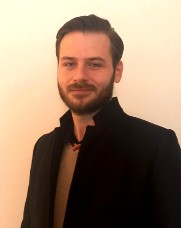
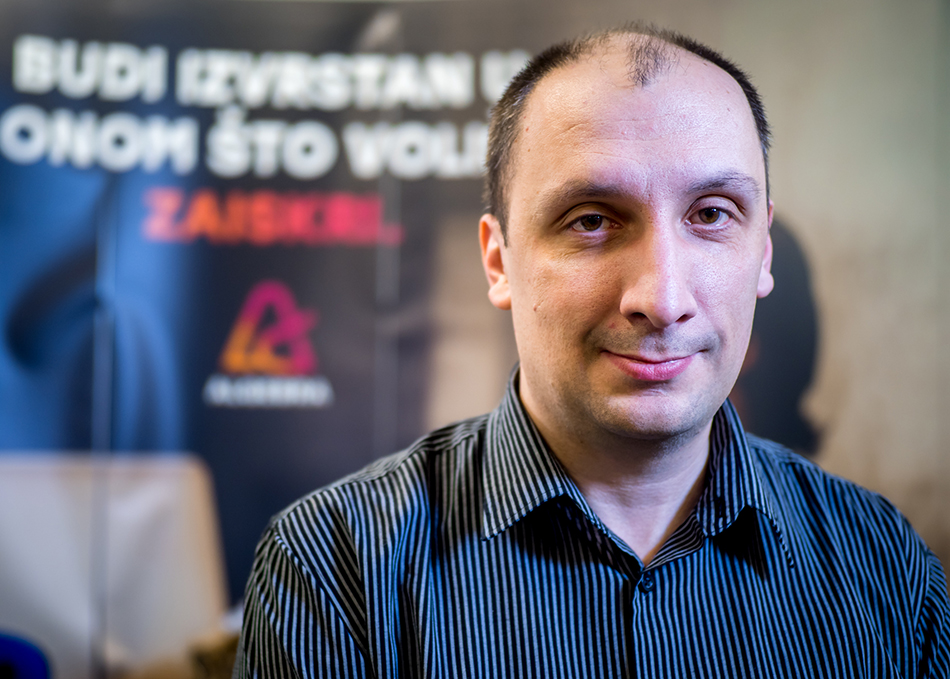
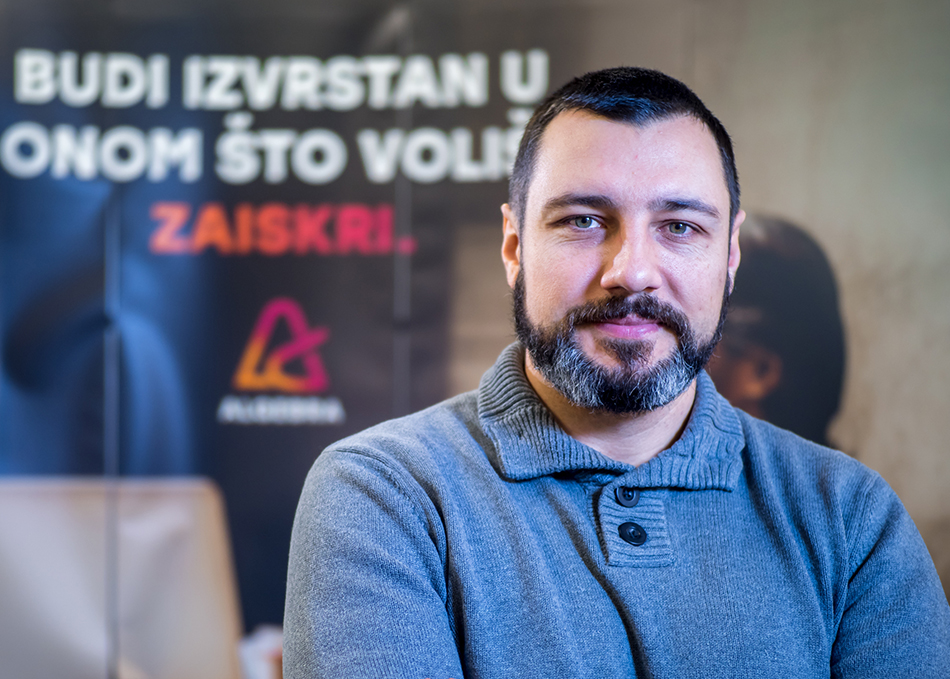
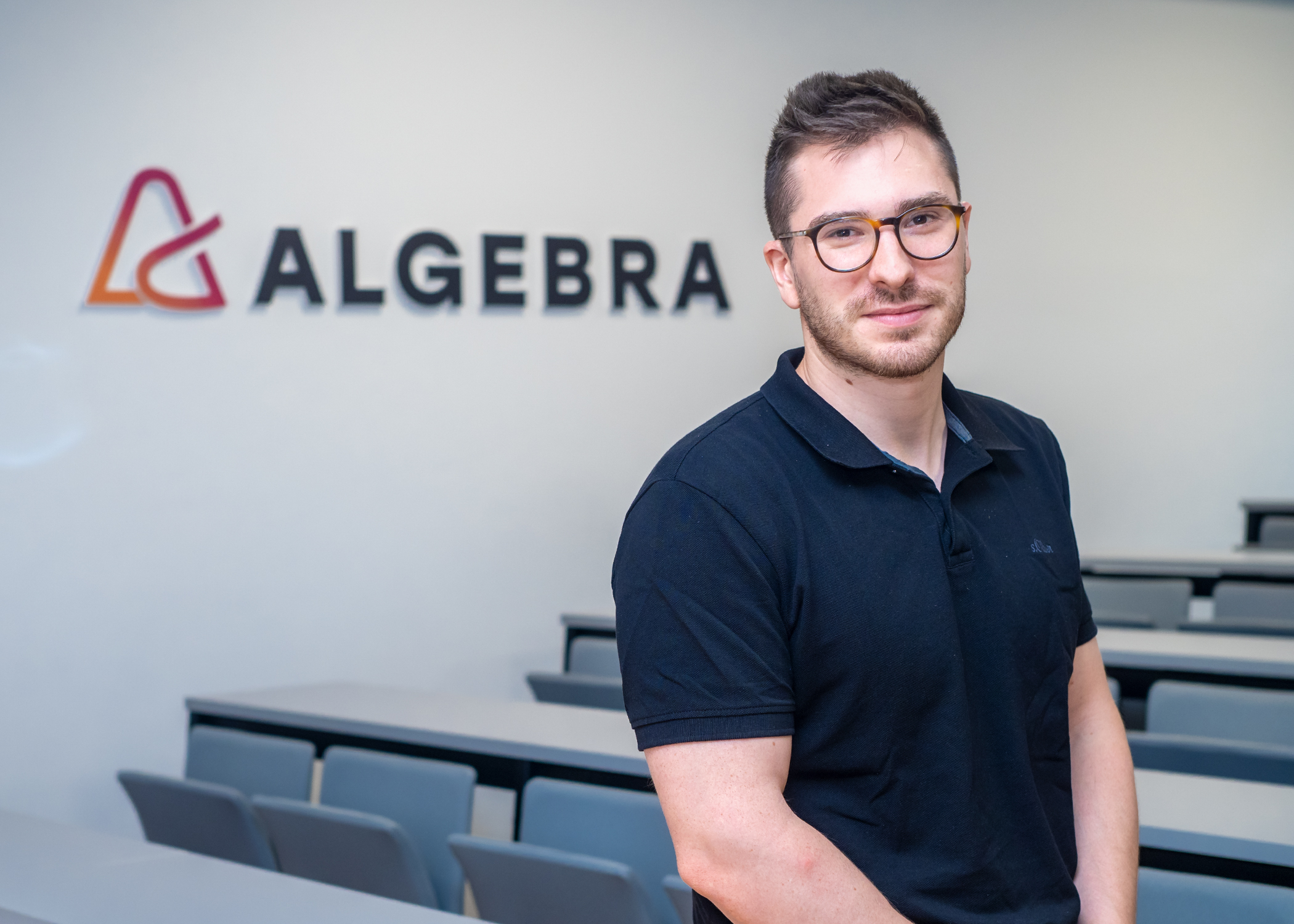
Tomislav Medić, MA, is a Lecturer at the Department of Informatics, Faculty of Economics and Business, University of Zagreb. His academic work focuses on information systems, educational technology, and financial machine learning. Faculty: Faculty of Economics and Business (University of Zagreb) Department: Informatics Office: Room A501, Trg J.F. Kennedyja 6, Zagreb Consultations: Monday 12-1PM (in-person or via Google Meet) His research explores technology utilization in education , stock market prediction using AI models , and business informatics applications . Recent publications analyze bibliometric trends in educational technology and comparative machine learning approaches for financial forecasting. Web presence: www.efzg.unizg.hr/tmedic | Contact: tmedic@net.efzg.hr
Vedran Dakić serves as an Associate Professor and head of the Department of Operating Systems at Algebra University, a position he has held since 2012. He teaches across undergraduate and graduate programs while maintaining industry relevance through annual consulting for external companies. His research and professional expertise centers on enterprise infrastructure systems, with key focus areas: Operating Systems Virtualization (VMware suite) Cloud Computing (VMware Cloud Director, vRealize) Enterprise Software (Microsoft Exchange, SQL Server) System Administration Network Virtualization (VMware NSX) Dr. Dakić completed his doctoral studies in January 2025 at the University of Zagreb's Faculty of Electrical Engineering and Computing in the scientific field of computing. As a certified trainer for VMware, Microsoft, and RedHat technologies, he integrates real-world administration practices—from Microsoft Exchange to VMware vSAN—into his academic instruction.
Silvio Papić is a Senior Lecturer at the University of Algebra, where he heads the Computer Networks Department and Systems Engineering studies. He holds a degree in Transport Engineering from the University of Zagreb, specializing in Aeronautics, and accumulated 15 years of expertise in computer networks through private-sector roles and independent learning. Roles: Department Head, Academic Program Coordinator, CCAI Instructor Specializations: Network Infrastructure, Security, Quality Management His research focuses on computer networks , including L2/L3 infrastructure, secure remote connections, data center networks, passive optical networks, and network performance optimization. He emphasizes improving teaching methodologies to foster critical thinking and real-world problem-solving skills, aligning course content with post-graduation industry demands. Silvio’s publications span network recovery in disrupted environments, electromagnetic interference impacts, Wi-Fi multicast-to-unicast testing, and educational psychology studies. He is a Cisco Certified Academy Instructor (CCAI) and mentor in EuroSkills/WorldSkills competitions, blending technical innovation with pedagogical rigor.
Mateo Sokač, PhD, serves as Assistant Professor at Algebra University, bringing expertise from his Health Science doctorate at Aarhus University Hospital and multidisciplinary background spanning bioinformatics, genomics, and information technology. His academic foundation includes a Master's in Bioinformatics and Bachelor's in Information Technology from RIT Croatia, complemented by internationally recognized certifications in AI, machine learning, and genomic engineering. His educational qualifications: PhD in Health Science, Aarhus University Hospital, Aarhus, Denmark Master's in Bioinformatics, Aarhus University Hospital, Aarhus, Denmark Bachelor's in Information Technology, RIT Croatia, Zagreb Dr. Sokač's research pioneers the integration of cancer evolution analysis with personalized medicine development, employing cutting-edge computational approaches to transform public health standards. His work uniquely bridges genomic engineering, artificial intelligence, and clinical oncology to address complex challenges in tumor heterogeneity and therapeutic resistance. This multidisciplinary focus has generated significant publications in high-impact journals, particularly in cancer vaccine development and genomic biomarker discovery. Analysis of his 2023-2025 publications reveals dominant themes in computational oncology (73% of works), with strong emphasis on AI-driven cancer vaccine development, multi-omics integration for personalized therapy, and environmental health applications. His research consistently employs advanced techniques like graph neural networks, non-negative matrix factorization, and foundation models across diverse domains from marine microbiology to lung adenocarcinoma grading. Professional development highlights: Dozen+ international certifications in AI, machine learning, and genomic engineering Specialized training in DNA sequencing and genomic engineering Certifications acquired from domestic and foreign institutions While specific advising details remain undisclosed, his publication record indicates extensive collaboration on large-scale cancer genomics projects including TRACERx and international consortia. His work on ctDNA analysis and immune cell profiling suggests involvement in major grants related to cancer evolution and immunotherapy response prediction. Current research trajectories point toward developing integrated platforms for real-time cancer monitoring and personalized treatment adaptation. Dr. Sokač leads innovative projects at the intersection of computational biology and clinical oncology, notably developing frameworks like ANORAK for histopathological analysis and BRAINS for neuroimaging applications. His environmental monitoring initiatives using solar gliders and drone technology demonstrate commitment to cross-domain applications of data science, contributing to Algebra University's research ecosystem through interdisciplinary collaboration.
Josip Stanešić is a Lecturer at Algebra University, specializing in computing engineering with a focus on DevOps, cloud computing, and cybersecurity. He holds a master's degree in Computing Engineering and completed his professional study in Applied Computing in 2022. Certifications: DevOps, Cloud Computing, System Administration, Security Current role: Consultant in DevOps and Cloud Computing His research interests include digital signatures, password security policies, DNS attack prevention, and IT infrastructure for small businesses. Recent publications highlight critical intersections between technical implementation and cybersecurity practices. Scientific Awards 12th place at WorldSkills competition (IT Networks System Administration) Josip contributes to academic and professional education through teaching and practical consulting, bridging theoretical knowledge with real-world application in technology domains.
Srečko Zajec is a lecturer at Algebra University, actively engaged in research within network theory and interdisciplinary domains combining business analytics and information technologies. He is currently pursuing a doctoral degree at the Faculty of Information Studies in Novo Mesto. Research Interests: Data analytics, network analysis, graph databases, and their applications in business and technology. Career Highlights: Led a team in implementing a SaaS platform for data analysis and visualization during the establishment of the Croatian state cloud. Additional Activities: Involved in showbusiness through promotion, organizational work, copywriting, and photography.
Mateja Đumić is an Assistant Professor at the School of Applied Mathematics and Informatics , Josip Juraj Strossmayer University of Osijek, Croatia. With a PhD in Computing from University of Zagreb (2020) and MSc/BSc in Mathematics from University of Osijek, she specializes in genetic programming , automated heuristic design , and combinatorial optimization problems. PhD in Computing (2020), University of Zagreb MSc in Mathematics (2014), University of Osijek BSc in Mathematics (2011), University of Osijek Her research focuses on solving container relocation problems and resource-constrained scheduling through evolutionary computation techniques. She has pioneered automated design of relocation rules using genetic programming , achieving superior performance over manual methods while exploring multi-objective optimization (including energy consumption), ensemble learning for heuristic improvement, and rollout algorithms to enhance solution quality. Recent work demonstrates how genetic programming can outperform traditional metaheuristics in maritime logistics, while her 2024 studies investigate multitask learning approaches for container relocation scenarios. She also explores fitness landscape analysis to optimize genetic programming parameters and develops automated priority rules for both static and dynamic scheduling environments. Professor Đumić teaches computer science , heuristic algorithms , database systems , and mathematical competitions at both undergraduate and graduate levels. She actively participates in international conferences including GECCO , CEC , and COST Action Training Schools .
Snježana Majstorović Ergotić is a Full Professor at the School of Applied Mathematics and Informatics , Josip Juraj Strossmayer University of Osijek . Her research focuses on Graph Theory and its applications , including Metric Graph Theory , Spectral Graph Theory , Chemical Graph Theory , Complex Networks , and Cluster Analysis . PhD in Mathematics, University of Zagreb (2011) BSc in Mathematics and Computer Science, University of Osijek (2005) Her recent work explores extremal graph theory problems, such as maximizing the Graovac-Ghorbani index and studying Kirchhoff index preservation after vertex removal. She has developed innovative clustering methods for geometrical object detection and growth curve analysis using spectral techniques. Professional activities include serving on the Topical Advisory Panel for Mathematics (MDPI) since 2021, editorial work, and memberships in Croatian Mathematical Society , Croatian Operational Research Society , and European Mathematical Society . She has participated in numerous international collaborations, including projects with Slovenia, Serbia, and Canada. Teaching includes courses in Graphs and Applications , Complex Networks , and Combinatorial Mathematics at the School of Applied Mathematics and Informatics, while also contributing to Mathematics III for Civil Engineering students.
Luca Grisanti is a Researcher at the Division of Theoretical Physics, Ruđer Bošković Institute (IRB) in Zagreb, Croatia, where he has been employed since October 2018. Holding a PhD in Chemical Sciences from Parma University (2011), he previously completed postdoctoral research at the University of Mons (Belgium, 2011-2013), ICTP Trieste (2013-2016), and SISSA Trieste (2016-2018). His interdisciplinary work bridges computational chemistry, materials science, and biophysics, with significant contributions to molecular modeling of optoelectronic materials and biological systems. Education: PhD in Chemical Sciences, Parma University, Italy (2011) Master Degree in Chemistry (Physical Chemistry curriculum), Parma University, Italy Dr. Grisanti's research focuses on computational approaches for modeling material properties from electronic structure to morphology and dynamics. He specializes in charge and exciton transport in molecular/hybrid materials, electron-phonon coupling mechanisms, and computational spectroscopy of excited states in biomolecules and molecular aggregates. His work integrates quantum mechanical methods with classical simulations to address challenges in organic electronics, perovskite optoelectronics, and amyloid biophysics, emphasizing predictive modeling of structure-property relationships. Analysis of his 15 most recent publications (2019-2025) reveals dominant research trajectories in computational perovskite engineering for stable optoelectronic devices, nucleobase assembly dynamics in aqueous environments, and amyloid optical property mechanisms. Key methodological themes include hybrid quantum-classical modeling, crystal structure prediction, and nonadiabatic dynamics simulations, with applications spanning photovoltaics, bioimaging probes, and neurodegenerative disease modeling. Research Funding: Coordinator: HYMO4EXNOMOMA (Hybrid modeling for excited states in novel molecular materials), Croatian Science Foundation (2021-2025) Member: 2DPEROEXLORE (Exploring halide 2D/quasi-2D perovskites), Croatian Science Foundation (2019-2023) Member: Micro4Nano (Multifunctional nanocarriers for nonlinear microscopy), EU H2020-MSCA-RISE (2021-2024) As an active member of IRB's Theoretical Physics division, Dr. Grisanti leads computational efforts in the HYMO4EXNOMOMA project while collaborating on perovskite stability and bioimaging initiatives. His external partnerships span European institutions including University of Mons, ICTP, and SISSA. Beyond research, he engages in science communication and has co-edited conference proceedings on hybrid molecular modeling. His computational frameworks for exciton dynamics and biomolecular simulations continue to influence both materials design and biophysical understanding.
Dr. Antica Čulina is a Senior Research Associate at the Ruđer Bošković Institute's Division for Marine and Environmental Research, Laboratory for Informatics and Environmental Modelling. Holding a DPhil in Zoology from the University of Oxford and BSc in Ecology from the University of Zagreb, her work focuses on open science, meta-analysis, and evolutionary ecology of birds. Education DPHIL in Zoology, University of Oxford (2010-2015) BSc in Ecology, University of Zagreb (2003-2008) Her research bridges biodiversity informatics with open science principles, particularly through the SPI-Birds network which she leads. This initiative standardizes long-tail ecological data across 120+ global contributors, influencing Dutch science policy through the NWO Open Science Fund. The eight featured publications demonstrate her expertise in ecological meta-research, statistical modeling of bird behavior, and FAIR data practices. Key contributions include quantifying research waste, developing open data frameworks, and analyzing pair bond dynamics in monogamous species. Scientific Achievements Dutch Data Prize recipient Veni fellowship (250,000 EUR) Lorentz Center workshop funding Multiple international grants As Executive Director of SPI-Birds, Associate Editor at Journal of Animal Ecology, and Co-Chair of SORTEE's Education Committee, she actively shapes open science policy. Her teaching spans quantitative ecology at Radboud University and life history courses at Wageningen University.
Lea Skorin-Kapov is a Full Professor in the Department of Telecommunications at the University of Zagreb Faculty of Electrical Engineering and Computing. Her research focuses on Quality of Experience (QoE), multimedia systems, and telecommunications networks. She leads the MUEXLab research group, which addresses challenges in QoE management, network resource allocation, and user-centric system design. Her work spans topics like video streaming optimization, cloud gaming performance, and energy-efficient network solutions. Notable contributions include frameworks for encrypted video monitoring and best practices for QoE fairness in shared systems. She has authored over 50 peer-reviewed publications and received two Best Paper Awards for innovative work in VR gaming and drone control simulations. Current research emphasizes QoE sustainability in 6G networks and wildfire resource scheduling. Collaborations involve institutions like TU Dortmund and industry partners in telecommunications. Lea actively participates in IEEE standards committees and serves on editorial boards for journals like the International Journal of Human-Computer Interaction .
Prof. Mato Baotić is a Full Professor and Head of the Department of Control and Computer Engineering at the University of Zagreb's Faculty of Electrical Engineering and Computing (FER). His research focuses on advanced control systems, model predictive control (MPC), renewable energy systems, and power engineering. He leads projects in distributed power systems, microgrid control, wind turbine optimization, and mechatronics. His work integrates theoretical advancements with practical applications in energy efficiency, robotics, and smart grids. Key research areas include MPC for wind turbines, grid reconfiguration, and omnidirectional mechatronic systems. He has contributed to the LARES laboratory for renewable energy systems and collaborates on international projects like DYMASOS and MICROGRID. His publications span control algorithms, grid optimization, and energy storage solutions. Prof. Baotić teaches courses on control systems synthesis, predictive control, and automatic control. He advises numerous research initiatives and oversees labs developing systems for energy and robotics applications.
Dr. Josip Žubrinić is an Assistant Professor in the Department of Applied Mathematics at the Faculty of Electrical Engineering and Computing (FER), University of Zagreb. His research focuses on applied mathematics, homogenization theory, elasticity, and interdisciplinary applications in materials science and quantum systems. He is affiliated with FER's applied mathematics group and actively contributes to the Bibliography (CROSBI) research repository. Dr. Žubrinić's work spans theoretical and applied domains, including: Homogenization of PDEs in heterogeneous media Statistical mechanics models (e.g., Rydberg atoms, Flory polymer models) Combinatorial optimization for settlement planning Mathematical analysis of elastic structures and poroelastic plates Recent research highlights include studies on critical-contrast PDEs, quantum lattice systems, and multiscale modeling of composite materials. His articles demonstrate a strong emphasis on interdisciplinary methods bridging pure mathematics and real-world engineering problems. No scientific awards or grants are explicitly listed in the provided materials. His teaching includes specialized topics like complexity functions in jammed systems and combinatorial models.
Marko Bosiljevac is an Associate Professor at the University of Zagreb's Faculty of Electrical Engineering and Computing (FER), specifically within the Department of Communication and Space Technologies. He has held academic roles since 2006, progressing from Research Assistant to his current position. His research focuses on electromagnetic transmission structures, antennas, metasurfaces, remote sensing systems (including ground-based synthetic aperture radars and fiber optic sensors), and biomedical antenna applications. He has been recognized with the Silver Plaque 'Josip Lončar' for his doctoral work and scientific contributions. Affiliations: Member of FER's ERASMUS Committee since 2016, coordinator for Information and Communication Technologies student exchange programs, and elected member of the University of Zagreb Council for Technical Sciences since 2022. Education: PhD (2012) and MSc (2005) in Electrical Engineering from FER. Research Interests: Bosiljevac’s work spans advanced antenna design, metamaterials, biomedical sensors, and remote sensing. He has pioneered glide-symmetric metasurfaces and contributed to implantable antenna development. His research emphasizes practical applications in healthcare, telecommunications, and environmental monitoring. Articles: His publications reflect a focus on antenna innovation, biomedical applications, and radar systems. Recent trends include deep learning integration for object classification and optimizing antenna performance in complex environments. Awards: Silver Plaque 'Josip Lončar' (2012), and ongoing recognition for contributions to antenna theory and biomedical engineering. Advising & Grants: Manages a Croatian Science Foundation project and bilateral initiatives. He has supervised numerous projects and contributed to over 100 publications. His leadership roles include organizing workshops and editorial work for journals like Automatika . Labs & Teams: Co-founded the Applied Optics Lab (AOLab) at FER, focusing on optical sensors, nonlinear optics, and passive optical networks. Collaborates internationally with institutions like EPFL, KTH, and UC3M.
Hrvoje Pandžić serves as a Full Professor at the Faculty of Electrical Engineering and Computing (FER), University of Zagreb, specializing in energy storage systems and electric vehicle integration within power networks. His research focuses on critical energy transition challenges: Technical-economic analysis of battery storage (capacity, efficiency, lifecycle costs) Grid services from stationary storage and EV aggregation Hydrogen's role in decarbonization pathways Market participation models for energy-limited resources Synergies between storage, renewables, and charging infrastructure He teaches the graduate course Energy Storage and Electric Vehicles , covering storage classification, battery chemistries, market mechanisms, and system balancing applications. Current research emphasizes investment modeling and regulatory frameworks for storage deployment. Contact: hrvoje.pandzic@fer.hr