معرفی
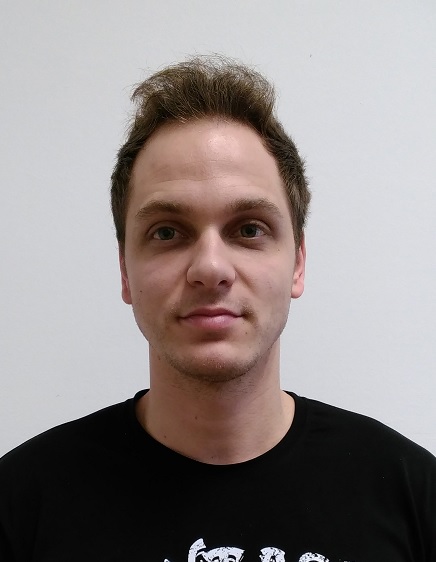
Marko Bosiljevac is an Associate Professor at the University of Zagreb's Faculty of Electrical Engineering and Computing (FER), specifically within the Department of Communication and Space Technologies. He has held academic roles since 2006, progressing from Research Assistant to his current position. His research focuses on electromagnetic transmission structures, antennas, metasurfaces, remote sensing systems (including ground-based synthetic aperture radars and fiber optic sensors), and biomedical antenna applications. He has been recognized with the Silver Plaque 'Josip Lončar' for his doctoral work and scientific contributions.
- Affiliations: Member of FER's ERASMUS Committee since 2016, coordinator for Information and Communication Technologies student exchange programs, and elected member of the University of Zagreb Council for Technical Sciences since 2022.
- Education: PhD (2012) and MSc (2005) in Electrical Engineering from FER.
Research Interests: Bosiljevac’s work spans advanced antenna design, metamaterials, biomedical sensors, and remote sensing. He has pioneered glide-symmetric metasurfaces and contributed to implantable antenna development. His research emphasizes practical applications in healthcare, telecommunications, and environmental monitoring.
Articles: His publications reflect a focus on antenna innovation, biomedical applications, and radar systems. Recent trends include deep learning integration for object classification and optimizing antenna performance in complex environments.
- Awards: Silver Plaque 'Josip Lončar' (2012), and ongoing recognition for contributions to antenna theory and biomedical engineering.
Advising & Grants: Manages a Croatian Science Foundation project and bilateral initiatives. He has supervised numerous projects and contributed to over 100 publications. His leadership roles include organizing workshops and editorial work for journals like Automatika.
Labs & Teams: Co-founded the Applied Optics Lab (AOLab) at FER, focusing on optical sensors, nonlinear optics, and passive optical networks. Collaborates internationally with institutions like EPFL, KTH, and UC3M.