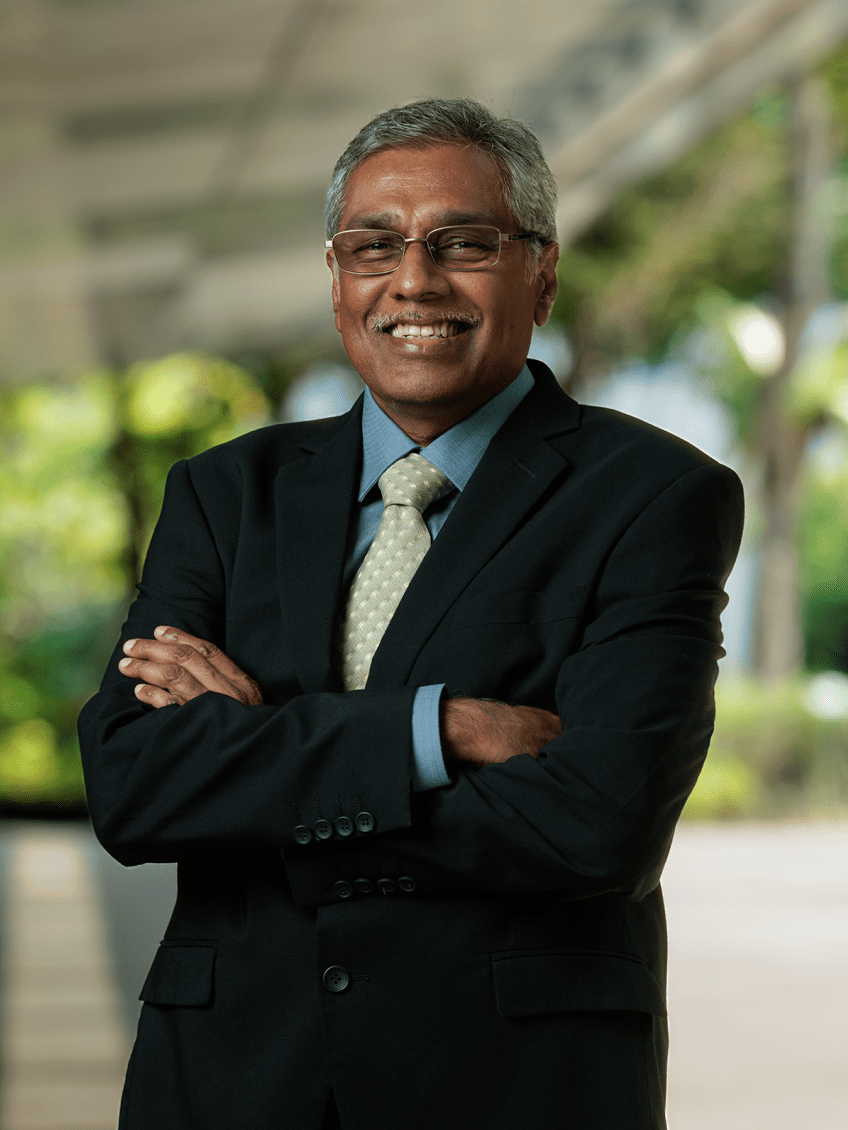
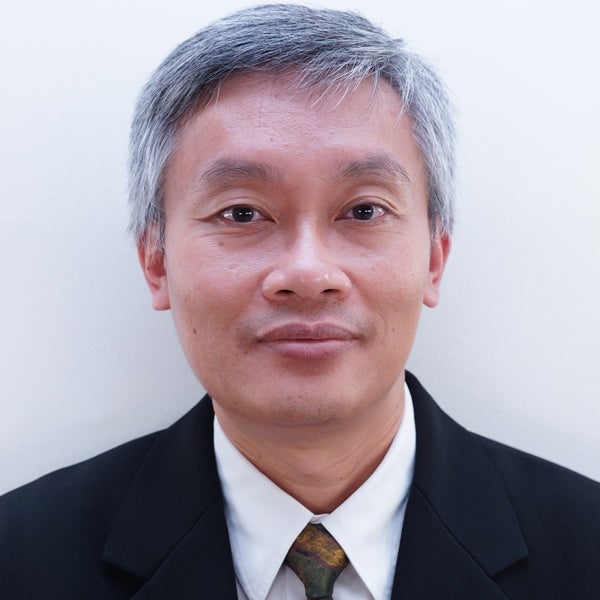
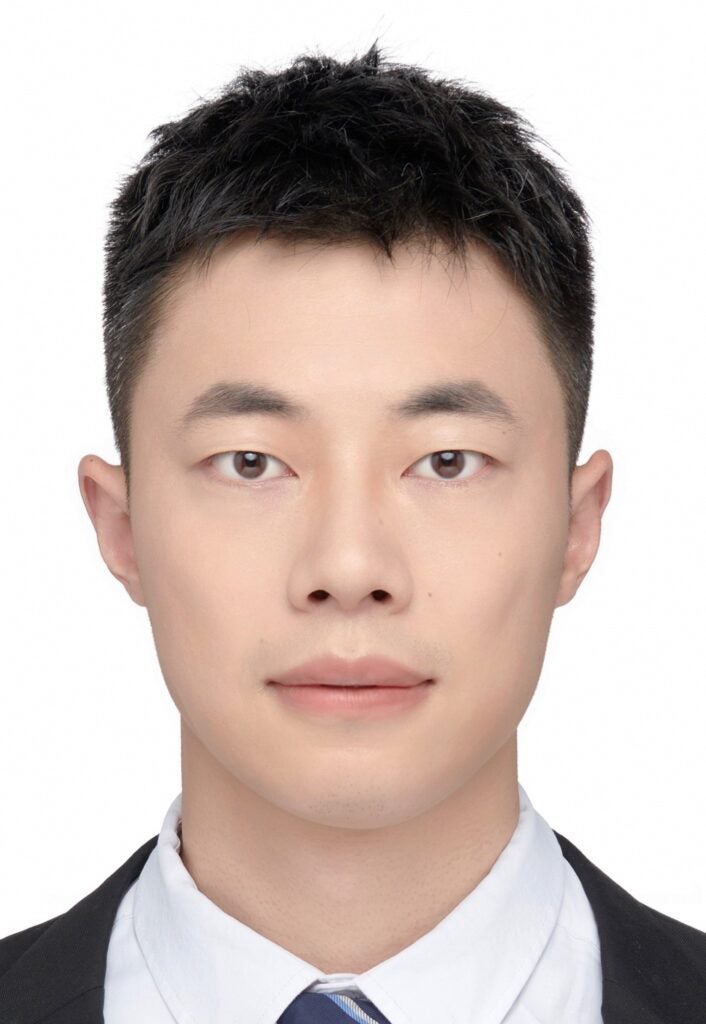
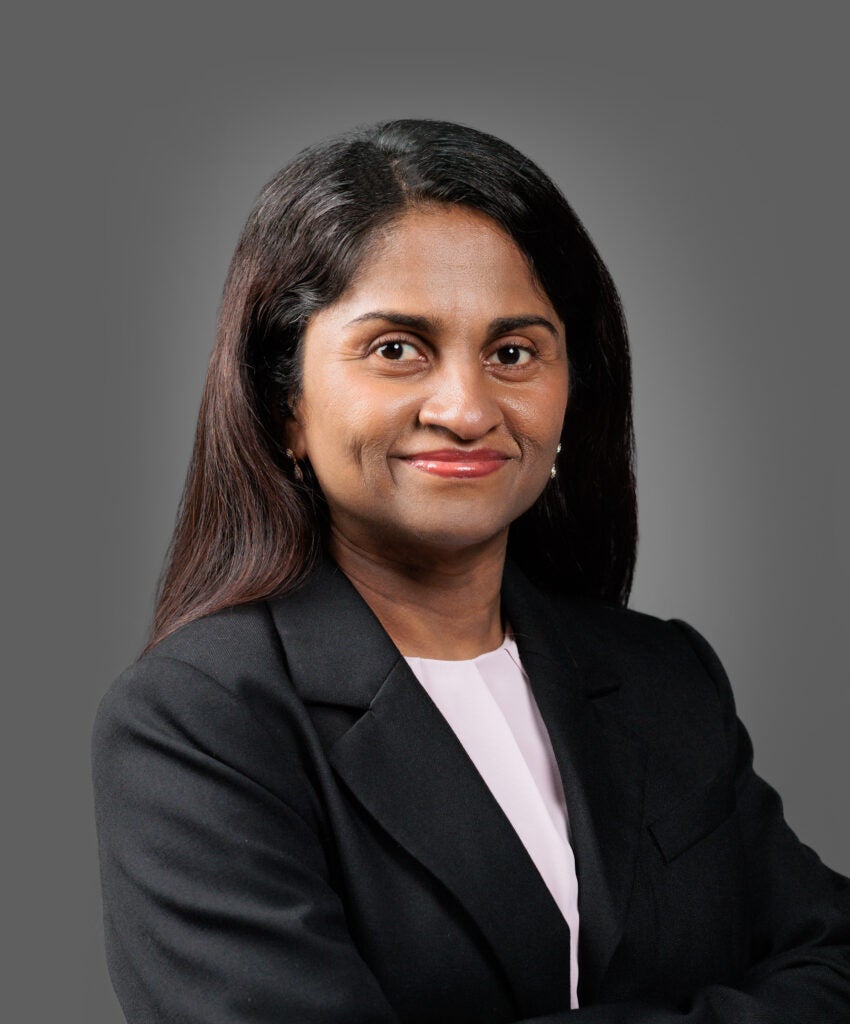
Ashraf A. Kassim is a Professor at the Singapore University of Technology and Design (SUTD) and serves as Associate Provost for the Office of Education and Innovation. He holds a PhD from Carnegie Mellon University and previously held positions including Professor of Electrical & Computer Engineering at the National University of Singapore (NUS), where he also served as Vice-Provost (Research) and Vice-Dean of Engineering. His industry experience includes research at Texas Instruments developing machine vision systems. His research spans computer vision , medical image analysis , machine learning , and deep learning . Key applications include diagnostic radiography, generative adversarial networks (GANs) for image synthesis, facial landmark detection, and attribute-based fashion retrieval systems. His work integrates advanced neural architectures with real-world challenges in healthcare and multimedia. Publications (170+ articles) emphasize deep learning-driven solutions: recent works focus on medical imaging (cell classification, radiograph analysis), generative models (text-to-image synthesis, GANs), and computer vision applications (facial analysis, fashion retrieval). Awards and Honors: Mendaki Foundation’s Anugerah Cemerlang (Academic Excellence Award) Institution of Engineers Singapore Award (2011) Public Administration Medal (Bronze, 2012) National Day Long Service Award (2018) NUS Annual Teaching Excellence Award Administrative service includes board memberships at Singapore Science Centre, Singapore Synchrotron Light Source, and Centre for Maritime Studies. He contributes to academic committees and journal editorial boards internationally.
Dr. Luo Wei is an Assistant Professor at the National University of Singapore (NUS), holding joint appointments in the Department of Geography (Faculty of Arts & Social Sciences) and the Saw Swee Hock School of Public Health. His research focuses on spatial epidemiology, infectious disease modeling, phylogeography, and health inequality. He leads a multidisciplinary team combining expertise in geography, public health, computational biology, statistics, and environmental sciences. Dr. Luo's educational background includes a PhD and Master’s in Geography from The Pennsylvania State University and University at Buffalo, respectively. His work bridges geospatial analytics with public health challenges, particularly in understanding disease transmission dynamics and intervention strategies for pathogens like COVID-19, influenza, dengue, and HIV. Research interests include spatiotemporal disease surveillance, geo-social interaction patterns, and the application of big data and machine learning in health systems. Key contributions include pandemic modeling during the global health crisis and exploring vaccine efficacy and public opinion using social media analysis. Awarded the Waldo-Tobler Young Researcher Award for GIScience contributions, his research has been published in high-impact journals such as Physics Reports and JMIR Public Health and Surveillance . His career includes a Research Associate role at Boston Children’s Hospital and Harvard Medical School (2019–2020). Dr. Luo actively collaborates across disciplines, advancing geovisual analytics tools and frameworks like MapReader. He teaches courses in spatial big data, geocomputation, and GIScience.
Dr. Swapnil Mishra is an Assistant Professor at the NUS Saw Swee Hock School of Public Health and the NUS Institute of Data Science. His work bridges global health challenges with machine learning and Bayesian modelling, focusing on spatiotemporal data analysis for epidemics and public policy. He co-founded the Machine Learning & Global Health Network with leading international institutions. Education: B.Eng., University of Pune, 2009 Masters Computing (Hons.), The Australian National University, 2014 Ph.D., The Australian National University, 2019 Research Interests: His research encompasses infectious disease modelling, hierarchical Bayesian approaches, and generative deep learning. He develops scalable models to understand epidemics like malaria and HIV, while also exploring crime patterns and online information diffusion. Key Contributions: Notable work includes SARS-CoV-2 lineage analysis in Brazil, evaluating non-pharmaceutical interventions during the pandemic, and developing the πVAE framework for Bayesian deep learning. His research often addresses real-world policy challenges, such as pandemic preparedness and disease surveillance. Awards: Singapore NRF Fellowship (2023) Queen’s Anniversary Prize (2021) SPI-M-O Award (2022) Blackwell-Rosenbluth Award (2022) Advisory Roles: Advised New York State and Herbert Smith Freehills on pandemic response strategies. His work integrates academic research with practical policy solutions. Labs/Teams: Leads interdisciplinary collaborations through the Machine Learning & Global Health Network, fostering global health science innovation.
XIE Xiaofei is an Assistant Professor of Computer Science at the School of Computing and Information Systems (SCIS), Singapore Management University (SMU). He holds the Lee Kong Chian Fellowship and has a PhD from Tianjin University (2018). Previously, he was a postdoctoral researcher at Nanyang Technological University (NTU, 2018–2021). His research focuses on program analysis, software testing, vulnerability detection, and AI system quality assurance. Key areas include adversarial attacks on deep learning systems, autonomous driving testing, and secure software development. He actively advises PhD students and collaborates on projects like the GameRTS framework for video game testing and BehAVExplor for autonomous systems. Education : PhD, Tianjin University, 2018 Postdoctoral Research, NTU Singapore, 2018–2021 Research Interests : Dr. Xie explores cutting-edge topics such as neural network testing , AI security , and large language model (LLM) reliability . He develops tools like DeepHunter for DNN fuzz testing and CAShift for cloud attack detection. His work bridges theory and practice, addressing real-world challenges in software safety and AI robustness. Recent Contributions : His publications span top venues (ICSE, ASE, CVPR) and include innovations like behavior diversity testing for autonomous vehicles and multi-target backdoor attacks on code models. He also leads initiatives to enhance federated learning security and LLM vulnerability detection. Awards & Recognition : ACM Tianjin Doctoral Dissertation Award (2019) ACM SIGSOFT Distinguished Paper Award (ISSTA 2022) Best Paper Award, APSEC 2020 3 rd place in AI Singapore’s Trusted Media Challenge (2022) Advising & Grants : He mentors seven PhD/MSc students and leads research teams funded by initiatives like SMU’s Lee Kong Chian Fellowship. His labs focus on autonomous systems testing and AI-driven security tools .
Yuchen Li is an Associate Professor at the School of Computing and Information System (SCIS) at Singapore Management University (SMU), where he also holds the Lee Kong Chian Fellowship for Research Excellence. He earned his Ph.D. in Computer Science from the National University of Singapore (NUS) in 2017. His research focuses on social analytics, high-performance graph mining, and fintech applications leveraging large language models (LLMs). He has led significant projects funded by MoE, including 'Next-Gen Competitive Intelligence' and 'CONQUEROR' for concurrent graph query processing. His academic contributions span influential publications in top-tier conferences like SIGMOD, KDD, and ICML, with notable works on graph algorithms, fraud detection, and knowledge graph robustness. He advises Ph.D. students and has supervised over a dozen researchers, including current students Xiao Hanhua, Wang Sha, and Ye Chang. His awards include the Lee Kong Chian Fellowship and the Best Demo Paper Award at CIKM 2021. Li’s research bridges theoretical foundations and practical applications, addressing challenges in graph processing, social media analysis, and fintech. His team develops systems like 'Dupin' for fraud detection and 'ThunderRW' for in-memory graph processing, showcasing expertise in GPU acceleration and scalable algorithms.
Dr. Quang H. Pham is a Research Scientist at the Institute for Infocomm Research (I2R), Agency for Science, Technology and Research (A*STAR), specializing in machine learning within the Machine Intellection department. He holds a Ph.D. from Singapore Management University's School of Computing and Information Systems, supervised by Professor Steven Hoi. His research centers on continual learning , time series forecasting , meta learning , and domain adaptation , with significant contributions to online learning systems. Dr. Pham's work addresses catastrophic forgetting through innovative approaches like Continual Normalization and DualNet architectures, enabling neural networks to learn continuously from non-stationary data streams. Analysis of his publication trajectory (2018-2023) reveals a consistent focus on efficient online learning methodologies, with publications in top venues including ICLR (3 papers), NeurIPS, and IJCAI. His research bridges theoretical advances in neural network design with practical applications in computer vision and medical image analysis. Dr. Pham actively serves the community as a reviewer for premier journals (TPAMI, IJCV) and conferences (NeurIPS, ICML, CVPR). His GitHub presence (15 repositories, 56 stars) demonstrates commitment to open science, with implementations of his research widely adopted by the community. As a Research Scientist at A*STAR's I2R, he participates in nationally funded research initiatives, though specific grant details aren't public. His work shows strong translational potential for real-world AI systems requiring continuous adaptation, particularly in healthcare and time-sensitive decision environments.
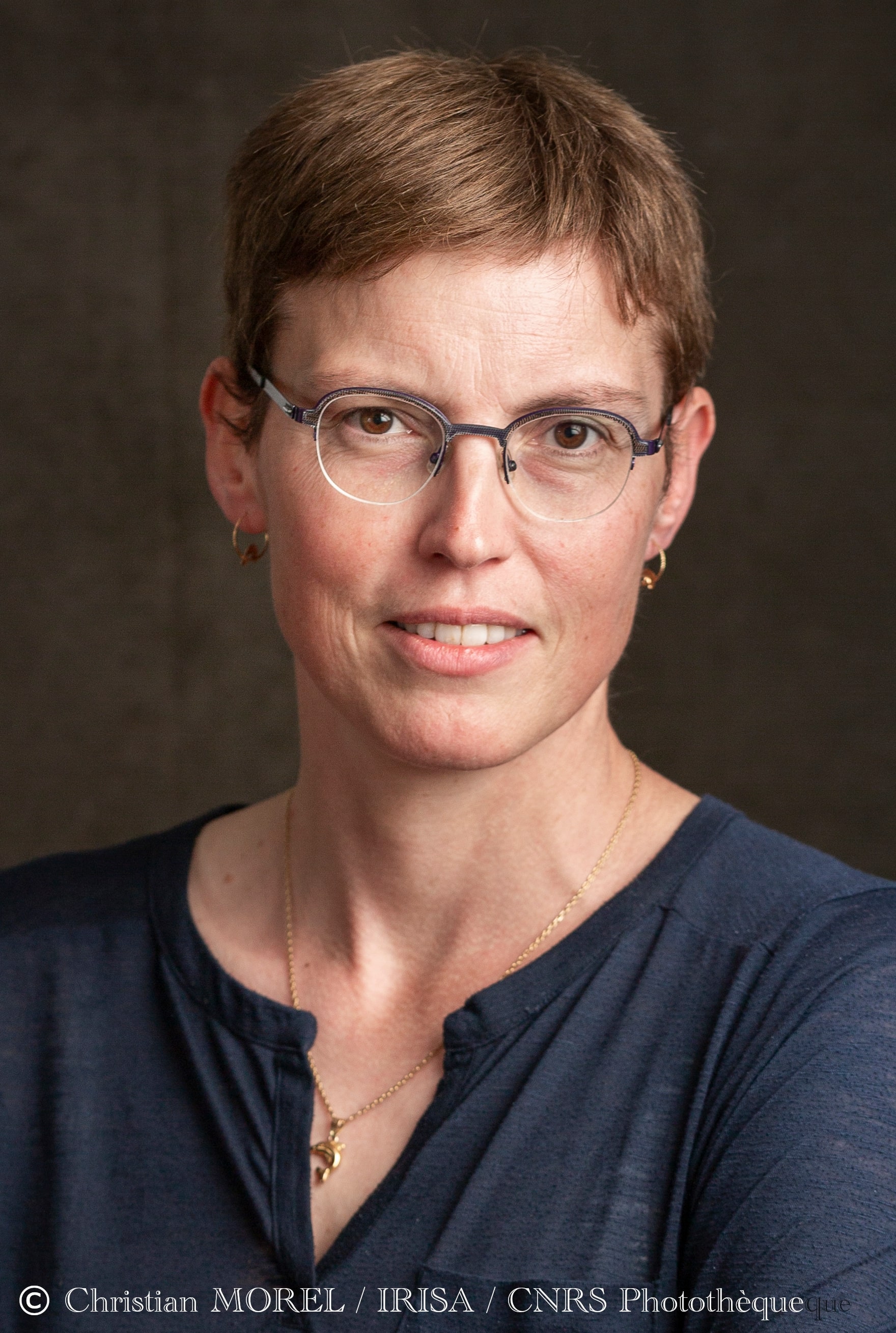
Stéphanie Delaune is a CNRS Research Director (DR1) at IRISA, leading the SPICY team and chairing the Cybersecurity Axis at IRISA. Her research focuses on formal verification of cryptographic protocols, privacy preservation, and development of the Squirrel prover. She holds a position at the University of Rennes 1 and is affiliated with the CNRS. Her work spans electronic voting, RFID systems, and quantum-resistant protocols, with a strong emphasis on automated tools for security analysis. Roles: Head of SPICY Team, Leader of Cybersecurity Axis, CNRS Research Director (DR1) Affiliations: IRISA, University of Rennes 1, CNRS Her research interests include verifying security protocols for privacy (e.g., vote privacy, anonymity), analyzing electronic voting systems, and developing formal methods like the Squirrel prover. She actively participates in international committees such as the IEEE Computer Security Foundations Symposium and ACM Transactions on Privacy and Security. Recent work highlights include a distinguished paper at ESORICS 2023 for uncovering Bluetooth pairing flaws and contributions to quantum-resistant protocol verification. Her team’s projects include the PEPR Cybersecurity SVP initiative and the RESQUE quantum resilience project. Grants/Projects: RESQUE (2023–2026), SVP Project (2022–2028), ANR Drama (2023–2026) Awards: Distinguished Paper Awards (ESORICS 2023, CSF 2022), Google Gift (2022) She oversees labs and teams focusing on cybersecurity innovation and mentors students in formal methods and cryptographic protocol analysis.
Stylianos Dritsas is an Associate Professor and Associate Head of the Architecture and Sustainable Design Pillar at Singapore University of Technology and Design (SUTD). His research focuses on Design Computation and Digital Fabrication, particularly in developing sustainable bio-composite materials and robotic additive manufacturing systems. He previously taught at Harvard Graduate School of Design, EPFL (Lausanne), and the Architectural Association in London, and is a registered architect in Greece and the UK. Education and professional background includes expertise in computational design, architectural engineering, and sustainable manufacturing. His work integrates advanced materials, robotics, and digital tools to address environmental challenges in construction and manufacturing. Research interests span biodegradable composites, large-scale 3D printing, and the application of AI in medical and architectural design. Key contributions include innovations in ear impression-taking via 3D scanning, BIM-enabled regulatory design tools, and the development of fungus-like adhesive materials for sustainable manufacturing. His work emphasizes circular economy principles and bioinspired solutions for urban and industrial applications. Labs/Teams: Active in the Digital Fabrication (DFAB) group at SUTD, focusing on interdisciplinary projects in architecture, robotics, and materials science.
Dr. Wawan Solihin is an adjunct lecturer in the Civil Engineering Department at the National University of Singapore (NUS), specializing in Building Information Modelling (BIM) and spatial data management. With over 30 years of professional experience, his research focuses on automated code compliance, BIM interoperability, and applying AI to enhance building data interrogation. He earned his PhD from Georgia Institute of Technology in 2016 under Prof. Chuck Eastman, pioneering solutions for BIM-based compliance checks. Education: PhD (Design Computing), Georgia Institute of Technology, USA (2016) Research Interests: AI-driven BIM data quality and automation Automated code compliance for buildings Integration of spatial data and BIM OpenBIM and data interoperability standards Key Projects & Contributions: Core contributor to Singapore’s BIM initiatives (e.g., PUB’s BIM Checker, URA’s GFA Autochecker) Co-developer of Fornaxcloud for cloud-based BIM validation Active in standardization via buildingSMART International and Singapore Technical Committees Advising & Grants: Co-supervises PhD and final-year students on AI-BIM integration Leads industry-funded projects in compliance automation Labs & Teams: Member of buildingSMART’s Regulatory Domain Steering Committee Technical coordinator for Singapore’s BIM standardization efforts
Dr. Rui Shengjie is an Assistant Professor in the Department of Civil and Environmental Engineering at the National University of Singapore (NUS). He holds a PhD in Geotechnical Engineering from Zhejiang University (2022) and a Bachelor’s degree from the China University of Geosciences (Wuhan, 2017). His research focuses on offshore geotechnics and ocean engineering, addressing challenges in marine environments and renewable energy systems. He has been a Marie Curie Research Fellow at the Norwegian Geotechnical Institute (NGI) and a Visiting Researcher at NTNU (Norway). **Education:** PhD, Geotechnical Engineering, Zhejiang University, 2022 BEng, China University of Geosciences (Wuhan), 2017 His research interests span offshore geotechnics (foundation analyses, seabed-structure interaction), ocean engineering (mooring systems, floating wind turbines), and offshore renewable energy . He has collaborated globally, presenting at MIT, Oxford, ETH Zurich, and others. Dr. Rui serves on editorial boards for Ocean Engineering and Frontiers in Marine Science , and chairs sessions at major conferences like ASME OMAE2024. **Awards:** Bright Spark Lecturer (ISSMGE, 2025) Marie Skłodowska-Curie Fellowship (EU, 2023) Excellent PhD Thesis Awards (2022-2023) He has reviewed over 40 journals and contributed to international committees like ISSMGE TC104 and TC209. His work emphasizes sustainable offshore energy solutions and seabed dynamics, with active participation in global research networks.
Assoc Prof Chee Whye Chin is an Associate Professor of Mathematics at the National University of Singapore (NUS), affiliated with the Department of Mathematics. His research focuses on arithmetic algebraic geometry, monodromy groups, and representation theory of reductive groups. He has contributed to foundational work on ℓ-independence of monodromy groups and compatible systems of lisse sheaves. His teaching philosophy emphasizes student-driven learning through interactive lectures and continual assessments, aiming to foster deep understanding of mathematical concepts. Research Interests: Monodromy groups and their structural properties Reductive algebraic groups and their representations ℓ-Independence conjectures in arithmetic geometry Applications of group theory in algebraic geometry Publications: His work spans algebraic geometry, number theory, and computational methods. Notable contributions include studies on rationality of homogeneous varieties, optimization of matrix multiplication algorithms, and independence of ℓ results in compatible systems. Over 15 key publications since 1997 reflect his interdisciplinary impact. Awards & Recognition: No specific awards mentioned, but his research has been cited widely in areas like genomics and computational methods. Teaching & Mentorship: Emphasizes active learning through interactive sessions and rigorous assessments. Encourages students to develop self-directed learning strategies by avoiding pre-prepared lecture notes, fostering independent exploration of mathematical concepts.
Assoc Prof Kah Loon Ng is an Associate Professor in the Department of Mathematics at the National University of Singapore (NUS). His research interests span Applied Mathematics, Pure Mathematics, Applied Computing, and Theory of Computation. He is renowned for innovative teaching methods including story-telling approaches, mind maps, and differential learning strategies to engage students at all levels. His pedagogical innovations include screencast resources for tutorials and past exam questions, enhancing student accessibility to learning materials. In teaching, Prof Ng emphasizes fostering analytical skills, adaptability, and confidence in students. He employs interactive techniques like group discussions, conceptual teasers during lectures, and personalized attention to address varying student abilities. His approach integrates Information Technology strategically without over-reliance, ensuring dynamic classroom engagement. His teaching philosophy prioritizes creating a supportive environment where students can explore mathematics' practical applications across disciplines, challenging the misconception that mathematics is only for educators. Prof Ng’s research contributions include foundational work on graph orientation, firefighter problem generalizations, and disease modeling in dynamic networks. His publications reflect interdisciplinary applications, such as curriculum reform in data science education and advanced graph theory studies. His work bridges theoretical mathematics with real-world problem-solving, influencing both academic discourse and educational practices.
Dr. Sasani Jayawardhana is a full-time Lecturer at the University of Colombo, where she co-founded the ALOeKA research facility to integrate artificial intelligence with spectroscopic techniques in materials science. Her academic journey includes a BSc in Physics from the University of Colombo, a PhD in nanostructured sensors from Swinburne University of Technology, and postdoctoral research in optical instrumentation at the University of Sri Jayewardenepura. She has pioneered low-cost experimental setups, including optical fiber sensors and Raman spectrometers. Education: BSc (Physics, University of Colombo), PhD (Swinburne University), Postdoc (University of Sri Jayewardenepura) Her research focuses on leveraging machine learning to accelerate materials discovery, particularly in nanotechnology and optical sensing. Key areas include SERS (Surface-Enhanced Raman Scattering), biomimetic surface engineering, and energy harvesting systems. Her work bridges experimental physics with computational tools, emphasizing cost-effective instrumentation for global accessibility. Publications highlight innovations like solar radio burst analysis, gemstone identification via Raman-ML hybrid systems, and low-cost lab equipment. These advancements underscore her commitment to both theoretical and applied materials science. No scientific awards are explicitly noted, but her contributions to accessible research tools and interdisciplinary collaboration are notable. She has advised no listed students but has mentored teams in lab development. The ALOeKA facility exemplifies her vision for integrative research frameworks.
Professor Jing Sheng CHEN is a distinguished faculty member in the Department of Material Science and Engineering at the National University of Singapore (NUS), College of Engineering. He serves as Principal Investigator leading an experimental materials science research group with state-of-the-art facilities for thin film deposition, nanofabrication, and magnetic characterization. His research has received international recognition including IEEE Fellow status and IEEE Magnetics Society Distinguished Lecturer appointment. Professor Chen's research focuses on cutting-edge areas of spintronics and magnetic materials, with particular emphasis on high anisotropy magnetic materials for hard disk drives, perpendicular anisotropy based magnetic tunnel junctions, Rashba/spin Hall effects, multiferroic materials and devices, and nanostructured magnetic systems. His work bridges fundamental physics with practical applications in next-generation memory and computing technologies. The research group maintains strong international collaborations with institutions across Asia, Europe, and North America. Analysis of recent publications reveals a strong trend toward antiferromagnetic spintronics, topological spin transport phenomena, and the integration of ferroelectric control with spin-orbitronic devices. The group has made significant contributions to understanding chiral antiferromagnetic order, electrical manipulation of topological states, and the development of energy-efficient spin current generation mechanisms. Their work spans fundamental physics discoveries to prototype device demonstrations with potential applications in neuromorphic computing and low-power electronics. IEEE Fellow (2024) IEEE Magnetics Society Distinguished Lecturer (2022) Professor Chen has supervised numerous PhD students, Master's students, and postdoctoral fellows who have gone on to successful careers in academia and industry worldwide. His group has secured substantial research funding supporting advanced facilities including multiple sputtering systems, pulsed laser deposition equipment, and sophisticated magnetic characterization tools. The research program maintains strong industry connections with major data storage and semiconductor companies. The research group operates specialized facilities including multiple sputtering machines (Kurt J. Lesker with 6 targets, AJA International with 7 targets), pulsed laser deposition systems, ion beam etching equipment, and comprehensive magnetic characterization systems including a 9T PPMS, homemade integrated harmonic Hall voltage measurement system, ferromagnetic resonance system, and magneto-optic Kerr effect setup. These facilities support the group's research in thin film growth, nanofabrication, and advanced magnetic property characterization.
Jungpil Hahn is a Provost's Chair Professor at the National University of Singapore (NUS) School of Computing, where he holds multiple leadership positions including Vice-Dean of Communications, Director of the NUS Fintech Lab, Deputy Director of AI Singapore (AI Governance), and Deputy Director of the Centre for Technology, Robotics, Artificial Intelligence & the Law. Previously, he served as Head of the Department of Information Systems and Analytics from July 2015 to June 2021. Before joining NUS, he was an Assistant Professor at Purdue University's Krannert School of Management and a Visiting Assistant Professor at Carnegie Mellon University's Tepper School of Business. Ph.D. in Information & Decision Sciences, University of Minnesota (2003) M.B.A. in Business Administration, Yonsei University, Seoul (1998) B.B.A. in Business Administration, Yonsei University, Seoul (1998) Professor Hahn's research spans multiple cutting-edge domains, with a particular focus on organizational learning in digital contexts, open innovation, and the impact of emerging technologies on business processes. His work examines how organizations adapt to technological change, with special attention to decentralized autonomous organizations (DAOs), blockchain governance, and the effects of privacy-enhancing technologies on business analytics. He investigates the intersection of human behavior and technology, particularly in crowdsourcing platforms and software development teams, exploring how team composition, knowledge diversity, and organizational structures impact innovation outcomes. His research also addresses practical challenges in data science, including missing data problems and the impact of privacy technologies on firms' analytics capabilities. His recent publications reveal a strong trend toward studying decentralized organizational forms enabled by blockchain technology, with multiple papers examining DAOs and consensus mechanisms. There's also a clear focus on the practical challenges of implementing AI and data analytics in business settings, particularly around data quality issues and the impact of privacy technologies. His work bridges theoretical organizational science with practical business applications, often using simulation-based approaches to develop and test theories. Recipient of multiple Best Paper Awards at ICIS (2020-2023) AIS Distinguished Member (2022) Faculty Teaching Excellence Award at NUS School of Computing (2014) Best 2013 Published Paper Award from Academy of Management's OCIS Division Best Reviewer Award from INFORMS Information Systems Society (2009) Professor Hahn has successfully mentored numerous PhD students who have secured prestigious academic positions at institutions worldwide, including the University of Colorado, Georgia State University, and Central University of Finance and Economics. His research is supported by significant grants focused on digital transformation, blockchain applications, and AI governance. He serves as Senior Editor of MIS Quarterly and has previously served as Associate Editor of Information Systems Research, demonstrating his leadership in the academic community. His research projects often involve interdisciplinary collaboration with computer scientists, economists, and legal scholars. He leads the Garbage Can Lab (https://garbcan.com/), which conducts research on complex socio-technical systems using an 'organized anarchy' approach inspired by the Garbage Can Model of Organizational Choice. The lab brings together researchers from diverse backgrounds to tackle problems related to digital transformation, platform innovation, computational social science, and data science. Current projects include studying organizational learning in DAOs, AI-enabled organizational decision-making, interventions for crowdsourcing platforms, and the impact of privacy technologies on business analytics.