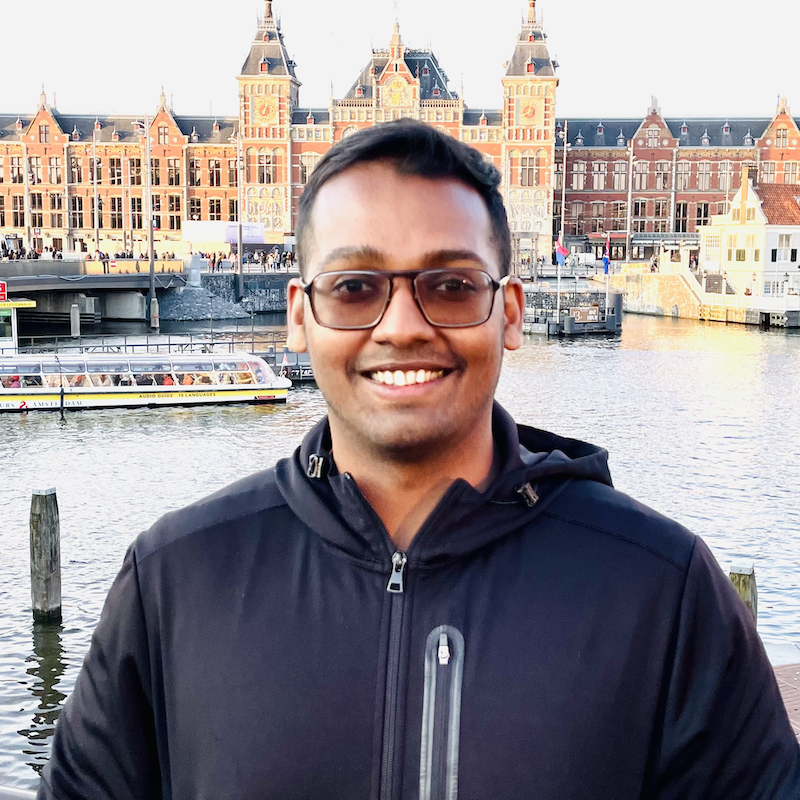
Tathagata Srimani is an Assistant Professor in the Department of Electrical and Computer Engineering at Carnegie Mellon University (CMU), affiliated with the College of Engineering. He previously served as a Postdoctoral Scholar in Electrical Engineering at Stanford University. His academic journey includes a Ph.D. and S.M. in EECS from MIT (2022 and 2018 respectively) and a B.Tech. in E&ECE from IIT Kharagpur (2016). Research Focus: Srimani’s work centers on nanoelectronics and transformative NanoSystems. Key areas include: Carbon nanotube field-effect transistors (CNFETs) and their monolithic 3D integration with silicon Ultra-dense 3D integration of logic and memory to address the 'memory wall' in AI/ML Technology-architecture co-design frameworks for energy-efficient computing Key Achievements: Developed first silicon fab-compatible CNFET processes (TNANO ’18, Nature ’19) Enabled CNFET RISC-V microprocessor and monolithic 3D integration with Analog Devices/SkyWater Recipient of MIT Presidential Fellowship (2016) and Morris Joseph Levin Award (2018) Teaching & Outreach: Teaches semiconductor devices and hardware design, including hands-on 'Hacker Fab' courses. Leads the NEXUS Research Group exploring heterogeneous nanomaterials (e.g., magnetic and oxide semiconductors) and thermal/power management in 3D systems. Future Directions: Expanding into probabilistic computing hardware, co-design frameworks for application-specific systems, and scaling 3D NanoSystem technologies for industrial adoption.
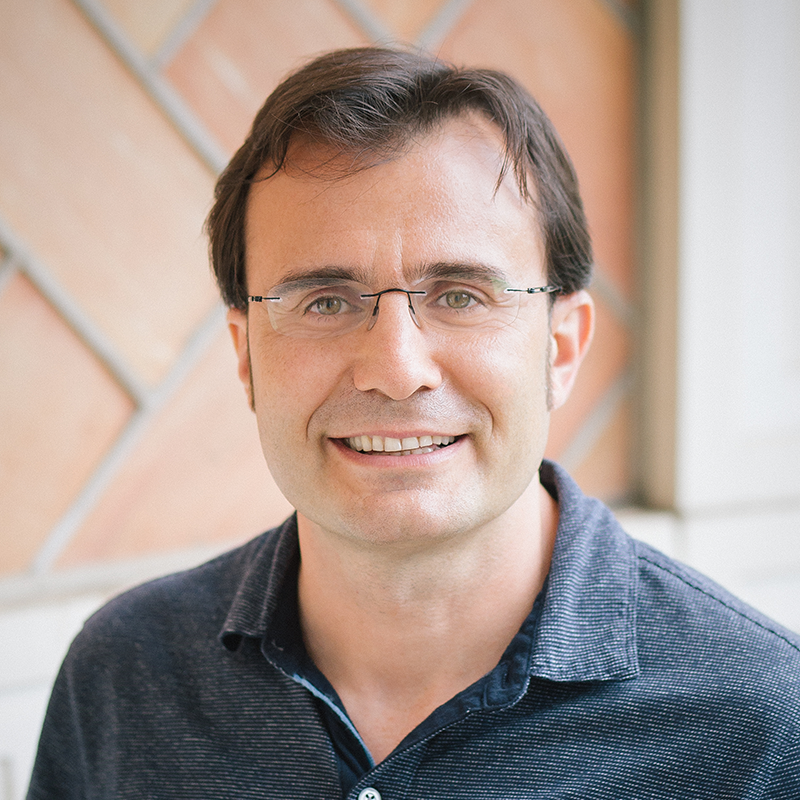
Venkatesan Guruswami is a Chancellor's Professor in the Department of Electrical Engineering and Computer Sciences and Professor in the Department of Mathematics at the University of California, Berkeley. He previously served as faculty at Carnegie Mellon University for 13 years and held a Miller Research Fellowship at UC Berkeley. His research focuses on Theoretical Computer Science , particularly in Error-Correcting Codes , Approximation Algorithms , Quantum Computing , and Hardness of Approximation . Guruswami has made groundbreaking contributions to list decoding and quantum code constructions, with works featured in Science Magazine and the Journal of the ACM (where he serves as Editor-in-Chief). Education : B.Tech (1997, IIT Madras), Ph.D. (2001, MIT), Miller Research Fellowship (2001-02, UC Berkeley) Research Areas : Theory of error-correcting codes, approximation algorithms, pseudorandomness, probabilistically checkable proofs, and quantum coding theory Guruswami's recent work explores quantum LDPC codes , parameterized inapproximability , and stream decodable codes . He has received prestigious awards including the NSF CAREER award , David and Lucile Packard Fellowship , and Sloan Research Fellowship . His advising spans a wide range of students and postdocs, with notable contributions to coding theory and computational complexity .
Sivaraman Balakrishnan is a Professor at Carnegie Mellon University with joint appointments in the Department of Statistics and Data Science and the Machine Learning Department. His research bridges statistical machine learning, algorithmic statistics, and robust inference. Education: Ph.D. in Computer Science from Carnegie Mellon University (Language Technologies Institute, advised by Jaime Carbonell); postdoctoral work at UC Berkeley (Department of Statistics, advised by Martin Wainwright and Bin Yu). Research Interests: Spanning robust statistics, domain adaptation, minimax hypothesis testing, assumption-light inference, causal inference, statistical optimal transport, non-parametric statistics, ranking, crowdsourcing, optimization, and topological data analysis. Key Research Trends: Recent work focuses on domain adaptation under label/misingness shifts, robust gradient estimation, smooth optimal transport maps, and conditional independence testing. He explores minimax optimal methods, univariate mean estimation, and high-dimensional regression with missing data. Scientific Awards: IMS Lawrence D. Brown Student Award (2021, 2020) NVIDIA Pioneer Award (2018) Franklin V. Taylor Memorial Best Paper Award (2018) Grants and Editorial Roles: NSF grants (CCF-1763734, DMS-1713003, DMS-2113684, DMS-2310632), Amazon Research Award (2021), Google Research Scholar Award (2021). Associate Editor for JASA and JRSSB ; Editorial Board member for Foundations and Trends in Statistics . Collaborative Groups: Co-organizes the Statistics and Machine Learning Reading Group and participates in the Causal Inference Working Group at CMU.
Maarten Sap is an Assistant Professor at Carnegie Mellon University's Language Technologies Institute with a courtesy appointment in the Human-Computer Interaction Institute. He also holds a part-time research scientist position at the Allen Institute for AI (AI2) as an AI safety lead. Current affiliations: CMU (2022–present), AI2 (2022–present) Prior: Postdoctoral Researcher at AI2 (2021–2022), Research Intern at AI2 (2018–2019) and Microsoft (2019) His research focuses on enhancing AI systems with social intelligence and addressing social biases in language technology. Key themes include: Ethical AI and Human-Centric Design Narrative Dynamics and Social Context Analysis AI Agents and Social Intelligence Toxic Language Detection and Cultural Bias Mitigation Recent publications examine: AI safety frameworks like HAICOSYSTEM Clinical reasoning alignment (ALFA) Multilingual moderation (PolyGuard) Cultural sensitivity in non-verbal AI (Mind the Gesture) Personality shaping in LLMs (BIG5-CHAT) Scientific Recognition: 2025 Okawa Research Grant Best Paper Runner Up - NAACL 2025 Outstanding Paper - EMNLP 2023 Best Paper - FAccT 2023 Best Paper - WeCNLP 2020 He advises a diverse group of PhD students across CMU and MIT, and has served on multiple program committees including ACL, EMNLP, and FAccT. His work appears in top venues like Nature Machine Intelligence, PNAS, and ACL.
Gianluca Piazza is the STMicroelectronics Professor of Electrical and Computer Engineering at Carnegie Mellon University (CMU), with a courtesy appointment in Mechanical Engineering. He directs the John and Claire Bertucci Nanotechnology Laboratory (CMU Nanofab). Previously, he was the Wilf Family Term Assistant Professor at the University of Pennsylvania. His research focuses on piezoelectric micro/nano electromechanical systems (M/NEMS) for RF communication, optomechanics, chemical/biological sensing, and mechanical computing. Key projects include nanorelays for low-power computing, ultrasound-based wireless powering, and piezoelectric MEMS for energy harvesting. Education: PhD (2005) in Electrical Engineering from UC Berkeley; MS (2001) from University of Texas at Austin and Politecnico di Milano (Italy). Research Interests: M/NEMS design, micro/nano fabrication, piezoelectric materials, mechanical switches, and energy-efficient electronics. His work bridges fundamental science and applied engineering, with patents in micromechanical resonators and awards including the IBM Young Faculty Award (2006) and multiple IEEE Best Paper Awards. Grants & Collaborations: NSF LEAP-HI grant ($2M) for nanorelay development (2020); CMU Kavčić-Moura Endowment funding. Collaborates with Maarten de Boer (Mechanical Engineering) and institutions like the University of Pennsylvania and City University of Hong Kong. Labs & Teams: Leads the Piazza Micro and Nano Systems Laboratory, focusing on NEMS/MEMS innovation. Active in CMU’s Center for Silicon System Implementation and Engineering Research Accelerator.
Anson Kahng is an Assistant Professor in the Department of Computer Science and the Goergen Institute of Data Science at the University of Rochester. He previously held postdoctoral positions at the University of Toronto and completed his PhD at Carnegie Mellon University under the supervision of Ariel Procaccia, focusing on computational social choice. PhD, Computer Science, Carnegie Mellon University Undergraduate degree, Computer Science, Harvard College His research explores the intersection of computer science and democracy, developing frameworks like virtual democracy and liquid democracy while analyzing fairness in participatory budgeting and voting systems. He combines theoretical analysis with empirical methods, emphasizing interdisciplinary collaboration. Recent work includes advancements in ranked choice voting optimization, fairness metrics for elections, and structural analysis in cryo-electron tomography. He has published in top venues such as IJCAI, AAAI, NeurIPS, and ACM Transactions on Economics and Computation. NeurIPS 2019 Spotlight Presentation (top 2.5% of submissions) Kahng advises PhD students Alina Chadwick and Joe Saber, and has mentored multiple undergraduate researchers. He teaches courses on algorithmic game theory and computational statistics at the University of Rochester.
Yihan Sun is an Assistant Professor at the University of California, Riverside (UCR) since January 2020. He earned his Ph.D. in Computer Science from Carnegie Mellon University (CMU) , advised by Guy Blelloch , and holds a Bachelor's degree in Computer Science from Tsinghua University . Research Interests: Yihan Sun focuses on the theory and practice of parallel computing , including Parallel algorithms and data structures Write-efficient algorithms for Non-Volatile Memory (NVM) Computational geometry (range trees, Delaunay triangulations) Graph algorithms (SSSP, SCC, cluster-based BFS) Concurrent and persistent data structures Multi-version concurrency control (MVCC) with garbage collection Applications in databases, transactional systems, and computational biology Recent Research Trends: His work on join-based parallel balanced trees has been foundational, supporting four balancing schemes (AVL, red-black, weight-balanced, treaps) and enabling efficient implementations in graph analytics, spatial queries, and dynamic programming. Recent publications focus on output-sensitive algorithms , scalable graph libraries (PASGAL) , and pedagogical approaches to teaching parallel algorithms. Teaching: He teaches CS260 (Parallel Algorithms) at UCR and has served as a guest lecturer for MIT 6.886 (Algorithm Engineering) and CMU 15-859 (Algorithms in the real world) . He also contributed to algorithm education through a tutorial at the ACM Symposium on Principles and Practice of Parallel Programming (PPoPP 2019) . Labs & Collaborations: Yihan is a core contributor to the PAM (Parallel Augmented Maps) library, which has been integrated into systems like Aspen (graph-streaming) and C-trees . He collaborates with teams at CMU-Parlay , PBBS , and Ligra , with his code available on Github for community feedback.
Professor Vincent Sokalski is a faculty member in the Department of Materials Science and Engineering at Carnegie Mellon University (CMU), specializing in nanoscale magnetic and spintronic materials. He holds a B.S. from the University of Pittsburgh and advanced degrees (M.S., Ph.D.) from CMU. His research focuses on emerging phenomena in magnetic thin films for energy-efficient computing, particularly leveraging skyrmions and the Dzyaloshinskii-Moriya interaction. He chairs the Pittsburgh IEEE Magnetics Society and directs CMU's MSE Department's community and inclusion initiatives. Sokalski also leads outreach efforts through the College of Engineering. Education: Ph.D., Materials Science & Engineering, CMU (2011) M.S., Materials Science & Engineering, CMU (2009) B.S., Materials Science & Engineering, University of Pittsburgh (2007) Research emphasizes low-power memory solutions via spintronic materials, with a focus on stabilizing skyrmions for next-generation computing. His group employs combinatorial material design and advanced imaging techniques like Lorentz transmission electron microscopy. Recent work explores asymmetrical superlattices and DMI-driven phenomena. Publications highlight advancements in domain wall dynamics, skyrmion stabilization, and magnetic symmetry breaking. Awards include the 2021 Provost’s Inclusive Teaching Fellowship. Sokalski advises students like Nisrit Pandey and Maxwell Li, who have won national poster competitions. He co-leads the AMPED Consortium grant for advanced magnetic technologies and oversees MSE’s materials characterization facilities.
Fangwei Si is the Cooper-Siegel Assistant Professor of Physics at Carnegie Mellon University's Department of Physics, with courtesy appointments in Biomedical Engineering. His research focuses on uncovering biological laws through quantitative biophysics , integrating microfluidics , imaging , and physical modeling . He previously held postdoctoral positions at The Scripps Research Institute and University of California, San Diego, and earned his Ph.D. in Mechanical Engineering from Johns Hopkins University. Ph.D.: Johns Hopkins University (2015) B.S.: Peking University (2009) His research bridges cell surface biophysics , cellular adaptation , and bacteria-phage interactions , emphasizing how cells optimize fitness through precise membrane organization and component redundancy . Current projects explore mechanical compression effects , quantitative adaptation principles , and phage-host coevolution . The lab's articles reveal trends in cell size control (2017-2019), mechanosensation (2018), and stochastic modeling (2020-2021), extending to machine learning approaches (2025) and high-throughput imaging (2024). Key methods include microfluidics , genetic modulation , and physical modeling . At CMU, Si leads the Experimental Cell Biophysics Lab, mentoring Ph.D. students like Mo Zhou and Christopher Aldrich , alongside postdocs and undergraduates. His lab received NIH and NSF grants in 2023 to advance research on microbial systems.
Xu Zhang is an Assistant Professor in Electrical and Computer Engineering at Carnegie Mellon University's College of Engineering. He directs the Zhang Lab, focusing on atomically precise 2D materials (e.g., graphene, tellurium) for nanoelectronic/photonic devices in computing, sensing, energy, and healthcare. His research bridges metamaterials, neuromorphic systems, and scalable nanofabrication. Zhang holds a PhD from MIT and BS from USTC, with honors including MIT Technology Review's Innovators Under 35 (2022), NSF CAREER Award (2023), and multiple MIT fellowships. His group's recent work demonstrates programmable mid-infrared metasurfaces, high-mobility tellurium photodiodes, and kirigami-actuated optical systems for biomedical imaging and AR/VR. Advisees include Kevin St. Luce, Yibai Zhong, and Tianyi Huang. Zhang has secured research funding from NSF and industry partners.
Dr. Avniel Singh Ghuman is an Associate Professor in the Department of Neurological Surgery at the University of Pittsburgh School of Medicine. He serves as Director of the Cognitive Neurodynamics Lab and plays a key role in advancing MEG (Magnetoencephalography) Research at the university. His work bridges clinical neurosurgery with fundamental neuroscience research to understand visual perception mechanisms. Dr. Ghuman's educational background includes: BA in Math and Physics from The Johns Hopkins University (1998) PhD in Biophysics from Harvard University (2007) Postdoctoral training at the National Institute of Mental Health Dr. Ghuman's research focuses on how the brain transforms visual input into meaningful perception of objects, faces, words, and social images in real-world contexts. His laboratory employs both invasive (intracranial EEG) and non-invasive (MEG) techniques to examine the spatiotemporal dynamics of neural activity during visual processing. The lab integrates multivariate machine learning methods, network analysis, and direct neural stimulation to investigate information processing at both local brain regions and distributed network levels. Recent work has pioneered methods for studying brain activity during authentic social interactions and natural behavior. His publication record demonstrates significant contributions to understanding real-world face perception, neural dynamics during natural behavior, and the application of advanced analytical techniques to brain imaging data. His research has revealed how brain network dynamics form a 'punctuated equilibrium' of stable states with transitory bursts between them, coinciding with behavioral shifts in everyday activities. Dr. Ghuman has received notable recognition for his work: Young Investigator Award from NARSAD (2012) Award for Innovative New Scientists from the National Institute of Mental Health (2015) His research has been featured in prominent media outlets including MIT Technology Review, The Wall Street Journal, and Carnegie Mellon University publications. As Director of the Cognitive Neurodynamics Lab, Dr. Ghuman leads a research program that has advanced our understanding of how the brain processes visual information in real-world environments, with implications for both fundamental neuroscience and clinical applications.
Mariya Toneva is a C.V. Starr Postdoctoral Fellow at Princeton Neuroscience Institute researching computational models of language processing in the brain. Her work bridges machine learning, natural language processing, and neuroscience to understand how humans comprehend language. She develops methods to align artificial language models with brain activity, using fMRI and MEG to study neural representations. Honored with NSF and C.V. Starr fellowships, her research has been recognized by the Society for Neurobiology of Language. Starting 2022, she joins Max Planck Institute as tenure-track faculty.
Daragh Byrne is an Associate Teaching Professor at the Carnegie Mellon University School of Architecture , with courtesy appointments in the School of Design and Human-Computer Interaction Institute (HCII) . Previously an Assistant Research Professor at Arizona State University’s School of Arts, Media and Engineering, he manages the NSF-funded XSEAD project and leads MakeSchools , a catalog of making practices in higher education. PhD in Digital Media from Dublin City University (2011) M.Res. in Design and Evaluation of Advanced Interactive Systems from Lancaster University B.Sc. in Computer Applications from Dublin City University His research explores experiential media systems through Internet of Things and tangible interaction design , focusing on how computational tools can capture human experience and enable multidisciplinary collaboration. Key projects include Sentient Concrete (thermochromic architectural surfaces) and Spooky Technology (speculative design around invisible technologies). He has developed CMU’s Designing for the Internet of Things course since 2016, creating hands-on curricula for connected product design. Recent publications examine creative physical computing education , AI-driven documentation systems , and XR-enabled skill training . Awards include multiple CMU research grants and the CHI 2018 Best Paper Award . He actively advises PhD and Masters students in Computational Design, emphasizing human-centered design and speculative technology research .
Garth Gibson is a Professor in the Computer Science Department and Department of Electrical and Computer Engineering at Carnegie Mellon University's School of Computer Science. He serves as Co-Director of the Master of Computational Data Science program and as Associate Dean for Master's Programs. Gibson has been a faculty member at CMU since 1991, after receiving his Ph.D. and M.Sc. in Computer Science from the University of California at Berkeley and a Bachelor of Mathematics in Computer Science and Applied Mathematics from the University of Waterloo. Gibson's research focuses on large-scale parallelism in computer systems, secondary memory system technologies and optimization, scalable file and key-value storage systems, scalable machine learning, and systematic testing for large scale systems. His work bridges theoretical concepts with practical implementations, with a strong emphasis on shepherding technological advances from academic research to commercial reality. He has made significant contributions to RAID technology, network-attached secure disks (NASD), and parallel file systems that have shaped industry standards and products. Gibson's recent publications reveal a strong trend toward data-intensive scalable computing, with increasing focus on machine learning systems, distributed storage solutions, and high-performance computing infrastructure. His research has evolved from foundational storage technologies to address the challenges of petascale and exascale computing environments, with particular attention to the intersection of storage systems and machine learning workloads. The papers demonstrate a consistent theme of addressing system scalability challenges through innovative architectural approaches. Scientific Awards: 2014 Fellow of the IEEE for contributions to the performance and reliability of transformative storage systems 2012 Fellow of the ACM for contributions to the performance and reliability of storage systems 2012 Jean-Claude Laprie Award in Dependable Computing Industrial/Commercial Product Impact Category 2011 SIGOPS Hall of Fame for the SIGMOD88 RAID paper 1999 Reynold B. Johnson Information Storage Award 1999 Allan Newell Award for Research Excellence 1998 Test of Time Award 1991 A.C.M. Doctoral Dissertation Award (tied for second) Gibson has advised numerous graduate students who have gone on to influential positions in both academia and industry, including Swapnil Patil who won first place in the 2010 ACM Graduate Student Research Competition. He has secured significant research funding through initiatives like the DOE Petascale Data Storage Institute and the Intel Science and Technology Center for Cloud Computing. His research has been supported by collaborations with national laboratories including Los Alamos, Sandia, Oak Ridge, Pacific Northwest, and Lawrence Berkeley. Gibson founded CMU's Parallel Data Laboratory (PDL) in 1993, which has grown into a vibrant research community comprising 6-9 faculty members, 2-3 dozen students, and 4-10 staff. The PDL operates with guidance from the Parallel Data Consortium, which includes 15-25 companies interested in parallel data systems. He also founded Panasas Inc. in 1999, a scalable storage cluster company that has deployed technology in national laboratories, energy sectors, and other high-performance computing environments. More recently, Gibson established the Big Learning research group and created the Systems Major curriculum within CMU's Master of Computational Data Science program.
Greg Ganger is the Jatras Professor of Electrical and Computer Engineering at Carnegie Mellon University and Director of the Parallel Data Lab (PDL). His research focuses on computer systems, including cloud computing, storage systems, distributed systems, and machine learning infrastructure. He holds a Ph.D. in Computer Science and Engineering from the University of Michigan and completed postdoctoral work at MIT. Education: Ph.D., M.S., and B.S. in Computer Science from the University of Michigan (1991–1995). Research Interests: Ganger leads projects in cloud computing, storage/file systems, operating systems, and systems for big data and large-scale machine learning. Recent work includes optimizing cloud resource scheduling, developing sustainable storage solutions, and improving ML cluster efficiency. The PDL explores storage system architecture, file systems, and leveraging new storage technologies like non-volatile memory (NVM). Awards: 2021 OSDI Best Paper, 2021 SOSP Best Paper, 2021 SoCC Test of Time Award, and 2021 R&D 100 Award. His team's work on Kangaroo caching and MACARON cloud caching exemplifies cutting-edge contributions. Advising & Grants: Advises graduate students in ECE and Computer Science. Active in grants related to distributed storage, cloud systems, and ML infrastructure. Collaborates with industry partners like Los Alamos National Lab on storage systems. Labs/Teams: Directs the Parallel Data Lab (PDL), a leading research group in storage and distributed systems. Collaborates with CMU’s CyLab on security aspects of storage systems and ML infrastructure.