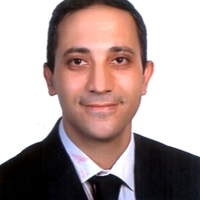
Mehmet Ali YALÇINKAYA is a full-time Lecturer in the Department of Computer Engineering at Ahi Evran University's Faculty of Engineering and Architecture. His academic journey includes a PhD (2020) and MSc (2015) in Computer Engineering from Süleyman Demirel University, and a BSc in Electronics and Computer Education (2012). PhD: Computer Engineering, Süleyman Demirel University (2020) MSc: Computer Engineering, Süleyman Demirel University (2015) BSc: Electronics and Computer Education, Süleyman Demirel University (2012) His research focuses on Information Security and Cryptology , Artificial Intelligence , Computer Software , and Cybersecurity . Recent work includes phishing detection systems, deep learning applications for security, and AI-driven educational tools. Key article trends: 2025: NLP for violence detection in healthcare 2024: Multilayer security frameworks, AI in education, and biometric authentication 2023: Phishing defense mechanisms and agricultural pest detection He has supervised four Master's theses and collaborated with 48 researchers. Notable projects include a BCI-supported deep learning model for motor/facial analysis (2025-2027) and AI-powered educational systems for primary schools.
Mustafa AKSU is a Lecturer at Ahi Evran University, Faculty of Engineering and Architecture, Department of Computer Engineering. He holds a Doctorate (2016) from İnönü University in Computer Hardware, a Master's (2004) in Electrical and Electronics Engineering from Kahramanmaraş Sütçü İmam University, and a BSc (1998) in Computer Science Engineering from Kocaeli University. Current Position: Doctor Öğretim Üyesi (Lecturer) since 2022 Previous Role: Full-time Teaching Staff at Kahramanmaraş Sütçü İmam University (2001-2022) His research focuses on Data Structures and Algorithms , with significant contributions to skip ring/skip list innovations and their applications in robotics, artificial intelligence, and image processing. Key interests include: Algorithm optimization Machine learning applications Image segmentation techniques Mobile system development Renewable energy simulations Publications showcase expertise in data structures, robotics, and energy systems, with a recent 2024 paper on COVID-19 prediction algorithms and a 2023 book chapter on robotic simulation importance . Collaborations span institutions including İnönü University, University of Turku, and Gaziantep University. As a thesis advisor, he has guided three Master's students in 2024. Professional experience includes department chairmanship (2011-2014) and extensive teaching roles since 2001.
Dr. Gökçe Yildirim serves as a Doctor Lecturer at Bingöl University's Vocational School of Technical Sciences within the Department of Machine and Metal Technologies since 2019, advancing from Lecturer (2019-2025) to her current position. Her academic foundation was built at Fırat University through sequential engineering degrees culminating in a 2024 PhD in Software Engineering. Educational background: Mechatronics Engineering BSc, Fırat University (2010-2014) Mechatronics Engineering MSc, Fırat University (2014-2017) Software Engineering PhD, Fırat University (2018-2024) Her research program centers on machine learning and optimization with distinctive expertise in chaotic-system-based random number generation . This computational focus drives interdisciplinary applications across medical diagnostics, agricultural forecasting, and gaming analytics. Recent work demonstrates sophisticated integration of nonlinear dynamics with security-critical applications, reflecting both theoretical depth and practical implementation skills. Publication analysis reveals consistent output since 2018 with accelerating international engagement. The 2023 works mark significant maturation of her research identity, particularly the Chaos, Solitons & Fractals paper establishing her innovative optimization approach for chaotic random number generators. Her portfolio shows remarkable versatility across domains while maintaining core computational methodology. Scientific recognition: No major awards documented in current records Dr. Yildirim maintains active teaching responsibilities across foundational engineering disciplines while pursuing research. Her vocational school context emphasizes practical skill development, with research directly informing curriculum design. Current publications indicate ongoing projects in secure random number generation and agricultural data mining, though specific grant details remain undisclosed. No dedicated research laboratory is documented, suggesting computational work leverages shared university resources within the vocational school's applied engineering framework.
Associate Professor Muzaffer Aslan is a faculty member at Bingöl University's Faculty of Engineering and Architecture, specializing in applied artificial intelligence research. His work bridges computer science, electrical engineering, and biomedical domains with practical implementations in industrial, medical, and energy systems. His academic journey includes a BSc in Electronic-Computer Education from Gazi University (1993), MSc from Fırat University (2004), and PhD in Electrical-Electronics Engineering from Fırat University (2016). This multidisciplinary foundation enables his cross-domain research approach. Professor Aslan's research centers on developing efficient deep learning solutions for real-world problems. His primary focus areas include medical imaging analysis (brain tumor and COVID-19 detection from X-rays), fall detection systems using depth sensors, emotion recognition from EEG signals, and appliance classification for smart grids. He innovates through hybrid architectures that combine CNNs with signal processing techniques like wavelet transforms and dispersion entropy, achieving high accuracy while maintaining computational efficiency. His publication record shows accelerating output since 2020, with 11 journal articles in 2021-2022 alone spanning medical diagnostics, agricultural technology, and industrial quality control. Recent work demonstrates increasing sophistication in model design, particularly in efficient architectures for resource-constrained environments as seen in his 2023 surface defect detection paper. As Principal Investigator for a TÜBİTAK 1002 project on appliance classification, he secures active research funding while mentoring graduate students. His supervision style emphasizes practical implementation, with students frequently co-authoring publications and contributing to textbook development. The collaborative nature of his work is evident in multi-institutional authorship patterns across his publications.
Enes Algül serves as a Lecturer in the Faculty of Engineering and Architecture at Bingol University, bringing deep expertise in Graph Machine Learning and Geometric Deep Learning developed through his PhD at the University of York and postdoctoral work at the University of Copenhagen. His research bridges theoretical computer science with practical applications in bioinformatics and computer vision. His educational foundation includes: PhD in Computer Science, University of York, UK (2017-2022) MSc in Software Engineering, University of Hertfordshire, UK (2016-2017) Bachelor's in Computer Engineering, Ankara University, Turkey (2009-2014) Research Interests: Algül pioneers methods for transforming complex data into graph and 3D point cloud representations, applying Graph Kernels and Graph Neural Networks to solve challenging problems in RNA structure classification and face recognition. His work uniquely combines graph theory, deep learning, and domain-specific knowledge in bioinformatics, with recent focus on novel graph representations for RNA molecules based on sequence free energy and 3D structural properties. This interdisciplinary approach enables breakthroughs in analyzing biological data and visual recognition systems. Scientific Recognition: Turkish Ministry of National Education Scholarship (2014) - Awarded to top 900 undergraduate students nationally Academic Contributions: Algül teaches advanced courses including Software Engineering, Natural Language Processing, and Object-Oriented Programming at Bingol University. His graduate teaching experience at York demonstrates strong pedagogical skills across Python, Java, and data science curricula. The scholarship supporting his entire graduate education reflects exceptional academic promise, and his recent publication surge in 2023 indicates active research momentum with potential for significant future contributions in geometric deep learning applications. Research Environment: While no dedicated lab is specified, Algül's work spans multiple high-impact domains including computational biology and computer vision. Students would engage with cutting-edge techniques in graph representation learning and neural network architectures applied to real-world data challenges.
Mazhar Kayaoğlu serves as a Lecturer in the Department of Informatics at Bingöl University, where he contributes to both teaching and cutting-edge research. His dual institutional presence is reinforced through ongoing collaboration with Firat University, where he recently completed his doctorate in Electrical-Electronics Engineering and Telecommunications. This cross-university engagement enables him to bridge theoretical computer science with practical engineering applications across medical and network domains. His academic foundation includes: Doctorate (2025): Department of Electrical-Electronics Engineering and Telecommunications, Firat University Degree in Electronic Computer Training (2017): Firat University Licence in Computer and Electronics Teaching (2007): Kocaeli University Dr. Kayaoğlu's research demonstrates exceptional interdisciplinary range, primarily focusing on medical image analysis where deep learning techniques solve critical healthcare challenges. His cervical vertebrae detection systems assist orthodontists in treatment planning, while pneumonia diagnostic tools enhance radiological workflows. Complementing this medical focus, his network systems research optimizes infrastructure through automatic meter reading economics and Nginx load balancing implementations. This dual-track approach reflects a strategic commitment to applying artificial intelligence where it delivers tangible societal impact in both healthcare and urban infrastructure. Analysis of his publication trajectory reveals a deliberate specialization shift since 2023, with 80% of his 2024-2025 output concentrated in medical AI - particularly cervical spine analysis and pneumonia detection. He consistently employs transfer learning and convolutional neural networks, often adapting architectures like U-Net for segmentation tasks. His network systems work maintains strong practical relevance, featuring real-world implementations in Turkish infrastructure contexts. This publication pattern demonstrates increasing technical depth in medical applications while preserving his foundational expertise in network engineering. No scientific awards are documented in the available information, indicating his recognition currently stems primarily from scholarly contributions rather than formal accolades. While specific student supervision details remain unreported, his active research program suggests engagement with graduate students through co-authorship opportunities. His collaborative publication pattern - averaging 3.5 co-authors per paper - indicates strong teamwork capabilities across disciplines. Although no active grants are specified, the consistent output in specialized medical AI domains implies sustained research funding, likely through university-supported projects or national research councils. Though no dedicated laboratory is mentioned, Dr. Kayaoğlu's research emerges from dynamic cross-institutional teams. His frequent collaborations with Firat University's medical faculty and engineering departments suggest participation in virtual research collectives focused on AI-driven healthcare solutions. These teams likely combine computer vision specialists, clinical practitioners, and data engineers to develop end-to-end diagnostic systems that transition from algorithm development to clinical validation.
Dr. MÜCAHİT Çalışan serves as a Lecturer at Bingöl University with dual appointments in the Computer Engineering Department (Faculty of Engineering and Architecture) and the Distance Education Application and Research Center. Holding a PhD from İnönü University (2022), he contributes to both teaching and research in computer engineering. His academic journey includes: Bachelor's Degree: Electronics and Computer Education, Fırat University (2003-2007) Master's Degree: Electronics and Computer Education, Fırat University (2011-2013) PhD: Computer Engineering, İnönü University (2016-2022) Dr. Çalışan's research centers on thermal imaging applications and machine learning techniques, with notable work in biomedical engineering such as skull thickness calculation using thermal analysis. His methodology combines finite element methods with image processing algorithms, extending to dimension reduction techniques and autoencoder optimization for coding performance. The evolution from thermal camera fundamentals (2011) toward biomedical applications (2021) demonstrates growing specialization. His publication portfolio shows consistent output with international reach, highlighted by the 2021 Applied Sciences article featuring cross-border collaboration. While specific grant details aren't public, the research trajectory suggests active projects in thermal imaging and machine learning applications. Teaching core courses including Database and Operating Systems, he bridges theoretical knowledge with practical implementation. Though no dedicated laboratory is documented, his computational research likely utilizes university resources for thermal analysis and machine learning experiments.
Dr. Musab Coşkun serves as a Lecturer at Bingöl University's Continuing Education Application and Research Center. He maintains active international collaborations through past visiting researcher positions at the University of Koblenz and Landau (Germany) and the University of Malta. His academic credentials include: Bachelor of Science in Electrical and Electronics Engineering, Fırat University (2006-2010) with Erasmus exchange at Bialystok University of Technology, Poland (2008-2009) Master of Science in Electrical and Electronics Engineering, Fırat University (2012-2015) Doctor of Philosophy in Electrical and Electronics Engineering, Fırat University (2015-2022) Dr. Coşkun's research integrates Computer Vision, Deep Learning, and Robotics to solve practical problems in unmanned systems and human-machine interaction. His work spans theoretical algorithm development (e.g., efficient neural networks for sEMG classification) and hardware implementation (FPGA acceleration, UAV systems), with recent emphasis on reinforcement learning for robotic manipulation. The progression from 2016-2017 object tracking studies to 2021-2022 robotic grasping research demonstrates evolving technical sophistication while maintaining core computer vision expertise. His publication record shows consistent output in high-impact venues, with recent work focusing on deployable deep learning solutions for robotics. The 2018 TÜBİTAK-funded project on humanoid robot training algorithms provides evidence of competitive grant acquisition capability. As an early-career lecturer, Dr. Coşkun offers students hands-on experience with cutting-edge robotics and vision systems within Bingöl University's continuing education framework, emphasizing practical implementation skills alongside theoretical foundations.
FEYYAZ KOÇ serves as a Research Assistant at Bingöl University's Faculty of Engineering and Architecture since 2015, concurrently pursuing his doctorate in Renewable Energy Systems. His academic foundation includes a Licence in Electrical and Electronics Engineering from Gediz University (2010-2015) and an MSc in Renewable Energy Systems from Bingöl University (2019-2021). His research expertise centers on renewable energy systems with specialized focus on triboelectric nanogenerators for energy harvesting. KOÇ pioneers material optimization techniques using boron minerals, pumice, and functionalized silicone to enhance nanogenerator efficiency, while bridging electrical engineering with machine learning applications for electrical device classification and smart grid solutions. Recent publication trends (2021-2025) reveal concentrated advancements in triboelectric nanogenerator technology, with significant contributions in high-impact journals like Nano Research and Energy Technology. His work demonstrates evolving sophistication from fundamental stability analysis (2016) to cutting-edge material science applications. As an active researcher with ongoing doctoral studies, KOÇ maintains strong research momentum through conference engagements like SENSDETECH 2025. His work operates within Bingöl University's Renewable Energy Systems framework, focusing on practical energy solutions without dedicated lab infrastructure specified in current documentation.
Dr. Cihat Okan ARIKAN is a Lecturer at Ege University, affiliated with the Emel Akın Vocational School in the Design Department, working within the Fashion Design Program. His academic profile bridges textile engineering and computer science, reflecting a unique interdisciplinary approach to textile technology and education. Educational Background While specific educational credentials aren't detailed in available sources, Dr. ARIKAN holds a doctoral degree (as indicated by his 'Dr.' title) with expertise spanning both textile engineering and computer science disciplines. Research Interests Dr. ARIKAN's research spans multiple domains at the intersection of textile engineering and computer technology: Textile Engineering and Technology, with specialized focus on Yarn Technology (spinning, weaving, knitting) Pattern Recognition and Image Processing applications in textile manufacturing Artificial Intelligence and Computer Learning for textile applications Database Systems and Software Engineering for textile industry E-learning and Distance Education systems for engineering education Publication Trends Dr. ARIKAN's publication record demonstrates consistent progression from traditional textile manufacturing topics toward advanced applications of computer vision, artificial intelligence, and automation systems in textile quality control. His recent work on intelligent fabric inspection systems and 3D printing applications in textile design reflects the evolving nature of textile engineering in the digital age. Scientific Recognition His scholarly impact is evidenced by citations across major academic databases including Web of Science (6 metrics), Scopus (7 metrics), and Unisis (23 metrics), with broadcasting metrics showing 18 publications in WoS, 30 in Scopus, and 13 in Unisis. His work maintains consistent academic engagement in his specialized fields. Academic Supervision and Collaborations Dr. ARIKAN maintains active collaborations both within Ege University and across disciplines, particularly between textile engineering and computer science departments. His research on e-learning systems indicates involvement in educational technology initiatives at the institutional level, demonstrating his commitment to interdisciplinary academic development. Research Facilities Though specific laboratory information isn't provided, Dr. ARIKAN's research on fabric inspection systems, image processing for defect detection, and 3D printing applications suggests access to textile testing facilities, computer vision equipment, and digital manufacturing resources at Ege University, supporting his innovative research directions.
Mustafa Murat İNCEOÖLU is a Professor at Ege University's Faculty of Education, specializing in the Department of Computer and Educational Technologies Education. His academic work bridges computer science and pedagogical innovation, focusing on technology-driven educational solutions. His research expertise spans: Computer and Educational Technology Education Computer Science and Artificial Intelligence Machine Learning and Pattern Recognition Human-Computer Interaction Social Sciences integration in educational technology Engineering applications for learning systems With 9 publications and an H-index of 7, his scholarly output demonstrates consistent impact across Web of Science (5.9 avg citations), Scopus (9.2 avg citations), and Unisis databases. Publication distribution shows 1 Q1, 1 Q2, 1 Q3, and 7 Q4 journal articles, reflecting broad engagement with the field. He has received 4 academic recognitions, though specific award details remain undisclosed in university records. Collaborative work is evident through frequent co-authorship with Ege University colleagues across multiple departments. While student supervision practices and grant funding details aren't specified in the profile, his active publication record and departmental role suggest ongoing mentorship responsibilities. No dedicated laboratory or research center affiliation is indicated in the available information.
Gökalp TULUM serves as a Lecturer within the Institute of Science at Uskudar University, specifically in the Department of Artificial Intelligence Engineering. His academic responsibilities focus on graduate-level instruction in advanced computational disciplines. Machine Learning (Makine ÖÖğrenmesi) Advanced Machine Learning Artificial Neural Networks (Yapay Sinir Ağları) Digital Image Processing (Sayısal Görüntü İşleme) His research spans core artificial intelligence domains with emphasis on algorithmic development for visual data analysis and neural network architectures. Technical specialization includes pattern recognition systems, convolutional neural networks, and optimization techniques for high-dimensional data processing, reflecting the department's focus on next-generation AI engineering applications. Teaching responsibilities exclusively cover graduate coursework in artificial intelligence systems, demonstrating active engagement in the university's Master's Degree program through the Institute of Science. No formal advising relationships, research grants, or laboratory affiliations are documented in available materials.